

解説 / Description
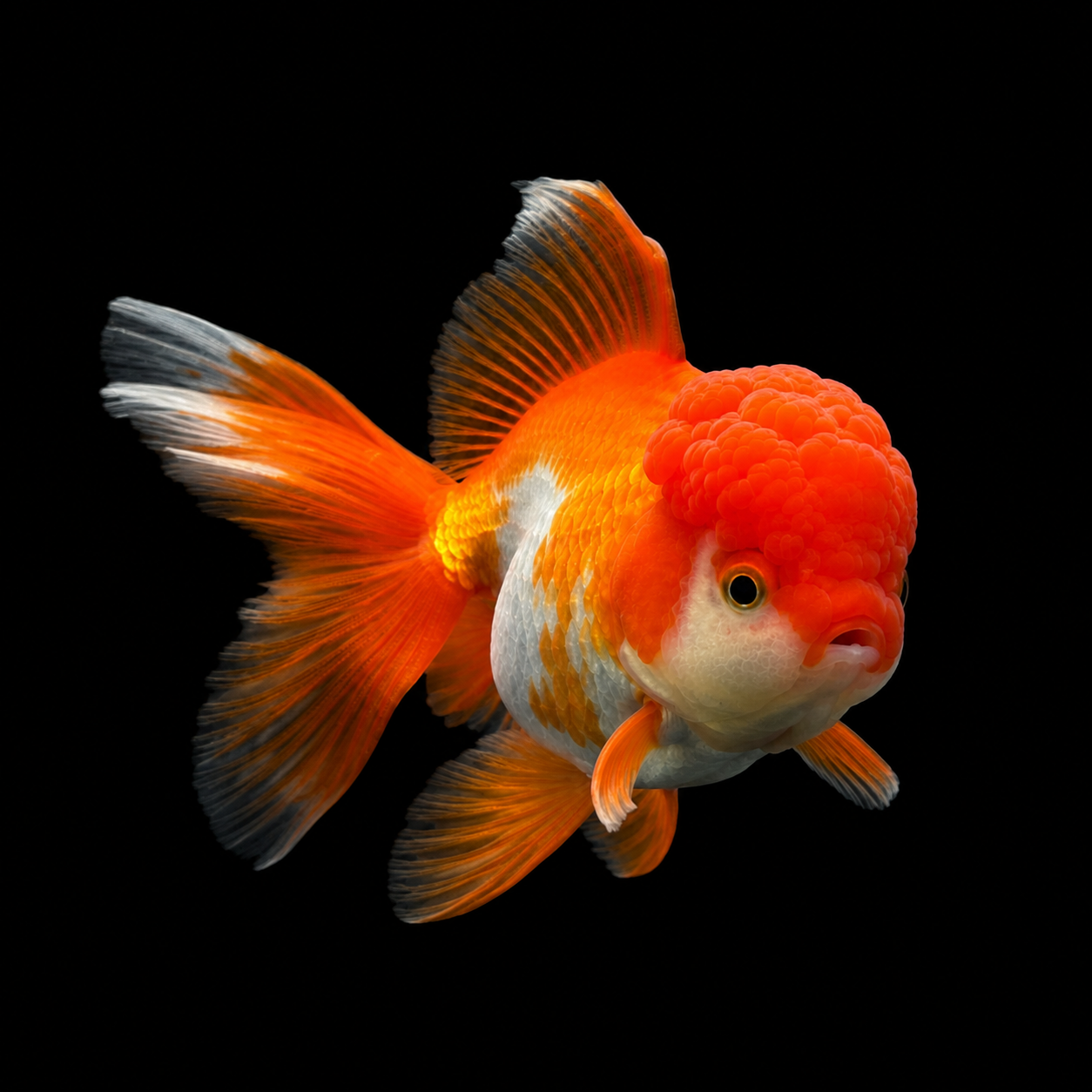
更紗オランダは、オランダシシガシラの赤白模様を楽しむ代表的な金魚です。丸みのある体、背びれ、ゆったりと広がる複尾に加え、成長とともに頭部へ発達する肉瘤が大きな見どころです。「更紗」と呼ばれる赤と白の配置は個体ごとに異なり、左右のバランスや白地の清潔感、赤色の深さ、模様の境界の明瞭さによって印象が大きく変わります。泳ぎは比較的穏やかで、人の気配に慣れる個体も多く、長く付き合うほど体格や肉瘤、色彩の変化を味わえる金魚です。 The Sarasa Oranda is a classic red-and-white color form of the Oranda fancy goldfish. Its appeal comes from the combination of a rounded body, a dorsal fin, a broad double tail, and the fleshy head growth known as a wen, which becomes more pronounced with age. No two red-and-white patterns are identical, and the overall impression changes greatly depending on the balance of the markings, the purity of the white areas, the depth of the red coloration, and the sharpness of the color boundaries. Its relatively gentle swimming style and noticeable changes in body shape, wen development, and coloration make it a rewarding goldfish to keep over many years.
基本情報 / Basic Information
| 学名 / Scientific Name | Carassius auratus (Linnaeus, 1758) |
|---|---|
| 通称 / Common Name | 更紗オランダ、サラサオランダ、赤白オランダRed-and-white Oranda, Sarasa Oranda |
| 分類 / Family | コイ目コイ科フナ属。キンギョの改良品種で、オランダシシガシラ系統に属します。Order Cypriniformes, family Cyprinidae, genus Carassius. It is a domesticated fancy-goldfish variety belonging to the Oranda group. |
| 英名 / English Name | Red-and-white Oranda / Sarasa Oranda |
| 分布 / Distribution | キンギョの祖先系統は東アジアに由来します。更紗オランダそのものは野生分布を持たない改良品種で、日本、中国、タイをはじめ世界各地で養殖・流通しています。The ancestral lineage of goldfish originated in East Asia. The Sarasa Oranda itself is a domesticated variety with no natural wild distribution and is bred and traded in Japan, China, Thailand, and many other regions worldwide. |
| 最大体長 / Max Size | 成魚で20〜25cm前後が一つの目安です。血統や飼育環境によっては、尾びれを含めて30cm近くに達する大型個体も見られます。Around 20–25 cm is a practical adult size, although well-grown individuals may approach 30 cm including the caudal fin, depending on lineage and husbandry. |
| 寿命 / Lifespan | 10〜15年程度が一つの目安です。十分な水量、安定した水質、適切な給餌を長期に維持できれば、20年以上生きる例もあります。A lifespan of about 10–15 years is a reasonable expectation. With generous water volume, stable water quality, and appropriate long-term feeding, some goldfish can live for more than 20 years. |
飼育環境 / Aquarium Environment
| 水槽サイズ / Tank Size | 成魚1匹でも60cmワイド水槽(約120L)以上を推奨します。成魚を2〜3匹でゆったり飼育するなら90cm規格水槽(約180L)以上が目安です。金魚は排泄量が多いため、体長だけでなく濾過能力と実水量を重視して選びます。For one adult, a 60 cm wide aquarium of roughly 120 L or larger is recommended. For two or three adults, a 90 cm standard aquarium of roughly 180 L or larger is a practical target. Because goldfish produce a large amount of waste, filtration capacity and actual water volume matter as much as body size. |
|---|---|
| 水温 / Temperature | 18〜24℃前後を安定して維持するのが扱いやすい範囲です。短期間ならより広い温度域に耐えますが、急変は避けます。高水温期は溶存酸素が低下しやすいため、28℃を超える環境では特にエアレーションと水質管理を強化します。 A stable range of about 18–24°C is practical for routine care. Goldfish can tolerate a broader range for short periods, but sudden temperature changes should be avoided. At temperatures above about 28°C, dissolved oxygen can fall quickly, so aeration and water-quality management become especially important. |
| 水質 / Water Quality | 中性から弱アルカリ性のpH7.0〜8.0を目安にし、アンモニアと亜硝酸は0mg/Lを維持します。硝酸塩はできるだけ低く保ち、40mg/Lを大きく超えないよう定期換水を行います。数値そのものよりも急激なpH変動や温度変化を避けることが重要です。Aim for neutral to slightly alkaline water around pH 7.0–8.0, with ammonia and nitrite maintained at 0 mg/L. Keep nitrate as low as practical and use regular water changes to prevent it from rising well above 40 mg/L. Avoiding sudden shifts in pH and temperature is more important than chasing a single exact number. |
| レイアウト / Layout | 中央に広い遊泳スペースを確保し、角の鋭い石や流木は避けます。肉瘤や長い尾びれを傷つけにくい滑らかな素材を選び、底床は掃除しやすい薄敷きまたはベアタンクが管理しやすいでしょう。水草を使う場合は、アヌビアス類など丈夫な種類をしっかり固定すると扱いやすくなります。Leave a broad open swimming area and avoid sharp rocks or rough driftwood. Choose smooth materials that are unlikely to damage the wen or flowing fins. A thin, easy-to-clean substrate or a bare-bottom setup simplifies maintenance. If live plants are used, hardy species such as Anubias are easier to manage when firmly secured. |
| 注意点 / Precautions | 排泄量が多いため、余裕のある濾過と定期的な底掃除・換水が欠かせません。肉瘤のしわには有機物がたまりやすく、水質悪化時には白濁や炎症が目立つことがあります。丸い体型では浮力異常が出る個体もいるため、過食を避け、沈下性フードを中心に少量ずつ与えます。低い炭酸塩硬度でpHが下がりやすい水では、原水の性質を確認したうえでカキガラなどを緩やかな緩衝材として使う方法もあります。Generous filtration, regular gravel cleaning, and routine water changes are essential because goldfish produce heavy waste. Organic debris can collect in the folds of the wen, and poor water quality may be followed by cloudiness or inflammation. Rounded-bodied fish can also be prone to buoyancy problems, so avoid overfeeding and favor small portions of sinking food. In very low-alkalinity water where pH tends to fall, oyster shell or another mild carbonate source can be used cautiously after checking the source-water chemistry. |
餌と給餌 / Feeding
| 餌の種類 / Diet | 金魚用の良質な沈下性ペレットを主食にし、冷凍赤虫、ブラインシュリンプ、ミジンコ類、加熱して柔らかくした葉野菜などを補助的に与えます。赤色の維持にはアスタキサンチンやスピルリナなどカロテノイド源を含む色揚げ飼料も利用できますが、栄養過多にならない範囲で使います。Use a high-quality sinking goldfish pellet as the staple food, supplemented with foods such as frozen bloodworms, brine shrimp, daphnia, and softened leafy vegetables. Color-enhancing diets containing carotenoid sources such as astaxanthin or spirulina can support red coloration, but they should be used without creating an overly rich diet. |
|---|---|
| 給餌のポイント / Feeding Tips | 1回に大量に与えるより、数分で食べ切れる少量を1日1〜2回に分けるほうが安全です。成長期はタンパク質を十分に確保しつつ、成魚では肥満を避けます。水温が10℃前後まで下がる屋外飼育では消化が鈍るため給餌量を大きく減らし、10℃未満では状態を見ながら原則として給餌を止めます。暑い時期は日中の高水温を避け、朝夕の涼しい時間帯に与えます。It is safer to offer small portions once or twice a day rather than a large single meal, using an amount the fish can finish within a few minutes. Growing fish need adequate protein, while adults should be protected from obesity. In outdoor systems near 10°C, digestion slows markedly, so feeding should be greatly reduced; below 10°C, feeding is generally withheld depending on the fish’s condition. During hot weather, feed in the cooler morning or evening rather than at peak daytime temperature. |
性格と混泳 / Temperament and Tank Mates
| 性格 / Temperament | 基本的には温和で、人に慣れると餌をねだるように寄ってくることもあります。縄張り性は強くありませんが、餌の時間には活発になり、個体差によっては同居魚を押しのけることがあります。Sarasa Orandas are generally peaceful and may become very responsive to people, often approaching the front of the aquarium at feeding time. They are not strongly territorial, although some individuals can become pushy when competing for food. |
|---|---|
| 混泳の相性 / Compatibility | 泳ぐ速さが近い琉金、東錦、丹頂などの丸物金魚とは合わせやすい傾向があります。コメットや和金などの速泳性が高い金魚とは給餌競争で不利になりやすく、ヒレをつつく魚や極端に小さな魚・エビ類との混泳も避けたほうが安全です。肉瘤が大きく視界が狭い個体には、とくに穏やかな同居魚を選びます。They usually combine well with other slower fancy goldfish such as Ryukin, Azumanishiki, and Redcap Oranda. Fast single-tailed goldfish such as Comets and Wakin can outcompete them for food, while fin-nipping species and very small fish or shrimp are poor choices. Individuals with very large wens and restricted vision benefit from especially calm tank mates. |
病気と対策 / Diseases and Prevention
| かかりやすい病気 / Common Diseases | 丸い体型に関連した浮力異常や転覆症状、水質悪化に伴うエロモナス症などの細菌性疾患、白点病、エラや体表に寄生する単生類、肉瘤の擦れや炎症などに注意します。転覆症状は一つの病名ではなく、消化不良、浮き袋機能の異常、感染、体型など複数の要因で起こる症状として考える必要があります。Watch for buoyancy disorders and rollover symptoms associated with the compact body shape, bacterial diseases such as Aeromonas-related infections following poor water quality, white spot disease, monogenean parasites of the gills and skin, and abrasion or inflammation of the wen. Rollover is best regarded as a clinical sign rather than a single disease because digestive problems, swim-bladder dysfunction, infection, and body conformation can all contribute. |
|---|---|
| 対策と予防 / Prevention | 最も重要なのは、過密を避け、アンモニア・亜硝酸を検出させない水質管理と適量給餌です。新しく迎えた個体は可能であれば2〜4週間の隔離観察を行い、呼吸、体表、フン、泳ぎ方を確認してから合流させます。異常が出た場合は隔離し、水質を測定したうえで原因を絞り込みます。薬浴を行う場合は対象疾病を確認し、日本国内で観賞魚に使用できる薬剤の製品表示に従ってください。重症、再発、肉瘤の過剰発達による視覚障害などでは、魚類診療に対応できる獣医師への相談が安全です。The most effective prevention is avoiding overcrowding, keeping ammonia and nitrite undetectable, and feeding appropriately. Whenever possible, observe new fish in quarantine for two to four weeks and check breathing, skin condition, feces, and swimming before introduction. If symptoms appear, isolate the fish and test the water before choosing a treatment. When medication is required, identify the likely disease and follow the label of an aquarium-fish product legally available in Japan. Severe, recurrent, or structural problems such as vision loss from excessive wen growth are best discussed with a veterinarian experienced in fish medicine. |
増やし方(繁殖) / Breeding
| 雌雄の判別 / Sexing | 成熟した雄は繁殖期になると、エラ蓋や胸びれ前縁に白い追星が現れます。雌は抱卵すると腹部がふっくらし、生殖孔が丸くやや突出する傾向があります。若魚や繁殖期以外では判別が難しく、体型だけで断定するのは避けます。Mature males often develop small white breeding tubercles on the gill covers and leading edges of the pectoral fins during the breeding season. Gravid females become fuller through the abdomen and tend to have a rounder, slightly protruding vent. Juveniles and adults outside the breeding season can be difficult to sex reliably, so body shape alone should not be treated as definitive. |
|---|---|
| 繁殖形態 / Reproduction | 卵生で、水草や産卵床に粘着性の卵をばらまくタイプです。春の水温上昇が繁殖のきっかけになりやすく、成熟した雄が雌を追尾して産卵を促します。親魚は卵を保護せず、産卵後には卵を食べることがあります。They are egg-laying scatter spawners that deposit adhesive eggs among plants or spawning media. Rising spring temperatures commonly help trigger spawning, with mature males chasing females and stimulating egg release. The parents provide no care and may eat the eggs after spawning. |
| 繁殖のポイント / Breeding Tips | 健康な親魚を別水槽で十分に仕上げ、冬から春へ移るような緩やかな水温変化と換水を利用して繁殖期を作ります。産卵用には金魚藻や人工産卵モップを用意し、産卵が確認できたら親魚を別容器へ移します。孵化仔魚は卵黄を吸収して自由遊泳を始めた後、インフゾリアなどの微小餌から始め、成長に合わせてブラインシュリンプ幼生や微粒子飼料へ切り替えます。更紗模様や肉瘤の発達には遺伝的なばらつきが大きく、親と同じ外観になるとは限りません。Condition healthy breeders in a separate tank and use gradual seasonal temperature changes and water changes to simulate the transition from winter into spring. Provide fine-leaved plants or artificial spawning mops. Once spawning is complete, remove the adults to protect the eggs. After the fry absorb their yolk sacs and begin free swimming, start with very small foods such as infusoria and progress to newly hatched brine shrimp or fine prepared diets as they grow. Red-and-white patterning and wen development vary strongly through inheritance, so offspring will not necessarily resemble the parents. |
雑学と豆知識 / Trivia and Fun Facts
| 1. 「オランダ」は原産国を示す名前ではない / 1. “Oranda” does not indicate Dutch origin | オランダシシガシラの祖先となる金魚は中国系統ですが、日本では江戸時代に「オランダ」という名が付けられました。当時、長崎は海外文化の玄関口であり、舶来の珍しい品物に「オランダ物」という印象を重ねることがありました。中国から琉球を経て長崎へ伝わったとされるこの金魚も、異国的で珍しい存在として「オランダ」の名をまとったと考えられています。つまり、名前だけを見てオランダ原産と思うと歴史の面白いところを見落としてしまいます。The ancestral Oranda lineage is Chinese, yet the Japanese name includes the word “Oranda,” meaning Holland. During the Edo period, Nagasaki was one of Japan’s principal windows to foreign cultures, and unusual imported objects were often associated with the idea of “Dutch” goods regardless of their precise country of origin. The goldfish lineage is thought to have reached Nagasaki from China via the Ryukyu Islands, so the name reflects its exotic status in Japan more than its biological origin. |
|---|---|
| 2. 「更紗」は染め物の言葉から金魚の色名になった / 2. “Sarasa” traveled from textiles to goldfish | 「更紗」はもともと、インドなどからもたらされた鮮やかな文様染めを指す染織の言葉です。異国の布に描かれた色の切り替わりや華やかな模様が日本人の目を引き、やがて金魚や鯉などの赤白模様にも同じ言葉が使われるようになりました。更紗オランダという名前には、魚そのものの歴史だけでなく、交易を通して日本へ入ってきた色彩文化の記憶まで重なっています。“Sarasa” originally referred to vividly patterned imported textiles, especially chintz-like fabrics associated with India and Asian trade. Their striking blocks and transitions of color became familiar in Japan, and the same word later came to describe red-and-white patterning in ornamental fish such as goldfish and koi. The name Sarasa Oranda therefore carries a piece of textile and trade history as well as a description of the fish’s coloration. |
| 3. 肉瘤は腫瘍ではなく、選択育種で固定された頭部組織 / 3. The wen is selected head tissue, not a tumor | オランダの肉瘤は、病的な腫瘍そのものではなく、遺伝的背景を持つ皮膚組織の過形成です。若魚では目立たなくても生後数か月から徐々に発達し、2〜3歳頃まで大きく変化する個体があります。近年の組織学・Micro-CT研究では、オランダや丹頂、ランチュウの肉瘤は、表皮が真皮方向へ不規則に伸びて融合する「融合型」として整理されています。見た目は柔らかな房状ですが、その下では皮膚、結合組織、頭部骨格が一体となって独特の輪郭をつくっています。The Oranda wen is not simply a pathological tumor; it is a genetically influenced overgrowth of skin tissue established through selective breeding. It can be subtle in juveniles, begin developing within the first months of life, and continue changing markedly into the second or third year. Recent histological and Micro-CT work groups the head growth of Orandas, Redcap Orandas, and Ranchu into a “fused” type in which irregular epidermal extensions grow toward and merge within the dermal region. The soft, lobed appearance is therefore produced by coordinated changes involving skin, connective tissue, and the underlying head structure. |
| 4. 更紗の赤は「食べた色素」を使ってつくられる / 4. The red color depends partly on pigments obtained from food | 金魚は赤色を見せるためにカロテノイドを利用しますが、カロテノイドを何もないところから作り出すことはできません。餌や植物プランクトンなどから取り込んだ色素を代謝し、赤色を担う色素胞へ蓄積します。そのため、血統が持つ発色の素質が同じでも、栄養状態や光環境、健康状態によって赤の深さは変わります。ただし色揚げ飼料を増やせば無限に赤くなるわけではなく、過剰給餌による肥満や水質悪化を防ぐことのほうが長期的には重要です。Goldfish use carotenoids to produce red coloration, but they cannot manufacture carotenoids from nothing. Pigments taken in through food and natural plankton are metabolized and stored in pigment cells associated with red and yellow coloration. This means that two fish with similar genetic potential can develop different color intensity depending on nutrition, light conditions, and health. Color-enhancing food is useful, but simply feeding more will not create unlimited redness; avoiding obesity and poor water quality is more important for long-term appearance. |
| 5. 稚魚の「フナ色」から更紗へ変わる時間 / 5. The journey from juvenile brown to red and white | 金魚の稚魚は、最初から鮮やかな赤白で泳ぎ始めるわけではありません。多くは祖先のフナを思わせる暗い褐色をまとい、成長とともに黒色素胞の状態が変化して「色変わり」が進みます。その下から赤や白が現れ、最終的な更紗模様へ近づいていきます。色素形成にはMC1R、ASIP、TYRなど複数の遺伝子経路が関与することが研究されており、一匹の若魚が時間とともに別の魚のような色へ変わっていく姿は、金魚育種の奥深さを実感できる場面です。Goldfish fry do not begin life in bright red and white. Many start with a dark brown coloration reminiscent of their crucian-carp ancestry and later undergo a process commonly described as color change, during which black pigment cells regress or reorganize and red or white areas become visible. Multiple pigment pathways, including genes such as MC1R, ASIP, and TYR, are involved in goldfish coloration. Watching a juvenile transform into a red-and-white adult can make the same fish appear almost completely different over time. |
| 6. 金魚の浮き袋は前後2室で、ガスの話も意外に奥深い / 6. A two-chambered swim bladder with surprising gas physiology | 金魚の浮き袋は前室と後室に分かれ、食道とは細い気管でつながっています。前室は聴覚にも関わり、後室は浮力調整への寄与が大きいとされています。さらに古典的な生理学研究では、金魚の浮き袋内にほぼ純粋な窒素が蓄積し得ることが報告されました。酸素を含むガスが分泌された後、酸素が優先的に再吸収されることで窒素が残るという説明です。水面でゆったり漂う姿の背後には、見た目以上に精密なガス調節の仕組みがあります。The goldfish swim bladder is divided into anterior and posterior chambers and remains connected to the esophagus by a pneumatic duct. The anterior chamber also contributes to hearing, while the posterior chamber plays a major role in buoyancy control. Classic physiological studies further showed that the goldfish swim bladder can accumulate gas that is nearly pure nitrogen. One explanation is that an oxygen-rich mixture is secreted first and oxygen is then preferentially reabsorbed, leaving nitrogen behind. The apparently effortless hovering of a goldfish is supported by unexpectedly sophisticated gas regulation. |
| 7. 日本産・タイ産・中国産では、同じオランダでも見せ方が違う / 7. Orandas are shaped by different regional breeding aesthetics | 流通個体を見比べると、生産地域によって改良の方向に傾向が見られます。日本では上見での体型や尾のまとまり、全体の調和を重視する系統が多く、タイでは横見で迫力の出る太い胴体、巨大な肉瘤、長く華やかな尾を追求した個体が目立ちます。中国では豪快な肉瘤や多様な色彩の系統が豊富です。もちろん生産者や血統による例外はありますが、同じ「オランダ」という名前の中に複数の美意識が共存していることは、現代の金魚文化の面白さの一つです。When Orandas from different breeding regions are compared, distinct aesthetic tendencies can often be seen. Japanese lines frequently emphasize balance when viewed from above, harmonious body shape, and a well-formed double tail. Thai lines often pursue a dramatic side view with very deep bodies, massive wens, and long ornamental fins, while Chinese breeding offers many bold head-growth forms and color variations. Individual breeders differ, of course, but the variety of regional preferences shows how several concepts of beauty coexist within the single name “Oranda.” |
| 8. 丹頂や東錦にもつながる、オランダ系統の広がり / 8. The Oranda lineage branches into other familiar varieties | オランダ系統の特徴は、別の色彩や体型と組み合わされながら多様な品種へ広がってきました。白い体に頭部だけ赤が残る「丹頂」は、赤い頭冠を際立たせたオランダ系の代表です。また、オランダ型の体と肉瘤にキャリコ模様を組み合わせた「東錦」は、日本の金魚文化を象徴する人気品種の一つです。更紗オランダを眺めることは、一匹の品種を見るだけでなく、金魚育種が色と形を組み替えてきた長い系譜を眺めることでもあります。Characteristics of the Oranda lineage have been combined with different colors and body forms to create many related varieties. The Redcap Oranda emphasizes a red head growth against a mostly white body, while Azumanishiki combines an Oranda-like body and wen with calico coloration and has become a celebrated Japanese fancy goldfish. Looking closely at a Sarasa Oranda therefore reveals more than a single variety; it also hints at the long breeding history through which goldfish keepers have recombined color, head growth, fins, and body shape. |
まとめ / Conclusion
更紗オランダは、赤白の模様、ふくよかな体、発達する肉瘤、ゆったりとした尾の動きが一体となって魅力を生み出す金魚です。模様は一匹ごとに異なり、成長とともに肉瘤や色彩の印象も変わるため、若魚から長く育てるほど個体らしさが深まっていきます。 The Sarasa Oranda brings together red-and-white patterning, a full-bodied silhouette, a developing wen, and slow, flowing fin movement. Each individual carries a unique pattern, and both the head growth and coloration can change noticeably with age, allowing the fish’s character to become more distinctive the longer it is kept.
その美しさを保つ鍵は、広めの水槽と安定した水質、過不足のない給餌、そして日々の小さな変化に気づく観察です。十分な空間でのびのび泳ぎ、赤と白が水中でゆっくり揺れる姿は、更紗オランダならではの存在感を見せてくれます。 Its beauty is best maintained through generous swimming space, stable water quality, balanced feeding, and close observation of small day-to-day changes. When given enough room to move comfortably, the slow motion of red and white through the water gives the Sarasa Oranda a presence that is difficult to mistake for any other fancy goldfish.

気になる道具や飼い方を見つけてみませんか?
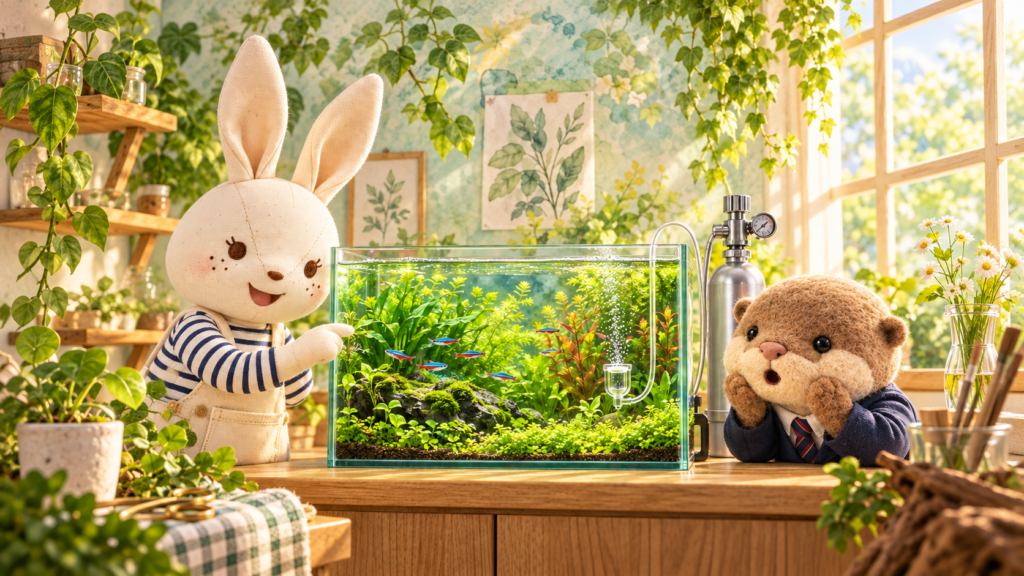 アイのアクアグッズ案内水草水槽のCO₂添加|3つの方式の選び方とおすすめ用品道具の特徴や使い方、選ぶときのポイントをアイが紹介します。記事はコチラ →
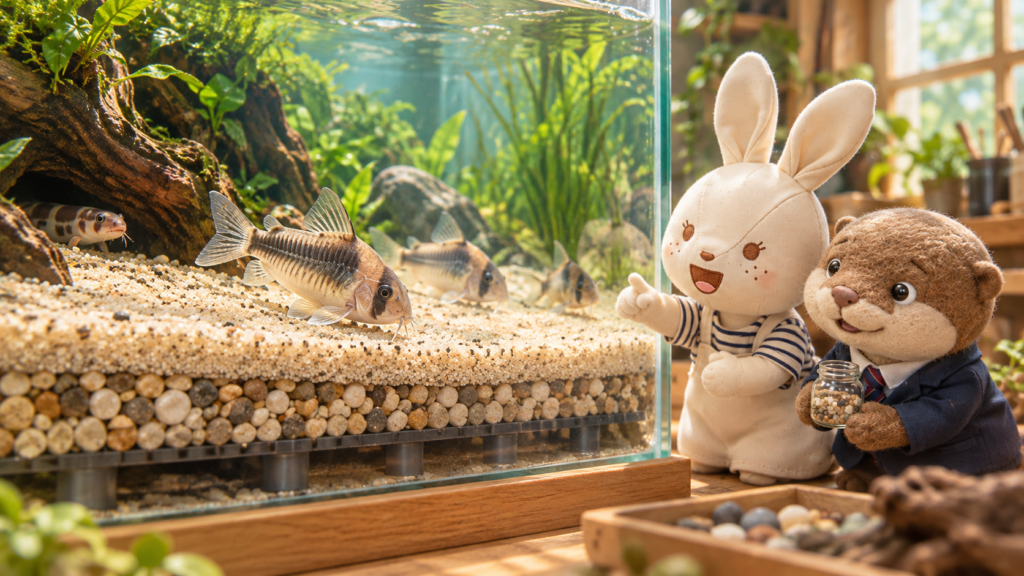 アイのアクアグッズ案内水槽の底砂の選び方|砂・砂利の違いとおすすめ商品道具の特徴や使い方、選ぶときのポイントをアイが紹介します。記事はコチラ →
さまざまな飼育テーマをご紹介。リンク先の記事には広告・商品紹介が含まれます。
案内・紹介記事一覧へ →分布マップ
キンギョの祖先系統は東アジアに由来します。更紗オランダ(Carassius auratus)そのものは野生分布を持たない改良品種で、日本、中国、タイをはじめ世界各地で養殖・流通しています。下の地図では、主要な生産・流通地域を含む東アジアから東南アジアを概略表示しています。
※この地図は記事中の分布情報をもとにした概略表示です。マーカーは分布範囲を把握しやすくするための代表地点であり、実際の採集地点や野生個体の確認地点を示すものではありません。更紗オランダは人為的に作出・維持されている改良品種のため、自然の野生分布を示す地図ではありません。
参考文献
-
Eschmeyer’s Catalog of FishesCalifornia Academy of Sciences. Carassius auratus (Linnaeus, 1758). Online version.参照範囲:学名、命名者、分類上の位置づけ
-
Goldfish (Carassius auratus) — Species ProfileU.S. Geological Survey, Nonindigenous Aquatic Species Database. 2026 revision.参照範囲:原産域、野外での生息環境、成魚サイズ、温度・pHなどへの耐性、生態
-
How should I care for my goldfish?RSPCA Australia Knowledgebase. Updated 1 May 2024.参照範囲:水槽容量、水温、pH、アンモニア・亜硝酸・硝酸塩、濾過、換水、寿命の目安
-
Ammonia in Aquatic SystemsFrancis-Floyd, R., Watson, C., Petty, D. & Pouder, D. B. University of Florida IFAS Extension.参照範囲:アンモニアと亜硝酸の管理、硝化、濾過、アルカリ度とpH低下、換水と給餌管理
-
Dissolved Oxygen for Fish ProductionFrancis-Floyd, R. University of Florida IFAS Extension.参照範囲:溶存酸素、夜間の酸素低下、高水温時の酸欠リスク、エアレーションの必要性
-
Environmental and Physiological Regulation of Reproduction in the Goldfish: Gonadal Development, Maturation, and Spawning Behavior: A ReviewKobayashi, M., Iwata, E. & Sorensen, P. W. Animals. 2026;16(5):775. doi:10.3390/ani16050775.参照範囲:季節変化と成熟、繁殖水温、雄の追尾行動、産卵生理、繁殖期の二次性徴
-
Embryonic and postembryonic development of the ornamental twin-tail goldfishLi, I.-J., Lee, S.-H., Abe, G. & Ota, K. G. Developmental Dynamics. 2019;248(4):251–283. doi:10.1002/dvdy.15.参照範囲:オランダ系統を含む観賞用双尾金魚の発達、雄の追星、雌雄の外部形態
-
Management of Aquarium FishMerck Veterinary Manual.参照範囲:新規導入魚の30日以上の隔離、専用器具による防疫、水質確認、金魚でみられる単生類寄生
-
Parasitic Diseases of FishMerck Veterinary Manual.参照範囲:白点病、ギロダクチルス、ダクチロギルスなどの単生類、皮膚・エラ症状、診断と予防
-
Bacterial Diseases in AquacultureYanong, R. P. E., Francis-Floyd, R. & Petty, B. D. Merck Veterinary Manual. Updated June 2026.参照範囲:Aeromonas属を含む魚類の細菌性疾患、環境管理と適切な診断に基づく治療の考え方




コメント