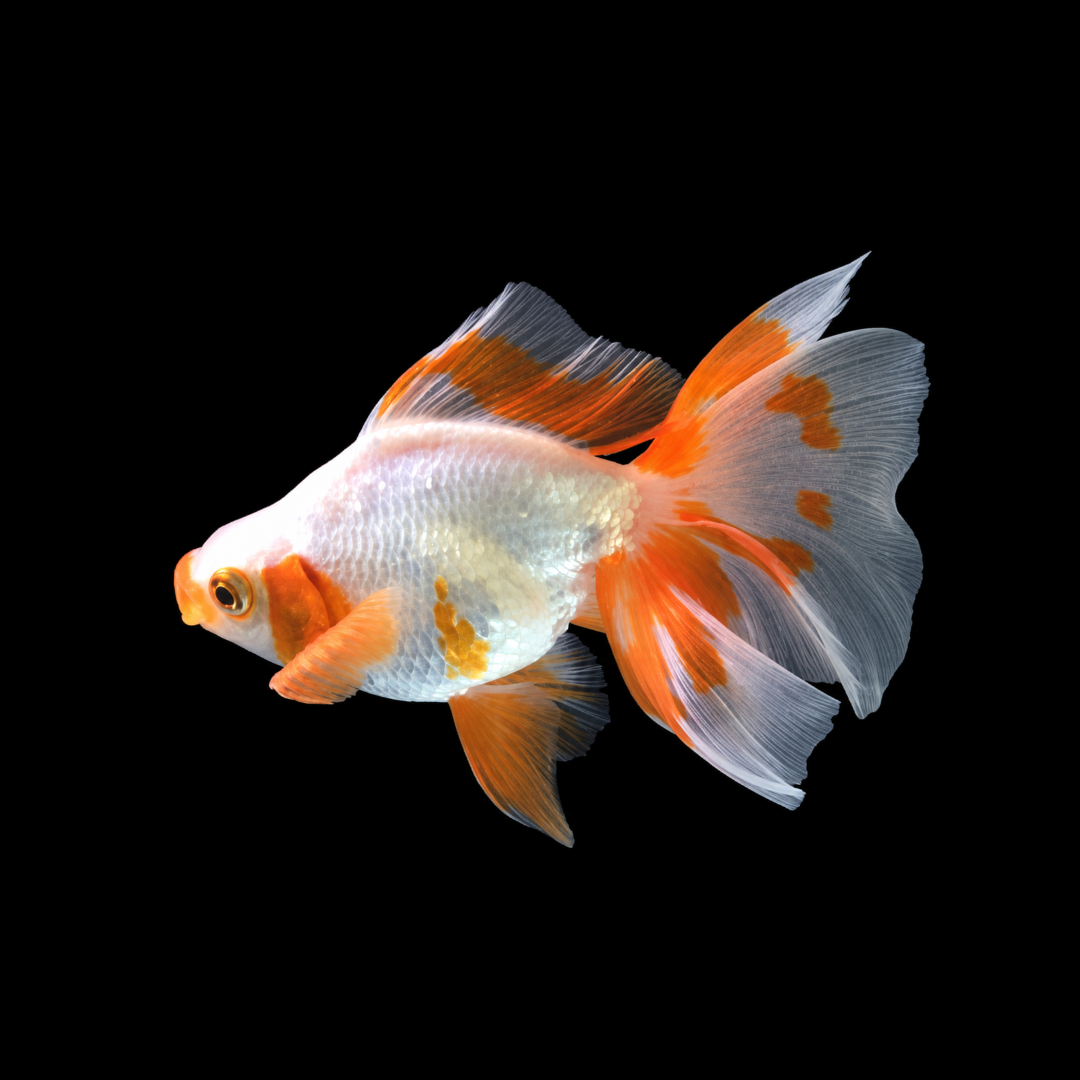
東海錦は、2003年に愛知県幡豆郡吉良町(現在の西尾市)で、地金とパンダ蝶尾の交配から作出された金魚です。作出当初は「吉良蝶尾」とも呼ばれ、現在は「東海錦」の名で知られています。地金系のすっきりした体型に、上見で蝶が羽を広げたように見える尾を組み合わせ、六鱗を思わせる赤白の配色が重視されます。魅力は体型、尾型、色彩の組み合わせにあり、どれか一つだけでなく全体の調和が見どころです。比較的新しい品種で、一般的な金魚ほど流通量は多くありませんが、上から眺めたときの尾の広がりに独特の存在感があります。Tokai Nishiki is a Japanese goldfish variety first produced in 2003 in Kira, Aichi Prefecture, now part of Nishio City, by crossing Jikin with Panda Butterfly-tail goldfish. It was initially also known as “Kira Chobi” and is now generally called Tokai Nishiki. The variety combines a streamlined Jikin-type body with a tail that spreads like butterfly wings when viewed from above, together with a red-and-white pattern reminiscent of the traditional Rokurin aesthetic. Its appeal comes from the balance of body form, tail shape, and coloration rather than from any single feature. As a comparatively recent and less commonly distributed variety, it is especially distinctive when appreciated from above.
基本情報 / Basic Information
学名 / Scientific Name
Carassius auratus
通称 / Common Name
東海錦、吉良蝶尾(作出当初の呼称)Tokai Nishiki; Kira Chobi was an early name used for the variety.
分類 / Family
コイ目・コイ科・フナ属。金魚の改良品種Order Cypriniformes, family Cyprinidae, genus Carassius; a domesticated fancy-goldfish variety
英名 / English Name
Tokai Nishiki Goldfish. No widely standardized English common name is established.
分布 / Distribution
野生分布はありません。2003年に愛知県吉良町で作出された改良品種で、日本国内の愛好家や専門店などを通じて維持、流通しています。There is no wild distribution. This cultivated variety was created in Kira, Aichi Prefecture, in 2003 and is maintained and circulated in Japan through breeders, hobbyists, and specialist retailers.
最大体長 / Max Size
東海錦に限定した信頼できる最大体長の統計は確認されていません。成長量は系統、給餌、飼育密度、水量などで大きく変わるため、十分な遊泳空間を確保して成魚まで育てることを前提にします。Reliable maximum-size statistics specific to Tokai Nishiki are not established. Growth varies substantially with lineage, feeding, stocking density, and water volume, so the fish should be housed with enough space for full adult development.
寿命 / Lifespan
東海錦に限定した寿命統計は確認されていません。一般的な金魚と同様に長期飼育が可能で、実際の寿命は水質、給餌、飼育密度、疾病管理などに大きく左右されます。No reliable lifespan statistics specific to Tokai Nishiki are established. Like other goldfish, it can be kept for many years, with actual longevity strongly influenced by water quality, feeding, stocking density, and disease management.
飼育環境 / Aquarium Environment
水槽サイズ / Tank Size
60cm規格水槽以上をひとつの目安とし、成長した個体や複数飼育では90cm規格水槽以上の余裕を持たせると管理しやすくなります。上見を重視する場合は、横幅が広く水深を抑えた大型プラ舟や丸鉢も使えますが、水量が少ない容器ほど水温や水質が変化しやすいため、飼育密度を抑えて管理します。A standard 60 cm aquarium or larger is a practical starting point, while a 90 cm standard aquarium or larger provides more manageable space for grown fish or groups. Wide, relatively shallow tubs or traditional round bowls can also be used for top-view keeping, but lower water volume changes temperature and water quality more quickly, so stocking should be kept conservative.
水温 / Temperature
金魚はヒーターを使わない常温飼育も可能です。東海錦でも特定の数値を追うより、急な水温変化を避けることが重要です。加温する場合は一定の水温を保ち、換水時も新水との温度差をできるだけ小さくします。Goldfish can be kept at normal room or seasonal temperatures without mandatory heating. For Tokai Nishiki, avoiding sudden temperature changes is more important than targeting a single exact number. If heating is used, keep the temperature stable and closely match replacement water during water changes.
水質 / Water Quality
中性付近の安定した水質を基本とし、急激なpH変動を避けます。アンモニアや亜硝酸が蓄積しないよう十分なろ過とエアレーションを確保し、食べ残しや排泄物をためないことが重要です。換水量と頻度は飼育密度や給餌量に合わせ、古い水を残すこと自体ではなく、水質を安定させながら汚れを除くことを目的に調整します。Aim for stable water around neutral pH and avoid abrupt shifts. Provide sufficient biological filtration and aeration so ammonia and nitrite do not accumulate, and prevent uneaten food and waste from building up. Adjust water-change volume and frequency to stocking and feeding; the goal is stable, clean water rather than preserving old water for its own sake.
レイアウト / Layout
蝶尾を傷つけないことを優先し、ベアタンクまたは角のない細かな底砂を使ったシンプルな構成が向きます。尖った石や流木、狭い隙間のある装飾は避け、広い遊泳スペースを確保します。大きな尾は水流の影響を受けやすいため、ろ過能力を確保しつつ強い直線的な流れは避けます。上見では水面の面積を広く取ると、尾の左右差や配色を観察しやすくなります。Prioritize protection of the butterfly tail. A bare-bottom setup or smooth fine substrate suits a simple layout. Avoid sharp rocks, rough driftwood, and narrow gaps, and leave ample open swimming space. The broad tail is easily affected by strong current, so provide adequate filtration without a forceful direct flow. A broad surface area also makes tail symmetry and coloration easier to assess from above.
注意点 / Precautions
大きな尾は裂けや擦れが起こりやすいため、網ですくう回数を減らし、移動時は魚体を傷めない方法で慎重に扱います。新規導入魚は可能であれば別容器で経過観察し、急な水温・水質変化、過密、食べ残し、酸欠を避けます。地金で伝統的に行われる調色は魚体へ直接処置を加える高度な技術であり、一般飼育者が見よう見まねで行う作業ではありません。The broad tail can tear or abrade easily, so minimize netting and handle the fish carefully during transfers. When possible, observe new fish separately before introduction, and avoid sudden changes in temperature or water chemistry, crowding, leftover food, and low oxygen. Traditional color adjustment derived from Jikin culture physically treats the fish’s body surface and is an advanced practice that should not be attempted casually.
餌と給餌 / Feeding
餌の種類 / Diet
良質な金魚用人工飼料を主食とします。沈下性またはゆっくり沈むタイプは、水面で空気を飲み込みやすい個体で使いやすい場合があります。補助的に冷凍赤虫、ミジンコ、ブラインシュリンプなどを利用できますが、主食との栄養バランスを崩さない範囲にとどめます。色揚げ飼料も使えますが、発色だけを目的に給餌量を増やさないことが大切です。Use a high-quality goldfish food as the staple diet. Sinking or slowly sinking foods can be useful for fish that tend to gulp air at the surface. Frozen bloodworms, Daphnia, or brine shrimp may be offered as supplements without displacing a balanced staple diet. Color-enhancing foods can also be used, but feeding should not be increased simply to intensify coloration.
給餌のポイント / Feeding Tips
1日1回、5分以内で食べ切れる量をひとつの基準とし、成長段階、季節、水温、魚の状態に応じて調整します。低水温期や食欲が落ちているときは量を減らし、無理に与えません。腹部が張るほどの過剰給餌は避け、糞の状態や泳ぎ方、水の汚れ方を見ながら適量を探ります。As a general reference, feed once daily in an amount that can be finished within about five minutes, then adjust for growth stage, season, water temperature, and condition. Reduce feeding in colder water or when appetite falls, and do not force food. Avoid overfeeding to the point of abdominal distension, and use feces, swimming behavior, and water quality as practical guides.
性格と混泳 / Temperament and Tank Mates
性格 / Temperament
性質は基本的に温和です。地金系の体型で比較的よく泳ぎますが、大きく広がる尾は水の抵抗を受けるため、和金のような長物系ほど素早く泳ぐとは限りません。落ち着いた環境で尾を十分に開いて泳げる状態を保つことが、東海錦らしい姿を楽しむうえで大切です。Temperament is generally peaceful. Its Jikin-type body gives it reasonable swimming ability, but the broad tail creates drag, so it may not move as quickly as streamlined single-tail goldfish. A calm environment that allows the tail to spread naturally is best for appreciating the variety’s characteristic form.
混泳の相性 / Compatibility
最も管理しやすいのは東海錦同士、または体格と泳ぐ速さが近い金魚との飼育です。和金やコメットなど給餌時に非常に速い個体と組み合わせる場合は、餌を十分に取れているか、追尾や尾の損傷がないかを確認します。琉金や出目金などとの混泳も一律に安全とは言えないため、品種名だけで判断せず、体格、泳力、個体差を見て組み合わせます。The easiest setup to manage is Tokai Nishiki with its own kind or with goldfish of similar size and swimming speed. If housed with very fast feeders such as Wakin or Comets, confirm that the Tokai Nishiki obtains enough food and is not being chased or having its tail damaged. Ryukin, telescope-eye goldfish, and other varieties are not automatically compatible simply by name; match fish by size, swimming ability, and individual behavior.
病気と対策 / Diseases and Prevention
かかりやすい病気 / Common Diseases
東海錦だけに特有の感染症が知られているわけではありません。金魚で一般的に見られる白点病、体表やひれの炎症、傷に続く水カビ、エラの異常などに注意します。また、消化状態や水温、体型など複数の要因が関わって、浮き沈みが不安定になる転覆症状が出ることがあります。鱗が逆立つ「松かさ」は一つの病名ではなく、重い体調不良で現れる症状として扱い、原因を決めつけないことが大切です。Tokai Nishiki is not known to have a unique infectious disease of its own. Watch for common goldfish problems such as white spot disease, inflammation of the skin or fins, fungal growth following injury, and gill abnormalities. Buoyancy problems may also appear through a combination of digestive condition, temperature, body form, and other factors. “Pineconing,” in which the scales stand out, should be treated as a serious clinical sign rather than assumed to be one single disease with one cause.
対策と予防 / Prevention
毎日の観察で、餌食い、呼吸、ひれの開き、体表、糞、泳ぎ方の変化を早く見つけます。異常があれば必要に応じて隔離し、水温、水質、酸素供給、直前の給餌や換水などを確認します。0.5%の塩水浴は、金魚が弱ったときの補助的な管理法として用いられますが、すべての病気を治す方法ではありません。白点病や細菌性疾患など特定の病気が疑われる場合は、観賞魚用薬の対象疾病と使用方法を確認し、製品表示に従います。薬剤同士や塩との併用は、併用可能と確認できない限り避けます。Daily observation is the most effective way to notice early changes in appetite, breathing, fin position, skin, feces, or swimming. If a fish becomes abnormal, isolate it when appropriate and check temperature, water quality, oxygenation, and recent feeding or water changes. A 0.5% salt bath is commonly used as supportive care for weakened goldfish, but it is not a universal cure. If a specific condition such as white spot disease or a bacterial infection is suspected, use an ornamental-fish medication only for the indicated disease and follow the product label. Avoid combining medications or salt unless compatibility is clearly established.
増やし方(繁殖) / Breeding
雌雄の判別 / Sexing
繁殖期の成熟雄では、エラぶたや胸びれ前縁に白い粒状の追星が現れることがあり、雌を追尾する行動も見られます。成熟雌は抱卵すると腹部がふっくらし、総排泄孔がやや目立つ場合があります。ただし、若魚や非繁殖期は外見だけでの判別が難しいため、複数の特徴を合わせて判断します。During the breeding season, mature males may develop small white breeding tubercles on the gill covers and leading edges of the pectoral fins and may actively chase females. Mature females often become fuller through the abdomen when carrying eggs, and the vent may become more noticeable. Young fish and fish outside the breeding season can be difficult to sex visually, so several signs should be considered together.
繁殖形態 / Reproduction
卵生で、水草や産卵床などに粘着性の卵を産み付ける金魚の一般的な繁殖形態をとります。水温が上がる季節に繁殖行動が起こりやすく、雄が雌を追って産卵を促します。親魚は卵を食べることがあるため、採卵後は親魚と卵を分けて管理するのが基本です。It is an egg-laying goldfish that scatters adhesive eggs onto aquatic plants or spawning media. Breeding behavior commonly increases as seasonal temperatures rise, with males chasing females to stimulate spawning. Because adult goldfish may eat the eggs, the parents and eggs are usually separated after spawning.
繁殖のポイント / Breeding Tips
東海錦の繁殖で難しいのは、産卵させることよりも、地金系の体型、蝶尾らしい尾型、赤白の配色を次世代で揃えることです。稚魚は成長に伴って形が変わるため、体型と尾型を段階的に見ながら選別します。金魚の双尾の基礎には発生遺伝学的な要因が関わりますが、東海錦らしい尾の広がりや全体の完成度まで一つの遺伝子だけで説明できるわけではありません。六鱗調に仕上げる際に地金由来の調色技法が応用されることがありますが、魚体への負担を伴う専門技術です。The main difficulty is not inducing spawning but reproducing the desired combination of a Jikin-type body, butterfly-tail form, and red-and-white coloration. Juvenile shape changes as the fish grows, so body and tail form are selected repeatedly over time. Developmental genetics underlies the basic double-tail condition, but the full Tokai Nishiki tail spread and overall quality cannot be explained by a single gene alone. Traditional Jikin-derived color-adjustment methods may be applied when producing a Rokurin-like finish, but these are specialist techniques that physically stress the fish.
雑学と豆知識 / Trivia and Fun Facts
1. 2003年に愛知で生まれた新しい金魚 / 1. A modern goldfish created in Aichi in 2003
東海錦の出発点は2003年、愛知県幡豆郡吉良町で行われた地金とパンダ蝶尾の交配です。作出地にちなみ「吉良蝶尾」とも呼ばれ、のちに「東海錦」の名で知られるようになりました。金魚には何百年もの歴史を持つ古典品種がある一方、東海錦は21世紀に入ってから生まれた品種です。古い伝統だけでなく、現在も選別と交配によって新しい姿が生み出されていることを示す存在といえます。Tokai Nishiki began with a 2003 cross between Jikin and Panda Butterfly-tail goldfish in Kira, Aichi Prefecture. It was also known as “Kira Chobi” after its place of origin and later became known as Tokai Nishiki. While some goldfish varieties have histories extending back centuries, Tokai Nishiki is a twenty-first-century creation, showing that Japanese goldfish breeding remains an active rather than purely historical tradition.
2. 地金と蝶尾、二つの特徴を一匹にまとめる難しさ / 2. Combining Jikin and butterfly-tail traits
片親の地金は独特の体型と尾型を持つ愛知の伝統品種で、もう一方の蝶尾は、上から見たときに尾が左右へ大きく広がる姿が特徴です。東海錦では、この二つの系統から受け継いだ特徴を一匹の中で調和させる必要があります。尾が大きいだけでも、体が地金に似ているだけでも東海錦らしさは十分ではなく、体の流れ、尾の左右差、泳いだときの見え方まで含めて全体を評価する点に、この品種の育種の難しさがあります。Jikin, one parent variety, is a traditional Aichi goldfish with its own distinctive body and tail form, while Butterfly-tail goldfish are valued for tails that spread widely to both sides when viewed from above. Tokai Nishiki must bring these inherited features into balance within one fish. A large tail alone or a Jikin-like body alone is not enough; the overall flow of the body, left-right tail balance, and appearance in motion all matter.
3. 双尾の基礎は、胚の段階から作られる / 3. The double-tail foundation begins in the embryo
2014年の研究では、複数の双尾系金魚を調べた結果、chordin遺伝子の一つであるchdAの機能を失わせる変異が、尾部の軸骨格が二分する形質に深く関わることが示されました。つまり、金魚の双尾は成長後にひれ先だけが二つへ分かれるのではなく、胚発生の早い段階から尾の骨格を作る仕組みそのものが変化して生じます。ただし、この研究が説明しているのは双尾の基礎であり、東海錦で理想とされる蝶尾の広がりや左右対称性までを一つの遺伝子だけで決めるという意味ではありません。A 2014 study of several twin-tail goldfish strains showed that a loss-of-function mutation in one chordin gene, chdA, is strongly involved in formation of the bifurcated caudal axial skeleton. In practical terms, the double tail is not simply a fin edge that splits later in life; the developmental program forming the tail is already altered at an early embryonic stage. The study explains the foundation of the twin-tail condition, however, not every detail of the ideal butterfly-tail spread or symmetry sought in Tokai Nishiki.
4. 六鱗と調色は、地金文化を理解する鍵 / 4. Rokurin and traditional color adjustment
東海錦で意識される赤白の配色は、片親である地金の鑑賞文化と切り離せません。地金は1958年に愛知県の天然記念物に指定され、白い体に口先やひれの赤を生かす仕上げでは、伝統的に「調色」と呼ばれる技法が用いられてきました。これは餌で赤を濃くする色揚げとは異なり、魚体へ直接処置を行う専門的な技術です。東海錦の六鱗調の美しさを見るときは、単なる模様ではなく、愛知で受け継がれてきた金魚の鑑賞文化が背景にあると考えると、その特徴を理解しやすくなります。The red-and-white pattern valued in Tokai Nishiki is closely tied to the culture of its Jikin parent. Jikin was designated a Natural Monument of Aichi Prefecture in 1958, and traditional finishing methods known as color adjustment have long been used to emphasize a white body with red retained on the mouth and fins. This is different from simply feeding color-enhancing food: it is a specialist technique involving direct physical treatment of the fish. Understanding that background helps explain why Tokai Nishiki coloration is judged as part of a regional aesthetic tradition rather than as a random pattern.
5. 金魚の祖先研究は「中国のフナ類由来」まで押さえると分かりやすい / 5. What genetic research says about goldfish origins
金魚が中国のフナ類を祖先として家畜化されたことは、歴史資料と遺伝学研究の双方から支持されています。一方、祖先集団をどの系統名で表すかについては研究によって結果や分類上の扱いが異なり、かつて報告された「ギベリオ系統」という説明だけで現在の知見すべてを言い切ることはできません。一般的には、日本在来のフナから独自に生まれたのではなく、中国で家畜化された金魚が日本へ伝わり、日本でさらに多様な品種へ改良された、と理解するのが適切です。日本への伝来時期には諸説がありますが、1502年に堺へもたらされたとする記録が有力な説の一つとして知られています。Historical and genetic evidence supports the view that goldfish were domesticated from Chinese crucian-carp lineages. The exact taxonomic description of the ancestral population has varied among studies, so the older statement that all goldfish were definitively derived from a single “Gibelio” lineage is too strong. A clearer general interpretation is that goldfish were domesticated in China rather than independently from native Japanese crucian carp, then introduced to Japan and further diversified there through selective breeding. The precise date of introduction is debated, although a 1502 record associated with Sakai is one of the best-known historical accounts.
6. 弥富は金魚の産地であり、現在も大きな流通拠点 / 6. Yatomi remains a major production and distribution center
愛知県弥富市の金魚養殖は約150年の歴史を持ち、市は現在も全国有数の生産・流通拠点です。市内には金魚の卸売市場があり、多くの品種が集まります。ただし、東海錦について「弥富へ行けば常に入手できる」とまでは言えません。生産数や仕上がりに左右される品種なので、実際の購入では専門店、生産者、愛好家の販売情報を個別に確認する必要があります。価格も体格や尾型、色、年齢、出自によって大きく変わるため、一律の相場を固定値として示すより、個体ごとに状態を確認するほうが現実的です。Goldfish culture in Yatomi, Aichi Prefecture, has a history of about 150 years, and the city remains one of Japan’s major production and distribution centers, with wholesale markets handling many varieties. This does not mean that Tokai Nishiki is continuously available there. Because supply depends on breeding output and individual quality, buyers usually need to check specialist retailers, breeders, or hobbyist sales individually. Prices also vary greatly with size, tail form, coloration, age, and provenance, so a single fixed market price is not particularly informative.
7. 東海錦は上見で特徴が伝わりやすい / 7. Tokai Nishiki is especially expressive from above
東海錦は横からも観賞できますが、蝶尾の左右への広がりと赤白の配置は、上から見たときに最も把握しやすくなります。体の中心線に対して尾がどのように開くか、左右差がないか、泳いだときに尾が無理なく動くかを一度に観察できるためです。浅く広い容器が語られることが多いのも、この上見の魅力と関係しています。ただし、観賞性を優先して水量を減らしすぎると管理が難しくなるため、尾の見え方と水質の安定を両立させることが大切です。Tokai Nishiki can be appreciated from the side, but the lateral spread of the butterfly tail and the red-and-white pattern are easiest to understand from above. A top view reveals how the tail opens around the body’s centerline, whether the two sides are balanced, and whether the tail moves naturally during swimming. This helps explain the appeal of broad, shallow viewing containers, although water volume should never be reduced so far that temperature and water quality become unstable.
まとめ / Conclusion
東海錦は、2003年に愛知で生まれた比較的新しい金魚で、地金系の体型と蝶尾の広がり、六鱗を思わせる赤白の配色を一匹の中で楽しめることが大きな魅力です。形のまとまりや尾の左右差、色の見え方には個体差があり、その違いを見比べることもこの品種ならではの楽しさにつながります。Tokai Nishiki is a comparatively recent Japanese goldfish variety created in Aichi in 2003. Its main appeal is the combination of a Jikin-type body, the broad spread of a butterfly tail, and red-and-white coloration reminiscent of Rokurin. Individual fish vary in overall balance, tail symmetry, and pattern, and comparing those differences is part of the variety’s appeal.
飼育では、特殊な仕上げを急ぐよりも、十分な水量、安定した水質、穏やかな水流、尾を傷つけにくい環境を整えることが基本です。上からゆっくり泳ぐ姿を眺めながら、尾が自然に開き、健康に成長していく過程を長く楽しむことが、東海錦と付き合ううえで最も大切な姿勢といえるでしょう。In care, the priority is not to rush specialized finishing techniques but to provide sufficient water volume, stable water quality, gentle flow, and an environment that protects the tail. Watching the fish from above as it grows, swims comfortably, and opens its tail naturally offers a long-term way to appreciate Tokai Nishiki at its best.






コメント