

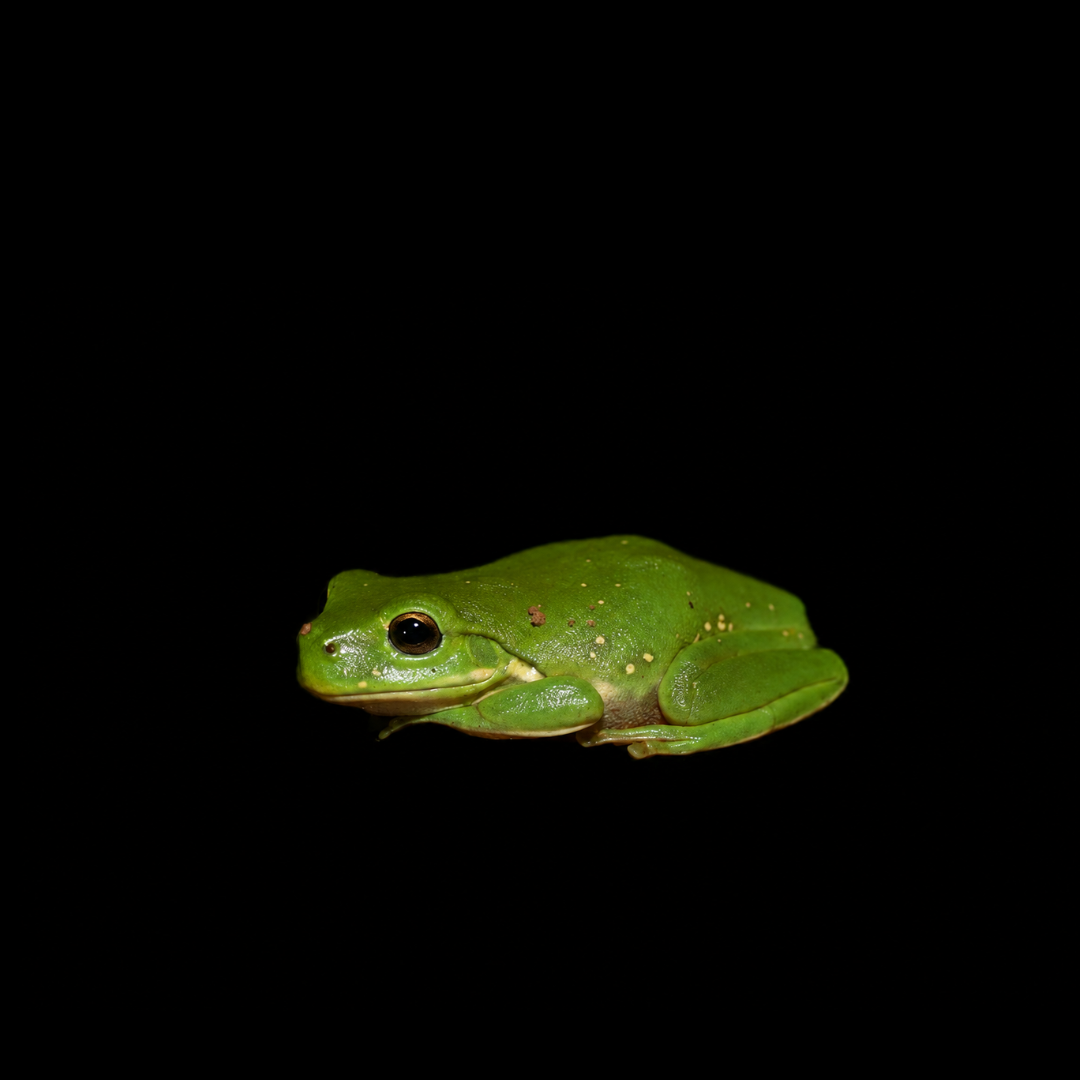
解説Description
イエアメガエルは、丸みのある大きな頭、金色の虹彩、発達した指先の吸盤、そしてどこか微笑んでいるようにも見える表情で親しまれる大型の樹上性カエルです。ノーマル個体の背面は鮮やかな緑色からオリーブ色、褐色まで幅広く変化し、小さな白い斑点が散ることもあります。温度や湿度、明るさ、活動状態などによって体色の見え方が変わるため、同じ個体でも時間帯や環境によって印象が大きく異なります。丈夫で餌付きやすいことから飼育入門種として紹介されることが多い一方、長寿で食欲も強いため、実際には「食べさせすぎないこと」と「蒸らさないこと」が長期飼育の大切な鍵になります。季節的に乾燥する地域から湿潤な森林、さらには住宅地まで利用する高い適応力を持ち、その皮膚には水分保持や病原体への防御に関わる独特の仕組みが備わっています。見た目の愛嬌だけでなく、生理学や分類学、医学生化学の研究対象としても非常に興味深い両生類です。 The White’s Tree Frog is a large arboreal frog loved for its broad rounded head, golden iris, expanded toe pads, and characteristically gentle-looking expression. Normal-colored animals may range from bright green to olive or brown, often with scattered small white spots. Their appearance can shift noticeably with temperature, humidity, lighting, and activity level. Although the species is often recommended to beginners because it is hardy and usually feeds readily, its strong appetite and long lifespan make portion control and good ventilation especially important for long-term health. In the wild it occupies environments ranging from seasonally dry woodland to humid forest and even suburban areas. Its skin also has remarkable adaptations for conserving water and defending against microbes. Beyond its charm as a pet, this frog is an important subject in taxonomy, physiology, and biomedical research.
基本情報Basic Information
| 学名Scientific Name | Pelodryas caerulea(Litoria caerulea の名称も現在なお広く使用される) |
|---|---|
| 通称Common Name | イエアメガエル、ホワイトツリーフロッグ、ダンピーツリーフロッグWhite’s Tree Frog, Green Tree Frog, Dumpy Tree Frog |
| 分類Classification | 無尾目(Anura)・Pelodryadidae科・Pelodryas属。古くからアマガエル科(Hylidae)・Litoria属として広く扱われてきたため、資料や流通では旧来の分類名も頻繁に見られます。Order Anura, family Pelodryadidae, genus Pelodryas. The species has long been treated in Hylidae and the genus Litoria, so the older combination remains common in literature and the pet trade. |
| 英名English Name | White’s Tree Frog / Green Tree Frog / Dumpy Tree Frog |
| 分布Distribution | オーストラリア北部から東部を中心に広く分布し、トレス海峡周辺およびニューギニア島南部にも自然分布します。森林、湿地、疎林、乾燥気味の地域、人家周辺など多様な環境を利用します。Widely distributed across northern and eastern Australia, with native populations around the Torres Strait and in southern New Guinea. It occupies a broad range of habitats including forest, wetlands, open woodland, seasonally dry areas, and human-modified environments. |
| 成体サイズAdult Size | 頭胴長でおよそ7〜11.5cm。一般にメスの方がオスより大きく、11cmを超える大型個体も見られます。Approximately 7–11.5 cm in snout–vent length. Females are generally larger than males, and large individuals may exceed 11 cm. |
| 寿命Lifespan | 飼育下では10年以上生きることが多く、15年前後がひとつの目安です。20年以上生きた飼育記録もあり、長期飼育を前提に迎えるべき種類です。In captivity, living for more than 10 years is common, with around 15 years being a useful general expectation. Records exceeding 20 years are known, so this species should be regarded as a long-term commitment. |
飼育環境Enclosure Environment
| 飼育容器・サイズEnclosure and Size | 樹上性なので床面積だけでなく高さを重視します。成体1匹なら幅45×奥行45×高さ60cm程度をひとつの実用的な目安とし、可能であればさらに高さと枝の選択肢を確保します。幼体は餌を見つけやすい小さめの容器から始めても構いません。前面開閉式のガラスケージなどは管理しやすい一方、上部や側面に十分な通気を確保し、扉やメッシュ蓋には確実な脱走防止策を施します。Because this is an arboreal species, vertical space is as important as floor area. For one adult, an enclosure around 45 × 45 × 60 cm is a practical starting point, with more height and climbing options being preferable when possible. Juveniles can begin in a smaller enclosure where prey is easy to locate. Front-opening glass terrariums work well if they provide strong ventilation, and all doors or mesh lids must be securely escape-proof. |
|---|---|
| 温度Temperature | 日中は24〜28℃前後、夜間は20〜24℃前後を目安にし、ケージ内に緩やかな温度差を作ります。30℃を超える高温が長時間続く環境や、暖房器具によって一部だけが極端に熱くなる状態は避けます。日本の冬は室温そのものが下がりやすいため、サーモスタットを併用した暖房と室内空調を組み合わせると安定します。夏は加温よりも通気と室温管理が重要です。Aim for roughly 24–28°C during the day and 20–24°C at night, with a gentle thermal gradient inside the enclosure. Avoid prolonged temperatures above 30°C and prevent heaters from creating dangerously hot local spots. In winter, thermostatically controlled heating combined with room climate control is often more stable than relying on a small heater alone. In summer, ventilation and room cooling are usually more important than added heat. |
| 環境管理Environmental Management | 湿度はおおむね60〜80%を目安にしつつ、常にびしょ濡れにするのではなく、霧吹き後に表面が少し乾く時間を作って通気を保ちます。全身が無理なく浸かれる浅い水入れを常設し、カルキを除いた清潔な水を毎日交換します。イエアメガエルは水入れで排泄することが多いため、見た目が透明でも早めの交換が重要です。フン、食べ残し、脱皮殻は見つけ次第除去し、ケージ全体が酸っぱい臭いや蒸れた臭いにならないよう管理します。A broad humidity range of about 60–80% works well, but the enclosure should not remain constantly saturated. Allow surfaces to dry slightly between misting events while maintaining good airflow. Provide a shallow water dish large enough for the frog to soak comfortably, and replace it every day with clean dechlorinated water. White’s Tree Frogs often defecate in their water dish, so water should be changed even when it still looks clear. Remove feces, uneaten food, and shed skin promptly, and avoid stagnant, sour-smelling conditions. |
| レイアウトLayout | 太めの流木、コルクバーク、安定した枝、丈夫な観葉植物などを組み合わせ、複数の高さに休める場所を作ります。昼間に落ち着いて休める葉陰やコルクの裏などがあると安心です。床材はソイル系、吸水性マット、キッチンペーパーなど管理方針に合わせて選べますが、給餌時に土粒を大量に飲み込みにくい工夫をします。幼体や導入直後の個体は、便や食欲を確認しやすいキッチンペーパー管理が便利です。Use sturdy branches, cork bark, secure climbing structures, and resilient live plants to create resting places at several heights. Shaded retreats under leaves or behind cork help the frog rest undisturbed during the day. Soil-based substrates, washable mats, or paper towels can all work depending on the keeper’s management style, but feeding should be arranged to reduce accidental ingestion of loose substrate. Paper towels are especially useful for juveniles or newly acquired animals because feces and appetite are easy to monitor. |
| 注意点Precautions | 最大の注意点は、強い食欲を「たくさん食べられる=健康」と考えないことです。成体は肥満しやすく、過剰給餌や高脂肪の餌への偏りは、脂質代謝に関係する健康問題のリスクを高めます。また、必要以上のハンドリングは皮膚を乾燥・損傷させるため避け、触れる必要がある場合は手を十分にすすいで湿らせ、石けん、消毒剤、ハンドクリームなどを皮膚に残さないようにします。新しく迎えた個体は既存個体とすぐに同居させず、食欲、便、皮膚状態を観察しながら検疫します。The most important precaution is not to confuse a strong appetite with a need for unlimited food. Adults are prone to obesity, and chronic overfeeding or an overly fatty diet can increase the risk of lipid-related health problems. Excessive handling should also be avoided because amphibian skin is delicate and permeable. If handling is necessary, rinse and moisten your hands thoroughly and avoid residues from soap, sanitizer, lotion, or other chemicals. Newly acquired frogs should be quarantined before contact with established animals while appetite, feces, and skin condition are monitored. |
餌と給餌Feeding
| 餌の種類Diet | 主食はコオロギ、デュビアなどの栄養管理された餌用昆虫を中心にし、サイズの合うゴキブリ類、イナゴ類、ミミズ類などもローテーションに取り入れると食事の偏りを減らせます。餌昆虫には適切なガットローディングを行い、カルシウム剤を定期的にダスティングします。脂肪分の高いワックスワーム類は嗜好性が高い反面、常用せず少量のご褒美程度にとどめます。マウスや小魚などの脊椎動物を常食させる必要はありません。Base the diet on well-fed feeder insects such as crickets and dubia roaches, and rotate appropriately sized roaches, locusts, earthworms, or similar prey to reduce dietary monotony. Feeder insects should be properly gut-loaded and dusted with calcium on a regular schedule. High-fat larvae such as waxworms are very palatable but are best reserved as occasional treats. There is no need to make vertebrate prey such as mice or fish a routine part of the diet. |
|---|---|
| 給餌のポイントFeeding Tips | 成長期の幼体は少量を高頻度に、成体は数日おきの少量給餌をひとつの出発点として、体型と活動量を見ながら量と間隔を調整します。腹部が常に大きく張っている、頭部後方や体側のふくらみが目立つといった状態なら、与えすぎになっていないか見直します。ピンセット給餌では、飛びついた際に口を傷つけないよう先端の丸い樹脂製や竹製の器具が安全です。人工飼料を利用する場合は、両生類向けに栄養設計された製品を選び、個体の反応を見ながら補助的に使います。Growing juveniles benefit from smaller, more frequent meals. For adults, small meals every few days can be used as a starting point, with the amount and interval adjusted according to body condition and activity. If the abdomen remains constantly distended or the areas behind the head and along the flanks become increasingly bulky, reassess the feeding amount and frequency. When tong-feeding, use rounded plastic or bamboo tongs to reduce the risk of oral injury during lunges. If a prepared diet is used, choose one formulated for amphibians and use it according to the animal’s acceptance and overall nutritional plan. |
行動と同居Behavior and Cohabitation
| 行動・性質Behavior | 基本的には夜行性で、日中は葉陰、樹洞に相当する隙間、ケージ上部の暗がりなどでじっと休み、消灯後に枝やガラス面を移動して餌を探します。指先の大きな吸盤によって垂直面を巧みに登り、飼育下でも高い位置を好みます。人の気配に慣れる個体は多いものの、哺乳類のように触れ合いを求める動物ではありません。オスは繁殖期などに、低く響く大きな声で繰り返し鳴くことがあります。This species is primarily nocturnal. During the day it rests quietly under leaves, in crevice-like retreats, or in darker elevated areas, becoming active after lights-out to climb and hunt. Its large adhesive toe pads allow it to move easily across vertical surfaces, and captive frogs often prefer the upper portions of the enclosure. Many individuals become accustomed to routine human activity, but they are not animals that seek tactile interaction in the way a mammal might. Adult males may produce loud, deep repetitive calls during the breeding season. |
|---|---|
| 同居の相性Compatibility | 同種同士は、体格差が小さく、十分な空間、隠れ場所、給餌場所を確保できれば複数飼育が可能です。ただし本種は口に入る大きさの動物を獲物と判断することがあるため、小さな個体との大きな体格差は避けます。異種との混泳・混飼は、捕食、ストレス、病原体の持ち込み、必要温湿度の違いなどが重なりやすいため基本的には勧められません。Groups of the same species can be kept successfully when individuals are similar in size and the enclosure provides ample space, resting sites, and feeding access. However, White’s Tree Frogs may treat any animal small enough to swallow as prey, so large size differences should be avoided. Mixed-species housing is generally not recommended because predation, stress, disease transmission, and different environmental requirements can all become problems. |
病気と対策Diseases and Prevention
| かかりやすい病気・不調Common Diseases and Health Problems | 飼育下では、まず肥満に注意が必要です。角膜に脂質が沈着して白濁する角膜脂質症は複数の飼育下両生類で報告されており、イエアメガエルでも症例があります。食餌中の脂質やコレステロールが関与すると考えられていますが、原因を単純にひとつへ限定できる病気ではありません。カルシウムやビタミンD3の不足、給餌バランスの乱れは代謝性骨疾患のリスクを高めます。さらに、蒸れや不衛生な環境に伴う皮膚トラブル、外傷、脱水、脱皮不全、寄生虫、細菌・真菌感染症、両生類ツボカビ症などにも注意します。食欲不振、急な体重減少、皮膚のただれ、異常な脱皮、姿勢の乱れ、眼の白濁などが続く場合は、両生類を診療できる獣医師への相談が必要です。In captivity, obesity is an important concern. Corneal lipid deposition, which can appear as white cloudiness, has been reported in several captive amphibians, including White’s Tree Frogs. Dietary fat and cholesterol are thought to contribute, although the condition is not explained by a single cause. Poor calcium and vitamin D3 balance can increase the risk of metabolic bone disease. Other concerns include skin problems associated with stagnant or unhygienic conditions, trauma, dehydration, retained shed, parasites, bacterial or fungal disease, and amphibian chytridiomycosis. Persistent loss of appetite, rapid weight loss, skin lesions, abnormal shedding, postural changes, or cloudy eyes warrant consultation with a veterinarian experienced in amphibians. |
|---|---|
| 対策と予防Prevention and Care | 日常管理では、適正体型を維持できる給餌量、清潔な飲水・浸水用の水、十分な通気、定期的な清掃、栄養を整えた餌昆虫とカルシウム補給が基本です。低出力のUVBを利用する場合は、照射距離と遮蔽物を確保し、カエルが自分で光を避けられる場所を必ず設けます。病原体の持ち込みを防ぐため、新規個体や使用器具は既存個体と分けて管理します。ツボカビ症を含む感染症が疑われても、ケージを高温にするだけの自己流治療は行わず、両生類を診療できる獣医師に相談してください。Prevention begins with controlled feeding that maintains a healthy body condition, clean soaking water, strong ventilation, regular cleaning, well-nourished feeder insects, and appropriate calcium supplementation. If low-output UVB is provided, follow safe lamp distance guidance and always include shaded areas so the frog can move out of the light. Quarantine new animals and keep their equipment separate from established frogs to reduce pathogen transfer. If an infectious disease such as chytridiomycosis is suspected, do not rely on improvised heat treatment alone; consult a veterinarian experienced with amphibians. |
増やし方(繁殖)Breeding
| 雌雄の判別Sexing | 成熟したオスはメスより小柄なことが多く、喉に発達した鳴嚢を持つため、喉の皮膚がゆるく黒ずんで見えることがあります。繁殖期には前肢の親指付近にざらついた婚姻瘤が現れ、抱接時にメスを保持する助けになります。メスは一般に大きく、喉の色も比較的淡い傾向がありますが、若い個体では外見だけで確実に判別できないことがあります。Mature males are usually smaller than females and possess a developed vocal sac, which can make the throat look loose and darker. During the breeding season they develop rough nuptial pads near the thumbs that help them hold the female during amplexus. Females are generally larger and tend to have a paler throat, although young animals can be difficult to sex reliably from appearance alone. |
|---|---|
| 繁殖形態Reproduction | 野外では主に春から夏の降雨期に繁殖し、オスが低い声で鳴いてメスを呼びます。抱接は水中で行われ、メスが放出した卵にオスが精子をかける体外受精です。1回に数百個規模の卵を水中に産み、環境条件が適していれば1〜3日ほどで孵化します。幼生はオタマジャクシとして水中生活を送り、成長後に後肢、続いて前肢が現れ、肺呼吸主体の子ガエルへ変態します。In the wild, breeding occurs mainly during the wetter spring and summer period, when males call with a deep voice to attract females. Amplexus takes place in water, and fertilization is external as the male releases sperm over the eggs. A clutch consists of hundreds of eggs laid in water. Under suitable conditions they may hatch in about one to three days, producing aquatic tadpoles that later develop hind limbs, then forelimbs, before metamorphosing into air-breathing froglets. |
| 繁殖のポイントBreeding Tips | 繁殖には健康で十分に成熟した雌雄を用い、普段から肥満させないことが重要です。降雨や季節変化を模した環境刺激と、安全に産卵できる広めの水場を用意します。オタマジャクシは24〜26℃前後の安定した水温で育て、過密を避け、少量ずつ給餌しながらこまめな部分換水で水質悪化を防ぎます。前肢が出始めたら遊泳力が落ちるため、必ず緩やかなスロープや流木など、水面から容易に上がれる足場を設けます。上陸直後は尾を吸収している間ほとんど食べないことがあり、尾が消えて活動が安定してから、ごく小さな生き餌を与え始めます。Use only healthy, fully mature animals for breeding, and avoid allowing adults—especially females—to become obese beforehand. Seasonal cues such as simulated rainfall and a suitable breeding water area can help trigger reproduction. Rear tadpoles at a stable water temperature of roughly 24–26°C, avoid overcrowding, feed small amounts, and maintain water quality with frequent partial changes. Once the forelimbs appear, swimming ability declines, so provide a gentle ramp, sloped wood, or another easy route out of the water. Newly emerged froglets may not feed while the tail is being absorbed; begin offering very small live prey once the tail has disappeared and the froglet is active. |
雑学と豆知識Trivia and Fun Facts
| 1. 「青」を意味する学名が残った理由1. Why a green frog has a name meaning “blue” | 種小名の caerulea はラテン語で「青い」という意味です。初期の標本では保存の過程で黄色系の色素が失われ、皮膚の青みが強く見えたと考えられています。生きたノーマル個体は緑色が基本ですが、緑色は単一の色素だけで作られているわけではなく、皮膚内の色素細胞や光を反射する構造の組み合わせで生まれます。このため、光や生理状態によって青緑色からオリーブ色、褐色まで幅広く印象が変わります。The species name caerulea means “blue” in Latin. Early preserved specimens apparently lost part of their yellow pigmentation during preservation, leaving the skin looking unusually blue. Living normal-colored frogs are typically green, but that green is not produced by a single pigment. It results from the interaction of pigment cells and light-reflecting structures in the skin, which is why the same frog can appear blue-green, olive, or brown under different conditions. |
|---|---|
| 2. White’s Tree Frog の「White」は色ではなく人名2. “White” in White’s Tree Frog is a person’s name | 英名の White’s Tree Frog は、白い体色を意味する名前ではありません。1790年に本種を科学的に記載した英国の博物学者ジョン・ホワイト(John White)に由来します。本種はオーストラリア産のカエルとして非常に早い時期に西洋科学へ紹介された種類のひとつで、分類名が何度も変わっても、ホワイトの名を残す英名は今日まで使われています。The “White” in White’s Tree Frog does not describe the frog’s color. It honors the British naturalist John White, who scientifically described the species in 1790. It was among the earliest Australian frogs introduced to Western science, and although its scientific classification has changed repeatedly, the common name commemorating White has endured. |
| 3. 学名は今も「移動中」3. Its scientific name is still part of an evolving taxonomy | 長い間 Litoria caerulea の名で親しまれてきましたが、分子系統解析と2025年の分類再検討を受け、現在の主要な分類データベースでは Pelodryas caerulea が採用されています。一方で、博物館や飼育書、流通では Litoria caerulea も今なお広く使われています。さらに近縁群の研究では、ニューギニアの茶褐色の近縁種 Pelodryas mira が別種として認識されるなど、「よく知られたカエル」の周辺でも分類学的な発見が続いています。For decades the species was widely known as Litoria caerulea. Following molecular work and a major taxonomic reassessment published in 2025, a leading current database now recognizes Pelodryas caerulea. However, Litoria caerulea remains common in museum resources, husbandry literature, and the pet trade. Research on the same species group has also led to recognition of close relatives such as the brown New Guinea species Pelodryas mira, showing that even familiar frogs can still hold taxonomic surprises. |
| 4. 皮膚は「薬の研究室」にもなっている4. Its skin has become a laboratory for drug research | イエアメガエルを含むオーストラリアの樹上性カエルの皮膚分泌物からは、セルレインやカエリン類などの生理活性ペプチドが研究されてきました。セルレインは消化管ホルモンに似た作用を持つことで知られ、カエリン類などのペプチドでは抗微生物作用をはじめとする生理活性が研究されています。ただし、これらは「カエルに触れば薬効が得られる」という意味ではありません。多くは精製した分子を用いた基礎研究、細胞実験、動物モデルの段階で評価されているものです。Skin secretions from Australian tree frogs, including this species and its relatives, have yielded bioactive peptides such as caerulein and members of the caerin family. Caerulein is known for effects resembling gastrointestinal hormones, while caerin and related peptides are being studied for antimicrobial and other biological activities. This does not mean that touching a frog provides a medical benefit. These findings come from studies using purified molecules, often in laboratory cell systems or animal models. |
| 5. 人家を「人工の樹洞」として使う5. Houses can function like artificial tree hollows | 原産地では、樹洞や樹皮の隙間だけでなく、雨どい、メーターボックス、郵便受け、浴室などの人工物に潜り込むことがあります。昼間の暑さや乾燥を避けられ、夜になると外灯に集まる昆虫を狙えるため、人の暮らしの周辺が意外に好都合な環境になるのです。都市化に弱い両生類が多い中で、本種の環境利用の柔軟さは際立っています。In its native range, the species may shelter not only in tree hollows and bark crevices but also in gutters, meter boxes, mailboxes, and even bathrooms. These human structures can provide cool, humid daytime refuges, while outdoor lights attract insects at night. Many amphibians decline in heavily modified habitats, making the flexibility of this species especially notable. |
| 6. 乾燥に強いのは「乾かしてよい」という意味ではない6. Drought tolerance does not mean the frog should be kept dry | イエアメガエルの皮膚には水分蒸発を抑える仕組みがあり、乾燥時には体表の水分を守る行動や皮膚分泌が働きます。これはオーストラリアの季節的な乾燥に適応した重要な能力ですが、飼育下で低湿度を長期間続けてよいという意味ではありません。むしろ、適度な湿度と清潔な水場を確保しながら、過湿と蒸れを避ける「湿っているが空気は動く」環境が理想的です。White’s Tree Frogs have physiological and behavioral mechanisms that reduce water loss during dry conditions. These adaptations are important in Australia’s seasonally dry environments, but they do not mean the frog should be kept chronically dry in captivity. The goal is moderate humidity and reliable access to clean water without stagnant saturation—a humid enclosure with moving air rather than a constantly wet one. |
まとめConclusion
イエアメガエル(ノーマル)は、堂々とした体格と愛嬌のある表情、時間とともに移ろう体色、そして夜になると見せる力強い樹上行動が魅力のカエルです。丈夫という評価は確かに本種の大きな長所ですが、その丈夫さに甘えて過剰に餌を与えたり、蒸れた環境を放置したりすると、長期的な健康を損ないかねません。適度な温湿度、十分な通気、清潔な水、立体的に動ける空間、そして体型を見ながら量を調整する給餌を続けることが、長期的な健康を保つ飼育につながります。 The normal White’s Tree Frog combines an impressive build, an endearing expression, shifting coloration, and strong nocturnal climbing behavior. Its reputation for hardiness is deserved, but that strength should not encourage overfeeding or stagnant conditions. Stable temperatures, moderate humidity, good airflow, clean water, vertical space, and feeding adjusted to body condition all support long-term health.
静かに葉陰で休む昼の姿と、消灯後に大きな吸盤で枝から枝へ移動する夜の姿には、乾燥や季節変化の激しい環境を生き抜いてきた適応の積み重ねが表れています。長く飼育するほど、単に「丈夫で飼いやすいカエル」という印象だけでは捉えきれない、環境への適応と行動の奥深さを観察できる両生類です。 Its quiet daytime posture beneath cover and its confident movement from branch to branch after dark both reflect a long evolutionary history of coping with seasonal dryness and environmental change. Over years of careful keeping, it becomes clear that this species is more than simply a hardy, easy-to-keep frog; its behavior and environmental adaptations offer much to observe.

気になる道具や飼い方を見つけてみませんか?
 アイのアクアグッズ案内バルブの仲間に合わせる飼育用品|チェリーバルブ・スマトラ・中型種の水槽とろ過道具の特徴や使い方、選ぶときのポイントをアイが紹介します。記事はコチラ →
 アイのアクアグッズ案内水草水槽のCO₂添加|3つの方式の選び方とおすすめ用品道具の特徴や使い方、選ぶときのポイントをアイが紹介します。記事はコチラ →
 アイのアクアグッズ案内ラスボラ・ボララスの群泳を楽しむ飼育用品|水槽・ろ過・ヒーター・餌・水草道具の特徴や使い方、選ぶときのポイントをアイが紹介します。記事はコチラ →
 アイのアクアグッズ案内エンゼルフィッシュの飼育用品|高さのある水槽・ろ過・水草・餌の選び方道具の特徴や使い方、選ぶときのポイントをアイが紹介します。記事はコチラ →
さまざまな飼育テーマをご紹介。リンク先の記事には広告・商品紹介が含まれます。
案内・紹介記事一覧へ →分布マップ
イエアメガエル(Pelodryas caerulea)は、オーストラリア北部から東部を中心に広く分布し、トレス海峡周辺およびニューギニア島南部にも自然分布します。森林や湿地、疎林、季節的に乾燥する地域、人家周辺など、さまざまな環境で見られます。
※この地図は分布地域を把握するための概略表示です。マーカーは分布域を示すために設定した代表地点であり、実際の採集地点や特定個体の確認地点を示すものではありません。
参考文献
- Frost, Darrel R. “Pelodryas caerulea (White, 1790).” Amphibian Species of the World: an Online Reference. American Museum of Natural History.
- Donnellan, S. C., Mahony, M. J., Esquerré, D., et al. 2025. “Phylogenomics informs a generic revision of the Australo-Papuan treefrogs (Anura: Pelodryadidae).” Zoological Journal of the Linnean Society, 204(2), zlaf015.
- Australian Museum. “Green Tree Frog.”
- Queensland Government. “Common green tree frog.”
- Smithsonian’s National Zoo & Conservation Biology Institute. “White’s tree frog.”
- Harper, Brad. 2008. “Amphibian Husbandry Manual – Litoria caerulea.” Australasian Society of Zoo Keeping Husbandry Manuals 掲載資料.
- Poole, V. A. & Grow, S. (eds.). 2012. “Amphibian Husbandry Resource Guide, Edition 2.0.” Association of Zoos and Aquariums, Amphibian Taxon Advisory Group.
- Whitaker, B. R. & Yaw, T. J. “Noninfectious Disorders of Amphibians.” Merck Veterinary Manual. Updated 2026.
- Holmes, M. L., Shine, R. & Waddle, A. W. 2024. “Spontaneous reoccurrence of Batrachochytrium dendrobatidis infections in Australian green tree frogs (Litoria caerulea) following apparently successful heat therapy: Case report.” Veterinary Research Communications, 48, 3229–3237.




コメント