

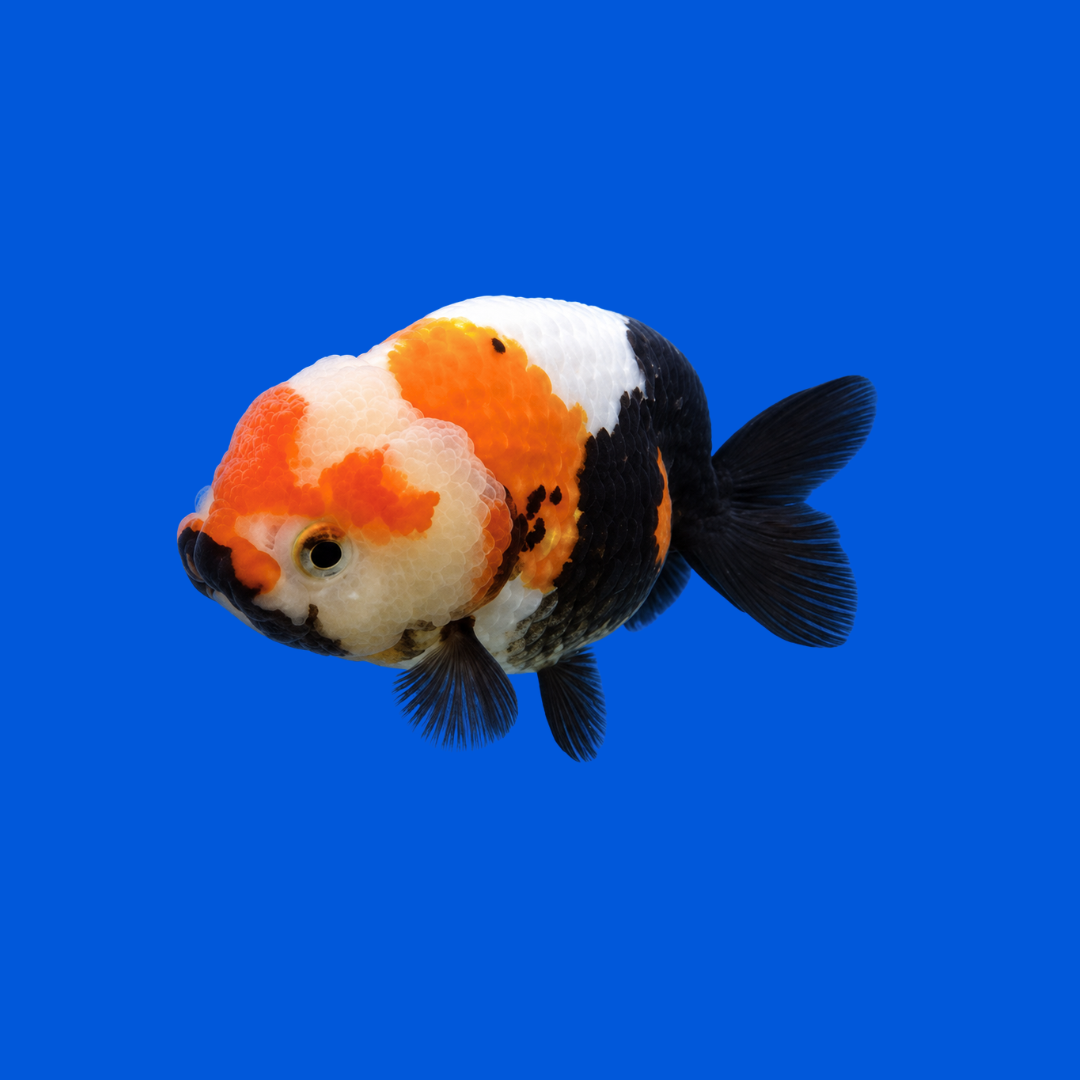
解説 / Description
トリカラーランチュウは、背びれを持たない卵型の体、なめらかな背なり、頭部に発達する肉瘤というランチュウらしい姿に、赤・白・黒の三色表現を持つ個体へ用いられる流通名です。日本の観賞魚流通では、江戸錦などのキャリコ系とは区別し、普通鱗を基調とする三色個体を「トリカラー」と呼ぶ例が見られます。ただし、輸入金魚の名称には仕入先や販売者による揺れがあり、名称だけで鱗型や作出系譜まで一律に判断できるわけではありません。ランチュウ特有の肉瘤と丸みのある体型に、成長に伴って印象を変える三色が重なることで、一尾ごとの個性を観察する楽しみが大きい金魚です。 Tricolor Ranchu is a trade name used for Ranchu-type goldfish that combine the classic dorsal-finless, egg-shaped body, smooth back profile, and developed head growth with a red, white, and black color pattern. In the Japanese aquarium trade, the name is often used to distinguish normal-scale tricolor fish from calico forms such as Edo Nishiki. However, naming of imported fancy goldfish is not fully standardized among suppliers and retailers, so the label alone does not always establish scale type or breeding lineage. Their appeal lies in the combination of the Ranchu body form and a three-color pattern whose appearance can change as the fish matures.
基本情報 / Basic Information
| 学名 / Scientific Name | Carassius auratus |
|---|---|
| 通称 / Common Name | トリカラーランチュウ、三色ランチュウ(いずれも流通名として用いられる呼称)Tricolor Ranchu, Tri-color Ranchu (trade names) |
| 分類 / Family | コイ目・コイ科・フナ属。金魚の改良品種であり、トリカラーランチュウ自体が独立した野生種として分類されるわけではありません。Order Cypriniformes, family Cyprinidae, genus Carassius. Tricolor Ranchu are an ornamental goldfish variety rather than a separate wild species. |
| 英名 / English Name | Tricolor Ranchu |
| 分布 / Distribution | 人工改良された金魚のため、品種としての野生分布はありません。日本では観賞魚として養殖・流通し、海外の養殖場から輸入される個体もあります。As a selectively bred form of goldfish, it has no natural wild distribution as a breed. It is produced and traded as an ornamental fish in Japan, and some individuals are also imported from overseas farms. |
| 最大体長 / Max Size | 飼育下ではおおむね15〜20cm前後。系統、給餌、飼育密度、容器の大きさによって差があります。Usually around 15–20 cm in captivity, with variation depending on strain, feeding, stocking density, and available space. |
| 寿命 / Lifespan | 10〜15年程度が一般的な目安です。水質、食事、飼育環境が安定していれば、それ以上長生きする個体もいます。A general guideline is about 10–15 years, although well-maintained individuals can live longer when water quality, nutrition, and the overall environment remain stable. |
飼育環境 / Aquarium Environment
| 水槽サイズ / Tank Size | 成魚1匹でも60cmワイド水槽(約100L前後)以上を一つの目安にすると管理しやすく、複数飼育では90cm規格水槽(約180L)以上など、さらに余裕のある水量が適しています。ランチュウは排泄量が多いため、体長だけでなく水量とろ過能力に余裕を持たせることが重要です。上見を重視する場合は、水深を抑えたプラ舟やFRP容器も適しています。For one adult, a wider 60 cm aquarium with roughly 100 L of usable volume or more is a practical target. For multiple adults, a 90 cm standard aquarium of around 180 L or another setup with similarly generous volume is easier to manage. Ranchu produce substantial waste, so water volume and filtration capacity matter as much as body size. Shallow tubs or FRP ponds are also suitable when top-view appreciation is the priority. |
|---|---|
| 水温 / Temperature | 20〜23℃前後を中心に、18〜24℃程度の範囲で急激な変化を避けて安定させます。金魚は熱帯魚のように高水温を常時必要とする魚ではありません。導入時は産地ではなく、販売時や輸送時の水温を確認し、飼育水へゆっくり慣らすことが大切です。 Keep the water stable, generally around 20–23°C and within roughly 18–24°C, while avoiding rapid changes. Goldfish do not require continuously high tropical temperatures. When introducing a new fish, match and adjust from the temperature at sale or transport rather than assuming a temperature based on its country of origin. |
| 水質 / Water Quality | 中性付近〜弱アルカリ性を目安にし、急激なpH変化を避けます。アンモニアと亜硝酸は検出されない状態を維持し、硝酸塩は定期的な換水でできるだけ低く保ちます。大食漢で水を汚しやすいため、十分な生物ろ過と定期的な換水が重要です。Aim for stable water from around neutral to slightly alkaline and avoid sudden pH shifts. Ammonia and nitrite should remain undetectable, while nitrate should be kept as low as practical through regular water changes. Strong biological filtration and routine maintenance are important because goldfish eat heavily and produce considerable waste. |
| レイアウト / Layout | 広い遊泳スペースを確保し、強すぎる水流は避けます。底面はベアタンクでも管理しやすく、底床を使う場合は腹部やヒレを傷つけにくい滑らかな素材が向きます。金魚では背景色に応じて体色の濃淡が可逆的に変化することが研究で報告されているため、暗色の背景で黒が濃く見える場合があります。ただし、これは黒斑の長期的な残り方を保証するものではありません。Provide open swimming space and avoid excessive current. A bare-bottom tank is easy to maintain, while any substrate should be smooth enough to avoid damaging the belly or fins. Studies in goldfish have shown reversible changes in overall color tone in response to background color, so dark surroundings can make the fish appear darker. This does not, however, guarantee long-term retention of black markings. |
| 注意点 / Precautions | 体が短く泳ぎが穏やかなため、強い水流や激しい競争を苦手とします。導入時は水温と水質を急変させず、可能なら隔離水槽で健康状態を確認してから本水槽へ移します。食べ過ぎや水質悪化は浮力異常や消化不良のきっかけになりやすいため、給餌量と換水のバランスを崩さないことが重要です。Their compact body and gentle swimming style make them poorly suited to strong currents or intense feeding competition. Avoid sudden changes in temperature and water chemistry during introduction, and quarantine new arrivals when possible. Overfeeding and deteriorating water quality can contribute to digestive and buoyancy problems, so feeding and maintenance should remain balanced. |
餌と給餌 / Feeding
| 餌の種類 / Diet | ランチュウ・金魚用の高品質な沈下性ペレットを主食にし、冷凍赤虫などの動物性飼料を補助的に与えます。赤〜橙の発色を意識する場合は、アスタキサンチンなどのカロテノイド源を含む色揚げ飼料を適量取り入れます。魚類はカロテノイドを餌から得るため、食事は健康な発色を支える要素の一つですが、もともとの模様そのものを作り替えるものではありません。Use a high-quality sinking pellet formulated for Ranchu or goldfish as the staple diet, supplemented with animal-based foods such as frozen bloodworms. For red to orange coloration, color-enhancing feeds containing carotenoid sources such as astaxanthin can be offered in moderation. Fish obtain carotenoids from their diet, so nutrition can support healthy coloration, but it does not redesign the fish’s underlying color pattern. |
|---|---|
| 給餌のポイント / Feeding Tips | 水温が安定している成長期は、1日1〜3回の範囲で、短時間で食べ切れる少量を分けて与えます。水温が下がり活動量が落ちる時期は、食欲を見ながら量と回数を減らします。一度に大量に与えるより、少量ずつ調整する方が水質を維持しやすく、沈下性の餌は水面で空気を飲み込みやすい個体にも使いやすい選択です。During active growth at a stable temperature, offer small portions one to three times per day, adjusting the amount so food is eaten promptly. As temperature and activity decrease, reduce both quantity and frequency according to appetite. Smaller portions are easier to balance with water quality than a single heavy feeding, and sinking food can be useful for fish that tend to gulp air at the surface. |
性格と混泳 / Temperament and Tank Mates
| 性格 / Temperament | 基本的には温和で、人にもよく慣れる金魚です。餌の時間になると前面へ寄ってくるなど、飼育者の動きに反応する個体も多く、ゆったりした泳ぎと愛嬌のある頭部が大きな魅力です。They are generally peaceful and often become accustomed to their keeper. Many learn to approach the front of the tank at feeding time, and their calm swimming style and expressive head growth give them a particularly personable presence. |
|---|---|
| 混泳の相性 / Compatibility | 同程度の大きさで、泳力と給餌速度が近いランチュウやオランダ獅子頭などの丸手の金魚とは合わせやすい傾向があります。和金やコメットのように泳ぎが速い品種とは餌の競争で不利になりやすく、熱帯魚とは適温や食性が合わないことがあるため、基本的には金魚同士の飼育が無難です。口に入る小魚や小型のエビは捕食される可能性があります。They are usually most compatible with similarly sized fancy goldfish that have comparable swimming and feeding speeds, such as other Ranchu or Oranda. Fast-bodied varieties such as Common Goldfish or Comets can outcompete them for food, while tropical fish may have different temperature and dietary needs. Small fish or shrimp that fit in the mouth may be eaten. |
病気と対策 / Diseases and Prevention
| かかりやすい病気 / Common Diseases | 白点病などの寄生虫症、イカリムシやチョウによる外部寄生、細菌性の体表・エラの異常、そして丸い体型の金魚で見られやすい浮力異常や転覆症状に注意します。新しく導入した個体は輸送や環境変化で体力が落ちていることもあるため、見た目が元気でも数日間は呼吸、便、ヒレの開き、体表の異常を観察します。Watch for parasitic diseases such as ich, external parasites including anchor worms and fish lice, bacterial abnormalities affecting the skin or gills, and buoyancy problems that are often seen in compact-bodied fancy goldfish. Newly introduced fish may be weakened by transport and environmental change, so monitor breathing, feces, fin posture, and the skin carefully even when they initially appear active. |
|---|---|
| 対策と予防 / Prevention | 予防の中心は、隔離導入、安定した水温、アンモニア・亜硝酸を蓄積させないろ過、十分な酸素、過密と過食の回避です。体調不良時は症状に応じて隔離し、絶食や塩水浴が補助的に用いられる場合もありますが、すべての病気に同じ処置が有効なわけではありません。寄生虫や細菌性疾患が疑われる場合は、観賞魚用医薬品の対象疾病と用法・用量を確認し、薬剤を自己判断で重ねないことが大切です。Prevention centers on quarantine, stable temperature, filtration that prevents ammonia and nitrite accumulation, adequate oxygenation, and avoiding overcrowding or overfeeding. Isolation, temporary fasting, or a salt bath may be used as supportive measures in some situations, but the same treatment does not suit every disease. When parasites or bacterial disease are suspected, use aquarium medications only for the indicated condition and follow the labeled dosage rather than combining treatments indiscriminately. |
増やし方(繁殖) / Breeding
| 雌雄の判別 / Sexing | 繁殖期のオスは、エラ蓋や胸ビレ前縁に白い追星が現れることがあり、メスは成熟すると腹部がふっくらして見えます。ただし体型や個体差が大きいため、若魚では外見だけでの判別が難しいことがあります。During the breeding season, males may develop small white breeding tubercles on the gill covers and leading edges of the pectoral fins, while mature females often appear fuller through the abdomen. Juveniles and unusually shaped individuals can be difficult to sex by appearance alone. |
|---|---|
| 繁殖形態 / Reproduction | 卵生で、水草や人工産卵床に粘着性の卵を産み付けます。親魚は卵を保護せず、産卵後に食べてしまうことがあるため、採卵後は親魚と卵を分けて管理します。水温によって差はありますが、20〜25℃前後では数日で孵化します。They are egg-layers that scatter adhesive eggs onto plants or artificial spawning mops. The parents do not guard the eggs and may eat them after spawning, so the adults are normally separated from the eggs. At roughly 20–25°C, hatching usually occurs within several days, depending on temperature. |
| 繁殖のポイント / Breeding Tips | 春の水温上昇期に成熟した親魚を用い、産卵床を十分に用意します。ランチュウでは、背びれの有無、背なり、尾の開き、尾筒の太さなどを稚魚期から厳しく選別する必要があります。さらにトリカラーでは、三色模様とランチュウらしい無背びれ体型を同時に残す必要があるため、狙った表現を安定して得る難度は高く、親と同じ柄がそのまま子に再現されるとは限りません。Use mature breeders as temperatures rise in spring and provide ample spawning material. Ranchu breeding requires strict juvenile selection for traits such as the absence of a dorsal fin, the curve of the back, tail spread, and caudal peduncle strength. Tricolor breeding is even more demanding because the desired three-color pattern must be retained together with the classic Ranchu body form, and offspring will not necessarily reproduce the exact pattern of their parents. |
雑学と豆知識 / Trivia and Fun Facts
| 1. 江戸錦と「トリカラー」は名前だけでは区別しきれない / 1. Edo Nishiki and “Tricolor” cannot be separated by name alone | 赤・白・黒が入るランチュウ型の金魚を見ると、江戸錦を思い浮かべる人も少なくありません。江戸錦は、二代目秋山吉五郎氏がランチュウと東錦を交配して作出した品種として知られ、モザイク透明鱗によるキャリコ特有の色合いを見せます。一方、「トリカラーランチュウ」は統一された品種規格というより流通名として使われる面があり、日本の市場では普通鱗を基調とする赤・白・黒の個体をこう呼ぶ例があります。したがって、両者を見分けるときは販売名だけで決めつけず、実際の鱗型と色の出方を確認するのが確実です。A red, white, and black Ranchu-shaped goldfish can easily bring Edo Nishiki to mind. Edo Nishiki are known as a Japanese variety created by the second-generation Kichigoro Akiyama through a cross between Ranchu and Azuma Nishiki, and their calico appearance is associated with mosaic transparent scales. “Tricolor Ranchu,” by contrast, functions partly as a trade name rather than a universally standardized breed designation, and in Japan it is often applied to red, white, and black fish based on normal scales. The safest distinction therefore comes from examining the actual scale type and coloration rather than relying on the sales name alone. |
|---|---|
| 2. 「ランチュウ」という名には長い文化史がある / 2. The name “Ranchu” carries a long cultural history | 背びれを欠く卵型の金魚は、中国での長い選抜の歴史を経て、日本でも独自の鑑賞文化の中で改良されてきました。日本では「蘭鋳」「蘭虫」「卵虫」など複数の表記が使われてきたことからも、呼び名そのものに長い歴史があることが分かります。「ランチュウ」の語源を中国語の卵型金魚の呼称と結びつける説もありますが、語源には諸説があり、一つの説明だけを確定事項として扱うのは慎重であるべきです。名称の変遷からは、中国で始まった金魚の改良が日本の美意識の中で独自に深められてきた過程が見えてきます。Dorsal-finless, egg-shaped goldfish have a long history of selection in China and were later refined in Japan within a distinct culture of appreciation. In Japan, several written forms have been used for Ranchu over time, including characters corresponding to Rantyu, Ranchu, and “egg insect,” showing that the name itself has a long history. One theory connects the word “Ranchu” with older Chinese names for egg-shaped goldfish, but the etymology is not settled well enough to treat a single explanation as definitive. The changing name reflects a broader history in which Chinese goldfish breeding was further developed under Japanese aesthetic traditions. |
| 3. 上から見るランチュウ、横から楽しむランチュウ / 3. Ranchu from above and Ranchu from the side | 日本の伝統的なランチュウ文化では、浅い容器の上から魚を見る「上見」が非常に重視されてきました。上見では背幅、尾筒の力強さ、尾の開き、泳いだときの尾捌きがよく分かります。一方、ガラス水槽が中心の現代アクアリウムでは「横見」で楽しむ機会が多く、弓なりの背なりや肉瘤の立体感、顔つきの愛らしさが強く印象に残ります。トリカラーランチュウは色彩のコントラストが大きいため、横見水槽でも存在感を出しやすく、伝統的な上見文化とは少し違う方向からランチュウの魅力を広げている存在といえます。Traditional Japanese Ranchu culture places great emphasis on “top view,” where the fish is observed from above in a shallow container. This angle reveals body width, caudal peduncle strength, tail spread, and the quality of the fish’s movement. Modern glass aquariums, however, naturally encourage “side view,” which highlights the curved back, the three-dimensional head growth, and the expressive face. With their strong color contrast, Tricolor Ranchu can be especially striking from the side, expanding the appreciation of Ranchu beyond the classic top-view tradition. |
| 4. 白く見える仕組みは一つではない / 4. White coloration is produced in more than one way | トリカラーの三色は、絵の具を三色並べたような単純な仕組みではありません。黒は主にメラニンを含む黒色素胞、赤〜橙は赤色素胞や黄色素胞に蓄えられるカロテノイドやプテリジンなどによって生まれます。白く見える部分については、赤や黒の色素が少ないことに加え、光を反射する虹色素胞や白色素胞など、複数の色素細胞・反射構造が関わり得ます。そのため「白は虹色素胞だけで生まれる」と単純化するのは正確ではありません。また、フナ属魚類の研究ではSCARB1がカロテノイド由来の体色に関与する例が報告されていますが、トリカラーランチュウの色柄を一つの遺伝子だけで説明できるわけではありません。体色は遺伝、成長、栄養、色素細胞、光の反射が重なって現れる性質です。The three colors of a Tricolor Ranchu are not produced as simply as three paints placed side by side. Black is associated mainly with melanin-containing melanophores, while red to orange tones arise from carotenoids, pteridines, and related compounds in erythrophores and xanthophores. White areas can involve several mechanisms, including reduced red and black pigmentation together with reflective cells such as iridophores and leucophores. It is therefore too simple to describe white as an effect of iridophores alone. Research in Carassius lineages has also reported a role for SCARB1 in carotenoid-related coloration, but the color pattern of Tricolor Ranchu cannot be explained by a single gene. Their appearance results from the interaction of genetics, growth, nutrition, pigment cells, and optical reflection. |
| 5. 黒は「残す」のが難しい色 / 5. Black is the hardest color to keep | 金魚は成長の途中で体色が変わることで知られ、幼魚期の黒色素が成長とともに減る「褪色」には遺伝的な制御が関わることが古くから研究されています。トリカラーランチュウでも、幼魚期に見えた黒斑が成長後に薄くなったり消えたりする個体があります。一方、背景色への適応によって体全体の色調が一時的・可逆的に濃く見える現象もあり、これは成長に伴う長期的な褪色とは別の仕組みです。良質な餌と安定した水質は健康な発色を支えますが、背景を暗くするだけで黒斑を固定できるわけではありません。成長後にどの程度の黒が残るかは、個体差を含む遺伝的背景と発育の影響を大きく受けます。Goldfish are well known for changing color as they mature, and genetic control of the developmental loss of juvenile melanophores has been studied for decades. In Tricolor Ranchu, black markings visible in young fish may become weaker or disappear as the fish grows. Goldfish also show reversible background-related changes in overall color tone, but this is a different process from long-term developmental depigmentation. Good nutrition and stable water quality support healthy coloration, yet a dark background alone cannot permanently fix black markings. How much black remains in an adult is strongly influenced by individual genetic background and development. |
| 6. 三色と「背びれなし」を同時にそろえる難しさ / 6. Combining tricolor with a dorsal-finless Ranchu body is difficult | トリカラーランチュウの具体的な作出系譜は、流通名ごとに公開・統一されているとは限りません。そのため「特定の品種との交配から必ず作られる」と断定するのは適切ではありません。一方、ランチュウの無背びれ形質そのものは単純ではなく、無背びれのランチュウ系統と背びれを持つ金魚を交配した研究では、子に正常な背びれ、異常な背びれ、背びれのない個体が分かれて現れることが示されています。つまり、別系統から色彩形質を取り入れながらランチュウらしい体型をそろえる育種では、世代を重ねた交配と選別が必要になります。柄だけでなく、背なりや尾、泳ぎまで整える難しさが、ランチュウ育種の奥深さです。The exact breeding history of fish sold as Tricolor Ranchu is not necessarily published or standardized under a single trade name, so it is not appropriate to state that they must come from one specific cross. What is well established is that the dorsal-finless Ranchu trait is genetically complex. Experimental crosses between dorsal-finless Ranchu-type goldfish and dorsal-finned goldfish have produced offspring with normal, abnormal, and absent dorsal fins. This means that when breeders introduce color traits from another line while trying to retain a Ranchu body, repeated breeding and selection are required. The challenge lies not only in producing a striking pattern, but also in preserving the back profile, tail structure, and swimming form. |
| 7. 日本への輸入には水産防疫のルールがある / 7. Import into Japan is subject to aquatic animal health controls | 海外で育成された金魚が日本へ入るときは、観賞魚だから自由に持ち込めるというわけではありません。生きた金魚は「きんぎょその他のふな属魚類」として水産資源保護法に基づく輸入防疫の対象で、2026年6月9日以降はコイ春ウイルス血症とレッドマウス病が対象疾病とされています。輸入には農林水産大臣の許可が必要で、輸入許可申請時には輸出国政府機関が発行する検査証明書の提出が求められます。検査の結果、対象疾病を広げるおそれがないと認められない場合には、一定期間の管理飼育を命じられることもあります。店頭に並ぶ一尾の背景には、養殖や輸送だけでなく、国内への疾病侵入を防ぐための制度もあります。Overseas-bred goldfish cannot enter Japan without controls simply because they are ornamental fish. Live goldfish are covered by Japan’s aquatic animal import quarantine rules as Carassius species under the Act on the Protection of Fishery Resources. Since June 9, 2026, Spring viraemia of carp and enteric redmouth disease have been listed as target diseases for this group. Import requires permission from the Minister of Agriculture, Forestry and Fisheries, and the application must include an inspection certificate issued by the exporting country’s government authority. If inspection cannot rule out the risk of spreading a target disease, a defined period of managed holding may be ordered. The route from farm to shop therefore includes not only breeding and transport, but also a biosecurity system intended to prevent disease introduction. |
まとめ / Conclusion
トリカラーランチュウは、ランチュウ特有の無背びれ体型と肉瘤の存在感に、赤・白・黒の三色表現が重なる金魚です。流通名には多少の揺れがありますが、日本では江戸錦などのキャリコ系と区別して扱われることがあり、実際の鱗型や色の出方を見比べることも楽しみの一つです。成長に伴って黒斑や全体の色調が変わることがあり、上見と横見でも体型や模様の印象が変わります。 Tricolor Ranchu combine the dorsal-finless Ranchu body and expressive head growth with a red, white, and black color pattern. The trade name is not completely standardized, but in Japan these fish are often treated separately from calico forms such as Edo Nishiki, making the actual scale type and coloration worth examining rather than relying on the label alone. Black markings and overall tone can change as the fish matures, and the same individual can present a different impression from above and from the side.
健やかに育てるには、余裕のある水量とろ過、急変のない水温、食欲に合わせた少量ずつの給餌、新しく迎えた個体の丁寧な導入管理が大切です。体色は遺伝や成長、餌、背景など複数の要素の影響を受けるため、色だけを追うのではなく、泳ぎ、体型、食欲、呼吸を日々観察することが健康な発色にもつながります。ゆったりとした泳ぎの中で、三色の変化とランチュウらしい体つきを長く楽しめることが、この金魚の大きな魅力です。 Keeping them healthy depends on generous water volume, reliable filtration, stable temperature, feeding small portions according to appetite, and careful acclimation of newly introduced fish. Color is influenced by several factors, including genetics, growth, diet, and background, so daily attention to swimming, body condition, appetite, and breathing is more important than pursuing color alone. Their calm movement, changing tricolor appearance, and unmistakable Ranchu form are what make them rewarding fish to observe over the long term.
気になる道具や飼い方を見つけてみませんか?
 アイのアクアグッズ案内水槽の中に陸地がある!? コタロウと探るアクアテラリウムのメカニズム滝の水はどこから来るの? 白い霧の正体は? アイとコタロウが、水の循環、隠れたポンプ、霧の装置、陸上の植物と水草の葉の変化から、アクアテラリウムのメカニズムを探ります。記事はコチラ →
 アイのアクアグッズ案内そのごはん、泳いでる! 卵から始めるブラインシュリンプの孵化と道具選び道具の特徴や使い方、選ぶときのポイントをアイが紹介します。記事はコチラ →
さまざまな飼育テーマをご紹介。リンク先の記事には広告・商品紹介が含まれます。
案内・紹介記事一覧へ →分布マップ
トリカラーランチュウ(Carassius auratus)は人工改良された金魚のため、品種としての野生分布はありません。日本では観賞魚として養殖・流通しており、海外の養殖場から輸入される個体もあります。
※この地図は、記事の分布欄に記載された日本での養殖・流通をもとにした概略表示です。野生での自然分布や正確な養殖場・流通地点を示すものではありません。マーカーは地図表示のために設定した日本国内の代表地点であり、実際の採集地点ではありません。
参考文献
-
National Center for Biotechnology Information (NCBI). Taxonomy Browser: Carassius auratus (Taxonomy ID: 7957)
参照項目:学名、分類
-
U.S. Geological Survey, Nonindigenous Aquatic Species Database. Goldfish (Carassius auratus) – Species Profile
参照項目:分布、生息環境、体長、食性、自然下の繁殖生態
-
Royal Veterinary College, University of London. Goldfish Care. Reviewed December 2024
参照項目:飼育環境、水質管理、ろ過、給餌、隔離、急激な温度変化の回避
-
Tsai, H.-Y., Chang, M., Liu, S.-C., Abe, G., & Ota, K. G. (2013). Embryonic development of goldfish (Carassius auratus): A model for the study of evolutionary change in developmental mechanisms by artificial selection. Developmental Dynamics, 242(11), 1262-1283
参照項目:繁殖、胚発生、孵化時期と水温の関係
-
Chen, D., et al. (2020). The evolutionary origin and domestication history of goldfish (Carassius auratus). Proceedings of the National Academy of Sciences, 117(47), 29775-29785
参照項目:金魚の改良・選抜、ランチュウ系統に関係する無背びれ形質の遺伝的複雑性
-
Petty, B. D., Francis-Floyd, R., & Yanong, R. P. E. Merck Veterinary Manual. Parasitic Diseases of Fish
参照項目:白点病、イカリムシ、チョウなどの寄生虫症、隔離と衛生管理
-
Petty, B. D., Francis-Floyd, R., & Yanong, R. P. E. Merck Veterinary Manual. Bacterial Diseases of Fish
参照項目:細菌性疾患、水質悪化、過密、輸送、温度変化などの発症リスク
-
農林水産省「水産輸入防疫制度について」
参照項目:金魚の輸入防疫、対象疾病、輸入許可、検査証明書、管理飼育




コメント