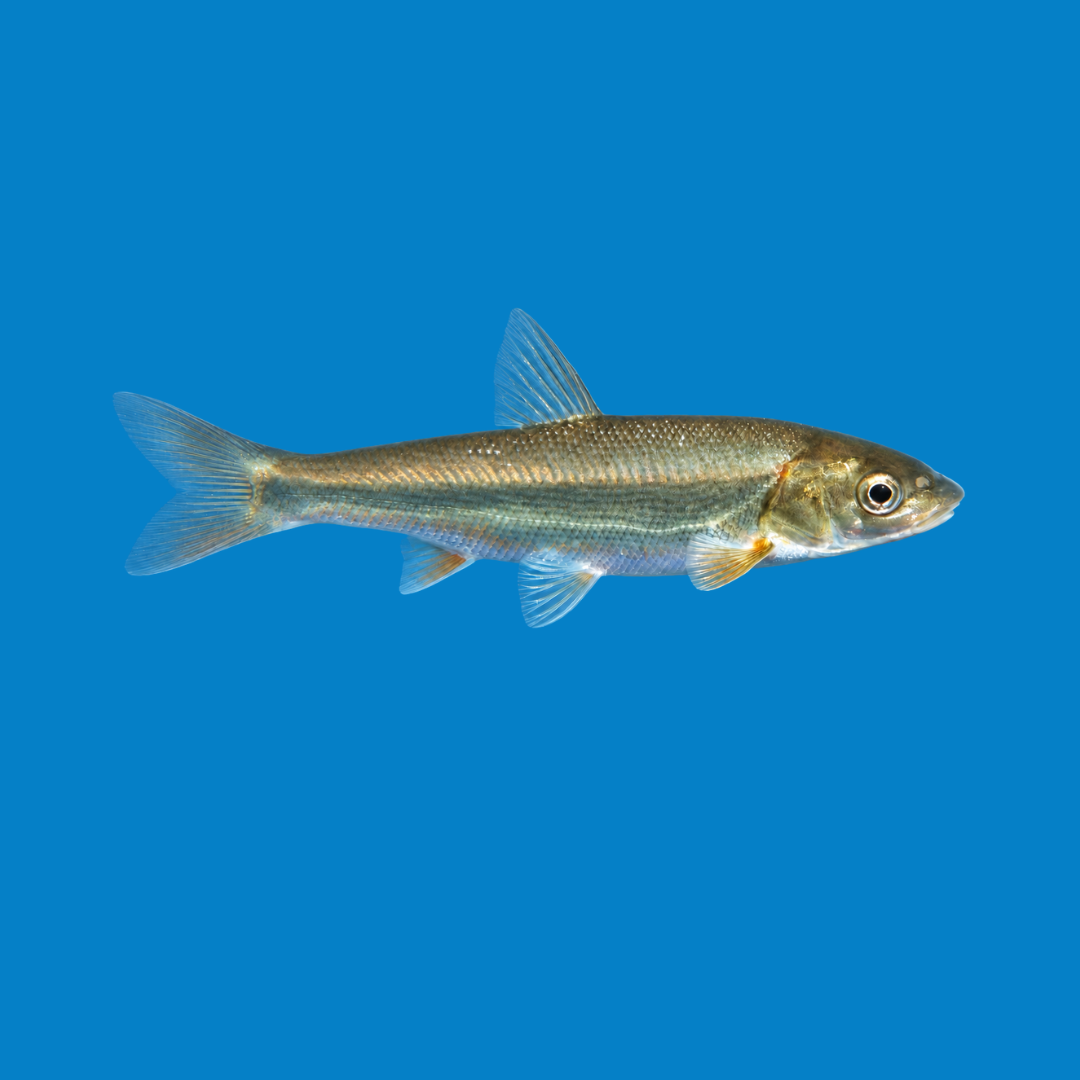
ウグイは、日本の河川や湖沼で古くから親しまれてきた、すらりとした紡錘形の川魚です。普段は銀白色の体に暗い縦帯を見せますが、春から初夏の繁殖期には体側に鮮やかな朱色の線が現れ、水槽内でも季節の移ろいを感じさせます。淡水だけで一生を送る個体群と、海へ下って成長したのち川へ戻る個体群があり、淡水・汽水・海水という異なる環境を利用できる適応力も大きな特徴です。丈夫な魚ではあるものの、最大50cmほどになり、よく泳ぐため、終生飼育には大型水槽と十分なろ過・酸素供給が欠かせません。The Japanese dace is a streamlined river fish long familiar throughout Japan. It is normally silvery with a dark lateral band, but during the spring to early-summer breeding season vivid vermilion stripes develop along its sides, bringing a striking sense of seasonality to the aquarium. Some populations complete their entire life cycle in fresh water, whereas others migrate to the sea and later return to rivers. This ability to use fresh, brackish, and marine waters is one of the species’ most remarkable adaptations. Although hardy, it may reach about 50 cm and is an active swimmer, so lifelong care requires a large aquarium, efficient filtration, and strong oxygenation.
基本情報 / Basic Information
学名 / Scientific Name
Pseudaspius hakonensis (Günther, 1877)
通称 / Common Name
ハヤ、アカハラ、アカウオ、イダ、アイソ、ギンペイ(銀兵・銀平)など。ハヤは複数のコイ目魚類を含む地方的な総称としても使われます。Japanese dace, big-scaled redfin; numerous Japanese regional names are also used.
分類 / Family
脊索動物門・条鰭綱・コイ目・ウグイ科・ウグイ亜科・ウグイ属。旧来の分類や一部の国内資料ではコイ科として扱われます。Phylum Chordata, Class Actinopterygii, Order Cypriniformes, Family Leuciscidae, Subfamily Pseudaspininae, Genus Pseudaspius. Older classifications place it in Cyprinidae.
英名 / English Name
Japanese dace / Big-scaled redfin
分布 / Distribution
日本では沖縄県を除く各地の河川、湖沼、汽水域、沿岸域に広く分布します。国外ではサハリン、朝鮮半島など東アジアに分布します。水系によって淡水型と降海型が見られます。Widely distributed in rivers, lakes, brackish waters, and coastal areas of Japan except Okinawa. Outside Japan it occurs in East Asia, including Sakhalin and the Korean Peninsula. Both freshwater-resident and sea-run populations occur, depending on the drainage.
最大体長 / Max Size
全長約50cm。一般に見かける個体は15〜30cmほどですが、大型個体は体高と遊泳力が増します。Approximately 50 cm total length. Individuals commonly encountered are around 15–30 cm, while larger adults become deeper-bodied and powerful swimmers.
寿命 / Lifespan
目安は5〜8年。野外では最高8年の報告があり、飼育下の寿命は水温、成長速度、飼育密度などに左右されます。Usually about 5–8 years. A maximum age of eight years has been reported in the wild; captive lifespan depends on temperature, growth rate, stocking density, and other conditions.
飼育環境 / Aquarium Environment
水槽サイズ / Tank Size
幼魚を少数で一時的に育てる場合でも90cm規格水槽(約157L)以上を目安とし、成魚の終生飼育には120cmワイド水槽(約300L)以上を推奨します。複数飼育や30cmを超える個体では、さらに長く水量の多い水槽が必要です。Even for temporarily raising a small number of juveniles, use at least a standard 90 cm aquarium of about 157 L. For lifelong adult care, a 120 cm wide aquarium of roughly 300 L or larger is recommended. Groups and fish over 30 cm require still greater swimming length and water volume.
水温 / Temperature
長期飼育は10〜24℃を目安にします。幅広い水温に耐える魚ですが、25℃を超える時期は溶存酸素が低下しやすいため、強いエアレーション、十分な水流、必要に応じた冷却を行います。急激な温度変化は避けてください。Aim for 10–24°C for long-term care. The species tolerates a broad range, but dissolved oxygen falls more readily above 25°C, so provide vigorous aeration, adequate current, and cooling when needed. Avoid abrupt temperature changes.
水質 / Water Quality
淡水飼育では弱酸性〜弱アルカリ性のpH6.5〜7.8を目安にし、アンモニアと亜硝酸は検出されない状態を保ちます。強い適応力は水質悪化に耐え続けられることを意味しません。大型個体は排せつ量が多いため、能力に余裕のあるろ過と定期的な換水が重要です。For freshwater care, target slightly acidic to slightly alkaline water around pH 6.5–7.8, with no detectable ammonia or nitrite. Strong adaptability does not mean that the fish can endure chronic poor water quality. Large individuals produce substantial waste, making oversized filtration and regular water changes essential.
レイアウト / Layout
中央から前面に広い遊泳空間を確保し、底床には角のない砂利や丸石を用いると河川らしい環境になります。石や流木は崩れないよう固定し、吸水口には幼魚の吸い込み防止カバーを付けます。フタは隙間なく設置し、ろ過の吐出口などで緩やかな流れを作ります。Leave a broad open swimming area across the front and center. Smooth gravel and rounded stones create a river-like setting. Secure rocks and wood against collapse, fit intake guards when juveniles are present, use a tight-fitting lid, and create a moderate current with the filter outlet or a circulation pump.
注意点 / Precautions
成長すると小型水槽では持て余すため、入手前に成魚用設備を準備します。高水温時の酸欠、飛び出し、石組みへの衝突に注意してください。採集には漁業権、都道府県の規則、禁漁期間・区域・漁具の制限が関係する場合があります。由来の異なる水系への放流は、遺伝的撹乱や病原体拡散につながるため行ってはいけません。Prepare adult-sized housing before acquisition, as growing fish soon outstrip small tanks. Watch for oxygen shortage in warm water, jumping, and collision with rockwork. Collection may be regulated by fishery rights, prefectural rules, closed seasons, protected areas, and gear restrictions. Never release fish into another drainage, because this can disturb locally adapted gene pools and spread pathogens.
餌と給餌 / Feeding
餌の種類 / Diet
雑食性で、自然下では水生昆虫、甲殻類、付着藻類、小魚や魚卵などを利用します。飼育下では品質のよい淡水魚用ペレットを主食にし、冷凍アカムシ、冷凍イサザアミ、オキアミ、小型甲殻類、植物質を含む配合飼料などを補助的に与えます。Omnivorous; in nature it feeds on aquatic insects, crustaceans, attached algae, small fish, and fish eggs. In captivity, use a good-quality freshwater fish pellet as the staple diet and supplement it with frozen bloodworms, mysids, krill, small crustaceans, and prepared foods containing plant matter.
給餌のポイント / Feeding Tips
1日1〜2回、数分で食べ切れる量を与えます。活発に奪い合うため、餌を水面の数か所へ分散させ、弱い個体にも届くようにします。成長期でも過給餌は肥満と水質悪化を招くため、腹部の張りと残餌を観察して量を調整します。採集した生き餌は寄生虫を持ち込む可能性があるため常用しない方が安全です。Feed once or twice daily, offering only what the fish finish within a few minutes. Because they compete actively, spread food across several areas so subordinate fish can feed. Even during growth, overfeeding promotes obesity and water deterioration; adjust portions by watching abdominal condition and leftovers. Wild-collected live foods may introduce parasites and are best avoided as routine feed.
性格と混泳 / Temperament and Tank Mates
性格 / Temperament
通常は機敏で群れを意識する魚ですが、成長や繁殖期に伴って追いかけ行動が強くなることがあります。臆病さと好奇心を併せ持ち、驚くと水槽壁やフタへ勢いよく突進します。落ち着いた環境では人影を覚え、給餌時に前面へ集まるようになります。Normally agile and socially oriented, Japanese dace may become more persistent in chasing as they mature or enter breeding condition. They combine wariness with curiosity and may dash into the glass or lid when startled. In a calm setting they learn the keeper’s presence and gather at the front at feeding time.
混泳の相性 / Compatibility
同程度の大きさで低水温と強い水流に適応できる温和な日本産魚とは、大型水槽で混泳できる場合があります。ただし、口に入る小魚やエビ、魚卵は捕食対象になります。動きの遅い魚、長いヒレを持つ魚、高水温を好む熱帯魚との組み合わせは避けます。導入時は検疫を行い、追い回しや餌の独占が見られたらすぐ隔離できるようにします。In a large aquarium, it may coexist with peaceful native fishes of similar size that tolerate cool, flowing water. Small fish, shrimp, and eggs that fit in its mouth may be eaten. Avoid slow-moving species, long-finned fish, and tropical species requiring consistently warm water. Quarantine new arrivals and be ready to separate any fish if persistent chasing or food monopolization develops.
病気と対策 / Diseases and Prevention
かかりやすい病気 / Common Diseases
導入直後や水温・水質が急変したときは、白点病、水カビ病、カラムナリス病、エロモナス感染症などに注意します。網ずれや石への衝突で傷ができると、水カビや細菌の二次感染が起こりやすくなります。野外採集個体では、体表・鰓・消化管の寄生虫を持ち込む可能性もあります。After introduction or abrupt changes in temperature or water quality, watch for ich, saprolegniasis, columnaris disease, and Aeromonas infections. Net abrasions and collisions with rocks can lead to secondary fungal or bacterial infection. Wild-caught fish may also carry parasites on the skin, gills, or in the digestive tract.
対策と予防 / Prevention
新しい個体は別容器で十分に観察してから本水槽へ移し、安定した水温、強い酸素供給、清浄な水を保ちます。病魚が出たら早めに隔離し、症状、水温、水質、経過を確認します。薬浴は観賞魚用魚病薬の対象疾病・用法・用量を厳守し、ろ過細菌や同居生物への影響にも注意してください。診断が難しい、呼吸が速い、出血や潰瘍が広がる場合は、魚病に詳しい獣医師や専門機関へ相談します。Observe new fish in a separate quarantine system before moving them into the main aquarium, and maintain stable temperature, strong oxygenation, and clean water. Isolate affected fish promptly and check symptoms, temperature, water parameters, and progression. Use only aquarium medications labeled for the suspected disease, following every dose and direction while considering effects on biofiltration and tank mates. Seek a veterinarian or aquatic animal health specialist when diagnosis is uncertain or rapid breathing, hemorrhage, or spreading ulcers occur.
増やし方(繁殖) / Breeding
雌雄の判別 / Sexing
平常時の外見だけでの判別は難しく、成熟期に見分けやすくなります。成熟した雄は一般に細身で、頭部や体表に追星が発達しやすく、雌は抱卵すると腹部が丸みを帯びます。鮮やかな婚姻色は雌雄の両方に現れるため、赤い体色だけでは判別できません。The sexes are difficult to distinguish by appearance outside the breeding season. Mature males are generally slimmer and more likely to develop prominent breeding tubercles on the head and body, while egg-bearing females become rounded in the abdomen. Bright nuptial coloration occurs in both sexes and cannot be used alone for sexing.
繁殖形態 / Reproduction
卵生です。春から初夏、水温の上昇や増水などを合図に群れで浅い瀬へ集まり、流れのある砂礫底で産卵します。親魚は卵や稚魚を保護しません。産卵期や時期は地域、水温、淡水型・降海型などの生活史によって異なります。Oviparous. From spring to early summer, cues such as rising water temperature and increased flow bring groups into shallow riffles, where they spawn over flowing gravel beds. The parents provide no care for eggs or fry. Timing varies with region, water temperature, and whether the population is freshwater-resident or sea-run.
繁殖のポイント / Breeding Tips
一般家庭での自然繁殖は容易ではありません。十分に成熟した複数の親魚、季節的な低温期からの緩やかな昇温、強い酸素供給、清浄な流水、丸みのある小砂利の産卵床が必要です。産卵を確認したら食卵を避けるため親魚を分け、卵には穏やかな流水と高い溶存酸素を保ちます。地域系統を守るため、繁殖個体の由来を記録し、異なる水系の個体を安易に交配・放流しないことが重要です。Natural breeding in a home aquarium is not easy. It requires several fully mature adults, a gradual warming after a seasonal cool period, strong oxygenation, clean flowing water, and a bed of smooth small gravel. Once spawning is observed, separate the adults to reduce egg predation and keep a gentle current with high dissolved oxygen around the eggs. Record the origin of breeding stock and avoid casually crossing or releasing fish from different drainages, so locally distinct lineages are not compromised.
雑学と豆知識 / Trivia and Fun Facts
1. 学名が語る分類学の変化 / 1. A Scientific Name That Records Taxonomic Change
ウグイは長くTribolodon hakonensisの名で親しまれてきましたが、極東アジアのウグイ類を見直した系統分類研究を受け、現在はPseudaspius hakonensisが有効名として広く採用されています。属名Pseudaspiusは「偽のAspius」という意味を持ち、姿が似て見える魚を比較しながら分類してきた歴史の名残です。一方、種小名hakonensisは箱根にちなみます。ひとつの学名の中に、最初に注目された土地と、その後に更新された進化の理解が同居しているのです。For many years the Japanese dace was familiar as Tribolodon hakonensis, but a revised phylogenetic classification of Far Eastern daces led to broad acceptance of Pseudaspius hakonensis as the valid name. Pseudaspius means “false Aspius,” preserving a trace of the history in which similar-looking fishes were compared and classified, while the species name hakonensis refers to Hakone. A single scientific name therefore brings together the locality that first drew attention and a later, updated understanding of evolutionary relationships.
2. 酸の湖で生きる魚 / 2. A Fish Living in an Acidic Lake
青森県の宇曽利山湖では、火山の影響で湖水が強い酸性を示すにもかかわらず、ウグイの個体群が暮らしています。そこで重要になるのが鰓のイオン調節です。体内から塩類が失われやすい環境に入ると、鰓のイオン細胞が増え、ナトリウムの取り込みと酸塩基平衡を支える仕組みが大きく働きます。ただし、これは特定個体群が長い時間をかけて獲得した生理的特性です。家庭のウグイを強酸性水へ入れてよいという意味ではなく、野生集団が環境に合わせて築いてきた適応の精妙さを示しています。In Lake Usoriyama, Aomori Prefecture, a population of Japanese dace survives despite the strongly acidic water created by volcanic influence. Ion regulation at the gills is central to this feat. In conditions that promote salt loss from the body, ionocytes in the gills proliferate and mechanisms supporting sodium uptake and acid–base balance become highly active. This is a physiological trait developed over time in a particular population, not a reason to expose aquarium fish to strongly acidic water. Its real significance lies in the delicacy of local adaptation in the wild.
3. 春の赤が生んだ土地の名前 / 3. Spring Red and a Wealth of Local Names
普段のウグイは銀色の川魚ですが、産卵期には暗い帯を挟むように朱色の線が現れます。この季節だけの変化は各地の人々の記憶に残り、アカハラ、アカウオ、サクラウグイなどの呼び名を生みました。イダ、アイソ、ハヤといった名まで含めると、その呼び方は地域ごとに驚くほど多彩です。同じ魚を見つめながら、土地ごとに異なる色、季節、食文化が名前へ刻まれてきたことが分かります。For much of the year the Japanese dace is a silvery river fish, but during spawning season vermilion stripes appear around its dark lateral band. This seasonal transformation impressed communities across Japan and inspired names such as akahara, aka-uo, and sakura-ugui. Together with names including ida, aiso, and haya, the vocabulary varies remarkably from place to place. Each name records a local way of noticing the same fish through color, season, fishing, and food culture.
4. 川と海をつなぐ生活史 / 4. A Life History Linking River and Sea
ウグイのすべてが同じ旅をするわけではありません。川や湖で一生を送る集団がある一方、海へ下って成長し、繁殖期に川へ戻る集団もあります。コイ目の魚としては目を引くこの柔軟さが、河川、湖、河口、沿岸という幅広い水域への進出を支えてきました。水槽で見せる丈夫さの奥には、塩分の違う世界を行き来できる浸透圧調節の仕組みと、水系ごとに異なる生活史が隠れています。Not every Japanese dace makes the same journey. Some populations spend their entire lives in rivers or lakes, while others descend to the sea, grow there, and return to rivers to reproduce. This notable flexibility for a cypriniform fish has helped the species use rivers, lakes, estuaries, and coastal waters. Behind its hardiness in an aquarium lies an osmoregulatory system capable of coping with contrasting salinities, along with life histories that differ from one drainage to another.
5. 「つけば」が支えた人と魚の関係 / 5. “Tsukeba” and a Relationship Between People and Fish
長野県の千曲川流域に伝わるつけば漁は、春に砂礫の浅瀬へ集まるウグイの習性を利用します。漁師は小石を整えて人工の産卵場所を作り、集まった魚を捕らえました。魚を獲るための仕事が、同時に産卵に適した川底を生み出していた点が興味深いところです。ウグイは食材や漁獲物であるだけでなく、人が川の季節を読み、流れと折り合いをつけて暮らしてきた歴史を映す魚でもあります。The traditional tsukeba fishery of the Chikuma River basin in Nagano uses the Japanese dace’s habit of gathering over shallow gravel in spring. Fishers arranged small stones to create artificial spawning grounds and captured the fish drawn to them. Remarkably, work intended for harvest also created riverbed habitat suited to spawning. The Japanese dace is therefore more than food or catch: it reflects a history of people reading the river’s seasons and learning to live with its flow.
まとめ / Conclusion
ウグイは身近で強健な日本産魚でありながら、春の婚姻色、川と海を行き来する生活史、極端な環境に適応した地域個体群など、知るほどに奥行きが増す存在です。銀色の群れが流れに向かって泳ぐ姿は、自然の河川を切り取ったような力強い景観を水槽にもたらします。Though familiar and hardy, the Japanese dace grows more fascinating with every detail: its spring nuptial colors, life histories linking river and sea, and locally adapted populations in extreme environments. A silvery group holding position in the current brings the strength and movement of a natural river into the aquarium.
その魅力を長く楽しむには、丈夫さに甘えず、成魚の大きさに見合う水槽、冷涼で酸素豊富な清浄水、十分な遊泳空間を用意することが大切です。由来の分からない個体を野外へ放さず、地域ごとに受け継がれてきた命のつながりまで大切にする姿勢が、ウグイと誠実に付き合う第一歩になります。To enjoy this fish for years, do not take its resilience for granted. Provide an aquarium suited to adult size, clean cool water rich in oxygen, and ample swimming space. Never release fish of uncertain origin into the wild; respecting the living continuity of each local population is the first step toward responsible care.
分類・学名
Sakai, H., Watanabe, K. and Goto, A. (2020). A revised generic taxonomy for Far East Asian minnow Rhynchocypris and dace Pseudaspius. Ichthyological Research, 67, 330–334. https://doi.org/10.1007/s10228-019-00726-5
学名・分類・分布・生息環境
California Academy of Sciences. Eschmeyer’s Catalog of Fishes: Pseudaspius hakonensis. 種情報(2026年9月13日閲覧)
生活史・降海・河川間移動
Katano, O., Nakamura, T., Abe, S. and Baba, Y. (2010). Population density, growth and migration via the sea to different streams of Japanese dace Tribolodon hakonensis in lower reaches of small streams. Ichthyological Research, 57, 1–9. https://doi.org/10.1007/s10228-009-0114-1
水温・塩分環境への適応
Nakamura, M., Masuda, R., Tsukamoto, K. and Otake, T. (2016). Narrowed temperature adaptability in non-natal osmotic environments of two euryhaline wanderers, dace and black porgy: implications for seasonal habitat changes. Fisheries Science, 82, 261–268. https://doi.org/10.1007/s12562-015-0956-6
繁殖・産卵環境
Shirotori, Y., Yamaguchi, M., Ikuta, K., Murakami, M. and Hakoyama, H. (2006). Spawning habitat selection and suitability for Japanese dace, Tribolodon hakonensis. Journal of Ethology, 24, 285–289. https://doi.org/10.1007/s10164-006-0195-5
強酸性環境への地域適応
Hirata, T. et al. (2003). Mechanism of acid adaptation of a fish living in a pH 3.5 lake. American Journal of Physiology-Regulatory, Integrative and Comparative Physiology, 284, R1199–R1212. https://doi.org/10.1152/ajpregu.00267.2002
飼育水・ろ過・給餌・検疫・疾病予防
Yanong, R. P. E. Fish Health Management Considerations in Recirculating Aquaculture Systems—Part 1: Introduction and General Principles. University of Florida IFAS Extension, FA099. 資料本文(2026年9月13日閲覧)
アンモニア・亜硝酸・生物ろ過
Francis-Floyd, R., Watson, C., Petty, D. and Pouder, D. B. Ammonia in Aquatic Systems. University of Florida IFAS Extension, FA031. 資料本文(2026年9月13日閲覧)
白点病
Francis-Floyd, R., Yanong, R. P. E. and Pouder, D. B. Ichthyophthirius multifiliis (White Spot) Infections in Fish. University of Florida IFAS Extension, FA006. 資料本文(2026年9月13日閲覧)
カラムナリス病
Declercq, A. M., Haesebrouck, F., Van den Broeck, W., Bossier, P. and Decostere, A. (2013). Columnaris disease in fish: a review with emphasis on bacterium-host interactions. Veterinary Research, 44, 27. https://doi.org/10.1186/1297-9716-44-27
水カビ病
van West, P. (2006). Saprolegnia parasitica, an oomycete pathogen with a fishy appetite: new challenges for an old problem. Mycologist, 20, 99–104. https://doi.org/10.1016/j.mycol.2006.06.004
エロモナス感染症
Bandeira Junior, G. and Baldisserotto, B. (2021). Fish infections associated with the genus Aeromonas: a review of the effects on oxidative status. Journal of Applied Microbiology, 131, 1083–1101. https://doi.org/10.1111/jam.14986






コメント