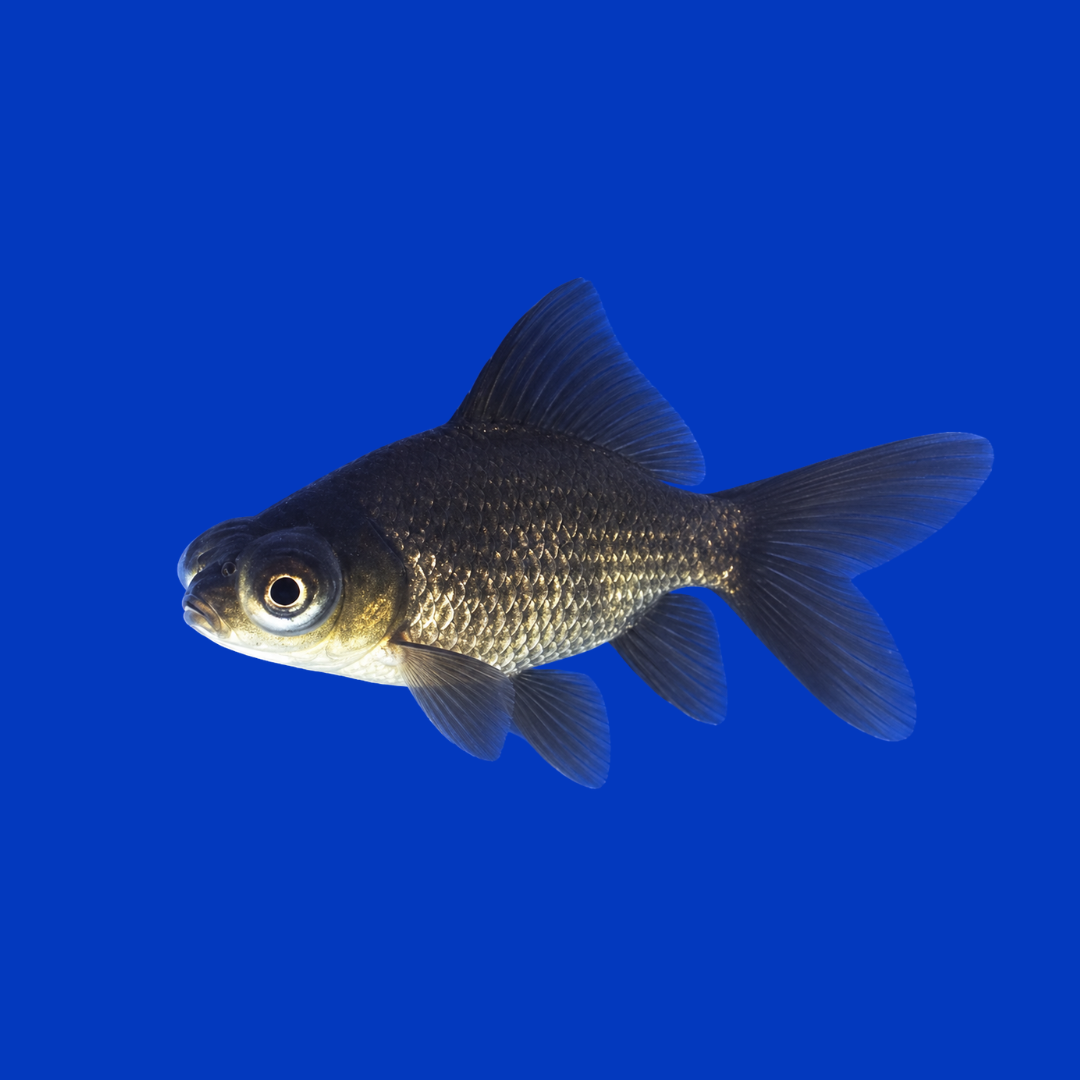
柳出目金(やなぎでめきん)は、和金型の細長い体と、出目金のように左右へ突出した目を持つ金魚です。「出目コメット」の名でも流通し、すらりとした姿と、泳ぐたびに動く尾びれを楽しめます。一般的な丸い体の出目金とは異なる姿ですが、細長い体だからといって、ほかの長物金魚と同じ勢いで餌を取れるとは限りません。目を傷つけにくい配置と、一匹ずつ食事を確認できる飼育環境を整えましょう。Yanagi Demekin is a slender, wakin-type goldfish with projecting telescope eyes. Also traded in Japan as Deme Comet, it combines an elongated silhouette with a flowing tail. Its shape differs from the familiar rounded telescope goldfish, but a slender body does not guarantee that it can compete equally with other active goldfish for food. Provide an eye-safe layout and check that every fish feeds successfully.
基本情報 / Basic Information
学名 / Scientific Name
Carassius auratus (Linnaeus, 1758)。柳出目金に独立した学名はありません。Carassius auratus (Linnaeus, 1758). Yanagi Demekin has no separate scientific name.
通称 / Common Name
柳出目金、ヤナギデメキン、出目コメット。Yanagi Demekin; Deme Comet (Japanese trade names).
分類 / Family
コイ目 コイ科 フナ属。観賞用に改良された金魚の一系統です。Order Cypriniformes; family Cyprinidae; genus Carassius. An ornamental goldfish strain.
英名 / English Name
Goldfish(種の英名)。柳出目金は Yanagi Demekin と表記し、特徴を説明するときは long-bodied telescope goldfish と表現できます。Goldfish is the species common name. Yanagi Demekin is the Japanese variety name; long-bodied telescope goldfish describes its appearance.
分布 / Distribution
観賞用に改良された金魚で、柳出目金としての自然分布域はありません。日本では国内で養殖された個体が流通しています。An ornamental goldfish without a native wild range of its own. Domestically bred specimens are traded in Japan.
最大体長 / Max Size
柳出目金としての確かな最大値は不明です。幼魚の販売サイズを成魚の大きさと考えず、体と尾の成長に合わせて飼育容器を広げましょう。購入時のサイズ表示が、尾を含む全長かどうかも確認してください。A reliable maximum specific to this variety is not established. Juvenile sale size is not adult size; expand accommodation as the body and tail grow. Check whether a quoted measurement includes the tail.
寿命 / Lifespan
金魚全般では10〜15年ほどが一つの目安で、さらに長く生きる例もあります。柳出目金だけの寿命を示す確かな値はありません。About 10–15 years is a general reference for goldfish, with some living longer. A lifespan specific to Yanagi Demekin is not established.
飼育環境 / Aquarium Environment
水槽サイズ / Tank Size
少数の小さな幼魚には60cm規格水槽(60×30×36cm、総容量約65L)を育成の出発点として検討します。成長や匹数に応じて90cmワイド水槽(90×45×45cm、約182L)以上へ広げ、尾を引っかけずに泳ぎ、向きを変えられる空間を確保しましょう。これらは飼育計画の目安で、成魚のサイズにかかわらず同じ容器で飼えるという意味ではありません。容量は満水時の概算です。For a few small juveniles, consider a 60 × 30 × 36 cm tank, approximately 65 L gross, as grow-out accommodation. Upgrade to 90 × 45 × 45 cm, about 182 L, or larger as size and stocking require. Allow unobstructed swimming and turning without snagging the tail. These are planning examples, not lifelong allowances regardless of adult size; volumes are approximate gross capacities.
水温 / Temperature
室内の日常管理では20〜24℃程度を一つの目安にします。季節による緩やかな変化と、移動・水替えによる急変は分けて考えましょう。夏は過昇温と酸素不足に注意し、冬は水温と食欲に合わせて給餌量を調整します。Around 20–24°C is a useful reference for routine indoor care. Distinguish gradual seasonal changes from sudden changes during transfers or water changes. Prevent overheating and oxygen shortage in summer, and adjust feeding to temperature and appetite in winter.
水質 / Water Quality
淡水で、pH6.5〜7.5程度の安定した水質を目指します。十分に立ち上がった生物ろ過を用い、アンモニアと亜硝酸塩が検出されない状態を保ちましょう。定期的な部分換水と底の汚れの除去を行い、水質測定と飼育密度に応じて頻度を調整します。Use freshwater with a stable pH around 6.5–7.5. Maintain established biological filtration and aim for undetectable ammonia and nitrite. Perform regular partial water changes and remove settled waste, adjusting frequency to stocking and water-test results.
レイアウト / Layout
角の鋭い石、枝先のとがった流木、硬い人工水草、狭い隙間は避けます。飾りは控えめにし、目や尾が触れにくい遊泳空間を残しましょう。フィルターの水流は分散させ、魚が流されずに休める場所を作ります。底砂は滑らかなものを選び、口に挟まる大きさの小石に注意してください。Avoid sharp stones, pointed branches, rigid artificial plants, and narrow gaps. Keep decoration restrained, leaving space clear of obstacles at eye and tail level. Diffuse filter output and provide a resting area without strong current. Choose smooth substrate and avoid pebbles that could become lodged in the mouth.
注意点 / Precautions
「丈夫な金魚」として扱われる場合もありますが、水の汚れに強いことを前提に飼わないでください。移動時は目や長いヒレを網に引っかけないようにし、必要に応じて水ごとすくえる容器を使います。フタで飛び出しを防ぎ、屋外では流出や鳥などにも備えましょう。Do not interpret a reputation for hardiness as tolerance of dirty water. During transfers, avoid catching eyes or long fins in netting; a suitable container can move the fish with water. Fit a lid against jumping and protect outdoor setups from overflow and predators.
餌と給餌 / Feeding
餌の種類 / Diet
金魚用の総合栄養食を主食にし、口に合う粒の大きさを選びます。沈下性の粒など、落ち着いて探して食べられる餌を試し、実際の食べやすさで選びましょう。魚のアラの出汁や台所の野菜くずは与えず、補助食も観賞魚用として管理されたものを少量にとどめます。Use a complete goldfish diet sized to the mouth. Try foods such as sinking pellets that the fish can locate and eat calmly, choosing according to actual feeding success. Avoid fish-stock liquids and kitchen scraps; keep aquarium-appropriate supplements to small portions.
給餌のポイント / Feeding Tips
1日1〜2回の少量給餌を出発点にし、食欲と水温に合わせて調整します。餌を探すのに時間がかかる個体には、毎回同じ開けた場所で少しずつ与えましょう。ほかの魚が先に食べ尽くす場合は給餌場所を分け、それでも食べられなければ飼育容器を分けます。残餌を放置して補おうとしないことが大切です。Start with one or two small meals daily, adjusting to appetite and temperature. For a fish that takes time to locate food, offer small portions in the same open spot. Separate feeding locations if tank mates eat everything first, and separate accommodation if this does not resolve competition. Do not compensate by leaving excess food in the tank.
性格と混泳 / Temperament and Tank Mates
性格 / Temperament
餌を探して泳ぐ一方、周囲の魚やレイアウトによって動き方が変わります。一般的な和金型の魚より慎重に動く個体もいるため、見た目だけで活発さを決めつけず、普段の泳ぎ方を把握しましょう。繁殖期には追尾が起こります。Movement varies with companions and surroundings. Some individuals behave more cautiously than ordinary wakin-type goldfish. Observe the fish’s usual swimming rather than predicting activity solely from its outline. Chasing can occur during breeding.
混泳の相性 / Compatibility
体格と餌を取る速さが近い金魚を候補にします。同じ柳出目金でも個体差があるので、合流後の給餌は必ず観察してください。勢いよく餌を独占する和金やコメット、ヒレや目をつつく魚との同居は避けます。小魚や小さなエビは食べられる可能性があります。Consider goldfish of similar size and feeding ability. Even members of the same variety differ, so monitor meals after introduction. Avoid companions that monopolize food, including particularly vigorous common or comet goldfish, and fish that peck at fins or eyes. Small fish and shrimp may be eaten.
病気と対策 / Diseases and Prevention
かかりやすい病気 / Common Diseases
白点病、尾ぐされ症状、水カビなど、金魚共通の不調に注意します。加えて、突出した目の外傷や長いヒレの傷みを観察しましょう。もともとの出目とは違う急な腫れ、白濁、出血などが見られた場合は、普段の形として見過ごさないでください。Watch for common goldfish problems such as ich, fin deterioration, and water mould, along with injuries to projecting eyes and long fins. Sudden swelling, cloudiness, or bleeding should not be dismissed as the normal telescope-eye shape.
対策と予防 / Prevention
新しく迎えた魚は別容器で状態を観察してから合流させます。異常が出たら水温、水質、酸素供給を確認し、必要に応じて隔離します。塩浴や薬浴を一律に行うのではなく、原因に合う対処を選び、薬は説明書に従って使用してください。判断が難しい場合は魚を診療できる獣医師に相談しましょう。Observe new arrivals separately before introduction. If signs develop, check temperature, water quality, and oxygen supply, and isolate when appropriate. Select treatment for the cause rather than automatically adding salt or medication. Follow product directions and consult a fish veterinarian when diagnosis is uncertain.
増やし方(繁殖) / Breeding
雌雄の判別 / Sexing
繁殖期のオスでは、鰓ぶたや胸びれに白い粒状の追星が現れることがあります。メスは卵を持つと腹部がふっくらしますが、腹の丸さだけでは確実に判別できません。成熟状態と追尾行動も合わせて観察します。Breeding males may develop small white tubercles on the gill covers and pectoral fins. Egg-bearing females become fuller, but abdominal shape alone is unreliable. Consider maturity and spawning behavior as well.
繁殖形態 / Reproduction
卵生で体外受精します。金魚は水草などに付着する粘着性の卵を産み、親は卵や仔魚を保護しません。春から初夏など、水温と日照の変化に伴って繁殖行動が見られます。An egg-layer with external fertilization. Goldfish deposit adhesive eggs on plants and similar surfaces, and provide no parental care. Spawning commonly follows seasonal changes in temperature and daylight.
繁殖のポイント / Breeding Tips
成熟した健康な親魚と、柔らかい水草や産卵モップを用意します。追尾で目をぶつけないよう障害物を減らし、追われ続ける魚は分けましょう。産卵後は親魚と卵を分離します。卵は水温に応じて数日ほどで孵化し、仔魚は初めに卵黄を使って育ちます。泳ぎ出して餌を取る段階で、口に合う稚魚用飼料や孵化直後のブラインシュリンプを少量ずつ与えてください。子がすべて親と同じ体型や目になるとは限りません。Prepare healthy mature parents and soft plants or spawning mops. Reduce obstacles during chasing and separate any fish subjected to persistent pursuit. Separate eggs from adults after spawning. Eggs hatch over several days depending on temperature, and larvae initially rely on yolk. Once free-swimming and feeding, offer suitably sized fry food or newly hatched brine shrimp in small portions. Not all offspring necessarily share the parents’ body and eye traits.
雑学と豆知識 / Trivia and Fun Facts
1. 細長い体に出目が加わると / 1. Telescope eyes on a slender body
金魚を見分けるときは、目だけでなく体型と尾を一緒に見ると特徴がつかみやすくなります。柳出目金は、丸い体と開いた尾を持つ一般的な出目金とは違い、細長い体にフナ尾や吹き流し状の尾を組み合わせた姿です。通常の出目金にも背びれがあるため、背びれの有無だけでこの二つを区別することはできません。横から体の輪郭を追い、上から尾の形を見ると、同じ出目でも姿の違いがよく分かります。To distinguish goldfish, examine body and tail as well as eyes. Yanagi Demekin combines an elongated body with a single or flowing tail, unlike the rounded body and spread double tail of a typical telescope goldfish. Ordinary telescope goldfish also have a dorsal fin, so its presence alone does not distinguish them. Side and top views reveal different parts of the overall form.
2. 「出目コメット」は姿を伝える名前 / 2. A trade name describing appearance
「出目コメット」という別名からは、コメットを思わせる細長い姿と、出目金の目を持つことが想像できます。ただし、似た姿を表す呼び名だけで、特定の親品種との直接の交配や作出者まで確定することはできません。柳出目金の詳しい作出年代や系譜は明らかでないため、血統に関心がある場合は生産者の記録を確認しましょう。名前は姿を知る入口になり、来歴はまた別の楽しみになります。Deme Comet evokes a comet-like outline combined with telescope eyes. A descriptive name alone, however, does not establish a particular direct cross or identify its creator. The detailed origin and development date of Yanagi Demekin remain unclear. If pedigree matters, seek breeder records; the name introduces the appearance, while provenance provides another dimension of interest.
3. 江戸の人も上から眺めていた / 3. A tradition of viewing from above
今はガラス水槽の横から金魚を見る機会が多いですが、江戸時代には陶器の鉢で飼い、上から眺める楽しみ方が一般的でした。柳出目金も上見では左右に出た目や尾の動きが分かり、横見とは違う印象を楽しめます。観賞のために何度も別容器へ移す必要はありません。いつもの飼育場所で静かに目線を変えるだけでも、一匹の魚にいくつもの表情があることに気づけます。Glass aquariums make side views familiar today, but goldfish in Edo-period Japan were commonly kept in ceramic bowls and viewed from above. A top view of Yanagi Demekin reveals the lateral eyes and tail movement differently. Repeated transfers for viewing are unnecessary: quietly changing your viewpoint at its usual home can reveal another aspect of the same fish.
4. 1748年の飼育書から続く楽しみ / 4. A hobby with an eighteenth-century handbook
1748年には『金魚養玩草(きんぎょそだてぐさ)』という飼育の手引書が刊行されました。金魚の養殖が広がるにつれて、かつて一部の人が楽しんでいた魚は、庶民の暮らしにも身近になっていきます。柳出目金が当時からいたという意味ではありませんが、姿の違いを見比べ、餌を食べる様子や日々の変化を楽しむ気持ちは、長く続く金魚文化につながっています。珍しい品種も、毎日の世話を重ねることで身近な一匹になっていきます。A goldfish-keeping handbook, Kingyo Sodategusa, was published in 1748. As breeding expanded, fish once enjoyed by a limited section of society became more accessible. This does not mean Yanagi Demekin existed then, but observing individual shapes, feeding, and daily changes connects today’s hobby with a long tradition. Regular care turns an unusual variety into a familiar individual.
まとめ / Conclusion
柳出目金は、細長い体と流れる尾、左右に張り出した目が組み合わさった、個性的な金魚です。すらりとした見た目だけで飼い方を決めず、その一匹の泳ぎや餌の取り方に合わせることが、落ち着いた暮らしにつながります。Yanagi Demekin combines a slender body, flowing tail, and projecting eyes. Care based on each fish’s swimming and feeding, rather than its slim appearance alone, helps it settle comfortably.
目を守れる広い空間と清潔な水を保ち、食事の時間にはゆっくり観察してみましょう。横から見る尾の動きも、上から見る出目の輪郭も、日々の世話を通じて親しみのある姿になっていきます。Maintain clean water and generous, eye-safe space, and take time to observe meals. The moving tail seen from the side and the eye outline seen from above can become familiar pleasures through daily care.






コメント