

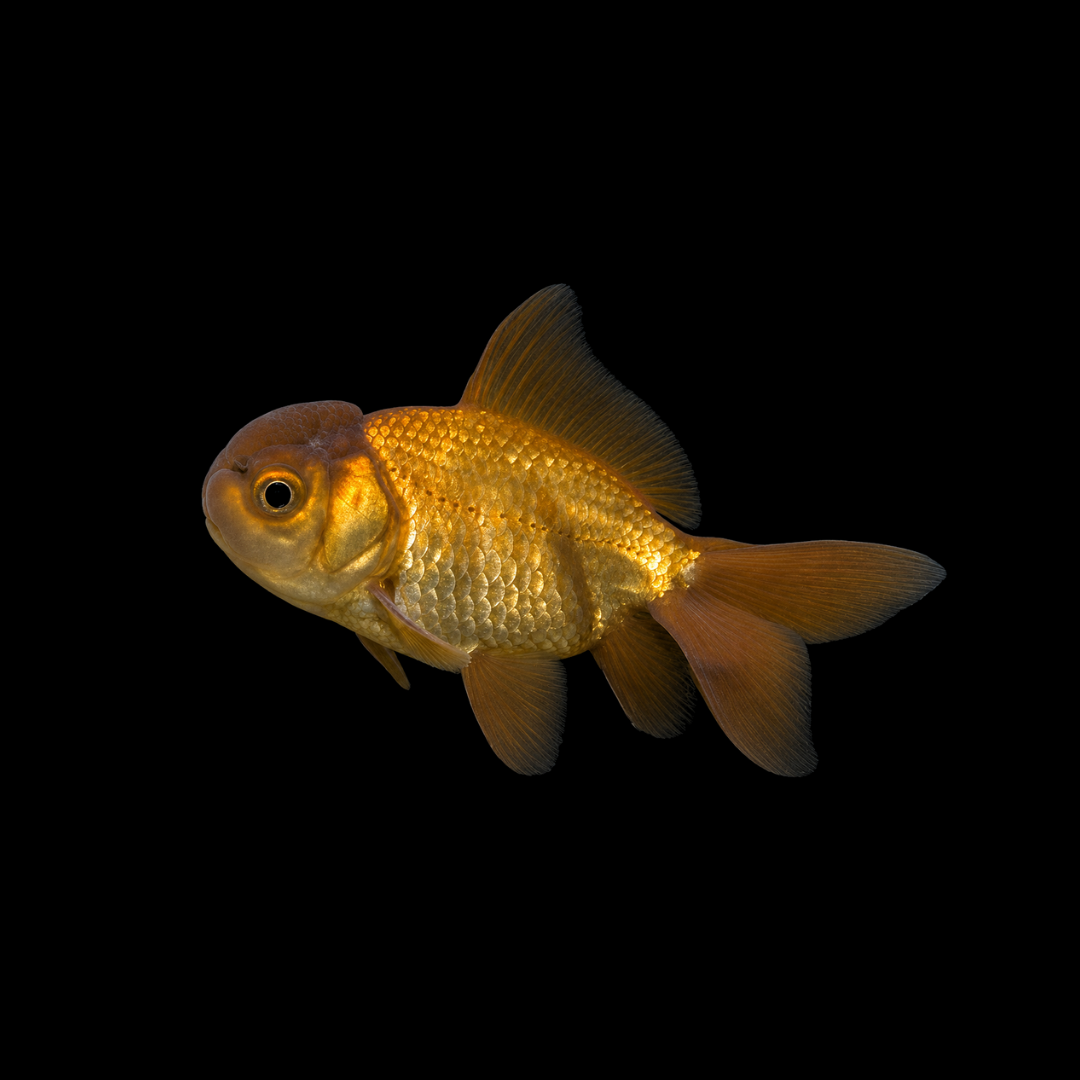
解説 / Description
茶金(ちゃきん)は、オランダ獅子頭型の体型と頭部に発達する肉瘤、そして名前の由来にもなった独特の茶褐色を特徴とする金魚です。英語圏では Chocolate Oranda と呼ばれ、日本で一般的な赤や白の金魚とは異なる落ち着いた色合いが目を引きます。体色は品種として受け継がれる特徴を基礎とし、金魚一般では飼料中のカロテノイドや背景色への適応によって色調が変化することも知られています。ただし、茶金特有の茶褐色を単一の色素だけで説明するのは適切ではなく、複数の色素細胞とその見え方が関わるものとして捉えるのが自然です。遊泳は和金などの長手型に比べてゆったりしているため、強すぎる水流を避け、十分な水量と安定したろ過環境を整えることが長期飼育の基本になります。 Chakin is a fancy goldfish characterized by an Oranda-type body, a developed head growth known as a wen, and distinctive brown to chocolate coloration. In English-speaking aquarium circles it is commonly referred to as the Chocolate Oranda. Its coloration is inherited as a breed characteristic, while studies of goldfish more broadly show that dietary carotenoids and adaptation to background color can influence visible color tone. The Chakin brown should not be reduced to a single pigment; it is better understood as the visible result of multiple pigment-cell systems. Compared with long-bodied goldfish, Oranda-type fish are relatively slow swimmers, so long-term care depends on ample water volume, stable filtration, and a gentle current.
基本情報 / Basic Information
| 学名 / Scientific Name | Carassius auratus |
|---|---|
| 通称 / Common Name | 茶金、チョコレートオランダChocolate Oranda, Chakin |
| 分類 / Family | コイ目・コイ科・フナ属。観賞用品種としてはオランダ獅子頭系の金魚に含まれます。Order Cypriniformes, family Cyprinidae, genus Carassius. As an ornamental variety, it belongs to the Oranda-type fancy goldfish group. |
| 英名 / English Name | Chocolate Oranda |
| 分布 / Distribution | 野生種としての自然分布はなく、人為選抜によって作出された金魚の品種です。中国から日本へ輸入されたオランダ型の品種として知られ、日本ではそれまで一般的でなかった茶褐色の体色から「茶金」と呼ばれています。It has no natural wild distribution because it is a domesticated ornamental variety. Chakin is known in Japan as an Oranda-type goldfish imported from China, and its Japanese name refers directly to its distinctive brown coloration. |
| 最大体長 / Max Size | 飼育下では15〜20cm前後がひとつの目安です。オランダ型の金魚は飼育環境や系統によってさらに大型化する個体もいるため、成長後の体格を見越して水槽を選びます。Around 15–20 cm is a useful general guide in aquaria. Oranda-type goldfish can grow larger depending on lineage and husbandry, so the aquarium should be chosen with adult size in mind. |
| 寿命 / Lifespan | 10年以上飼育されることもある長寿の金魚です。適切な環境ではさらに長生きする例があり、寿命は水質、栄養、病気の有無などの飼育条件と個体差に大きく左右されます。Goldfish can live for more than 10 years, and well-maintained individuals may live considerably longer. Lifespan varies greatly with water quality, nutrition, disease history, and individual condition. |
飼育環境 / Aquarium Environment
| 水槽サイズ / Tank Size | 成魚を長期飼育するなら、90cm規格水槽をひとつの目安にすると、水質の安定と遊泳スペースを確保しやすくなります。若魚は60cm規格水槽でも管理できますが、成長に合わせて余裕のある水槽へ移します。複数飼育では個体数だけでなく、実水量とろ過能力を見ながら水槽サイズを大きくしてください。For long-term adult care, a Japanese-standard 90 cm aquarium is a useful target because it provides more stable water quality and swimming space. Juveniles can be managed in a 60 cm tank, but should be moved to a roomier aquarium as they grow. For multiple fish, increase tank size according to both effective water volume and filtration capacity rather than fish count alone. |
|---|---|
| 水温 / Temperature | 18〜24℃程度をひとつの目安に、急変させず安定させると飼育しやすくなります。低温にも比較的耐えますが、水温が下がると活動量や消化速度も低下するため、魚の状態に合わせて給餌量を調整します。高水温時は溶存酸素が低下しやすいため、十分なエアレーションと室温管理を意識してください。 A stable range of about 18–24°C is a useful husbandry target. Goldfish tolerate cooler water, but activity and digestion slow as temperature falls, so feeding should be adjusted to the fish’s condition. At higher temperatures, dissolved oxygen decreases more readily, making adequate aeration and room-temperature control especially important. |
| 水質 / Water Quality | 中性付近から弱アルカリ性の安定した水質が扱いやすく、数値そのものより急激なpH変化を避けることが重要です。アンモニアと亜硝酸は検出されない状態を維持し、十分な生物ろ過を確保します。部分換水は週1回、全体の3分の1前後をひとつの目安とし、水質検査や汚れ方に応じて頻度と量を調整してください。Stable water from around neutral to mildly alkaline is generally easy to manage, and avoiding abrupt pH changes is more important than chasing a single exact value. Ammonia and nitrite should remain undetectable, supported by adequate biological filtration. As a practical starting point, change about one third of the water weekly and adjust the amount or frequency according to test results and waste accumulation. |
| レイアウト / Layout | 遊泳スペースを広く取り、肉瘤や長いヒレを傷つける鋭利な石や枝状流木は避けます。底床を使う場合は角の少ない砂利や砂を薄く敷くと管理しやすくなります。金魚では背景色への適応によって体色の濃淡が変わることがあり、暗めの背景では濃く見える傾向があります。フィルターの吐出口は壁面に当てるなどして、水流を穏やかに調整してください。Prioritize open swimming space and avoid sharp rocks or branch-like wood that could damage the wen or fins. If substrate is used, smooth gravel or sand kept relatively shallow is easy to maintain. Goldfish can alter visible color tone during adaptation to different background colors, and darker backgrounds often make them appear darker. Direct the filter outlet toward the tank wall or otherwise diffuse the flow to keep currents gentle. |
| 注意点 / Precautions | 肉瘤は皮膚組織が増生してできる柔らかな構造で、擦れや傷をきっかけに状態を崩すことがあります。過度に発達して視界や鰓蓋周辺を妨げる個体では、摂餌や呼吸に支障が出る場合もあります。また、丸手の金魚では浮力の異常が見られることがあるため、過食や急な水温変化を避け、普段と違う泳ぎ方が続く場合は水質と体調を確認してください。肉瘤の切除などの処置が必要な状態では、自己流で行わず、魚類を診療できる獣医師など専門家へ相談するのが安全です。The wen is a soft overgrowth of skin tissue, and abrasion or injury can become a health problem if conditions deteriorate. In heavily developed individuals, the wen may interfere with vision or the opercular region and affect feeding or respiration. Rounded fancy goldfish may also develop buoyancy abnormalities, so avoid overfeeding and sudden temperature shifts, and check water quality and general condition if abnormal swimming persists. If surgical reduction of the wen ever becomes necessary, professional veterinary guidance is safer than attempting the procedure without appropriate expertise. |
餌と給餌 / Feeding
| 餌の種類 / Diet | 金魚用の良質な人工飼料を主食にします。丸手の金魚では沈下性またはゆっくり沈むタイプが使いやすく、補助的に冷凍赤虫、ブラインシュリンプ、加熱して柔らかくしたエンドウ豆や葉物野菜なども利用できます。金魚ではカロテノイドを含む飼料が皮膚の色調に影響することが報告されていますが、茶金の茶褐色そのものを保証するものではありません。色揚げ用飼料を使う場合も、主食との栄養バランスを優先します。Use a high-quality goldfish pellet as the staple diet. Sinking or slowly sinking foods are often easier for rounded fancy goldfish to handle. Frozen bloodworms, brine shrimp, and small portions of softened peas or leafy vegetables can be offered as supplements. Dietary carotenoids have been shown to influence skin pigmentation in goldfish, but they do not guarantee the characteristic Chakin brown. Color-enhancing foods should therefore remain supplementary to a balanced staple diet. |
|---|---|
| 給餌のポイント / Feeding Tips | 1回に大量に与えず、短時間で食べ切れる量を1日1〜2回程度から調整します。成長期は状態を見ながら回数を増やせますが、水温が低い時期は消化速度が落ちるため量を減らします。体色維持を意識する場合も色揚げ飼料だけに偏らず、主食とのバランスを優先してください。食後に浮きやすい状態が繰り返される場合は、給餌量や餌の種類だけでなく、水質や魚の体調もあわせて確認します。Avoid large single meals. Start with one or two small feedings per day, offering only what can be eaten promptly. Growing juveniles may be fed more frequently, while feeding should be reduced in cooler water because digestion slows. Even when maintaining color, do not rely exclusively on color-enhancing food; overall nutritional balance comes first. If post-feeding buoyancy repeatedly occurs, review not only food type and portion size but also water quality and the fish’s general condition. |
性格と混泳 / Temperament and Tank Mates
| 性格 / Temperament | 基本的には温和で、人の存在や給餌にも慣れやすく、観察しやすい金魚です。同程度の大きさと泳力を持つ金魚とは合わせやすい一方、繁殖期にはオスがメスを強く追尾することがあり、追われる個体が消耗していないか注意します。Generally peaceful and readily accustomed to people and feeding routines, Chakin is easy to observe. It is usually compatible with goldfish of similar size and swimming ability. During the breeding season, however, males may chase females intensely, so watch for exhaustion in the fish being pursued. |
|---|---|
| 混泳の相性 / Compatibility | 同程度の大きさと遊泳力を持つオランダ獅子頭、琉金、丹頂など丸手の金魚との混泳が向いています。和金やコメットのように泳ぎが速い品種では餌を取り負けることがあり、小型熱帯魚は水温や給餌条件が合わない場合があります。ヒレをつつく魚、肉瘤を傷つける可能性のある魚との混泳は避けてください。It is best paired with similarly sized fancy goldfish of comparable swimming ability, such as Orandas, Ryukins, and Redcaps. Fast-swimming varieties such as Common Goldfish or Comets may outcompete it for food, while small tropical fish often have different temperature and husbandry requirements. Avoid fin-nipping species or any tank mate likely to damage the wen. |
病気と対策 / Diseases and Prevention
| かかりやすい病気 / Common Diseases | 金魚全般で見られる白点病、エロモナス属細菌などが関わる細菌感染症、カラムナリス症、尾ぐされ・口ぐされなどに注意します。茶金に限らず、肉瘤を持つオランダ型では傷んだ組織から感染が広がることがあり、丸手の金魚では浮力の異常が見られることもあります。肉瘤に白い付着物、赤みや潰瘍、急な腫れなどの変化が出た場合は、水質を確認したうえで早めに対応してください。Watch for common goldfish problems such as white spot disease, bacterial infections involving organisms such as Aeromonas, columnaris, and fin or mouth rot. As with other wen-bearing Oranda types, damaged headgrowth tissue can become a site of infection, while rounded fancy goldfish may also show buoyancy abnormalities. White deposits, redness, ulceration, or sudden swelling of the wen should prompt an immediate check of water quality and the fish’s condition. |
|---|---|
| 対策と予防 / Prevention | 最も重要なのは、アンモニアと亜硝酸を蓄積させない水質管理、適切な給餌、急激な温度変化を避けることです。新しい個体は可能なら別水槽で一定期間状態を確認してから導入し、異常が見られる個体は早めに隔離します。薬浴や塩水浴は病気や魚の状態によって適否が変わるため、製品表示や専門家の指示に従い、複数の薬剤を安易に併用しないでください。症状だけで病名を決めつけず、改善しない場合や重症例では魚類を診療できる獣医師など専門家への相談を検討します。The most effective prevention is stable water quality with no ammonia or nitrite accumulation, appropriate feeding, and avoidance of sudden temperature changes. New fish should ideally be observed in a separate aquarium for a period before introduction, and symptomatic fish should be isolated early. The suitability of salt baths or medications depends on the disease and the fish’s condition, so follow product directions or professional guidance and avoid casually combining treatments. Do not diagnose solely from one visible symptom; persistent or severe cases are best discussed with a veterinarian or other qualified fish-health professional. |
増やし方(繁殖) / Breeding
| 雌雄の判別 / Sexing | 成熟期にはオスの鰓蓋や胸ビレ前縁に白い追星が現れることがあり、繁殖期にはメスを追尾します。メスは成熟すると腹部がふっくらし、産卵前には左右非対称に張ることがあります。ただし若魚や季節外では判別が難しく、単一の特徴だけで断定するのは避けます。In mature males, small white breeding tubercles may appear on the opercula and leading edges of the pectoral fins, and males actively chase females in spawning season. Mature females often become fuller through the abdomen and may appear asymmetrically swollen before spawning. Juveniles and fish outside the breeding season can be difficult to sex, so no single feature should be treated as definitive. |
|---|---|
| 繁殖形態 / Reproduction | 卵生で、水草や産卵床などに粘着性の卵をばらまくタイプです。親魚は卵を保護せず、むしろ食べることがあるため、産卵後は卵または親魚を速やかに分けます。水温20〜25℃程度では、状態が良ければ数日で孵化が始まります。It is an egg-scattering species that deposits adhesive eggs on plants or spawning media. The parents provide no parental care and may eat the eggs, so the eggs or adults should be separated promptly after spawning. At around 20–25°C, viable eggs may begin hatching within several days. |
| 繁殖のポイント / Breeding Tips | 春の水温上昇は繁殖を促す大きなきっかけになります。親魚は冬から春にかけて状態を整え、産卵床にはシュロや人工産卵藻、ウィローモスなどを利用できます。孵化後しばらくは卵黄嚢の栄養を使うため給餌せず、遊泳を始めてからインフゾリアなどの微小な初期餌、続いて孵化したブラインシュリンプへ移行します。稚魚は成長とともに飼育密度を下げ、体型や尾の開き、肉瘤の発達、体色の変化を見ながら育成します。金魚の稚魚は成長過程で体色が変化するため、幼い時期の色だけで成魚時の発色を判断するのは困難です。Rising spring temperatures are a major spawning trigger. Condition the adults well through winter and early spring, and provide spawning media such as spawning mops, palm fiber, or Java moss. Newly hatched fry initially depend on the yolk sac and require no food; once free-swimming, they can be started on infusoria or other microscopic foods before moving to newly hatched brine shrimp. Stocking density should be reduced as the fry grow, while body shape, tail set, wen development, and color change are evaluated over time. Goldfish fry change coloration as they develop, so adult color cannot be judged reliably from the earliest juvenile stage. |
雑学と豆知識 / Trivia and Fun Facts
| 1. 「茶」と「紫」と「チョコレート」で呼ばれる金魚 / 1. One Goldfish, Three Color Languages | 茶金の面白さのひとつは、同じ系統の魚でも地域によって色の呼び方が異なることです。日本では体色から「茶金」と呼ばれ、英語圏では Chocolate Oranda、中国では「紫高頭」など紫を用いた名称が見られます。これは茶褐色から紫褐色に見える独特の色合いを、それぞれの言語で別の身近な色名に置き換えたものと考えると分かりやすいでしょう。名称の違いをたどると、金魚の色が数値で一意に決まるものではなく、人の目と文化的な色彩語を通して鑑賞されてきたことが見えてきます。One interesting aspect of Chakin is that related fish are described with different color words in different regions. In Japan the name Chakin refers directly to the brown coloration, English-speaking hobbyists use Chocolate Oranda, and Chinese names such as Zi Gaotou use a word associated with purple. These labels can be understood as different everyday descriptions of a brown-to-purplish ornamental tone rather than as strict scientific color categories. The naming history shows how goldfish coloration has always been viewed through both biological appearance and human color language. |
|---|---|
| 2. 茶褐色は「一色」ではなく色素細胞の重なり / 2. Brown Is a Layered Biological Effect | 茶金の体色を「茶色の色素が一種類ある」と考えるのは正確ではありません。金魚の皮膚には黒色素胞や黄色素胞など複数の色素細胞があり、遺伝子発現や色素量、背景色への適応によって見える色調が変わることが研究されています。一方で、茶金だけを対象に「どの色素細胞がどの比率で茶褐色を作るのか」を直接示した研究は限られています。そのため、茶金の色は特定の一細胞だけで説明するのではなく、複数の色素系が組み合わさって見える品種特有の色調として理解するのが適切です。同じ個体でも環境によって濃淡の印象が変わる点は、魚の体色が生きた組織の働きによって表現されていることを実感させてくれます。It is not accurate to think of Chakin as possessing a single brown pigment. Goldfish skin contains several chromatophore systems, including melanophores and xanthophores, and studies show that visible coloration can change with gene expression, pigment content, and adaptation to background color. Direct research defining the exact pigment-cell proportions responsible specifically for Chakin brown is limited, so the safest interpretation is that its characteristic tone emerges from multiple interacting pigment systems rather than one cell type alone. The fact that the same fish may look lighter or darker under different conditions also shows that fish coloration is a living physiological trait rather than a fixed surface coating. |
| 3. 肉瘤は脂肪の塊ではない / 3. The Wen Is Not Simply a Lump of Fat | オランダ獅子頭型の象徴である肉瘤は、見た目から脂肪の塊と思われがちですが、組織学的には皮膚組織の増生として捉えられています。近年の比較研究では、オランダ型の肉瘤は表皮が真皮へ不規則に入り込み、内部に疎な結合組織や粘液細胞などを伴う構造が確認されています。つまり、単純な脂肪のこぶでも腫瘍そのものでもなく、品種として固定された頭部皮膚の特殊な発達です。柔らかな組織であるため、飼育では鋭利なレイアウトとの接触を避け、傷や炎症の兆候を早めに見つけられる清潔な環境を保つことが大切です。The wen, the signature feature of Oranda-type goldfish, is sometimes mistaken for a simple fatty mass. Histological studies instead describe it as an overgrowth of skin tissue. Recent comparative work on Oranda-type hoods shows irregular extensions of the epidermis into the dermis together with loose connective tissue and mucous cells. In other words, it is neither a simple fat deposit nor a tumor, but a breed-associated specialization of head skin. Because the tissue is soft, husbandry should minimize abrasion and make it easy to notice early signs of injury or inflammation. |
| 4. 「オランダ」という名前にオランダ原産の意味はない / 4. “Oranda” Does Not Mean Dutch Origin | 日本の金魚名に使われる「オランダ」は、現在のオランダで作出された品種という意味ではありません。オランダ獅子頭は中国系の金魚で、日本では江戸期に舶来・異国的なものを表す「オランダ」という語と結び付いて呼ばれるようになった、と説明されることが一般的です。ただし、日本でこの名称がどの地域・経路から定着したかについては複数の説明があるため、「出島を経由したから」と一つに断定するのは避けた方が確実です。茶金の英名 Chocolate Oranda は、このオランダ型の特徴と茶褐色の体色をそのまま表した呼び名です。The Japanese word “Oranda” in goldfish names does not mean that the variety originated in the modern Netherlands. Oranda goldfish are of Chinese origin, and in Japan the term Oranda came to be associated with imported or exotic things during the Edo period. Several explanations exist for exactly where and how the name became established in Japan, so it is safer not to reduce the history to a single Dejima route. The English name Chocolate Oranda simply combines the Oranda body and wen type with the variety’s brown coloration. |
| 5. 金魚の祖先研究はDNAで更新され続けている / 5. Goldfish Ancestry Has Been Rewritten by Genetics | 金魚の起源は、外見の似たフナ類だけを比べていた時代から、DNAを使って系統を追う時代へと研究方法が変わることで、より具体的に理解されるようになりました。ミトコンドリアDNAを用いた研究では、観賞金魚の母系系統が中国南部、とくに長江下流域の Carassius auratus 系統と近いことが示されています。これは「金魚の祖先はフナだった」という大まかな説明を一歩進め、家畜化に関わった母系の地理的な手掛かりが絞り込まれてきたことを意味します。茶金の丸みある体型、分かれた尾、肉瘤、茶褐色といった特徴も、その長い人為選抜の積み重ねの先に成立したものです。Understanding of goldfish ancestry has become more specific as research moved from comparisons of external appearance to DNA-based phylogeography. Mitochondrial studies show that domesticated goldfish maternal lineages are closely related to Carassius auratus populations from southern China, especially the lower Yangtze region. In practical terms, this refines the broad statement that goldfish came from crucian carp by identifying a more specific geographic and maternal genetic context for domestication. Chakin’s rounded body, divided tail, wen, and brown coloration all sit at the far end of that long history of artificial selection. |
まとめ / Conclusion
茶金は、落ち着いた茶褐色とオランダ型の肉瘤が組み合わさり、赤や白を基調とする金魚とは異なる趣を見せる品種です。体色の見え方や肉瘤の発達には個体差があり、成長に伴う変化を日々観察できることも、この金魚ならではの楽しさにつながります。 Chakin has a character distinct from red- and white-based goldfish, combining subdued brown coloration with the Oranda-type wen. Both visible color tone and wen development vary among individuals, and watching those features change as the fish matures is part of the appeal of keeping the variety.
十分な水量、安定したろ過、穏やかな水流、適量でバランスのよい給餌を続けることが、健やかな状態を保つ土台になります。独特の色合いと肉瘤を眺めながら、成長や体調の小さな変化にも気づいていける茶金は、日々の観察を重ねるほど個体への理解が深まっていく金魚です。 Ample water volume, stable filtration, gentle flow, and appropriately portioned, balanced feeding provide the foundation for keeping Chakin in good condition. Its distinctive coloration and wen reward close observation, and the small changes seen through growth and day-to-day health make it a goldfish that becomes more familiar the longer it is kept.

気になる道具や飼い方を見つけてみませんか?
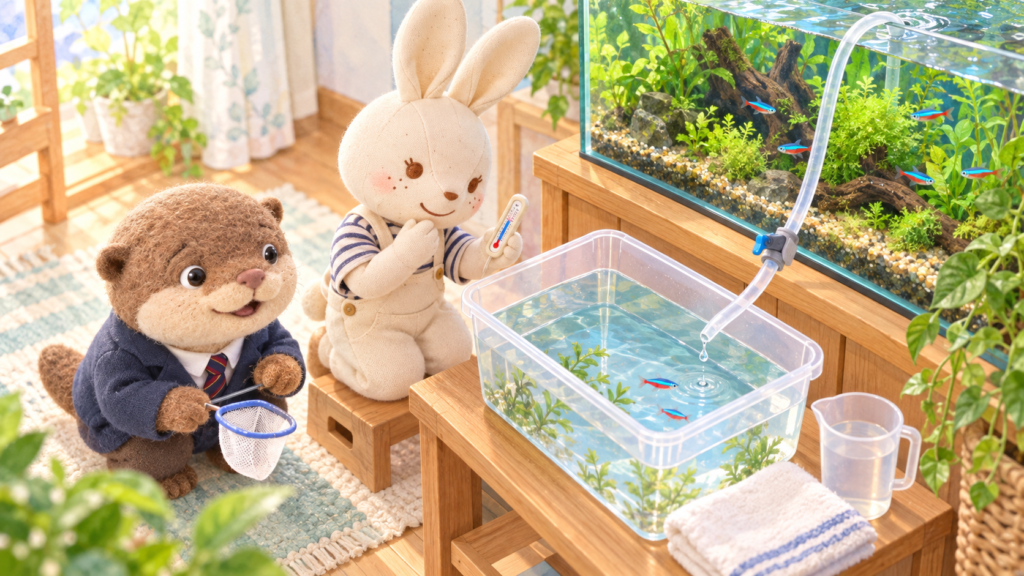 アイのアクアグッズ案内水合わせの道具とやり方|魚を迎える前にそろえたい容器・点滴キット・ネット買ってきた魚はすぐ水槽に入れていい? 水温合わせと水合わせの違いから、透明ケース・点滴キット・ネットの選び方、時間をかけすぎない注意点まで、アイとコタロウが紹介します。記事はコチラ →
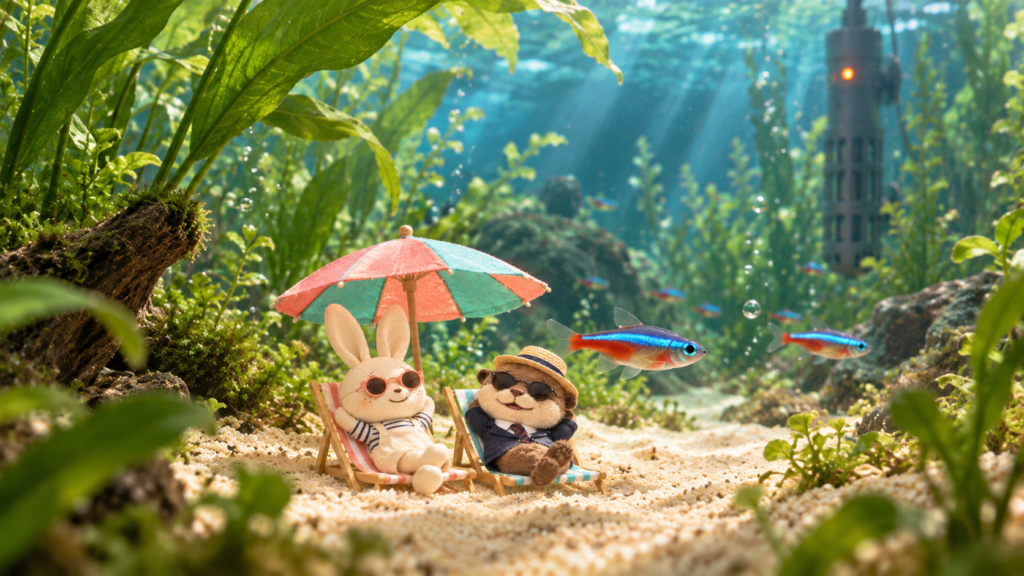 アイのアクアグッズ案内水槽用ヒーターの選び方|固定式・温度調節式と、水量に合うW数の考え方水槽の魚は冬に寒くない? アイとコタロウが水温計から固定式・温度調節式・分離式ヒーターまで比較。水量と室温に合うW数、設置場所、水換えや交換の注意点を、国内メーカーの商品とともに紹介します。記事はコチラ →
さまざまな飼育テーマをご紹介。リンク先の記事には広告・商品紹介が含まれます。
案内・紹介記事一覧へ →分布マップ
茶金(Carassius auratus)は野生種としての自然分布を持たない観賞用品種です。金魚の祖先系統は中国のフナ類に由来し、茶金は中国で発達したオランダ獅子頭系統を背景に成立し、日本には20世紀中頃に導入されたとされるため、中国から日本を含む東アジアを概略範囲として表示しています。
※この地図は、記事中の分布情報をもとに品種の成立・導入地域を概略的に示したものです。表示範囲やマーカーは自然分布域・生息範囲・実際の採集地点を示すものではありません。マーカーは地図表示のために設定した代表地点です。
参考文献
-
Fricke, R., Eschmeyer, W. N. & Van der Laan, R. (eds.). Eschmeyer’s Catalog of Fishes: Carassius auratus (Linnaeus, 1758).California Academy of Sciences. 分類、学名、東アジアにおける分布、淡水魚であること、観賞用品種が多数作出されていることの確認に参照。
-
Froese, R. & Pauly, D. (eds.). FishBase: Carassius auratus (Linnaeus, 1758).生息環境、淡水域での生態、pHの範囲、食性、沈水植物への産卵など、金魚という種の基礎生態と繁殖特性の確認に参照。
-
Watson, C. A., Hill, J. E. & Pouder, D. B. (2004). Species Profile: Koi and Goldfish. SRAC Publication No. 7201.金魚の観賞用品種、冷水性魚としての性質、成長、寿命、一般的な飼育・養殖管理の基礎情報の確認に参照。
-
Livengood, E. J. & Chapman, F. A. The Ornamental Fish Trade: An Introduction with Perspectives for Responsible Aquarium Fish Ownership. UF/IFAS Extension, FA124.生物ろ過によるアンモニア管理、適切な給餌、水質維持、導入魚の隔離、衛生管理など、家庭水槽での基本的な飼育条件と疾病予防の確認に参照。
-
Kobayashi, M., Iwata, E. & Sorensen, P. W. (2026). Environmental and Physiological Regulation of Reproduction in the Goldfish: Gonadal Development, Maturation, and Spawning Behavior: A Review. Animals, 16(5), 775.季節的な繁殖、水温上昇や換水などの環境刺激、水草・人工産卵床を利用した産卵行動など、繁殖条件の確認に参照。
-
Petty, B. D., Francis-Floyd, R. & Yanong, R. P. E. Parasitic Diseases of Fish. Merck Veterinary Manual.白点病の原因である Ichthyophthirius multifiliis、主な症状、診断の考え方、感染拡大を防ぐ管理上の注意点の確認に参照。
-
Petty, B. D., Francis-Floyd, R. & Yanong, R. P. E. Bacterial Diseases of Fish. Merck Veterinary Manual.Aeromonas 属による感染症、金魚で確認される潰瘍性疾患、カラムナリス症、および水質悪化・低酸素・温度変化・外傷などが発症リスクを高める点の確認に参照。
-
Zhang, J., Zhou, J., Pan, Y., He, W. & Li, C. (2026). Comparative study of the histology and Micro-CT scan of the goldfish hood. Aquaculture and Fisheries, 11(1), 152–159.オランダ型金魚の肉瘤が皮膚組織の増生であり、表皮の真皮への不規則な伸長や疎な結合組織などを伴うことの確認に参照。




コメント