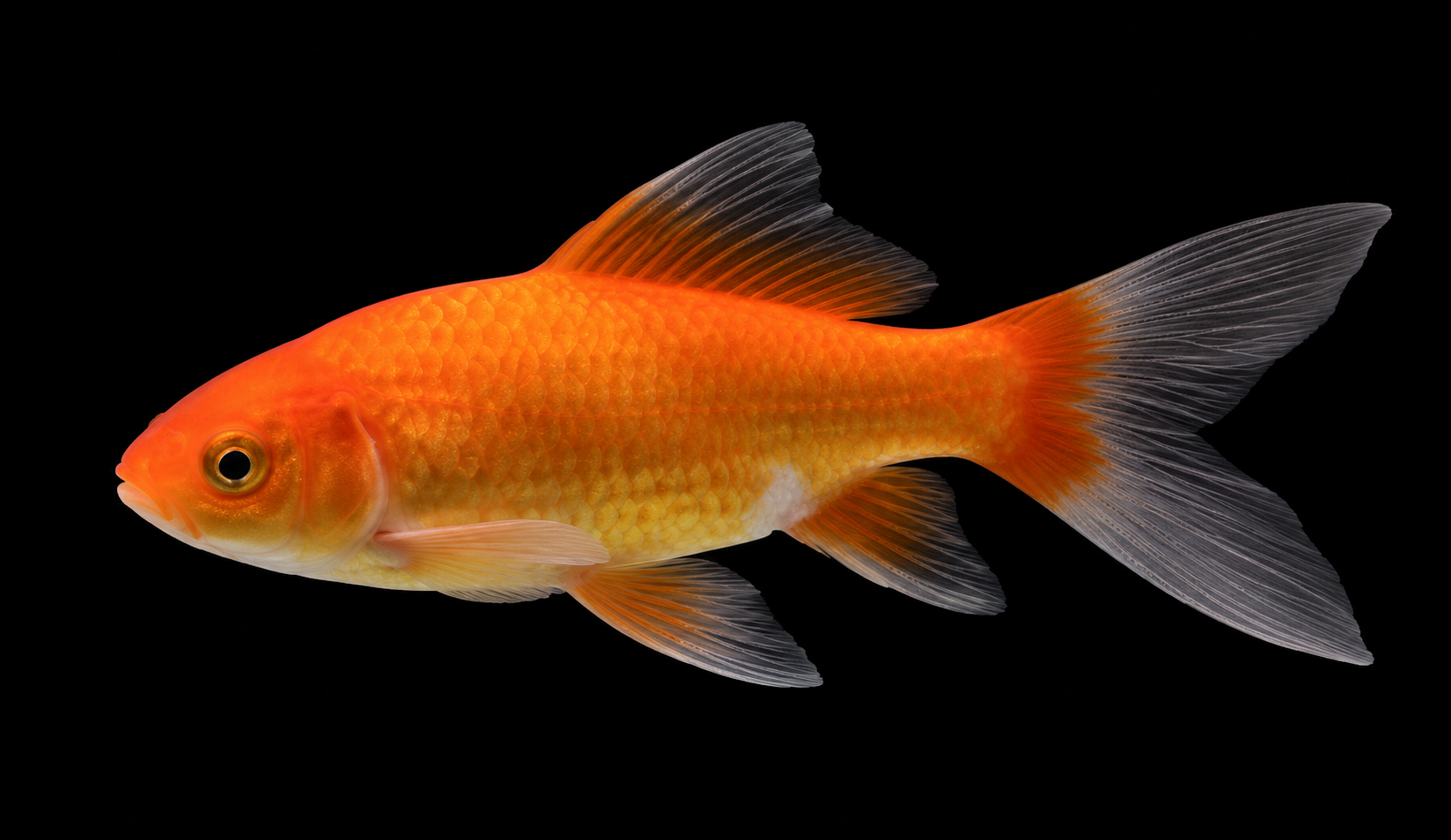
赤コメットは、金魚のコメット型のうち、赤から橙赤色を主体とする個体に用いられる国内流通上の呼称です。独立した魚種や亜種ではなく、細長い体、単尾、長く伸びる尾鰭や各鰭というコメットらしい姿に、鮮明な赤色が重なった長物金魚です。赤の濃さや尾の長さには個体差があり、泳ぐたびに長い尾が大きくなびくため、横見の大型水槽でも池での上見でも存在感があります。成長すると30cm前後まで大きくなる可能性があるため、小型容器での終生飼育には向きません。十分な遊泳距離とろ過能力を備え、水質を安定させることが長期飼育の基本です。The Red Comet is a Japanese trade name used for Comet-type goldfish whose coloration is predominantly red to orange-red. It is not a separate species or subspecies, but a long-bodied, single-tailed goldfish with the elongated caudal and other fins characteristic of the Comet. The depth of red coloration and fin length vary considerably among individuals. Its flowing tail is especially striking in motion, giving the fish a strong presence both from the side in a large aquarium and from above in a pond. Because it can grow to around 30 cm, it is not suited to lifelong care in a small container. Long-term care should provide generous swimming space, adequate filtration, and stable water quality.
基本情報 / Basic Information
学名 / Scientific Name
Carassius auratus (Linnaeus, 1758)
通称 / Common Name
赤コメット、素赤コメット。いずれも主として体色を示す国内流通名で、単一の固定血統を意味する名称ではありません。Red Comet, solid-red Comet. These are trade and color-designation names rather than names for a single formally fixed bloodline.
分類 / Family
コイ目コイ科フナ属。観賞金魚としては長手・単尾型のコメットに含まれます。Order Cypriniformes, family Cyprinidae, genus Carassius. As an ornamental goldfish, it belongs to the long-bodied, single-tailed Comet type.
英名 / English Name
Red Comet Goldfish / Comet Goldfish (red color form)
分布 / Distribution
観賞用に作られ流通する金魚のため、赤コメットというタイプ自体に自然分布はありません。金魚の祖先系統は東アジアに由来し、現在は観賞魚として世界各地で飼育・生産されています。日本国内では国産系と輸入系の双方が流通します。As a domesticated ornamental form, the Red Comet has no natural distribution of its own. Goldfish ancestry is East Asian, and goldfish are now bred and kept worldwide. In Japan, both domestically produced and imported Red Comets are available.
最大体長 / Max Size
おおむね30cm前後を想定します。一般の金魚では30cmを超える例もあるため、若魚の販売サイズだけで終生の設備を決めないことが重要です。Plan for roughly 30 cm in total length. Goldfish can sometimes exceed 30 cm, so long-term housing should not be chosen solely on the basis of the size of a juvenile at purchase.
寿命 / Lifespan
10~15年程度がひとつの目安ですが、良好な環境では20年以上生きる可能性もあります。赤コメット固有の寿命統計は確認されていないため、金魚全般の知見を基準に長期飼育を考えます。Around 10–15 years is a practical expectation, but well-kept goldfish can live for more than 20 years. Because lifespan data specific to Red Comets are not established, long-term planning should follow evidence from goldfish in general.
飼育環境 / Aquarium Environment
水槽サイズ / Tank Size
成魚まで見据えるなら、120cm規格水槽(約240L)以上を一つの目安にします。90cm規格水槽(約180L)で管理される例もありますが、30cm前後まで育つ可能性のある活発な長物金魚では、遊泳距離に余裕があるほど管理しやすくなります。複数の成魚では120cmワイド水槽(約300L以上)や、それ以上の大型水槽・池が適しています。必要な大きさは体格、尾数、ろ過能力によって変わるため、販売時の小さなサイズだけで終生の設備を決めないことが重要です。For long-term adult care, a standard 120 cm aquarium of roughly 240 L or larger is a useful planning reference. A standard 90 cm aquarium of around 180 L is also used in some situations, but active long-bodied goldfish that may grow to around 30 cm are easier to manage when given more swimming length. For multiple adults, a wide 120 cm aquarium of about 300 L or more, a larger system, or a pond is preferable. The required size varies with actual body size, stocking level, and filtration capacity, so lifelong housing should not be chosen solely from the small size of a fish at purchase.
水温 / Temperature
日常管理では20~24℃前後を扱いやすい目安とし、急激な温度変化を避けます。季節変化には比較的順応しますが、夏は高水温による溶存酸素低下に注意してください。金魚胚の研究では34℃で強い悪影響が確認されていますが、これは成魚の致死温度を示す値ではありません。For routine aquarium care, around 20–24°C is a practical target, with sudden temperature changes avoided. Goldfish can adapt to seasonal variation, but warm summer water reduces dissolved oxygen and requires particular care. Experimental work on goldfish embryos found severe adverse effects at 34°C, although this should not be interpreted as a lethal temperature threshold for adults.
水質 / Water Quality
淡水。pH6.5~7.5前後を目安に、何より急変を避けて安定させます。アンモニア0.1mg/L未満、亜硝酸0.2mg/L未満、硝酸塩50mg/L未満を管理目標の参考とし、十分な生物ろ過と定期換水を行います。赤コメットは成長すると排泄量も増えるため、見た目の水量より窒素負荷を処理できる設備が重要です。Freshwater. A pH around 6.5–7.5 is a useful target, with stability more important than chasing a precise number. As practical management references, keep ammonia below 0.1 mg/L, nitrite below 0.2 mg/L, and nitrate below 50 mg/L, supported by effective biological filtration and regular partial water changes. As Red Comets grow, their waste output increases substantially, so filtration capacity matters as much as visible water volume.
レイアウト / Layout
中央から前面に広い遊泳スペースを確保し、流木や石を使う場合は尾鰭を傷つける鋭い部分を避けます。丈夫な水草や人工水草で適度な隠れ場所を作りつつ、泳ぎを妨げない配置にします。ろ過器の吐出口で水面を動かし、必要に応じてエアレーションを追加すると、特に夏場の酸素確保に役立ちます。Leave a broad open swimming area through the center and front of the aquarium. If driftwood or stones are used, avoid sharp surfaces that could tear the long fins. Hardy live plants or artificial plants can provide cover, but should be arranged so that they do not obstruct swimming. Surface agitation from the filter, supplemented with aeration when needed, is especially useful for maintaining oxygen during warm weather.
注意点 / Precautions
小さな金魚鉢での終生飼育には向きません。成長の速さには個体差がありますが、大型化と長寿命を前提に設備を用意してください。新しく迎えた個体は既存魚へすぐ混ぜず、可能なら隔離観察を行います。高密度飼育、過剰給餌、ろ過不足は水質悪化と疾病リスクを高めるため、定期的な水質測定と換水を習慣にします。This fish is not suited to lifelong care in a small bowl. Growth rate varies widely among individuals, but the system should be planned for a large, long-lived fish. Newly acquired fish should not be mixed immediately with established stock; quarantine and observation are preferable when possible. Overstocking, overfeeding, and inadequate filtration raise the risk of poor water quality and disease, so routine testing and partial water changes are important.
餌と給餌 / Feeding
餌の種類 / Diet
主食は金魚用の完全配合飼料を基本にします。粒径の合う沈下性または浮上性ペレットを中心に、補助的にミジンコ、冷凍アカムシ、加熱して柔らかくした植物質などを少量取り入れると食性に変化をつけられます。栄養の偏りを避けるため、単一の生餌だけに頼らないようにします。Use a nutritionally complete goldfish food as the staple diet. Appropriately sized sinking or floating pellets can be supplemented in small amounts with foods such as daphnia, frozen bloodworms, and softened vegetable matter. Avoid relying on a single live or frozen food as the sole diet, as this can create nutritional imbalance.
給餌のポイント / Feeding Tips
一度に多量を与えず、短時間で食べ切れる量を基本にします。成長期は少量を複数回に分ける方法も使えますが、残餌が出る量まで増やさないことが重要です。低水温期は代謝と摂餌が落ちるため、魚の反応を見ながら量を減らします。体格差がある複数飼育では、餌場を分けて弱い個体にも行き渡るようにします。Avoid large meals and feed only an amount that can be consumed quickly. During active growth, smaller portions can be divided into several feedings, but not to the point that uneaten food accumulates. Feeding should be reduced as metabolism and appetite decline in colder water. When fish of different sizes are kept together, feeding in more than one area helps ensure that less competitive individuals receive food.
性格と混泳 / Temperament and Tank Mates
性格 / Temperament
基本的には温和で活動的です。長手型らしく遊泳力があり、水槽内を広く使って泳ぎます。餌への反応は強く、産卵期には雄が雌を追尾する行動が目立つことがあります。口に入る大きさの小魚や卵、稚魚などは捕食される可能性があります。Generally peaceful and active. As a long-bodied goldfish, it is a capable swimmer that makes full use of the aquarium. It can be highly food-motivated, and mature males may chase females more noticeably during the breeding season. Small fish, eggs, and fry may be eaten if they fit into the mouth.
混泳の相性 / Compatibility
同程度の大きさで遊泳力のある和金、コメット、朱文金などの長物金魚とは合わせやすい傾向があります。泳ぎの遅い丸手の金魚とは餌競争で差が出ることがあるため、体格と摂餌状況をよく観察します。ヒレをかじる魚や高水温を必要とする熱帯魚との混泳は避けた方が安全です。極端に小さな魚は捕食される可能性があります。It is usually most compatible with similarly sized, strong-swimming long-bodied goldfish such as Wakins, other Comets, and Shubunkins. Slow-swimming fancy goldfish may be disadvantaged at feeding time, so body condition and food access should be monitored carefully. Avoid fin-nipping species and tropical fish that require consistently high temperatures. Very small fish may be swallowed.
病気と対策 / Diseases and Prevention
かかりやすい病気 / Common Diseases
赤コメットだけに特有の病気が知られているわけではなく、金魚全般でみられる外部寄生虫症、細菌性の体表・鰭・鰓の感染症、浮力異常などの健康トラブルに注意します。金魚ヘルペスウイルス2型(CyHV-2)による疾病も金魚で知られており、食欲低下、元気消失、鰓の蒼白などがみられることがあります。こうした症状だけで病名を確定することはできないため、異常が続く場合は魚類診療に対応する獣医師へ相談するのが安全です。No disease is known to be unique to Red Comets. As with other goldfish, watch for external parasitic diseases, bacterial infections affecting the skin, fins, or gills, and buoyancy problems. Cyprinid herpesvirus 2 (CyHV-2) is also known to infect goldfish and may be associated with reduced appetite, lethargy, and pale gills. These signs are not enough to establish a diagnosis on their own, so persistent illness should be assessed by a veterinarian experienced with fish whenever possible.
対策と予防 / Prevention
最も重要なのは、病気を持ち込ませないことと、水質悪化によるストレスを減らすことです。新規個体は隔離観察し、網やホースを可能な範囲で使い分けます。アンモニア・亜硝酸の蓄積を防ぎ、過密と過剰給餌を避け、酸素を十分に確保します。薬浴や塩水浴は原因、濃度、魚の状態によって適否が変わるため、予防目的で常用せず、まず水質と症状を確認して原因を切り分けます。The most effective prevention is to reduce disease introduction and minimize stress caused by poor water quality. Quarantine new fish and, where practical, use separate nets and hoses. Prevent ammonia and nitrite accumulation, avoid crowding and overfeeding, and maintain adequate oxygen. The suitability of medication or salt treatment depends on the cause, concentration, and condition of the fish, so they should not be used routinely as preventive measures; first check water quality and assess the signs.
増やし方(繁殖) / Breeding
雌雄の判別 / Sexing
成熟期の雄では、鰓蓋や胸鰭の前縁に追星と呼ばれる白い小突起が現れることがあります。雌は抱卵すると腹部がふっくらしやすく、上から見たときに体幅が増して見えることがあります。ただし若魚や繁殖期以外では外見だけの判別が難しく、複数の特徴を合わせて判断します。During the breeding season, mature males may develop small white breeding tubercles on the gill covers and leading rays of the pectoral fins. Gravid females often become fuller through the abdomen and may appear broader when viewed from above. Outside the breeding season, and especially in juveniles, visual sexing can be difficult, so several characteristics should be considered together.
繁殖形態 / Reproduction
卵生で、水草や産卵床などに粘着性の卵を多数ばらまくタイプです。成熟した雄が雌を追尾し、産卵と同時に放精します。親魚は卵を保護せず、むしろ食べてしまうため、採卵後は親魚と卵を分ける管理が一般的です。Oviparous and an egg-scattering breeder. The female releases numerous adhesive eggs onto plants or spawning media while males follow and release sperm. The parents do not guard the eggs and may eat them, so eggs are commonly separated from the adults after spawning.
繁殖のポイント / Breeding Tips
成熟した雌雄を十分に給餌して状態を整え、春から初夏にかけて水温が上がる時期に産卵床を用意します。コメットを用いた誘発繁殖試験では18~22℃で産卵が確認されていますが、これは家庭での標準成功率を示すものではありません。産卵後は親魚を分け、卵へ十分な酸素を供給し、過密と急激な温度上昇を避けます。孵化後の仔魚は口の大きさに合う微細な餌から始め、成長に合わせて餌の粒径を上げていきます。Condition mature males and females with adequate nutrition and provide spawning media as temperatures rise from spring into early summer. Experimental induced breeding of Comet goldfish has produced spawning at 18–22°C, but these results should not be interpreted as a standard household success rate. After spawning, separate the adults, maintain good oxygenation around the eggs, and avoid crowding or abrupt overheating. Newly hatched fry should begin with very fine foods suited to their mouth size, with food size increased as they grow.
雑学と豆知識 / Trivia and Fun Facts
1. 「赤コメット」は魚種名ではない / 1. “Red Comet” is not a species name
赤コメットを理解するうえで最初に押さえたいのは、「赤コメット」という名前が分類学上の魚種名ではないことです。学術的には金魚である Carassius auratus に含まれ、その中のコメット型で赤色を主体とする個体を、日本の流通現場で赤コメット、あるいは素赤コメットと呼んでいます。つまり同じ名称で売られていても、すべてがひとつの親魚系統から続く固定血統とは限りません。赤の濃さ、尾の長さ、体型に幅があるのは欠点というより、この呼称が「厳密な系統名」ではなく「姿と色を表す販売カテゴリー」として使われてきたことの表れと見る方が自然です。The first key to understanding the Red Comet is that the name is not a taxonomic species designation. Scientifically, these fish are goldfish, Carassius auratus, and the Japanese aquarium trade uses names such as Red Comet or solid-red Comet for predominantly red individuals of the Comet type. Fish sold under the same name therefore do not necessarily descend from one formally fixed parental line. Variation in color depth, tail length, and body form is best understood as a consequence of the name functioning as a commercial color-and-form category rather than as a strict lineage designation.
2. 名前の「コメット」は彗星を思わせる尾から / 2. The name “Comet” evokes a comet’s tail
コメットの名には、具体的な由来を示す古い記録があります。Hugo Mulerttは1883年の著書で、1881年夏に得た長い尾をもつ個体を、そのころ空を照らしていた長尾の彗星にちなみ「Comet」と名付けたと記しています。長く大きな尾と細長い体つきは、当時からこの金魚を特徴づける要素でした。赤コメットでは体色が比較的単純なぶん、尾の伸びや左右のバランス、尾筒の力強さ、泳ぎそのものが目立ちます。じっと止まった写真だけでなく、実際に泳ぐ姿でも魅力が伝わりやすい金魚です。There is an early written account explaining the name “Comet.” In his 1883 book, Hugo Mulertt wrote that he named a long-tailed fish obtained in the summer of 1881 after a long-tailed comet that was illuminating the sky at the time. The large flowing tail and elongated body were already central to the fish’s identity. Because Red Comets often have relatively simple coloration, the extension and symmetry of the tail, the strength of the caudal peduncle, and the quality of the swimming motion become especially noticeable. Their character is often appreciated as clearly in motion as in a still photograph.
3. 1881年の記録はあるが、親魚までは分からない / 3. An 1881 record exists, but the parentage remains unclear
コメットの起源については、まったく手掛かりがないわけではありません。Mulertt自身の1883年の記録には、1881年夏に交配から得た個体をコメットと名付けたことが記されています。ただし、その記述だけでは交配に用いた親魚の組み合わせまでは特定できません。したがって、コメットという名称と1881年の作出記録には具体的な根拠がある一方、現在のコメットへ至るすべての血統や交配過程まで断定するのは避けるのが適切です。The origin of the Comet is not entirely undocumented. In his own 1883 account, Mulertt wrote that he obtained the fish through a crossing in the summer of 1881 and named it “Comet.” However, that passage does not identify the exact parental combination. It is therefore reasonable to regard the Comet name and an 1881 breeding record as specifically documented while avoiding certainty about every lineage and crossing that led to the modern form.
4. 「素赤」は色を説明する日本らしい言葉 / 4. “Suaka” is a distinctly Japanese color term
日本の金魚流通では、白斑の目立たない赤一色の個体を「素赤」と表現することがあります。そこで赤を主体とするコメットが「素赤コメット」と呼ばれるのは、日本の金魚文化で育った色彩表現をコメットに重ねたものと考えられます。ただし「素赤」という販売名は、将来にわたって一切白が出ないことを遺伝学的に保証する言葉ではありません。若魚は成長とともに色調が変わることもあるため、名前だけでなく、その時点の個体の発色や体表を見て選ぶ楽しみがあります。In the Japanese goldfish trade, the term “suaka” is used for fish that appear predominantly solid red, with little or no conspicuous white patterning. Calling a fish a “Suaka Comet” therefore reflects a color vocabulary rooted in Japanese goldfish culture. The term should not, however, be interpreted as a genetic guarantee that no white will ever appear later in life. Juvenile coloration can change as the fish matures, which makes the actual color and condition of the individual fish more informative than the sales name alone.
5. 小さく売られていても、暮らしは長く大きい / 5. A small fish in the shop can become a large, long-term companion
赤コメットは店頭では手のひらより小さな若魚として出会うことがありますが、国内では17~20cm級の当歳魚が販売された例があり、最終的には30cm前後を見込む必要があります。さらに金魚は10年以上生きることが珍しくなく、良好な環境では20年以上に達することもあります。購入時のサイズだけを見ると気軽な小型魚に思えますが、実際には水槽の拡張、ろ過能力、夏の酸素管理、長期の餌代まで含めて付き合う魚です。その分、数年かけて尾が伸び、体格が整い、泳ぎに迫力が出ていく変化を長く楽しめます。Red Comets may be encountered in shops as juveniles smaller than a hand, yet Japanese sales records include first-year fish already 17–20 cm long, and adults should be planned for at around 30 cm. Goldfish also commonly live for more than a decade, with some individuals surviving beyond 20 years under excellent care. A small fish at purchase can therefore become a substantial long-term commitment involving larger housing, stronger filtration, summer oxygen management, and years of feeding. In return, the gradual development of the tail, body, and swimming presence can be enjoyed over a very long period.
まとめ / Conclusion
赤コメットは、赤から橙赤色を主体とする体色と、長く流れる尾を力強い泳ぎの中で楽しめるコメット型の金魚です。独立した魚種や単一の固定血統を示す名称ではないため、赤の濃さ、尾の伸び方、体型には個体差があります。成長後は30cm前後まで大きくなる可能性があり、その体格に見合う遊泳空間を確保すると、コメットらしい伸びやかな動きが引き立ちます。The Red Comet is a Comet-type goldfish whose red to orange-red coloration and flowing tail are best appreciated in active, open swimming. The name does not represent a separate species or a single fixed bloodline, so individuals vary in color intensity, tail development, and body shape. Because adults may grow to around 30 cm, housing that provides swimming space appropriate to that size allows the characteristic movement of the Comet form to be seen at its best.
長く付き合うために大切なのは、十分な水量とろ過、水質の安定、食べ残しを出さない給餌、新しい魚を慎重に迎えることです。小さな若魚から年月をかけて体格と尾が育っていく過程も、赤コメットならではの見どころのひとつです。Long-term care depends on adequate water volume and filtration, stable water quality, controlled feeding without leftover food, and cautious introduction of new fish. Watching a small juvenile gradually develop its body and flowing tail over the years is one of the distinctive rewards of keeping a Red Comet.
Ortega-Salas, A. A. & Reyes-Bustamante, H. (2006). Initial sexual maturity and fecundity of the goldfish Carassius auratus under semi-controlled conditions.
Revista de Biología Tropical, 54(4), 1113–1116. DOI: 10.15517/rbt.v54i4.3086
Rahaman, S. M. B., Mahmud, Z., Ahmed, F., Ghosh, A. K. & Sabbir, W. (2011). Induced Breeding, Embryonic and Larval Development of Comet Gold Fish (Carassius auratus).
Motta, J. H. S. et al. (2023). Effect of temperature on embryonic development and first exogenous feeding of goldfish Carassius auratus (Linnaeus, 1758).
Brazilian Journal of Biology, 83, e270943. DOI: 10.1590/1519-6984.270943






コメント