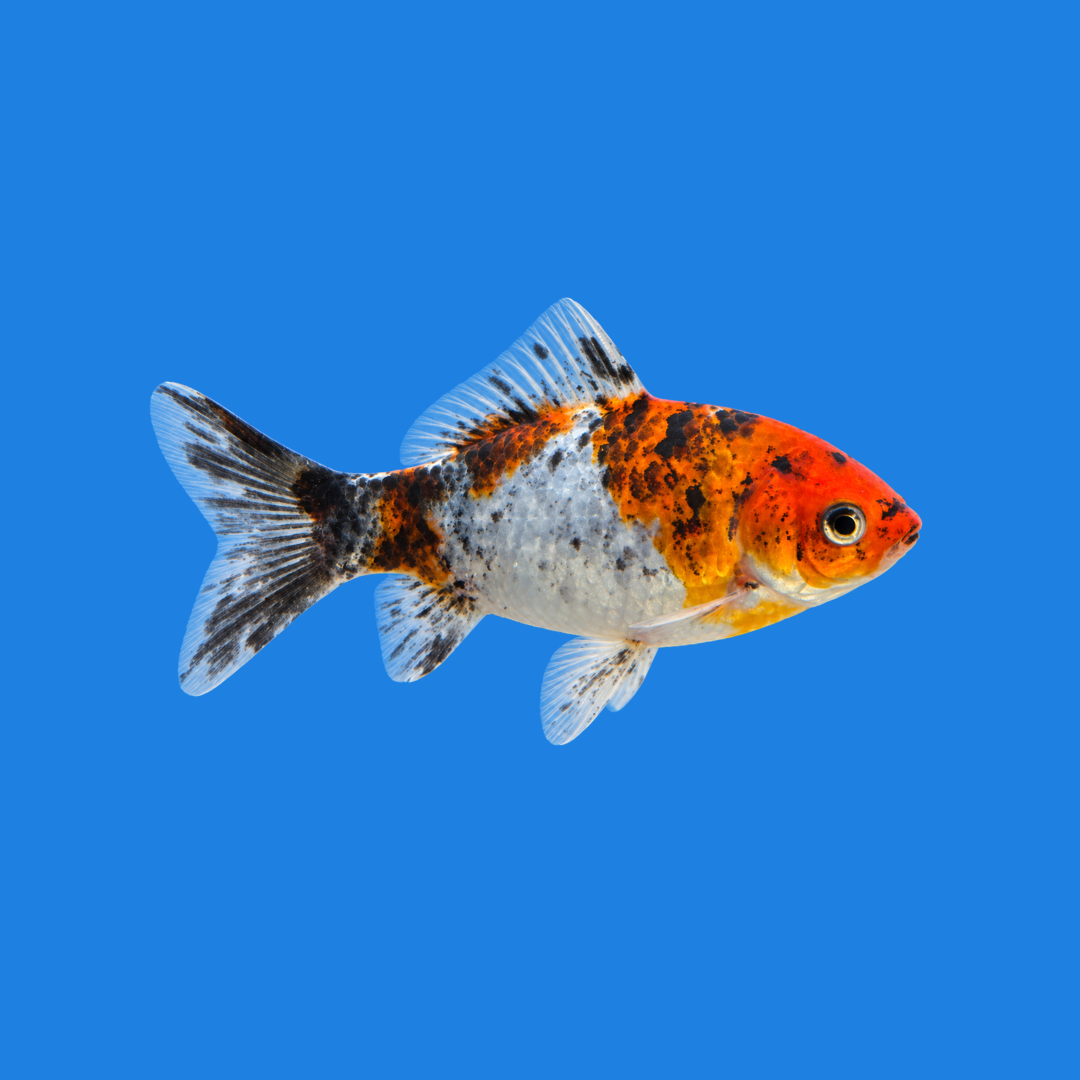
三色和金は、赤・白・黒の三色が混じる和金型の金魚です。細長い体型で遊泳力が高く、尾形にはフナ尾や開き尾など個体・系統による違いがあります。三色の入り方も一匹ごとの差が大きく、紅白の面積や黒斑の位置、鱗の光沢、尾形などによって印象が変わります。東京都江戸川区や埼玉県などで生産される金魚として知られ、愛知県弥富のような金魚の流通拠点でも取り扱われています。鱗質にも銀鱗や透明鱗系を含むバリエーションが見られます。活発に泳ぎ、成長すると必要な水量も増えるため、十分な遊泳スペースとろ過、酸素供給を確保することが大切です。Sanshoku Wakin is a Wakin-type goldfish with a mixture of red, white, and black coloration. It has a long, streamlined body and strong swimming ability, while tail form can vary between individuals and lines, including single crucian-type tails and open tails. The distribution of the three colors also differs greatly from fish to fish, so the balance of red and white, the placement of black markings, scale luster, and tail form all affect its appearance. It is known from goldfish-producing areas such as Edogawa in Tokyo and Saitama, and is also handled through major goldfish distribution centers such as Yatomi in Aichi. Variants with ginrin and transparent-scale traits are also seen. Because it is active and requires more water volume as it grows, ample swimming space, filtration, and oxygenation are important.
コイ科・フナ属の金魚Family Cyprinidae; goldfish of the genus Carassius
英名 / English Name
Tricolor Wakin Goldfish
分布 / Distribution
日本国内で観賞用に生産・流通する金魚の一品種。東京都江戸川区や埼玉県などで生産例が知られ、愛知県弥富などの金魚流通地域でも取り扱われる。An ornamental goldfish variety produced and traded in Japan. Production is known from areas including Edogawa in Tokyo and Saitama, and the variety is also handled in goldfish distribution centers such as Yatomi in Aichi.
最大体長 / Max Size
三色和金に限定した信頼できる最大体長の基準は確認しにくい。10cm前後は流通サイズの一例にすぎず、和金型はその後も成長するため、成長後を見越した飼育スペースを確保する。A reliable variety-specific maximum size is not well established for Sanshoku Wakin. Around 10 cm is only one common market size, and Wakin-type goldfish continue growing, so housing should allow for their adult size.
寿命 / Lifespan
適切な管理下では10年以上生きる例がある。Under appropriate care, individuals may live for more than 10 years.
飼育環境 / Aquarium Environment
水槽サイズ / Tank Size
60cm規格水槽以上を一つの目安とし、若魚は少数から飼育する。和金型は成長すると体格も遊泳量も増えるため、複数飼育や大型個体では90cm規格水槽など、より大きな水槽・容器への移行を検討する。A standard 60 cm aquarium or larger is a practical starting point for a small number of juveniles. As Wakin-type goldfish grow, both body size and swimming activity increase, so larger aquariums or containers, such as a standard 90 cm tank, should be considered for multiple or larger fish.
水温 / Temperature
15~28℃程度に適応し、20~25℃前後では活性と成長を保ちやすい。高温時は酸素量が低下しやすいため、エアレーションを強化する。Adaptable to roughly 15–28°C, with about 20–25°C being suitable for maintaining activity and growth. At high temperatures, strengthen aeration because dissolved oxygen can fall.
水質 / Water Quality
pH 6.5~8.0程度の中性~弱アルカリ性を目安とし、アンモニアと亜硝酸を検出されないレベルに管理する。十分な生物ろ過と酸素供給を行い、定期的に換水する。Aim for neutral to slightly alkaline water around pH 6.5–8.0, with ammonia and nitrite kept at undetectable levels. Provide effective biological filtration, good oxygenation, and regular water changes.
レイアウト / Layout
広い遊泳空間を優先し、底砂を使う場合は大磯砂など管理しやすい素材を薄めに敷く。水草は食害を受けやすいため、丈夫な種類を部分的に配置する程度が扱いやすい。三色模様を見せるには濃色の背景や落ち着いた照明が向く。Prioritize open swimming space. If substrate is used, a manageable material such as coarse river gravel can be laid in a relatively thin layer. Plants may be nibbled, so hardy species are best used sparingly. A dark background and balanced lighting can emphasize the tricolor pattern.
注意点 / Precautions
過密飼育と過給餌は水質悪化につながりやすい。和金型は泳ぎが速く、遅泳性の丸手金魚と同居させると餌取りで差が出やすいため、混泳相手の泳力と給餌状況を確認する。新魚は導入前に隔離し、病気の持ち込みを防ぐ。Overstocking and overfeeding can quickly degrade water quality. Wakin-type goldfish swim quickly, so slower-bodied fancy goldfish may be disadvantaged at feeding time. Check swimming ability and feeding access when mixing fish. Quarantine new arrivals before introduction to reduce disease risks.
餌と給餌 / Feeding
餌の種類 / Diet
金魚用の顆粒・ペレット・フレークを主食とし、冷凍アカムシ、ミジンコ、ブラインシュリンプなどを補助的に与える。色揚げを意識する場合はアスタキサンチン配合飼料も利用される。Use balanced goldfish granules, pellets, or flakes as the staple diet, supplemented with foods such as frozen bloodworms, daphnia, and brine shrimp. Astaxanthin-containing feeds may also be used when color enhancement is desired.
給餌のポイント / Feeding Tips
1日1~2回、数分で食べきれる量を目安にする。低水温時は代謝に合わせて量を減らす。食欲低下や浮き方の異常が見られる場合は原因を消化不良と決めつけず、まず水質や全身状態を確認し、必要に応じて給餌量を見直す。食べ残しは速やかに取り除く。Feed once or twice daily in an amount that can be eaten within a few minutes. Reduce the amount at lower temperatures as metabolism slows. If appetite declines or buoyancy becomes abnormal, do not assume digestive trouble is the sole cause; first check water quality and the fish’s overall condition, and adjust feeding if appropriate. Remove leftovers promptly.
性格と混泳 / Temperament and Tank Mates
性格 / Temperament
和金型らしく活発で遊泳力が高い。基本的には観賞魚として扱いやすいが、給餌時には素早く餌へ集まりやすい。Active and strong-swimming, as expected for the Wakin body type. It is generally manageable as an ornamental fish but can reach food quickly at feeding time.
混泳の相性 / Compatibility
同じ和金型や泳力の近い金魚との混泳が無難。琉金型など比較的ゆっくり泳ぐ品種と混ぜる場合は、餌取り競争が起きていないか注意する。他種との混泳より、体格・泳力・水温条件の近い金魚同士での飼育が管理しやすい。Tank mates with a similar Wakin-type body and swimming ability are the safest choice. When kept with slower fancy varieties such as Ryukin-type fish, watch for feeding competition. Goldfish with similar size, swimming ability, and temperature requirements are generally easier to manage than mixed-species combinations.
病気と対策 / Diseases and Prevention
かかりやすい病気 / Common Diseases
白点病や尾ぐされ病などの感染症に注意する。水質悪化や過密、急な環境変化、新魚導入時の病原体持ち込みは発症リスクを高める。いわゆる「転覆」は単一の病名ではなく、浮いたままになる、沈めない、姿勢を保てないといった異常な浮き方を示す症状として捉える。Watch for infectious problems such as white spot disease and fin rot. Poor water quality, crowding, sudden environmental changes, and pathogens introduced with new fish can increase disease risk. So-called “swim bladder” or overturning problems are better understood as abnormal buoyancy signs—such as persistent floating, inability to sink, or loss of normal posture—rather than as one single disease.
対策と予防 / Prevention
日常的な水質管理、適正な給餌、新魚の隔離が基本となる。異常が見られた場合は、白点・充血・ヒレの崩れ・異常遊泳などの症状を確認し、原因に合った対処を選ぶ。塩浴や薬浴はすべての症状に共通する治療ではないため、市販薬は対象疾病と用法を確認して使用し、判断が難しい場合は魚病に詳しい専門家や獣医師へ相談する。Routine water-quality control, appropriate feeding, and quarantine of new fish are the foundation of prevention. If abnormalities appear, check the actual signs—such as white spots, redness, damaged fins, or abnormal swimming—and choose treatment according to the likely cause. Salt baths and medications are not universal treatments for every condition; use commercial medicines only for their indicated diseases and according to directions, and seek advice from an aquatic-fish specialist or veterinarian when the cause is unclear.
増やし方(繁殖) / Breeding
雌雄の判別 / Sexing
繁殖期のオスは追星が目立ちやすく、メスは成熟すると腹部の膨らみが確認しやすい。繁殖用の親魚は健康状態と体格も併せて確認する。During the breeding season, males may show prominent breeding tubercles, while mature females are easier to identify by a fuller abdomen. Health and body condition should also be checked when selecting broodstock.
繁殖形態 / Reproduction
春季を中心に産卵する卵生。水草や人工の産卵床に多数の粘着性卵を産み付ける。産卵後は親魚による食卵を避けるため、親魚を分離する。An egg-laying fish that commonly spawns in spring. Large numbers of adhesive eggs are deposited on aquatic plants or artificial spawning media. After spawning, remove the adults to reduce egg predation.
繁殖のポイント / Breeding Tips
繁殖を狙う場合は、冬から春にかけて親魚の健康状態と栄養状態を整え、産卵期には雌雄と産卵床を準備する。受精卵の孵化日数は水温に左右され、20℃前後では約4日が一つの目安となる。孵化直後は卵黄を吸収するまで給餌せず、自由遊泳を始めてからゾウリムシ、ワムシ、ブラインシュリンプ幼生などの小さな餌へ移行する。稚魚の選別は固定した日程だけで判断せず、成長に応じて明らかな奇形、体型、尾形、成長差、色柄を段階的に確認する。三色模様には個体差が大きいため、同じ親から生まれた稚魚でも多様な色形が現れる。When breeding is intended, condition the broodstock through winter and spring and prepare males, females, and spawning media for the breeding season. Hatching time depends strongly on water temperature; at around 20°C, about four days is a useful guideline. Newly hatched fry do not need food until their yolk reserves are absorbed. Once they begin free swimming, offer very small foods such as infusoria, rotifers, and newly hatched brine shrimp. Do not base juvenile selection on a rigid timetable alone; as the fry develop, assess obvious deformities, body shape, tail form, growth differences, and coloration in stages. Tricolor patterning varies greatly, so siblings from the same parents can develop quite different colors and markings.
雑学と豆知識 / Trivia and Fun Facts
雑学・豆知識 / Trivia & Fun Facts
三色和金の面白さは、同じ赤・白・黒の組み合わせでも、一匹ごとに模様の入り方が異なるところにあります。更紗和金の紅白に黒斑が加わることで印象が大きく変わり、左右や上見・横見でも見え方が変化します。金魚では、透明鱗のように遺伝機構が研究されている形質がある一方、体色全体は複数の色素細胞や関連遺伝子が関わる複雑な形質です。つまり、三色和金の将来の柄を単純な遺伝比だけで予測することは難しく、繁殖では同じ親から多様な表現の稚魚が現れます。日本の金魚文化は、中国で長く家畜化・選抜されてきた金魚を受け入れた後、国内でも品種改良や養殖技術を発展させてきました。三色和金もその流れの中で、和金型の活発な泳ぎと、個体ごとの配色を見比べる楽しさを併せ持つ存在です。濃い背景の水槽や水鉢では白地と朱赤が目立ちやすく、黒斑が模様全体のアクセントになります。群れで泳がせると個体ごとの柄の違いが次々に見え、和金型らしい動きとともに三色の変化を楽しめます。One of the most appealing features of Sanshoku Wakin is that the same combination of red, white, and black can produce a different pattern on every fish. Adding black markings to a red-and-white base changes the overall impression considerably, and the pattern can look different from the left, right, above, or side. In goldfish, some traits such as transparent scales have been studied genetically, while overall body coloration is a more complex characteristic involving multiple pigment-cell types and associated genes. In practical terms, the future pattern of a Sanshoku Wakin cannot be predicted from a simple inheritance ratio, and siblings from the same parents may develop very different appearances. Goldfish were domesticated and selectively bred in China over a long period, and after their introduction to Japan, breeding and aquaculture techniques continued to develop locally. Sanshoku Wakin fits within that tradition, combining the active swimming style of the Wakin form with the pleasure of comparing individual color patterns. Against a dark aquarium or tub background, the white and vermilion areas stand out more clearly and the black markings act as accents. In a group, the differences between individuals appear one after another as they swim, making the changing tricolor patterns especially enjoyable.
まとめ / Conclusion
三色和金は、細長い和金型の体に赤・白・黒の模様が重なり、一匹ごとに異なる表情を楽しめる金魚です。活発に泳ぐため、成長後を見越した遊泳スペースを確保し、安定した水質と適量の給餌を保つことが長期飼育の基本になります。Sanshoku Wakin combines the long Wakin-type body with variable red, white, and black patterning, giving each fish a distinct appearance. Because it is an active swimmer, long-term care depends on providing enough space for its adult size, stable water quality, and appropriate feeding.
赤・白・黒の入り方は個体差が大きく、成長に伴って見え方が変わることもあります。日々の状態をよく観察しながら育てることで、和金型らしい動きと、その個体ならではの三色模様を長く味わえます。The balance of red, white, and black varies greatly between individuals and may also appear different as the fish grows. By observing the fish carefully from day to day, keepers can enjoy both the lively movement of the Wakin form and the distinctive tricolor pattern of each individual over many years.
Livengood, E. J. & Chapman, F. A. University of Florida IFAS Extension. The Ornamental Fish Trade: An Introduction with Perspectives for Responsible Aquarium Fish Ownership.
https://ask.ifas.ufl.edu/publication/fa124
Environmental and Physiological Regulation of Reproduction in the Goldfish: Gonadal Development, Maturation, and Spawning Behavior: A Review. Animals. 2026;16(5):775.
https://doi.org/10.3390/ani16050775






コメント