

解説 / Description
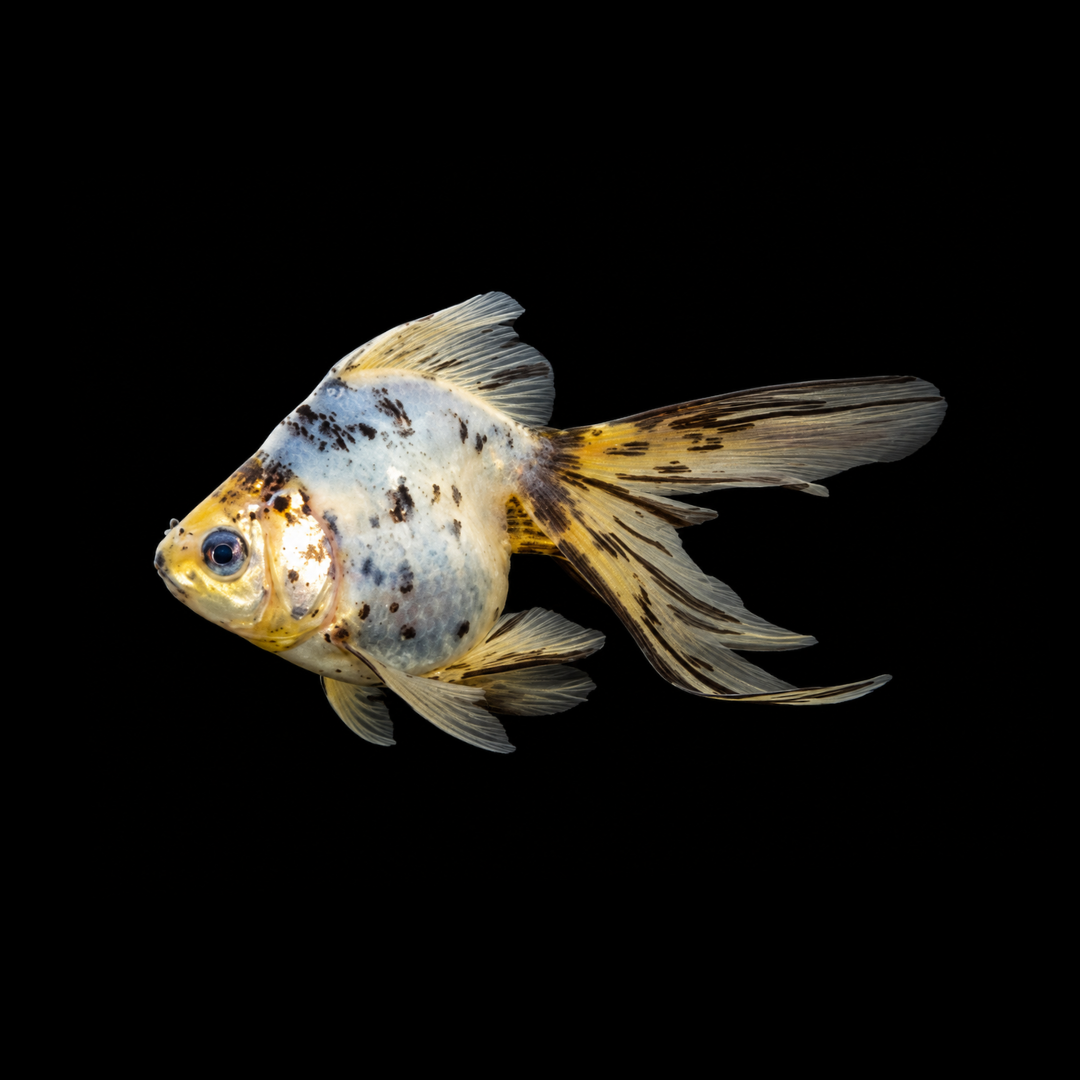
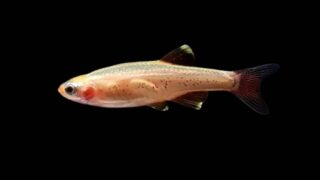
絣琉金(カスリリュウキン)は、琉金の丸く体高のある体型に、キャリコ系の透明感ある色彩が現れた金魚です。国内では、キャリコ系のうち赤色を含まないことを理想とする色柄を「絣」と呼ぶことがあり、浅葱、墨、白から黄白色が不規則に重なる姿を楽しみます。部分的に赤が残る個体も流通し、呼称の境界は生産者や販売店によって一定ではありません。一般には色柄名として用いられますが、生産者によっては独自の系統として作り込まれている例もあります。同じ「絣琉金」の名で流通していても、浅葱の濃さ、墨の量、鱗質、尾型には大きな個体差があります。紅白とは異なる落ち着いた色調と、一尾ごとに異なる模様が魅力です。 Kasuri Ryukin is a goldfish form that combines the deep-bodied, rounded shape of the Ryukin with translucent calico-type coloration. In Japan, “kasuri” is used for a calico-derived pattern in which the ideal is little to no red, leaving combinations of asagi blue-gray, black sumi, and white to cream tones. Some fish retain small areas of red, and the boundary of the term is not completely uniform among breeders and retailers. It is generally used as a color-pattern name, although some breeders also maintain their own Kasuri lines. Fish sold under the same name can therefore differ greatly in asagi intensity, amount of black, scale type, and tail form. Its appeal lies in its restrained coloration and the individual pattern of each fish.
基本情報 / Basic Information
| 学名 / Scientific Name | Carassius auratus |
|---|---|
| 通称 / Common Name | 絣琉金(かすり琉金)。「絣」は主に色柄を示す呼び名として使われ、生産者や販売店によって扱いが異なる場合があります。Kasuri Ryukin. “Kasuri” is primarily a Japanese color-pattern term, and usage may vary among breeders and retailers. |
| 分類 / Family | コイ目・コイ科・フナ属。絣琉金は金魚 Carassius auratus の改良品種・色彩型にあたり、独立した種ではありません。Order Cypriniformes, family Cyprinidae, genus Carassius. Kasuri Ryukin is a domesticated variety or color form of Carassius auratus, not a separate species. |
| 英名 / English Name | Kasuri Ryukin (Japanese trade name; no standardized English common name confirmed) |
| 分布 / Distribution | 人工改良された観賞魚のため、絣琉金そのものに自然分布はありません。日本国内では養魚場、金魚専門店、観賞魚店、通販などを通じて流通します。As a domesticated ornamental form, Kasuri Ryukin has no natural geographic distribution. In Japan it is distributed through breeders, goldfish specialists, aquarium shops, and online retailers. |
| 最大体長 / Max Size | 一般的には全長15〜20cm前後が目安です。系統、尾の長さ、給餌量、飼育密度によって差があり、良好な環境ではさらに大きく育つ個体もいます。Typically around 15–20 cm in total length. Final size varies with strain, tail length, feeding, and stocking density, and some well-grown individuals can become larger. |
| 寿命 / Lifespan | 6〜10年程度をひとつの目安とし、良好な環境では10年以上生きる個体もいます。寿命は水質、過密、給餌、病気の有無、遺伝的素質によって大きく変わります。A practical lifespan estimate is around 6–10 years, while some individuals live beyond 10 years in good conditions. Longevity varies with water quality, stocking density, diet, disease, and genetic background. |
飼育環境 / Aquarium Environment
| 水槽サイズ / Tank Size | 成魚1匹でも100L以上をひとつの目安とし、日本の規格では90cmクラスの水槽を検討すると長期管理に余裕を持たせやすくなります。2匹以上では90cm規格水槽(約150〜180L級)を起点に、匹数に応じてさらに余裕を持たせます。金魚は排泄量が多いため、水量だけでなく、ろ過能力と定期的な換水を含めて飼育環境を考えることが重要です。For one adult fancy goldfish, around 100 L or more is a more appropriate long-term starting point; in Japan, a 90 cm-class aquarium is a practical option. For two or more adults, a standard 90 cm aquarium of roughly 150–180 L should be treated as a starting point and increased as stocking rises. Goldfish produce a high waste load, so filtration and regular water changes are as important as tank volume. |
|---|---|
| 水温 / Temperature | 15〜23℃前後が扱いやすい範囲で、室内では18〜23℃程度を安定して保つと管理しやすくなります。金魚はより広い温度範囲に順応できますが、急激な変化は負担になるため避けます。導入時も購入元と水槽の温度差を確認し、徐々に馴染ませてください。 A stable range of about 15–23°C is suitable, with roughly 18–23°C convenient for routine indoor care. Goldfish can acclimate to a wider temperature range, but rapid changes should be avoided. When introducing a fish, check the temperature difference between the source water and the aquarium and acclimate gradually. |
| 水質 / Water Quality | 中性付近から弱アルカリ性を中心に、pH6.5〜8.5程度の安定した水質が扱いやすい範囲です。アンモニアと亜硝酸は検出されない状態を維持し、硝酸塩をため過ぎないよう定期的に換水します。適正範囲内でも急変を避けることが重要です。Stable water from near-neutral to mildly alkaline, roughly pH 6.5–8.5, is suitable. Keep ammonia and nitrite at undetectable levels and control nitrate with regular water changes. Even within the acceptable range, sudden changes should be avoided. |
| レイアウト / Layout | 泳ぐ空間を広く取り、尖った石や枝状の流木は避けます。琉金は体高が高く尾が大きいため、強い一点水流よりも広く分散した穏やかな流れが向きます。底床を使う場合は角の少ない砂利や砂を選び、掃除のしやすさを優先します。背景色は金魚の体色の見え方や体色調節に影響し、黒や濃色の背景では浅葱や墨が濃く見えることがありますが、遺伝的な柄を固定するものではありません。Leave generous open swimming space and avoid sharp rocks or branching driftwood. Because Ryukin are deep-bodied with broad fins, they do better with gentle, dispersed flow rather than a strong jet. If substrate is used, choose smooth gravel or sand and prioritize ease of cleaning. Background color can affect how goldfish coloration appears and is physiologically regulated; dark backgrounds may make asagi and sumi look deeper, but they do not permanently fix the genetic pattern. |
| 注意点 / Precautions | 浅葱や墨は成長、遺伝的素質、背景、光、体調などの影響を受け、購入時の見え方がそのまま固定されるとは限りません。また、丸い体型の個体では転覆、浮上、沈下などの浮力異常が見られることがあります。過密、急な水温変化、強すぎる水流、食べ過ぎを避け、新規導入魚は可能なら別容器で健康状態を確認してから合流させます。Asagi and black markings can change in appearance with growth, genetics, background, lighting, and condition, so the fish may not look exactly the same as it did at purchase. Deep-bodied individuals may also develop buoyancy abnormalities such as floating, sinking, or rolling. Avoid crowding, abrupt temperature changes, excessive current, and overfeeding, and quarantine new fish when possible before mixing them with an established group. |
餌と給餌 / Feeding
| 餌の種類 / Diet | 金魚用の良質な人工飼料を主食とし、沈下性またはゆっくり沈むタイプが扱いやすいです。補助的に冷凍赤虫、ブラインシュリンプ、ミジンコ類、柔らかい植物質などを組み合わせると食性に幅を持たせられます。色揚げ飼料は体色の見え方を補助する目的で使われますが、絣かどうかを決める遺伝的な色柄そのものを変えるものではありません。Use a high-quality goldfish pellet as the staple diet, preferably a sinking or slowly sinking formula. Frozen bloodworms, brine shrimp, daphnia, and soft plant material can be offered as supplements. Color-enhancing foods can influence the appearance of existing coloration, but they do not change the inherited color-pattern category that makes a fish Kasuri. |
|---|---|
| 給餌のポイント / Feeding Tips | 一度に大量に与えず、活動期は1日1〜2回を基本に、短時間で食べ切れる量へ調整します。育成目的で回数を増やす場合も、総量と水質悪化に注意します。低水温では代謝と消化が落ちるため給餌量を減らし、食欲が乏しいときは無理に与えません。浮きやすい個体では沈下性飼料を選び、急な食餌変更を避けると管理しやすくなります。Avoid large single meals. During active periods, one or two small feedings per day are a practical baseline, adjusted to what the fish can finish quickly. More frequent feeding can be used for growth, but total food intake and water quality must be controlled. Metabolism and digestion slow in cooler water, so reduce feeding and do not force food when appetite is poor. Sinking food is often helpful for fish prone to buoyancy problems, and abrupt diet changes should be avoided. |
性格と混泳 / Temperament and Tank Mates
| 性格 / Temperament | 基本的には温和で人にも慣れやすい金魚です。ただし餌への反応は強く、給餌時には同居魚と競争します。琉金型は和金型より泳ぎがゆっくりで、長い尾や高い体型の個体ほど急流や激しい追い回しを苦手とします。Generally peaceful and quick to associate people with feeding. They are enthusiastic eaters and will compete at mealtime. Ryukin swim more slowly than streamlined common-type goldfish, and fish with especially deep bodies or long fins are less suited to fast current or persistent chasing. |
|---|---|
| 混泳の相性 / Compatibility | 体格と遊泳力が近い琉金、出目金、オランダ系などの丸物金魚が合わせやすい相手です。和金、コメット、朱文金など速く泳ぐ長物とは餌の取り合いで不利になりやすいため、同居させる場合は十分な広さと給餌の工夫が必要です。小型魚やエビ類は捕食される可能性があるため、基本は遊泳力の近い金魚同士で組み合わせると管理しやすくなります。Other fancy goldfish with similar body size and swimming ability, such as Ryukin, Telescope, and Oranda types, are generally the best companions. Faster common, comet, and shubunkin-type goldfish may outcompete them for food, so mixed housing requires ample space and careful feeding. Small fish and shrimp may be eaten, so groups of goldfish with similar swimming ability are usually the easiest to manage. |
病気と対策 / Diseases and Prevention
| かかりやすい病気 / Common Diseases | 白点病、尾ぐされ病、水カビ病、細菌性の体表トラブル、エラの異常など、一般的な金魚の病気に注意します。加えて琉金型では、浮袋機能や消化状態などが関係する転覆・浮上・沈下といった浮力異常が見られることがあります。転覆は単一原因の感染症というより症状の総称として考え、原因を決めつけないことが大切です。Watch for common goldfish problems such as white spot disease, fin rot, fungal growth, bacterial skin lesions, and gill disorders. Ryukin may also develop buoyancy abnormalities such as floating, sinking, or rolling, which can involve swim-bladder function, digestion, body conformation, or other causes. “Swim bladder disease” is best treated as a symptom category rather than assuming one single infectious cause. |
|---|---|
| 対策と予防 / Prevention | ろ過を十分に効かせ、定期換水でアンモニア・亜硝酸の蓄積を防ぎます。温度合わせと水合わせを丁寧に行い、食欲、フン、呼吸、泳ぎ方を日常的に観察します。浮力異常が出たときは、まず水質と水温を確認し、給餌量や餌の種類を見直します。症状が続く、呼吸が速い、出血や潰瘍がある場合は、原因に合わない薬を自己判断で重ねず、魚病に詳しい販売店や獣医師へ相談するのが安全です。Use adequate filtration and regular water changes to prevent ammonia and nitrite accumulation. Acclimate temperature and water chemistry gradually, and routinely observe appetite, feces, breathing, and swimming posture. If buoyancy problems appear, first check water quality and temperature, then review feeding amount and food type. Persistent symptoms, rapid breathing, bleeding, or ulcers warrant expert advice rather than repeated use of medication without a diagnosis. |
増やし方(繁殖) / Breeding
| 雌雄の判別 / Sexing | 繁殖期のオスはエラ蓋や胸ビレ前縁に白い「追星」が現れ、メスを追尾することがあります。成熟したメスは抱卵すると腹部がふっくらし、総排泄孔がやや突出して見える場合があります。ただし体型だけでの判別は誤りやすく、繁殖期の複数の特徴を組み合わせて判断します。In breeding condition, males often develop small white breeding tubercles on the gill covers and leading rays of the pectoral fins and may actively chase females. Gravid females often become fuller in the abdomen and may show a slightly more protruding vent. Body shape alone is unreliable, so use several seasonal signs together. |
|---|---|
| 繁殖形態 / Reproduction | 粘着性の卵を水草や産卵床へばらまく卵生です。親魚は卵を保護せず食べることもあるため、産卵後は親魚か産卵床を分けます。孵化までの日数は水温に左右され、20℃前後ではおおむね数日から1週間ほどが目安です。孵化後は卵黄を吸収して遊泳を始めてから、ブラインシュリンプ幼生、ワムシ、微細な稚魚用飼料などを与えます。Goldfish are adhesive egg scatterers, depositing eggs on plants or spawning mops. The parents provide no care and may eat the eggs, so separate the adults or move the spawning medium after spawning. Hatching time depends on temperature; at around 20°C it is generally several days to about a week. Once the fry have absorbed their yolk and become free-swimming, offer newly hatched brine shrimp, rotifers, or appropriately fine fry food. |
| 繁殖のポイント / Breeding Tips | 絣らしい色柄を狙う場合、単に絣同士を掛ければ同じ外観が揃うわけではありません。古典的な透明鱗遺伝では、モザイク透明鱗に相当するヘテロ個体同士から普通鱗・モザイク透明鱗・全透明鱗が概ね1:2:1に分離すると説明されますが、赤、浅葱、墨の量や配置、体型、尾型はさらに複数の遺伝要因と選別の影響を受けます。親魚の健康状態と体型を優先し、稚魚は成長段階ごとに鱗質、赤の有無、浅葱と墨のバランス、背なり、尾の開きなどを見ながら段階的に選別します。Breeding two Kasuri-looking fish does not produce a uniform batch of Kasuri-looking offspring. Under the classical transparent-scale model, two heterozygous nacreous fish can segregate roughly 1:2:1 into metallic, nacreous, and matt scale phenotypes. However, the amount and placement of red, blue-gray asagi, and black, as well as body and tail form, involve additional genetic and selective factors. Prioritize healthy, well-shaped parents and cull gradually as the fry develop, evaluating scale type, absence or presence of red, balance of asagi and sumi, back profile, and tail structure. |
雑学と豆知識 / Trivia and Fun Facts
| 1. 「絣」は何を指すのか / 1. What “Kasuri” Means | 金魚の世界で「絣」は、キャリコ系の派生色柄として使われる呼び名です。赤色が入らないものが理想とされますが、部分的に赤が残る個体も珍しくありません。そのため、絣琉金は一般には琉金の体型に現れた色柄表現として理解すると分かりやすい一方、生産者によっては独自の系統として作り込まれている例もあります。呼称だけでなく、鱗質、赤の有無、浅葱の見え方、墨の配置を一尾ずつ確認すると、その個体の特徴をつかみやすくなります。In goldfish terminology, “kasuri” is used for a calico-derived color pattern in which an absence of red is considered ideal, although small red areas are not unusual. It is therefore easiest to understand Kasuri Ryukin primarily as a color expression on a Ryukin body, while recognizing that some breeders also develop their own established lines. Looking at scale type, residual red, asagi tone, and the placement of black gives a clearer picture of each fish than the label alone. |
|---|---|
| 2. キャリコ琉金から続く明治の物語 / 2. The Meiji-Era Story Behind Calico Ryukin | 琉金は江戸時代に中国から琉球を経て日本へ伝わったとされます。明治期には、初代秋山吉五郎が琉金と三色出目金を交配してキャリコ琉金を作出したと伝えられており、これが絣琉金につながる色彩上の土台になりました。米国人フランクリン・パッカードからの依頼が作出の契機だったという経緯も、金魚関係の資料で広く紹介されています。絣の浅葱や墨は、こうしたキャリコ系のモザイク透明鱗と色素配置の延長上にある表現です。Ryukin is believed to have reached Japan from China through the Ryukyu Islands during the Edo period. In the Meiji era, the first Kichigoro Akiyama is widely credited with creating Calico Ryukin by crossing Ryukin with calico telescope goldfish. Goldfish references also commonly report that a request from the American Franklin Packard helped prompt the project. The asagi and sumi seen in Kasuri are best understood as an extension of the nacreous scale type and pigment distribution found in calico lines. |
| 3. 浅葱は「青い色素」だけで説明できない / 3. Asagi Is More Than a Simple Blue Pigment | 絣琉金の浅葱は、青い色素が一種類だけ存在しているために見える色ではありません。金魚では、体の深い位置にある黒色素が、透明鱗やモザイク透明鱗を通して青灰色に見えることがあり、鱗や皮膚にあるグアニン由来の反射性も全体の見え方に関わります。つまり、浅葱は「深部の黒色素が透けて見えること」と「反射層の状態」が組み合わさった外観として理解するのが分かりやすく、単純にチンダル現象だけで説明するのは適切ではありません。The asagi blue-gray of Kasuri Ryukin is not produced by a single blue pigment. In goldfish, deeper black pigmentation can appear blue-gray when seen through transparent or nacreous scales, while guanine-based reflectivity in the scales and skin also affects the overall appearance. In simple terms, asagi is best understood as the visual result of deeper dark pigment seen through partially transparent tissues together with the condition of reflective layers, rather than as a color produced by a single “Tyndall effect.” |
| 4. 透明鱗は古典遺伝学の有名な題材 / 4. Transparent Scales Are a Classic Genetics Example | 金魚の透明鱗形質は、古くから不完全優性の代表例として研究されてきました。古典的な表記では、反射性の強い普通鱗、両者の中間となるモザイク透明鱗、反射層が乏しい全透明鱗が、一つの遺伝座の組み合わせによって異なる表現型として現れます。モザイク透明鱗同士の交配でおおむね1:2:1の分離が期待されるのはこのためです。ただし、絣として商品価値を決める赤の消失、浅葱の面積、墨の配置、体型まで同じ法則だけで予測できるわけではありません。遺伝の教科書のようにきれいな比率と、実際の選別育種の難しさが同居しているところが金魚育種の奥深さです。Transparent-scale inheritance in goldfish has long been studied as a classic example of incomplete dominance. In the traditional model, highly reflective metallic scales, intermediate nacreous or mosaic scales, and matt transparent scales correspond to different genotype combinations at a major locus. This is why a nacreous-by-nacreous cross can be expected to segregate roughly 1:2:1 for these scale phenotypes. However, the traits that determine commercial Kasuri quality—loss of red, area of asagi, placement of black, body shape, and tail form—cannot be predicted from that one locus alone. Goldfish breeding therefore combines a textbook genetic ratio with the much less predictable reality of selective breeding. |
| 5. 2026年の研究が示した「透明」の分子背景 / 5. A 2026 Study on the Molecular Basis of Transparency | 透明体色の仕組みは、古典遺伝学だけでなく分子レベルでも研究が進んでいます。2026年に公表された透明金魚と一般的な金魚を比較した研究では、グアニンとその前駆物質の減少、プリン代謝に関わる遺伝子発現の変化、虹色素胞が十分な反射顆粒を作れないことが透明な外観と関連すると報告されました。つまり、銀白色の反射を支える材料が少なくなることで、体表が透けて見えやすくなるという説明です。ただし、この研究は絣琉金の浅葱や墨の配置そのものを調べたものではなく、絣の色柄全体を直接説明する研究ではありません。Transparent body coloration in goldfish is now being studied at the molecular as well as the classical genetic level. A 2026 comparison of transparent and common goldfish reported reduced guanine and related precursors, changes in purine-metabolism gene expression, and insufficient formation of reflective granules in iridophores. In practical terms, reduced material for silvery reflection can make deeper tissues more visible. However, that study did not directly investigate the asagi or sumi pattern of Kasuri Ryukin, so it should not be treated as a complete molecular explanation of Kasuri coloration. |
| 6. 背景色で濃く見えることと「色が固定される」ことは別 / 6. Background Adaptation Is Not Permanent Color Fixation | 金魚は背景の明るさや色に応じて体色を調節します。短期的には色素胞内の色素の分布が変わり、長期的な飼育では色素胞の状態や数に変化が生じることも報告されています。そのため、黒い背景では濃く、白い背景では淡く見える傾向があります。ただし、これは環境に応じた体色調節であり、遺伝的な柄を永久に固定する操作ではありません。黒い背景は「退色を止める方法」と考えるより、色の見え方を整える飼育環境の一要素として利用するのが適切です。Goldfish regulate body coloration in response to background brightness and color. Short-term changes can involve redistribution of pigment within chromatophores, while longer-term background adaptation can also alter chromatophore condition or abundance. Fish therefore tend to look darker against black backgrounds and paler against white ones. This is environmental color regulation, not a way to permanently lock a genetic pattern in place. A dark background is best treated as one factor that changes how the fish looks rather than as a permanent anti-fading treatment. |
| 7. 国内市場では「一尾ごとの差」が価値になる / 7. Individual Variation Drives Market Appeal | 絣琉金は、素赤の琉金などの普及色に比べると流通量が少なく、専門店や通販では一尾ごとの写真や動画を使った個体販売がよく見られます。選ぶ際にはサイズだけでなく、琉金らしい背なりと体高、尾の開き、鱗質、浅葱の見え方、墨の配置、赤の有無などが見どころになります。柄の個体差が大きいため、同じ「絣琉金」という名前でも外観や価格に幅が出やすく、実物または個体写真を見て選ぶ意味が大きい金魚です。Kasuri Ryukin is less widely distributed than common red Ryukin, and specialty stores and online sellers often present individual fish with their own photographs or videos. Buyers usually look beyond size to the Ryukin back profile and body depth, tail spread, scale type, appearance of asagi, placement of black, and presence or absence of red. Because the pattern varies greatly from fish to fish, appearance and price can differ widely even under the same trade name, making individual selection especially important. |
| 8. 着物の「絣模様」が名前の由来 / 8. The Textile Pattern Behind the Name | 「絣」という名は、浅葱や墨が不規則に入る姿を、着物などに見られる絣模様になぞらえたものです。絣織りは、糸の段階で染め分けてから織ることで、模様の輪郭に独特のかすれや揺らぎが生まれる染織技法です。絣琉金も、透明感のある鱗の下に浅葱や墨が重なり、一尾ごとに異なるかすれ模様のような表情を見せます。魚の色柄と日本の染織語が自然に結びついた、覚えやすく特徴をよく表した呼び名です。The name “kasuri” compares the fish’s irregular asagi and black markings with patterns seen in Japanese kasuri textiles. In kasuri weaving, threads are dyed before weaving so that the finished motif develops characteristic softened or slightly blurred edges. Kasuri Ryukin similarly shows translucent scales with asagi and sumi appearing in irregular, individual patterns. The textile term is therefore a clear and memorable description of the fish’s appearance. |
まとめ / Conclusion
絣琉金は、琉金らしい高い体高とゆったりした泳ぎに、浅葱、墨、白系の色が重なる落ち着いた色彩を備えた金魚です。赤色が入らないことを理想とするキャリコ系の色柄ですが、実際の個体には幅があり、成長や飼育環境によって見え方が変わることもあります。十分な水量、安定した水質、穏やかな水流、適量の給餌を整えることで、琉金らしい姿と繊細な色柄を長く楽しめます。 Kasuri Ryukin combines the high-backed, leisurely form of the Ryukin with a subdued palette of asagi blue-gray, black sumi, and pale body tones. The ideal Kasuri pattern contains no red, but real fish vary, and their appearance can change with growth and environment. With adequate water volume, stable water quality, gentle flow, and controlled feeding, the characteristic Ryukin form and delicate coloration can be enjoyed over the long term.
選ぶときは、呼び名や赤の有無だけでなく、背なり、腹部の左右差、尾の開き、鱗質、浅葱と墨の配置、泳ぎの安定性まで確認すると、その個体の特徴を判断しやすくなります。同じ柄を探しにくい魚だからこそ、一尾ごとの違いを観察しながら選ぶ楽しさがあります。鮮やかな紅白とは異なる、静かな色合いを好む飼育者にとって、絣琉金は長く眺めても飽きにくい存在です。 When choosing one, look beyond the label and the presence or absence of red. Check the back profile, abdominal symmetry, tail spread, scale type, balance of asagi and sumi, and the stability of its swimming. Because identical patterns are difficult to find, much of the appeal lies in comparing individual fish carefully. For aquarists who prefer subdued coloration to bright red-and-white patterns, Kasuri Ryukin offers a distinctive fish to observe over many years.
気になる道具や飼い方を見つけてみませんか?
 アイのアクアグッズ案内ショップで見かけるカラフルなバケツ。いったい何が入ってる?道具の特徴や使い方、選ぶときのポイントをアイが紹介します。記事はコチラ →
 アイのアクアグッズ案内お魚を撮ったのに、ボクが写ってる! スマホで楽しむ水槽撮影と便利な道具道具の特徴や使い方、選ぶときのポイントをアイが紹介します。記事はコチラ →
さまざまな飼育テーマをご紹介。リンク先の記事には広告・商品紹介が含まれます。
案内・紹介記事一覧へ →分布マップ
絣琉金は人工改良された観賞魚であり、自然分布はありません。日本国内では養魚場、金魚専門店、観賞魚店、通販などを通じて流通しているため、下の地図では日本列島全体を概略範囲として表示しています。
※この地図は絣琉金の自然分布や実際の販売地点・養殖地点を示すものではなく、日本国内で流通する観賞魚であることを視覚的に示した概略表示です。マーカーは日本列島を示すために設定した代表地点であり、実際の採集地点ではありません。
参考文献
-
Eschmeyer’s Catalog of Fishes: Carassius auratus
California Academy of Sciences, Institute for Biodiversity Science and Sustainability. Online version, updated 13 Aug. 2026.
参照範囲:分類、原種の分布・生息環境、金魚の栽培品種としての位置づけ -
How to look after fancy goldfish
Ornamental Aquatic Trade Association (OATA). Accessed 27 Aug. 2026.
参照範囲:琉金を含む丸物金魚の飼育水量、水温、pH、水質管理、ろ過、水流、最大サイズ、寿命、雌雄判別、繁殖、混泳上の注意 -
Environmental Diseases of Aquatic Animals in Aquatic Systems
Francis-Floyd R, Yanong RPE, Petty BD. Merck Veterinary Manual. Last updated Jun. 2026.
参照範囲:アンモニア・亜硝酸などの水質管理、過密・過給餌・ろ過不全に伴う健康リスク、換水と環境管理 -
Bacterial Diseases of Fish
Petty BD, Francis-Floyd R, Yanong RPE. Merck Veterinary Manual. Last updated Sept. 2024.
参照範囲:細菌性の体表・鰓疾患、ストレス、過密、輸送、急な温度変化、低水質が発症リスクに与える影響 -
Parasitic Diseases of Fish
Merck Veterinary Manual. Accessed 27 Aug. 2026.
参照範囲:白点病を含む観賞魚の寄生虫性疾患、皮膚・鰓に現れる症状と診断の考え方 -
Swim Bladder Problems in Goldfish
Canadian Veterinary Medical Association (CVMA), 24 Oct. 2012.
参照範囲:琉金など丸い体型の金魚でみられる浮力異常、浮袋と体型の関係 -
Optimizing the Growth, Health, Reproductive Performance, and Gonadal Histology of Broodstock Fantail Goldfish (Carassius auratus, L.) by Dietary Cacao Bean Meal
Al-Khalaifah HS, Amer SA, Al-Sadek DMM, Khalil AA, Zaki EM, El-Araby DA. Animals. 2020;10(10):1808. doi:10.3390/ani10101808.
参照範囲:金魚の繁殖、粘着性卵、産卵後の卵管理、孵化




コメント