

解説 / Description
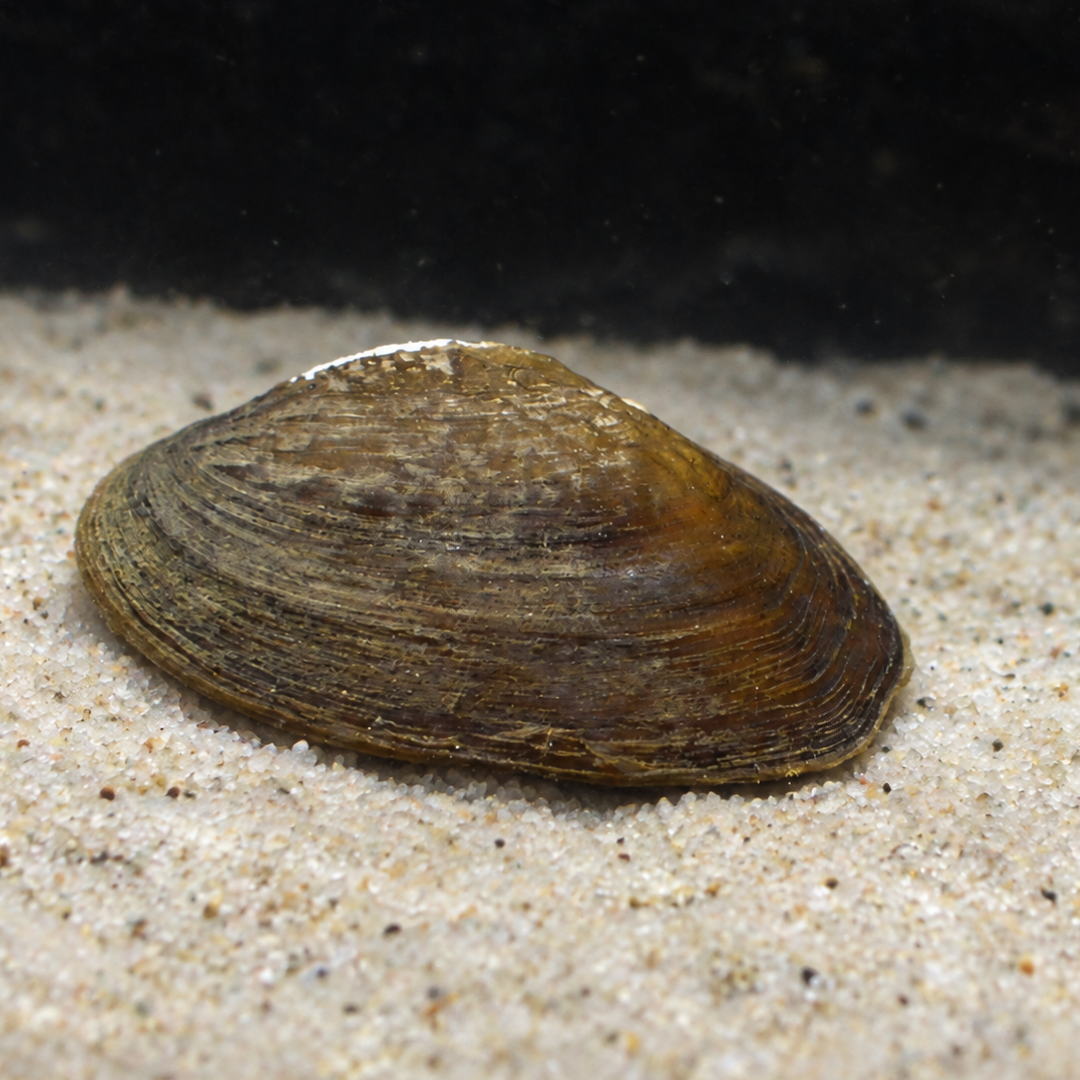
マツカサガイは、本州・四国・九州の河川、湖沼、農業用水路などに生息する日本固有の淡水二枚貝です。厚い殻の表面に並ぶ逆V字形や波状の彫刻が松笠を思わせ、若い個体の黄褐色は成長とともに黒褐色へ変わります。砂泥へ潜って水中の微細藻類や有機懸濁物を濾し取るため、自然界では水中と河床をつなぐ役割を担います。一方、水槽では餌不足が外見から分かりにくく、元気そうに見えたまま衰弱することがあります。十分な溶存酸素、潜れる底砂、安定した中性付近の水質、そして継続的な微粒子食の供給をそろえて初めて長期維持を目指せる、観察と管理の腕が問われる生き物です。 The Matsukasagai is a freshwater mussel endemic to Japan, inhabiting rivers, lakes, ponds, and agricultural channels across Honshu, Shikoku, and Kyushu. Its thick shell bears reverse-V-shaped or wavy ridges reminiscent of a pine cone, while the yellowish-brown shell of juveniles darkens with age. By burrowing into sand or mud and filtering microalgae and suspended organic particles, it helps connect processes in the water column with those on the streambed. In an aquarium, however, food shortage is difficult to recognize from appearance alone, and an animal may decline while still seeming normal. Long-term care therefore demands well-oxygenated water, a suitable burrowing substrate, stable near-neutral chemistry, and a continuous supply of fine suspended food.
基本情報 / Basic Information
| 学名 / Scientific Name | Pronodularia japanensis (Lea, 1859) |
|---|---|
| 通称 / Common Name | マツカサガイ。流通上は「タナゴ用二枚貝」などの総称で扱われることがありますが、他のイシガイ類との取り違えに注意が必要です。Matsukasagai; it may be sold generically as a “freshwater mussel for bitterling spawning,” so confusion with other unionid mussels is possible. |
| 分類 / Family | 軟体動物門・二枚貝綱・イシガイ目・イシガイ科・マツカサガイ属。分子系統解析では、従来マツカサガイと呼ばれてきた集団に遺伝的に深く分化した複数系統が含まれることが示されており、地域によっては暫定的に「マツカサガイ類」と扱うのが慎重です。Phylum Mollusca, Class Bivalvia, Order Unionida, Family Unionidae, Genus Pronodularia. Molecular studies indicate that populations historically identified under this name include several deeply divergent lineages, so a cautious “Pronodularia japanensis species complex” treatment may be appropriate in some regions. |
| 英名 / English Name | Japanese corrugated freshwater mussel(広く統一された英名は未確立 / no universally standardized English common name) |
| 分布 / Distribution | 日本の本州・四国・九州。河川の中下流域、湖沼、ため池、湧水の影響を受ける細流、農業用水路などの砂泥底に見られます。ただし分布は連続的ではなく、地域個体群の減少や消失が報告されています。Honshu, Shikoku, and Kyushu, Japan. It occurs in sandy or muddy bottoms of middle and lower river reaches, lakes, ponds, spring-influenced streams, and agricultural channels. Its range is fragmented, and many local populations have declined or disappeared. |
| 最大体長 / Max Size | 殻長は一般に約9cmまで。地域系統や生息環境によって殻の細長さ、厚み、膨らみに差が見られます。Generally up to about 9 cm in shell length. Shell elongation, thickness, and inflation vary among geographic lineages and habitats. |
| 寿命 / Lifespan | 野外ではおおむね10年前後と推定されますが、個体群や環境条件による幅があります。飼育下では慢性的な餌不足が寿命を大きく縮めます。Roughly around 10 years in the wild, although estimates vary by population and environmental conditions. Chronic food limitation can greatly shorten captive lifespan. |
飼育環境 / Aquarium Environment
| 水槽サイズ / Tank Size | 1〜2個体でも60cm規格水槽(約57L)以上を目安にします。単に体が収まる容量ではなく、水温・酸素・餌となる懸濁物を安定させる水量として考えます。過密飼育は避けてください。For even one or two mussels, use at least a standard 60 cm aquarium of about 57 L. The volume is needed not merely to fit the animals, but to stabilize temperature, oxygen, and suspended food. Avoid crowding. |
|---|---|
| 水温 / Temperature | 15〜22℃を安定した飼育目安とし、急変と長時間の高水温を避けます。夏は25℃を超える状態をできるだけ長引かせず、冷却と強めのエアレーションを併用します。野外の生息水温は地域や季節で変動するため、入手元の環境も確認してください。 A stable 15–22°C is a practical care target. Avoid abrupt changes and prolonged warm conditions; during summer, minimize periods above 25°C and combine cooling with vigorous aeration. Wild temperatures vary by region and season, so information about the source habitat is valuable. |
| 水質 / Water Quality | 完全な淡水で、中性〜弱アルカリ性を目安に安定させます。アンモニアと亜硝酸は検出されない状態を保ち、十分な溶存酸素を確保します。極端な軟水や酸性化は殻の侵食を招くため、必要に応じて少量のカキ殻などを濾過槽へ入れ、pHと硬度を測定しながら調整します。Maintain stable freshwater near neutral to mildly alkaline conditions, with undetectable ammonia and nitrite and ample dissolved oxygen. Very soft or acidic water can erode the shell. If necessary, a small amount of oyster shell may be placed in the filter while pH and hardness are monitored. |
| レイアウト / Layout | 細粒の川砂や田砂を5〜8cmほど敷き、殻を立てて潜れる面積を広く取ります。角の鋭い砂利、大粒の礫、固く締まる底床は避けます。緩やかな水流が水槽全体を巡りつつ、貝の周囲に止水域ができない配置が理想です。入水管・出水管が砂面へ出ているか、毎日そっと観察します。Provide a broad area of fine river sand or similar substrate about 5–8 cm deep so the mussel can burrow upright. Avoid sharp gravel, large stones, and compacted substrate. Aim for gentle circulation throughout the tank without stagnant pockets around the animal. Check daily that the inhalant and exhalant siphon openings remain exposed at the surface. |
| 注意点 / Precautions | 導入前に採集・販売の適法性と産地を確認し、地域系統の異なる個体を野外へ放流しないでください。殻を無理に開かず、長時間空気にさらさず、水合わせは温度と水質をゆっくりそろえます。塩浴、銅を含む魚病薬、殺貝成分、過量の液体炭素源は危険です。死後は殻が閉じたままでも水を急速に悪化させるため、強い異臭、長時間の開殻、刺激への無反応があれば隔離して確認します。Before purchase, confirm lawful provenance and locality, and never release captive mussels into the wild, especially outside their source population. Do not force the valves open or leave the animal exposed to air for long periods; acclimate temperature and chemistry gradually. Salt baths, copper-containing medications, molluscicides, and overdosed liquid carbon products are hazardous. A dead mussel can rapidly foul the water even with the shell partly closed, so isolate and inspect any individual showing strong odor, prolonged gaping, or no response to gentle disturbance. |
餌と給餌 / Feeding
| 餌の種類 / Diet | 水中を漂う淡水性の植物プランクトン、微細な有機懸濁物、細菌を含む微粒子を濾過して食べます。飼育下では、別容器で安全に培養した薄いグリーンウォーター、成分と保存状態が明確な淡水二枚貝・濾過摂食生物用の微細飼料などを利用します。魚用フレークや沈下性ペレットをそのまま与えても、主食として十分には利用できません。It filters freshwater phytoplankton, fine suspended organic matter, and bacteria-associated particles. In captivity, suitable options include lightly concentrated green water cultured safely in a separate container and finely dispersed commercial food formulated for freshwater filter feeders. Ordinary fish flakes or sinking pellets are not an adequate staple when offered intact. |
|---|---|
| 給餌のポイント / Feeding Tips | 透明な水を保つことと、貝に餌が届いていることは同じではありません。少量を定期的に与え、給餌前後のアンモニア、亜硝酸、溶存酸素、濁りの消え方を観察して量を調整します。スポイトを使う場合も入水管へ強く吹き込まず、少し上流側へ静かに分散させます。濃い青水は夜間に酸素を消費するため、常時エアレーションを行います。園芸用肥料や酵母製剤を生体のいる水槽へ直接入れる方法は、水質急変や酸欠の危険があるため避け、植物プランクトンの培養は必ず別容器で管理します。Clear water does not necessarily mean the mussel is well fed. Offer small amounts regularly, then adjust by monitoring ammonia, nitrite, dissolved oxygen, and how quickly suspended food clears. If using a pipette, disperse food gently just upstream rather than jetting it into the inhalant siphon. Dense green water can consume oxygen at night, so continuous aeration is essential. Do not add garden fertilizer or yeast products directly to an occupied aquarium; culture phytoplankton in a separate container to prevent oxygen depletion and sudden deterioration. |
性格と混泳 / Temperament and Tank Mates
| 性格 / Temperament | 攻撃性はなく、多くの時間を底砂に潜って過ごします。足を使ってゆっくり移動するため、置いた場所から移ったり、軽いレイアウト素材を押したりすることがあります。動かない時間が長くても直ちに死亡とは限りません。Non-aggressive and usually buried for much of the time. It can move slowly with its muscular foot, shift from where it was placed, and push lightweight decorations. Long periods without visible movement do not by themselves indicate death. |
|---|---|
| 混泳の相性 / Compatibility | 低温寄りの安定した淡水を好む温和な日本産淡水魚とは条件を合わせやすく、タナゴ類の産卵母貝として利用されることもあります。ただし繁殖期のタナゴを含め、魚の過密は酸素消費と水質悪化を招きます。大型シクリッド、フグ類、大型ザリガニなど、殻や水管をつつく生体とは混泳できません。魚病薬を使うときは、貝を薬剤の入らない別水槽へ移します。Conditions can be compatible with peaceful Japanese freshwater fishes that prefer stable, relatively cool water, and the mussel is sometimes used as a spawning host for bitterlings. Nevertheless, fish crowding—including breeding bitterlings—increases oxygen demand and waste. Do not keep it with large cichlids, puffers, large crayfish, or other animals that bite the shell margin or siphons. Move the mussel to an untreated aquarium before medicating fish. |
病気と対策 / Diseases and Prevention
| かかりやすい病気 / Common Diseases | 家庭水槽で個別診断できる感染症の情報は限られています。実際に多いのは、長期的な餌不足による衰弱、高水温と夜間の酸欠、アンモニア・亜硝酸中毒、酸性・軟水による殻の侵食、底床の嫌気化による障害です。殻頂部の白い露出は野外個体にも見られる摩耗で、直ちに病気とは限りませんが、拡大する場合は水質を点検します。Information allowing specific diagnosis of infectious disease in home aquaria is limited. More common problems are chronic starvation, heat combined with nighttime oxygen depletion, ammonia or nitrite poisoning, shell erosion in acidic or very soft water, and stress from anoxic substrate. A pale worn umbo is also common in wild individuals and is not automatically disease, but progressive erosion warrants a water-chemistry check. |
|---|---|
| 対策と予防 / Prevention | 予防の中心は、十分な餌・酸素・水量を切らさず、底床を清潔に保ちながら急変を避けることです。導入個体は別容器で状態を観察し、殻表の付着生物を薬品で処理しないでください。定期的に水質を測定し、少量の換水を重ねます。二枚貝へ安全性が確認されていない薬剤を自己判断で使わず、異常時はまず水温、酸素、アンモニア、亜硝酸、pH、給餌履歴を確認します。Prevention centers on maintaining food, oxygen, and adequate water volume while keeping the substrate clean and avoiding sudden change. Observe new animals separately and do not chemically strip organisms from the shell. Test water regularly and use repeated modest water changes. Avoid unverified medications; when trouble appears, first check temperature, oxygen, ammonia, nitrite, pH, and feeding history. |
増やし方(繁殖) / Breeding
| 雌雄の判別 / Sexing | 外観だけでの確実な判別は困難です。成熟期に雌の鰓が保育嚢として膨らむことがありますが、確認のために殻をこじ開ける行為は重大な損傷につながります。専門的には軟体部や生殖細胞の観察を用います。Reliable sexing from external shell shape alone is difficult. The female’s gills may swell as brood chambers during reproductive condition, but forcing the valves open to inspect them can cause serious injury. Professional identification relies on examination of soft tissues or reproductive cells. |
|---|---|
| 繁殖形態 / Reproduction | 雌は受精卵を鰓の保育嚢で育て、グロキディウム幼生を放出します。幼生は適合する魚の鰓や鰭に一時的に付着・被嚢し、変態後に稚貝として離脱して底生生活へ移ります。マツカサガイではカワムツ、コイ、ハゼ類など複数の魚種で変態成功が報告され、地域によって主要宿主が異なる可能性があります。The female broods fertilized eggs in specialized gill chambers and releases glochidium larvae. Each larva temporarily attaches to and becomes encysted on the gill or fin of a suitable fish, later detaching as a juvenile mussel. Successful transformation has been reported on several fishes, including dark chub, common carp, and gobies, while the principal host may differ among local populations. |
| 繁殖のポイント / Breeding Tips | 家庭水槽での完結した繁殖は非常に難しく、親貝の雌雄、季節的な成熟、地域個体群に適した宿主魚、幼生の寄生、離脱直後の微小な稚貝の育成を連続して成功させる必要があります。宿主魚へ意図的に大量寄生させる行為は魚を傷めるおそれがあり、保全目的の増殖は研究機関や行政と連携して行う領域です。魚類血漿を加えた培地で宿主を使わずに変態させる試験管内培養は海外の複数種で進展していますが、マツカサガイの日常的な繁殖法として確立した技術ではありません。Completing the life cycle in a home aquarium is exceptionally difficult. Success requires appropriately sexed adults, seasonal maturation, a compatible host fish for the local mussel population, controlled larval attachment, and culture of microscopic newly detached juveniles. Deliberately exposing fish to large numbers of larvae may harm them, so conservation propagation belongs in collaboration with researchers and authorities. Host-free culture media containing fish plasma have produced advances for several unionid species abroad, but this is not an established routine breeding method for Matsukasagai. |
雑学と豆知識 / Trivia and Fun Facts
| 1. 名前を生んだ「松笠」の彫刻 / 1. The pine-cone sculpture behind the name | マツカサガイを手にした人がまず目を奪われるのは、殻表を走る逆V字形や波状の肋です。その規則的な凹凸が松の球果を思わせることから、親しみやすい和名が生まれました。ところが、流れや底質の違いは殻の輪郭や摩耗の程度にも影響します。さらに分子系統解析は、同じ名で呼ばれてきた集団の中に複数の深い遺伝系統があることを示しました。見た目の似た一枚の殻が、実は日本列島の地史を刻んだ記録でもあるのです。The first feature to catch the eye is the series of reverse-V-shaped and wavy ridges running across the shell. Their orderly relief resembles a pine cone and inspired the Japanese name. Yet current and substrate can alter the outline and wear of the shell, while molecular studies reveal several deeply divergent lineages hidden under the traditional name. A single familiar-looking shell can therefore preserve a record of the geological and biogeographic history of the Japanese archipelago. |
|---|---|
| 2. 動けない貝が魚に乗って旅をする / 2. A nearly stationary mussel travels by fish | 成貝の移動は足を使った短い歩みに限られます。それでも次世代は、グロキディウム幼生として魚の鰓や鰭に付着し、水の流れだけでは届きにくい場所へ運ばれます。魚の上皮に包まれた幼生は変態を終えると離脱し、砂の間へ降り立ちます。この生活史は分散の仕組みであると同時に、宿主魚が減れば貝の再生産も止まるという弱点でもあります。川を守るには、貝だけでなく魚と移動経路まで一緒に守らなければならないことを教えてくれます。Adults move only short distances with their muscular foot. The next generation nevertheless travels: glochidia attach to the gills or fins of fish and are carried to places that drifting alone may not reach. Enclosed by host epithelium, the larvae transform, detach, and settle among grains of sand. This is both an elegant dispersal mechanism and a vulnerability, because mussel recruitment can stop when host fishes decline. Protecting the mussel therefore requires protection of fishes and their movement routes as well. |
| 3. 「水をきれいにする貝」の本当の意味 / 3. What a “water-cleaning mussel” really does | 濾過摂食によって水中の粒子が減るため、マツカサガイはしばしば水質浄化役として紹介されます。しかし粒子は消滅するのではなく、貝の体に取り込まれるか、糞や偽糞として河床へ移されます。自然の川では、この働きが物質循環の一部になります。閉じた水槽では、移された有機物を換水や底床管理で外へ出さなければ、やがて水質悪化へ戻ってきます。貝は濾過器の代用品ではなく、餌と酸素を必要とする生きた生態系の構成員です。Because filtration reduces particles suspended in the water, Matsukasagai is often marketed as a water-cleaning animal. The particles do not vanish, however: they enter the mussel’s body or are transferred to the bottom as feces and pseudofeces. In a river this is part of nutrient cycling. In a closed aquarium, accumulated organic matter must still be removed through water changes and substrate care. The mussel is not a substitute for a filter; it is a living ecosystem member that itself requires food and oxygen. |
| 4. タナゴと貝が結ぶ、交差する生活史 / 4. Intersecting life cycles of bitterling and mussel | タナゴ類はイシガイ類の鰓内へ産卵し、卵と仔魚を守ってもらいます。一方、貝の幼生は別の段階で魚を宿主として利用します。ただし「タナゴが貝を増やし、貝がタナゴを増やす」という単純な一対一の関係ではありません。貝ごとに適した宿主魚が異なり、タナゴの産卵が貝へ負担を与えることもあります。水槽内で産卵母貝として使う場合も、消耗品のように扱わず、貝自身の給餌と休養を優先することが大切です。Bitterlings place their eggs inside unionid gills, gaining protection for eggs and larvae. Mussel larvae, at a different stage, use fish as hosts. This is not a simple one-to-one exchange in which each partner automatically increases the other: compatible fishes differ among mussel species and bitterling spawning can burden the mussel. When a mussel is kept as a bitterling spawning host, it should not be treated as disposable; its own feeding and recovery must remain priorities. |
| 5. 死殻にも続く生態系での仕事 / 5. Ecological work that continues after death | 丈夫な殻は、生きている間だけの道具ではありません。河床に残った死殻は、平坦な砂泥の中へ硬い面と隙間をつくり、小型の底生動物や魚に隠れ場所を与えることがあります。殻の存在が底生群集の密度や構成へ影響するという研究は、ひとつの生物が死後も環境の立体構造を支え得ることを示します。ただし水槽内の死骸は急激な水質悪化を招くため、自然界の役割と飼育管理は分けて考え、速やかに取り出してください。The durable shell remains useful beyond the animal’s life. On a natural streambed, empty valves add hard surfaces and crevices to otherwise flat sand or mud, potentially sheltering small benthic animals and fishes. Studies showing that shells can influence benthic community density and composition illustrate how an organism may continue shaping habitat after death. In an aquarium, however, a carcass can quickly pollute the water and must be removed promptly. |
| 6. 保全と流通をつなぐ産地情報 / 6. Provenance connects conservation and trade | 環境省レッドリスト2020では準絶滅危惧と評価され、自治体のレッドリストや条例ではさらに高い危機区分や採集規制の対象となる地域があります。全国一律の扱いだけで判断せず、採集地の条例、保護区、漁業権を確認する必要があります。しかも、分類学的には地域ごとの遺伝系統が重要です。由来の分かる適法な個体を選び、飼えなくなっても放流しないという基本が、野外個体群とアクアリウム文化の双方を守ります。The species is listed as Near Threatened on Japan’s national Red List 2020, while some prefectural lists and ordinances assign higher threat levels or restrict collection. National status alone is therefore insufficient; local ordinances, protected areas, and fishing rights must be checked. Geographic lineage also matters taxonomically. Choosing legally sourced animals of known provenance and never releasing unwanted specimens protects both wild populations and responsible aquarium culture. |
| 7. 水一杯から探す環境DNA調査 / 7. Finding mussels from a sample of water | 泥に潜る二枚貝は、目視や手網だけでは低密度の個体群を見落としやすい生き物です。そこで、水中へ放出された微量のDNAを検出する環境DNA調査が役立ちます。ただし、DNAは流れによって下流へ運ばれ、光、微生物、底質への吸着などで減少します。陽性地点の真下に必ず貝がいるとは限らないため、流速や支流の合流を考えながら上流側を絞り込み、最後は現地の生息環境と組み合わせて判断します。水一杯の情報が、見えない個体群を探す手掛かりになる時代が始まっています。A mussel buried in mud is easy to miss when populations are sparse, even with visual searches and hand nets. Environmental DNA surveys can detect minute traces released into the water. Those traces may drift downstream and decline through light exposure, microbial activity, and adsorption to sediment, so a positive sample does not prove that a mussel sits directly beneath the sampling point. Flow, tributaries, and physical habitat must be considered while tracing the source upstream. A bottle of water can now provide the first clue to a population hidden from view. |
| 8. 宿主を使わない幼生培養への挑戦 / 8. The challenge of host-free larval culture | イシガイ科の保全では、幼生を宿主魚へ寄生させる工程が増殖の大きな難所です。海外を中心とする試験管内培養では、細胞培養用の基礎培地へ魚類由来の血漿などを加え、宿主を使わずにグロキディウムを稚貝へ変態させる研究が進んでいます。魚類血漿中の脂質やタンパク質が発達を支える可能性も調べられています。ただし、成功率は貝の種類、血漿の由来、無菌操作、温度条件によって大きく変わります。マツカサガイを家庭で増やすための処方ではなく、将来の系統保存や再導入を支える専門技術として期待される段階です。In unionid conservation, the requirement for larval attachment to host fish is a major propagation bottleneck. Experimental in-vitro methods, developed mainly outside Japan, combine cell-culture media with fish-derived plasma or related supplements to transform glochidia without a living host. Researchers are also investigating how lipids and proteins in plasma support development. Success varies greatly with mussel species, plasma source, aseptic technique, and temperature. This is not a home-breeding recipe for Matsukasagai, but a specialist technology with potential for future lineage preservation and reintroduction. |
| 9. 食料、装身具、ボタンへと受け継がれた殻 / 9. Shells used for food, ornaments, and buttons | 日本では古くから淡水や汽水の貝が食料として利用され、貝塚に残った殻は当時の水辺環境や暮らしを伝えてきました。加工しやすい殻は装身具などにも姿を変え、近代には光沢をもつ二枚貝の殻を打ち抜く貝ボタン産業が発達しました。もっとも、遺跡や産業資料で「イシガイ科」と分かっても、現代の分類でマツカサガイ一種まで確実に同定できない資料もあります。文化史を語るときは、本種固有の記録と淡水二枚貝全体の記録を丁寧に分けることが大切です。Freshwater and brackish-water shellfish have long been used as food in Japan, and shells preserved in middens reveal aspects of ancient waterside environments and daily life. Workable shells also became ornaments, while modern industry punched lustrous bivalve shell into buttons. Yet archaeological or industrial material identified broadly as Unionidae cannot always be assigned confidently to Matsukasagai under modern taxonomy. Its cultural history is most accurately told by distinguishing records of this species from those of freshwater mussels as a whole. |
| 10. 外来魚へ付着しても旅が成功するとは限らない / 10. Attachment to a non-native fish may lead nowhere | グロキディウムは魚へ付着さえすればよいわけではなく、宿主の組織に包まれた後、変態を完了できなければ次世代になれません。ほかのイシガイ類では、オオクチバスやブルーギルへ付着しても大半が魚体上で死亡した例が報告されています。これは外来魚が在来の適合宿主を減らすだけでなく、幼生を行き止まりへ導く可能性を示す重要な知見です。ただし、宿主適合性は貝の種や地域個体群で異なるため、この結果をマツカサガイの全個体群へそのまま当てはめることはできません。Attachment alone is not enough. After a glochidium is enclosed by fish tissue, it must still complete metamorphosis to become the next generation. In other Japanese unionids, larvae attached to largemouth bass or bluegill have been observed to die on the fish in high proportions. This suggests that introduced fishes may not only reduce native hosts but can also lead larvae into a reproductive dead end. Host compatibility differs among mussel species and geographic populations, however, so those results cannot simply be applied to every Matsukasagai population. |
まとめ / Conclusion
マツカサガイは、静かに砂へ潜りながら水中の微粒子を濾し、幼生期には魚の力を借りて次の生息地へ向かう、川のつながりを体現した二枚貝です。松笠模様の重厚な殻の内側には、底質、水流、餌、宿主魚のすべてがそろって初めて続く繊細な生活史が隠れています。 Matsukasagai quietly filters suspended particles while buried in sand, yet in its larval stage it relies on fish to reach the next habitat. Its pine-cone-patterned shell encloses a delicate life history that can continue only where substrate, current, food, and host fishes remain connected.
水槽で迎えるなら、「水をきれいにしてくれる貝」ではなく、継続的な給餌と涼しく酸素豊かな水を必要とする主役の一員として向き合いたい生き物です。由来を確かめ、毎日の小さな変化を見守り、決して野外へ放さないこと。その丁寧な付き合い方が、長い時間を生きる貝の落ち着いた存在感を、無理なく楽しむ道につながります。 In the aquarium, it should be regarded not as a device that cleans water, but as a focal animal needing continuous nourishment and cool, oxygen-rich conditions. Confirm its provenance, observe small daily changes, and never release it outdoors. That patient approach offers the best chance to appreciate the quiet presence of this long-lived mussel responsibly.
分布マップ
広い意味でのマツカサガイは、日本の本州・四国・九州に分布し、河川、湖沼、ため池、農業用水路などの砂泥底に生息します。
この地図は本州・四国・九州を含む分布地域の概略表示です。マーカーは地図上の代表地点であり、実際の採集地点や個体群の所在地を示すものではありません。
参考文献
-
Lopes-Lima, M., Hattori, A., Kondo, T., et al.(2020) “Freshwater mussels (Bivalvia: Unionidae) from the rising sun (Far East Asia): Phylogeny, systematics, and distribution.” Molecular Phylogenetics and Evolution, 146, 106755. DOI
対応項目:イシガイ科の分類、分子系統、マツカサガイに含まれる遺伝的グループ、東アジアにおける分布。
-
Kondo, T.(2023) “The Identity of Pronodularia japanensis (Lea, 1859) (Bivalvia: Unionidae) and Estimation of Its Type Locality.” Venus, 81(1–4), 39–46. DOI
対応項目:学名の適用範囲、タイプ産地、3グループの形態差、狭義のマツカサガイの分布・生息環境・繁殖情報。
-
福岡県(2024)「マツカサガイ」『福岡県レッドデータブック2024』。 資料ページ
対応項目:本州・四国・九州の分布、流水域の砂礫〜砂泥底という生息環境、形態、宿主魚、地域個体群の減少要因。
-
環境省(2020)「環境省レッドリスト2020」陸産貝類・淡水産貝類。 環境省レッドリスト・レッドデータブック
対応項目:国内における保全上の評価区分。
-
Negishi, J. N. & Kayaba, Y.(2010) “Size-specific growth patterns and estimated longevity of the unionid mussel (Pronodularia japanensis).” Ecological Research, 25, 403–411. DOI
対応項目:農業水路個体群の成長、季節と水温の関係、推定寿命。
-
伊藤寿茂・尾田紀夫・丸山隆(2003)「マツカサガイのグロキディウム幼生の寄生生態」『日本生態学会誌』53(3), 187–196。 DOI
対応項目:グロキディウム幼生の寄生部位、宿主魚ごとの変態成功、付着から稚貝離脱までの過程。
-
綱川孝俊・酒井忠幸(2018)「マツカサガイの人工増殖試験―餌の検討―(平成28年度)」『栃木県水産試験場研究報告』61, 54–55。 PDF
対応項目:稚貝への緑藻・珪藻混合餌料の給餌、成長結果、流水停止時の飼育上の問題。
-
中村柑南・渡壁咲希・高尾実里・川﨑優人・松本浩司・畑啓生(2025)「ため池における絶滅危惧淡水二枚貝マツカサガイの一時保管」『保全生態学研究』30(1), 83–91。 DOI
対応項目:室内水槽とため池における飼育、生残と成長、給餌、長期維持の難しさ。
-
Patterson, M. A., Mair, R. A., Eckert, N. L., Gatenby, C. M., Brady, T., Jones, J. W., Simmons, B. R. & Devers, J. L.(2018) Freshwater Mussel Propagation for Restoration. Cambridge University Press. DOI
対応項目:イシガイ科の生活史、親貝と宿主魚の管理、幼生の変態、稚貝育成、保全増殖時の取り扱い。
-
Knowles, S., Dennis, M., McElwain, A., Leis, E. & Richard, J.(2023) “Pathology and infectious agents of unionid mussels: A primer for pathologists in disease surveillance and investigation of mortality events.” Veterinary Pathology, 60(5), 510–528. DOI
対応項目:イシガイ科で報告された病理・感染性因子、感染症の知見が限られること、死亡時の原因調査。




コメント