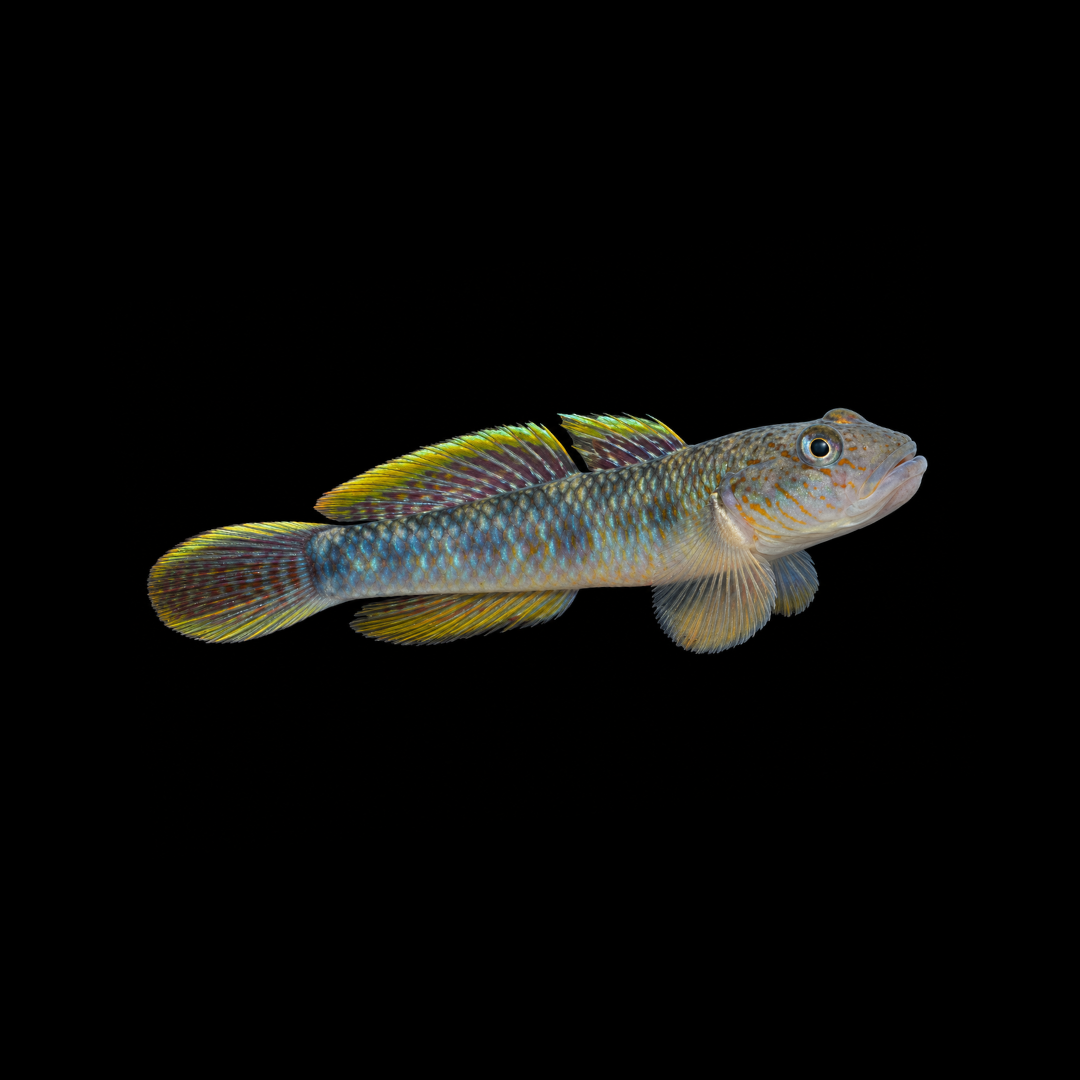
ヨシノボリは、東アジアから東南アジアの河川や湖沼を中心に暮らす、ヨシノボリ属の魚の総称です。左右の腹鰭が合わさった吸盤で石やガラス面にとまり、胸鰭を踏ん張るようにして底を移動します。くりっとした目で周囲を見ながら動く姿には、底生魚ならではの愛嬌があります。繁殖期のオスは種ごとに特徴的な婚姻色を見せ、石の下などに巣を作って卵を守ります。ただし、ヨシノボリ属には多数の種が含まれ、適温、成魚の大きさ、回遊の有無、仔魚の育て方は一様ではありません。流通名だけで判断せず、種名と採集地、野生採集個体か繁殖個体かを確認することが、無理のない飼育と自然環境への配慮につながります。Rhinogobius is a diverse genus of small gobies found mainly in rivers and lakes across East and Southeast Asia. Their paired pelvic fins are fused into a suction disc that lets them hold on to stones and aquarium glass, while their watchful eyes and deliberate movements give them the distinctive charm of bottom-dwelling fish. Breeding males develop species-specific coloration, and males build nests beneath stones or in similar shelters and guard the eggs. The genus contains many species, however, and temperature preference, adult size, migratory life history, and larval requirements vary considerably. A trade name alone is therefore not enough: confirming the species, locality, and whether a fish is captive-bred or wild-collected is central to both responsible husbandry and conservation.
基本情報 / Basic Information
学名 / Scientific Name
Rhinogobius Gill, 1859
通称 / Common Name
ヨシノボリ、ヨシノボリ類。地域や漁業上の呼び名として、ゴリ、ウロリ、じんぞくなどがありますが、これらは他の小型底生魚を含む場合があります。Rhinogobius gobies; regional Japanese names include gori, urori, and jinzoku, although these vernacular names may also include other small bottom-dwelling fishes.
分類 / Family
ハゼ目(Gobiiformes)・オクスデルクス科・ゴビオネルス亜科・ヨシノボリ属。採用する分類体系によっては、広義のハゼ科に置かれます。Order Gobiiformes, family Oxudercidae, subfamily Gobionellinae, genus Rhinogobius. Some classifications place the genus in a broadly defined Gobiidae.
英名 / English Name
Rhinogobius gobies
分布 / Distribution
日本、ロシア極東、朝鮮半島、中国、台湾、ベトナム、ラオス、タイ、フィリピンなど、東アジアから東南アジアの淡水域を中心に分布します。種によっては仔魚期に河口や沿岸海域を利用します。Distributed mainly in fresh waters from East to Southeast Asia, including Japan, the Russian Far East, the Korean Peninsula, China, Taiwan, Vietnam, Laos, Thailand, and the Philippines. Larvae of some species use estuaries or coastal marine waters.
最大体長 / Max Size
種により大きく異なり、多くは全長3〜10cmほどです。日本産の大型種であるオオヨシノボリでは全長約12cmに達することがあります。購入個体の種が不明な場合は、大きくなる可能性を見込んで設備を選びます。Highly species-dependent; most are about 3–10 cm in total length. The larger Japanese species Rhinogobius fluviatilis may reach roughly 12 cm. If identification is uncertain, select equipment with the possibility of a larger adult in mind.
寿命 / Lifespan
種や個体群による差が大きく、ヨシノボリ属全体に共通する寿命は示せません。野生採集個体は入手時の年齢も分からないため、飼育可能な年数を正確に見積もることは困難です。Lifespan varies substantially among species and populations, so no single figure applies to the genus as a whole. The age of a wild-collected fish is also usually unknown, making its remaining lifespan in captivity difficult to estimate reliably.
飼育環境 / Aquarium Environment
水槽サイズ / Tank Size
小型種1匹なら30cm規格水槽相当から飼育できます。ペアでは45cm規格水槽(約35L)以上、複数飼育や大型種では60cm規格水槽(約57L)以上を目安とし、争いが続く場合はより広い水槽か隔離設備を用意します。水量だけでなく、縄張りを分けられる底面積を優先してください。A single small species can be maintained in a standard 30 cm aquarium. As a general guide, use a standard 45 cm tank of about 35 L or larger for a pair and a standard 60 cm tank of about 57 L or larger for a group or a larger species. If persistent aggression occurs, provide a larger tank or separate housing. Floor area for dividing territories matters more than volume alone.
水温 / Temperature
日本産の温帯性種を室内で飼育する場合は、おおむね15〜25℃が管理上の目安です。ただし、これは属全体に共通する最適水温ではありません。山地渓流産と湖沼産、亜熱帯産の輸入種では適温が異なるため、種と産地の情報を優先します。いずれも急変を避け、高水温時は酸欠にも注意しながら、必要に応じて冷却ファン、水槽用クーラー、室温管理を利用してください。For temperate Japanese species kept indoors, approximately 15–25°C is a practical management range, not a universal optimum for the entire genus. Mountain-stream, lake-dwelling, and subtropical imported species can differ, so species and locality information should take priority. Avoid abrupt changes and watch for oxygen depletion as temperature rises, using fans, an aquarium chiller, or room cooling when necessary.
水質 / Water Quality
清浄で安定した淡水を基本とし、pHと硬度は種や産地の情報に合わせます。アンモニアと亜硝酸が検出されない状態を保ち、十分に成熟したろ過とエアレーションで溶存酸素を確保してください。流水性の種でも水槽全体の流れを強くしすぎず、石の背後などに休息できる緩流域を作ります。Provide clean, stable freshwater and match pH and hardness to the species and locality information available. Keep ammonia and nitrite undetectable, use mature biological filtration, and maintain adequate dissolved oxygen with aeration. Even for stream species, do not make the entire aquarium a high-velocity channel; include calmer refuges behind stones.
レイアウト / Layout
角の鋭くない川砂や小粒の砂利を敷き、平たい石、丸石、流木、素焼き筒などで洞窟状の隠れ家を作ります。隠れ家は個体数より多めに用意し、争いが見られる場合はさらに増やします。石や流木で互いの視線を遮ることも重要です。繁殖を狙う場合は、オスが下を掘れる平石を安定させて置きます。Use smooth river sand or fine gravel and form cave-like retreats with flat stones, rounded rocks, wood, or ceramic tubes. Provide more shelters than fish and add further cover if aggression occurs. Rocks and wood should also block lines of sight. For breeding, place stable flat stones with enough substrate beneath them for males to excavate.
注意点 / Precautions
吸盤と跳躍力を使って配管やコードを伝うため、蓋を設置し、すべての隙間を安全に塞ぎます。強い流れを好む種でも、高水温や酸欠に耐えるという意味ではありません。野外採集では土地所有者の権利、漁業権、都道府県の漁業調整規則、自然公園等の規制、種の保存法や地域の保護条例を事前に確認してください。環境省レッドリスト掲載と法的な採捕禁止は同じ制度ではありません。飼育個体は在来種であっても採集地を含む野外へ放さず、他水系への移動も行わないでください。These gobies can climb equipment and jump, so use a secure lid and safely close every opening. Even species associated with fast water are not tolerant of overheating or oxygen depletion. Before collecting, check land access, fishing rights, prefectural fishery regulations, protected-area rules, national species-conservation law, and local wildlife ordinances. Inclusion on Japan’s national Red List is not, by itself, the same as a statutory collection ban. Never release aquarium fish, even native species, and never move them between drainage systems.
餌と給餌 / Feeding
餌の種類 / Diet
水生昆虫の幼虫、小型甲殻類、イトミミズ類などの小動物を中心に食べ、種や成長段階によっては藻類や有機物も利用します。飼育下では、栄養設計された沈下性の小粒飼料を主食とし、冷凍アカムシ、冷凍ミジンコ、ブラインシュリンプなどを補助的に与えます。生き餌は病原体や寄生虫を持ち込まない培養品を選びます。They feed mainly on aquatic insect larvae, small crustaceans, worms, and other invertebrates, while some species and life stages also consume algae or organic material. In captivity, use a nutritionally complete sinking micro-pellet as the staple and supplement with frozen bloodworms, frozen daphnia, or brine shrimp. Choose cultured live foods to reduce the risk of introducing pathogens and parasites.
給餌のポイント / Feeding Tips
1日1〜2回、数分で食べ切る量を底まで届けます。導入直後に人工飼料を認識しない個体には、解凍したアカムシなどをピンセットで動かす、または沈下粒を弱い流れに乗せると反応しやすくなります。混泳水槽では中層魚が先に食べ尽くさないよう、スポイトで各縄張りへ分配します。腹部の張りと痩せを個体ごとに観察し、食べ残しは回収します。Feed once or twice daily, delivering only what is consumed within a few minutes to the bottom. Newly introduced fish that ignore prepared food may respond when thawed bloodworms are moved with forceps or when sinking pellets drift gently in the current. In community tanks, distribute food to each territory with a pipette so midwater fish do not take everything first. Check each fish for a healthy abdominal profile and remove leftovers.
性格と混泳 / Temperament and Tank Mates
性格 / Temperament
底層に縄張りを作り、とくに成熟したオス同士は口を大きく開けて威嚇し、追い払い合います。個体差と種差が大きく、繁殖期には普段より攻撃性が高まります。一方で、飼育者や給餌器具を覚えて前面に出てくるなど、環境をよく観察する行動も魅力です。They establish bottom territories. Mature males in particular gape, display, and chase rivals, with substantial variation among individuals and species. Aggression often intensifies during breeding. They are also attentive animals that may learn to approach their keeper or feeding tool.
混泳の相性 / Compatibility
同じ水温と流れを好み、底の縄張りを奪わない温和な中層魚とは、十分な広さがあれば混泳できます。長い鰭を持つ魚、動きの遅い魚、口に入る稚魚や小型エビは避けます。他の底生ハゼとは縄張りが重なりやすく、近縁種間では交雑の懸念もあるため、繁殖や系統維持を目的とする水槽では種別・産地別の単独管理が安全です。激しい追尾、餌を食べられない個体、裂けた鰭が見られたら直ちに隔離します。With adequate space, they can share a tank with peaceful midwater fishes that prefer similar temperature and flow and do not compete for bottom territories. Avoid slow or long-finned fish, small fry, and shrimp that can fit in the goby’s mouth. Other benthic gobies often overlap territorially, and closely related forms may hybridize; species- and locality-specific housing is safest for breeding or lineage preservation. Separate fish immediately if persistent chasing, food exclusion, or torn fins occurs.
病気と対策 / Diseases and Prevention
かかりやすい病気 / Common Diseases
輸送や急な水質変化の後には、白点病、細菌性の鰭・体表・鰓の病変、擦れ傷からの二次感染が問題になります。野生採集個体では、寄生虫や慢性的な痩せにも注意します。白い点、体をこすりつける動作、呼吸の速さ、鰭の欠損、口元の変色、食欲低下を毎日確認します。After transport or rapid water-quality change, problems may include white spot disease, bacterial lesions of the fins, skin, or gills, and secondary infection of abrasions. Wild-collected fish also warrant attention for parasites and chronic wasting. Check daily for white spots, flashing, rapid breathing, damaged fins, discoloration around the mouth, and loss of appetite.
対策と予防 / Prevention
新魚は隔離水槽で状態を観察し、本水槽との水温・水質差を小さくして導入します。過密を避け、種に合う安定した水温、十分な酸素、清潔な底床を保つことが基本です。発症時は隔離して水質を測定し、症状から原因を絞ります。治療は観賞魚用医薬品の対象魚種、用法、用量を守り、必要なら魚病に詳しい獣医師や専門店に相談してください。昇温、塩水浴、複数薬剤の併用を一律の手順とせず、とくに低水温を好む個体へ急激な昇温を行わないことが重要です。薬浴中は酸素不足を防ぎ、活性炭など薬効を吸着するろ材は製品表示に従って外します。Observe new fish in a quarantine aquarium and minimize temperature and chemistry differences during introduction. Avoid crowding and maintain a stable species-appropriate temperature, adequate oxygen, and a clean substrate. If disease appears, isolate the fish, test water quality, and narrow the cause from the signs. Follow the species indication, directions, and dosage of an ornamental-fish medication, consulting an aquatic veterinarian or experienced specialist when needed. Do not treat heat, salt, or combined medications as a universal protocol, and never raise the temperature abruptly for fish that favor cooler water. Maintain strong aeration during treatment and remove carbon or other medication-adsorbing media when directed by the product label.
増やし方(繁殖) / Breeding
雌雄の判別 / Sexing
一般に成熟したオスは頭部が大きく、背鰭や臀鰭が発達し、繁殖期には頬や鰭、体側の色が強くなります。メスはやや小柄で腹部が丸みを帯びる傾向があります。ただし模様と性的二型は種ごとに異なり、若魚や非繁殖期の判別は難しいため、外見だけで確定できない場合があります。Mature males generally have broader heads and more developed dorsal and anal fins, with stronger cheek, fin, and body coloration during breeding. Females tend to be smaller with a rounder abdomen. Patterns and sexual dimorphism differ by species, however, and juveniles or non-breeding fish may not be reliably sexed by appearance alone.
繁殖形態 / Reproduction
石の下などの狭い空間に粘着卵を産む基質産卵型です。オスが砂を掘って巣を整え、メスを招き入れます。卵は巣の天井に並び、産卵後は主にオスが胸鰭で水を送り、孵化まで保護します。卵数、卵径、孵化日数は種と水温で異なります。They are substrate spawners that attach eggs inside a narrow shelter, commonly beneath a stone. The male excavates and prepares the nest and courts a female inside. Eggs are arranged on the ceiling, and the male usually fans and guards them until hatching. Egg number, egg size, and incubation period vary with species and temperature.
繁殖のポイント / Breeding Tips
最初に生活史を確認します。カワヨシノボリやホワイトチーク・ゴビーなど、仔魚が比較的発達した状態で孵化して淡水にとどまる型は、水槽内での育成が比較的現実的です。孵化仔魚の口に合うワムシ類、微小生物、孵化直後のブラインシュリンプなどを段階的に用意し、親による捕食を防ぎます。一方、シマヨシノボリなどの両側回遊型は、小さな仔魚が海や河口へ流下する生活史を持ち、塩分移行、極小の生物餌料、密度管理が必要で難易度が高くなります。塩分と給餌条件は種別の飼育記録を参照し、一律に海水へ移さないでください。卵付きの石を動かす場合は水中で扱い、オスの保護を妨げないようにします。Begin by identifying the life-history type. Fluvial direct-developing species such as Rhinogobius flumineus and the white-cheeked goby, Rhinogobius duospilus, hatch at a relatively advanced stage and remain in freshwater, making aquarium rearing more practical. Prepare appropriately sized rotifers or other microfauna followed by newly hatched brine shrimp, and protect larvae from parental predation. Amphidromous species such as Rhinogobius nagoyae produce tiny larvae that naturally drift toward estuarine or marine nursery waters; their culture requires managed salinity transfer, very small live foods, and careful density control. Use species-specific records rather than moving every brood directly to full seawater. If an egg-bearing stone must be moved, keep it submerged and minimize disruption of the guarding male.
雑学と豆知識 / Trivia and Fun Facts
1. 卵の大きさから見えた、川と海を結ぶ物語 / 1. Egg Size Revealed a River-to-Sea Story
かつて日本のヨシノボリ類は、姿がよく似ていることから広く一つの種のように扱われていました。水野信彦博士は1961年、卵の大きさと生活史が異なる三つの生態型を示しました。小卵を産む型には、仔魚が海へ流下する両側回遊型と、湖沼内で生活史を完結する型があります。一方、河川内で一生を過ごす型は大きな卵を産み、仔魚はより発達した状態で孵化します。この発見は、外見だけでは見えにくい多様性を生活史から解き明かす出発点になりました。後の核DNA研究では、両側回遊から淡水生活への移行と、それに伴う卵サイズの変化が、日本のヨシノボリ類の少なくとも三つの系統で独立に起きたことが示唆されています。Japanese Rhinogobius were once treated broadly as though their similar appearance represented a single species. In 1961, Nobuhiko Mizuno distinguished three ecological forms that differed in egg size and life history. Small-egg forms include amphidromous fishes whose larvae drift to the sea and lentic fishes that complete their life cycle within lakes or ponds. River-resident forms, by contrast, produce larger eggs and hatch at a more advanced stage. This work opened a path to recognizing diversity that external appearance alone had concealed. Later nuclear-DNA analyses indicated that transitions from amphidromy to freshwater residency, accompanied by changes in egg size, evolved independently in at least three Japanese lineages.
2. 約900万年の歴史をたどるゲノム研究 / 2. Genomics Traces a History of About Nine Million Years
2026年に公表された中国産ヨシノボリ属の系統ゲノム研究では、26種を対象に4,434の単一コピー核遺伝子座からデータを集め、品質処理後の2,137遺伝子座を用いて系統関係を解析しました。その結果、属の共通祖先からの分岐は約933万年前の中新世後期、北部系統と南部系統の主要な分岐は約596万年前と推定されました。後者は東アジアで大規模な古水系の再編が起きた時期と重なると考えられています。推定年代には化石較正や解析モデルに由来する幅がありますが、身近な川底の小魚の多様化が、東アジアの地史と深く関わってきた可能性を示す研究です。A 2026 phylogenomic study of Chinese Rhinogobius collected data from 4,434 single-copy nuclear loci across 26 species and analyzed 2,137 loci retained after quality filtering. It estimated the crown age of the genus at about 9.33 million years in the late Miocene and a major northern–southern split at roughly 5.96 million years ago. The latter estimate coincides with a period of major paleodrainage reorganization in East Asia. Although these dates carry uncertainty from fossil calibration and analytical models, the study indicates that the diversification of these familiar stream fish may be closely connected to the geological history of East Asia.
3. 吸盤は、張り付くためだけの器官ではない / 3. The Pelvic Disc Is More Than a Simple Suction Cup
左右の腹鰭が一体化した吸盤は、流れの中で姿勢を保ち、短い遊泳と着底を繰り返す生活を支えます。吸盤内の圧力を周囲より低くすることで基質に吸着する仕組みは、滝を登るハゼ類で詳しく研究されてきました。ただし、吸着力や持久力に関する代表的な実験値の多くは、ヨシノボリ属ではなく別属の滝登りハゼから得られたものです。これらはハゼ類の吸盤を理解する手がかりにはなりますが、同じ数値をヨシノボリ属へそのまま当てはめることはできません。The disc formed by the fused pelvic fins stabilizes the fish in current and supports a stop-and-go life of short swims followed by attachment. Suction produced by lowering pressure inside the disc relative to the surrounding water has been studied in detail in waterfall-climbing gobies. However, many of the best-known experimental values for adhesive force and endurance were measured in climbing gobies from genera other than Rhinogobius. These studies help explain the general function of goby pelvic discs, but their numerical results cannot be transferred directly to Rhinogobius.
4. ゴリ、ウロリ、じんぞくがつなぐ川魚文化 / 4. River-Fish Culture in the Names Gori, Urori, and Jinzoku
「ゴリ」は一つの標準和名ではなく、地域によってヨシノボリ類、ウキゴリ類、カジカ類などを指す地方名です。北陸では、ゴリと呼ばれる小魚を佃煮、唐揚げ、汁物などに利用してきました。琵琶湖ではビワヨシノボリを中心とするゴリがウロリとも呼ばれ、滋賀県が発信する「琵琶湖八珍」の一つに数えられます。四国の一部では、カワヨシノボリなどを指す「じんぞく」という名が残ります。地方名が指す魚は地域や時代によって変わりますが、その曖昧さも、人々が暮らしの中で身近な川魚を見分け、利用してきた歴史を映しています。Gori is not the standard name of a single species. Depending on the region, it may refer to Rhinogobius, other gobies, or sculpins. In Hokuriku, small fish called gori have long been used in simmered preserves, fried dishes, and soups. Around Lake Biwa, gori centered on the endemic Rhinogobius biwaensis are also called urori and are included among Shiga Prefecture’s “Eight Delicacies of Lake Biwa.” In parts of Shikoku, the name jinzoku survives for Rhinogobius flumineus and similar stream fish. The fish denoted by each local name can change across place and time, reflecting a long history of recognizing and using familiar river fish in daily life.
5. 美しさを守る鍵は、正しい名前と産地 / 5. Accurate Names and Localities Protect Their Diversity
観賞魚店では、複数種が単に「ヨシノボリ」として扱われることがあります。しかし、頬の模様や胸鰭基部の斑紋が似る種も多く、幼魚や色の薄い個体は写真だけでの同定が困難です。アオバラヨシノボリをはじめ、分布が狭く絶滅が強く懸念される種も存在します。販売者が学名、産地、採集・繁殖の別を記録し、飼育者がその情報を引き継ぐことは、違法採集の排除だけでなく、交雑や別水系への遺棄を防ぐうえでも重要です。名前を丁寧に扱うことは、色や姿を分類する作業ではなく、その魚が歩んできた進化と土地の履歴を守る行為でもあります。Several species may be sold simply as “Rhinogobius,” yet many share similar cheek patterns or marks near the pectoral-fin base, and juveniles or pale individuals can be difficult to identify from photographs. Some forms, including the narrowly distributed blue-belly goby, face a very high risk of extinction. Recording the scientific name, locality, and wild or captive-bred origin—and passing that information to the next keeper—helps exclude illegal collection and prevents hybridization or release into another drainage. Treating a name carefully is not merely sorting colors and shapes; it helps preserve a fish’s evolutionary and geographic history.
まとめ / Conclusion
ヨシノボリの魅力は、石の上から周囲を見つめる愛嬌と、流れの中で体を支える機能美、そして種ごとに異なる婚姻色にあります。種と産地に合う安定した水温と水質、十分な酸素、休息できる流れの陰、視線を遮る石組み、底まで届く餌を整えると、その魚らしい行動をじっくり観察できます。The appeal of Rhinogobius lies in the alert way they watch from a stone, the functional beauty of a body supported in current, and the distinct breeding colors of each species. Stable temperature and water chemistry suited to the species and locality, adequate oxygen, quiet refuges behind the flow, sight-breaking rockwork, and food that reaches the bottom allow their characteristic behavior to emerge.
同じヨシノボリという名でも、海と川を行き来するもの、淡水だけで世代をつなぐもの、限られた島や水系に分布するものがいます。種と産地を確かめ、採集や譲渡に関する規制を確認し、決して野外へ放さないことまでが飼育の一部です。一匹ごとの来歴を大切にするほど、小さな水槽の中にも、東アジアの川が育んだ多様な暮らしが見えてきます。Yet the name Rhinogobius includes fishes that move between river and sea, others that complete generations entirely in freshwater, and still others restricted to particular islands or drainage systems. Responsible keeping includes confirming species and locality, checking collection and transfer regulations, and never releasing aquarium fish into the wild. Respecting the origin of each fish brings the diverse ways of life shaped by East Asian rivers into clearer view.
Fricke, R., Eschmeyer, W. N. & Van der Laan, R. (eds.). Eschmeyer’s Catalog of Fishes: Genera, Species, References. California Academy of Sciences. 公式データベース(2026年9月14日閲覧)
Suzuki, T., Shibukawa, K., Senou, H. & Chen, I-S. (2016). Redescription of Rhinogobius similis Gill 1859 (Gobiidae: Gobionellinae), the type species of the genus Rhinogobius Gill 1859, with designation of the neotype. Ichthyological Research, 63, 227–238. doi:10.1007/s10228-015-0494-3
Yamasaki, Y. Y., Nishida, M., Suzuki, T., Mukai, T. & Watanabe, K. (2015). Phylogeny, hybridization, and life history evolution of Rhinogobius gobies in Japan, inferred from multiple nuclear gene sequences. Molecular Phylogenetics and Evolution, 90, 20–33. doi:10.1016/j.ympev.2015.04.012
Liu, S., Xue, Q., Hu, Y., Hu, J., Pan, Y., Bu, Y., Wang, J., Xia, J. & Li, C. (2026). Phylogenomics of Rhinogobius gobies reveal northern-southern divergence and trait evolution in China. Molecular Phylogenetics and Evolution, 218, 108577. doi:10.1016/j.ympev.2026.108577
Suzuki, T., Oseko, N., Yamasaki, Y. Y., Kimura, S. & Shibukawa, K. (2022). A new species with two new subspecies of Rhinogobius (Teleostei: Gobiidae) from Yaeyama Group, the Ryukyu Islands, Japan. Bulletin of the Kanagawa Prefectural Museum (Natural Science), 51, 9–34. doi:10.32225/bkpmnh.2022.51_9
Wu, L. et al. (2026). High-quality genome assembly and annotation of the white-cheeked goby, Rhinogobius duospilus (Herre, 1935) (Gobiiformes: Oxudercidae). G3: Genes|Genomes|Genetics, 16(2), jkaf278. doi:10.1093/g3journal/jkaf278
Sone, S., Inoue, M. & Yanagisawa, Y. (2001). Habitat use and diet of two stream gobies of the genus Rhinogobius in south-western Shikoku, Japan. Ecological Research, 16, 205–219. doi:10.1046/j.1440-1703.2001.00387.x
Takahashi, D. & Yanagisawa, Y. (1999). Breeding ecology of an amphidromous goby of the genus Rhinogobius. Ichthyological Research, 46, 185–191. doi:10.1007/BF02675437
Kondo, M., Maeda, K., Hirashima, K. & Tachihara, K. (2013). Comparative larval development of three amphidromous Rhinogobius species, making reference to their habitat preferences and migration biology. Marine and Freshwater Research, 64, 249–266. doi:10.1071/MF12234
Iida, M., Kido, K. & Shirai, K. (2021). Migratory pattern and larval duration of an amphidromous goby (Rhinogobius nagoyae) at Sado Island, in northern Japan. Marine and Freshwater Research, 72, 1243–1249. doi:10.1071/MF20094
飼育管理・疾病・導入時の注意
Noga, E. J. (2010). Fish Disease: Diagnosis and Treatment, 2nd ed. Wiley-Blackwell. doi:10.1002/9781118786758
MSD Veterinary Manual. “Management of Aquarium Fish.” 公式資料(2026年9月14日閲覧)
Hadfield, C. A. & Clayton, L. A. (2011). Fish quarantine: current practices in public zoos and aquaria. Journal of Zoo and Wildlife Medicine, 42(4), 641–650. doi:10.1638/2011-0034.1






コメント