

解説 / Description
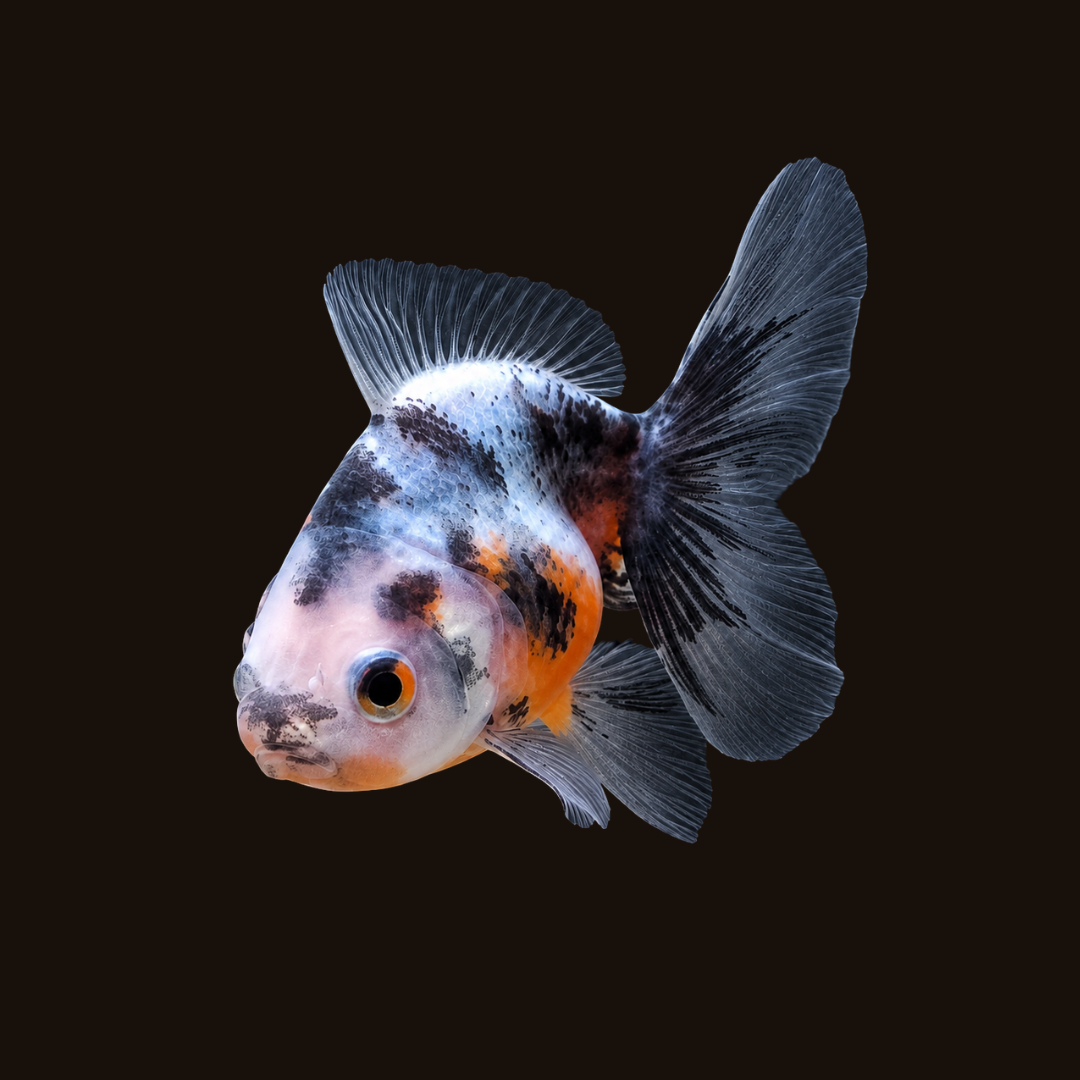
バルーン東錦は、東錦のキャリコ模様と頭部の肉瘤を受け継ぎながら、胴の短さや丸みを強く見せるよう選抜された金魚です。流通では「ショートテール東錦」などの名称も使われます。赤、白、浅葱、墨が複雑に重なるモザイク透明鱗と、オランダ型らしい背びれ、発達する肉瘤、ころんとした輪郭が大きな魅力です。「バルーン東錦」は流通上の呼称として使われることが多く、すべての個体が同一の固定系統に属するとは限りません。そのため購入時は産地名だけでなく、背なり、尾の開き、左右対称性、泳ぎの安定性、肉瘤の状態まで個体ごとに確認することが大切です。丸く短い体型の観賞用金魚では、通常体型とは脊椎や浮き袋の形態が異なる例が報告されています。過給餌を避け、安定した水質と穏やかな水流を保ち、無理なく泳げる環境を整えることが長期飼育の基本です。 Balloon Azuma Nishiki is a selectively bred Azuma Nishiki form that emphasizes a short, rounded body while retaining the calico pattern and head growth of the traditional variety. Trade names such as “Short-tail Azuma Nishiki” are also used. Its appeal comes from mosaic translucent scales showing red, white, blue-gray asagi and black, together with a dorsal fin, an Oranda-type wen and a compact outline. “Balloon Azuma Nishiki” is generally a trade description rather than the name of one universally standardized genetic line, so fish sold under it can vary considerably. Buyers should therefore assess each individual for dorsal profile, tail set, bilateral symmetry, stable swimming and wen condition rather than relying on origin labels alone. Studies of rounded ornamental goldfish have found differences in vertebral and swim-bladder morphology compared with more elongated forms, making restrained feeding, stable water quality and gentle current particularly important for long-term care.
基本情報 / Basic Information
| 学名 / Scientific Name | Carassius auratus |
|---|---|
| 通称 / Common Name | バルーン東錦、ショートテール東錦、ST東錦Balloon Azuma Nishiki, Short-tail Azuma Nishiki, ST Azuma Nishiki |
| 分類 / Family | コイ目・コイ科・フナ属の観賞用改良品種Order Cypriniformes, Family Cyprinidae, genus Carassius; an ornamental domesticated form |
| 英名 / English Name | Balloon Azuma Nishiki / Short-tail Azuma Nishiki (trade names) |
| 分布 / Distribution | 野生分布を持たない観賞用改良品種。日本国内で生産・流通されるほか、海外で生産された短体傾向の個体も流通します。A domesticated ornamental form with no natural wild distribution. It is bred and traded in Japan, and short-bodied fish produced overseas are also present in the market. |
| 最大体長 / Max Size | 全長15〜20cm前後がひとつの目安です。短体のため胴は短く見えますが、頭部や尾びれを含めるとこれを超える個体もいます。大きさは系統と飼育環境による差が大きくなります。Around 15–20 cm in total length is a practical guide, although some individuals can exceed this. Adult size varies considerably with line and husbandry. |
| 寿命 / Lifespan | 適切な環境では10年以上生きることがあります。寿命には個体差が大きく、短体個体では骨格や浮き袋の状態が健康維持に影響することもあるため、長期飼育を前提に十分な水量と安定した水質を確保します。A lifespan of more than 10 years is possible under appropriate care. Individual variation is substantial, and skeletal or swim-bladder condition in short-bodied fish can affect long-term health, so husbandry should be planned around generous water volume and stable water quality. |
飼育環境 / Aquarium Environment
| 水槽サイズ / Tank Size | 成魚をゆったり飼うなら90cm規格水槽クラス、約150〜180Lを推奨します。60cm規格水槽、約55〜65Lでは幼魚や少数飼育が中心となり、成長後は換水頻度とろ過能力に十分な余裕が必要です。金魚は排泄量が多いため、水量が多いほど水質と水温を安定させやすくなります。For adults, a 90 cm standard aquarium of roughly 150–180 L is recommended. A 60 cm standard tank of about 55–65 L is mainly suited to juveniles or very small numbers and requires generous filtration and more frequent water changes as the fish grow. Goldfish produce substantial waste, and larger water volume makes temperature and water chemistry easier to stabilize. |
|---|---|
| 水温 / Temperature | 目安は15〜24℃。金魚自体はより広い温度域に順応できますが、短体個体では急激な変化を避けることが特に重要です。給餌量は水温と活動量に合わせ、10℃前後まで下がって食欲や動きが鈍くなった場合は大幅に減らします。 A practical target is 15–24°C. Goldfish can acclimate to a broader temperature range, but avoiding rapid changes is especially important for compact-bodied fish. Adjust feeding to temperature and activity, reducing it substantially when the water approaches 10°C and appetite and movement decline. |
| 水質 / Water Quality | 中性〜弱アルカリ性を中心に、pH6.8〜8.0程度を目安とします。アンモニアと亜硝酸は検出されない状態を維持し、硝酸塩も定期換水で蓄積しすぎないよう管理します。強い数値合わせより、十分なろ過、エアレーション、定期換水による安定性を優先します。Neutral to mildly alkaline water is suitable, with about pH 6.8–8.0 as a practical range. Ammonia and nitrite should remain undetectable, and nitrate should be kept from excessive accumulation through regular water changes. Stability, adequate biological filtration and aeration are more important than aggressively chasing a particular pH value. |
| レイアウト / Layout | 広い遊泳スペースを残したシンプルなレイアウトが向きます。底床を使う場合は誤飲しにくい細砂や、口に入らない大きさの丸石を選び、尖った石や硬い流木は避けます。暗めの背景は浅葱や墨を見分けやすく、魚類にみられる背景への一時的な体色反応の影響も受けます。ただし体色は遺伝、成長、光環境、栄養にも左右されるため、背景色だけで恒久的な発色を保証できるわけではありません。A simple layout with generous swimming space is best. If substrate is used, choose fine sand or rounded stones too large to swallow, and avoid sharp rocks or rigid driftwood. Dark backgrounds can make asagi and black markings easier to see, while fish may also show temporary color responses to their surroundings. Long-term coloration, however, is also influenced by genetics, age, lighting and nutrition, so background color alone does not guarantee stronger permanent color. |
| 注意点 / Precautions | 強い水流、過密、急な水温変化、急激なpH変化を避けます。短体ほど泳ぎの個体差が大きいため、購入時には常に頭上がり・尻上がりになる、横倒しになる、底から浮けないなどの症状がないか確認します。ろ過は十分な能力を確保しつつ、吐出口を壁面へ向ける、スポンジフィルターを併用するなどして実際の水流を穏やかにします。Avoid strong current, overcrowding and sudden shifts in temperature or pH. Swimming ability varies more widely in short-bodied fish, so check before purchase for persistent head-up or tail-up posture, rolling, floating at the surface or inability to rise from the bottom. Use adequate filtration but diffuse the outlet or combine it with sponge filtration to keep actual water movement gentle. |
餌と給餌 / Feeding
| 餌の種類 / Diet | 金魚用の高品質な沈下性ペレットを主食にし、補助的に冷凍赤虫、ブラインシュリンプ、ミジンコ、加熱して柔らかくした葉物野菜などを組み合わせます。成長期にはタンパク質を確保しつつ、成熟魚では高脂肪・高カロリー餌の連用を避けます。Use a high-quality sinking goldfish pellet as the staple diet and supplement with foods such as frozen bloodworms, brine shrimp, daphnia and softened cooked leafy vegetables. Juveniles need adequate protein for growth, while mature fish should not be kept continuously on very rich, high-fat diets. |
|---|---|
| 給餌のポイント / Feeding Tips | 一度に大量に与えず、短時間で食べ切れる量を1日1〜3回に分けます。沈下性餌は、水面で餌と一緒に空気を飲み込む機会を減らしやすいため、浮力異常が出やすい個体にも使いやすい選択肢です。低水温時は活動量に合わせて回数と量を落とし、食欲が鈍いときや浮き方に異常が出たときは無理に給餌しません。開封後の餌は高温多湿と酸化を避け、少量包装を早めに使い切ると品質を保ちやすくなります。Feed small portions that are consumed quickly, usually divided into one to three meals per day rather than one large meal. Sinking food can reduce the opportunity to gulp air along with food at the surface and is often a practical choice for individuals prone to buoyancy problems. Reduce both frequency and amount as activity declines in cooler water, and do not force feeding when appetite is poor or buoyancy becomes abnormal. Store opened food away from heat, moisture and oxidation, and use smaller packages while they are fresh. |
性格と混泳 / Temperament and Tank Mates
| 性格 / Temperament | 温和で人に慣れやすく、餌の時間には前面へ寄ってくる個体も多い金魚です。攻撃性は低い一方、短い体と大きな尾のため直線的な遊泳は得意ではなく、給餌競争では素早い魚に負けることがあります。Generally peaceful and readily accustomed to people, many individuals approach the front of the aquarium at feeding time. Aggression is low, but the compact body and large fins make sustained fast swimming difficult, so they can lose out to faster fish during feeding. |
|---|---|
| 混泳の相性 / Compatibility | オランダ獅子頭、東錦、琉金、江戸錦、らんちゅうなど、同程度の遊泳力を持つ丸手金魚との混泳が基本です。和金、コメット、朱文金のように速く泳ぐ長手の金魚とは、餌取りで差がつきやすく、接触事故も起こりやすいため慎重にします。極端に大きさの違う個体、常に追い回す個体、泳ぎに障害のある個体は分けて管理します。They are best kept with other rounded fancy goldfish of similar swimming ability, such as Orandas, Azuma Nishiki, Ryukin, Edo Nishiki and Ranchu. Faster long-bodied goldfish such as common goldfish, comets and shubunkins can outcompete them for food and may increase the risk of accidental collisions. Separate fish with extreme size differences, persistent chasing behavior or serious swimming impairment. |
病気と対策 / Diseases and Prevention
| かかりやすい病気 / Common Diseases | 注意したいのは、転覆を含む浮力異常、消化不良、白点病、尾ぐされ病などの細菌性疾患、鰓や体表に生じる寄生虫症です。特に丸い観賞用金魚では、浮き袋の大きさや位置、脊椎や体型の特徴、空気の飲み込み、便秘、感染など複数の要因が浮力異常に関係します。単に「腸内ガスだけが原因」と決めつけず、姿勢や呼吸、腹部の状態、水質を合わせて確認することが大切です。Important problems include buoyancy disorders such as persistent floating or sinking, digestive trouble, white spot disease, bacterial fin disease and parasites affecting the gills or body surface. In rounded fancy goldfish, buoyancy problems can involve several factors including swim-bladder size and position, body and spinal conformation, swallowed air, constipation and infection. It should not automatically be attributed to intestinal gas alone; posture, breathing, abdominal condition and water quality should be considered together. |
|---|---|
| 対策と予防 / Prevention | まず水温、アンモニア、亜硝酸、pH、酸素供給を確認し、原因になり得る環境要因を整えます。軽い浮力異常では一時的な絶食、沈下性餌への変更、安定した適温管理が役立つ場合がありますが、改善しない、腹部が腫れる、鱗が逆立つ、呼吸が速い、出血や潰瘍がある場合は感染症や内臓の異常も考えます。0.3%前後の塩分添加は、淡水魚の浸透圧調整を補助する支持療法として用いられることがありますが、すべての転覆や感染症を治す方法ではありません。使用する場合は実水量から濃度を正確に計算し、魚の状態を観察しながら行います。症状が重い、または長引く場合は、魚類を診られる獣医師への相談を検討します。First check temperature, ammonia, nitrite, pH and oxygenation and correct any environmental cause. Mild buoyancy problems may improve with short-term fasting, switching to sinking food and maintaining a stable appropriate temperature, but persistent symptoms, abdominal swelling, raised scales, rapid breathing, hemorrhage or ulcers can indicate infection or internal disease. Salt at around 0.3% is sometimes used as supportive care to reduce osmoregulatory stress in freshwater fish, but it is not a universal cure for buoyancy disorders or infections. If used, calculate the concentration from the actual water volume and monitor the fish closely. Severe or persistent cases warrant consultation with a veterinarian experienced in fish medicine. |
増やし方(繁殖) / Breeding
| 雌雄の判別 / Sexing | 繁殖期のオスは鰓蓋や胸びれ前縁に白い追星が現れ、メスを追尾する行動が目立ちます。成熟したメスは抱卵すると腹部がふっくらしやすく、総排泄孔がやや突出することがあります。ただし若魚や非繁殖期は外見だけでの判別が難しく、複数の特徴を総合して判断します。During the breeding season, males often develop white breeding tubercles on the gill covers and leading rays of the pectoral fins and actively chase females. Mature females carrying eggs may develop a fuller abdomen and a slightly protruding vent. Outside the breeding season, especially in young fish, visual sexing can be unreliable and several signs should be considered together. |
|---|---|
| 繁殖形態 / Reproduction | 卵生で、水草や人工産卵床などに粘着性の卵をばらまく体外受精型です。春の水温上昇と日長の変化が繁殖行動のきっかけになりやすく、成熟親魚ではおおむね18〜24℃付近で産卵が見られます。親魚は卵を食べるため、産卵後は親魚または産卵床を分離します。They are egg-laying external fertilizers that scatter adhesive eggs among plants or artificial spawning mops. Rising spring temperatures and changing day length commonly stimulate breeding behavior, and mature fish often spawn around 18–24°C. Adults may eat the eggs, so remove the parents or transfer the spawning medium after spawning. |
| 繁殖のポイント / Breeding Tips | 親魚は色柄だけでなく、正常に泳げること、摂食と排泄に問題がないこと、脊椎の極端な湾曲や慢性的な浮力異常がないことを優先して選びます。モザイク透明鱗は古典的な遺伝モデルでは不完全優性として説明され、モザイク透明鱗同士を交配すると、普通鱗、モザイク透明鱗、全透明鱗が理論上およそ1:2:1に分離します。これは「望ましいキャリコ模様の個体が半数生まれる」という意味ではなく、あくまで鱗型の基本的な分離比です。遺伝記号の表し方は文献によって異なりますが、Matsui系の表記ではTTがマット、Ttがナクレアス、ttがメタリックとされます。赤、浅葱、墨の配置、肉瘤、短体、尾型はさらに別の遺伝要因と選抜の影響を受けるため、狙った外観がそのまま高率で再現されるわけではありません。稚魚は成長に合わせて、重度の奇形や遊泳不全、尾の左右差、背なり、鱗質、色柄を段階的に評価し、健康性と正常な遊泳を優先して残します。Select broodstock for normal swimming, feeding and defecation first, not only for color pattern. Avoid fish with severe spinal curvature or chronic buoyancy problems. In the classical genetic model, mosaic translucent, or nacreous, scaling behaves as an incomplete-dominant trait: two nacreous parents theoretically produce metallic, nacreous and matt scale types in roughly a 1:2:1 ratio. This does not mean that half the fry will have a desirable calico pattern; it describes the basic segregation of scale phenotype. Genetic symbols differ among authors; in the Matsui convention, TT denotes matt, Tt nacreous and tt metallic. Red, asagi and black patterning, wen growth, short body and tail form are influenced by additional genetic factors and selective breeding, so the desired appearance does not reproduce at a uniformly high rate. Evaluate fry progressively for severe deformity, swimming ability, tail symmetry, dorsal profile, scale type and pattern, while prioritizing health and functional movement. |
雑学と豆知識 / Trivia and Fun Facts
| 1. 東錦は昭和前期に成立した関東生まれの金魚 / 1. Azuma Nishiki was developed in the Kanto region during the early Showa period | 東錦は、横浜の金魚商・加藤金蔵がオランダ獅子頭と三色出目金を交配して作出し、東京の金魚商・高橋鉄次郎が命名したと伝えられています。作出年は昭和6年(1931年)と昭和18年(1943年)の両方が現代の資料に見られ、記録が一致していません。そのため、昭和前期に成立した品種として捉えるのが無理のない理解です。オランダ獅子頭の体型と肉瘤に、三色出目金由来のモザイク透明鱗の色彩が組み合わさったことが、東錦の大きな特徴になりました。Azuma Nishiki is traditionally credited to Yokohama goldfish dealer Kinzo Kato, who crossed Oranda with calico telescope goldfish, with the name later given by Tokyo dealer Tetsujiro Takahashi. Modern references do not agree on the exact year: both 1931 and 1943 are cited. It is therefore safest to regard the variety as having been established during the earlier part of the Showa era rather than assigning one definitive year. The Oranda contributed the body form and wen, while the calico telescope line contributed the mosaic translucent coloration. |
|---|---|
| 2. 「バルーン東錦」は流通名として理解すると分かりやすい / 2. “Balloon Azuma Nishiki” is best understood as a trade-form name | バルーン東錦やショートテール東錦は、伝統的な東錦とは別の学術上の種や亜種ではありません。また、短体化が最初にどの国のどの系統で成立したのかを、一つの起源に断定できるだけの公開資料は限られています。現在は国内外で短体傾向の東錦が流通しているため、名称だけで同一系統と判断せず、個体の体型、泳ぎ、尾型、色柄を確認することが実際的です。Balloon or short-tail Azuma Nishiki is not a separate species or subspecies from ordinary Azuma Nishiki. Public documentation is also insufficient to assign the first short-bodied form to one definitive country or founding line. Short-bodied Azuma-type fish are now traded from both domestic and overseas production, so the name alone should not be taken to indicate one fixed line. In practice, body shape, swimming ability, tail form and coloration of the individual fish are more informative. |
| 3. キャリコの1:2:1は「色柄」ではなく鱗型の基本モデル / 3. The 1:2:1 rule describes scale phenotype, not the final color pattern | モザイク透明鱗の遺伝は、金魚遺伝学の古典的な例として知られています。ヘテロ接合のナクレアス、つまりモザイク透明鱗同士を交配すると、理論上はメタリック、ナクレアス、マットが約1:2:1に分かれます。ただし、これは「赤頭で浅葱が広く、墨が理想的に散る個体が50%生まれる」という意味ではありません。赤、黄色、黒の色素細胞の量や位置、グアニンによる反射、成長に伴う退色などが重なるため、完成時の模様ははるかに複雑です。Mosaic translucent scaling is a classic example in goldfish genetics. When two heterozygous nacreous fish are crossed, the classical model predicts metallic, nacreous and matt scale phenotypes in approximately a 1:2:1 ratio. This does not mean that 50% of the fry will have an ideal red head, broad asagi field and perfectly placed black spots. The adult pattern also depends on the distribution of red, yellow and black chromatophores, reflective guanine tissues and age-related color changes. |
| 4. 浅葱は「青い色素」を塗った色ではない / 4. Asagi is not produced by a simple blue pigment | 東錦の浅葱は、透明度の高い鱗や皮膚を通して見える深部の黒色素と、グアニンを含む反射組織などが組み合わさって生じる青灰色の外観です。魚類ではメラノフォア、キサントフォア、エリスロフォア、イリドフォアなど複数の色素・反射細胞が体色を作ります。金魚のゲノム研究では透明鱗に関わるT/t遺伝子座の候補領域が絞り込まれていますが、東錦らしい浅葱の質や墨の配置までを単一の遺伝子だけで説明できる段階ではありません。つまり、浅葱は「青色を作る一つの遺伝子」で決まる色ではなく、鱗の透明度と色素・反射組織の組み合わせとして現れる色と考えると分かりやすいでしょう。The asagi of Azuma Nishiki is a blue-gray visual effect produced by deeper dark pigment seen through relatively transparent scales and skin together with guanine-containing reflective tissues; it is not simply a layer of blue pigment. Fish coloration is produced by several chromatophore and reflective cell types, including melanophores, xanthophores, erythrophores and iridophores. Goldfish genomic research has narrowed the candidate region associated with the classical T/t transparent-scale locus, but the exact quality of asagi and the placement of black markings cannot yet be reduced to a single gene. In practical terms, asagi is best understood as the combined appearance of scale transparency, pigment cells and reflective tissues rather than a color controlled by one simple “blue gene.” |
| 5. 鈴木系東錦と江戸錦は、同じキャリコでも名称の性格が異なる / 5. Suzuki-line Azuma and Edo Nishiki are related calico names of different kinds | 鈴木系東錦は、東錦の中の特定の育成系統を示す名称として流通しています。これに対して江戸錦は、東錦とらんちゅうの交配から成立した別品種で、背びれのないらんちゅう型を基本とします。どちらもキャリコの色彩を楽しむ金魚ですが、鈴木系東錦はあくまで東錦の系統名、江戸錦は品種名という違いがあります。外見上は、東錦系の背びれを持つオランダ型の輪郭と、江戸錦の背びれを欠く背なりが分かりやすい識別点です。Suzuki-line Azuma is a name used for a particular breeding line within Azuma Nishiki. Edo Nishiki, by contrast, is a separate variety developed from Azuma Nishiki and Ranchu and is based on the dorsal-finless Ranchu body form. Both are appreciated for calico coloration, but the terms are not equivalent: Suzuki-line Azuma denotes a line within Azuma Nishiki, whereas Edo Nishiki is a variety name. Visually, the dorsal fin and Oranda-like outline of Azuma-type fish contrast with the dorsal-finless back profile of Edo Nishiki. |
| 6. 短体化は見た目だけでなく浮き袋の形にも影響する / 6. Shortening the body can affect more than appearance | 観賞用金魚の形態研究では、丸く短い系統で椎骨数が少なく、脊椎の湾曲が強くなる傾向が報告されています。また、細長い体型の金魚とは浮き袋の前後の比率が異なる例も示されています。つまり、短体化は外見だけの変化ではなく、泳ぎや浮力に関わる内部構造とも関係します。バルーン体型の魅力を将来に残すには、単に「より短く、より丸く」を目指すのではなく、水平姿勢を保って自力で餌を取り、無理なく泳げる個体を親に残すことが重要です。Morphological studies of ornamental goldfish show that round, short-bodied strains tend to have fewer vertebrae and stronger spinal curvature. Differences in the relative size of the anterior and posterior swim-bladder chambers have also been reported between elongated and globular forms. In other words, shortening the body is not only an external change; it is associated with structures involved in swimming and buoyancy. Preserving balloon-type beauty responsibly therefore means selecting not simply for ever shorter bodies, but for fish that can maintain a horizontal posture, feed independently and swim without chronic difficulty. |
| 7. 加須は現在も東日本の観賞魚流通を支える重要拠点 / 7. Kazo remains a major ornamental-fish distribution hub in eastern Japan | 埼玉県加須市には埼玉県養殖漁業協同組合の水産流通センターがあり、県の水産業振興計画でも東日本最大の観賞魚流通市場として、東日本一円の流通中核を担う施設と位置づけられています。金魚やメダカの品評会、即売会なども開催され、生産者、流通業者、小売店、愛好家が交わる場所になっています。バルーン東錦のように個体差が価値へ直結する魚では、こうした市場や専門店で実物を見て選べること自体が大きな意味を持ちます。Kazo City in Saitama is home to the Aquatic Products Distribution Center of the Saitama Aquaculture Fisheries Cooperative. Saitama Prefecture’s fisheries promotion plan describes it as the largest ornamental-fish distribution market in eastern Japan and a central hub for regional trade. Goldfish and medaka shows and sales are also held there, bringing together breeders, wholesalers, retailers and hobbyists. For a fish such as Balloon Azuma Nishiki, where individual conformation and pattern strongly affect value, the ability to inspect fish directly at specialist markets and shops is particularly important. |
| 8. 欧米の「グリーンピース療法」は万能薬ではない / 8. The Western “pea remedy” is not a universal cure | 英語圏の飼育情報では、浮力異常のある金魚に茹でて皮を除いたグリーンピースを少量与える方法が紹介されることがあります。便秘が関係する場合の食事調整として利用されることはありますが、浮き袋の形態異常や感染など別の原因を治す方法ではありません。医学的な万能治療ではなく、便秘が疑われる軽症例で検討される食餌上の工夫の一つと理解し、まず水質や姿勢、腹部の状態を確認することが大切です。English-language goldfish care often mentions small amounts of cooked, skinned peas for fish with buoyancy problems. They may be used as a dietary adjustment when constipation is suspected, but peas cannot correct swim-bladder malformation, infection or other underlying causes. They are best regarded as one feeding option for selected mild cases rather than a medical cure, with water quality, posture and abdominal condition checked first. |
| 9. 国産と輸入魚は「どちらが丈夫」と一括りにできない / 9. Domestic versus imported does not automatically determine hardiness | 国産魚には輸送距離の短さ、系統や生産者を追いやすいこと、日本の季節条件で育成された個体を選びやすいことなどの利点があります。一方、輸入魚にも健全で優れた個体は多く、丈夫さは産地だけでなく、育成密度、餌、水質、出荷前処置、輸送時間、販売店でのトリートメントによって大きく変わります。購入時は産地だけで選ばず、入荷後の観察期間を店に確認し、餌の食べ方や泳ぎの安定性も見ておきましょう。Domestic fish can benefit from shorter transport, easier traceability of breeder and line, and the possibility of selecting fish raised under Japanese seasonal conditions. Imported fish, however, can also be healthy and excellent. Hardiness depends not only on origin but on stocking density during rearing, diet, water quality, pre-shipment handling, transport duration and post-arrival conditioning. When choosing a fish, look beyond its origin: ask the shop how long it has been observed after arrival, and check its feeding response and swimming stability. |
まとめ / Conclusion
バルーン東錦は、東錦が持つ浅葱、赤、墨の重なりと肉瘤の存在感に、短体ならではの丸いシルエットが加わった、個体差を楽しむ魅力の大きい金魚です。同じ名前で流通していても体型や尾、色柄には幅があるため、見た目だけでなく、自然に泳げるか、水平姿勢を保てるか、餌を無理なく取れるかまで含めて選ぶと、その個体らしさを長く楽しみやすくなります。 Balloon Azuma Nishiki combines the layered asagi, red and black coloration and prominent wen of Azuma Nishiki with a compact rounded silhouette, making individual variation a major part of its appeal. Even under the same trade name, body shape, tail form and pattern can vary widely, so appearance should be considered together with natural swimming, stable posture and comfortable feeding when selecting a fish for long-term care.
十分な水量、穏やかな水流、清潔で安定した水質を保ち、沈下性餌を中心に食べ過ぎを避ければ、ころんとした体でゆったり泳ぐ姿と、成長に伴う色柄の変化をじっくり楽しめます。繁殖でも外見だけに偏らず、健康な骨格と安定した泳ぎを備えた個体を残していくことが、バルーン東錦と無理なく長く付き合うための大切な視点になります。 With generous water volume, gentle current, clean stable water and restrained feeding based mainly on sinking foods, the fish can display its relaxed swimming style while its coloration changes with growth. In breeding, selecting for healthy skeletal structure and stable swimming as well as appearance is an important part of maintaining Balloon Azuma Nishiki as a form that can be enjoyed over the long term without sacrificing basic function.

気になる道具や飼い方を見つけてみませんか?
 アイのアクアグッズ案内あい先生のアクアグッズ深堀り!|泡で汚れを取り出す? プロテインスキマーの歴史と仕組み道具の特徴や使い方、選ぶときのポイントをアイが紹介します。記事はコチラ →
 アイのアクアグッズ案内水槽のろ材の選び方|ウール・リング・活性炭の違いとおすすめ商品フィルターの中の綿や石は何をしている? アイとコタロウが、ウール・スポンジ・セラミック・焼結ガラス・活性炭・ゼオライトを比較。機種との相性、入れ方、洗い方と交換まで商品とともに紹介します。記事はコチラ →
さまざまな飼育テーマをご紹介。リンク先の記事には広告・商品紹介が含まれます。
案内・紹介記事一覧へ →分布マップ
バルーン東錦(Carassius auratus)は野生分布を持たない観賞用改良品種です。日本国内で生産・流通されるほか、海外で生産された個体も流通しているため、地図では世界規模の範囲を概略表示しています。
※この地図は記事の分布情報をもとにした概略表示です。本品種には自然の野生分布域がありません。マーカーは表示上の代表地点として日本付近に設定したもので、実際の採集地点・原産地点・特定の養殖場を示すものではありません。
参考文献
-
Fricke, R., Eschmeyer, W. N. & Van der Laan, R. (eds.). Eschmeyer’s Catalog of Fishes: Carassius auratus (Linnaeus, 1758). California Academy of Sciences.
分類、学名、種としての位置づけ、分布の確認。
-
Froese, R. & Pauly, D. (eds.). FishBase: Carassius auratus, Goldfish.
分類、東アジアを中心とする原種の分布、淡水での生息環境、水質範囲、食性、産卵生態の確認。
-
Ornamental Aquatic Trade Association (OATA). How to look after fancy goldfish.
ファンシーゴールドフィッシュの水槽容量、水温、pH、アンモニア・亜硝酸管理、穏やかな水流、寿命、雌雄判別、家庭飼育下での繁殖条件の確認。
-
Chen, D. et al. (2020). The evolutionary origin and domestication history of goldfish (Carassius auratus). Proceedings of the National Academy of Sciences of the United States of America, 117(47), 29775–29785. doi:10.1073/pnas.2005545117.
金魚の家畜化・選抜育種の背景と、透明鱗に関わるT/t遺伝子座の不完全優性および候補領域の確認。
-
Ota, K. G. & Abe, G. (2016). Goldfish morphology as a model for evolutionary developmental biology. Wiley Interdisciplinary Reviews: Developmental Biology, 5(3), 272–295. doi:10.1002/wdev.224.
丸く短い観賞用金魚でみられる椎骨数の減少、脊椎形態、体型と浮き袋形態の関係など、短体化に伴う解剖学的特徴の確認。
-
Kobayashi, M., Iwata, E. & Sorensen, P. W. (2026). Environmental and Physiological Regulation of Reproduction in the Goldfish: Gonadal Development, Maturation, and Spawning Behavior: A Review. Animals, 16(5), 775. doi:10.3390/ani16050775.
季節繁殖、水温上昇と成熟・排卵、日長との関係、産卵行動など繁殖生理の確認。
-
Wildgoose, W. H. (2007). Buoyancy disorders of ornamental fish: a review of cases seen in veterinary practice. Fish Veterinary Journal, 9, 22–37.
金魚の浮力異常について、浮き袋の過膨張・変位・液体貯留、腸管ガス、腎疾患、全身性疾患など複数の原因があり得ることの確認。
-
MSD Veterinary Manual. Management of Aquarium Fish; Parasitic Diseases of Fish; Bacterial Diseases of Fish.
水質・水温・浸透圧管理、白点病を含む寄生虫症、細菌性疾患、症状が長引く場合の診断と治療方針の確認。
-
Francis-Floyd, R. The Use of Salt in Aquaculture. University of Florida IFAS Extension.
淡水魚に対する食塩の浸透圧調整補助、濃度と処置時間を目的に応じて区別する必要性、0.1~0.3%程度の低濃度利用に関する確認。





コメント