

解説 / Description
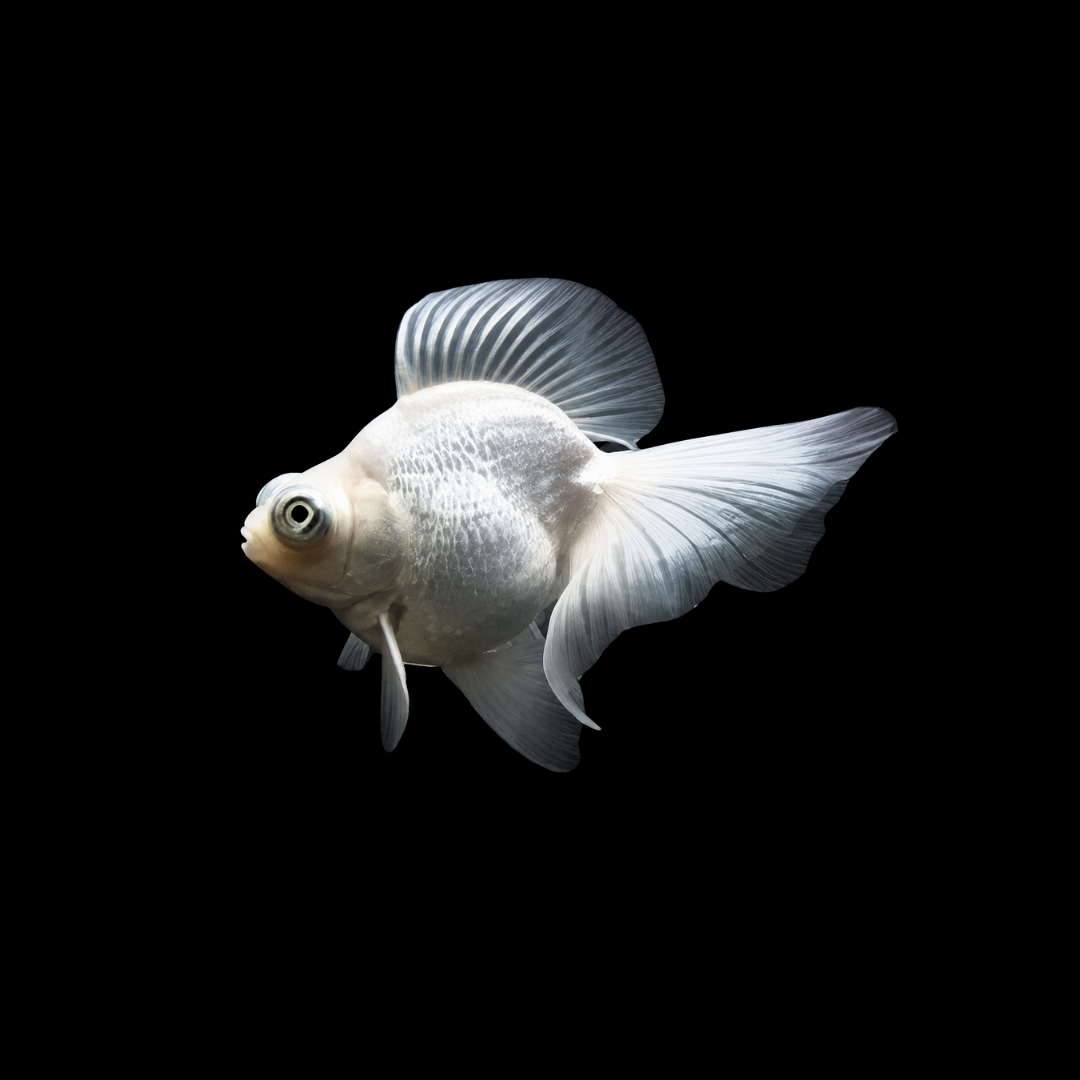
白蝶尾は、出目金系の突出した眼と、真上から見たときに蝶が羽を広げたように見える大きな尾鰭をあわせ持つ蝶尾のうち、白色を主体とする金魚です。最大の見どころは、体軸に対して左右へ水平に開く四つ尾のシルエットで、特に浅めの容器で楽しむ「上見」では、尾の張り、左右の対称性、切れ込みの整い方がよく分かります。純白から銀白色に見える体色は、色素細胞の構成や反射性の細胞、成長に伴う褪色などが重なって生じる複雑な表現型であり、白蝶尾だけに固有の単一遺伝子で説明できる形質ではありません。優雅な姿とは対照的に、視野の制約と大きな尾によって泳ぎはあまり得意ではないため、強い水流や鋭いレイアウトを避け、ゆったりと暮らせる環境を整えることが長期飼育の鍵になります。 The White Butterfly Tail is a white-bodied form of the Butterfly Telescope goldfish, combining protruding telescope eyes with a broad double tail that spreads laterally like the wings of a butterfly when viewed from above. Its greatest appeal is the four-lobed tail silhouette opening horizontally on both sides of the body axis. In shallow containers intended for top viewing, the firmness of the tail, bilateral symmetry, and balance of the central divisions can be appreciated especially clearly. The white to silvery-white appearance is a complex phenotype produced by the composition of chromatophores, reflective cells, and age-related color change; it should not be attributed to a single gene unique to this variety. Despite its elegant appearance, the fish is not a powerful swimmer because of restricted vision and its large tail, so gentle flow, an obstacle-free layout, and ample swimming space are central to successful long-term care.
基本情報 / Basic Information
| 学名 / Scientific Name | Carassius auratus (Linnaeus, 1758) |
|---|---|
| 通称 / Common Name | 白蝶尾、蝶尾(白系)White Butterfly Telescope, White Butterfly Tail Goldfish |
| 分類 / Family | コイ目コイ科フナ属Order Cypriniformes, Family Cyprinidae, Genus Carassius |
| 英名 / English Name | White Butterfly Telescope Goldfish |
| 分布 / Distribution | 野生分布を持つ独立種ではなく、中国で発達した観賞用金魚の系統です。現在は中国、日本を含む各国で養殖・流通しています。金魚そのものの祖先集団は中国のフナ類に由来します。This is a domesticated ornamental strain rather than a naturally distributed wild species. Butterfly-type goldfish were developed in China and are now bred and traded in Japan, China, and other countries. Domestic goldfish as a whole descend from Chinese crucian-carp populations. |
| 最大体長 / Max Size | 一般に全長15〜20cm前後。系統、飼育密度、給餌、水量などにより差があります。Generally around 15–20 cm in total length, with variation according to strain, stocking density, diet, and available water volume. |
| 寿命 / Lifespan | 適切な飼育下で6〜10年以上が目安。金魚では20年以上生きた例も知られていますが、個体差と飼育条件の影響が大きいです。A practical expectation under good care is 6–10 years or more. Goldfish exceeding 20 years have been reported, although lifespan varies greatly with the individual and husbandry conditions. |
飼育環境 / Aquarium Environment
| 水槽サイズ / Tank Size | 成魚1匹なら100L級をひとつの目安とし、日本の規格では60cmワイド水槽〜90cm規格水槽程度の底面積を確保すると管理しやすくなります。複数飼育では90cm規格水槽以上を基本に、1匹増えるごとに十分な水量と底面積を追加してください。上見を重視する場合は、同等以上の水量を確保できる浅型水槽や大型のトロ舟も適します。For one adult, about 100 L is a useful minimum target. In Japanese aquarium sizes, a 60 cm wide-format tank to a standard 90 cm tank provides a more manageable footprint. For groups, start with a standard 90 cm tank or larger and increase both water volume and floor area as fish are added. Large shallow tubs or low tanks of equivalent or greater volume are also suitable when top viewing is the priority. |
|---|---|
| 水温 / Temperature | 15〜23℃前後を安定して保つと飼育しやすいです。金魚自体はより広い温度域に順応できますが、蝶尾のような改良品種では急激な温度変化を避け、特に高温時は溶存酸素の低下に注意します。 A stable range of about 15–23°C is easy to manage. Goldfish can acclimate to a broader range, but fancy varieties such as Butterfly Tails should be protected from rapid temperature changes, and dissolved oxygen should be watched carefully during warm periods. |
| 水質 / Water Quality | pH6.5〜8.5を目安に、アンモニアと亜硝酸は0mg/Lを維持します。硝酸塩はできるだけ低く保ち、目安として水道水の値より20mg/L以上高くしないよう管理します。硬度は極端な軟水を避け、中硬水〜硬水程度(GH 8〜18°dH、KH 5〜15°dKH)が扱いやすい範囲です。数値そのものより急変を避けることが重要です。Aim for pH 6.5–8.5 with ammonia and nitrite maintained at 0 mg/L. Keep nitrate as low as practical; a useful guideline is to avoid allowing it to rise more than about 20 mg/L above the source-water level. Medium-hard to hard water is generally suitable, roughly GH 8–18°dH and KH 5–15°dKH. Stability is more important than chasing an exact number. |
| レイアウト / Layout | 突出した眼と大きな尾鰭を傷つけないよう、流木の尖端、角張った石、硬い造花などは避けたバリアフリー構成が基本です。底床を使うなら角の丸い素材を薄く敷くか、清掃性を優先してベアタンクにします。尾の形を楽しむなら、上から観察しやすい広い底面と穏やかな水面を確保すると魅力が際立ちます。Use an obstacle-free layout that protects the protruding eyes and broad tail from injury. Avoid sharp driftwood tips, angular rocks, and rigid artificial plants. If substrate is used, choose smooth material and keep it shallow, or use a bare-bottom setup for easier cleaning. For appreciation of the tail shape, provide a broad footprint and calm surface that can be viewed easily from above. |
| 注意点 / Precautions | ろ過能力は十分に確保しながら、水流は弱く拡散させます。強い吐出流は泳ぎの負担となり、長い尾鰭のコンディションを崩す原因になります。週1回を基本に25%前後の部分換水を行い、飼育密度や硝酸塩の上昇に応じて換水量を調整してください。新しい個体は可能なら別容器で健康状態を観察してから合流させます。Provide generous biological filtration but diffuse the return so the current remains gentle. Strong directional flow increases swimming effort and can compromise the condition of the broad tail. As a baseline, perform a partial water change of about 25% weekly and adjust the amount according to stocking density and nitrate accumulation. When possible, observe newly acquired fish separately before introducing them to the main aquarium. |
餌と給餌 / Feeding
| 餌の種類 / Diet | 金魚用の良質な沈下性ペレットを主食にし、必要に応じて金魚向けのゲルフードを組み合わせます。副食として、信頼できる供給元の冷凍赤虫、ブラインシュリンプ、ミジンコなどを少量与えることもできます。活き餌は寄生虫や病原体を持ち込む可能性があるため、由来が不明な採集餌は避けます。Use a high-quality sinking goldfish pellet as the staple diet, with a goldfish-formulated gel food as an optional supplement. Small portions of frozen bloodworms, brine shrimp, or daphnia from reliable sources can be offered as variety. Avoid wild-collected live foods of unknown origin because they can introduce parasites or other pathogens. |
|---|---|
| 給餌のポイント / Feeding Tips | 白蝶尾は視力と遊泳力で素早い金魚に劣るため、餌が確実に届く位置へ沈め、食べ残しが出ない量を少量ずつ与えます。成長期や暖かい時期は1日2〜3回に分ける方法が扱いやすく、低水温では代謝に合わせて回数と量を減らします。浮上餌を大量に与えるより、沈下性の主食を中心にした方が水面で慌てて空気を飲み込む行動を抑えやすくなります。Because White Butterfly Tails are slower and have more limited vision than streamlined goldfish, deliver food where they can locate it and feed small amounts that are fully consumed. During growth and warm conditions, two or three small meals per day are easy to manage; reduce both frequency and quantity as water temperature falls. A sinking staple also helps reduce frantic surface feeding and unnecessary gulping of air. |
性格と混泳 / Temperament and Tank Mates
| 性格 / Temperament | 温和で人にも慣れやすい金魚ですが、泳ぎはゆっくりしています。大きな尾と出目性のため、餌探しや方向転換に時間がかかる個体もおり、落ち着いた環境ほど本来の姿を見せやすくなります。They are peaceful goldfish that often become accustomed to their keeper, but they swim slowly. The broad tail and telescope eyes can make feeding and turning more deliberate, so calm surroundings allow them to behave more naturally. |
|---|---|
| 混泳の相性 / Compatibility | 最も安全なのは蝶尾同士、または体格と遊泳速度が近い穏やかな丸物金魚との飼育です。和金、コメット、朱文金のような泳ぎの速いフナ尾系は餌を先取りしやすく、蝶尾の眼や尾を傷つける可能性もあるため基本的に分けます。出目金系などとの混泳でも、餌が全個体に行き渡るか、追い回しやヒレへの接触がないかを観察してください。The safest companions are other Butterfly Tails or calm fancy goldfish of similar size and swimming speed. Fast single-tailed types such as Common Goldfish, Comets, and Shubunkins tend to dominate food and may accidentally damage the eyes or fins, so they are best housed separately. Even with other telescope or fancy varieties, confirm that every fish receives food and that no chasing or fin damage occurs. |
病気と対策 / Diseases and Prevention
| かかりやすい病気 / Common Diseases | 白点病、尾ぐされ病などの外部感染症、エロモナス属細菌が関与する潰瘍や立鱗、浮力異常、眼球の擦過傷や白濁に注意します。特に突出した眼と幅広い尾は外傷を受けやすく、丸い体型の個体では浮き方の異常が目立つことがあります。Watch for white spot disease (ich), fin rot and other external infections, ulcerative or pineconing conditions associated with Aeromonas bacteria, abnormal buoyancy, and abrasions or cloudiness of the protruding eyes. The exposed eyes and broad fins are particularly vulnerable to physical damage, while compact-bodied individuals may also show conspicuous buoyancy problems. |
|---|---|
| 対策と予防 / Prevention | 最優先は水質検査と環境の見直しです。アンモニア・亜硝酸を0に保ち、過密、急な水温変化、強い水流、鋭利な装飾を避けます。白点のような症状でも原因は複数あり得るため、可能なら隔離して観察し、市販薬を使う場合は対象病原体と用法・用量を確認してください。塩分や昇温は病気によって有効性と適温が異なるため、すべての症状に一律で高温・高濃度塩水を適用しないことが大切です。重症、急速な悪化、潰瘍、呼吸困難、眼球の深い損傷がある場合は魚類を診療できる獣医師への相談が安全です。The first priority is always water testing and correction of husbandry problems. Keep ammonia and nitrite at zero and avoid crowding, rapid temperature shifts, strong current, and sharp decorations. Similar-looking white spots can have different causes, so isolate and observe affected fish when possible and confirm the target pathogen and label directions before using medication. Salt and temperature manipulation can be useful in selected conditions but should not be applied at high levels indiscriminately. Severe or rapidly worsening disease, ulcers, respiratory distress, or deep eye injury warrants consultation with a veterinarian experienced in fish medicine. |
増やし方(繁殖) / Breeding
| 雌雄の判別 / Sexing | 繁殖期にはオスの鰓蓋や胸鰭前縁に白い追星が現れやすく、メスは抱卵すると腹部に厚みが出ます。総排泄孔の形にも傾向がありますが個体差があるため、追星、体型、追尾行動を複数の手掛かりとして判断します。During the breeding season, males commonly develop small white breeding tubercles on the gill covers and leading edges of the pectoral fins, while gravid females become fuller through the abdomen. Vent shape can provide an additional clue, but it varies between individuals, so use several signs together, including tubercles, body shape, and chasing behavior. |
|---|---|
| 繁殖形態 / Reproduction | 卵生で、水草や産卵用モップなどに粘着性の卵をばらまくタイプです。春に水温が上がる時期に繁殖行動が活発になりやすく、成熟は飼育条件によりますが1〜2歳以降が目安です。親魚は卵を食べるため、産卵後は卵または親魚を速やかに分けます。They are egg layers that scatter adhesive eggs among plants or spawning mops. Spawning activity often increases as temperatures rise in spring, and sexual maturity is commonly reached from roughly one to two years of age depending on growth and husbandry. Because adults readily eat eggs, separate the eggs or the parents promptly after spawning. |
| 繁殖のポイント / Breeding Tips | 孵化後の仔魚は卵黄を吸収して自由遊泳を始めてから、ブラインシュリンプ幼生や仔魚用の微粒子飼料を少量ずつ与えます。蝶尾では成長に伴って尾の開き、左右差、眼の出方、背骨や各鰭の形を見ながら選別します。白い体色は成長過程の褪色で変化するため、幼魚の色だけで成魚の発色を完全に予測することはできません。人工授精は親魚への負担や損傷を伴うため、経験がない場合は自然産卵から始める方が安全です。After the larvae absorb their yolk and begin free swimming, offer newly hatched brine shrimp or fine fry food in small frequent portions. In Butterfly Tails, breeders evaluate tail spread, left-right symmetry, eye development, spinal alignment, and fin structure as the fish grow. Because goldfish coloration changes during juvenile depigmentation, adult color cannot be predicted perfectly from fry color alone. Hand spawning can injure broodstock if performed incorrectly, so natural spawning is the safer starting point for inexperienced keepers. |
雑学と豆知識 / Trivia and Fun Facts
| 1. 「蝶尾」の美しさは上から完成する / 1. The Butterfly Tail Is Completed by the Top View | 一般的な出目金では横から見た体高や尾の流れも大きな鑑賞点になりますが、蝶尾は水面側から見たときに個性が最も分かりやすい金魚です。左右の尾葉が大きく開き、中央の切れ込みを挟んで一枚の蝶のような輪郭を描く個体ほど印象が整います。尾が水平に張ること、左右の大きさが近いこと、付け根にねじれが少ないことは、見た目だけでなく泳ぎのバランスにも関係します。そのため、購入時は横見の写真だけでなく、できれば上見の静止画や動画を確認すると個体差を判断しやすくなります。In ordinary telescope goldfish, body depth and the flowing profile of the tail are important from the side. Butterfly Tails reveal their identity most clearly from above. The most harmonious fish show broad left and right tail lobes forming a butterfly-like outline around the central division. A level tail, similar proportions on both sides, and minimal twisting at the base contribute not only to appearance but also to balanced swimming. When selecting a fish, top-view photographs or video are therefore much more informative than side-view images alone. |
|---|---|
| 2. 金魚の祖先は「ヒブナ1匹」ではなく中国のフナ集団 / 2. Goldfish Did Not Descend from a Single Red Crucian Carp | 金魚の歴史は、灰色から赤橙色へ変化したフナが人の目に留まったことから始まったと語られることが多く、赤いフナを意味する「ヒブナ」は祖先像を説明する上で分かりやすい存在です。ただし現代の集団遺伝学では、観賞用金魚は中国南部、とくに長江下流域を含むフナ集団との強い近縁性が示されています。つまり「ある1匹のヒブナがすべての金魚の直接の祖先になった」という単純な一本道ではなく、フナの集団から色彩変異を持つ魚が選ばれ、千年以上にわたる人為選択の中で体型、鰭、眼、鱗、色が次々に多様化したと考える方が現在の理解に近いのです。Goldfish history is often introduced with the story of gray crucian carp producing red-orange individuals that attracted human attention. The Japanese term hibuna, meaning a red crucian carp, is therefore a useful image of an early ancestral form. Modern population genetics, however, points to close relationships between domesticated goldfish and crucian-carp populations from southern China, especially the lower Yangtze region. The history is therefore not a simple line beginning with one ancestral red fish. Instead, colored variants were selected from crucian-carp populations, and more than a millennium of artificial selection progressively diversified body shape, fins, eyes, scales, and coloration. |
| 3. 日本への金魚伝来は1502年説が有力だが、記録は後世の文献 / 3. The 1502 Introduction to Japan Is Influential but Historically Indirect | 日本への金魚伝来は文亀2年(1502年)、明から泉州堺へ持ち込まれたという説が広く知られています。この記述は江戸時代の飼育書『金魚養玩草』に見られ、現在も有力説として紹介されていますが、出来事と記録成立の間には時間差があります。その後、江戸時代に飼育・繁殖技術が普及し、金魚は一部の珍奇な舶来品から庶民にも親しまれる観賞魚へ変わっていきました。蝶尾そのものははるかに新しい系統で、中国で発達した出目金系の選別品種が昭和後期以降に日本でも広く知られるようになり、現在は中国産と国内繁殖魚の双方が流通しています。A widely cited account places the introduction of goldfish to Japan in 1502, when fish from Ming China were reportedly brought to Sakai in Izumi Province. The account appears in the Edo-period husbandry book Kingyo Sōgangusa and remains an influential historical interpretation, although the written record was compiled long after the event it describes. During the Edo period, advances in keeping and breeding transformed goldfish from rare imported curiosities into familiar ornamental animals. The Butterfly Tail is much newer: telescope-based strains developed in China became widely known in Japan in the late Shōwa period, and both Chinese imports and domestically bred fish are now available. |
| 4. 白い体色は「色がない」だけではない / 4. White Is More Than the Absence of Color | 魚の皮膚には、黒色に関係する黒色素胞、黄〜赤色に関係する黄色素胞・赤色素胞、光を反射して銀白色や金属的な輝きを生む虹色素胞など、複数の色素細胞が関わります。白蝶尾が白く見えるときも、単にすべての色素細胞が消えて透明になっているわけではありません。金魚の白色皮膚を比較した近年のトランスクリプトーム研究では、メラニン形成、チロシン代謝、Wntシグナル、MAPKシグナルなどに関連する遺伝子群の発現差が報告されています。白色は、黒や赤黄の色素形成が弱いことと、皮膚・鱗の散乱や反射が組み合わさって成立する、複数の細胞と経路が関与する表現型と考えるのが適切です。Fish skin contains several chromatophore types, including melanophores associated with dark pigment, xanthophores and erythrophores associated with yellow to red coloration, and iridophores that reflect light to create silvery or metallic effects. A White Butterfly Tail is therefore not simply a transparent fish lacking every pigment cell. Recent transcriptomic comparisons of white and differently colored goldfish skin have found expression differences in gene groups associated with melanogenesis, tyrosine metabolism, Wnt signaling, and MAPK signaling. White coloration is best understood as a multi-cellular, multi-pathway phenotype in which reduced dark and red-yellow pigmentation combines with optical scattering and reflection by the skin and scales. |
| 5. 金魚のゲノムは倍数化の歴史を背負っている / 5. The Goldfish Genome Carries a History of Genome Duplication | 金魚は2n=100本の染色体を持ち、コイ類の進化史で起きた比較的新しい全ゲノム重複の影響を受けています。かつては単純に「四倍体」と説明されることもありましたが、ゲノム解析からは、異なる祖先ゲノムの融合を伴う古い異質倍数化と、その後の再編成を経た複雑な背景が示されています。遺伝子が重複して存在することは、金魚に非常に多様な形態変異が蓄積し、人の選抜によって固定されてきた進化的背景を考える上でも興味深いポイントです。蝶尾の巨大な尾や出目も、こうした長い家畜化の中で選び続けられた形質の一部です。Goldfish have 2n = 100 chromosomes and retain the legacy of a relatively recent whole-genome duplication in cyprinid evolution. They were once described simply as tetraploid, but modern genome analyses indicate a more complicated history involving ancient allopolyploid formation through the merger of distinct ancestral genomes followed by subsequent genomic restructuring. The presence of duplicated genes is intriguing when considering how goldfish accumulated enormous phenotypic diversity that human breeders could select and stabilize. The broad butterfly tail and telescope eyes are part of this long domestication history of selecting unusual morphology. |
| 6. 「白」は成長とともに変わることがある / 6. White Color Can Change as the Fish Matures | 金魚の仔魚や幼魚は、成魚とは異なる暗い色調を示すことが多く、成長に伴って褪色しながら品種らしい色へ変化します。白蝶尾でも、幼魚期に残っていた黒色が薄くなったり、頭部や鰭にわずかな色が残ったりするなど、色の抜け方には個体差があります。また背景色や照明によって色素顆粒が細胞内で集散し、見かけの明暗が変化する生理的な反応もあります。明るい容器に入れただけで遺伝的に白い魚へ変わるわけではなく、遺伝的な素質、成長、健康状態、環境が重なって見え方が決まります。Goldfish larvae and juveniles commonly begin with darker coloration and change as they mature through a depigmentation process. In White Butterfly Tails, residual dark areas may fade at different rates, while traces of color can remain on the head or fins in some individuals. Background and lighting can also alter apparent brightness through physiological movement of pigment granules within chromatophores. A bright container does not genetically turn a fish white; appearance reflects the combined effects of inherited potential, maturation, health, and environment. |
| 7. 国内流通では中国産と国産の両方が見られる / 7. Both Chinese and Japanese-Bred Fish Circulate in Japan | 蝶尾は中国由来の系統として発達しましたが、日本でも愛好家や養殖業者による繁殖が行われています。埼玉県加須市の埼玉県養殖漁業協同組合では観賞魚の卸売市場が運営され、水曜日が市場開催日となっており、県産の金魚・メダカ・錦鯉などが関東を中心とした業者へ流通しています。一方、白蝶尾そのものは専門店の店頭販売だけでなく、通販やオークションでも購入でき、2026年夏の国内通販では5cm前後の中国産白蝶尾が1,600円程度で販売される例も確認できます。価格はサイズだけでなく、尾の左右対称性、尾付け、眼の整い方、白さ、傷の有無、血統や作出者によって大きく変動します。Although Butterfly Tails developed from Chinese lines, Japanese hobbyists and breeders also reproduce them domestically. The Saitama Prefectural Aquaculture Cooperative in Kazo operates a wholesale ornamental-fish market, with market activity held on Wednesdays, distributing locally produced goldfish, medaka, koi, and other ornamental fish mainly to businesses in the Kanto region. White Butterfly Tails themselves are sold not only through specialist shops but also through online retailers and auctions. As one market reference, Chinese-bred white fish of around 5 cm were listed in Japan for about ¥1,600 in summer 2026. Prices vary widely with size, tail symmetry, tail set, eye quality, whiteness, physical condition, lineage, and breeder reputation. |
| 8. 値段より先に「尾・眼・泳ぎ」を見る / 8. Judge the Tail, Eyes, and Swimming Before the Price | 白蝶尾を選ぶときは、色の白さだけに目を奪われないことが大切です。上から見て尾が左右ほぼ同じ大きさで開くか、尾の付け根が不自然に折れていないか、両眼の大きさや向きが極端に違わないかを確認します。さらに、止まっている写真では見えない問題を知るため、泳いだときに片側へ傾かないか、呼吸が速すぎないか、餌を認識して食べられるかを見ると安心です。特に通販では上見動画が大きな判断材料になり、到着後は輸送疲れや潜在的な感染症を考えて、すぐに既存魚と合流させず観察期間を設けるとリスクを下げられます。When choosing a White Butterfly Tail, do not let whiteness alone determine the purchase. From above, check whether both sides of the tail spread to similar proportions, whether the tail base is twisted or sharply bent, and whether the eyes differ greatly in size or direction. Video is especially useful because still photographs cannot show a fish leaning to one side, breathing excessively, or failing to locate food. For online purchases, a top-view swimming video is therefore highly valuable. After arrival, an observation period before mixing with established fish reduces the risk associated with shipping stress and hidden disease. |
まとめ / Conclusion
白蝶尾は、純白から銀白色の体と、上から見たときに蝶の羽を思わせる大きな尾鰭が出会うことで、ほかの金魚とは異なる静かな華やかさを見せます。尾の左右対称性や水平な張り、丸い体と出目のバランスまで含めて一匹ごとの個性が強く、成長に伴う尾と体色の変化を見守る楽しさも大きな品種です。 The White Butterfly Tail combines a white to silvery body with an expansive tail that resembles butterfly wings from above, creating a calm elegance unlike that of most other goldfish. Each individual has a distinctive balance of tail symmetry, horizontal spread, rounded body, and telescope eyes, and watching the tail and coloration develop with age is part of the pleasure of keeping the variety.
その美しさを長く保つためには、広い水量、穏やかな水流、清浄で安定した水、傷つく物のないレイアウト、そして確実に餌へたどり着ける環境が欠かせません。上見でゆっくり泳ぐ白蝶尾を眺めていると、人の選抜が生み出した造形美と、ひとつの生命として丁寧に暮らしを支えることの両方が、この金魚の魅力を形づくっていることを実感できます。 To preserve that beauty, they need generous water volume, gentle current, clean and stable water, a layout free of hazards, and feeding conditions that allow them to reach food reliably. Watching a White Butterfly Tail move slowly beneath the surface reveals both the extraordinary form created by generations of selective breeding and the importance of supporting that form with thoughtful everyday care.

気になる道具や飼い方を見つけてみませんか?
 アイのアクアグッズ案内プレコ飼育に必要なもの|餌・流木・ろ過・隠れ家・掃除用品道具の特徴や使い方、選ぶときのポイントをアイが紹介します。記事はコチラ →
 アイのアクアグッズ案内カルキ抜き・水質調整剤の選び方|水換えと水槽の種類に合わせて選ぶ道具の特徴や使い方、選ぶときのポイントをアイが紹介します。記事はコチラ →
さまざまな飼育テーマをご紹介。リンク先の記事には広告・商品紹介が含まれます。
案内・紹介記事一覧へ →分布マップ
白蝶尾(Carassius auratus)は野生分布を持つ独立種ではなく、中国で発達した観賞用金魚の系統です。現在は中国、日本を含む各国で養殖・流通しているため、地図では起源と流通の中心となる東アジアを概略表示しています。
※この地図は分布・由来を把握するための概略表示です。マーカーは中国を示す代表地点として設定したもので、実際の採集地点や特定の養殖場を示すものではありません。
参考文献
-
Catalogue of Life. Carassius auratus (Linnaeus, 1758)
分類・学名の確認。 -
FishBase. Carassius auratus, Goldfish
分類、原種の分布・生息環境、体長、繁殖形態、産卵床となる水草への付着卵、繁殖期の追星などの基礎情報。 -
Wang, S.-Y., Luo, J., Murphy, R. W., Wu, S.-F., Zhu, C.-L., Gao, Y. & Zhang, Y.-P. (2013). Origin of Chinese Goldfish and Sequential Loss of Genetic Diversity Accompanies New Breeds. PLOS ONE, 8(3), e59571.
観賞用金魚の家畜化起源と、中国南部・長江下流域のフナ集団との遺伝的近縁性。 -
Ornamental Aquatic Trade Association (OATA). How to look after fancy goldfish.
水槽容量、水温、pH、アンモニア・亜硝酸・硝酸塩、硬度、水流、換水、レイアウト、給餌、混泳、雌雄判別、産卵管理など、改良金魚の飼育条件全般。 -
Ortega-Salas, A. A. & Reyes-Bustamante, H. (2006). Initial sexual maturity and fecundity of the goldfish Carassius auratus under semi-controlled conditions. Revista de Biología Tropical, 54(4), 1113–1116.
性成熟、産卵、植物への産卵、卵の孵化と仔魚の初期発育に関する飼育下の観察。 -
Merck Veterinary Manual. Management of Aquarium Fish.
新規導入魚の隔離、水質検査、生物ろ過、アンモニア・亜硝酸管理など、観賞魚の疾病予防と飼育管理。 -
Petty, B. D., Francis-Floyd, R. & Yanong, R. P. E. Merck Veterinary Manual. Parasitic Diseases of Fish.
白点病(Ichthyophthirius multifiliis)を含む外部寄生虫の症状、診断、生活環と、外見だけで確定診断しない必要性。 -
Petty, B. D., Francis-Floyd, R. & Yanong, R. P. E. Merck Veterinary Manual. Bacterial Diseases of Fish.
Aeromonas属などによる細菌感染、皮膚潰瘍、水質悪化・低酸素・輸送・温度変化・外傷と発症リスクの関係。




コメント