

解説Description
ウーパールーパーは、メキシコシティ南部のソチミルコ水系に由来する水生のサンショウウオです。多くの両生類が成長とともに外鰓を失って陸上生活へ移るのに対し、本種は、房状の外鰓や尾鰭といった幼生の特徴を保ったまま成熟します。この性質は「幼形成熟(ネオテニー)」と呼ばれ、生涯をほぼ水中で過ごす独特の姿を形づくっています。
日本で最もよく知られるのが、白から淡い桃色の体と黒い瞳を持つリューシスティックです。これはアルビノとは異なる遺伝的な色彩表現で、血管が透けて見える柔らかな体色や、ゆったりと水底を歩く姿が大きな魅力です。一方、涼しく安定した水温と清浄な水質を必要とし、特に日本の夏は冷却設備なしでは管理が難しい動物でもあります。親しみやすい外見の奥には、巨大なゲノム、優れた再生能力、そして深刻な危機にある野生個体群という、いくつもの生物学的な物語があります。
The axolotl is an aquatic salamander native to the Xochimilco water system in southern Mexico City. Whereas many amphibians lose their external gills and move onto land as they mature, this species reaches adulthood while retaining larval features such as feathery gills and a tail fin. This condition, known as paedomorphosis or neoteny, gives the axolotl its distinctive form and an almost entirely aquatic life.
The best-known color form in Japan is the leucistic axolotl, with a white to pale pink body and dark eyes. Leucism is genetically distinct from albinism. Its softly colored, translucent skin and unhurried walk along the bottom are central to its appeal. Yet axolotls require cool, stable temperatures and clean water, and Japan’s hot summers are difficult to manage without reliable cooling. Behind their friendly appearance lies a remarkable story of a gigantic genome, exceptional regenerative ability, and a wild population in critical danger.
基本情報Basic Information
| 学名Scientific Name | Ambystoma mexicanum |
|---|---|
| 通称Common Name | ウーパールーパー、メキシコサンショウウオ、アホロートル。リューシスティック個体は「ホワイト黒目」などの名でも流通します。Axolotl, Mexican axolotl, and Mexican walking fish. The featured morph is commonly called a leucistic axolotl. |
| 分類Classification | 両生綱・有尾目・トラフサンショウウオ科・トラフサンショウウオ属Class Amphibia, order Caudata, family Ambystomatidae, genus Ambystoma |
| 英名English Name | Axolotl / Mexican Axolotl / Leucistic Axolotl |
| 分布Distribution | 野生個体はメキシコシティ南部、ソチミルコの運河・湿地水系に固有です。かつてはチャルコ湖にも分布しましたが、生息地の大部分は都市化や干拓で失われました。ペットや研究用の飼育個体は世界各地で繁殖されています。Wild axolotls are endemic to the canals and wetlands of Xochimilco in southern Mexico City. They formerly occurred in Lake Chalco, but most of the original habitat has been lost through drainage and urbanization. Captive populations are bred worldwide for research and the pet trade. |
| 成体サイズAdult Size | 全長18~25cmほどが一般的で、大型個体では30cm前後に達することがあります。尾を含む全長で表します。Usually about 18–25 cm in total length, with some large individuals approaching 30 cm. Measurements include the tail. |
| 寿命Lifespan | 適切な飼育下では10年以上生きることがあり、10~15年ほどが一つの目安です。系統や個体差のほか、長期的な水温・水質、栄養管理によって変わります。With appropriate care, axolotls may live for more than 10 years, with roughly 10–15 years serving as a general guide. Lifespan varies among individuals and bloodlines and with long-term temperature, water quality, and nutrition. |
飼育環境Enclosure Environment
| 飼育容器・サイズEnclosure and Size | 成体1匹には、底面が幅60cm×奥行き30cm程度ある蓋付き水槽を一つの目安とします。高さよりも底面積を重視し、成長後の体長や濾過装置などの設置スペースを見込んで、可能なら一回り大きな水槽を選びます。水量と濾過能力に余裕があるほど、水温と水質は安定させやすくなります。For one adult, a covered aquarium with a floor area of roughly 60 × 30 cm is a useful starting point. Floor space matters more than height. Allow room for the animal at full size and for filtration equipment, choosing a larger aquarium when possible. Greater water volume and adequate filtration make temperature and water quality easier to stabilize. |
|---|---|
| 温度Temperature | 日常管理では15~18℃を安定して保つことが目安です。およそ22℃を超える環境は避け、急激な温度変化も起こさないようにします。日本の夏は水槽用クーラーまたは室内エアコンを主軸にし、予備の温度計と停電時の対策も用意します。冷却ファンは気化熱を利用するため、湿度が高い時期は効果が限られ、水の蒸発にも注意が必要です。Aim to maintain a stable daily temperature of 15–18°C. Avoid conditions above about 22°C and prevent abrupt temperature changes. In Japanese summers, rely primarily on an aquarium chiller or continuous room air-conditioning, with a backup thermometer and a power-outage plan. Evaporative fans have limited effect in humid weather and increase water loss. |
| 環境管理Environmental Management | 生体を迎える前に生物濾過を立ち上げ、アンモニアと亜硝酸塩を検出されない状態に保ちます。硝酸塩も定期的に測定し、蓄積させないことが大切です。週1回の部分換水を基本としつつ、交換量と頻度は水質検査の結果や水量、飼育密度に合わせて調整します。新しい水は必ずカルキを抜き、水温を合わせます。強い水流は避け、吐出口を壁面へ向けるなどして流れを穏やかにします。食べ残しと糞は見つけ次第取り除きます。Establish biological filtration before introducing the animal, and keep ammonia and nitrite undetectable. Test nitrate regularly as well and prevent it from accumulating. Begin with weekly partial water changes, then adjust their volume and frequency according to test results, water volume, and stocking density. Always dechlorinate new water and match its temperature. Avoid strong currents by diffusing or redirecting the filter outlet. Remove feces and uneaten food promptly. |
| レイアウトLayout | 誤飲できる大きさの砂利は使いません。幼体はベアタンクが管理しやすく、十分に育った個体には目の細かい砂、または何も敷かない底面が安全です。全身が収まる滑らかな隠れ家を1つ以上設け、角やバリのない流木・石・低水温と弱い光に耐える水草を選びます。強い照明から逃れられる暗がりを必ずつくります。Never use gravel small enough to swallow. A bare-bottom tank is easiest for juveniles; for well-grown animals, either very fine sand or no substrate is safest. Provide at least one smooth hide large enough for the whole body. Use only decor without sharp edges, and choose plants that tolerate cool water and dim light. Always provide shade from bright illumination. |
| 注意点Precautions | 皮膚と外鰓は傷つきやすいため、観賞魚のように網ですくったり、素手で触れたりしないことが基本です。移動時は水ごと容器ですくいます。急な温度・pH変化、未成熟な濾過、誤飲、高温が大きな事故要因です。甲状腺ホルモンやヨウ素で変態を誘発する行為は、深刻な負担を伴うため行いません。飼育個体や卵を野外へ放すことも厳禁です。The skin and external gills are delicate, so avoid nets and unnecessary handling. Transfer the animal in a container together with water. Sudden changes in temperature or pH, an uncycled filter, swallowed objects, and overheating are major hazards. Never attempt to induce metamorphosis with thyroid hormones or iodine; the process can impose severe physiological stress. Captive animals and eggs must never be released into the wild. |
餌と給餌Feeding
| 餌の種類Diet | 成体の主食には、清潔な環境で養殖されたミミズ類や、ウーパールーパー・肉食性両生類向けの良質な沈下性人工飼料が適します。冷凍アカムシは補助食として利用できますが、成体の単独主食には栄養が偏ります。孵化直後から小さな幼生には、孵化ブラインシュリンプ、ミジンコなど、口に合う大きさの動く餌が必要です。採集した生き餌や餌用魚は寄生虫・病原体を持ち込むおそれがあります。Suitable adult staples include earthworms raised in clean conditions and high-quality sinking pellets formulated for axolotls or carnivorous amphibians. Frozen bloodworms can be supplementary food but are not a balanced sole diet for adults. Newly feeding larvae require suitably small moving prey such as freshly hatched brine shrimp or Daphnia. Wild-caught live food and feeder fish may introduce parasites or pathogens. |
|---|---|
| 給餌のポイントFeeding Tips | 成長期の幼生・幼体には毎日、成体には週2~4回ほどを目安に与えます。回数と量は、水温、餌の大きさ、成長段階、食欲、便、体つきを見ながら調整します。ピンセットやスポイトで鼻先へ静かに提示し、食べ残しは早めに回収します。体調不良時は普段の回数を機械的に守らず、まず環境と健康状態を確認します。Feed growing larvae and juveniles daily, and offer food to adults roughly two to four times per week. Adjust frequency and quantity according to temperature, food size, growth stage, appetite, feces, and body condition. Present food gently near the snout with feeding tongs or a pipette and remove leftovers promptly. If the animal is unwell, do not follow the usual schedule mechanically; first check its environment and health. |
行動と同居Behavior and Cohabitation
| 行動・性質Behavior | 薄暗い時間帯に動きが増え、普段は水底で休んだり、ゆっくり歩いたりします。側線で水の動きをとらえ、近くの餌へ吸い込むように飛びつきます。時折水面へ上がって空気をのみ、すぐに沈む行動は正常な範囲です。一方、落ち着きなく泳ぎ続ける、食欲が落ちる、外鰓の状態が悪くなるといった変化が続く場合は、水流・水質・水温を確認します。いずれも原因を一つに絞れる行動ではないため、変化を組み合わせて判断することが大切です。Activity often increases in dim light. Axolotls usually rest or walk slowly along the bottom and use their lateral-line system to detect water movement before lunging at nearby food. An occasional trip to the surface for a gulp of air followed by a prompt return to the bottom can be normal. Persistent restless swimming, appetite loss, or deterioration of the gills calls for a check of current, water quality, and temperature. None of these signs identifies a single cause, so assess them together rather than in isolation. |
|---|---|
| 同居の相性Compatibility | 単独飼育が最も安全です。同種であっても口に入る相手や外鰓・四肢を餌と誤認してかじることがあります。やむを得ず複数飼育する場合は、十分に広い水槽で同程度の体格の個体を合わせ、隠れ家と給餌場所を複数用意し、事故時に直ちに隔離できるようにします。魚は外鰓をつついたり病原体を持ち込んだりし、逆に捕食されるため、他種との混泳は勧められません。Keeping one axolotl alone is safest. Even members of the same species may mistake a smaller tank mate, gills, or limbs for food. If similarly sized adults must share a spacious tank, provide multiple hides and feeding stations and be ready to separate them immediately after any injury. Fish may nip the gills or introduce disease and may themselves be eaten, so mixed-species housing is not recommended. |
病気と対策Diseases and Prevention
| かかりやすい病気・不調Common Diseases and Health Problems | 高温やアンモニア・亜硝酸塩によるストレス、細菌性・真菌性の皮膚や外鰓の病変、外傷、異物誤飲による消化管閉塞、便秘やガス、浮力異常などに注意します。食欲不振、外鰓の状態悪化、白い綿状物、皮膚の赤み・白濁・潰瘍、異常な膨満、横倒しの浮遊、底へ戻れない状態は、環境確認と受診を急ぐサインです。浮く症状を一括して「ぷかぷか病」とみなすと、感染、閉塞、臓器疾患など、原因の異なる不調を見逃すおそれがあります。Watch for heat stress, ammonia or nitrite exposure, bacterial and fungal lesions of the skin or gills, trauma, gastrointestinal obstruction after swallowing foreign material, constipation, gas, and abnormal buoyancy. Appetite loss, deteriorating gills, cotton-like growths, red or cloudy skin, ulcers, unusual swelling, rolling, or an inability to return to the bottom require prompt environmental checks and veterinary attention. Treating every floating episode as one generic “floating disease” can obscure problems with different causes, including infection, obstruction, or organ disease. |
|---|---|
| 対策と予防Prevention and Care | 毎日の観察と水温確認、定期的な水質測定、適正な給餌、誤飲物の排除が基本です。新しい個体は器具を分けて隔離観察してから合流させます。不調時は、まず水温・アンモニア・亜硝酸塩・硝酸塩・pHを測り、必要なら清潔でカルキを抜いた同温度の水を入れた別容器へ移し、両生類を診療できる獣医師に相談します。観賞魚用薬には両生類へ有害な成分や濃度の製品があり、塩浴・冷蔵・薬浴も原因や個体の状態によって適否が異なります。一律の家庭療法として行わず、治療は獣医師の指示に従います。Prevention begins with daily observation and temperature checks, routine water testing, suitable feeding, and removal of swallowable objects. Quarantine new animals with separate equipment before any introduction. When illness appears, first measure temperature, ammonia, nitrite, nitrate, and pH. If necessary, move the animal to a separate container of clean, dechlorinated, temperature-matched water and contact a veterinarian experienced with amphibians. Some fish medications contain ingredients or concentrations harmful to amphibians, while the suitability of salt baths, refrigeration, or medicated baths depends on the cause and the animal’s condition. Do not apply these as universal home remedies; follow veterinary direction. |
増やし方(繁殖)Breeding
| 雌雄の判別Sexing | 確実に近い判別は性成熟後で、一般に生後12~18か月以降が目安です。オスは総排泄孔が明瞭に膨らみ、体つきが比較的すっきりします。メスは総排泄孔の膨らみが小さく、抱卵すると腹部が丸みを帯びます。体形だけでは肥満や成長差と紛らわしいため、総排泄孔と成熟度を合わせて見ます。Reliable sexing is easiest after sexual maturity, generally from about 12–18 months of age. Males develop a conspicuously swollen cloaca and often remain relatively slender. Females have a less prominent cloaca and become rounder when carrying eggs. Body shape alone can be confused with obesity or differences in growth, so assess the cloaca together with maturity. |
|---|---|
| 繁殖形態Reproduction | オスは水底に円錐形の精包を置き、求愛に応じたメスが総排泄孔から取り込むことで体内受精します。その後、メスは水草や産卵材へ、ゼリー層に包まれた卵を1粒ずつ多数産み付けます。産卵数は数百個に達することがあり、水温などの条件によっておよそ2~3週間で孵化します。The male deposits cone-shaped spermatophores on the bottom. During courtship, the female takes them into her cloaca, resulting in internal fertilization. She later attaches numerous jelly-coated eggs individually to plants or spawning material. A clutch may contain several hundred eggs, which usually hatch in roughly two to three weeks depending on temperature. |
| 繁殖のポイントBreeding Tips | 繁殖は、大量の幼生を育てる設備、餌、譲渡先まで準備できる場合に限ります。日照時間の変化は繁殖時期に影響しますが、飼育下では季節を問わず産卵することもあります。極端な冷却や薬剤による刺激は必要ありません。産卵後は親または卵を別容器へ移し、卵を過密にせず清潔な水で管理します。卵黄を吸収した幼生には孵化ブラインシュリンプなどを少量ずつ頻回に与え、成長差が出たら共食いを防ぐため大きさ別に分けます。メスの連続産卵は消耗が大きいため、十分な回復期間を設けます。Breed only when there is enough space, food, time, and a responsible placement plan for a large number of larvae. Changes in day length can influence breeding time, but captive axolotls may spawn in any season. Extreme cooling or chemical stimulation is unnecessary. After laying, move either the adults or the eggs to prevent predation, and keep eggs uncrowded in clean water. Once yolk is absorbed, offer small live foods such as newly hatched brine shrimp several times a day. Sort larvae by size as growth diverges to reduce cannibalism. Allow females an adequate recovery period between clutches. |
雑学と豆知識Trivia and Fun Facts
| 1. 白くてもアルビノではない1. White, but not albino | リューシスティックの「白」は、メラニンを作れないアルビノと同じ仕組みではありません。ウーパールーパーの白色変異では、色素細胞の発生や移動を支えるエンドセリン3(Edn3)遺伝子の働きに異常があり、体表へ広がる色素細胞が大きく減ります。一方で眼には黒い色素が残るため、白い体に黒い瞳という対照的な姿になります。成長後に顔や背中へ黒い斑点が現れる「ダーティー・リューシ」と呼ばれる個体もいます。Leucistic white is not produced by the same mechanism as albinism, in which melanin production is impaired. The axolotl white mutation affects the Edn3 gene, which supports the development and migration of pigment cells, greatly reducing pigmentation across the skin. Dark pigment remains in the eyes, producing the characteristic contrast of a pale body and black eyes. Some animals later develop dark freckles on the face or back and are informally called “dirty leucistics.” |
|---|---|
| 2. 瞳の「金環」とメラノイド遺伝子2. The golden eye ring and the melanoid gene | 瞳の周囲に見える金属光沢には、光を反射する虹色素胞が関わっています。2023年には、メラノイド変異を決める遺伝的要因として、白血球チロシンキナーゼ(Ltk)遺伝子が報告されました。ただし、流通上使われる「金環」「金環なし」という呼び分けと遺伝子型の対応は、見た目だけでは確定できません。照明や観察角度でも輝き方が変わるため、眼の外観は形態的な特徴として捉えるのが適切です。Reflective iridophores contribute to the metallic sheen visible around the pupil in some axolotls. In 2023, the leukocyte tyrosine kinase gene, Ltk, was reported as the Mendelian determinant of the melanoid mutation. However, retail descriptions such as “gold ring” and “no gold ring” cannot by themselves establish genotype. Because lighting and viewing angle also affect the sheen, eye appearance is best treated as a visible trait rather than a genetic diagnosis. |
| 3. 大人になっても幼生の姿3. An adult in larval form | 外鰓を残した姿は未完成なのではなく、自然に成熟した成体の姿です。本種は通常、変態せずに水中生活へ適した形のまま性成熟し、繁殖します。一方、組織には甲状腺ホルモンへ反応する性質が残っており、実験的に変態を誘発できることが知られています。これは飼育方法ではなく、健康上の危険を伴うため試してはいけません。水から陸へ移すだけで安全に変態するわけでもありません。External gills do not mean that an axolotl is unfinished; this is its naturally mature adult form. The species normally reaches sexual maturity and reproduces without metamorphosing, retaining an aquatic body plan. Its tissues nevertheless retain the capacity to respond to thyroid hormone, and metamorphosis can be induced experimentally. This is not a husbandry technique and should never be attempted because it poses health risks. Simply moving an axolotl out of water will not cause safe metamorphosis either. |
| 4. ヒトの約10倍に及ぶ巨大ゲノム4. A genome about ten times the size of ours | ウーパールーパーのゲノムは約320億塩基対に及び、ヒトの約10倍という巨大さです。四肢や尾、脊髄、心臓の一部などを再生する能力とともに、発生生物学や再生研究の重要なモデル動物となってきました。ただし「何でも完全に再生する」わけではなく、年齢、損傷の場所や程度、健康状態によって結果は変わります。The axolotl genome contains roughly 32 billion base pairs—about ten times the size of the human genome. Together with its ability to regenerate limbs, the tail, the spinal cord, and portions of the heart, this has made the species a major model for developmental biology and regeneration research. Regeneration is not unlimited, however; outcomes vary with age, injury location and severity, and health. |
| 5. 「ウーパールーパー」は日本で広まった愛称5. “Wooper looper” is a Japanese nickname | 原産地メキシコでの名は、ナワトル語に由来する「アホロートル(axolotl)」です。日本では1985年、テレビCMにリューシスティック個体が登場したことをきっかけに「ウーパールーパー」という愛称が全国へ広まりました。白い個体の印象が強いため、本来の野生型が黒褐色のまだら模様を持つことを知らない人も少なくありません。In Mexico the animal is called axolotl, a name derived from Nahuatl. In Japan, the nickname “wooper looper” spread nationwide after a leucistic animal appeared in a television commercial in 1985. The pale morph became so iconic that many people remain unaware that wild axolotls naturally have dark, mottled coloration. |
| 6. 飼育下では身近、野生個体群は深刻な危機6. Common in captivity, critically endangered in nature | 世界中の研究施設や家庭で繁殖される一方、野生のメキシコサンショウウオはIUCNレッドリストで「深刻な危機(Critically Endangered)」と評価され、国際取引はワシントン条約(CITES)附属書IIで管理されています。水質汚染、都市化による湿地の縮小、外来のコイやティラピアによる捕食が大きな脅威です。ペットとして数が多いことと、野生集団が守られていることは同じではありません。ソチミルコの水と伝統的な農耕景観を守ることが、本種の未来につながります。Although bred worldwide in laboratories and homes, the wild Mexican axolotl is assessed as Critically Endangered on the IUCN Red List, and international trade is regulated under CITES Appendix II. Water pollution, wetland loss caused by urbanization, and predation by introduced carp and tilapia are major threats. Abundance in captivity does not mean the wild population is secure. Protecting Xochimilco’s water and traditional agricultural landscape is essential to the species’ future. |
まとめConclusion
ウーパールーパーのリューシスティックは、白い体に黒い瞳という姿の内側に、色素細胞の発生、幼形成熟、再生という生物学の奥深さを秘めています。健やかに飼うために欠かせないのは、十分な水量と立ち上がった生物濾過を用意し、冷たく清潔で流れの穏やかな水を長期にわたって維持することです。特に日本の夏は、安定した冷却環境を事前に整える必要があります。 The leucistic axolotl reveals profound biology—pigment-cell development, paedomorphosis, and regeneration—within its pale body and dark eyes. Keeping it healthy depends on adequate water volume, mature biological filtration, and the long-term maintenance of cool, clean, gently moving water. In Japan’s hot summers, a reliable cooling system must be prepared in advance.
長く付き合うには、日々の小さな変化を観察し、涼しく清浄な水を変わらず保つ姿勢が求められます。飼育下で親しまれている姿と、ソチミルコで危機にある野生個体群の両方を知ることで、房状の外鰓を揺らして暮らすこの動物の魅力と、その命を預かる責任がより深く見えてきます。 A lasting relationship with this species requires attention to small daily changes and consistent maintenance of cool, clean water. Understanding both its familiar captive form and the threatened wild population in Xochimilco brings its appeal—and the responsibility of caring for its life—into clearer view.
気になる道具や飼い方を見つけてみませんか?
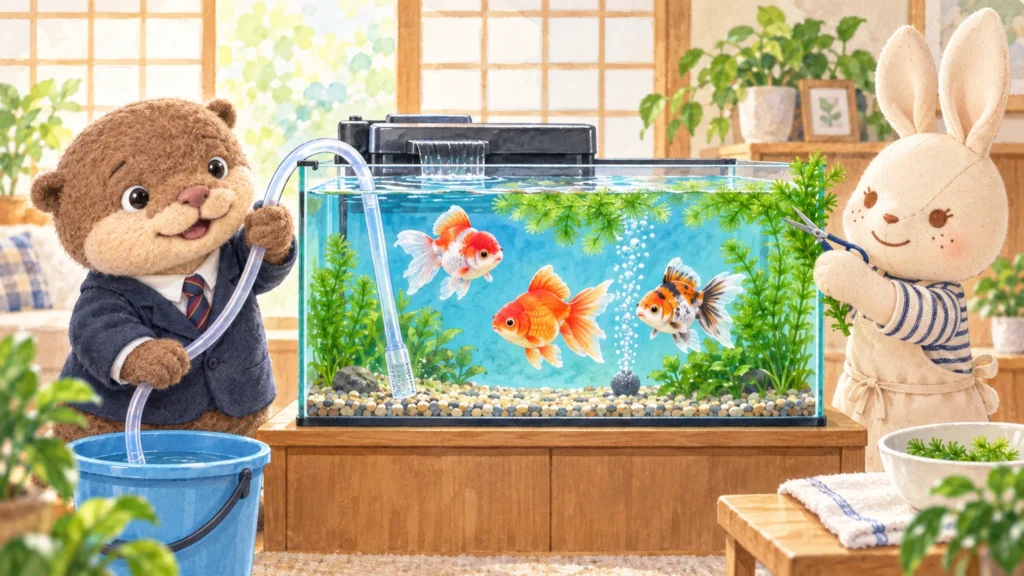 アイのアクアグッズ案内金魚を長く楽しむ飼育用品|水槽・フィルター・エアレーション・水換え道具の特徴や使い方、選ぶときのポイントをアイが紹介します。記事はコチラ →
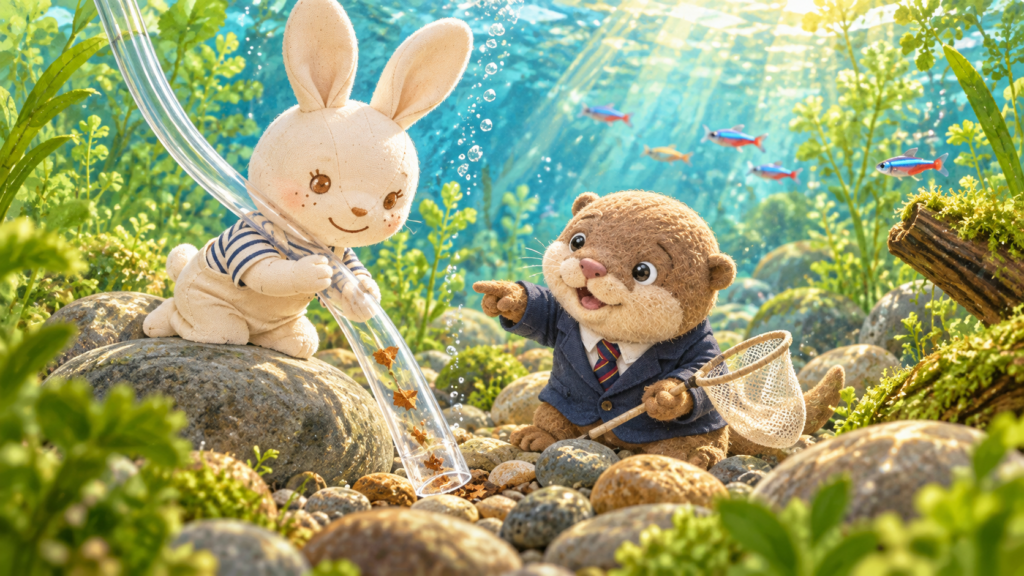 アイのアクアグッズ案内水換え・底砂掃除の道具の選び方|砂利・砂・ソイルに合うクリーナーとポンプ道具の特徴や使い方、選ぶときのポイントをアイが紹介します。記事はコチラ →
さまざまな飼育テーマをご紹介。リンク先の記事には広告・商品紹介が含まれます。
案内・紹介記事一覧へ →分布マップ
野生のウーパールーパー(Ambystoma mexicanum)は、メキシコシティ南部のソチミルコに残る運河・湿地水系に固有です。かつてはチャルコ湖にも分布していました。
地図は現在および過去の分布地域を把握するための概略表示です。マーカーはソチミルコ水系を示す代表地点であり、実際の採集地点や個体の生息地点を示すものではありません。
参考文献
- Frost, D. R. Amphibian Species of the World 6.2: An Online Reference — Ambystoma mexicanum (Shaw and Nodder, 1798). American Museum of Natural History. 分類・学名・分布 資料を開く
- IUCN SSC Amphibian Specialist Group. 2020. Ambystoma mexicanum. The IUCN Red List of Threatened Species 2020: e.T1095A53947343. 分布・生息環境・脅威・保全状況 資料を開く
- Contreras, V., Martínez-Meyer, E., Valiente, E. & Zambrano, L. 2009. Recent decline and potential distribution in the last remnant area of the microendemic Mexican axolotl (Ambystoma mexicanum). Biological Conservation, 142: 2881–2885. 現在の分布・生息地・野生個体群の減少 資料を開く
- Duhon, S. T. 2018. Guide to Axolotl Husbandry. Ambystoma Genetic Stock Center, University of Kentucky. 水質・水温・給餌・繁殖・健康管理 資料を開く
- Khattak, S., Murawala, P., Andreas, H., et al. 2014. Optimized axolotl (Ambystoma mexicanum) husbandry, breeding, metamorphosis, transgenesis and tamoxifen-mediated recombination. Nature Protocols, 9: 529–540. 飼育条件・繁殖・幼生管理 資料を開く
- Servín, E., Alcantar-Rodriguez, A. & Medrano, A. 2025. Experiences with the management and breeding of Mexican axolotl (Ambystoma mexicanum), for research and biobanking purposes, in a vivarium. Frontiers in Amphibian and Reptile Science, 3: 1620078. 水質・温度・給餌・飼育下繁殖 資料を開く
- Wright, K. M. & Whitaker, B. R. (eds.). 2001. Amphibian Medicine and Captive Husbandry. Krieger Publishing Company. ISBN 978-0-89464-917-2. 両生類の疾病・診断・治療・飼育上の注意 書誌情報を開く



コメント