

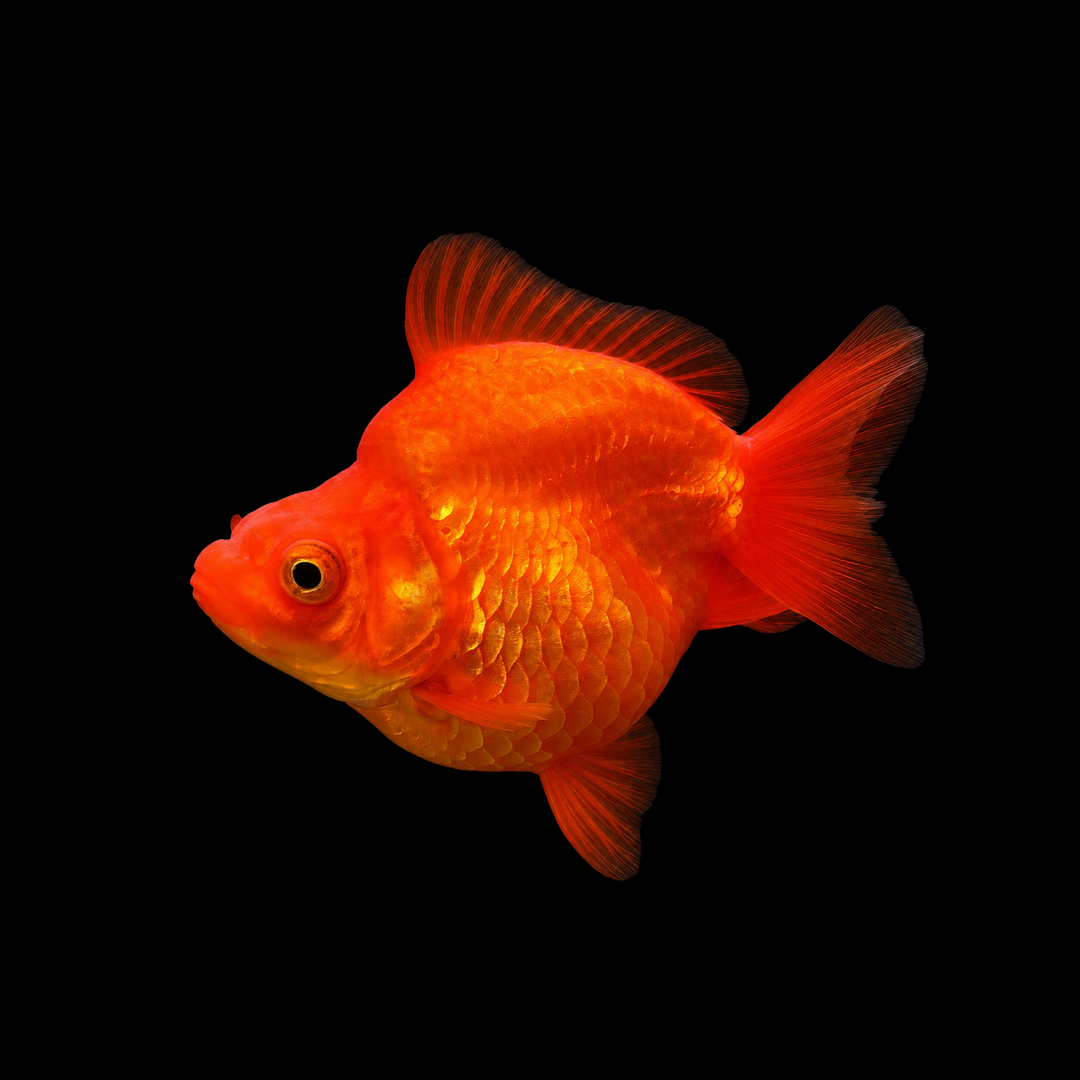
解説 / Description
だるま琉金(赤)は、琉金の中でも尾びれが短くまとまるショートテール型のうち、赤を主体とする個体を指す流通上の呼び方です。だるま琉金は分類学上の別種ではなく、赤も独立した品種名ではありません。見どころは、琉金らしい高い体高と背中のアーチ、短い尾によって強調される丸い輪郭、そして赤の入り方です。日本の金魚用語では、全身が赤または橙色を基調としてヒレ先に白さが残るものを「素赤」、ヒレ先まで赤一色に染まるものを「猩々」と呼びます。赤の濃さだけでなく、体の左右対称性、背なり、尾の付き方、無理のない泳ぎまで含めて見ると、だるま琉金らしい魅力を捉えやすくなります。 Red Daruma Ryukin is a trade description for red individuals of the short-tail Ryukin form. It is not a separate taxonomic species, and red is a color expression rather than an independent breed. Its appeal lies in the Ryukin’s deep body and dorsal arch, the rounded silhouette emphasized by the compact tail, and the distribution of red coloration. In Japanese goldfish terminology, predominantly red or orange fish with pale fin tips are called “suaka,” while fish that remain red through the fin tips are called “shojo.” When evaluating a fish, the quality of the red is best considered together with body symmetry, dorsal contour, tail set, and stable, unforced swimming.
基本情報 / Basic Information
| 学名 / Scientific Name | Carassius auratus |
|---|---|
| 通称 / Common Name | だるま琉金(赤)、赤だるま琉金、ショートテール琉金(赤)Red Daruma Ryukin, Red Short-tail Ryukin |
| 分類 / Family | コイ目・コイ科・フナ属。キンギョの改良品種で、琉金のショートテール型に位置づけられる。だるま琉金は分類学上の別種ではなく、「赤」はその中の体色表現。Order Cypriniformes, family Cyprinidae, genus Carassius. A domesticated goldfish form within the short-tail Ryukin group. Daruma Ryukin is not a separate taxonomic species, and “red” describes its color expression. |
| 英名 / English Name | Red Daruma Ryukin / Red Short-tail Ryukin |
| 分布 / Distribution | 野生分布をもつ魚ではなく、人為選択によって維持される観賞魚。日本国内では国産のだるま琉金に加え、中国産・タイ産などとして流通するショートテール琉金も見られる。産地や系統を重視する場合は、「だるま琉金」という名称だけで判断せず、販売時の個体情報を確認する。This is a domesticated ornamental form with no natural wild distribution. In Japan, locally bred Daruma Ryukin are sold alongside short-tail Ryukin marketed as Chinese- or Thai-bred. When provenance or lineage matters, rely on the information supplied for the individual fish rather than the name “Daruma Ryukin” alone. |
| 最大体長 / Max Size | 全長15〜20cm程度が目安。最終的な大きさは、系統、体型、飼育密度、給餌条件などによって異なる。Typically around 15–20 cm in total length. Final size varies with lineage, body type, stocking density, nutrition, and long-term care. |
| 寿命 / Lifespan | 飼育下では6〜10年程度がひとつの目安で、良好な水質と適切な管理のもとでは、さらに長く生きる例もある。A lifespan of roughly 6–10 years is a practical expectation in captivity, and some individuals live considerably longer under consistently good water quality and husbandry. |
飼育環境 / Aquarium Environment
| 水槽サイズ / Tank Size | 成魚1匹でも100L前後以上を目安とする。日本で一般的な水槽なら、60cmワイド水槽(公称約120L)以上がひとつの目安となり、90cm規格水槽(公称約180L)なら水量にさらに余裕を持たせやすい。成魚を追加する場合は、1匹につき50L程度を追加する考え方が目安になる。赤色個体だから特別に小さな水槽で飼えるわけではなく、だるま琉金では短い体に十分な体高が出るため、体長だけでなく体の厚みと排泄量を見込んで余裕を持たせる。For one adult, around 100 L or more is a useful baseline. In Japan, a 60 cm wide aquarium with a nominal capacity of about 120 L is a practical starting point, while a standard 90 cm aquarium with a nominal capacity of about 180 L provides more margin. As a guide, allow about 50 L of additional volume for each extra adult. Red coloration does not reduce the space requirement: Daruma Ryukin develop substantial body depth and mass despite their short outline, so tank planning should account for body volume and waste production rather than length alone. |
|---|---|
| 水温 / Temperature | 15〜23℃前後を日常管理の目安とする。だるま琉金(赤)も基本的な温度条件はほかの丸手金魚と共通し、赤を濃くする目的で高水温に固定する必要はない。重要なのは急激な変化を避けることで、通常の室内飼育ではヒーターは必須ではないが、室温が大きく下がる環境や季節の変わり目には、温度を安定させる目的で使用できる。 For routine care, around 15–23°C is a suitable target range. Red Daruma Ryukin have the same basic temperature needs as other fancy goldfish; there is no need to hold them at high temperature simply to intensify red color. Avoid abrupt changes. A heater is not normally essential indoors, although it can be useful for stabilizing temperature in very cold rooms or during seasonal transitions. |
| 水質 / Water Quality | pH6.5〜8.5程度を目安に、急変のない安定した水質を保つ。アンモニアと亜硝酸は0mg/Lを維持し、硝酸塩も蓄積させすぎない。週1回、全水量の25〜30%程度を換水することを基本にし、飼育密度や汚れ方に応じて頻度を調整する。赤の発色を維持するうえでも、特殊な添加物より、まず継続して良好な水質と体調を保つことを優先する。Aim for stable water around pH 6.5–8.5. Ammonia and nitrite should remain at 0 mg/L, while nitrate should not be allowed to accumulate excessively. As a baseline, change about 25–30% of the water once a week, adjusting the frequency to stocking density and waste load. For maintaining attractive red coloration, consistent water quality and general health should take priority over special additives. |
| レイアウト / Layout | 短い尾と丸い体型は強い水流に押されやすいため、広い遊泳スペースと穏やかな循環を確保する。スポンジフィルター、投げ込み式フィルター、流量を調整した上部式・外部式フィルターなどが使いやすい。底床は掃除しやすいベアタンクのほか、口に入りにくい大きさの丸い底材や細砂も選べる。尖った石や狭い隙間は避ける。水深を一律に浅くする必要はないが、すでに浮力障害がある個体では、浅めにすると移動の負担が軽くなる場合がある。Because the compact body and short tail are easily pushed by strong currents, provide open swimming space with gentle circulation. Sponge filters, air-driven box filters, or flow-reduced canister and overhead filters work well. A bare-bottom setup is easy to clean; alternatively, use smooth substrate that is either too large to swallow or fine enough to pass easily. Avoid sharp decor and tight gaps. There is no need to keep the water uniformly shallow, although a shallower depth may reduce the effort required for movement in individuals already experiencing buoyancy problems. |
| 注意点 / Precautions | だるま琉金では、赤という体色よりも、短く体高のある体型のほうが飼育上の注意点に直結する。丸手金魚に共通して、浮く、沈む、姿勢を保ちにくいといった浮力異常がみられることがあるため、過密、過給餌、水質悪化、急な温度変化、強すぎる水流を避ける。新しく導入する個体は隔離して状態を観察する。長時間の浮上・沈下、左右非対称の泳ぎ、腹部膨満、松かさ状の鱗、充血、ヒレの崩れがみられた場合は、「だるま体型だから」と決めつけず、病気を含めて原因を確認する。For Daruma Ryukin, husbandry concerns are linked more closely to the compact, deep body than to red coloration itself. As with other rounded fancy goldfish, buoyancy problems such as persistent floating, sinking, or difficulty maintaining posture can occur. Avoid crowding, overfeeding, poor water quality, rapid temperature changes, and excessive current. Quarantine and observe newly acquired fish. Persistent floating or sinking, asymmetric swimming, abdominal swelling, raised scales, hemorrhage, or fin erosion should not simply be dismissed as a consequence of the Daruma body shape; possible disease should also be investigated. |
餌と給餌 / Feeding
| 餌の種類 / Diet | 金魚用の消化性に配慮した総合栄養食を主食とし、浮力トラブルが出やすい個体には沈下性またはゆっくり沈む粒餌が扱いやすい。赤の発色を支える目的では、アスタキサンチンやスピルリナなどカロテノイドを供給できる原料を含む色揚げ飼料を補助的に利用できる。ただし、色揚げ飼料は素赤を猩々へ変えるためのものではなく、遺伝的な色柄の上にある赤色の発色を栄養面から支える位置づけと考える。冷凍アカムシ、ミジンコ類、植物質を含む補助食は、主食との栄養バランスを崩さない範囲で与える。Use a complete, digestible goldfish diet as the staple. Sinking or slowly sinking pellets are often easier to manage for individuals prone to buoyancy problems. Color-enhancing diets containing ingredients that supply carotenoids, including astaxanthin- or spirulina-based materials, can support red pigmentation. They should not be regarded as a way to convert a suaka pattern into shojo; rather, they support the expression of red within the fish’s inherited color pattern. Frozen bloodworms, daphnia-type foods, and plant-containing supplements may be offered in moderation without displacing a balanced staple diet. |
|---|---|
| 給餌のポイント / Feeding Tips | 1日1回を基本に、数分以内で食べ切れる量を与える。成長期などで給餌回数を増やす場合も、1回量を少なくして食べ残しを出さないようにする。丸手の金魚では、短期間で体を大きくすることより、体調と排泄を見ながら過給餌を避ける方が安定した飼育につながる。低水温時や食欲低下時は量を減らし、食べ残しはすぐ取り除く。餌は高温多湿を避けて密閉保管する。浮上性の餌が必ず浮力障害を起こすわけではないが、表層で空気を取り込みやすい個体では、沈下性またはゆっくり沈む餌への変更が役立つことがある。Feed once daily as a basic routine, offering only what the fish can finish within a few minutes. If feeding more often during periods of growth, keep each portion small and avoid leftovers. For round-bodied fancy goldfish, preventing overfeeding is generally more important than pushing rapid growth. Reduce the ration in cooler water or when appetite falls, and remove uneaten food promptly. Store food sealed away from heat and humidity. Floating food does not inevitably cause buoyancy problems, but switching to sinking or slowly sinking food can help individuals that take in excess air while feeding at the surface. |
性格と混泳 / Temperament and Tank Mates
| 性格 / Temperament | 基本的には温和で、人の動きや給餌時間を学習して水槽前に寄ってくる個体も多い。活発に餌を探す一方、ショートテールで体高が高いため、和金やコメットほど長距離を素早く泳ぐタイプではない。Generally peaceful and responsive to routine. Many individuals learn feeding times and approach the front of the aquarium when people appear. They actively search for food, but the deep short body is less efficient for sustained fast swimming than long-bodied goldfish such as common goldfish or comets. |
|---|---|
| 混泳の相性 / Compatibility | 同程度の大きさで泳力が近い琉金、オランダ獅子頭、出目金などの丸手金魚と合わせやすい。和金、コメット、朱文金など俊敏な長手金魚とは、餌取り競争で不利になることがある。ヒレをかじる魚、高水温を好む熱帯魚、小型エビ類との混泳は基本的に避ける。新しく迎えた魚は、病原体の持ち込みを防ぐため、別容器で状態を観察してから合流させる。Best kept with similarly sized fancy goldfish of comparable swimming ability, such as other Ryukin, Oranda, or telescope-eyed varieties. Fast long-bodied goldfish such as common goldfish, comets, and Shubunkin may outcompete them at feeding time. Avoid fin-nipping species, tropical fish requiring persistently warm water, and small shrimp likely to be eaten. Observe newly acquired fish separately before introduction to reduce the risk of introducing disease. |
病気と対策 / Diseases and Prevention
| かかりやすい病気 / Common Diseases | だるま琉金で特に意識したいのは、丸手金魚にみられる浮力障害です。浮く、沈む、横倒しになる、姿勢を保ちにくいといった症状は、鰾の異常、体型や脊椎に伴う構造的な問題、消化管の状態、感染症や内臓疾患など複数の原因で起こり得るため、「転覆病」という一つの病気として原因を決めつけないことが大切です。赤色個体に固有の病気があるわけではなく、ほかの金魚と同様に白点病、吸虫類などの寄生虫症、尾ぐされや潰瘍などの細菌性疾患、腹水を伴う松かさ症状にも注意します。The main condition to keep in mind with Daruma Ryukin is buoyancy dysfunction seen in rounded fancy goldfish. Persistent floating, sinking, rolling, or difficulty maintaining posture can arise from several causes, including swim-bladder abnormalities, structural effects of body conformation or the spine, gastrointestinal conditions, infection, and internal disease. These signs should not be assigned to a single diagnosis called “swim bladder disease.” Red individuals do not have a unique set of diseases; like other goldfish they can also be affected by ich, flukes and other parasites, bacterial fin rot or ulcers, and systemic disease associated with fluid accumulation and pineconing. |
|---|---|
| 対策と予防 / Prevention | まず水質を確認し、アンモニアと亜硝酸が0mg/Lか、水温が急変していないか、十分に酸素が供給されているかを確かめます。あわせて、直近の給餌量や餌の種類、換水やろ過の状態も見直します。食後に浮きやすい個体では、浮上性飼料から沈下性またはゆっくり沈む飼料へ変更すると改善することがあります。浮力障害は構造的な異常や内臓疾患が原因になることもあるため、家庭で原因を断定して塩浴や薬浴を重ねるより、症状が続く場合は診断を受ける方が確実です。長引く浮力異常、著しい腹部膨満、松かさ状の鱗、出血、食欲廃絶がある場合は、魚類を診療できる獣医師への相談が望まれます。抗菌薬は、細菌感染が疑われる所見や診断に基づいて選びます。Start by checking water quality, confirming that ammonia and nitrite are at 0 mg/L, temperature has remained stable, and oxygenation is adequate. Also review recent feeding, food type, water changes, and filtration. If a fish tends to float after eating, changing from floating food to a sinking or slowly sinking diet may help. Because buoyancy problems can also result from structural abnormalities or internal disease, repeated salt or medication treatments without identifying the cause are less reliable than obtaining a diagnosis when signs persist. Persistent buoyancy loss, marked abdominal swelling, pineconing, hemorrhage, or complete loss of appetite warrants consultation with a veterinarian experienced in fish medicine. Antibacterial drugs should be selected when bacterial infection is supported by clinical findings or diagnosis. |
増やし方(繁殖) / Breeding
| 雌雄の判別 / Sexing | 成熟期のオスは、エラぶたや胸びれ前縁に白い粒状の「追星」が出やすく、産卵期にはメスを追尾する。メスは腹部がふっくらし、産卵が近いと生殖孔周辺がやや突出して見えることがある。ただし若魚や非繁殖期は外見だけでの判別が難しい。Mature males often develop white breeding tubercles on the gill covers and leading rays of the pectoral fins and actively chase females during spawning season. Females tend to become fuller through the abdomen, and the vent may appear slightly more prominent near spawning. Sexing juveniles or fish outside the breeding season is much less reliable. |
|---|---|
| 繁殖形態 / Reproduction | 卵生で、粘着性のある卵を水草や産卵床にばらまくタイプ。親魚は卵を保護せず、産卵後に卵を食べることがある。Egg-laying broadcast spawner. Adhesive eggs are scattered among plants or spawning mops. Parents provide no care and may eat the eggs after spawning. |
| 繁殖のポイント / Breeding Tips | 春の水温上昇をきっかけに繁殖行動が活発になる。十分に成熟し体調のよい親魚を選び、産卵床を用意して産卵後は親魚と卵を分ける。赤いだるま琉金を狙う場合は、親魚の赤の濃さだけでなく、ショートテール、体高、背なり、腹部の左右対称性、尾の付き方、安定した泳ぎを合わせて見る。孵化した稚魚がすべて親と同じ体型や赤の表現になるわけではなく、金魚は成長の途中で体色も変化するため、複数回の選別が必要になる。仔魚には成長段階に合わせて微細餌からブラインシュリンプ幼生などへ切り替える。Spawning activity commonly increases with the seasonal rise in temperature. Select fully mature, healthy breeders, provide spawning mops or suitable plants, and separate the adults from the eggs after spawning. When breeding specifically for red Daruma Ryukin, evaluate more than depth of red: select for the short tail, body depth, dorsal contour, abdominal symmetry, tail set, and stable swimming. Fry will not all reproduce the parents’ body shape or red expression, and goldfish coloration changes during growth, so selection is carried out repeatedly as the juveniles develop. Feed fry progressively from very fine first foods to newly hatched brine shrimp as they grow. |
雑学と豆知識 / Trivia and Fun Facts
| 1. 琉金という名前に残る、江戸時代の伝来経路 / 1. The Ryukin Name Preserves Its Route into Japan | 琉金は、中国から琉球を経由して日本へ伝わったことが名称の由来とされる金魚です。江戸時代の日本で知られるようになった琉金は、体高のある丸い体と長く伸びる尾を特徴として発展しました。だるま琉金はこの琉金の系統にありながら、尾を短くまとめる方向の選別が加わったタイプです。古典的な長尾の琉金と、現代のショートテール型は見た目こそ大きく異なりますが、どちらも琉金という同じ品種群の中にある表現として理解できます。Ryukin is a goldfish whose Japanese name is generally linked to its introduction from China through the Ryukyu Islands. In Japan it developed as a deep-bodied variety known for an elevated back and long caudal fin. Daruma Ryukin remains part of this Ryukin tradition but has been selected in the opposite direction for a compact tail. Classic long-tail Ryukin and modern short-tail forms look quite different, yet both belong within the broader Ryukin variety group. |
|---|---|
| 2. 「だるま琉金」は、短い尾をもつ琉金を示す流通上の呼び名 / 2. “Daruma Ryukin” Is a Trade Name for Short-tail Ryukin | 「だるま琉金」は分類学上の名称ではなく、日本の観賞魚流通でショートテールの琉金を示す呼び方です。短い尾によって体の丸さが強調されるため、同じ全長の通常琉金よりも胴が詰まって見えます。流通個体には国産のほか、中国産・タイ産などとして販売されるものもあり、「だるま琉金」という名称だけで単一の産地や血統を意味するわけではありません。“Daruma Ryukin” is not a taxonomic name but a Japanese aquarium-trade term for short-tail Ryukin. The compact tail visually emphasizes the rounded body, making the fish appear more compressed than a conventional Ryukin of similar length. Fish are marketed as Japanese-, Chinese-, and Thai-bred, so the name itself does not indicate a single country of origin or bloodline. |
| 3. 赤いだるま琉金を見るときの基本は「素赤」と「猩々」 / 3. Suaka and Shojo Are the Key Red Expressions | 日本の金魚用語では、全身が赤または橙色を基調としながらヒレ先に白さが残るものを「素赤」、ヒレ先まで含めて全身が赤一色のものを「猩々」と呼びます。だるま琉金(赤)では、この赤の入り方が個体選びの大きな見どころになります。ただし、赤が濃ければそれだけで良個体というわけではありません。短い尾と高い体高が無理なくつながり、左右のバランスが整い、安定して泳げることまで含めて評価すると、色と体型の両方を楽しめます。In Japanese goldfish terminology, “suaka” describes fish that are predominantly red or orange but retain pale fin tips, while “shojo” refers to fish that remain red through the fin tips. This distribution of red is an important feature when selecting a red Daruma Ryukin. Depth of color alone, however, does not define quality. The most convincing fish combine the compact tail and deep body without obvious imbalance and can maintain stable swimming. |
| 4. 赤の発色は、赤色素胞とカロテノイドの働きに支えられる / 4. Red Color Is Supported by Erythrophores and Carotenoids | 金魚の赤や橙の色には、皮膚にある赤色素胞(エリスロフォア)と、その細胞に存在する色素が関わっています。研究では金魚の赤色素胞にカロテノイドが含まれることが確認されており、餌から得た色素成分の代謝も体色形成に関係します。このため色揚げ飼料は赤の発色を支える補助になりますが、もともとの色柄を自由に作り替えるものではありません。素赤と猩々の違いも、単に色揚げ飼料を多く与えれば変えられるというものではなく、個体がもつ色の表現を基礎に考える必要があります。Red and orange coloration in goldfish involves erythrophores in the skin and the pigments associated with those cells. Studies of goldfish erythrophores have confirmed the presence of carotenoids, and dietary pigment metabolism contributes to body coloration. Color-enhancing diets can therefore support red expression, but they do not freely redesign the inherited color pattern. The distinction between suaka and shojo should likewise be understood as a color expression of the fish, not something that can simply be created by feeding more color food. |
| 5. 琉金の双尾にはchordin遺伝子の変異が関わる / 5. The Ryukin Twin Tail Is Linked to a chordin Mutation | 琉金を含む双尾系の金魚では、胚の背腹方向の形成に関わるchordin遺伝子の変異が、尾部の軸骨格が二つに分かれる形態と結びついていることが研究で示されています。金魚の祖先系統では全ゲノム重複も起きており、重複した遺伝子をもつという進化的背景が、この大きな形態変化が固定される過程を考える手掛かりになっています。ただし、この研究が説明する中心は双尾の成立であり、だるま琉金特有の短い胴や赤い体色まで一つの遺伝子で説明するものではありません。In twin-tail goldfish, including Ryukin, research has linked a mutation in the chordin gene, which functions in embryonic dorsal–ventral patterning, with the bifurcation of the caudal axial skeleton. The goldfish lineage also experienced whole-genome duplication, and this duplicated genetic background helps researchers consider how such a major morphological change could become established. The finding primarily explains the twin-tail condition; it does not mean that one chordin mutation explains the compact Daruma body or red coloration. |
| 6. 飯田琉金は「赤い琉金」の重要な銘柄だが、だるま琉金と同義ではない / 6. Iida Ryukin Is Important to Red Ryukin Culture, but It Is Not Synonymous with Daruma Ryukin | 長野県飯田地方の「飯田琉金」は、発色のよい猩々で知られる琉金の銘柄です。赤い琉金を語るうえでは重要な存在ですが、「飯田琉金」は産地・銘柄を示す呼び方であり、「だるま琉金」は尾の短いショートテール型を示す呼び方です。したがって、飯田琉金だから自動的にだるま琉金になるわけでも、だるま琉金だから飯田系というわけでもありません。赤、体型、産地という別々の情報を分けて見ると、販売名を正確に理解しやすくなります。Iida Ryukin from the Iida region of Nagano is a named Ryukin line known especially for strongly developed shojo red coloration. It is important in the culture of red Ryukin, but “Iida Ryukin” identifies provenance or a branded line, whereas “Daruma Ryukin” describes the short-tail form. An Iida Ryukin is therefore not automatically a Daruma Ryukin, and a Daruma Ryukin is not automatically of Iida origin. Keeping color, body form, and provenance as separate pieces of information makes trade names easier to interpret accurately. |
まとめ / Conclusion
だるま琉金(赤)の魅力は、琉金らしい高い体高を残しながら尾を短くまとめた丸い輪郭と、素赤や猩々として現れる赤の表情が重なることにあります。赤だけ、丸さだけを見るのではなく、背なり、左右対称性、尾の付き方、安定した泳ぎまで調和した個体ほど、ショートテール琉金としての魅力が自然に伝わります。 The appeal of the red Daruma Ryukin comes from the combination of a deep Ryukin body, compact tail, and red expressions such as suaka and shojo. Rather than judging redness or roundness alone, the most convincing fish show a natural balance among the dorsal contour, bilateral symmetry, tail set, coloration, and stable swimming.
飼育では、赤色そのものよりショートテールで体高のある体型に配慮し、十分な水量、穏やかな水流、安定した水質、過不足のない給餌を保つことが重要です。泳ぎに異常が出たときは「転覆病」と一括りにせず、水質、餌、体型、病気など複数の可能性を確認します。無理のない環境で状態を整えていけば、丸い体をゆったり動かしながら、その個体がもつ赤の濃淡やヒレ先まで続く色の表情を長く楽しめます。 In husbandry, the compact, deep body matters more than the red color itself. Generous water volume, gentle flow, stable water quality, and appropriate feeding form the foundation of long-term care. When abnormal swimming appears, consider water quality, diet, body conformation, and disease rather than treating every case as one “swim bladder disease.” With stable conditions, the fish can display its rounded form comfortably while the individual depth and distribution of red coloration remain the focus of appreciation.

気になる道具や飼い方を見つけてみませんか?
 アイのアクアグッズ案内ダニオの仲間に合わせる飼育用品|ゼブラダニオから超小型種まで水槽・ろ過・餌を選ぶ道具の特徴や使い方、選ぶときのポイントをアイが紹介します。記事はコチラ →
 アイのアクアグッズ案内マジックリーフ物語|一枚の葉がアクアリウム用品になるまで道具の特徴や使い方、選ぶときのポイントをアイが紹介します。記事はコチラ →
さまざまな飼育テーマをご紹介。リンク先の記事には広告・商品紹介が含まれます。
案内・紹介記事一覧へ →分布マップ
だるま琉金(赤)は野生分布をもつ魚ではなく、人為選択によって維持される観賞魚です。日本では国産個体のほか、中国産・タイ産などのショートテール琉金も流通しているため、地図では記事中で挙げられている日本・中国・タイを含む東アジアから東南アジアを概略範囲として表示しています。
※この地図は記事中の流通・飼育地域をもとにした概略表示で、野生での自然分布や個々の生産地を示すものではありません。マーカーは地図表示の目安として設定した代表地点であり、実際の採集地点・生産地点を示すものではありません。
参考文献・参照資料
-
大和郡山市「金魚の品種(古来中国より伝来)― 琉金」2021年3月19日更新。
対応項目:琉金の渡来時期と琉球経由という名称背景、体長が比較的短く体高が高い丸手の体型、琉金という品種の基本的特徴
-
加福竹一郎「金魚の腸型について(2)琉金」『淡水区水産研究所研究報告』15巻2号、159–166頁、1966年。
対応項目:琉金の高い体高、腸管の形態、和金との形態差、前後の鰾の比率など、丸手体型を理解するための解剖学的背景
-
Matsumoto, J. & Obika, M. “Morphological and biochemical characterization of goldfish erythrophores and their pterinosomes.” Journal of Cell Biology, 39(2), 233–250, 1968. DOI: 10.1083/jcb.39.2.233.
対応項目:赤いだるま琉金の体色をつくる赤色素胞(エリスロフォア)と、そこに存在する色素の細胞学的・生化学的基盤
-
秦正弘・秦満夫「金魚のカロチノイド色素-IV. カロチノイドの代謝」『日本水産学会誌』38巻4号、331–338頁、1972年。DOI: 10.2331/suisan.38.331.
対応項目:赤色の発現に関係するカロテノイドの吸収・蓄積・代謝、ゼアキサンチンなどからアスタキサンチンへの代謝
-
Abe, G. et al. “The origin of the bifurcated axial skeletal system in the twin-tail goldfish.” Nature Communications, 5, 3360, 2014. DOI: 10.1038/ncomms4360.
対応項目:琉金を含む双尾系金魚の尾部骨格、chordin遺伝子変異と双尾形質の成立に関する遺伝学的背景
-
愛知県水産試験場 内水面漁業研究所 弥富指導所「金魚飼育質問集」。
対応項目:琉金など丸い体型の金魚における急激な水温変化への注意、ヒーターの考え方、給餌量、水槽内での基本的な飼育管理
-
Froese, R. & Pauly, D. (eds.). FishBase: Carassius auratus.
対応項目:種としての分類、淡水魚としての生息環境、基礎的な分布情報、粘着卵を水草や水中物へ産み付ける繁殖生態
-
Roberts, H. E. “Swim Bladder Disease/Buoyancy Disorders.” Clinical Veterinary Advisor: Birds and Exotic Pets, Elsevier, 2013, pp. 36–37. DOI: 10.1016/B978-1-4160-3969-3.00025-1.
対応項目:琉金を含む丸手の観賞用金魚で浮力障害がみられやすいこと、浮上・沈下を単一原因で扱わず、鰾の異常、体型、環境、基礎疾患などを含めて評価する考え方
-
Petty, B. D., Francis-Floyd, R. & Yanong, R. P. E. “Bacterial Diseases of Fish.” Merck Veterinary Manual. Last updated September 2024.
対応項目:尾ぐされ・潰瘍・出血などの細菌性疾患、水質悪化や過密・輸送・急な温度変化などのストレス要因、抗菌薬を診断に基づいて選ぶ考え方
-
Merck Veterinary Manual. “Parasitic Diseases of Fish” / “Protistan Parasites of Fish.”
対応項目:白点病(Ichthyophthirius)や吸虫類など、金魚を含むコイ科魚類で問題となる寄生虫症の症状・診断・管理




コメント