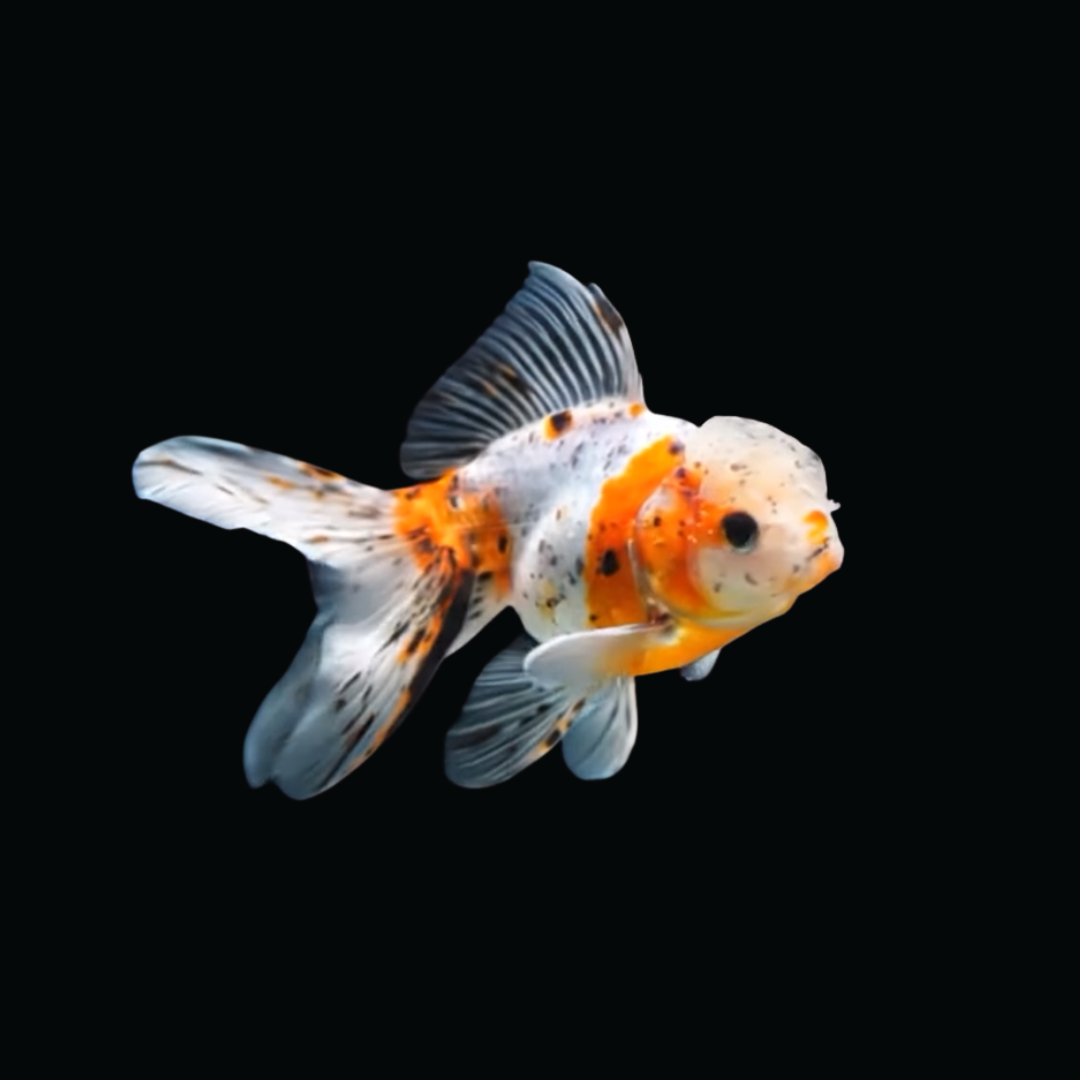
最大の特徴は、赤、白、黒、そして「浅葱(あさぎ)」と呼ばれる美しい藍色が織りなす体色です。頭部には肉瘤(にくりゅう)と呼ばれる脂肪質の隆起が発達し、成長とともに迫力を増していきます。一般的に流通している丸手のタイプから、愛好家の間で保存されてきた長手の「関東東錦」、さらに肉瘤が大きく発達する「鈴木東錦」など、いくつかの系統が存在し、それぞれに異なる魅力を持っています。Azuma Nishiki is an artistic goldfish variety born in Japan, combining the elegant body shape of the “Oranda Shishigashi” (often called the King of Goldfish) with the gorgeous mosaic transparent scales of the “Calico Telescope.” It was created in the early Showa period by Kinzo Kato, a goldfish merchant in Yokohama.
Its most distinctive feature is its coloration, woven from red, white, black, and a beautiful indigo blue known as “Asagi.” A fleshy growth called a “wen” develops on the head, becoming more impressive as the fish matures. Several strains exist, each with its own charm, ranging from the commonly distributed round-bodied type to the long-bodied “Kanto Azuma Nishiki” preserved by enthusiasts, and the “Suzuki Azuma Nishiki,” known for its largely developed wen.
15cm〜25cm(飼育環境や系統によりさらに大型化することもある)15cm – 25cm (Can grow larger depending on environment and strain)
寿命 / Lifespan
10年〜15年(適切な管理下ではそれ以上生きることも珍しくない)10 – 15 years (Not uncommon to live longer under proper care)
飼育環境 / Aquarium Environment
水槽サイズ / Tank Size
60cm規格水槽(約60L)以上が推奨されます。本来の大きさと優雅な泳ぎを楽しむためには、90cm規格水槽(約157L)や、水深が浅く表面積の広い「プラ舟(トロ舟)」での飼育が理想的です。A 60cm standard tank (approx. 60L) or larger is recommended. To enjoy their full size and elegant swimming, a 90cm standard tank (approx. 157L) or a shallow, wide surface area container like a “Pura-bune” is ideal.
水温 / Temperature
15〜28℃(生存可能範囲は広いですが、肉瘤の発達や消化を助けるには20℃以上が望ましいです)
水質 / Water Quality
中性〜弱アルカリ性(pH 7.0〜7.8)。日本の水道水は軟水傾向ですが、東錦は中硬水(GH 6-12)を好み、ミネラル分が骨格形成や鱗の艶に良い影響を与えます。Neutral to slightly alkaline (pH 7.0 – 7.8). While Japanese tap water tends to be soft, Azuma Nishiki prefers medium hard water (GH 6-12), as minerals positively affect skeletal formation and scale luster.
レイアウト / Layout
遊泳スペースを広く確保することが重要です。底砂は掃除のしやすい薄敷きか、敷かない「ベアタンク」が管理しやすいでしょう。肉瘤や長く伸びたヒレを傷つけないよう、鋭利な岩や複雑な流木は避けてください。Ensuring ample swimming space is important. A thin layer of substrate or a bare tank is easier to manage. Avoid sharp rocks or complex driftwood to prevent injury to their wen and long fins.
注意点 / Precautions
「浅葱色(青み)」を美しく維持するためには、背景や底面が黒や濃紺の環境が良いとされています(背地適応)。白い水槽では色が飛び、ぼやけた印象になりがちです。To maintain the beautiful “Asagi” (indigo blue) color, an environment with a black or dark navy background and bottom is recommended (due to background adaptation). In white tanks, the colors tend to fade and look washed out.
餌と給餌 / Feeding
餌の種類 / Diet
金魚用の人工飼料(沈下性が推奨)、冷凍赤虫、ブラインシュリンプなど。肉瘤を発達させたい場合は、高タンパク・高脂肪の餌を与えますが、水の汚れに注意が必要です。Artificial goldfish food (sinking type recommended), frozen bloodworms, brine shrimp, etc. To develop the wen, feed high-protein and high-fat food, but be careful of water pollution.
給餌のポイント / Feeding Tips
消化不良による転覆病を防ぐため、一度に大量に与えず、数回に分けて与えます。特に水温が下がる冬場は消化機能が落ちるため、低タンパクの餌(胚芽入りなど)に切り替えるか、餌切り(絶食)を行います。To prevent swim bladder disorder caused by indigestion, feed small amounts multiple times a day rather than all at once. Especially in winter when water temperature drops and digestion slows, switch to low-protein food (e.g., with wheat germ) or stop feeding altogether.
性格と混泳 / Temperament and Tank Mates
性格 / Temperament
非常に温和で人懐っこい性格です。餌をくれる人に良く慣れます。系統によって泳ぎの得意さが異なり、長手の「関東東錦」は比較的活発ですが、丸手のタイプはゆったりと泳ぎます。Very gentle and friendly temperament. They get used to the person feeding them. Swimming ability varies by strain; the long-bodied “Kanto Azuma Nishiki” is relatively active, while the round-bodied types swim leisurely.
混泳の相性 / Compatibility
同じオランダ型の金魚(オランダ獅子頭、丹頂など)や、体型の近い琉金との混泳が適しています。動きの速い和金やコメットと一緒にしてしまうと、餌が取れなかったり、突かれたりするストレスを受けることがあります。They are compatible with other Oranda-type goldfish (Oranda Shishigashi, Red Cap Oranda, etc.) or Ryukin with similar body shapes. Avoid keeping them with fast-moving varieties like Wakin or Comets, as they may cause stress by outcompeting for food or nipping.
病気と対策 / Diseases and Prevention
かかりやすい病気 / Common Diseases
転覆病(体がひっくり返る)、松かさ病(鱗が逆立つ)、白点病、エラ病など。特に丸手の個体は内臓が圧迫されやすいため、転覆病のリスクが高い傾向にあります。Swim bladder disorder (flipping over), Dropsy (pinecone disease), White spot disease (Ich), Gill disease, etc. Round-bodied individuals are particularly prone to swim bladder disorder due to compressed internal organs.
対策と予防 / Prevention
水温の急変を避けることと、古い餌や与えすぎによる消化不良を防ぐことが最大の予防です。青水(グリーンウォーター)での飼育は、整腸作用や色揚げ効果が期待でき、健康維持に有効です。The best prevention is to avoid sudden temperature changes and prevent indigestion caused by old food or overfeeding. Raising them in green water can be effective for maintaining health, expecting intestinal regulation and color enhancing effects.
増やし方(繁殖) / Breeding
繁殖形態 / Reproduction
卵生です。春になり水温が20℃前後になると繁殖行動が見られます。オスがメスを追いかけ、水草や産卵藻(金魚の産卵用アイテム)に卵を産み付けます。Oviparous. Breeding behavior is seen in spring when the water temperature reaches around 20°C. Males chase females, and eggs are laid on aquatic plants or spawning mops.
繁殖のポイント / Breeding Tips
親魚は卵を食べてしまうため、産卵後はすぐに卵を別容器に隔離する必要があります。東錦は遺伝的に模様が固定しにくいため、美しいキャリコ模様の個体を得るためには、多くの稚魚から良い個体を選ぶ「選別」という作業が不可欠です。Since parents will eat the eggs, eggs must be isolated in a separate container immediately after spawning. As Azuma Nishiki’s patterns are genetically difficult to fix, “culling” (selecting good individuals from many fry) is essential to obtain individuals with beautiful calico patterns.
雑学と豆知識 / Trivia and Fun Facts
1. 「東(関東)」の名に込められたプライド / 1. Pride in the Name “Azuma” (East)
「東錦」という名前には、深い意味があります。昭和初期、西日本(関西)では「らんちゅう」が金魚界の覇権を握っていました。これに対抗し、関東(東)を代表する新しい旗艦品種として作られたのがこの金魚です。「東(アズマ)」の名には、関東独自の「粋」な美意識と、西のらんちゅうに負けない品種を、という強い対抗心と誇りが込められているのです。The name “Azuma Nishiki” has a deep meaning. In the early Showa period, “Ranchu” dominated the goldfish world in Western Japan (Kansai). This goldfish was created as a new flagship variety representing Kanto (East) to rival it. The name “Azuma” embodies Kanto’s unique aesthetic of “Iki” (chic) and a strong sense of rivalry and pride not to lose to the western Ranchu.
2. 「浅葱色(あさぎいろ)」の科学 / 2. The Science of “Asagi” Blue
東錦の魅力である、あの透き通るような青色(浅葱色)。実は魚の体に「青い色素」があるわけではありません。これは鱗の下にある黒色素胞(メラノフォア)の上を、半透明の鱗や光を反射する層が覆うことで、光が散乱して青く見える現象(チンダル現象に近い構造色)です。そのため、黒い容器で飼育すると黒色素が引き締まり、より鮮やかな青に見えるようになります。The captivating translucent blue color (Asagi) of Azuma Nishiki implies no actual “blue pigment” in the fish’s body. It is a phenomenon (structural color similar to the Tyndall effect) where light scatters and appears blue as semi-transparent scales and light-reflecting layers cover the melanophores (black pigment cells) beneath the scales. Therefore, keeping them in a black container tightens the black pigment, making the blue appear more vivid.
3. 鈴木東錦と浜錦の血統 / 3. Suzuki Azuma and Hama Nishiki Lineage
近年人気が高い「鈴木東錦」は、埼玉県坂戸市の鈴木養魚場で作出された系統です。この系統の画期的な点は、「浜錦」という頭の水泡が大きく発達する品種の血を導入したことにあります。これにより、従来の東錦よりもさらに立派で、透明感のある独特な肉瘤を持つ個体が生まれました。黒と浅葱色が非常に濃く出るのもこの系統の特徴で、現代のアクアリウムシーンで特別な存在感を放っています。The recently popular “Suzuki Azuma Nishiki” is a strain created at the Suzuki Fish Farm in Sakado City, Saitama Prefecture. The revolutionary point of this strain is the introduction of blood from “Hama Nishiki,” a variety with largely developed head blisters. This resulted in individuals with even more magnificent, unique wens with a sense of transparency compared to traditional Azuma Nishiki. The intense black and Asagi colors are also characteristic of this strain, giving it a special presence in the modern aquarium scene.
まとめ / Conclusion
東錦は、日本の金魚文化が生み出した「生きた芸術品」です。一匹ごとに異なるモザイク模様と、成長とともに風格を増す肉瘤、そして何よりも「浅葱色」の深みは、見る者を飽きさせません。関東東錦のようなクラシックなスタイルから、愛らしい丸手のタイプまで、自分の好みに合った一匹を見つける喜びもひとしおです。Azuma Nishiki is a “living work of art” produced by Japanese goldfish culture. The mosaic patterns unique to each fish, the wen that adds dignity with growth, and above all, the depth of the “Asagi” color never bore the viewer. From classic styles like Kanto Azuma Nishiki to adorable round-bodied types, the joy of finding one that suits your taste is exceptional.
飼育には水質管理や適切な給餌など、多少の知識と手間は必要ですが、手をかけた分だけ美しく成長してくれます。ぜひ、あなただけの東錦を育て上げ、水槽の中で泳ぐ歴史と美意識を感じてみてください。While keeping them requires some knowledge and effort, such as water quality management and proper feeding, they grow beautifully in proportion to the care given. Please raise your own Azuma Nishiki and feel the history and aesthetics swimming in your tank.



 アイのアクアグッズ案内ショップで見かけるカラフルなバケツ。いったい何が入ってる?道具の特徴や使い方、選ぶときのポイントをアイが紹介します。記事はコチラ →
 アイのアクアグッズ案内エンゼルフィッシュの飼育用品|高さのある水槽・ろ過・水草・餌の選び方道具の特徴や使い方、選ぶときのポイントをアイが紹介します。記事はコチラ →



コメント