

解説Description
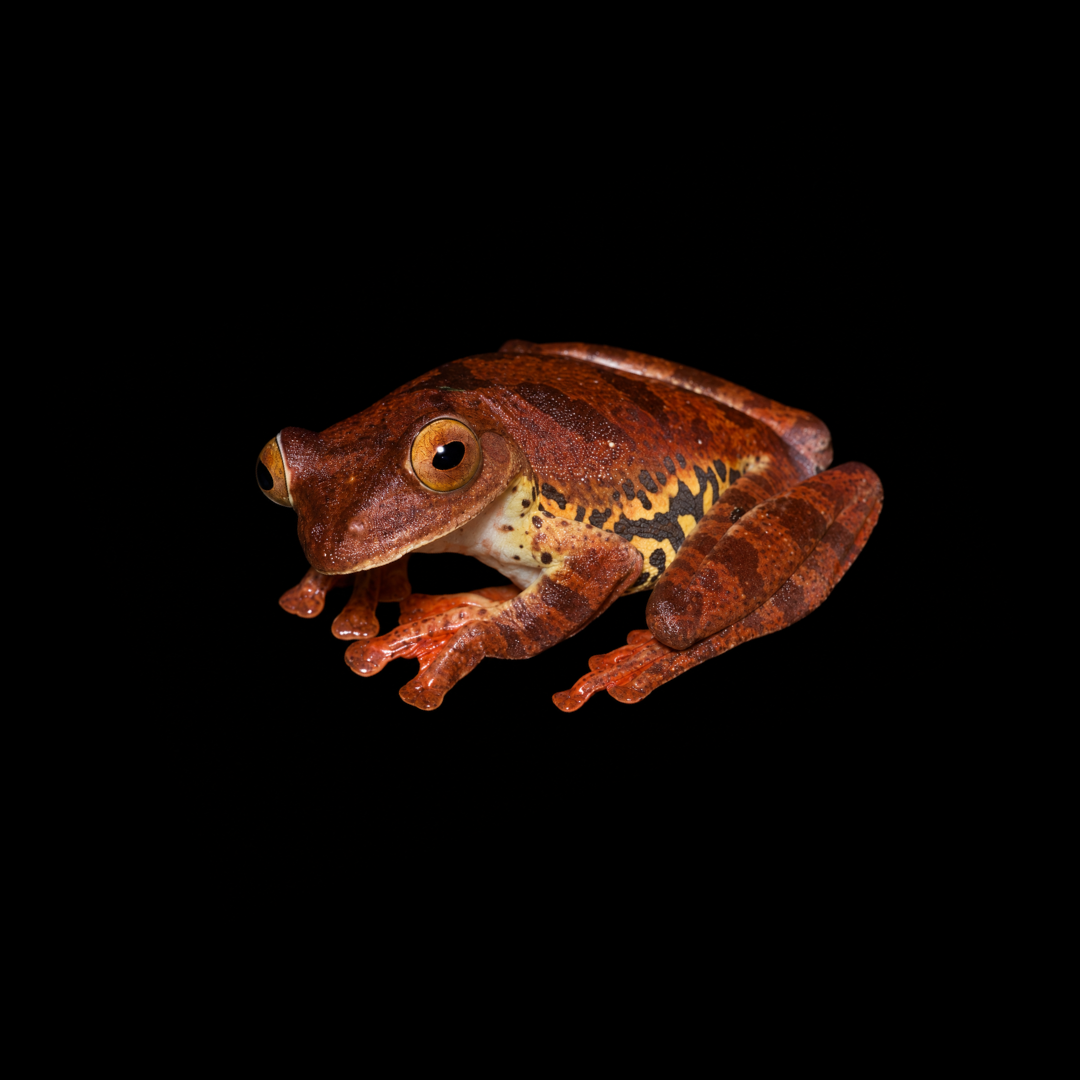
ハーレクイントビガエルは、東南アジアの湿潤な森林に暮らす樹上性のカエルです。褐色から赤褐色の背面は樹皮や枯れ葉に溶け込みやすい一方、体側には黄色地に黒斑が入り、指趾の間には橙色から赤色の大きな水かきが発達します。四肢を広げると、水かきや四肢の皮膚のひだが有効な表面積を増やし、樹上から斜め下へ制御しながら滑空できます。休息時の目立ちにくい姿と、跳躍時に現れる鮮やかな色彩の対比も、本種の大きな魅力です。飼育では、単に湿度を高くするだけでは十分ではありません。高さのある空間、通気、清潔な水、安定した温度、跳躍時の衝突を避けやすいレイアウトを組み合わせることが重要です。流通個体には野生採集由来のものも含まれるため、導入時の隔離観察と、寄生虫や感染症を持ち込まないための防疫にも配慮します。熱帯雨林の立体的な環境に適応した生態を理解すると、姿だけでなく、本種らしい動きや休み方まで含めて観察しやすくなります。 The Harlequin Flying Frog is an arboreal frog of the humid forests of Southeast Asia. Its brown to reddish-brown back blends with bark and dead leaves, while the flanks are yellow with dark spots and the extensive webbing between the digits may be orange to red. When the limbs are spread, the webbing and dermal flaps increase the effective surface area of the body and allow a controlled, diagonally descending glide from elevated perches. The contrast between its cryptic resting appearance and the vivid colors revealed during a leap is one of the species’ most distinctive features. In captivity, high humidity alone is not enough. Good care requires vertical space, ventilation, clean water, stable temperatures, and a layout that reduces the risk of collision during powerful jumps. Because animals in trade may include wild-collected individuals, quarantine and basic biosecurity against parasites and infectious disease are also important. Understanding the species as a frog adapted to the three-dimensional structure of rainforest vegetation makes its characteristic movement and resting behavior easier to appreciate and accommodate.
基本情報Basic Information
| 学名Scientific Name | Rhacophorus pardalis Günther, 1858 |
|---|---|
| 通称Common Name | ハーレクイントビガエル、ヒョウトビガエルHarlequin Tree Frog, Panther Flying Frog, Panther Flying Treefrog, Gliding Tree Frog |
| 分類Classification | 無尾目(Anura)/アオガエル科(Rhacophoridae)/アオガエル属(Rhacophorus)Order Anura / Family Rhacophoridae / Genus Rhacophorus |
| 英名English Name | Harlequin Tree Frog / Panther Flying Frog |
| 分布Distribution | タイ半島部、マレー半島、スマトラ島、ボルネオ島、フィリピン。国別ではブルネイ、インドネシア、マレーシア、フィリピン、タイに分布する。Peninsular Thailand, the Malay Peninsula, Sumatra, Borneo, and the Philippines; occurring in Brunei, Indonesia, Malaysia, the Philippines, and Thailand. |
| 成体サイズAdult Size | 吻端から総排泄孔までの長さ(SVL)で、オス約39〜55mm、メス約55〜71mm。メスのほうが大きく、体つきも頑丈になる傾向がある。Approximately 39–55 mm snout–vent length (SVL) in males and 55–71 mm in females. Females are generally larger and more robustly built. |
| 寿命Lifespan | 本種固有の信頼できる平均寿命データは乏しく、明確な値は確立していない。入手時の年齢も不明なことが多いため、数年以上の長期飼育を前提に設備と管理体制を整えたい。Reliable species-specific lifespan data are limited, and a firm average is not well established. Because the age of imported animals is often unknown, husbandry should be planned with multi-year, long-term care in mind. |
飼育環境Enclosure Environment
| 飼育容器・サイズEnclosure and Size | 前開き式など、通気を確保しやすい高さのあるガラス製テラリウムが扱いやすい。飼育設備の大きさに種として確立された基準はないが、実用上の目安として成体1匹でも45×45×60cm級以上を確保し、ペアでは60×45×60cm〜60×60×80cm級、またはそれ以上の余裕を持たせたい。跳躍力が強いため、狭い容器では吻端をガラス面にぶつける事故が起こりやすい。扉やメッシュ部は確実に閉まる構造にする。A tall, well-ventilated glass terrarium, ideally with front-opening access, is practical. There is no well-established species-specific enclosure standard, but as a practical guide, around 45 × 45 × 60 cm or larger provides a reasonable starting point for one adult, while a pair benefits from roughly 60 × 45 × 60 cm to 60 × 60 × 80 cm or more. Powerful jumps can lead to snout injuries in cramped enclosures, so generous clearance is important. Doors and mesh panels must close securely. |
|---|---|
| 温度Temperature | 飼育上の目安として、日中22〜27℃、夜間20〜24℃程度を保ち、急激な温度変化を避ける。30℃を超える高温環境は避け、日本の夏はケージだけを局所的に冷やすより、エアコンで部屋全体の温度を安定させるほうが管理しやすい。冬は20℃を大きく下回る状態を長く続けず、加温器具を使う場合は生体が直接触れない位置に設置し、サーモスタットで管理する。As a practical husbandry range, about 22–27°C by day and 20–24°C at night can be used as a guide, while avoiding abrupt fluctuations. Sustained temperatures above 30°C should be avoided; during hot Japanese summers, stabilizing the room with air conditioning is generally easier and safer than trying to cool only the enclosure. In winter, avoid prolonged temperatures well below 20°C, and control heating equipment with a thermostat so the frog cannot contact hot surfaces directly. |
| 環境管理Environmental Management | 相対湿度はおおむね70〜90%を飼育上の目安としつつ、常時びしょ濡れにせず、霧吹き後に表面が少し乾く時間を作る。湿度と通気を両立させることが重要で、空気が停滞した蒸れた環境は皮膚トラブルや細菌性疾患のリスクを高める。飲水・吸水に使う水は清潔なものを用い、浅い水入れを設置する場合は日常的に状態を確認する。排水や器具は他の両生類飼育系と安易に共用せず、新規導入個体は隔離して観察する。本種に必要なUVB量を示す種特異的なデータは乏しいため、UVBを使用する場合は低出力から慎重に運用し、葉陰などの退避場所を十分に用意して過剰照射を避ける。Relative humidity around 70–90% can be used as a husbandry guide, but the enclosure should not remain continuously saturated. After misting, allow surfaces to partially dry. Humidity and ventilation must be balanced because stagnant, warm, wet conditions increase the risk of skin and bacterial problems. Use clean water for hydration, monitor any shallow water dish routinely, and avoid casually sharing drainage or equipment with other amphibian enclosures. Newly acquired frogs should be quarantined. Species-specific data defining a required UVB level are limited, so if UVB is used, keep exposure modest, provide ample shaded retreats, and avoid overexposure. |
| レイアウトLayout | 太めの流木やコルク樹皮を斜め・縦方向にしっかり固定し、ポトス、モンステラ、ブロメリア類など幅広い葉を持つ植物で複数の休息場所を作る。跳び移る先がぐらつかないこと、ガラス面へ一直線に飛び込みにくいことを意識する。床は排水層と保水性のあるソイル、ヤシガラなどを組み合わせ、清掃しやすくする。バイオアクティブ方式も利用できるが、導入生物だけに清掃を任せず、汚れや死餌は人の手で取り除く。Secure sturdy branches and cork bark vertically and diagonally, and provide multiple resting surfaces with broad-leaved plants such as pothos, Monstera, or bromeliads. Perches should not wobble when the frog lands, and the layout should reduce long, unobstructed jump paths directly into glass. A drainage layer with moisture-retentive soil or coco-based substrate can be used for the floor. Bioactive systems are possible, but cleanup organisms do not replace routine removal of waste and uneaten prey. |
| 注意点Precautions | 皮膚が薄く、薬剤や汚れの影響を受けやすいため、不要なハンドリングは避ける。移動が必要な場合は、十分にすすいだ濡れた手、または粉なしの清潔な手袋を用い、短時間で済ませる。野生採集個体では内部寄生虫や感染症を持ち込む可能性があるため、少なくとも数週間から2か月程度は他個体と分けて健康状態を確認し、異常があれば両生類を診療できる獣医師に相談する。飼育個体や飼育水、床材を野外へ放さないことも重要である。Amphibian skin is highly permeable and sensitive to contaminants, so unnecessary handling should be avoided. When transfer is essential, use thoroughly rinsed wet hands or clean powder-free gloves and keep contact brief. Wild-collected animals may carry internal parasites or infectious agents, so keep new arrivals separate for several weeks to around two months while monitoring their condition. Seek a veterinarian experienced with amphibians if abnormalities appear. Never release captive animals, enclosure water, or used substrate into the wild. |
餌と給餌Feeding
| 餌の種類Diet | 主に生きた小動物を捕食する昆虫食性。コオロギ類、デュビア、ハエ類、ガ類の幼虫など、サイズの合う餌昆虫を偏らないように使う。餌昆虫は栄養価の高い餌で事前に育てるガットローディングを行い、カルシウムを中心としたサプリメントを適切に利用する。Primarily insectivorous, taking live invertebrate prey. Suitable feeders include appropriately sized crickets, dubia roaches, flies, and moth larvae. Rotate feeder types rather than relying on a single insect, gut-load prey before feeding, and use calcium-based supplementation appropriately. |
|---|---|
| 給餌のポイントFeeding Tips | 夜間の活動開始後に、体格や栄養状態、季節、繁殖状態を見ながら少量ずつ与える。給餌回数を固定するより、体つきと食欲を確認して調整するほうが安全である。1回に大量に入れず、短時間で捕食できる量を観察しながら与え、餌の大きさは頭幅を大きく超えない程度にする。カルシウムは継続的に補い、ビタミンD3や総合ビタミンはUVB利用の有無や製品濃度を考慮して過剰投与を避ける。食べ残しは長時間放置しない。Offer food after the frogs become active at night, adjusting the amount to body condition, appetite, season, and reproductive status rather than relying on a rigid feeding schedule. Avoid placing a large excess of prey in the enclosure; offer a modest amount that can be taken promptly, and use prey that does not greatly exceed the width of the frog’s head. Provide calcium consistently, while vitamin D3 and multivitamins should be dosed cautiously according to product strength and whether UVB is used. Do not leave uneaten feeders in the enclosure for long periods. |
行動と同居Behavior and Cohabitation
| 行動・性質Behavior | 夜行性で、日中は葉や枝に体を伏せるようにして休む。夜になると樹上を移動し、長い四肢と大きな指趾端の吸盤を使って枝や葉を渡り歩く。危険を感じた際や移動時には大きく跳躍し、水かきを広げて滑空することがある。成熟したオスは繁殖期に鳴き、短く柔らかな声を繰り返す。人への慣れを期待するタイプの生体ではなく、落ち着いた環境で行動を観察する飼育に向く。Nocturnal and strongly arboreal. During the day it often rests flattened against leaves or branches, becoming active after dark and moving through vegetation with long limbs and expanded toe pads. When escaping or changing perches, it may make powerful leaps and spread its webbing to glide. Mature males call during the breeding season, producing relatively short, soft notes. This is not a species that benefits from frequent handling; it is best appreciated through quiet observation. |
|---|---|
| 同居の相性Compatibility | 同種を複数で飼育する場合は、体格の近い個体を選び、十分な空間と複数の休息場所を確保したうえで、餌を独占する個体や慢性的に追われる個体がいないか観察する。大きなサイズ差がある組み合わせは避ける。他種との混棲は、病原体の持ち込み、環境要求の違い、給餌競争、誤食などの問題が増えるため、基本的には勧めない。If several conspecifics are kept together, use animals of similar size, provide ample space and multiple resting sites, and watch for feeding dominance or chronic displacement. Avoid large size differences. Mixed-species housing is generally not recommended because it increases the risks of pathogen transfer, mismatched environmental requirements, feeding competition, stress, and accidental predation. |
病気と対策Diseases and Prevention
| かかりやすい病気・不調Common Diseases and Health Problems | 狭いケージでの跳躍による吻端の擦過傷、蒸れや不衛生な環境に伴う皮膚炎・細菌感染、脱水、食欲不振、栄養の偏りによる代謝性骨疾患に注意する。野生採集個体では線虫などの内部寄生虫が確認されることがあり、飼育下では寄生虫負荷が健康状態に影響する場合がある。また、カエルツボカビなど両生類の感染症は、個体の健康だけでなく、他の飼育個体や野外への病原体拡散を防ぐという点でも重要である。Important problems include snout abrasions caused by repeated impacts in cramped enclosures, dermatitis and bacterial infection associated with stagnant or dirty conditions, dehydration, loss of appetite, and metabolic bone disease associated with nutritional imbalance. Wild-collected animals may carry internal parasites such as nematodes, and parasite burdens can become clinically important in captivity. Amphibian infectious diseases such as chytridiomycosis matter not only to the individual frog but also because biosecurity is needed to prevent transmission to other captive animals or the environment. |
|---|---|
| 対策と予防Prevention and Care | 予防の基本は、適切な温度、湿度と通気の両立、清潔な水、余裕あるケージ、偏りの少ない給餌である。新規導入個体は隔離し、糞便検査などを含め必要に応じて獣医師の診察を受ける。体重減少、長引く拒食、皮膚の発赤やただれ、姿勢異常、浮腫、呼吸の異常などが見られた場合は、自己判断で薬を使わず、飼育環境の記録とともに両生類を診療できる獣医師へ相談する。器具や排水は他の両生類飼育系と分け、使用後は適切に洗浄・消毒する。Prevention depends on balanced conditions: stable temperatures, humidity combined with ventilation, clean water, adequate enclosure space, and a varied diet. Quarantine new animals and seek veterinary examination when appropriate, including fecal testing for parasites. Persistent anorexia, weight loss, reddened or ulcerated skin, abnormal posture, edema, or breathing changes warrant professional evaluation rather than unsupervised medication. Keep tools and drainage separate from other amphibian systems and clean and disinfect equipment appropriately after use. |
増やし方(繁殖)Breeding
| 雌雄の判別Sexing | 成熟すると体格差が分かりやすく、オスはSVL約39〜55mm、メスは約55〜71mmと、一般にメスのほうが明らかに大型。繁殖期にはオスが鳴くことも有力な手掛かりになる。ただし若い個体では体格差だけで断定しにくいため、成長を待って総合的に判断する。Sexual size dimorphism becomes useful in mature animals: males are roughly 39–55 mm SVL, while females are generally larger at about 55–71 mm. Calling by mature males during the breeding season is another strong clue. Juveniles can be difficult to sex reliably from size alone, so assessment is best made after further growth. |
|---|---|
| 繁殖形態Reproduction | 雨季に水辺へ集まり、植物上で抱接して産卵する。メスは粘液を分泌し、後肢でかき混ぜて泡状にし、その中へ卵を包み込む泡巣を作る。泡巣は池や一時的な水たまりの上に張り出した葉や枝などに設けられ、胚は水面から離れた状態で初期発生を進める。孵化後、幼生は泡巣の崩れとともに下の水へ落下し、オタマジャクシとして水中生活へ移る。Breeding is associated with the rainy season. Pairs amplex on vegetation near water, and the female produces mucus that is whipped into a foamy mass with the hind limbs, enclosing the eggs in a foam nest. The nest is placed on leaves or branches over ponds or temporary pools, allowing early development to occur above the water surface. After hatching, larvae drop into the water as the nest breaks down and continue development as aquatic tadpoles. |
| 繁殖のポイントBreeding Tips | 本種では飼育下繁殖の手順が広く確立しているとは言いにくいため、野外で雨季に繁殖する生態を手掛かりに慎重に条件を整える。繁殖を試みる場合は、まず成熟した雌雄の健康と栄養状態を十分に整え、そのうえで降雨や湿度の季節変化を段階的に与える。レインチャンバーを使用する場合も、強い水流を直接生体へ当てず、泡巣を作れる大きな葉と、その直下に幼生が安全に落下できる水場を用意する。泡巣は乾燥させず、かといって常時水没させない。孵化後は水質悪化と過密を避け、親個体への過度な刺激を繰り返さないことが大切である。A widely established captive-breeding protocol is not available for this species, so attempts should be based cautiously on its natural association with rainy-season breeding. Begin with fully mature adults in good health and nutritional condition, then introduce changes in rainfall and humidity gradually. If a rain chamber is used, avoid directing forceful water at the frogs, and provide large leaves for foam-nest construction above a safe body of water. Keep the nest humid without submerging it. After hatching, avoid poor water quality and overcrowding, and do not repeatedly stimulate adults at the expense of their condition. |
雑学と豆知識Trivia and Fun Facts
| 1. 「飛ぶ」と「落ちる」は違う1. Gliding is more than simply falling | トビガエルの滑空は、ただ落下速度を遅くするだけのパラシュート運動ではありません。四肢を広げた姿勢、水かき、前腕や踵周辺の皮膚のひだを組み合わせることで有効面積を増やし、落下方向や姿勢を調整しながら斜め下へ移動します。着地時には大きな指趾端の吸盤が濡れた葉や樹皮をつかみ、樹上生活に必要な「離陸・滑空・着地」が一つの形態セットとして機能しています。Flying frogs do more than slow a vertical fall. By combining a spread-limb posture, extensive webbing, and skin flaps around the limbs, they increase effective aerodynamic area and can influence body attitude and descent direction. Enlarged adhesive toe pads then help secure a landing on wet leaves or bark. Takeoff, glide, and landing therefore form an integrated set of arboreal adaptations. |
|---|---|
| 2. 「pardalis」はヒョウを思わせる名前2. The name “pardalis” evokes a leopard | 種小名のpardalisはヒョウやパンサーを指す語に由来し、黄色い体側に散る黒斑の印象とよく重なります。英名のPanther Flying Frogも同じ特徴を強調した呼び名です。一方、Harlequin Tree Frogの「ハーレクイン」は、褐色の背面から鮮やかな黄色・橙色がのぞく、道化師の衣装のような色彩対比を連想させます。The specific epithet pardalis is associated with the leopard or panther, fitting the dark spots scattered across the yellow flanks. The English name Panther Flying Frog emphasizes the same pattern. “Harlequin” instead refers to the theatrical contrast between the subdued brown upper surface and the vivid yellow and orange colors revealed along the sides and webbing. |
| 3. 白斑は「鳥の糞」に見える?3. Do the white spots mimic bird droppings? | 個体によっては褐色の背面に不規則な白斑が入り、葉の上で四肢を畳んで休むと鳥の糞のように見えることがあります。これが捕食者の目を欺く擬態として働く可能性が指摘されていますが、すべての個体に同じ模様が出るわけではありません。確実に証明された単一の機能と決めつけるより、保護色の多様な一例として見ると面白い特徴です。Some individuals carry irregular white flecks on the brown dorsum, and when they rest with the limbs folded on a leaf the overall pattern can resemble bird droppings. This has been suggested as a possible form of predator-avoidance mimicry, although the pattern is not equally developed in every individual. It is best regarded as an intriguing hypothesis within the species’ broader range of cryptic coloration. |
| 4. 1858年の記載から続く分類史4. A taxonomic history dating to 1858 | 本種は1858年にアルベルト・ギュンターによって記載され、フィリピンとボルネオに由来する標本が基礎になりました。その後、広い分布域の各地から複数の学名が提唱され、地域変異をどこまで同一種に含めるかが長く検討されてきました。Rhacophorus rizaliやR. pulchellusは現在も本種の同物異名として扱われています。一方、サンギヘ島の個体群に付けられたRhacophorus rhyssocephalusは、2025年の再検討を受け、現在の主要な分類データベースでは独立種として扱われています。古い資料と現在の分類で名前の扱いが一致しないことがあるため、学名の履歴を読む際には注意が必要です。The species was described by Albert Günther in 1858 from material associated with the Philippines and Borneo. Several scientific names were later proposed for populations across its broad range, reflecting long-running work on regional variation. Rhacophorus rizali and R. pulchellus are still treated as synonyms of this species. In contrast, the Sangihe Island population named Rhacophorus rhyssocephalus was reassessed in 2025 and is now recognized as a distinct species in a major current amphibian taxonomy. Older literature may therefore use some names differently from current sources. |
| 5. 泡巣は卵の「陸上シェルター」5. The foam nest is an aerial nursery | 泡巣は、卵を水面から離した状態で発生させるための繁殖構造です。湿潤な泡の中で卵と初期胚を保護し、水中の捕食者に直接さらされる時間を減らします。発生が進むと幼生は下の水へ移り、オタマジャクシとして生活を続けます。本種ではさらに、産卵後のメスが葉を寄せたり折りたたんだりして泡巣を覆う行動も報告されており、泡だけでなく周囲の植物まで利用して卵塊を守る点が興味深いところです。A foam nest allows eggs to begin development above the water surface. The moist foam protects eggs and early embryos while reducing their direct exposure to aquatic predators, and the larvae later move into the water below to continue development as tadpoles. In this species, females have also been observed pulling or folding leaves around the foam nest after laying, adding a further layer of protection by using the surrounding vegetation. |
| 6. 夜の森では声が重要6. Sound matters in the nocturnal forest | オスの声は、短く柔らかな「チャックル」、あるいは「ラトル」「バズ」のような音として記録されています。近年の音響研究では複数のコールタイプが報告されており、単純に一種類の鳴き声だけを出すわけではないことも分かってきました。夜行性の樹上性カエルにとって、植生の中で相手へ位置や状態を伝える音声は、繁殖行動を理解するうえで重要な手掛かりです。Male calls have been described as short, soft “chuckles” or as rattle- or buzz-like notes. More recent acoustic work has reported several distinct call types, indicating that the vocal repertoire is more varied than a single stereotyped call. For a nocturnal arboreal frog, acoustic signals are an important part of communication through dense vegetation and a useful clue to understanding reproductive behavior. |
| 7. 広く分布していても森林への依存は大きい7. A wide range does not mean independence from forests | ハーレクイントビガエルは東南アジアの広い範囲に分布し、IUCNレッドリストでは低懸念(Least Concern)と評価されています。ただし、森林内の植生と繁殖に使える止水域の両方を利用するため、森林伐採や農地転換などによる生息地の喪失・劣化は無関係ではありません。世界的な評価が低懸念であっても、それは各地域の生息地が影響を受けないという意味ではありません。The Harlequin Flying Frog is widely distributed in Southeast Asia and is assessed as Least Concern on the IUCN Red List. Even so, it uses forest vegetation as well as standing water for breeding, so habitat loss and degradation caused by deforestation and land conversion remain relevant. A global Least Concern assessment does not mean that every local population or habitat is unaffected. |
| 8. 日本では両生類ならではの流通上の位置づけがある8. Amphibians occupy a distinctive legal position in Japanese pet trade rules | 日本の動物愛護管理法で、販売時の現物確認と対面説明が明示的に求められている対象は哺乳類・鳥類・爬虫類です。両生類はこの規定の対象群に含まれていません。ただし、輸送可能かどうかは販売者の方針、利用する配送サービス、地域、時期によっても変わり、感染症対策や動物福祉への配慮が不要になるわけではありません。特に真夏や真冬の長距離輸送は、生体への負担を慎重に考える必要があります。Under Japan’s animal welfare regulations, the explicit in-person viewing and explanation requirements for pet sales apply to mammals, birds, and reptiles; amphibians are not included in that particular group. This does not remove the need for good welfare or biosecurity. Whether shipping is available still depends on the seller, carrier, destination, and season, and long-distance transport during extreme summer heat or winter cold should be considered carefully. |
| 9. 飼育者の防疫が野外のカエルも守る9. Captive biosecurity also protects wild amphibians | カエルツボカビなどの病原体は、水や濡れた器具を介して広がる可能性があります。新しい個体を隔離し、ピンセットや水入れ、清掃用品をケージ間で安易に共用しないことは、飼育個体同士の感染を防ぐだけでなく、外来系統の病原体を野外へ持ち出さないためにも大切です。飼育水や床材、生体そのものを自然環境へ捨てないという基本行動が、在来の両生類を守る防疫の第一歩になります。Pathogens such as chytrid fungi can potentially move in water and on wet equipment. Quarantining new animals and avoiding casual sharing of tongs, water containers, and cleaning tools between enclosures reduces transmission among captive frogs and also lowers the risk of moving foreign pathogen lineages into the environment. Never releasing captive animals, enclosure water, or used substrate into natural habitats is a basic but important part of protecting native amphibians. |
まとめConclusion
ハーレクイントビガエルは、樹皮に溶け込む落ち着いた背面色と、跳躍の瞬間に広がる鮮やかな水かきを併せ持つカエルです。滑空に適した四肢と水かき、濡れた葉や枝をとらえる指趾端、そして水面上の植物に作る泡巣は、樹上で暮らしながら水辺で繁殖する本種の生活をよく表しています。飼育では、姿を楽しむために過度に触れたり装飾を増やしたりするより、十分な空間、通気、安定した温度、清潔な環境を優先することが大切です。 The Harlequin Flying Frog combines subdued bark-like coloration with vivid webbing that becomes conspicuous during a leap. Limbs and webbing suited to gliding, adhesive toe pads for gripping wet vegetation, and foam nests placed above water together reflect a life spent in trees but tied to standing water for reproduction. In captivity, its natural qualities are best supported not by frequent handling or elaborate decoration, but by adequate space, ventilation, stable temperatures, and clean conditions.
夜になると枝から葉へ静かに移動し、ときに大きく跳んで水かきを広げます。その姿を長く観察するには、日々の温湿度や衛生状態を安定させ、新しい個体を迎える際の隔離や器具の管理まで含めて丁寧に飼うことが欠かせません。落ち着いた環境が整うほど、熱帯雨林の樹上生活に適応した本種本来の姿が見えやすくなります。 After dark, the frog moves quietly from branch to leaf and may occasionally make a broad leap with its webbing spread. Long-term observation depends on stable temperature and humidity, good hygiene, and careful quarantine and equipment management when new animals are introduced. The more settled the environment, the more clearly the species can display the behavior shaped by life in rainforest vegetation.

気になる道具や飼い方を見つけてみませんか?
 アイのアクアグッズ案内海水魚初心者の必需品|水槽・人工海水・比重計・水質検査道具の特徴や使い方、選ぶときのポイントをアイが紹介します。記事はコチラ →
 アイのアクアグッズ案内海水魚の底砂の選び方|サンゴ砂・ライブサンドとおすすめ商品道具の特徴や使い方、選ぶときのポイントをアイが紹介します。記事はコチラ →
 アイのアクアグッズ案内水草水槽のCO₂添加|3つの方式の選び方とおすすめ用品道具の特徴や使い方、選ぶときのポイントをアイが紹介します。記事はコチラ →
 アイのアクアグッズ案内ローチの仲間に合わせる飼育用品|クーリー・流水性・ボーシャの水槽と底砂道具の特徴や使い方、選ぶときのポイントをアイが紹介します。記事はコチラ →
さまざまな飼育テーマをご紹介。リンク先の記事には広告・商品紹介が含まれます。
案内・紹介記事一覧へ →分布マップ
ハーレクイントビガエル(Rhacophorus pardalis)は、タイ半島部からマレー半島、スマトラ島、ボルネオ島、フィリピンにかけて分布し、ブルネイ、インドネシア、マレーシア、フィリピン、タイで知られています。
※この地図は分布地域全体を把握するための概略表示です。マーカーは分布域のおおよその位置を示す代表地点であり、実際の採集地点や個体の確認地点を示すものではありません。
参考文献
- Frost, D. R. (2025). Amphibian Species of the World: an Online Reference, Version 6.2. American Museum of Natural History, New York. “Rhacophorus pardalis Günther, 1858.” 分類・学名・同物異名・分布 Amphibian Species of the World
- Herlambang, A. E. N., Sabinhaliduna, E., Trilaksono, W., Anita, S., Riyanto, A., Hamidy, A., Krone, I., Amini, S., Navarrete Méndez, M. J., Herr, M. & McGuire, J. A. (2025). Taxonomic Reassessment of an Enigmatic Flying Frog (Amphibia: Rhacophoridae) from Sangihe Island, Indonesia. Zootaxa, 5636(1), 121–143. 分類・Rhacophorus rhyssocephalusの再評価 https://doi.org/10.11646/zootaxa.5636.1.5
- Haas, A., Kueh, B.-H., Joseph, A., bin Asri, M., Das, I., Hagmann, R., Schwander, L. & Hertwig, S. T. (2018). An updated checklist of the amphibian diversity of Maliau Basin Conservation Area, Sabah, Malaysia. Evolutionary Systematics, 2, 89–114. 形態・体サイズ・生息環境・止水域の利用 https://doi.org/10.3897/evolsyst.2.27020
- Brown, R. M., Siler, C. D., Oliveros, C. H., Welton, L. J., Rock, A., Swab, J., van Weerd, M., van Beijnen, J., Rodriguez, D., Jose, E. & Diesmos, A. C. (2013). The amphibians and reptiles of Luzon Island, Philippines, VIII: the herpetofauna of Cagayan and Isabela Provinces, northern Sierra Madre Mountain Range. ZooKeys, 266, 1–120. 分布・生息環境・止水域での繁殖・泡巣 https://doi.org/10.3897/zookeys.266.3982
- Sheridan, J. A., Howard, S. D., Yambun, P., Rice, J. L., Cadwallader-Staub, R., Karoulus, A. & Bickford, D. (2012). Novel Behaviors of Southeast Asian Rhacophorid Frogs (Anura, Rhacophoridae) with an Updated Anuran Species List for Danum Valley, Sabah, Malaysian Borneo. Tropical Natural History, 12(1), 1–8. 繁殖行動・泡巣・産卵後の葉の操作 https://doi.org/10.58837/tnh.12.1.102986
- Poole, V. A. & Grow, S. (eds.) (2012). Amphibian Husbandry Resource Guide, Edition 2.0. Amphibian Taxon Advisory Group, Association of Zoos and Aquariums. 両生類の飼育環境・水質・栄養・照明・取り扱い・隔離管理 Amphibian Husbandry Resource Guide
- Pessier, A. P. & Mendelson, J. R. III (eds.) (2017). A Manual for Control of Infectious Diseases in Amphibian Survival Assurance Colonies and Reintroduction Programs, Version 2.0. IUCN/SSC Conservation Breeding Specialist Group. 感染症・カエルツボカビ・検疫・器具管理・衛生・防疫 Amphibian Disease Manual
- Goldberg, S. R. & Bursey, C. R. (2021). Endohelminths from Three Species of Frogs, Nyctixalus pictus, Philautus hosii, and Rhacophorus pardalis (Anura: Rhacophoridae) from Borneo, Malaysia. Comparative Parasitology, 88(1), 46–50. 本種で確認された内部寄生虫 https://doi.org/10.1654/1525-2647-88.1.46




コメント