

解説 / Description
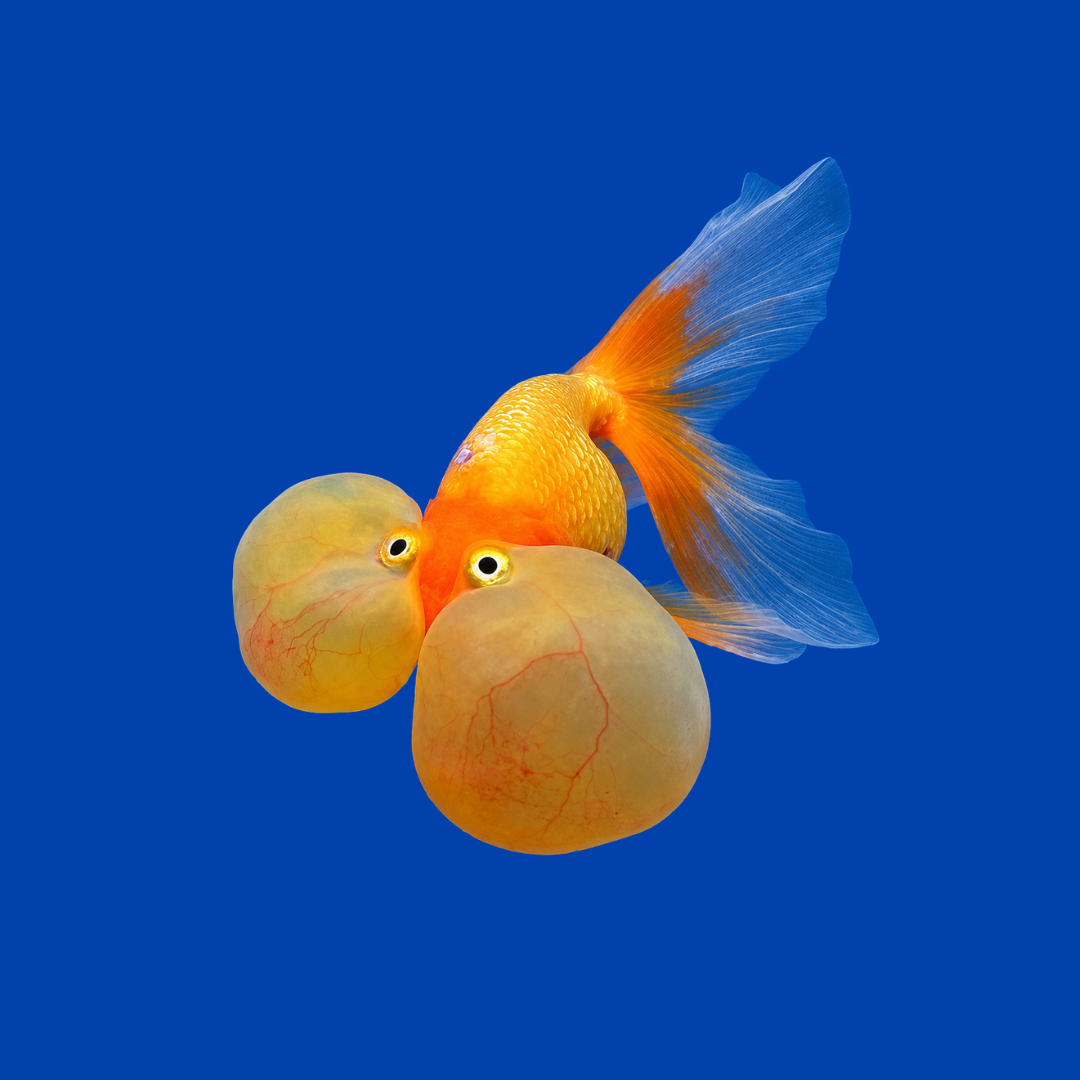
水泡眼(スイホウガン)は、中国で作出された金魚の一品種です。最大の特徴は、両眼の下に発達する透明な袋状の「水泡」と、背びれを欠く滑らかな背中にあります。水泡の内部にはリンパ液に近いと考えられる体液が満たされ、泳ぐたびに左右へやわらかく揺れる姿は、ほかの金魚にはない独特の存在感を生み出します。一般的には上向き気味の眼、やや細長い卵型の体、二つに分かれた尾を備え、素赤、更紗、白、黒、青系、キャリコなどさまざまな色彩が見られます。一方で、大きな水泡を傷つけやすく、泳ぎもゆっくりしているため、飼育では水泡を守りながら無理なく泳げる環境を整えることが大切です。安全な水槽で落ち着いて飼育すると、水泡眼らしい愛嬌と独特の美しさをじっくり楽しめます。 The Bubble Eye Goldfish is a domesticated goldfish variety developed in China. Its most distinctive features are the large transparent fluid-filled sacs beneath both eyes and the smooth back that normally lacks a dorsal fin. The sacs contain a fluid believed to be lymph-like and sway gently as the fish swims, creating an appearance unlike that of other goldfish varieties. Typical Bubble Eyes also have slightly upward-facing eyes, an elongated egg-shaped body, and a divided double tail, with colors ranging from solid red and red-and-white to white, black, bluish tones, and calico. Because the large sacs are vulnerable to injury and the fish swims slowly, the aquarium should be arranged so that the sacs are protected and the fish can move without difficulty. In a safe, calm environment, the Bubble Eye’s distinctive charm and gentle swimming style can be enjoyed at their best.
基本情報 / Basic Information
| 学名 / Scientific Name | Carassius auratus |
|---|---|
| 通称 / Common Name | 水泡眼、スイホウガン、バブルアイBubble Eye, Bubble Eye Goldfish |
| 分類 / Family | コイ目・コイ科・フナ属Order Cypriniformes, Family Cyprinidae, Genus Carassius |
| 英名 / English Name | Bubble Eye Goldfish |
| 分布 / Distribution | 中国で作出された観賞用品種で、野生分布はありません。現在は日本を含む東アジアをはじめ、世界各地の観賞魚市場で飼育・繁殖されています。A captive ornamental variety developed in China with no natural wild distribution. It is now bred and kept in Japan, elsewhere in East Asia, and throughout the international ornamental fish trade. |
| 最大体長 / Max Size | 全長15cm前後がひとつの目安です。個体差や系統、飼育条件によって大きさは前後します。Around 15 cm in total length is a useful general guideline, although size varies with the individual, lineage, and husbandry conditions. |
| 寿命 / Lifespan | 水泡眼だけを対象にした信頼できる寿命統計はほとんどありません。金魚としては長期飼育が可能で、適切な環境では10年前後、さらに長く生きる例もあります。水泡の損傷や慢性的な水質悪化を避け、日常的に状態を観察することが大切です。Reliable lifespan statistics specifically for Bubble Eyes are scarce. Like other goldfish, they can be long-lived in good conditions, with lifespans around 10 years or longer possible. Preventing eye-sac injuries, maintaining water quality, and observing the fish closely are important for long-term care. |
飼育環境 / Aquarium Environment
| 水槽サイズ / Tank Size | 成魚1匹でも60cm規格水槽(実水量の目安は約50〜60L)以上を基本にすると管理しやすくなります。複数飼育では90cm規格水槽以上を検討し、遊泳空間とろ過能力に余裕を持たせます。金魚鉢や小型容器は水質と水温が急変しやすく、水泡眼の長期飼育には適しません。For one adult, a standard 60 cm aquarium with roughly 50–60 L of actual water volume or more is a practical starting point. For multiple fish, a standard 90 cm aquarium or larger is preferable so that both swimming space and filtration capacity remain adequate. Small bowls and tiny containers are unsuitable for long-term care because water quality and temperature fluctuate too rapidly. |
|---|---|
| 水温 / Temperature | 18〜24℃前後を目安に、急変させないことを最優先します。金魚は幅広い水温に適応できますが、水泡眼では短時間の急な昇温・降温を避け、季節変化もゆっくり受けさせることが重要です。 Aim for roughly 18–24°C, with stability being more important than chasing an exact number. Goldfish can adapt to a fairly broad temperature range, but Bubble Eyes should be protected from rapid short-term rises or drops, and seasonal changes should occur gradually. |
| 水質 / Water Quality | 中性付近のpH6.5〜7.5を目安にします。アンモニアと亜硝酸は検出されない状態を理想とし、硝酸塩も定期的な換水で低く保ちます。金魚は排泄量が多いため、十分な生物ろ過と定期的な水質測定が重要です。ただし、水泡眼は強い水流に弱いため、ろ過能力と水流の穏やかさを両立させます。Keep the water near neutral, around pH 6.5–7.5. Ammonia and nitrite should ideally remain undetectable, while nitrate should be kept low through regular water changes. Goldfish produce substantial waste, so adequate biological filtration and routine water testing are essential. At the same time, filtration should not create strong currents that exhaust a weak-swimming Bubble Eye. |
| レイアウト / Layout | 最も安全なのはベアタンク、または角の立たない細かな砂を薄く敷いたシンプルなレイアウトです。尖った石、枝分かれした流木、硬い人工装飾、鋭い水草の切り口は避けます。フィルターの吸水口にはスポンジなどの保護を付け、スポンジフィルターや穏やかな外部・上部ろ過を調整して、水泡が吸い込まれない環境を作ります。The safest setup is a bare-bottom tank or a very simple layout with a thin layer of fine, smooth sand. Avoid sharp rocks, branching driftwood, rigid ornaments, and hard plant edges. Cover filter intakes with protective sponge material and use a sponge filter or carefully adjusted external or overhead filtration so that the eye sacs cannot be pulled into an intake. |
| 注意点 / Precautions | 水泡の損傷防止が最重要です。強い水流、狭い隙間、吸水口、粗い網、活発な同居魚はいずれも事故の原因になります。移動時は水泡を網目で圧迫しないよう、可能であれば大きめの容器で水ごとすくいます。また、新しく導入する個体は別容器で健康状態を確認してから合流させると、寄生虫や細菌性疾患の持ち込みを減らせます。Preventing eye-sac injury is the top priority. Strong currents, narrow gaps, exposed filter intakes, coarse nets, and highly active tank mates can all cause accidents. When moving the fish, avoid pressing the sacs against netting; whenever practical, use a sufficiently large container to scoop the fish together with the surrounding water. New fish should also be observed separately before introduction to reduce the risk of bringing in parasites or bacterial disease. |
餌と給餌 / Feeding
| 餌の種類 / Diet | 主食には、金魚用の沈下性またはゆっくり沈む粒餌が扱いやすいでしょう。補助的に、冷凍または生のブラインシュリンプ、ミジンコ類、植物質を含む金魚用フードなどを少量取り入れると、食事に変化をつけられます。いずれも与えすぎを避け、水質を悪化させない量に抑えます。Sinking or slowly sinking goldfish pellets are convenient as a staple diet. Small amounts of frozen or live brine shrimp, daphnia, and goldfish foods containing plant material can be added for variety. Avoid overfeeding and keep portions small enough that water quality is not compromised. |
|---|---|
| 給餌のポイント / Feeding Tips | 泳ぎが遅く、餌を見つけるのに時間がかかることがあるため、餌は魚の正面近くへ少量ずつ落とします。1日1〜2回を目安に、数分以内で食べきれる量に抑え、食べ残しは早めに取り除きます。沈下性またはゆっくり沈む餌は、水泡眼の目の前へ届けやすい点でも扱いやすいでしょう。複数飼育では、全個体が実際に食べているかを毎回確認します。Because Bubble Eyes swim slowly and may take time to locate food, offer small portions close to the front of the fish. Feed once or twice a day in amounts that can be finished within a few minutes, and remove leftovers promptly. Sinking or slowly sinking foods are particularly easy to place where the fish can find them. In a group, confirm at every feeding that each individual is actually obtaining food. |
性格と混泳 / Temperament and Tank Mates
| 性格 / Temperament | 性格はおおむね温和で、攻撃性の強い品種ではありません。動きはゆっくりしており、視覚にも制約があるため、活発な魚に追われたり餌を奪われたりすると消耗しやすい傾向があります。Bubble Eyes are generally peaceful and are not strongly aggressive. Their slow movement and restricted vision make them prone to stress and food competition when housed with more active fish. |
|---|---|
| 混泳の相性 / Compatibility | 最も安全なのは水泡眼同士の飼育です。ほかの金魚と混泳する場合は、泳ぎが同程度にゆっくりで、つつき行動の少ない個体を選び、給餌競争や水泡への接触が起きていないかをよく観察します。和金、コメット、朱文金などの俊敏な金魚や、ヒレや体表をつつく魚、ザリガニ類などとの同居は避けます。The safest option is to keep Bubble Eyes with other Bubble Eyes. If they are mixed with other goldfish, choose similarly slow, non-nipping individuals and closely monitor food competition and contact with the sacs. Avoid fast goldfish such as Common Goldfish, Comets, and Shubunkins, as well as fin-nipping fish or crayfish that may damage the delicate eye sacs. |
病気と対策 / Diseases and Prevention
| かかりやすい病気 / Common Diseases | 水泡眼では、水泡の裂傷や破裂が起こりやすく、傷口から細菌や水カビ類による二次感染につながることがあります。病気そのものは一般的な金魚と大きく変わらず、白点病、吸虫類による寄生、カラムナリス病、エロモナス属細菌による感染症などに注意します。浮力障害や鰓の異常といった健康トラブルも見逃せません。水泡の充血、白濁、腫れ、食欲低下、呼吸の速さ、体をこすりつける行動は早めに確認したい変化です。Bubble Eyes are particularly prone to tearing or rupture of an eye sac, and the resulting wound can be followed by secondary bacterial or water-mold infection. Their infectious diseases are otherwise similar to those of other goldfish, including white spot disease, fluke infestations, columnaris disease, and Aeromonas infections. Gill problems and buoyancy disorders are also important health issues to watch for. Redness, cloudiness or swelling of a sac, loss of appetite, rapid breathing, or repeated rubbing against surfaces should be treated as early warning signs. |
|---|---|
| 対策と予防 / Prevention | 予防の基本は、清浄で安定した水質、急激な水温変化の回避、鋭利物の排除、吸水口の保護、新魚の隔離観察です。水泡を傷つけた場合は、まず清潔なベアタンクへ隔離し、穏やかなエアレーションと良好な水質を維持して経過を観察します。家庭で水泡を針などで意図的に排液する行為は感染や損傷を広げる危険があるため避けます。赤みが拡大する、白い綿状物が付く、出血が続く、食べないなどの症状がある場合は、魚病に詳しい獣医師や信頼できる専門店に相談し、原因に合った薬剤を製品表示どおりに使用します。Prevention depends on clean, stable water; avoidance of rapid temperature changes; removal of sharp objects; protected filter intakes; and observation of new fish in quarantine. If a sac is damaged, first move the fish to a clean bare-bottom hospital tank with gentle aeration and excellent water quality. Do not intentionally drain the sac with a needle at home, because this can worsen tissue damage and infection. If redness spreads, cotton-like growth appears, bleeding persists, or the fish stops eating, consult an aquatic veterinarian or experienced fish-health specialist and use any medication strictly according to diagnosis and label directions. |
増やし方(繁殖) / Breeding
| 雌雄の判別 / Sexing | 若魚では判別が難しく、繁殖期の成魚で見分けやすくなります。オスはエラ蓋や胸びれ前縁に白い追星が現れることがあり、メスは抱卵すると腹部がふっくらして、繁殖期には生殖孔がやや突出して見えることがあります。単一の特徴だけでなく、複数の形質を合わせて判断します。Sexing juveniles is difficult and becomes easier in mature fish during the breeding season. Males may develop small white breeding tubercles on the gill covers and leading edges of the pectoral fins, while gravid females become fuller through the abdomen and may show a slightly protruding vent. Use several characteristics together rather than relying on a single sign. |
|---|---|
| 繁殖形態 / Reproduction | 卵生で、水草や産卵モップなどに粘着性の卵をばらまくタイプです。春の水温上昇や日長の変化が産卵行動のきっかけになりやすく、オスがメスを追尾して放卵・放精します。親魚は卵を食べるため、産卵後は親魚か卵のどちらかを別容器へ移します。Bubble Eyes are egg-laying broadcast spawners that scatter adhesive eggs onto plants, spawning mops, or similar surfaces. Rising spring temperatures and increasing day length commonly trigger spawning behavior, with males chasing females as eggs and sperm are released. Because adults may eat the eggs, separate the parents from the eggs after spawning. |
| 繁殖のポイント / Breeding Tips | 繁殖容器には水泡を傷つける障害物を置かず、柔らかな産卵モップを使用します。追尾や産卵時には親魚同士の接触が増えるため、水泡を傷つけない広さとシンプルな配置を意識します。孵化後は水質を安定させ、成長に合わせて適切な初期飼料へ切り替えます。選別では、まず泳ぎ、成長、背なり、尾の形などを確認し、水泡がはっきり発達してから左右の大きさや形のバランスを評価します。飼育できない個体を河川や池へ放流してはいけません。Keep the spawning tank free of obstacles that could injure the eye sacs and use soft spawning mops. Chasing and close contact increase during spawning, so provide sufficient open space and keep the setup simple to reduce the risk of sac damage. After hatching, keep water quality stable and change to suitable first foods as the fry develop. Early selection focuses on swimming ability, growth, back profile, and tail structure; symmetry and shape of the eye sacs are evaluated later, after the sacs have clearly developed. Never release unwanted fish into rivers, ponds, or other natural waters. |
雑学と豆知識 / Trivia and Fun Facts
| 1. 中国で育まれた金魚文化と水泡眼 / 1. A Product of China’s Long Goldfish Tradition | 金魚の家畜化と観賞文化は、中国で長い時間をかけて発展してきました。水泡眼がいつ、どの系統から現在の姿へ固定されたのかは、古い繁殖記録が限られており、細かな系譜まで確定していません。「蛤蟆頭(ハマトウ)」との関連を起源説として紹介する資料もありますが、その系譜を直接裏付ける記録は十分ではありません。日本には1958年(昭和33年)に渡来したとされ、戦後に中国から導入された特徴的な金魚のひとつとして定着しました。Goldfish domestication and ornamental culture developed in China over a long period. The exact date and breeding pathway that produced the modern Bubble Eye are not fully documented because historical breeding records are limited. Some sources describe a form called the Toadhead as being related to its origin, but the detailed lineage is not firmly established. The Bubble Eye is generally described as having reached Japan in 1958, where it became established as one of the distinctive Chinese goldfish varieties introduced in the postwar period. |
|---|---|
| 2. 「水泡」はどんな構造なのか / 2. What Exactly Are the “Bubbles”? | 水泡は単なる飾りではなく、眼の下に発達した袋状の組織です。一般向けには「角膜が膨らんだもの」と説明されることもありますが、研究論文では眼の下にある「眼嚢(eye sac)」として扱われ、膜状の上皮組織と血管を備え、内部にリンパ液に似た体液が存在する構造として記述されています。成長とともに袋は大きくなり、左右の大きさや形のそろい方が観賞上の印象を大きく左右します。The eye sacs are not merely decorative; they are specialized sac-like structures that develop beneath the eyes. Popular descriptions sometimes refer to them as expanded corneal tissue, but research papers treat them as subocular eye sacs and describe them as membranous epithelial structures supplied with blood vessels and containing a lymph-like fluid. The sacs enlarge as the fish grows, and their symmetry strongly influences the fish’s overall appearance. |
| 3. 水泡は再び満たされることがある / 3. Eye-Sac Fluid Can Replenish | 水泡から体液を採取した研究では、採取後およそ数か月で液が再び満たされ、再充填後に採取した液にも細胞増殖を促す活性が確認されています。ただし、この研究が示したのは採液後の「液の再充填」であり、裂けた水泡の組織が完全に元どおり治ることを証明したものではありません。事故で水泡を傷つけた場合は形が変わったり、傷口から二次感染したりする可能性があるため、再充填する性質があっても損傷の予防が最優先です。Research in which eye-sac fluid was collected showed that the fluid refilled over the following couple of months and that fluid collected again retained cell growth-promoting activity. Importantly, this demonstrates replenishment of the fluid after sampling; it does not prove that a torn sac will completely regenerate to its original form. Accidental injury may alter the shape of the sac and can lead to secondary infection, so prevention remains the priority. |
| 4. LRP2研究が示していること / 4. What the LRP2 Study Actually Shows | 2025年に報告された研究では、頂天眼の候補変異としてLRP2遺伝子のエクソン38に生じた途中終止変異が示され、出目金系の突出眼でも同じLRP2遺伝子の別の変異が関わることが報告されました。つまり、人為選択の中で、同じ遺伝子の異なる変化から似た眼形質が生じた可能性を示す研究です。ただし、この研究が直接扱ったのは頂天眼と出目金系の眼形質であり、水泡眼の眼下にできる大きな水泡の原因遺伝子を明らかにしたものではありません。LRP2の研究結果を、そのまま水泡形成の説明に置き換えないことが重要です。A study reported in 2025 identified a premature stop mutation in exon 38 of LRP2 as the leading candidate for the celestial-eye trait and showed that telescope-eye goldfish involve a different mutation in the same gene. In other words, similar eye phenotypes may have arisen through different changes in LRP2 under artificial selection. The study directly addressed celestial-eye and telescope-eye traits, however, not the large subocular sacs of the Bubble Eye. Its findings therefore should not be used as a direct genetic explanation for Bubble Eye sac formation. |
| 5. 二つ尾と背びれ欠失を考える手がかり / 5. Genetic Clues to the Twin Tail and Missing Dorsal Fin | 金魚の二つ尾では、発生初期の背腹軸形成に関わるchordin系遺伝子のひとつ、chdS(chdAとも呼ばれます)にあるE127X変異が重要な役割をもつことが示されています。この変異は127番目のアミノ酸位置でタンパク質を途中で短くする終止変異で、二つ尾の形成と強く結びついています。さらに別の研究では、chdSが二つ尾だけでなく、背びれを欠く形質にも関係することが示されました。水泡眼に見られる二つ尾と背びれのない体型を理解するうえで重要な手がかりですが、この遺伝子だけで水泡そのものの形成まで説明できるわけではありません。In goldfish, the twin-tail phenotype is strongly associated with the E127X mutation in a chordin-related gene known as chdS, also called chdA, which is involved in early dorsal–ventral development. The mutation introduces a premature stop at amino-acid position 127 and truncates the protein. Separate research has also shown that chdS contributes to the dorsal-finless phenotype. These findings provide important clues for understanding the combination of a double tail and missing dorsal fin seen in Bubble Eyes, but they do not explain formation of the eye sacs themselves. |
| 6. 水泡液は細胞培養研究にも使われている / 6. Eye-Sac Fluid as a Cell-Culture Research Material | 水泡眼の水泡液は、観賞魚研究の枠を越えて細胞培養の研究材料としても調べられています。2009年の研究では、ウシ胎児血清(FBS)を含む培地に水泡液を加えると、メダカやゼブラフィッシュ由来の複数の細胞で増殖促進効果が確認されました。また、採液後に水泡液が再び満たされるため、魚を犠牲にせず繰り返し採取できる点も研究上の利点です。この結果は、水泡液が魚類細胞培養の「増殖を助ける添加物」になり得ることを示したもので、FBSを完全に置き換えるヒト細胞培養用血清として実用化されたという意味ではありません。Bubble Eye sac fluid has also been investigated as a material for cell-culture research. In a 2009 study, adding the fluid to media that contained fetal bovine serum promoted growth in several cell types derived from medaka and zebrafish. Because the fluid refills after sampling, it can be collected repeatedly without sacrificing the fish. The result showed potential as a growth-promoting supplement for fish cell culture; it did not establish Bubble Eye fluid as a complete replacement for fetal bovine serum in human cell culture. |
| 7. 生きたまま免疫細胞を追える珍しい研究モデル / 7. A Rare Model for Repeated Immune-Cell Sampling | 水泡液には免疫を担う細胞が含まれており、少量を採取することで、同じ個体を生かしたまま免疫反応を追跡できます。2021年の研究では、水泡眼の眼嚢に加熱殺菌した緑膿菌を用いて免疫刺激を与えたところ、25℃に比べ33℃では炎症性サイトカインの遺伝子発現が低くなり、採取した眼嚢細胞を用いた生体外実験でも同じ傾向が示されました。同じ論文で、実際の緑膿菌感染による死亡率を比較した実験は水泡眼ではなく和金を用いて行われ、33℃群で生存率が低下しました。つまり、この研究は高温条件で金魚の免疫細胞の働きが弱まる可能性を示したものであり、水泡眼だけが特別に高温へ弱いことや、急な温度変化そのものを直接証明した研究ではありません。Eye-sac fluid contains immune cells, allowing researchers to collect small samples repeatedly while keeping the same fish alive. In a 2021 study, an immune challenge with heat-killed Pseudomonas aeruginosa in Bubble Eye sacs produced lower induction of pro-inflammatory cytokine genes at 33°C than at 25°C, and the same tendency was observed in ex vivo cultures of harvested eye-sac cells. In the same paper, the experiment comparing mortality after infection with live P. aeruginosa used common goldfish rather than Bubble Eyes and found poorer survival at 33°C. The study therefore suggests that elevated temperature can impair immune-cell function in goldfish; it does not by itself show that Bubble Eyes are uniquely sensitive to heat or directly test the effect of rapid temperature change. |
| 8. 日本では中国産と国内生産魚の両方が流通 / 8. Both Imported and Japanese-Bred Fish Circulate in Japan | 現在の日本では、中国から輸入された個体と国内で繁殖された個体の双方が流通しています。水泡眼は、愛知県弥富市や奈良県大和郡山市でも中国から導入された金魚として紹介され、弥富産などの国産個体も市場で確認できます。購入時は水泡の大きさだけでなく、左右のバランス、背なり、尾の状態、呼吸、充血や傷の有無、餌への反応まで確認すると、健康状態を判断しやすくなります。観賞上は左右の水泡が均整の取れた個体が好まれますが、飼育では何より無理なく泳げることと、傷がないことを優先して選びます。In Japan today, both imported Chinese fish and domestically bred Bubble Eyes are available in the trade. Goldfish-producing areas such as Yatomi in Aichi Prefecture and Yamatokoriyama in Nara Prefecture describe the Bubble Eye as a variety introduced from China, and domestically bred fish, including Yatomi-bred specimens, are also sold. When selecting a fish, look beyond sac size and check the balance of the sacs, back profile, tail condition, breathing, absence of redness or injury, and feeding response. Symmetrical sacs are traditionally valued for appearance, but for husbandry, comfortable swimming and the absence of injuries should take priority. |
| 9. 2026年時点の日本の輸入防疫 / 9. Japan’s Import-Quarantine Rules as of 2026 | 日本へ生きた金魚を輸入する場合、金魚を含むフナ属魚類は水産資源保護法に基づく輸入防疫の対象です。2026年6月9日の制度変更後、対象疾病はコイ春ウイルス血症(SVC)とレッドマウス病です。輸入には農林水産大臣の許可が必要で、検査証明書などを確認しても対象疾病を広げるおそれがないと認められない場合には、法令に基づく管理命令が出されることがあります。この管理命令が出された場合、金魚その他のフナ属魚類の管理期間は10日で、SVCの病原体を広げるおそれがないと認められない場合は15日です。また、中国から日本へ輸出する金魚については、輸出元施設が対象疾病の清浄条件を満たさない場合、輸出前に隔離と検査を行う衛生条件が定められています。したがって、「中国産金魚は日本到着後に必ず一律15日間隔離される」と理解するのは正確ではありません。輸出前の衛生条件と、日本到着後に必要に応じて出される管理命令は分けて考える必要があります。Live goldfish imported into Japan are subject to aquatic-animal import quarantine under the Act on the Protection of Fishery Resources. Following regulatory changes effective June 9, 2026, the target diseases for Carassius species include spring viraemia of carp (SVC) and enteric redmouth disease. Importation requires permission from the Minister of Agriculture, Forestry and Fisheries. If official certificates and other checks are still insufficient to rule out the risk of spreading a target disease, a management order may be issued. When such an order is issued, the management period for goldfish and other Carassius species is 10 days, or 15 days when the risk of spreading SVC cannot be ruled out. Chinese export health requirements also provide for pre-export isolation and testing when the exporting establishment does not meet disease-free conditions. It is therefore inaccurate to state that every Chinese goldfish is automatically quarantined for 15 days after arrival in Japan; pre-export health requirements and any post-arrival management order are separate parts of the system. |
まとめ / Conclusion
水泡眼は、両眼の下で揺れる大きな水泡と、背びれのない滑らかな背中が印象的な金魚です。その姿は長い選択交配によって形づくられてきた一方、水泡を傷つけやすく、泳ぎや餌取りもゆっくりしています。尖った物を置かないこと、強い水流を避けること、水質を安定させること、餌を確実に届けることが、健やかに飼うための基本です。 The Bubble Eye is instantly recognizable by its large swinging eye sacs and smooth dorsal-finless back. These features were shaped through generations of selective breeding, but they also make the sacs vulnerable to injury and leave the fish slow at swimming and feeding. Keeping sharp objects out of the aquarium, avoiding strong currents, maintaining stable water quality, and making sure food reaches the fish are the foundations of good care.
安全な環境が整うと、水泡眼は大きな水泡を揺らしながら、穏やかで独特な泳ぎを見せてくれます。毎日の給餌を通して泳ぎ方や水泡の状態を観察し、小さな傷や体調の変化に早く気づけるようにすると、その個性的な姿と落ち着いた動きを長く楽しみやすくなります。 In a safe environment, the Bubble Eye displays its characteristic calm swimming style while the large sacs sway gently beneath the eyes. Watching the fish during daily feeding and checking the sacs for small injuries or changes in condition makes it easier to respond early and enjoy this distinctive variety over the long term.

気になる道具や飼い方を見つけてみませんか?
 アイのアクアグッズ案内水換え・底砂掃除の道具の選び方|砂利・砂・ソイルに合うクリーナーとポンプ道具の特徴や使い方、選ぶときのポイントをアイが紹介します。記事はコチラ →
 アイのアクアグッズ案内アカヒレの仲間に合わせる飼育用品|無加温・混泳・繁殖の水槽とろ過道具の特徴や使い方、選ぶときのポイントをアイが紹介します。記事はコチラ →
さまざまな飼育テーマをご紹介。リンク先の記事には広告・商品紹介が含まれます。
案内・紹介記事一覧へ →分布マップ
水泡眼は中国で作出された観賞用品種で、自然界に固有の野生分布はありません。現在は日本を含む東アジアをはじめ、世界各地で観賞魚として飼育・繁殖されています。下の地図では、作出地である中国を中心に東アジアを概略表示しています。
※この地図は記事の分布情報をもとにした概略表示です。水泡眼には自然の野生分布がないため、マーカーは実際の採集地点を示すものではなく、作出地である中国を示す代表地点として配置しています。
参考文献
- California Academy of Sciences, Eschmeyer’s Catalog of Fishes. Carassius auratus (Linnaeus, 1758). Online Version, updated 13 August 2026.
- Froese, R. & Pauly, D. (eds.). 2026. FishBase: Carassius auratus (Linnaeus, 1758), Goldfish. Version 02/2026.
- Chen, D., Zhang, Q., Tang, W., et al. 2020. The evolutionary origin and domestication history of goldfish (Carassius auratus). Proceedings of the National Academy of Sciences of the United States of America, 117(47): 29775–29785. doi:10.1073/pnas.2005545117.
- RSPCA Australia Knowledgebase. 2024. How should I care for my goldfish?. Updated 1 May 2024.
- Petty, B. D., Francis-Floyd, R. & Yanong, R. P. E. Management of Aquarium Fish. Merck Veterinary Manual. Full review May 2022; last updated June 2026.
- Kobayashi, M., Iwata, E. & Sorensen, P. W. 2026. Environmental and Physiological Regulation of Reproduction in the Goldfish: Gonadal Development, Maturation, and Spawning Behavior: A Review. Animals, 16(5): 775. doi:10.3390/ani16050775.
- Petty, B. D., Francis-Floyd, R. & Yanong, R. P. E. Parasitic Diseases of Fish and Bacterial Diseases of Fish. Merck Veterinary Manual. Aquarium Fish section.
- 農林水産省. 水産輸入防疫制度について. きんぎょその他のふな属魚類に対する輸入防疫対象疾病および管理期間の現行情報.
ガ




コメント