

解説 / Description
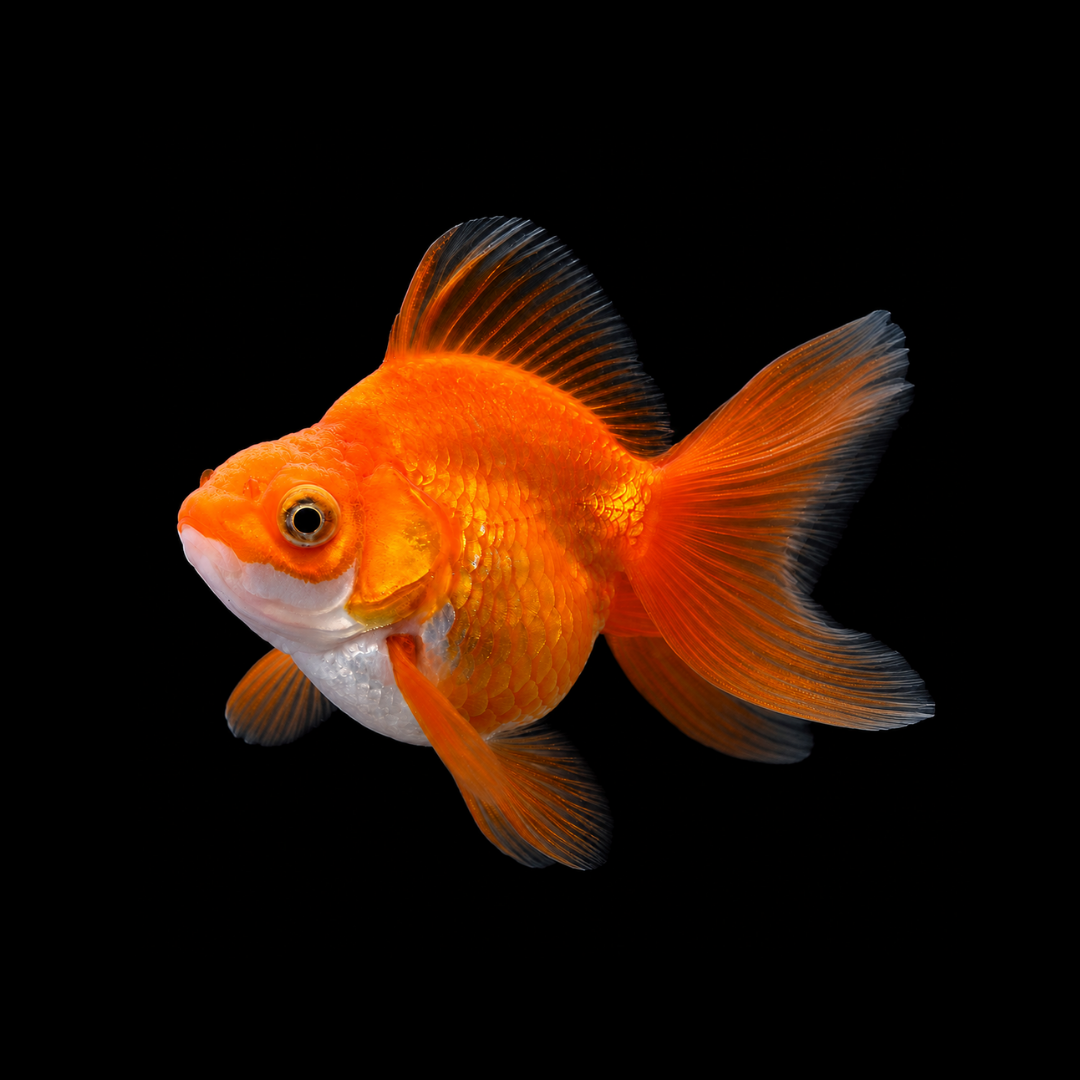
ブロードテール赤琉金は、琉金らしい短く体高のある体型と、赤を基調とした体色、そして大きく幅広く展開する尾鰭を組み合わせた改良金魚です。一般的な長尾の琉金が柔らかく流れる尾の動きを楽しむのに対し、ブロードテールでは尾鰭の親骨が比較的しっかりし、横から見たときに尾全体が大きく開く個体が好まれます。頭の後ろから背鰭へ向かって高く立ち上がる背のライン、丸みのある胴、左右のバランスが取れた双尾がそろうと、静止時にも力強いシルエットを見せます。なお「ブロードテール赤琉金」は独立した学術分類ではなく、キンギョの琉金系統における形態・体色を示す流通上および愛好家間の呼称です。 The Red Broadtail Ryukin is a selectively bred goldfish that combines the Ryukin’s short, deep body with predominantly red coloration and a broad, widely spread double tail. While traditional long-tailed Ryukin are admired for softly flowing fins, Broadtail individuals are selected for relatively firm leading tail rays and a caudal fin that opens broadly when viewed from the side. A steep dorsal profile behind the head, a rounded body, and a well-balanced paired tail create the powerful silhouette prized by enthusiasts. “Red Broadtail Ryukin” is not a separate scientific taxon, but a trade and hobby name describing a form and color variety within domesticated Ryukin goldfish.
基本情報 / Basic Information
| 学名 / Scientific Name | Carassius auratus |
|---|---|
| 通称 / Common Name | ブロードテール琉金、ブロードテール赤琉金、赤ブロードテール琉金Broadtail Ryukin, Red Broadtail Ryukin |
| 分類 / Family | コイ目・コイ科・フナ属。キンギョの琉金系統に属する改良品種Order Cypriniformes, family Cyprinidae, genus Carassius; a domesticated Ryukin-type goldfish variety |
| 英名 / English Name | Red Broadtail Ryukin Goldfish |
| 分布 / Distribution | 野生分布はありません。中国に起源を持つキンギョを基礎に作られた人工改良系統で、日本を含む各国の養魚場や愛好家によって繁殖・流通しています。There is no wild distribution. This is a domesticated ornamental form derived from goldfish of Chinese origin and is bred and traded by fish farms and hobbyists in Japan and many other countries. |
| 最大体長 / Max Size | 成魚でおおむね15~20cm前後。尾鰭が長く発達する個体では全長20cmを超えることがあります。Generally around 15–20 cm as an adult, with total length exceeding 20 cm in individuals with especially developed fins. |
| 寿命 / Lifespan | 目安は10~15年ほど。十分な水量、安定した水質、適切な給餌を維持できれば、それ以上長生きする例もあります。A typical expectation is about 10–15 years. With ample water volume, stable water quality, and appropriate feeding, some individuals can live longer. |
飼育環境 / Aquarium Environment
| 水槽サイズ / Tank Size | 成魚1匹でも60cmワイド水槽クラス(約80~100L以上)を目安にすると管理しやすく、2~3匹なら90cm規格水槽(約150~180L)以上が安心です。巨大な尾鰭を傷めず泳げるよう、高さだけでなく横幅と奥行きを重視します。幼魚を小型水槽で育てる場合も、成長に合わせて早めのサイズアップが必要です。For one adult, a wide 60 cm-class aquarium of roughly 80–100 L or more is a practical target. For two to three adults, a standard 90 cm aquarium of about 150–180 L or larger is preferable. Because the tail is large, prioritize swimming length and depth from front to back rather than tank height alone, and upgrade juvenile housing early as the fish grow. |
|---|---|
| 水温 / Temperature | 日常飼育では18~24℃前後を目安に、急変を避けて安定させます。キンギョ自体はより低い水温にも順応できますが、丸手の改良品種では低温時に活動や消化がゆっくりになるため、給餌量を水温と魚の動きに合わせて調整します。高温時は溶存酸素が低下しやすいので、夏場は特にエアレーションを強化します。 For routine aquarium care, about 18–24°C is a useful target, with stability more important than chasing an exact number. Goldfish can acclimate to cooler water, but round-bodied fancy varieties become less active and digest food more slowly at low temperatures, so feeding should be adjusted to temperature and activity. At high temperatures dissolved oxygen falls, making strong aeration especially important in summer. |
| 水質 / Water Quality | 中性~弱アルカリ性のpH7.0~8.0前後を目安とし、アンモニアと亜硝酸は常に検出されない状態を維持します。硝酸塩も蓄積させすぎないよう定期換水を行います。金魚は排泄量が多いため、十分に立ち上がった生物ろ過と高い酸素量が重要です。Aim for neutral to slightly alkaline water around pH 7.0–8.0, with ammonia and nitrite kept undetectable. Prevent excessive nitrate accumulation through regular water changes. Goldfish produce a heavy bioload, so a mature biological filter and high dissolved oxygen are essential. |
| レイアウト / Layout | 尾鰭の裂傷を防ぐため、鋭い石や枝状の流木、狭い隙間は避けます。ベアタンク、または誤飲しにくい細かな砂を薄く敷いたシンプルな構成が管理しやすいでしょう。ろ過能力は十分に確保しつつ、吐出口を壁面へ向ける、拡散パイプを使うなどして魚に直接強い水流が当たらないよう調整します。Avoid sharp rocks, branching driftwood, and narrow gaps that can tear the tail. A bare-bottom tank or a simple layout with a thin layer of fine sand is easy to maintain. Provide strong filtration capacity, but diffuse the outflow or aim it toward the glass so the fish is not forced to swim continuously against a strong current. |
| 注意点 / Precautions | 見た目の大きさ以上に排泄量が多いため、小さな水槽での過密飼育は水質悪化を招きます。新規水槽では生物ろ過が完成してから導入し、日常的にアンモニア・亜硝酸・硝酸塩を確認します。大きな尾と短い体型は強い水流や餌の競争に不利なので、単尾の和金・コメット系や極端に活発な魚との同居は避けるのが無難です。Their waste output is high for their apparent size, so overcrowding in small tanks quickly degrades water quality. Introduce fish only after the biological filter is established and monitor ammonia, nitrite, and nitrate routinely. The large tail and compact body are disadvantages in strong current and feeding competition, so avoid housing them with fast single-tailed goldfish such as Common or Comet types. |
餌と給餌 / Feeding
| 餌の種類 / Diet | 主食には消化性のよい金魚用の沈下性ペレットやゲルフードが使いやすく、補助的に冷凍アカムシ、ミジンコ類、加熱して柔らかくした葉物野菜などを組み合わせます。赤色の維持を重視する場合は、アスタキサンチンやスピルリナなどの色素原料を含む色揚げ飼料も有効です。Digestible sinking goldfish pellets or gel foods are practical staples. Frozen bloodworms, daphnia-type foods, and softened leafy vegetables can be offered as supplements. For maintaining strong red coloration, color-enhancing diets containing carotenoid sources such as astaxanthin or spirulina can be useful. |
|---|---|
| 給餌のポイント / Feeding Tips | 丸手の琉金は浮力バランスを崩しやすいため、1回に大量に与えるより少量を複数回に分ける方法が向いています。沈下性フードは水面での激しい摂餌を減らし、ゆっくり食べさせやすい点で有用です。ただし「浮上性の餌を食べると必ず空気を飲み込み転覆する」と単純化することはできず、転覆には体型、消化管、浮袋、水質、感染、過食など複数の要因が関わります。食後に浮く、傾くなどの症状が出る個体では、餌の種類・量・粒径を見直します。Round-bodied Ryukin can be prone to buoyancy problems, so several small meals are preferable to one large feeding. Sinking foods are useful because they reduce frantic surface feeding and make slower feeding easier. However, it is an oversimplification to say that floating food always causes fish to swallow air and overturn; buoyancy disorders can involve body conformation, the digestive tract, swim bladder, water quality, infection, and overfeeding. If a fish floats or tilts after meals, review food type, portion size, and pellet size. |
性格と混泳 / Temperament and Tank Mates
| 性格 / Temperament | 基本的には温和で、人にもよく慣れる金魚です。餌の時間には活発になり、個体によっては他魚を押しのけることがありますが、強い縄張りを作る魚ではありません。丸い体型と幅広い尾のため、泳ぎは単尾の金魚よりゆっくりです。Generally peaceful and quick to become accustomed to people. They may become enthusiastic and pushy at feeding time, but they are not strongly territorial. Their rounded body and broad tail make them slower swimmers than single-tailed goldfish. |
|---|---|
| 混泳の相性 / Compatibility | 琉金、オランダ獅子頭、東錦など、泳力と給餌速度が近い丸手の金魚同士が合わせやすい組み合わせです。和金、コメット、朱文金など素早い単尾品種とは餌の競争で不利になりやすく、ヒレをつつく魚との混泳も避けます。極端に視力や泳力が弱い品種と合わせる場合は、さらに給餌状況を細かく観察してください。They are best matched with similarly paced fancy goldfish such as Ryukin, Oranda, and Azuma Nishiki. Fast single-tailed varieties such as Common, Comet, and Shubunkin can outcompete them for food, and fin-nipping species should be avoided. If kept with varieties that have extremely limited vision or swimming ability, monitor feeding even more carefully. |
病気と対策 / Diseases and Prevention
| かかりやすい病気 / Common Diseases | 丸い体型に関連する浮力異常・転覆症状、尾鰭の傷から進行する尾ぐされ症状、白点病、エラの障害、消化不良などに注意します。とくに「転覆病」は単一の病名というより、浮袋の異常、消化管の膨満、感染、臓器の圧迫、体型上の問題などによって似た症状が現れる状態の総称として考えるほうが適切です。Watch for buoyancy disorders associated with the compact body shape, fin rot following tail injuries, ich, gill problems, and digestive disturbances. “Swim bladder disorder” is better understood as a description of abnormal buoyancy rather than one single disease, because similar signs may result from swim bladder dysfunction, intestinal distension, infection, organ pressure, or body conformation. |
|---|---|
| 対策と予防 / Prevention | 最優先は、アンモニアと亜硝酸を出さない成熟したろ過、十分な酸素、過密を避けた水量、急変のない水温、適量給餌です。新しい魚は可能なら別容器で観察期間を設け、既存魚への持ち込み感染を減らします。食塩浴は状況によって補助療法として使われ、0.5%なら水1Lに対して食塩5gが相当します。淡水魚の浸透圧調節負担を軽くする方向に働き、塩化物イオンは亜硝酸のエラからの取り込みを抑えるため、亜硝酸中毒時の補助になることがあります。ただし0.5%食塩水が多くの病原体を一律に死滅させるわけではなく、常用や自己判断での長期使用は避けます。症状が強い場合、原因不明の場合、薬浴を併用する場合は魚類を診られる獣医師や経験豊富な専門店に相談してください。Prevention starts with a mature filter that keeps ammonia and nitrite at zero, high oxygen levels, adequate water volume, stable temperature, and controlled feeding. When possible, observe new fish separately before introducing them to established stock. Salt baths can be used as supportive care in selected situations; 0.5% means 5 g of sodium chloride per liter of water. Salinity can reduce the osmotic workload of freshwater fish, and chloride ions can reduce nitrite uptake across the gills, making salt useful as supportive management during some nitrite exposures. However, 0.5% salt does not universally kill aquatic pathogens and should not be used continuously without a reason. For severe signs, uncertain causes, or medication combinations, consult an aquatic veterinarian or a highly experienced specialist retailer. |
増やし方(繁殖) / Breeding
| 雌雄の判別 / Sexing | 繁殖期の成熟したオスは、エラ蓋や胸鰭の前縁に白い追星が現れることがあります。メスは抱卵すると腹部がふっくらし、総排泄孔がやや突出して見える場合があります。ただし若魚や繁殖期以外では外見だけの判別は難しく、体型だけで断定するのは避けます。During the breeding season, mature males may develop white breeding tubercles on the gill covers and leading edges of the pectoral fins. Gravid females often become fuller in the abdomen and may show a slightly protruding vent. Outside the breeding season, or in young fish, visual sexing can be difficult and should not be based on body shape alone. |
|---|---|
| 繁殖形態 / Reproduction | 卵生で、水草や産卵藻などに粘着性の卵を多数産み付ける散乱型です。親魚は卵を保護せず、むしろ食べてしまうため、産卵後は親魚または卵を分離します。They are egg-laying scatter spawners that deposit many adhesive eggs on aquatic plants or spawning mops. The parents provide no care and may eat the eggs, so the adults or the eggs should be separated after spawning. |
| 繁殖のポイント / Breeding Tips | 親魚を十分に成熟させ、季節的な水温変化と良質な給餌で産卵に向けてコンディションを整えます。家庭繁殖では柔らかな産卵藻を用意し、追尾が激しすぎる場合は尾鰭の損傷に注意します。人工授精のための採卵・採精は高い技術を要し、親魚を傷つける危険があるため、経験者向けです。ブロードテールの完成度は単一遺伝子だけで決まる形質ではなく、尾の開き、親骨の強さ、左右対称性、尾筒、背の立ち上がり、体色などを世代ごとに選抜して固定していきます。稚魚では尾や脊椎の形を早期から観察し、健全性と品種形質の両面で選別します。Condition mature breeders with high-quality food and seasonal temperature changes. For home spawning, provide soft spawning mops and watch for tail damage if chasing becomes too vigorous. Hand stripping for artificial fertilization requires considerable skill and can injure the breeders, so it is best left to experienced breeders. Broadtail quality is not determined by a single gene; breeders select across generations for tail spread, strength of the leading rays, symmetry, caudal peduncle, dorsal profile, and coloration. Fry are evaluated early for both sound conformation and desired breed traits. |
雑学と豆知識 / Trivia and Fun Facts
| 1. 「琉金」の名は琉球を経由した歴史に由来する / 1. The name “Ryukin” reflects its route through the Ryukyu Islands | 金魚は中国で長い家畜化と選抜の歴史を持ち、日本には16世紀初頭に伝わったとされます。琉金はそれより後の江戸時代に、中国から琉球を経由して日本へ入った丸手の金魚に由来すると伝えられています。そのため「琉球から来た金魚」という記憶が品種名に残りました。現在の琉金は短い胴、高い体高、頭の後ろから立ち上がる背のライン、発達した尾鰭という、日本の金魚文化を代表する輪郭を持っています。Goldfish have a long history of domestication and selective breeding in China and are generally considered to have reached Japan in the early 16th century. The Ryukin arrived later, during the Edo period, and tradition holds that round-bodied goldfish from China reached Japan via the Ryukyu Islands. The route survives in the breed name itself. Modern Ryukin are recognized by a short body, great body depth, a steep dorsal rise behind the head, and strongly developed fins. |
|---|---|
| 2. 双尾の核心には発生遺伝子chordin Aが関わる / 2. The twin tail is linked to the developmental gene chordin A | 琉金を含む多くの丸手金魚の双尾は、単に尾鰭だけが二つに裂けたものではありません。研究では、胚の背腹方向の形成に関わるchordin A(chdA)の機能を低下させる変異が、尾部の軸骨格と鰭褶を腹側で二分することが示されています。金魚を含むフナ属は古いゲノム重複によって対応する遺伝子コピーを持つため、chdA側に大きな変化があっても発生全体が破綻しにくいと考えられています。さらに別系統では、トランスポゾン挿入によってchordin Aの発現が阻害される例も報告されており、「双尾」という見た目の裏には複数の遺伝的経路が存在する可能性があります。一方、ブロードテール特有の尾の張りや親骨の硬さまでを一つの遺伝子で説明できる段階には至っておらず、これらは長年の選抜育種で作り込まれた複合形質と見るのが適切です。The twin tail of Ryukin and many other fancy goldfish is more than a simple split in the fin membrane. Research has shown that mutations reducing the function of chordin A (chdA), a gene involved in embryonic dorsal–ventral patterning, can bifurcate the posterior axial skeleton and embryonic fin fold. Carassius goldfish retain duplicated gene copies from an ancient genome-duplication history, which is thought to provide developmental redundancy. Other twin-tail lines have also been reported with transposon insertions that disrupt chordin A expression, suggesting that more than one molecular route can produce a similar twin-tail phenotype. In contrast, the unusually broad spread and firm leading rays of the Broadtail have not been reduced to a single known gene and are better understood as complex traits refined through selective breeding. |
| 3. ブロードテールの成立史は「現代中国系統」が中心だが、細部は未確定 / 3. The modern Broadtail is closely associated with Chinese breeding, but its detailed pedigree remains uncertain | ブロードテール琉金は、伝統的な長尾琉金とは異なり、尾を広く張らせた現代的な観賞形を追求した系統として、主に中国を中心とする東アジアの改良金魚市場から広まりました。愛好家の間では特定のファーム、年代、ベールテール系との交配を起点とする説明も見られますが、これらの細かな成立年や交配順序を学術的な一次資料で確定できる情報は限られます。そのため、現時点では「近現代の中国系育種で発達し、各国でさらに選抜された琉金形態」と理解するのが安全です。流通名が同じでも尾の角度や開き方には系統差が大きいため、購入時は名称より実際の個体の姿を見ることが大切です。Unlike the traditional long-tailed Ryukin, the Broadtail represents a modern aesthetic that favors a widely spread caudal fin and became prominent through East Asian fancy-goldfish breeding, particularly Chinese lines. Hobby literature sometimes attributes its origin to specific farms, dates, or crosses with Veiltail-type fish, but detailed pedigrees and exact dates are not well established in primary scientific literature. It is therefore safest to regard the Broadtail as a modern Chinese-associated Ryukin form that has continued to be selected internationally. Fish sold under the same trade name can differ greatly in tail angle and spread, so the individual specimen matters more than the label alone. |
| 4. 赤色は遺伝だけでなく、色素細胞・飼料・背景環境の共同作品 / 4. Red coloration is produced by genetics, pigment cells, diet, and the visual environment together | 金魚の成長過程では黒色素胞の減少と、黄色~赤色を担う色素細胞の見え方が変化し、体色が大きく変わります。皮膚からはアスタキサンチン類などのケトカロテノイドが検出されており、鮮やかな赤を維持するには飼料から供給されるカロテノイドが重要です。ただし「赤くなるのは特定の一遺伝子が壊れたから」と単純化はできず、多数の色素関連遺伝子と色素細胞の分布が関与します。また金魚は背景色に応答して体色を変える内分泌機構を持ち、研究では黒い背景と白い背景でキサントフォアの密度や色調、MCHやMSH関連の遺伝子発現が変化することが示されています。暗い背景が色を濃く見せやすいという飼育経験には、生理学的な裏付けがあります。Goldfish coloration changes dramatically as they grow, involving changes in melanophores and in the visibility and distribution of yellow-to-red pigment cells. Ketocarotenoids including astaxanthin-related pigments have been detected in the skin, so dietary carotenoids are important for maintaining intense red coloration. The change cannot be reduced to the failure of one single “red color gene”; many pigment-related genes and chromatophore distributions are involved. Goldfish also possess endocrine mechanisms for background adaptation. Studies have shown changes in xanthophore density, body tone, and MCH/MSH-related gene expression between black and white backgrounds, giving physiological support to the aquarist observation that darker surroundings can make coloration appear deeper. |
| 5. 「記憶は3秒」は誤り。色や音を学習できる / 5. The “three-second memory” myth is wrong | 金魚の記憶が数秒しか続かないという有名な話に、科学的な根拠はありません。古くから色の識別学習とその保持が実験されており、少なくとも数日から数週間にわたる記憶が確認されています。さらに、二つの異なる楽曲を手がかりとして識別する訓練にも成功しています。視覚も興味深く、金魚には複数タイプの錐体細胞があり、条件によっては紫外線域を含む四色型の色覚が示されます。ただし紫外線感受性は年齢や順応条件で変化する報告があり、「人には見えない赤外線まで見える」とする説明を支持する標準的な証拠はありません。There is no scientific basis for the famous claim that goldfish remember for only a few seconds. Color-discrimination experiments have demonstrated retention over days to weeks, and goldfish have even been trained to distinguish between two different pieces of music as cues. Their vision is also remarkable: they possess multiple cone types and can show tetrachromatic color vision that includes ultraviolet sensitivity under some conditions. UV sensitivity can vary with age and adaptation, however, and there is no standard evidence supporting the popular claim that goldfish can see infrared light. |
| 6. 日本への輸入では金魚も水産輸入防疫の対象になる / 6. Imported goldfish are subject to Japan’s aquatic-animal quarantine system | 日本では、きんぎょを含むフナ属魚類は水産輸入防疫制度の対象です。輸入者は原則として到着5日前までに輸入許可申請書と輸出国政府機関の検査証明書を提出します。さらに管理が必要な場合は、事前確認を受けた管理施設で一定期間飼育する仕組みがあり、2026年の制度では金魚などフナ属魚類の管理期間は原則10日、コイ春ウイルス血症(SVC)の病原体を広げるおそれがないと認められない場合は15日とされています。かつての「金魚は必ず15日隔離」という説明は現在の制度を正確には表しません。また、輸入後の都道府県による着地検査は養殖用など特定用途で必要となるため、観賞目的の輸入と同一に扱わない注意が必要です。制度は改正されることがあるため、実際に輸入する場合は農林水産省と動物検疫所の最新情報を確認します。In Japan, Carassius fish including goldfish are covered by the aquatic-animal import quarantine system. Importers generally submit an import-permit application and an inspection certificate issued by the exporting country’s government authority at least five days before arrival. When post-entry management is required, fish are held at an approved management facility for a prescribed period. Under the 2026 rules, goldfish and other Carassius are generally managed for 10 days, extending to 15 days when the risk of spreading Spring Viremia of Carp (SVC) cannot be ruled out. The older shorthand that “all goldfish must be isolated for 15 days” is therefore no longer fully accurate. Prefectural post-entry inspection applies to certain uses such as animals intended for aquaculture, so it should not automatically be equated with ordinary ornamental import. Because regulations can change, commercial importers should always confirm the latest requirements with Japan’s Ministry of Agriculture, Forestry and Fisheries and the Animal Quarantine Service. |
| 7. 玉サバは「琉金のハネを商品化しただけ」の魚ではない / 7. Tamasaba is not simply a single-tail reject from Ryukin breeding | 琉金のような丸い体に一本のフナ尾を持つ玉サバは、新潟県中越地方で発達した地金魚です。起源については琉金と庄内金魚を交配したという説が広く知られ、そこから生まれたサバ尾系統の中で特に丸い個体を選抜して現在の玉サバへ改良したと説明されることが多くあります。琉金同士の繁殖から一本尾の稚魚が現れること自体はあり得ますが、それをすべて玉サバと呼ぶわけではありません。玉サバには雪国で長年選抜されてきた独自の育種史があり、単なる「先祖返り」ではなく地域性を備えた品種として扱うのが適切です。Tamasaba, with a Ryukin-like rounded body and a single crucian-type tail, is a regional goldfish developed in the Chuetsu area of Niigata Prefecture. A widely cited origin theory involves crossing Ryukin with Shonai goldfish, followed by selection of especially round fish from the resulting Sabao lines. Single-tailed fry can indeed appear in Ryukin breeding, but they are not automatically Tamasaba. The Tamasaba has its own long regional breeding history in snowy northern Japan and is better regarded as a distinct locally selected variety rather than merely an atavistic “reject” from Ryukin spawning. |
| 8. 国内では「産地」と「個体そのもの」の両方が価値を作る / 8. In Japan, both production origin and individual quality shape value | 日本の金魚流通では、愛知県弥富地域のように、生産地であると同時に流通拠点として発達してきた地域があります。弥富では多品種の金魚が生産・集荷され、競りなどを通じて全国へ送られてきました。一方、ブロードテール琉金の価格は産地名だけで決まるものではありません。背の立ち上がり、胴の丸み、尾筒の太さ、尾鰭の開きと左右対称性、鰭の欠損の有無、赤の深さ、泳ぎの安定性など、個体ごとの完成度が大きく影響します。通信販売で一点物の写真や動画が重視されるのは、この「同じ品種名でも一匹ずつ価値が違う」という金魚ならではの市場構造をよく表しています。Japan’s goldfish trade includes regions such as Yatomi in Aichi Prefecture that developed both as production centers and distribution hubs, gathering many varieties and shipping fish nationwide through established market channels. Yet the value of a Broadtail Ryukin is not determined by origin alone. The steepness of the dorsal rise, roundness of the body, thickness of the caudal peduncle, tail spread and symmetry, fin condition, depth of red coloration, and stable swimming posture all influence the value of an individual. The emphasis on individual photographs and videos in online sales reflects a distinctive feature of the goldfish market: two fish with the same variety name can have very different ornamental quality. |
まとめ / Conclusion
ブロードテール赤琉金の魅力は、丸く高い胴と、横から大きく広がる尾鰭、そして深い赤色が一つのシルエットにまとまるところにあります。見映えの強さとは対照的に、泳ぎは穏やかで、尾鰭は傷つきやすく、丸い体型ゆえに浮力トラブルにも注意が必要です。広い水槽、十分なろ過と酸素、穏やかな水流、少量ずつの給餌という基本を守るほど、本来の姿を無理なく楽しめます。 The appeal of the Red Broadtail Ryukin lies in the way its deep rounded body, widely spread tail, and rich red color unite into one striking silhouette. Despite that powerful appearance, it is a relatively slow swimmer, its fins are easily damaged, and its compact body can predispose it to buoyancy problems. A spacious aquarium, mature filtration, abundant oxygen, gentle current, and controlled feeding allow the fish to display its natural form without unnecessary strain.
美しい個体ほど、尾の張りや背の高さだけでなく、まっすぐ泳げること、食欲が安定していること、鰭や鱗が健全であることが大切です。造形美を追求してきた長い金魚育種の歴史と、生き物としての健康の両方を大切にして向き合えば、ブロードテール赤琉金は水槽の中で年月とともに存在感を増していく、非常に見応えのある伴侶になります。 In the finest specimens, ornamental traits such as tail spread and dorsal height matter alongside the ability to swim straight, feed consistently, and maintain healthy fins and scales. When the long history of selective goldfish breeding is balanced with the everyday needs of a living animal, a Red Broadtail Ryukin can become an increasingly impressive and rewarding presence in the aquarium for many years.

気になる道具や飼い方を見つけてみませんか?
 アイのアクアグッズ案内水槽フィルターの選び方|外掛け・外部・上部から小型オーバーフローまで道具の特徴や使い方、選ぶときのポイントをアイが紹介します。記事はコチラ →
 アイのアクアグッズ案内水換え・底砂掃除の道具の選び方|砂利・砂・ソイルに合うクリーナーとポンプ道具の特徴や使い方、選ぶときのポイントをアイが紹介します。記事はコチラ →
さまざまな飼育テーマをご紹介。リンク先の記事には広告・商品紹介が含まれます。
案内・紹介記事一覧へ →分布マップ
ブロードテール赤琉金(Carassius auratus)は野生分布を持たない人工改良系統です。中国に起源を持つキンギョを基礎とし、現在は日本を含む世界各地の養魚場や愛好家によって繁殖・流通しています。
※この地図は記事に記載された起源と世界的な繁殖・流通状況をもとにした概略表示です。マーカーは中国付近を示す代表地点であり、実際の採集地点・生息地点を示すものではありません。本系統には自然状態での野生分布はありません。
参考文献
- California Academy of Sciences, Eschmeyer’s Catalog of Fishes. “Carassius auratus (Linnaeus, 1758).” Online Version, updated 13 Aug. 2026. https://researcharchive.calacademy.org/research/ichthyology/catalog/fishcatget.asp?genus=Carassius&species=auratus&tbl=species
- FishBase. “Carassius auratus (Linnaeus, 1758) — Goldfish.” 分類、分布、生息環境、水質範囲、生態の基礎資料。 https://www.fishbase.org/summary/Carassius_auratus.html
- 大和郡山市「金魚の品種(古来中国より伝来)」2021年3月19日更新。琉金の由来と基本的な体型・品種情報。 https://www.city.yamatokoriyama.lg.jp/kanko_bunka_sports/kingyo/kingyonokeitotohinshu/6266.html
- Ornamental Aquatic Trade Association (OATA). “How to look after fancy goldfish.” ファンシーゴールドフィッシュの水温、水質、ろ過、水流、給餌、混泳、雌雄判別などの飼育指針。 https://ornamentalfish.org/what-we-do/advice-information/care-sheets/caresheets-coldwater-fish/how-to-look-after-fancy-goldfish/
- Royal Society for the Prevention of Cruelty to Animals (RSPCA). “Choosing an Aquarium for Pet Fish.” 水槽容量、過密回避、酸素交換、水量と水質安定性に関する飼育環境資料。 https://www.rspca.org.uk/adviceandwelfare/pets/fish/environment
- FishBase. “Reproduction of Carassius auratus.” 体外受精、粘着卵、産卵場所、繁殖期の産卵行動に関する資料。 https://www.fishbase.se/Reproduction/271
- Francis-Floyd, R.; Petty, B. D. “Routine Health Care of Fish.” Merck Veterinary Manual. Full review Feb. 2020; last updated Apr. 2026. 水質管理、清掃、換水、隔離、疾病徴候、投薬判断などの健康管理資料。 https://www.merckvetmanual.com/all-other-pets/fish/routine-health-care-of-fish
- Tanaka, D.; Wada, S.; Hatai, K. “Gross, Radiological and Anatomical Findings of Goldfish with Tenpuku Disease.” Aquaculture Science, 46(2), 293–299, 1998. DOI: 10.11233/aquaculturesci1953.46.293. 丸い体型の金魚にみられる転覆病の姿勢異常、浮袋形態、水温低下との関連を検討した学術報告。 https://www.jstage.jst.go.jp/article/aquaculturesci1953/46/2/46_2_293/_article/-char/ja/




コメント