

解説 / Description
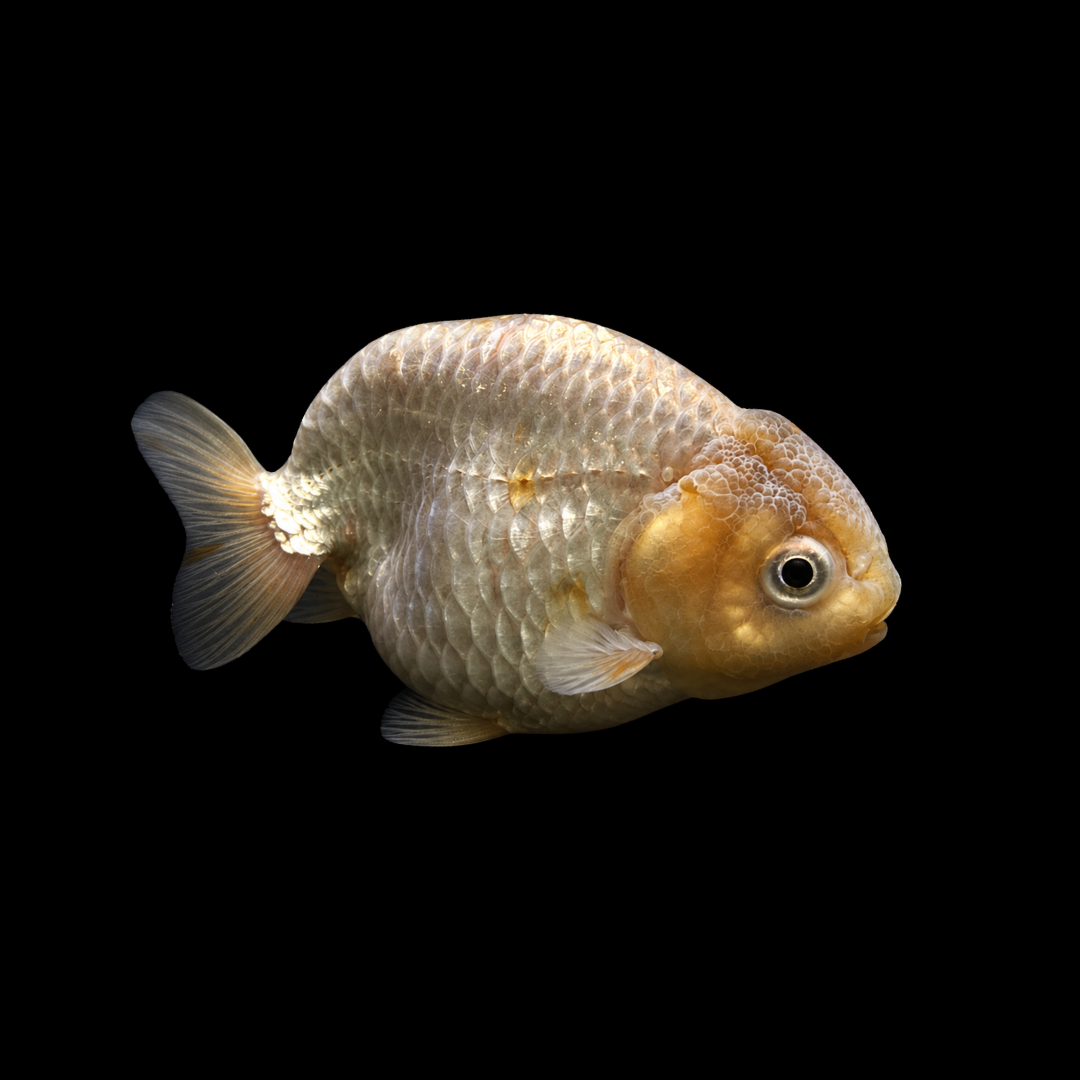
メノウランチュウは、背びれを持たない丸みのある体、発達する頭部の肉瘤、水平に開く尾というランチュウらしい姿に、青灰色や茶褐色、琥珀色などが複雑に重なる独特の体色を備えた金魚です。石英質の瑪瑙を思わせる渋く奥行きのある色合いが大きな魅力で、日本では主に中国産の個体が観賞魚として流通しています。色彩だけでなく、背なりや尾形、泳ぎのしなやかさを上から味わうランチュウ独特の鑑賞文化とも相性がよく、落ち着いた色調の中に一匹ごとの個性が強く現れます。 Menou Ranchu is a fancy goldfish variety combining the classic Ranchu form—no dorsal fin, a rounded body, developing head growth, and a horizontally spread tail—with distinctive blue-gray, brown, and amber-toned marbling. Its subdued yet deep pattern is reminiscent of agate, which is the origin of the Japanese name “Menou.” In Japan, specimens sold under this name are commonly imported from China. The variety is appreciated not only for color but also for the traditional Ranchu aesthetics of back contour, tail shape, and graceful movement when viewed from above.
基本情報 / Basic Information
| 学名 / Scientific Name | Carassius auratus |
|---|---|
| 通称 / Common Name | メノウランチュウ、瑪瑙らんちゅうMenou Ranchu |
| 分類 / Family | コイ目コイ科フナ属。キンギョのうち、背びれを欠くランチュウ系の改良品種Order Cypriniformes, family Cyprinidae, genus Carassius; a domesticated Ranchu-type goldfish variety lacking a dorsal fin |
| 英名 / English Name | Menou Ranchu |
| 分布 / Distribution | 自然分布を持たない改良品種。日本国内では中国産の個体が流通しています。基礎となるキンギョは、中国でフナ類から家畜化された観賞魚です。A domesticated ornamental variety with no natural wild distribution. In Japan, fish sold as Menou Ranchu are commonly imported from China. Goldfish were domesticated in China from crucian carp ancestors. |
| 最大体長 / Max Size | 成魚で15〜20cm前後が目安。系統、年齢、育成環境によっては20cmを超える個体もいます。Typically around 15–20 cm as an adult, although some individuals may exceed 20 cm depending on lineage, age, and rearing conditions. |
| 寿命 / Lifespan | メノウランチュウだけを対象にした寿命データは乏しく、一律の年数は示しにくい品種です。金魚全般では、適切な管理のもとで10年以上生きる個体もいるため、長期飼育を前提に環境を整えます。Variety-specific lifespan data for Menou Ranchu are limited, so a precise lifespan cannot be stated with confidence. Goldfish in general can live for more than 10 years under appropriate care, so long-term husbandry should be planned from the outset. |
飼育環境 / Aquarium Environment
| 水槽サイズ / Tank Size | 成魚1匹なら60cm規格水槽(約60Lクラス)を最低限の目安とし、余裕を持たせるなら60cmワイド水槽(製品により約90〜120Lクラス)以上がおすすめです。複数飼育では90cm規格水槽(約180Lクラス)以上を目安に、個体数とろ過能力に応じてさらに広い容器を選びます。上見を重視する場合は、水深20〜30cm程度を確保できる広いプラ舟や飼育池も適しています。For one adult, a standard 60 cm aquarium in the roughly 60 L class is a practical minimum, while a wider 60 cm tank—typically about 90–120 L depending on the model—offers more room. For several adults, a standard 90 cm aquarium in the roughly 180 L class or larger is preferable, adjusted to stocking level and filtration capacity. Wide tubs or ponds with a water depth of about 20–30 cm are also suitable for top-view Ranchu keeping. |
|---|---|
| 水温 / Temperature | 15〜28℃ほどの範囲で飼育できますが、室内では18〜25℃前後を急変させず安定させると管理しやすくなります。屋外で越冬させる場合は、季節変化に十分に馴化した健康な個体に限り、水温低下に合わせて給餌量を減らします。急激な水温変化は避けてください。 They can be kept across roughly 15–28°C, but indoor aquariums are easier to manage when maintained steadily around 18–25°C. Outdoor overwintering should only be attempted with healthy fish well acclimated to seasonal change, with feeding reduced as temperatures fall. Avoid abrupt temperature shifts. |
| 水質 / Water Quality | pH6.5〜7.5前後を目安に、急変のない安定した水質を維持します。アンモニアと亜硝酸は検出されない状態を保ち、硝酸塩も低く抑えます。金魚は排泄量が多いため、十分な生物ろ過と定期的な換水が重要です。Maintain stable water around pH 6.5–7.5 without sudden fluctuations. Ammonia and nitrite should remain undetectable, and nitrate should be kept low. Because goldfish produce a substantial waste load, adequate biological filtration and regular water changes are essential. |
| レイアウト / Layout | 広い遊泳面積を優先し、ベアタンクまたは細かく角のない底床を使います。肉瘤や体表を傷つける鋭い石や流木は避け、ろ過の吐出口は水流が強くなりすぎないよう調整します。スポンジフィルターや穏やかなエアレーションは相性がよく、上見では黒や濃色の容器が体色のコントラストを見やすくします。Prioritize open swimming space and use either a bare-bottom setup or smooth, fine substrate. Avoid sharp rocks and wood that could injure the head growth or body surface, and diffuse filter output to prevent excessive current. Sponge filtration and gentle aeration work well. Dark tubs or backgrounds can make the marbled coloration easier to appreciate from above. |
| 注意点 / Precautions | 丸く短い体型と背びれを欠く構造から、強い水流や深すぎる環境では泳ぎに余計な負担がかかることがあります。過密、急な水温変化、過剰給餌、水質悪化を避け、新しく迎えた個体は本水槽へ合流させる前に少なくとも2週間、可能なら3〜4週間ほど別容器で観察すると安心です。予防目的で薬剤を一律に使用するのではなく、症状や検査結果に応じて適切な治療を選びます。Their compact, rounded body and lack of a dorsal fin can make strong currents and overly demanding swimming conditions tiring. Avoid crowding, abrupt temperature changes, overfeeding, and deteriorating water quality. New fish are best observed in a separate quarantine container for at least two weeks and, when practical, for about three to four weeks before introduction. Routine preventive medication is not recommended; treatment should be selected according to symptoms and diagnosis. |
餌と給餌 / Feeding
| 餌の種類 / Diet | 金魚用の良質な沈下性ペレットを主食にし、ゲルフード、冷凍赤虫、ブラインシュリンプ、植物質を含む補助飼料などを組み合わせます。赤や茶褐色の発色を支える目的では、アスタキサンチンやスピルリナなどカロテノイド源を含む色揚げ飼料を補助的に利用できます。Use a high-quality sinking goldfish pellet as the staple diet, supplemented with gel foods, frozen bloodworms, brine shrimp, and feeds containing plant material. Color-enhancing foods containing carotenoid sources such as astaxanthin or spirulina may be used as a supplement to support red and brown tones. |
|---|---|
| 給餌のポイント / Feeding Tips | 一度に大量に与えず、短時間で食べ切れる量を少量ずつ与えます。成長期は状態を見ながら1日2〜数回に分けることもできますが、低水温時は消化が遅くなるため量と回数を減らします。浮力トラブルを起こしやすい個体では、沈下性や水分の多い餌を中心にし、水面で空気を飲み込みながら食べ続ける状況を避けると管理しやすくなります。Avoid large single meals and offer only what the fish can finish quickly. During active growth, food may be divided into two or several small meals per day, while both amount and frequency should be reduced in cool water as digestion slows. For fish prone to buoyancy problems, sinking or moisture-rich foods can be useful, while prolonged surface gulping during feeding should be avoided. |
性格と混泳 / Temperament and Tank Mates
| 性格 / Temperament | 基本的に温和で、他魚を積極的に攻撃する性質は強くありません。個体同士でゆっくりと群れるように泳ぎ、餌の時間には活発になります。泳ぎは細身の金魚より穏やかで、体型のよい個体ほど急流や激しい追い回しを苦手とします。Generally peaceful and not strongly aggressive toward other fish. They often move calmly with other goldfish and become more active at feeding time. Their swimming is slower than that of streamlined goldfish, and well-developed fancy individuals are poorly suited to strong currents or constant chasing. |
|---|---|
| 混泳の相性 / Compatibility | 同程度の大きさで泳ぎの速さが近いランチュウ、オランダ獅子頭、琉金などの丸手金魚とは比較的合わせやすい一方、コメットや和金のような俊敏な金魚とは餌競争で不利になることがあります。ヒレをつつく魚や極端に小さな魚との混泳は避けます。エビ類や小型の貝類は口に入るサイズだと食べられる可能性があります。産地や導入時期の異なる金魚を合わせる場合は、十分な期間の隔離観察を行ってから合流させてください。They are generally compatible with similarly sized, slow-swimming fancy goldfish such as Ranchu, Oranda, and Ryukin. Faster varieties such as Comets or common-type goldfish may outcompete them for food. Avoid fin-nipping species and very small fish. Shrimp and small snails may be eaten if they fit in the mouth. When mixing goldfish from different sources or purchase dates, allow an adequate quarantine and observation period before combining them. |
病気と対策 / Diseases and Prevention
| かかりやすい病気 / Common Diseases | 丸い体型の金魚では、一般に「転覆病」と呼ばれる浮力障害が起こりやすく、浮く、沈む、横倒しになる、逆さになるなどの症状が見られます。ただし原因は一つではなく、選択育種による体型と浮袋の位置・形態、給餌に伴う消化管の膨満や空気嚥下、水質や水温の不適切さ、感染症、臓器異常などが関与することがあります。ほかに白点病、エラの異常、細菌性の体表炎症、尾ぐされ、寄生虫症などにも注意します。Rounded fancy goldfish are predisposed to buoyancy disorders often loosely called “swim bladder disease,” with signs such as floating, sinking, rolling sideways, or turning upside down. There is no single cause; selectively bred body conformation and swim-bladder anatomy, digestive distension or air ingestion associated with feeding, unsuitable water conditions or temperature, infection, and internal-organ abnormalities may all contribute. Also watch for white spot disease, gill problems, bacterial skin disease, fin rot, and parasites. |
|---|---|
| 対策と予防 / Prevention | 最優先は水質の安定です。アンモニアと亜硝酸を測定し、適正な水温、十分な酸素量、過密を避けた飼育密度を維持します。浮力異常が出た場合は給餌をいったん控え、水質と水温を確認し、症状が続く場合や呼吸異常、出血、腫れなどを伴う場合は魚類を診られる獣医師へ相談します。塩水浴や抗菌薬、駆虫薬は原因によって必要性が異なるため、むやみに併用せず、薬剤ごとの用法用量と観賞魚への適用を確認して使用します。Stable water quality is the first line of prevention. Test ammonia and nitrite, maintain appropriate temperature and oxygenation, and avoid overcrowding. If abnormal buoyancy appears, pause feeding temporarily and check water quality and temperature. Persistent signs, breathing difficulty, bleeding, swelling, or other systemic symptoms warrant consultation with a veterinarian experienced in fish. Salt treatment, antibiotics, and antiparasitic drugs are condition-dependent and should not be combined indiscriminately; always follow product directions and confirm suitability for ornamental fish. |
増やし方(繁殖) / Breeding
| 雌雄の判別 / Sexing | 繁殖期のオスはエラぶたや胸びれの前縁に白い追星が現れ、メスを追尾する行動が目立ちます。メスは成熟すると腹部がふっくらし、産卵直前には総排泄口周辺がやや張り出します。繁殖期以外は外見だけでの判別が難しいことがあります。During the breeding season, males often develop white breeding tubercles on the gill covers and leading edges of the pectoral fins and actively chase females. Mature females become fuller in the abdomen and may show a more prominent vent shortly before spawning. Outside the breeding season, visual sexing can be difficult. |
|---|---|
| 繁殖形態 / Reproduction | 卵生で、水草や産卵藻、人工の産卵床などに粘着性のある卵を多数産み付けます。親魚には卵を保護する習性がなく、産卵後に卵を食べることがあるため、繁殖用容器では産卵後に親魚を分けて管理します。Oviparous. Females scatter many adhesive eggs onto aquatic plants, spawning mops, or artificial spawning media. The parents do not guard the eggs and may eat them, so breeders normally remove the adults after spawning. |
| 繁殖のポイント / Breeding Tips | 春の水温上昇が産卵のきっかけになりやすく、状態のよい親魚を別容器で十分に養成してから繁殖させます。孵化後は稚魚の成長に合わせて餌を切り替え、過密を避けながら育成します。メノウ色は体型、背なり、尾形、肉瘤と同時に選抜しなければならず、青灰色と茶褐色の模様も成長に伴って変化するため、狙った表現を安定して残すには世代を重ねた選別が必要です。Rising spring temperatures commonly stimulate spawning. Condition healthy brood fish well in a separate container before breeding. After hatching, adjust food to fry growth and prevent crowding. Breeding true-to-type Menou Ranchu is demanding because body shape, back contour, tail form, head growth, and marbled coloration must all be selected together, while blue-gray and brown patterning may continue to change as the fish grows. |
雑学と豆知識 / Trivia and Fun Facts
| 1. 「メノウ」という名が映す色の重なり / 1. Why the Name “Menou” Fits the Color | メノウランチュウを初めて見ると、赤でも黒でも青でもない、どこか鉱物的な色合いに目を奪われます。日本でいう「瑪瑙」は、さまざまな色の層や模様を持つ鉱物として親しまれてきました。この金魚も、青灰色の下地に茶褐色や琥珀色が重なり、一枚の色では説明できない奥行きを見せます。日本の流通名である「瑪瑙らんちゅう」は、単純な赤や青では表しにくい、複雑で鉱物的な色調を直感的に伝える名前でもあります。同じ品種名で流通していても模様の入り方は一匹ずつ異なり、その不均一さ自体が鑑賞価値になっています。At first glance, Menou Ranchu does not look simply red, black, or blue; its coloration has an almost mineral-like depth. The Japanese word menou means agate, a stone admired for layered and varied patterns. In the fish, a cool blue-gray foundation overlaps with warm brown and amber tones, creating a color that cannot be described as a single pigment. The Japanese trade name itself conveys a complex, mineral-like coloration that is difficult to reduce to a single hue. Even among fish sold under the same variety name, each individual develops a different pattern, and that irregularity is part of its appeal. |
|---|---|
| 2. 背びれのない曲線は遺伝学でも読み解かれている / 2. The Dorsal-Finless Shape Has a Genetic Story | ランチュウの滑らかな背中は、単に背びれが小さいのではなく、発生の過程から背びれを欠く体型として形成されます。研究では、Chordinの相同遺伝子であるchdSが、双尾だけでなく背びれ欠失の発現にも大きく関わることが実験的に示されています。一方で、背びれ欠失がchdSだけで完全に決まるわけではなく、安定した発現にはほかの遺伝要因も関与すると考えられています。つまり、上見で評価される「なめらかな背なり」は、長年の選抜によって固定されてきた複数の発生・遺伝要因が表れた形質として理解するのが適切です。The smooth back of a Ranchu reflects a body form in which the dorsal fin does not develop normally from early ontogeny. Experimental research has shown that chdS, a Chordin homolog, strongly influences both the twin-tail phenotype and expression of dorsal-fin loss. However, dorsal-fin absence is not explained by chdS alone; additional genetic factors are thought to contribute to its stable expression. The smooth back prized in top-view Ranchu is therefore best understood as a trait shaped by long-term selection acting on multiple developmental and genetic factors. |
| 3. 瑪瑙色は「一色」ではなく、色素胞の舞台 / 3. Menou Color Is a Stage of Multiple Pigment Cells | 魚の体色は、複数の色素細胞と光学的な反射が組み合わさって生まれます。金魚の皮膚にも黒色素胞、赤色素胞、黄色素胞、虹色素胞などがあり、その種類、密度、位置関係によって見える色が変わります。青灰色の見え方についても、単純に「青い色素がある」と考えるのではなく、黒色素胞や虹色素胞などの配置と光学的な効果を含む複合的な現象として捉えるのが適切です。ただし、メノウランチュウ特有の青灰色や茶褐色の模様を生む細胞配置や遺伝子の組み合わせは、品種単位ではまだ十分に解明されていません。そのため、成長に伴う色柄の変化には個体差が大きく、育種では長期的な選別が欠かせません。Fish coloration is produced by interactions among several pigment-cell types and optical reflection. Goldfish skin contains melanophores, erythrophores, xanthophores, and reflective iridophores, and visible color changes with their relative abundance and arrangement. Blue-gray coloration should not be reduced to the presence of a single “blue pigment”; it can involve the arrangement of dark and reflective chromatophores together with optical effects. The specific cellular arrangement and gene combinations responsible for Menou Ranchu marbling have not been established at the variety level, so color development can differ markedly among individuals as they mature. |
| 4. ランチュウは「横から見る魚」だけではない / 4. Ranchu Aesthetics Were Shaped by the Top View | 一般的な熱帯魚は正面や横から水槽越しに楽しむことが多いのに対し、ランチュウの世界では上から見た姿が大切にされてきました。背中の丸み、頭幅、尾筒の太さ、左右へ開く尾のバランス、そして泳ぐたびに尾がどのように返るかまでが一つの景色になります。三ツ尾、四ツ尾、さくら尾といった呼び分けも、単なる尾びれの枚数ではなく、尾芯の切れ込みや開き方を見分けるために磨かれてきた言葉です。メノウランチュウでは、この伝統的な造形の上に複雑な色面が乗るため、泳ぐたびに模様の見え方まで変化します。Most aquarium fish are enjoyed mainly from the side, but Ranchu culture places exceptional importance on the view from above. The curve of the back, width of the head, strength of the caudal peduncle, symmetry of the tail, and the way the tail moves through the water all become part of a single visual composition. Terms such as three-tail, four-tail, and sakura-tail were refined to describe the central split and spread of the caudal fin. In Menou Ranchu, the marbled color pattern adds another layer, so the visual impression changes with every movement. |
| 5. 色揚げは「色を作る」より「持っている色を支える」管理 / 5. Color Management Supports What the Fish Already Has | 金魚の赤や黄の発色には、餌から取り込むカロテノイドが関わります。そのため、アスタキサンチンやスピルリナなどを含む餌は暖色系の発色維持を助けます。一方、光量や背景色も魚の体色の見え方や色素細胞の反応に影響しますが、特定の照明を当てればメノウ色が必ず固定できるわけではありません。黒系の色素は成長とともに減少する個体もあり、一度大きく変化した色柄が同じ状態へ戻る保証はありません。色揚げとは新しい色を塗り足す技術ではなく、その個体が持つ遺伝的な色彩を、健康を崩さない範囲で引き出していく管理と考えると分かりやすいでしょう。Red and yellow coloration in goldfish is influenced by dietary carotenoids, so feeds containing ingredients such as astaxanthin or spirulina can help support warm tones. Light level and background also affect how body color appears and how pigment cells respond, but no particular lamp can guarantee that a Menou pattern will remain fixed. Dark pigmentation may decrease as some fish mature, and a substantially changed pattern cannot be assumed to return to its previous form. Color enhancement is best understood not as “painting on” new colors, but as supporting the expression of coloration the fish is genetically capable of producing while maintaining overall health. |
| 6. 中国の新色と日本の上見文化が出会った品種 / 6. A Meeting of Chinese Color Breeding and Japanese Ranchu Aesthetics | 現代の中国は大規模な金魚養殖と選別育種の一大拠点で、従来の赤白だけではない多彩な色変わりが次々に流通するようになりました。メノウランチュウは、その新しい色彩表現を、日本で長く磨かれてきたランチュウの体型美で受け止めたような存在です。青灰色と茶褐色の模様だけを見れば現代的ですが、評価される背なりや尾の開き、頭のつくりには古い鑑賞文化が息づいています。新しい色を楽しみながら、何世代もかけて形を選んできた金魚育種の歴史にも触れられるところが、この品種の奥深さです。Modern China is a major center of large-scale goldfish production and selective breeding, and many color forms beyond traditional red-and-white fish now enter the ornamental trade. Menou Ranchu can be seen as a meeting point between these newer color expressions and the body aesthetics of Ranchu refined in Japan over generations. The blue-gray and brown marbling feels contemporary, yet the qualities used to judge the back, tail spread, and head shape come from an older viewing tradition. The variety therefore offers both the excitement of new coloration and a connection to the long history of goldfish selection. |
まとめ / Conclusion
メノウランチュウは、青灰色と茶褐色が重なる静かな色彩と、背びれを持たないランチュウ独特の曲線美を同時に楽しめる金魚です。同じ名前で流通する個体でも模様、背なり、尾形、肉瘤の発達は一匹ずつ異なり、成長とともに表情が変わっていきます。その変化を観察する時間そのものが、この品種を飼う大きな楽しみになります。 Menou Ranchu combines quiet blue-gray and brown marbling with the distinctive dorsal-finless curves of the Ranchu form. Even fish sold under the same variety name differ in pattern, back contour, tail shape, and head growth, and their appearance continues to change as they mature. Watching those individual changes over time is one of the greatest pleasures of keeping this variety.
基本的な飼育はほかの金魚に準じますが、丸い体型ゆえに水質悪化、過剰給餌、急な温度変化、浮力障害には丁寧な配慮が必要です。広く穏やかな水環境、少量ずつの給餌、導入時の隔離観察を基本にすることで、渋い瑪瑙色とゆったりした泳ぎを長く楽しみやすくなります。派手さだけではなく、形と色の微妙な違いを見つめるほど魅力が深まる、育てながら味わいたい金魚です。 Its basic care follows that of other goldfish, but the compact Ranchu body calls for careful attention to water quality, overfeeding, sudden temperature changes, and buoyancy problems. A spacious, gentle environment, small controlled meals, and quarantine of new arrivals provide a sound foundation for long-term care. Menou Ranchu is a fish whose appeal deepens with observation—the more closely its subtle differences in form and color are appreciated, the more rewarding it becomes to raise.

気になる道具や飼い方を見つけてみませんか?
 アイのアクアグッズ案内水槽ライトの選び方|魚の見え方・水草・海水で選ぶおすすめ照明道具の特徴や使い方、選ぶときのポイントをアイが紹介します。記事はコチラ →
 アイのアクアグッズ案内水槽フィルターの選び方|外掛け・外部・上部から小型オーバーフローまで道具の特徴や使い方、選ぶときのポイントをアイが紹介します。記事はコチラ →
さまざまな飼育テーマをご紹介。リンク先の記事には広告・商品紹介が含まれます。
案内・紹介記事一覧へ →分布マップ
メノウランチュウ(学名:Carassius auratus)は自然分布を持たない改良品種です。 基礎となるキンギョは中国でフナ類から家畜化され、日本ではメノウランチュウとして中国産の個体が流通しています。 そのため、下の地図では中国全体を由来・流通地域の概略範囲として表示しています。
※この地図は分布欄の記述をもとにした概略表示です。メノウランチュウには自然分布がないため、マーカーは中国内の代表地点として便宜的に設定したものであり、実際の採集地点・原産地点を示すものではありません。
参考文献
-
Froese, R. & Pauly, D. (eds.). FishBase. Carassius auratus (Linnaeus, 1758). 分類、分布、生息環境、食性、繁殖に関する種情報。
https://fishbase.org/summary/Carassius-auratus.html -
Chen, D., Zhang, Q., Tang, W. et al. (2020). The evolutionary origin and domestication history of goldfish (Carassius auratus). Proceedings of the National Academy of Sciences, 117(47), 29775–29785. 金魚の起源、家畜化、改良品種群の遺伝的背景に関する研究。
https://doi.org/10.1073/pnas.2005545117 -
RSPCA Australia. How should I care for my goldfish? 金魚の水槽容量、水温、水質、ろ過、給餌、丸手金魚の浮力トラブルへの配慮など、家庭飼育に関する福祉・管理指針。
https://kb.rspca.org.au/categories/companion-animals/fish/how-should-i-care-for-my-goldfish -
Petty, B. D., Francis-Floyd, R. & Yanong, R. P. E. MSD Veterinary Manual. Management of Aquarium Fish. 観賞魚の水質管理、治療方針、隔離・検疫、バイオセキュリティに関する獣医学的資料。
https://www.msdvetmanual.com/exotic-and-laboratory-animals/aquarium-fish/management-of-aquarium-fish -
FishBase. Reproduction of Carassius auratus. 産卵様式、粘着卵、産卵基質、親による保護を行わない繁殖形態などに関する種情報。
https://www.fishbase.se/Reproduction/271 -
Tanaka, D., Wada, S. & Hatai, K. (1998). Gross, Radiological and Anatomical Findings of Goldfish with Tenpuku Disease. Aquaculture Science, 46(2), 293–299. 丸い体型の金魚にみられる転覆症状と鰾の形態・位置関係を検討した研究。
https://doi.org/10.11233/aquaculturesci1953.46.293 -
Petty, B. D., Francis-Floyd, R. & Yanong, R. P. E. MSD Veterinary Manual. Bacterial Diseases of Fish. 観賞魚の細菌性疾患と、水質悪化、過密、輸送、急な温度変化などの発症リスクに関する獣医学的資料。
https://www.msdvetmanual.com/exotic-and-laboratory-animals/aquarium-fish/bacterial-diseases-of-fish




コメント