

解説 / Description
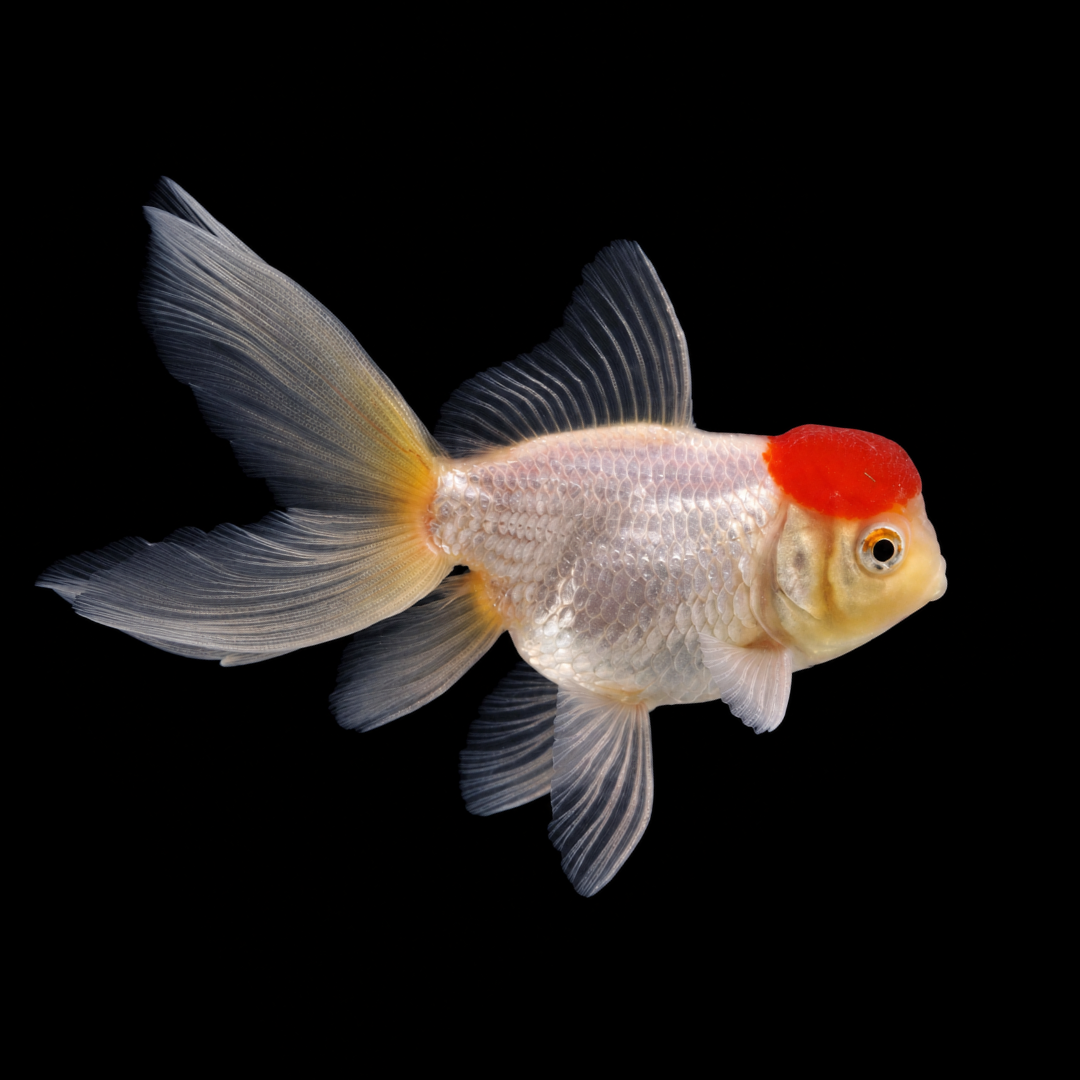
丹頂は、真珠のような白い体と、頭頂部だけに鮮やかな赤色を残した肉瘤が印象的な金魚です。オランダ獅子頭の体型を基礎に持ち、背びれを備えた丸みのある胴体と、ゆったり広がる双尾を組み合わせた優雅な姿が魅力です。日本では赤い頭部と白い体の配色が丹頂鶴を思わせることから「丹頂」と呼ばれ、英語圏ではRedcap Orandaとして親しまれています。見た目は華やかですが、遊泳力はそれほど高くなく、排泄量も多いため、十分な水量と強力なろ過、急変の少ない安定した水質を用意することが長期飼育の基本になります。 The Redcap Oranda is a fancy goldfish distinguished by a pearl-white body and a vivid red head growth confined mainly to the crown. It inherits the classic Oranda body form, combining a rounded body, a dorsal fin, and an elegant double tail that opens broadly in the water. In Japan, the red-and-white pattern evokes the red-crowned crane, giving rise to the name “Tancho,” while the variety is widely known in English as the Redcap Oranda. Despite its ornate appearance, it is not a powerful swimmer and produces substantial waste, so long-term care depends on generous water volume, efficient biological filtration, and stable water conditions with minimal sudden changes.
基本情報 / Basic Information
| 学名 / Scientific Name | Carassius auratus(domesticated variety; Redcap Oranda) |
|---|---|
| 通称 / Common Name | 丹頂、丹頂オランダ、レッドキャップ・オランダRedcap Oranda, Red Cap Oranda Goldfish |
| 分類 / Family | コイ目・コイ科・フナ属。オランダ獅子頭系に属する金魚の一品種Order Cypriniformes, family Cyprinidae, genus Carassius; a domesticated goldfish variety of the Oranda group |
| 英名 / English Name | Redcap Oranda / Red Cap Oranda Goldfish |
| 分布 / Distribution | 野生分布を持つ自然種ではなく、東アジアで長く改良されてきた金魚の一品種です。現在は日本、中国をはじめ世界各地で飼育・流通しています。This is a domesticated ornamental variety rather than a naturally occurring wild form. It developed through long-term selective breeding in East Asia and is now kept and traded throughout Japan, China, and many other regions of the world. |
| 最大体長 / Max Size | 一般的には15〜20cmほど。系統や飼育環境によっては25cm前後に達する大型個体もいます。Commonly around 15–20 cm, although large individuals from robust lines may approach about 25 cm under spacious, well-managed conditions. |
| 寿命 / Lifespan | 目安は10〜15年ほど。水量、水質、栄養、病気予防を良好に維持できれば、それ以上の長期飼育例もあります。A practical expectation is around 10–15 years. With excellent water quality, nutrition, space, and disease prevention, some individuals can live considerably longer. |
飼育環境 / Aquarium Environment
| 水槽サイズ / Tank Size | 成魚1匹を長期飼育する場合でも、60cm規格水槽(約57L)以上を実用的な最低ラインとして考えると管理しやすくなります。複数飼育や大型化する個体では、90cm規格水槽(約180L)前後、またはそれ以上の水量を確保するとより安定します。丹頂は成長すると体格が大きくなり排泄量も増えるため、小型容器ではなく、十分な水量と遊泳スペースを優先してください。For long-term care of a single adult, a standard 60 cm aquarium of roughly 57 L should be regarded as a practical minimum. For multiple fish or especially large individuals, a standard 90 cm aquarium of roughly 180 L or more provides greater stability. As Redcap Orandas grow, their body mass and waste production increase, so adequate water volume and swimming space should take priority over compact display containers. |
|---|---|
| 水温 / Temperature | 18〜24℃を中心に安定させると飼育しやすいです。より広い温度域に耐える金魚ですが、短時間での急激な変化は消化や免疫に負担をかけます。特に季節の変わり目は、必要に応じてヒーターを利用して日内変動を抑えます。 A stable range centered around 18–24°C is easy to manage. Goldfish can tolerate a broader range, but rapid temperature swings can stress digestion and immune function. During seasonal transitions, a heater can be used when necessary to reduce sharp daily fluctuations. |
| 水質 / Water Quality | pH6.0〜8.0程度の範囲で、急変の少ない水質が適しています。硬度の許容幅は比較的広いため、特定の数値に合わせることより、導入時や換水時に急な変化を起こさないことが重要です。アンモニアと亜硝酸は検出されない状態を維持し、硝酸塩を高濃度に蓄積させないよう、十分に機能した生物ろ過と定期換水で管理します。A stable pH of roughly 6.0–8.0 is suitable. Goldfish tolerate a fairly broad range of hardness, so avoiding abrupt changes during introduction and water changes is more important than chasing a precise hardness value. Ammonia and nitrite should remain undetectable, and nitrate should not be allowed to accumulate to high levels. Mature biological filtration and regular water changes are essential. |
| レイアウト / Layout | 中央に広い遊泳スペースを残し、底床は細かな砂利や砂など、口やヒレを傷つけにくい素材を選びます。肉瘤と長いヒレを傷つけやすいため、尖った石や枝状流木、狭い隙間のある装飾は避けます。ろ過能力は高く確保しつつ、吐出口を壁面に当てるなどして強すぎる直線的な水流を弱めると泳ぎやすくなります。Leave a broad central swimming area and use fine gravel or sand that is unlikely to injure the mouth or fins. Because the head growth and flowing fins are easily damaged, avoid sharp rocks, branching driftwood, and narrow gaps in decorations. Maintain strong filtration capacity while diffusing the outlet flow against the glass or otherwise preventing an excessively forceful current. |
| 注意点 / Precautions | 金魚は排泄量が多く、見た目以上に水を汚します。過密飼育を避け、週1回を基本に全体の20〜30%程度を目安として水質に応じた換水を行います。新しい個体は別容器で健康状態を確認してから導入すると感染症の持ち込みを減らせます。また、肉瘤が大きく発達して視界を妨げる個体では、餌を見つけにくくなることがあります。肉瘤の外科的な処置が必要な場合は、自己流で切除せず、魚類を診療できる獣医師など専門家に相談してください。Goldfish produce heavy waste loads and can foul water faster than their appearance suggests. Avoid crowding and, as a starting point, change roughly 20–30% of the water weekly while adjusting the schedule to actual water-test results. Quarantining new fish before introduction reduces the chance of importing infectious disease. In fish with very large head growths, vision may become obstructed and feeding can become difficult. If surgical trimming is ever considered, it should not be attempted casually at home and should be discussed with a veterinarian or other qualified fish-health professional. |
餌と給餌 / Feeding
| 餌の種類 / Diet | 主食には金魚用の高品質な沈下性ペレットやゲルフードが使いやすく、補助的に冷凍アカムシ、ブラインシュリンプ、ミジンコ類、加熱して柔らかくした葉物野菜などを組み合わせます。頭部の赤色維持を目的とした色揚げ飼料には、アスタキサンチンやスピルリナなどを配合した製品がありますが、色揚げだけに偏らず、消化性と栄養バランスを優先します。High-quality sinking goldfish pellets or gel foods are suitable staples. Frozen bloodworms, brine shrimp, small daphnia-type foods, and softened cooked leafy vegetables can be added as supplements. Color-enhancing diets may contain astaxanthin, spirulina, or related carotenoid sources, but digestive suitability and overall nutritional balance should take priority over color enhancement alone. |
|---|---|
| 給餌のポイント / Feeding Tips | 1日1〜2回を目安に、短時間で食べ切れる少量を与えます。低水温期は摂餌量や消化状態を見ながら量と回数を控えめにします。オランダや琉金などの丸手の金魚では、浮上性の餌とともに空気を飲み込むことが浮力トラブルにつながる場合があるため、症状が出やすい個体では沈下性やゲル状の餌が扱いやすいです。残餌は速やかに取り除き、水質悪化を防ぎます。Feed small portions once or twice daily, offering only what can be eaten promptly. In cooler water, adjust both portion size and frequency according to appetite and digestion. In rounded fancy goldfish such as Orandas and Ryukins, swallowing air while feeding at the surface can contribute to buoyancy problems, so sinking or gel diets may be easier to manage in affected individuals. Remove uneaten food promptly to prevent deterioration of water quality. |
性格と混泳 / Temperament and Tank Mates
| 性格 / Temperament | 基本的には穏やかで、人に慣れると前面に寄ってくる個体も多い親しみやすい金魚です。争いは比較的少ない一方、丸い体と長いヒレ、発達した肉瘤のため遊泳は俊敏ではありません。Generally peaceful and personable, many individuals learn to approach the front of the aquarium when people are nearby. Aggression is usually limited, but the rounded body, long fins, and developed head growth make the Redcap Oranda a relatively slow swimmer. |
|---|---|
| 混泳の相性 / Compatibility | 同じオランダ獅子頭、琉金、東錦など、泳ぐ速さと給餌ペースが近い丸手の金魚同士が合わせやすいです。和金、コメットなど非常に泳ぎの速い金魚とは、餌の競争で不利になることがあります。ヒレをつつく魚、大型の肉食魚、高水温を常時必要とする熱帯魚との混泳は避けます。体格差が大きい場合も、小さい個体が餌を取り負けないか注意します。Compatibility is best with similarly paced fancy goldfish such as other Orandas, Ryukins, and related rounded-bodied varieties. Very fast goldfish such as common goldfish or Comets may outcompete them at feeding time. Avoid fin-nipping species, large predatory fish, and tropical species that require permanently high temperatures. When there is a large size difference, monitor smaller fish carefully to ensure they receive enough food. |
病気と対策 / Diseases and Prevention
| かかりやすい病気 / Common Diseases | 丸みの強い体型では、浮く・沈む・姿勢が保てないといった転覆症状がみられることがあります。ほかに白点病、尾ぐされ病、細菌性の皮膚炎や鰓障害など、一般的な金魚の病気にも注意が必要です。流通や多頭飼育では、Cyprinid herpesvirus 2(CyHV-2)による疱疹ウイルス性造血器壊死症も重要な感染症で、急な大量死を伴うことがあります。Rounded-bodied fancy goldfish may develop buoyancy disorders in which they float, sink, or struggle to maintain normal posture. They are also susceptible to common goldfish problems such as white spot disease, fin rot, bacterial skin infections, and gill disease. In collections and commercial movement, Cyprinid herpesvirus 2 (CyHV-2), which causes herpesviral hematopoietic necrosis, is an important infectious threat and can be associated with rapid, severe losses. |
|---|---|
| 対策と予防 / Prevention | 最も重要なのは、アンモニアと亜硝酸を蓄積させない水質管理、急激な温度変化の回避、過密防止、そして新規導入魚の隔離観察です。転覆症状は、空気の飲み込み、体型、浮き袋や消化管などの状態が関係して起こることがあり、外見だけで原因を決めつけないことが大切です。まず水質と給餌内容を確認し、症状が続く場合は自己判断で薬浴や塩類浴を重ねず、原因に応じた対応を検討します。重症例、急速な悪化、体表の潰瘍、呼吸異常、多数個体への連続発症では、早めに魚類診療に対応する専門家へ相談します。The most effective prevention is consistent water quality with no measurable ammonia or nitrite, avoidance of abrupt temperature changes, low stocking pressure, and quarantine of newly acquired fish. Buoyancy disorders can involve swallowed air, body conformation, and the condition of the gas bladder or digestive tract, so the cause should not be assumed from appearance alone. Check water quality and feeding practices first, and avoid repeatedly applying medications or salt-based treatments without a clear reason. Severe disease, rapid deterioration, ulcers, respiratory distress, or repeated cases affecting multiple fish warrant prompt consultation with a qualified aquatic-animal health professional. |
増やし方(繁殖) / Breeding
| 雌雄の判別 / Sexing | 繁殖期の雄は、鰓ぶたや胸びれ前縁に白い追星が現れやすく、雌を追尾する行動も目立ちます。成熟した雌は腹部がふっくらし、産卵前には左右差を伴って張ることがあります。繁殖期以外は外見だけで確実に判別するのが難しい個体も少なくありません。During the breeding season, males often develop small white breeding tubercles on the gill covers and leading edges of the pectoral fins, and they may actively chase females. Mature females tend to develop a fuller abdomen, which may become noticeably distended before spawning. Outside the breeding season, reliable visual sexing can be difficult. |
|---|---|
| 繁殖形態 / Reproduction | 卵生で体外受精を行います。春先など水温が上がる時期に繁殖行動が起こりやすく、明け方に雄が雌を追い、雌は水草や人工産卵床へ多数の粘着性卵を産み付けます。産卵数は親魚の大きさや状態によって大きく変わり、数百個以上になることもあります。Redcap Orandas are egg-layers with external fertilization. Spawning commonly occurs as temperatures rise in spring. Around dawn, males chase females, which release numerous adhesive eggs onto plants or artificial spawning media. Egg numbers vary greatly with the size and condition of the female and may reach several hundred or more. |
| 繁殖のポイント / Breeding Tips | 親魚を十分に栄養管理したうえで、冬から春へ向かう緩やかな水温上昇を再現すると繁殖のきっかけを作りやすくなります。産卵後は親魚が卵を食べるため、親か産卵床を分けます。水温20℃前後では数日で孵化し、孵化直後は卵黄嚢を吸収してから遊泳を始めます。初期餌料にはインフゾリアなどの微小餌料を用い、成長に合わせてブラインシュリンプ幼生へ移行します。丹頂らしい赤い頭部、白い胴体、整った双尾、背びれ、体型を揃えるには多くの稚魚からの継続的な選別が必要です。Condition the parent fish well and reproduce a gradual winter-to-spring rise in temperature to encourage spawning. Because adults may eat their own eggs, remove either the parents or the spawning medium after spawning. At around 20°C, hatching usually occurs within several days; the fry then absorb their yolk reserves before becoming free-swimming. Begin with very small foods such as infusoria and transition to newly hatched brine shrimp as the fry grow. Producing the classic Redcap pattern, clean white body, balanced double tail, dorsal fin, and desirable body shape requires repeated selection from a large number of juveniles. |
雑学と豆知識 / Trivia and Fun Facts
| 1. 「丹頂」という名に重なる東アジアの美意識 / 1. The East Asian Aesthetic Behind the Name “Tancho” | 中国では、頭部が赤いこの系統は「紅頭」や「鶴頂紅」などの名で知られています。日本では、白い体と赤い頭部の配色が丹頂鶴を連想させることから「丹頂」と呼ばれるようになりました。英語圏のRedcap Orandaは、外見をそのまま「赤い帽子をかぶったオランダ」と表した名称です。同じ特徴を、鶴の姿に重ねる日本語名と帽子にたとえる英名で表している点に、観賞魚の呼び名らしい文化の違いが感じられます。In China, red-headed forms of this goldfish are known by names such as Hongtou and Hedinghong. In Japan, the white body and red crown evoke the red-crowned crane, giving rise to the name “Tancho.” The English name Redcap Oranda is more literal, describing the fish as an Oranda wearing a red cap. The different names show how the same ornamental feature can be interpreted through different cultural images. |
|---|---|
| 2. 金魚の丹頂と錦鯉の丹頂は、同じ名前でも別物 / 2. Redcap Oranda and Tancho Koi Share a Name, Not the Same Trait | 観賞魚の世界では、錦鯉にも「丹頂」という言葉があります。しかし金魚の丹頂は、オランダ獅子頭型の体形と赤い肉瘤を特徴として選抜されてきた品種です。一方、錦鯉の丹頂は独立した品種名というより、紅白・大正三色・昭和三色などで頭部に一つの緋斑を持つ個体を表す呼称として使われます。金魚では立体的な肉瘤が赤い冠を作るのに対し、錦鯉では平滑な皮膚上の色斑が評価の中心です。同じ「丹頂」という名でも、指している形質は異なります。The word “Tancho” is also used in the koi world, but it refers to a different ornamental feature. The Redcap Oranda is a goldfish variety selected for an Oranda-type body and a red head growth. In koi, Tancho is generally a designation for fish such as Kohaku, Taisho Sanshoku, or Showa Sanshoku that carry a single red marking on the head rather than the name of a separate breed. The goldfish therefore presents a raised red crown, whereas the koi is evaluated for a flat red marking on the skin. |
| 3. 四ツ尾の背景には、発生を変えた1つの遺伝的変化がある / 3. A Developmental Mutation Lies Behind the Double Tail | 丹頂を含む多くの丸手金魚に見られる双尾は、単に尾びれの先だけが二つに分かれたものではありません。胚の時期に体の背側と腹側を作り分ける仕組みに関わるchordin遺伝子の変化が、尾部の骨格そのものを左右しています。現代の双尾金魚では、chdS(旧称chdA)のE127Xという変異が共通して見つかっています。2024年のゲノム編集と交配による研究では、同じ遺伝子に別の機能喪失変異を起こしても双尾が生じ得ることが示されました。つまりE127Xだけが双尾を作れるわけではなく、育種の歴史の中でこの一つの変異が選ばれ、受け継がれてきたと考えられます。The double tail seen in many fancy goldfish, including the Redcap Oranda, is more than a fin that simply splits at the tip. Chordin is involved in the embryonic patterning that distinguishes the dorsal and ventral sides of the body, and changes in this pathway can alter the caudal skeleton itself. Modern twin-tail goldfish share an E127X mutation in chdS, formerly called chdA. A 2024 genome-editing and crossing study showed that other loss-of-function mutations in the same gene can also produce viable twin tails. This means E127X is not the only mutation capable of creating the form; rather, it appears to be the particular allele that was retained through the history of goldfish breeding. |
| 4. 赤い肉瘤は「脂肪のこぶ」ではなく、複雑な皮膚組織 / 4. The Red Head Growth Is Complex Skin Tissue, Not a Simple Fatty Lump | 丹頂の象徴である肉瘤は、英語ではwenやhoodと呼ばれます。オランダ系の肉瘤を対象とした近年の研究では、肉瘤は複数の組織層からなり、主にコラーゲンの蓄積と上皮細胞の増殖によって隆起が形成されることが示されています。2025年に報告された研究では、アラキドン酸代謝やTNFシグナル伝達の変化も、こうした組織形成と関連していました。つまり肉瘤は単純な脂肪の塊ではなく、皮膚組織が特徴的に増殖・線維化した複雑な構造として理解されつつあります。ただし、この研究結果がすべての肉瘤系統に同じように当てはまるかは、今後の検証が必要です。The signature head growth of the Redcap Oranda is often called a wen or hood. Recent research on Oranda-type hoods shows that the structure consists of multiple tissue layers and that its protrusions are formed largely through collagen accumulation and epithelial-cell proliferation. A 2025 study also linked changes in arachidonic-acid metabolism and TNF signaling with this tissue development. In practical terms, the wen is not a simple fatty lump but a complex form of skin overgrowth and fibrosis. The researchers also noted that further work is needed to determine whether the same mechanism applies equally to every hood-bearing goldfish strain. |
| 5. 頭の赤は「餌だけ」では作れない / 5. Diet Supports the Red Cap, but Cannot Create It Alone | 赤い頭部の発色にはカロテノイド系色素が関わり、金魚はそれらを餌から取り込んで体内で利用します。そのため、アスタキサンチンなどを含む飼料は赤みの維持を助けることがあります。ただし、丹頂らしい「頭だけが赤く、胴体は白い」という色分けは、餌を変えれば自由に作れるものではありません。どこに色素細胞が残るかという遺伝的な素質、成長に伴う転色、光環境、ストレス、水質などが重なって最終的な模様が決まります。色揚げ飼料は仕上げを支える道具であって、血統そのものを置き換えるものではありません。Carotenoid pigments contribute to the red coloration of the head, and goldfish must obtain these compounds through the diet before modifying and depositing them in pigment cells. Foods containing astaxanthin and related pigments can therefore support red coloration. However, the classic pattern of a red head on an otherwise white fish cannot be created simply by changing food. Genetic predisposition determines where pigment cells remain, while age-related color change, lighting, stress, and water quality all influence the final appearance. Color-enhancing food can support the finish, but it cannot replace the inherited pattern. |
| 6. 肉瘤は若魚の時点で完成しているわけではない / 6. The Wen Continues to Change Long After the Juvenile Stage | 丹頂の稚魚は、最初から成魚のような赤い冠を完成させているわけではありません。肉瘤の発達には系統差と個体差があり、若魚期から徐々に目立つようになり、その後も成長に伴って厚みや輪郭が変化します。そのため、若い個体の時点で将来の肉瘤の形を完全に予測することは困難です。同じ「丹頂」という名前でも、肉瘤の量感や輪郭には個体ごとの違いがあり、時間をかけて姿が変わっていくことも、この品種を飼育する魅力の一つです。Redcap Oranda fry are not born with the fully developed crown seen in mature fish. Wen development varies among bloodlines and individuals, becoming more apparent during the juvenile stage and continuing to change in thickness and outline as the fish grows. For that reason, the final shape of the wen cannot be predicted with certainty from a young fish alone. Even within the same named variety, individual differences in the volume and outline of the wen make long-term development part of the appeal of keeping Redcap Orandas. |
| 7. 日本の金魚流通を支えてきた埼玉・加須 / 7. Kazo, Saitama, and the Distribution of Japanese Goldfish | 埼玉県加須市周辺は、丹頂を含む金魚の生産や研究、品評、流通と深く関わってきた地域です。現在も加須市には埼玉県水産研究所と水産流通センターがあり、県内では金魚を含む観賞魚の養殖や育種研究が続けられています。品評では、赤い頭部だけを見るのではなく、肉瘤の形、白地の状態、体型、尾の開き、泳ぎなどを含めて全体の調和が見られます。家庭の水槽で泳ぐ一匹の丹頂にも、長年にわたる生産者の選別と観賞魚文化の積み重ねが反映されています。The area around Kazo in Saitama Prefecture has long been closely associated with goldfish production, research, exhibitions, and distribution, including varieties such as the Redcap Oranda. Kazo is home to the Saitama Fisheries Research Institute and a fisheries distribution center, while breeding and research on ornamental fish continue in the prefecture. Evaluation of fancy goldfish considers more than the red crown alone; the shape of the wen, condition of the white body, body balance, tail spread, and swimming quality all contribute to the overall impression. A Redcap Oranda in a home aquarium therefore reflects a much longer culture of selective breeding and ornamental-fish appreciation. |
| 8. 肉瘤の白い「小窓」は、病変とは限らない / 8. A Pale “Window” in the Wen Is Not Always Disease | 赤い肉瘤の一部に白い抜けが現れる個体があり、愛好家の間では「小窓」と呼ばれることがあります。均一な赤い冠を理想とする観賞上の評価では好みが分かれますが、色素の分布による個体差であれば、それ自体が健康障害を意味するわけではありません。ただし、白い部分が急に広がる、表面がただれる、綿状の付着物が出る、出血や悪臭を伴うといった変化は、単なる模様とは区別する必要があります。丹頂では「色の変化」と「組織の異常」を見分ける観察眼も、長く付き合ううえで大切になります。Some Redcap Orandas develop pale patches within the red wen, sometimes called small “windows” by hobbyists. From a show perspective, opinions differ because a uniformly red cap is often preferred, but a stable pigment gap by itself does not necessarily indicate a health problem. In contrast, a rapidly expanding white area, ulceration, cotton-like growth, bleeding, or foul-smelling tissue should be treated as a possible disease process rather than normal pattern variation. Keeping this variety successfully therefore involves learning to distinguish harmless color change from genuine tissue damage. |
まとめ / Conclusion
丹頂は、白い体に赤い冠という明快な色彩に加え、丸みのある体型、優雅な双尾、成長とともに表情を変える肉瘤まで楽しめる金魚です。長い選択育種によって受け継がれてきた姿には、双尾の発生や肉瘤の組織形成といった生物学的な特徴も重なっており、見た目の美しさと生き物としての奥深さをあわせ持っています。 The Redcap Oranda offers more than a simple red-and-white color contrast. Its rounded body, flowing double tail, and gradually changing head growth give the fish an appearance that continues to develop over time. These traits have been carried forward through long-term selective breeding and are also linked to distinctive biology, including the development of the twin tail and the tissue structure of the wen.
その一方で、丸みのある体と発達した肉瘤を持つ丹頂には、強すぎない水流と十分な水量、安定したろ過、無理のない給餌、日々の観察が欠かせません。ゆったりとした泳ぎに合わせて環境を整え、体調の小さな変化を見守りながら育てることで、赤い頭部と白い体のコントラストを長く楽しめる存在になります。 At the same time, the rounded body and developed wen make the Redcap Oranda poorly suited to strong currents or cramped conditions. Adequate water volume, stable filtration, moderate feeding, and daily observation are essential. When the aquarium is arranged around its unhurried swimming style and small changes in condition are noticed early, the contrast between the red crown and white body can remain an enduring part of the fish’s appeal.

気になる道具や飼い方を見つけてみませんか?
 アイのアクアグッズ案内水槽ライトの選び方|魚の見え方・水草・海水で選ぶおすすめ照明道具の特徴や使い方、選ぶときのポイントをアイが紹介します。記事はコチラ →
 アイのアクアグッズ案内お魚を撮ったのに、ボクが写ってる! スマホで楽しむ水槽撮影と便利な道具道具の特徴や使い方、選ぶときのポイントをアイが紹介します。記事はコチラ →
さまざまな飼育テーマをご紹介。リンク先の記事には広告・商品紹介が含まれます。
案内・紹介記事一覧へ →分布マップ
Carassius auratus の丹頂は野生分布を持つ自然種ではなく、東アジアで長く改良されてきた金魚の一品種です。現在は日本、中国をはじめ世界各地で飼育・流通しているため、地図では世界的な分布を概略表示しています。
※この地図は記事中の分布情報をもとにした概略表示です。マーカーは東アジアを示すために設定した代表地点であり、実際の採集地点・産地・特定個体の所在地を示すものではありません。
参考文献
-
Fricke, R., Eschmeyer, W. N. & Van der Laan, R. (eds.). Eschmeyer's Catalog of Fishes: Carassius auratus (Linnaeus, 1758). California Academy of Sciences. Online version, updated 13 Aug. 2026.
主な対応項目:学名、分類、原種としての分布、生息環境https://researcharchive.calacademy.org/research/ichthyology/catalog/fishcatget.asp?spid=2009
-
Froese, R. & Pauly, D. (eds.). FishBase: Carassius auratus (Goldfish).
主な対応項目:分類、生息環境、水質範囲、体長、繁殖生態、粘着性卵https://www.fishbase.se/summary/Carassius-auratus.html
-
Royal Society for the Prevention of Cruelty to Animals (RSPCA). Choosing an Aquarium for Pet Fish.
主な対応項目:水槽サイズ、水量の安定性、過密防止、金魚の飼育スペースhttps://www.rspca.org.uk/adviceandwelfare/pets/fish/environment
-
Petty, B. D., Francis-Floyd, R. & Yanong, R. P. E. Management of Aquarium Fish. MSD Veterinary Manual. Updated Jun. 2026.
主な対応項目:水質管理、生物ろ過、アンモニア・亜硝酸対策、検疫、感染症予防https://www.msdvetmanual.com/exotic-and-laboratory-animals/aquarium-fish/management-of-aquarium-fish
-
Petty, B. D., Francis-Floyd, R. & Yanong, R. P. E. Parasitic Diseases of Fish. MSD Veterinary Manual. Updated Jun. 2026.
主な対応項目:白点病(Ichthyophthirius multifiliis)、鰓・皮膚・ヒレの寄生虫性疾患https://www.msdvetmanual.com/exotic-and-laboratory-animals/aquarium-fish/parasitic-diseases-of-fish
-
Petty, B. D., Francis-Floyd, R. & Yanong, R. P. E. Bacterial Diseases of Fish. MSD Veterinary Manual. Reviewed May 2022; updated Sept. 2024.
主な対応項目:細菌性皮膚炎、潰瘍性病変、鰓を含む細菌感染、水質悪化や過密などの発症要因https://www.msdvetmanual.com/exotic-and-laboratory-animals/aquarium-fish/bacterial-diseases-of-fish
-
Canadian Veterinary Medical Association. Swim Bladder Problems in Goldfish. 24 Oct. 2012.
主な対応項目:丸手の金魚にみられる浮力異常、複数要因による転覆症状、給餌と飼育環境上の注意https://www.canadianveterinarians.net/related-resources/swim-bladder-problems-in-goldfish/
-
Goodwin, A. E., Sadler, J., Merry, G. E. & Marecaux, E. N. Herpesviral haematopoietic necrosis virus (CyHV-2) infection: case studies from commercial goldfish farms. Journal of Fish Diseases. 2009;32(3):271-278. doi:10.1111/j.1365-2761.2008.00988.x.
主な対応項目:CyHV-2、金魚の疱疹ウイルス性造血器壊死症、保有魚と発症リスクhttps://pubmed.ncbi.nlm.nih.gov/19309419/




コメント