

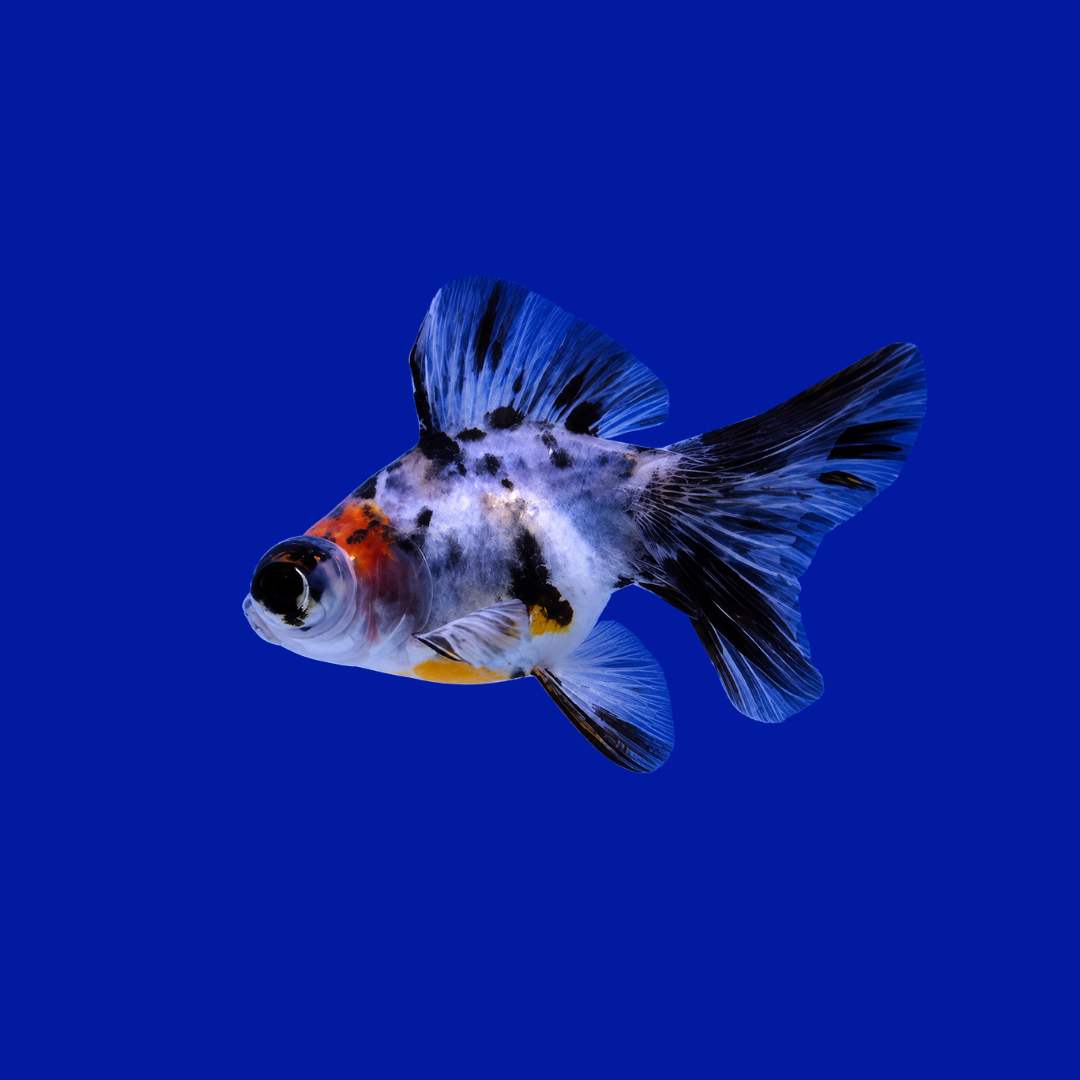
解説 / Description
キャリコ蝶尾は、金魚の中でも「上から見たときの美しさ」が際立つ観賞品種です。上見では、左右へ大きく張り出した尾びれが蝶の翅を広げたような輪郭をつくります。そこに出目金系統の突出した眼と、赤・橙・黒・白・浅葱色が入り混じるキャリコ模様が重なり、一尾ごとに異なる表情が生まれます。浅葱は単一の青色色素だけで生じる色ではなく、透明感のある鱗、皮膚の下の色素細胞、光の反射や散乱が組み合わさって見える複雑な色彩です。華やかな外見に対して泳ぎは速くないため、十分な遊泳スペースと穏やかな水流、眼を傷つけにくい安全なレイアウトを整えることが長期飼育の基本になります。 The Calico Butterfly Telescope Goldfish is a fancy goldfish especially valued for its beauty when viewed from above. From the top, its broad paired caudal fins spread laterally to form a silhouette reminiscent of a butterfly with open wings. This tail shape is combined with protruding telescope eyes and a calico pattern of red, orange, black, white, and bluish asagi tones, giving each fish a highly individual appearance. The asagi-blue effect is not produced by a single blue pigment; it results from interactions among translucent scales, deeper pigment cells, and reflected and scattered light. Because this variety is not a powerful swimmer, long-term care is best based on ample swimming space, gentle current, and smooth, eye-safe furnishings.
基本情報 / Basic Information
| 学名 / Scientific Name | Carassius auratus |
|---|---|
| 通称 / Common Name | キャリコ蝶尾、蝶尾、キャリコ蝶尾出目金Calico Butterfly Telescope Goldfish, Calico Butterfly Tail Goldfish |
| 分類 / Family | コイ目・コイ科・フナ属Order Cypriniformes, Family Cyprinidae, Genus Carassius |
| 英名 / English Name | Calico Butterfly Telescope Goldfish |
| 分布 / Distribution | 観賞用に作出された飼育品種のため、キャリコ蝶尾そのものに自然分布はありません。金魚は中国で長い年月をかけて家畜化・改良され、蝶尾も中国で成立した系統とされています。日本では1980年前後から知られるようになり、現在は中国由来の輸入個体と国内繁殖個体の双方が流通しています。As a domesticated ornamental variety, the Calico Butterfly Telescope has no natural wild distribution of its own. Goldfish were domesticated and diversified in China over many centuries, and the butterfly-tail form is also considered to have originated there. The variety became known in Japan around 1980, and both imported Chinese stock and domestically bred Japanese fish are now traded. |
| 最大体長 / Max Size | 成魚では全長15〜20cm程度が目安です。尾びれの長さ、血統、飼育密度、給餌量、水量によって個体差が大きく、良好な環境ではより大きく育つ場合もあります。About 15–20 cm in total length is a practical adult guideline. Size varies considerably with lineage, fin length, stocking density, feeding, and water volume, and some well-grown individuals may become larger. |
| 寿命 / Lifespan | 適切な環境では10年前後から15年以上飼育されることがあります。短命な魚ではなく、水質・給餌・体形由来の浮力トラブルを安定して管理できれば、長期飼育を楽しめる品種です。With appropriate husbandry, goldfish can commonly live around 10 years and may exceed 15 years. This is not a short-lived pet; stable water quality, sensible feeding, and management of body-shape-related buoyancy problems are important for longevity. |
飼育環境 / Aquarium Environment
| 水槽サイズ / Tank Size | 1尾なら60cm規格水槽(約55〜60L)以上をひとつの目安とし、成魚を複数飼育するなら90cm規格水槽(約150L前後)以上の方が水量と底面積に余裕を持たせやすくなります。蝶尾は横方向に大きく尾を広げるため、総水量だけでなく底面積の広さも重要です。上見を重視する育成容器では浅めの水深が用いられることがありますが、家庭飼育では水深を極端に浅くして総水量を減らすより、十分な水量を保ちながら強い流れを避けることを優先します。For a single fish, a standard 60 cm aquarium of roughly 55–60 L can serve as one practical guideline. For several adults, a standard 90 cm aquarium of around 150 L or larger provides more useful water volume and floor area. Because the butterfly tail spreads widely from side to side, floor area matters as well as total volume. Shallow water is sometimes used in top-view breeding tubs, but in the home aquarium it is usually better to preserve adequate water volume while avoiding excessive current rather than making the tank extremely shallow. |
|---|---|
| 水温 / Temperature | 18〜24℃程度を安定して保つと管理しやすい品種です。金魚自体はより広い温度域に適応しますが、急変は体調を崩す大きな要因になります。高水温では酸素量が減り代謝も上がるため、夏は酸欠と水質悪化に注意します。 A stable range of about 18–24°C is convenient for routine care. Goldfish can tolerate a broader temperature range, but sudden changes are stressful. At higher temperatures, dissolved oxygen falls while metabolism rises, so summer aeration and water-quality management become especially important. |
| 水質 / Water Quality | 弱酸性〜弱アルカリ性の範囲で適応しますが、pH6.5〜8.0程度の急変しない水が管理しやすいでしょう。アンモニアと亜硝酸は検出されない状態を維持し、硝酸塩も定期換水で蓄積を抑えます。金魚は排泄量が多いため、十分な生物ろ過と酸素供給を確保し、ろ過能力を水槽容量ぎりぎりで設計しないことが大切です。They adapt to mildly acidic through mildly alkaline water, with a stable pH of roughly 6.5–8.0 being practical for most aquaria. Ammonia and nitrite should remain undetectable, while nitrate should be controlled through regular water changes. Goldfish produce substantial waste, so generous biological filtration and aeration are essential. |
| レイアウト / Layout | 広い遊泳スペースを優先したシンプルなレイアウトが向きます。出目は擦り傷を受けやすいため、尖った石、鋭い流木、狭い隙間のある装飾品は避けます。底床を使う場合は角の取れた砂利や細砂を薄く敷き、掃除しやすさを確保します。水草はアヌビアス類のような丈夫なものを活着させる方法もありますが、金魚がついばむことを前提にしてください。フィルターの吐出口は壁面へ向けるなどして、尾びれが常時なびくほどの強い流れを作らないようにします。A simple layout with broad swimming space is best. Telescope eyes are vulnerable to abrasion, so avoid sharp rocks, pointed driftwood, and decorations with tight gaps. If substrate is used, choose smooth gravel or fine sand and keep it easy to clean. Tough plants such as Anubias can be attached to hardscape, although goldfish may nibble them. Aim filter outlets toward a wall or diffuse the flow so the fish is not forced to swim against a constant strong current. |
| 注意点 / Precautions | 特に注意したいのは、長い尾と短い体形、突出した眼のため、流線型の金魚ほど速く泳げず、障害物も避けにくいことです。強い水流、高密度飼育、急激な水温変化、餌の与え過ぎは避けます。浮力異常が出る個体では、水質を最初に確認したうえで、流れを弱め、必要に応じて水深をやや浅くし、給餌方法を見直します。眼が白濁したり片眼だけ腫れたりした場合は、単なる品種特徴と決めつけず、外傷や感染症も疑います。Particular care is needed because the deep body, long fins, and protruding eyes make this variety slower and less agile around obstacles than streamlined goldfish. Avoid strong current, crowding, sudden temperature shifts, and overfeeding. If buoyancy problems appear, check water quality first, then reduce current, consider somewhat shallower water when appropriate, and review feeding technique. Cloudiness or swelling of one eye should not automatically be dismissed as a breed trait; trauma or disease may be involved. |
餌と給餌 / Feeding
| 餌の種類 / Diet | 主食は金魚用の良質な沈下性またはゆっくり沈むペレットが扱いやすく、補助的にスピルリナ配合飼料、加熱して柔らかくしたグリーンピースや葉物野菜、冷凍赤虫などを少量与えられます。赤や橙の発色維持にはカロテノイドを含む配合飼料が役立ちますが、色揚げ飼料だけに偏らず、総合栄養食を主軸にします。A high-quality sinking or slowly sinking goldfish pellet is the easiest staple. Small amounts of spirulina-based food, softened peas or leafy vegetables, and frozen bloodworms can be used as supplements. Carotenoid-containing diets may support red and orange coloration, but color-enhancing food should not replace a nutritionally complete staple diet. |
|---|---|
| 給餌のポイント / Feeding Tips | 一度に大量に与えず、数分で食べ切れる量を1日1〜2回に分けるのが基本です。水面で勢いよく餌を取ると空気を飲み込みやすい個体がいるため、食後に浮きやすい魚では沈下性飼料へ切り替えると改善することがあります。乾燥ペレットを必ず事前にふやかす必要はなく、長く水に浸すと水溶性ビタミンが失われやすいため、食べやすい小粒を選ぶ方が適しています。恒常的な「週1〜2回の絶食」が必須という根拠は乏しく、体型・水温・便の状態を見ながら総給餌量を調整する方が安全です。Feed modest portions once or twice daily rather than offering a large meal at once. Some individuals swallow air when feeding vigorously at the surface, so fish that float after meals may benefit from a sinking diet. Dry pellets do not have to be pre-soaked routinely. Prolonged soaking can leach water-soluble vitamins, so choosing an appropriately small pellet size is generally preferable. Routine fasting one or two days every week is not an essential rule. Adjust total intake according to body condition, temperature, feces, and individual response. |
性格と混泳 / Temperament and Tank Mates
| 性格 / Temperament | 温和で飼育者にも慣れやすく、餌の時間になると近くへ寄ってくる個体も見られます。攻撃性は低い一方、泳ぎはゆっくりで、出目では視覚性能にも制約が生じるため、餌を探す速さや障害物への反応では流線型の金魚に劣ることがあります。This is a generally peaceful variety that can become accustomed to its keeper and may approach at feeding time. Aggression is low, but swimming is slow and telescope eyes can limit visual performance, so these fish may be less efficient at locating food and avoiding obstacles than streamlined goldfish. |
|---|---|
| 混泳の相性 / Compatibility | 同じくらいの大きさで泳ぎの遅い出目金、蝶尾、琉金などの丸手の金魚が合わせやすい相手です。らんちゅうなどとも混泳できる場合がありますが、給餌速度や個体差を見ながら調整します。和金型の金魚、コメット、朱文金のような俊敏な品種は餌を先取りしやすく、長期的には体格差が広がることがあるため、基本的には避けます。ヒレをつつく熱帯魚や吸着性の強い魚との混泳も適しません。Good companions are similarly sized, slow-swimming fancy goldfish such as other telescope types, butterfly tails, and ryukins. Ranchu and other slow varieties can sometimes be kept together, but feeding speed and individual behavior should be monitored. Faster, more streamlined varieties such as common-type goldfish, comets, and shubunkins can outcompete them for food and are best avoided for long-term mixed housing. Fin-nipping tropical fish and strongly sucking species are also unsuitable. |
病気と対策 / Diseases and Prevention
| かかりやすい病気 / Common Diseases | 白点病、尾ぐされ病などの細菌性・寄生虫性疾患に加え、丸い体形を持つ高級金魚では浮力異常が比較的よく見られます。出目は物理的に傷つきやすく、擦過傷から白濁や二次感染が起こることもあります。また、金魚ヘルペスウイルス性造血器壊死症(CyHV-2)などは新しい魚の導入をきっかけに問題化する可能性があるため、見た目が健康な個体でも慎重な導入が必要です。Potential problems include white spot disease, bacterial fin and skin infections, parasitic disease, and buoyancy disorders, which are relatively common in deep-bodied fancy goldfish. Telescope eyes are physically vulnerable and may develop cloudiness or secondary infection after abrasion. Viral diseases such as cyprinid herpesvirus 2 can also become a concern when new fish are introduced, so apparently healthy arrivals should still be handled cautiously. |
|---|---|
| 対策と予防 / Prevention | 予防の中心は、安定した水質、過密回避、十分な酸素供給、新規個体の隔離観察です。家庭では新しく迎えた魚を本水槽へ直ちに入れず、専用容器と専用器具で数週間観察すると感染拡大のリスクを下げられます。塩水浴や抗菌薬は万能の予防処置ではなく、特に抗菌薬を診断なしに常用すると耐性菌の選択につながり、一部の薬剤は生物ろ過にも影響するおそれがあります。症状に応じて治療を選び、重症例や原因不明の浮力異常は魚類を診療できる獣医師への相談が望まれます。なお、日本へ生きた金魚を輸入する場合、現行の水産輸入防疫制度では金魚を含むフナ属魚類が対象となり、コイ春ウイルス血症(SVC)とレッドマウス病が対象疾病となっており、輸入許可を受けるために輸出国政府機関の検査証明書などが必要です。書類・現物検査などで病原体を広げるおそれがないと認められない場合には管理命令が出されることがあり、その場合の管理期間は10日、SVC病原体を広げるおそれがないと認められない場合は15日と定められています。Prevention centers on stable water quality, avoiding crowding, strong aeration, and quarantine of new arrivals. In the home aquarium, newly acquired fish should ideally be observed for several weeks in a separate system with dedicated nets and equipment before joining established stock. Salt and antimicrobials are not universal preventive treatments. Routine antimicrobial use without diagnosis can select for resistant bacteria, and some medications may also affect biological filtration. Choose treatment according to the actual signs, and seek an aquatic veterinarian for severe or unexplained buoyancy disorders. In Japan, live goldfish are covered by the aquatic animal import quarantine system. Spring viraemia of carp and enteric redmouth disease are the relevant listed diseases, and official health certification is required as part of the import-permit process. If inspections cannot confirm that the animals pose no risk of spreading a listed pathogen, a management order may be issued; in that case the prescribed period is 10 days, or 15 days when the risk of spreading the SVC agent cannot be ruled out. |
増やし方(繁殖) / Breeding
| 雌雄の判別 / Sexing | 繁殖期の雄はエラぶたや胸びれ前縁に白い追星が現れ、雌を追尾する行動が目立ちます。雌は成熟すると腹部がふっくらし、上見で左右差が見えることもあります。若魚や非繁殖期は外見だけで確実に判別するのが難しいため、複数の特徴を合わせて判断します。During the breeding season, males commonly develop white breeding tubercles on the gill covers and leading rays of the pectoral fins and actively chase females. Mature females often become fuller through the abdomen and may look slightly asymmetrical from above. Juveniles and non-breeding adults can be difficult to sex reliably, so several features should be considered together. |
|---|---|
| 繁殖形態 / Reproduction | 卵生で、水草や産卵用モップなどへ粘着性のある卵をばらまくタイプです。春の水温上昇や換水などが刺激となって産卵行動が始まります。親魚は卵を食べるため、採卵後は親を別容器へ移すか、産卵床ごと隔離します。Goldfish are egg-layers that scatter adhesive eggs among plants or spawning mops. Rising spring temperatures and water changes can help trigger spawning behavior. Adults readily eat their own eggs, so the parents should be removed after spawning or the spawning medium should be transferred to a separate hatching container. |
| 繁殖のポイント / Breeding Tips | キャリコ蝶尾の繁殖では、単に稚魚を育てるだけでなく「どの形質を次代へ残すか」という選別が重要です。上見で尾が左右対称に開き、尾筒から尾先までの軸が大きく歪まず、左右の眼の大きさと向きがそろう個体を優先します。尾芯の強い曲がり、左右の尾づけの著しい非対称、尾が後方へ流れて蝶形を作らない個体などは種親候補から外されることがあります。キャリコの鱗質は古典的には反射性の強い普通鱗、キャリコらしいモザイク状の鱗質、透明感の強いマット系が分離する遺伝として知られ、同じ親から色や鱗の見え方が大きく異なる仔が出ます。そのため、尾型、眼、体形、色彩を同時に高い水準でそろえるには複数世代の選抜が必要です。Breeding Calico Butterfly Telescopes is as much about selection as it is about raising fry. Priority is usually given to fish whose tails open symmetrically from above, whose caudal axis is not strongly twisted, and whose telescope eyes are similar in size and orientation. Severe curvature of the tail axis, strongly uneven tail attachment, or tails that trail backward instead of forming a butterfly outline may exclude a fish from breeding stock. Classical goldfish genetics also describes segregation among reflective metallic, nacreous/calico, and highly transparent matte scale types, so offspring from the same parents can differ greatly in scale appearance and color. Achieving high-quality tail form, eyes, body shape, and coloration together generally requires selection over multiple generations. |
雑学と豆知識 / Trivia and Fun Facts
| 1. 「蝶尾」は一つの種ではなく、複数の観賞形質が重なった金魚 / 1. A Butterfly Telescope Is Not a Separate Species | キャリコ蝶尾に独立した学名があるわけではなく、生物学的には金魚Carassius auratusの飼育品種です。その名前の中には、上見で蝶の翅のように見える尾、出目金系統の突出した眼、そしてキャリコの鱗質と色彩という複数の選抜目標が折り重なっています。だからこそ同じ「キャリコ蝶尾」という販売名でも、尾の開き、眼の出方、胴の丸み、浅葱の面積は一尾ずつ異なります。完成度の高い個体ほど、偶然に美しくなったというより、何世代にもわたって複数の形質を同時に選び続けた結果として見ることができます。The Calico Butterfly Telescope has no separate scientific name; biologically it is a domesticated form of Carassius auratus. Its name combines several selected traits: a butterfly-like tail viewed from above, protruding telescope eyes, and nacreous calico scale coloration. That is why fish sold under the same variety name can differ markedly in tail spread, eye form, body depth, and the amount of blue-gray asagi. High-quality examples are best understood as the result of many generations of simultaneous selection for several traits rather than a single mutation acting alone. |
|---|---|
| 2. 双尾を可能にしたchordin遺伝子と金魚のゲノム重複 / 2. Chordin, Genome Duplication, and the Origin of Twin Tails | 蝶尾を支える双尾の遺伝的背景として、発生初期の背腹軸形成に関わるchordin系遺伝子が重要です。双尾金魚ではchdA(近年の命名ではchdSと表記されることもあります)の127番目のアミノ酸位置に終止コドンを生じるE127X変異が知られています。これによってChordinの働きが大きく低下し、胚の背腹軸形成が変化して、尾部の骨格とヒレが左右に分かれる双尾の形成につながります。背腹軸形成に関わる遺伝子の機能が大きく低下しても金魚で双尾が品種として維持できた背景には、金魚とコイの共通祖先系統で起きた全ゲノム重複によってchordinの相同遺伝子が複数存在することが関係すると考えられています。観賞魚の尾を眺めているだけで、古いゲノム重複と人為選択が交差した進化発生学の実例を目の前にしていることになります。The paired caudal fins underlying the butterfly tail are linked to the chordin developmental pathway. Twin-tailed goldfish carry a well-known E127X nonsense mutation in chdA, also called chdS in more recent nomenclature, at amino-acid position 127. The resulting loss of much of Chordin function alters early dorsal-ventral patterning and leads to the bifurcated caudal skeleton and paired tail morphology. A major reason this substantial reduction in a dorsal-ventral patterning gene could be maintained in viable goldfish appears to be the presence of duplicated chordin-related genes inherited from an ancient whole-genome duplication in the common ancestor of goldfish and common carp. A decorative tail therefore represents an unusual meeting point between genome evolution, embryology, and centuries of artificial selection. |
| 3. 出目の原因候補として強く支持されるLRP2 / 3. LRP2 Is Strongly Implicated in Telescope Eyes | 出目金系統の大きく突出した眼については、近年のゲノム研究からLRP2遺伝子の機能低下が重要な原因として強く支持されています。興味深いのは、横向きに突出する望遠鏡眼と、上向きになる頂天眼で、似た眼の表現型に同じLRP2が関わりながら、同一の変異を共有していない系統が確認されている点です。つまり人が「大きく突出した眼」という似た見た目を選んだ結果、同じ遺伝子へ別々の変化が集まる平行進化が起きた可能性があります。LRP2は人を含む脊椎動物で眼などの発生や機能に関わる遺伝子です。そのため、金魚の出目形質は、品種改良の歴史だけでなく、脊椎動物の眼がどのように形成されるかを考える研究材料としても利用されています。Recent genomic studies strongly support reduced LRP2 function as an important cause of protruding-eye phenotypes in goldfish. An especially interesting finding is that sideways-projecting telescope eyes and upward-turning celestial eyes can involve the same gene without sharing exactly the same causal mutation. In other words, human selection for a broadly similar visible trait may have repeatedly driven different genetic changes in the same developmental gene, an example of parallel evolution. LRP2 also has important functions in vertebrate biology, including eye development. Goldfish eye morphology is therefore useful not only for studying ornamental breeding but also as a research model for understanding how vertebrate eyes develop. |
| 4. 浅葱色は「青い色素」だけで説明できない / 4. Asagi Blue Is More Than a Blue Pigment | キャリコの魅力を決める浅葱色は、青い色素を一層塗ったような単純な色ではありません。キャリコでは、グアニン結晶による反射が強い部分と、反射が弱く透明感のある部分がモザイク状に混在し、その下のメラノフォアなどの色素細胞も見え方に関わります。こうした鱗の透明性、反射層、深部の色素細胞の位置関係に、光の反射や散乱が重なることで、黒そのものではなく青灰色から浅葱色として見えると説明されます。つまり浅葱の美しさは、色素の種類だけでなく、鱗と皮膚の構造がつくる見え方にも支えられています。The prized asagi-blue of calico goldfish is not simply a layer of blue pigment. Calico fish show a mosaic of strongly reflective areas and more translucent areas, and pigment cells such as melanophores beneath these layers also contribute to the visible color. The relationship among scale transparency, reflective guanine layers, deeper pigment cells, and the reflection and scattering of light can make dark areas appear blue-gray or asagi rather than simply black. In other words, the beauty of asagi depends not only on pigment identity but also on the structure of the scales and skin through which that pigment is seen. |
| 5. 美しい体形と泳ぎの効率にはトレードオフがある / 5. Ornamental Form Comes with a Swimming Trade-off | 蝶尾そのものを対象に同じ条件で流体計測した研究は確認できませんが、金魚の体型比較では、丸く短い体と双尾を持つファンテール型は、流線型のコモン型やコメット型より抗力が大きく、同じ速度を保つための尾の拍動頻度が高く、移動に必要なエネルギーも大きいことが示されています。この結果を蝶尾へそのまま数値として当てはめることはできませんが、丸い体形と大きな尾を持つ蝶尾で強い水流を避けるという飼育上の考え方には、こうした研究と整合する部分があります。観賞のために選ばれた体形と、効率よく速く泳ぐ体形が同じではないことを理解しやすい例です。Comparable hydrodynamic measurements specifically on butterfly telescopes have not been established, but studies comparing goldfish body forms show that deep-bodied, twin-tailed fantails experience more drag, use higher tailbeat frequencies at a given speed, and require more energy for transport than streamlined common and comet forms. Those numerical results should not be applied directly to butterfly telescopes, but they are consistent with the husbandry practice of avoiding strong current in a fish with a rounded body and large tail. This makes it easier to understand why a body selected for ornamental appearance is not necessarily one optimized for efficient high-speed swimming. |
| 6. 日本の「上見」文化と蝶尾の相性 / 6. Butterfly Tails and Japan’s Top-View Tradition | 日本では金魚を鉢やたらいに泳がせ、横からではなく水面越しに眺める上見の文化が古くから育ってきました。蝶尾は中国原産で、日本で広く知られるようになったのは比較的新しい1980年前後ですが、水平方向へ開く尾の輪郭はこの上見の美意識と非常に相性がよく、国内の愛好家にも受け入れられてきました。横見では「大きな出目金」に見える個体でも、上から見ると左右の尾肩、尾先の返り、眼の対称性、浅葱の配置が一度に見えます。飼育者が容器の上へ自然と回り込みたくなること自体が、この品種の鑑賞法をよく物語っています。Japan has a long tradition of viewing goldfish from above in bowls and shallow tubs rather than only through the side of a glass aquarium. The butterfly-tail form originated in China and became widely known in Japan relatively recently, around 1980, yet its horizontally spreading outline fits the Japanese top-view aesthetic extremely well. A fish that may simply resemble a large telescope goldfish from the side reveals much more from above: the symmetry of the tail shoulders, the sweep of the fin tips, the match of the eyes, and the distribution of asagi. The instinct to walk around the container and look down is itself part of the appeal of this variety. |
| 7. 「浅水=必須」ではなく、目的と個体に合わせて水深を使い分ける / 7. Shallow Water Is a Tool, Not an Absolute Rule | 蝶尾の育成では浅い容器が語られることが多く、実際に上見の尾型を確認しやすく、浮力異常のある個体では上下移動の負担を減らせる場合があります。しかし、家庭水槽で一律に「水深10〜20cmでなければならない」と考える必要はありません。水深を下げれば総水量も減りやすく、水温や水質が変化しやすくなるからです。健康な成魚では十分な水量と酸素、弱い流れを優先し、浮き沈みの症状が出た個体だけ一時的に浅めの環境へ移すなど、目的に応じて使い分ける方が合理的です。Shallow tubs are often discussed in butterfly-tail husbandry because they make top-view assessment easy and can reduce vertical effort for individuals with buoyancy problems. However, there is no need to treat a 10–20 cm water depth as an absolute rule for every home aquarium. Reducing depth can also reduce total volume and make temperature and water chemistry less stable. For healthy adults, generous water volume, good oxygenation, and low current should take priority; shallower water is better viewed as a management tool for specific fish or breeding goals rather than a universal requirement. |
| 8. 日本の輸入防疫では金魚も「対象水産動物」 / 8. Goldfish Are Covered by Japan’s Aquatic Import Biosecurity System | 海外から生きた金魚を日本へ輸入する場合、観賞魚だから自由に持ち込めるわけではありません。金魚を含むフナ属魚類は水産輸入防疫制度の対象で、2026年6月9日以降はコイ春ウイルス血症(SVC)とレッドマウス病が輸入防疫対象疾病とされています。輸入には農林水産大臣の許可が必要で、その手続きでは輸出国政府機関の検査証明書などが求められます。検査の結果、病原体を広げるおそれがないと認められない場合には管理命令が出されることがあります。これは、販売店や愛好家が導入後に行う自主的な隔離観察とは別の法定手続きです。海外由来の個体が国内へ入るまでには、外見からは見えにくい防疫の仕組みが設けられています。Live goldfish imported into Japan are not exempt from regulation simply because they are ornamental fish. Goldfish and other Carassius species are covered by Japan’s aquatic import biosecurity system, and since June 9, 2026, spring viraemia of carp and enteric redmouth disease have been listed as the relevant target diseases. Importation requires a permit from Japan’s Minister of Agriculture, Forestry and Fisheries, with official health certification required in the application process. If inspections cannot confirm that the animals pose no risk of spreading a listed pathogen, a management order may be issued. This legal process is separate from the voluntary quarantine practiced by retailers and hobbyists after acquisition. Imported fish therefore pass through a biosecurity framework that is largely invisible to the final keeper. |
まとめ / Conclusion
キャリコ蝶尾の魅力は、蝶のように開く尾、左右へ張り出す眼、赤・黒・白・浅葱が重なる体色が、一尾の中で絶妙な均衡をつくるところにあります。その華やかな姿は長い人為選択の成果である一方、丸い体形、大きな尾、突出した眼は、強い流れや外傷、浮力異常に配慮が必要な理由にもなっています。広い底面積、穏やかな水流、安定した水質、食べ過ぎを避けた給餌を基本にすると、この品種らしい落ち着いた動きと美しい尾の開きを保ちやすくなります。 The beauty of the Calico Butterfly Telescope lies in the balance of several extraordinary traits: a butterfly-like tail, paired protruding eyes, and a mosaic of red, black, white, and asagi. These features are the product of long artificial selection, but the rounded body, large tail, and protruding eyes also explain why strong current, injury, and buoyancy problems deserve extra attention. A broad swimming area, gentle current, stable water quality, and restrained feeding help the fish maintain the calm movement and elegant tail spread characteristic of the variety.
上から静かに眺めると、尾の左右差や浅葱の濃淡まで少しずつ見えてきます。速さや派手な動きよりも、ゆったりと泳ぐ中で尾の形や色の見え方を楽しめるのがキャリコ蝶尾の魅力です。体調の小さな変化を見逃さず、その個体に合った水流と給餌を整えていくことで、日々の世話と上見の楽しさが自然につながっていきます。 Viewed quietly from above, subtle differences in tail symmetry and the depth of the asagi coloration gradually become apparent. Its appeal does not depend on speed or constant activity; rather, it lies in observing how the tail form and colors appear as the fish moves slowly. By noticing small changes in condition and adjusting flow and feeding to the individual, everyday care naturally becomes part of the pleasure of top-view appreciation.

気になる道具や飼い方を見つけてみませんか?
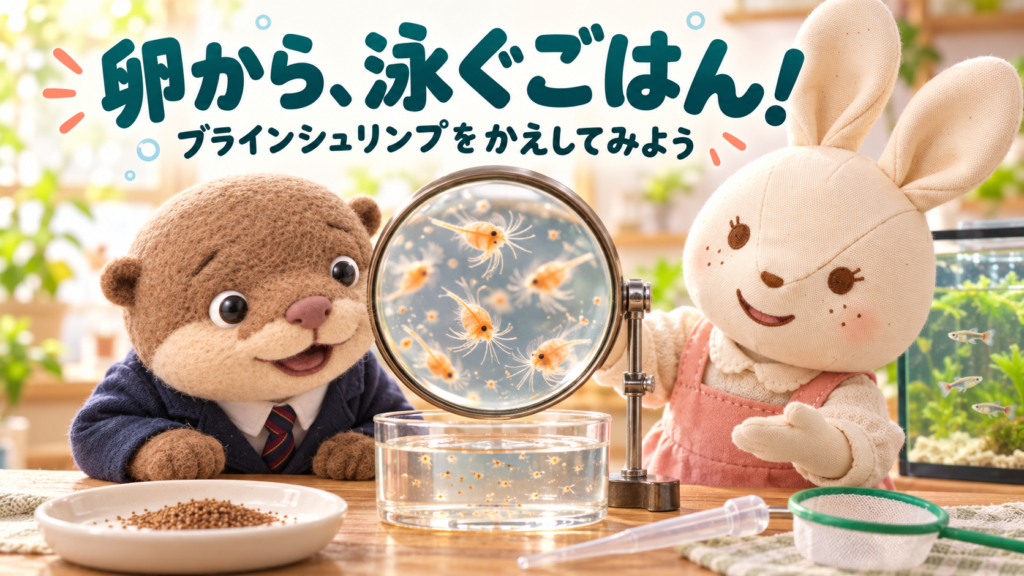 アイのアクアグッズ案内そのごはん、泳いでる! 卵から始めるブラインシュリンプの孵化と道具選び道具の特徴や使い方、選ぶときのポイントをアイが紹介します。記事はコチラ →
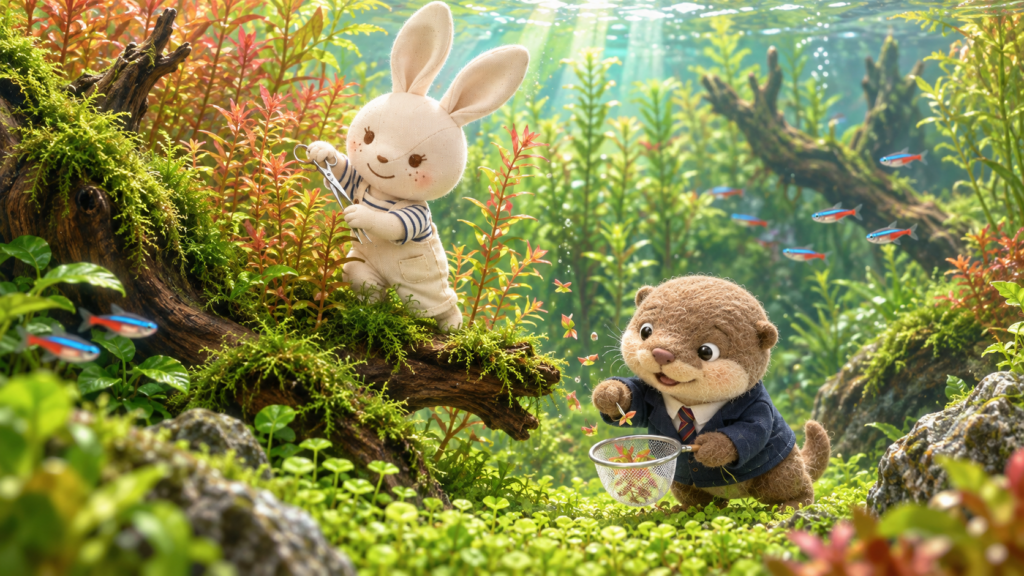 アイのアクアグッズ案内水草トリミングの道具とやり方|ハサミ・ピンセットを水草に合わせて選ぼう伸びすぎた水草は切っていい? 有茎草の差し戻し、前景草の絨毯、流木のモスを整える場面から、水草用ハサミ・ピンセット・ゴミ取りネットの選び方と片付けを紹介します。記事はコチラ →
さまざまな飼育テーマをご紹介。リンク先の記事には広告・商品紹介が含まれます。
案内・紹介記事一覧へ →分布マップ
キャリコ蝶尾は観賞用に作出された金魚の飼育品種で、野生下の自然分布はありません。金魚は中国で長い年月をかけて家畜化・改良され、蝶尾も中国で成立した系統とされています。日本でも1980年前後から知られ、現在は中国由来の輸入個体と国内繁殖個体が流通しています。
※この地図は、記事中の分布情報をもとに中国と日本を含む東アジアを概略表示したものです。マーカーは分布の目安として中国内陸部に設定した代表地点であり、実際の採集地点・産地・原産地点を示すものではありません。
参考文献
- Fricke, R., Eschmeyer, W. N. & Van der Laan, R. (eds.). Eschmeyer’s Catalog of Fishes: Genera, Species, References. California Academy of Sciences. Online version updated 13 August 2026.
- Froese, R. & Pauly, D. (eds.). 2026. FishBase. Carassius auratus (Linnaeus, 1758). World Wide Web electronic publication, version 06/2026. 参照日:2026年8月30日.
- Watson, C. A., Hill, J. E. & Pouder, D. B. 2004. Species Profile: Koi and Goldfish. Southern Regional Aquaculture Center, SRAC Publication No. 7201.
- RSPCA Australia. 2024. How should I care for my goldfish? RSPCA Knowledgebase. Updated 1 May 2024. 参照日:2026年8月30日.
- Blake, R. W., Li, J. & Chan, K. H. S. 2009. Swimming in four goldfish Carassius auratus morphotypes: understanding functional design and performance employing artificially selected forms. Journal of Fish Biology, 75(3): 591–617. DOI: 10.1111/j.1095-8649.2009.02309.x.
- Kobayashi, M., Iwata, E. & Sorensen, P. W. 2026. Environmental and Physiological Regulation of Reproduction in the Goldfish: Gonadal Development, Maturation, and Spawning Behavior: A Review. Animals, 16(5): 775. DOI: 10.3390/ani16050775.
- Petty, B. D., Francis-Floyd, R. & Yanong, R. P. E. Management of Aquarium Fish. MSD Veterinary Manual, Professional Version. Full review May 2022; updated June 2026. 参照日:2026年8月30日.
- Petty, B. D., Francis-Floyd, R. & Yanong, R. P. E. Viral Diseases of Fish. MSD Veterinary Manual, Professional Version. Full review May 2022; updated September 2024. 参照日:2026年8月30日.
- 農林水産省. 水産輸入防疫制度について. 消費・安全局 畜水産安全管理課. 2026年. 参照日:2026年8月30日.
- 農林水産省. 輸入防疫及び国内防疫の対象水産動物及び対象疾病. 2026年. 参照日:2026年8月30日.
ど




コメント