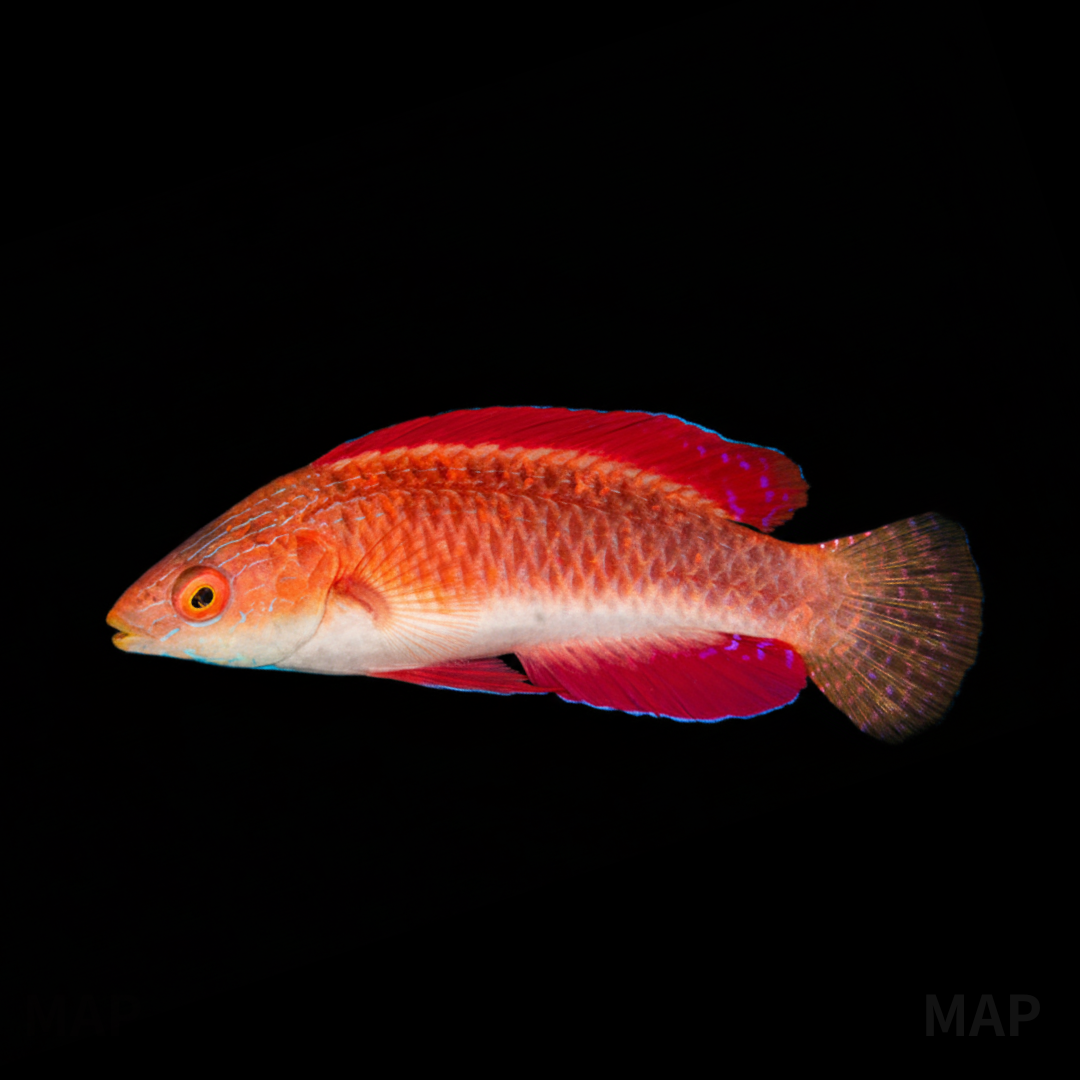
ルソンイトヒキベラは、フィリピンのルソン島周辺をはじめとする西太平洋のサンゴ礁に息づく、宝石のように美しい海水魚です。名前に冠された赤いヒレ(rubripinnis)が示す通り、特にオスの背鰭と臀鰭、そして糸状に長く伸びる腹鰭に見られる鮮烈な赤色は、見る者を圧倒します。彼らは非常に活動的で、水槽内の中層を優雅に、かつ力強く泳ぎ回ります。また、気分が高揚した際に一瞬で体色を輝かせる「フラッシング」という求愛行動は、本種を飼育する上での最大の醍醐味と言えるでしょう。The Luzon Wrasse (Cirrhilabrus rubripinnis) is a gem-like saltwater fish inhabiting the coral reefs of the Western Pacific, particularly around Luzon Island in the Philippines. As its name rubripinnis suggests, the brilliant red coloration found on the dorsal, anal, and elongated pelvic fins of the males is truly breathtaking. They are highly active swimmers, moving gracefully and powerfully through the middle layers of the aquarium. The “flashing” display, a rapid change in body coloration during courtship or excitement, is the highlight of keeping this species.
基本情報 / Basic Information
学名 / Scientific Name
Cirrhilabrus rubripinnis
通称 / Common Name
ルソンイトヒキベラRedfin wrasse, Red-finned wrasse
分類 / Family
スズキ目ベラ科イトヒキベラ属Order Perciformes, Family Labridae, Genus Cirrhilabrus
英名 / English Name
Redfin wrasse
分布 / Distribution
西太平洋(フィリピン、インドネシアなど)Western Central Pacific (Philippines, Indonesia, etc.)
最大体長 / Max Size
約9.1cmApproximately 9.1 cm (3.6 inches)
寿命 / Lifespan
約3〜5年(飼育環境による)Approximately 3 to 5 years (depending on the environment)
飼育環境 / Aquarium Environment
水槽サイズ / Tank Size
最低300L以上(90cm規格水槽〜120cmワイド水槽を推奨)Minimum 300L (90cm standard to 120cm wide tank recommended)
水温 / Temperature
24〜28℃(26℃前後での安定が理想的)24–28°C (Ideal stability around 26°C)
水質 / Water Quality
比重1.020〜1.026、pH 8.1〜8.4、高溶存酸素を好むSpecific gravity 1.020–1.026, pH 8.1–8.4, prefers high dissolved oxygen
レイアウト / Layout
広い遊泳空間と、夜間に眠るためのライブロックによる隠れ家が必要Requires ample open swimming space and hideouts among live rock for sleeping at night
注意点 / Precautions
水槽からの飛び出し事故が非常に多いため、隙間のないフタが必須Jump-out accidents are very common; a tight-fitting lid with no gaps is essential
餌と給餌 / Feeding
餌の種類 / Diet
動物性プランクトン食。イサザアミ、コペポーダ、高品質な人工飼料Zooplanktivore. Mysis shrimp, copepods, and high-quality prepared foods
給餌のポイント / Feeding Tips
代謝が激しいため、1日2〜4回の少量を頻繁に与えるのが健康維持のコツDue to high metabolism, feeding small amounts 2–4 times daily is key to maintaining health
性格と混泳 / Temperament and Tank Mates
性格 / Temperament
穏やかだが、同属や似た色彩の種には縄張り意識を見せることがあるPeaceful, but can show territorial behavior towards same genus or similar-looking species
混泳の相性 / Compatibility
サンゴを傷つけないためリーフタンクに最適。大型肉食魚との混泳は避けるExcellent for reef tanks as they don’t harm corals. Avoid housing with large predators
病気と対策 / Diseases and Prevention
かかりやすい病気 / Common Diseases
輸送ストレスによる吻部(口先)の擦れと、そこからの細菌感染Mouth rubbing injuries from transport stress and subsequent bacterial infections
対策と予防 / Prevention
導入時の慎重な水合わせと、隔離ケース(アクリメーションボックス)での観察Careful acclimation and the use of an acclimation box for observation upon introduction
増やし方(繁殖) / Breeding
雌雄の判別 / Sexing
オスは大きく色彩が鮮やかで腹鰭が長い。メスは淡い赤橙色で小ぶりMales are larger, more colorful, and have long pelvic fins. Females are smaller and pale reddish-orange
繁殖形態 / Reproduction
雌性先熟の性転換を行う。1匹のオスが複数のメスを囲うハレムを形成Protogynous hermaphrodites. They form harems where one dominant male leads multiple females
繁殖のポイント / Breeding Tips
水槽内での産卵は可能だが、浮遊性卵のため稚魚の育成は極めて困難Spawning in tanks is possible, but raising larvae is extremely difficult due to their pelagic nature
雑学と豆知識 / Trivia and Fun Facts
1. 学名 rubripinnis に込められた意味 / 1. The Meaning Behind rubripinnis
この魚の学名 Cirrhilabrus rubripinnis は、ラテン語の rubri(赤い)と pinnis(ヒレ)を組み合わせたものです。1980年にランドール博士らによって記載された際、その燃えるような赤いヒレが最も印象的な特徴として捉えられたことが分かります。まさに名は体を表す、美しいネーミングと言えます。The scientific name Cirrhilabrus rubripinnis is derived from the Latin words rubri (red) and pinnis (fins). When described by Dr. Randall and others in 1980, its fiery red fins were considered the most striking feature, making it a very fitting name.
2. 深海で輝く「プライベート・チャンネル」 / 2. The Deep-Sea Private Channel
海の深くでは赤い光は吸収され、通常は黒っぽく見えてしまいます。しかし、彼らは自らの体から深赤色の蛍光を発し、それを仲間同士で感知する特殊な視覚能力を持っています。青一色の世界で、彼らだけにしか見えない「秘密のシグナル」を使ってコミュニケーションを図っているという、神秘的な生態が近年の研究で示唆されています。In deep water, red light is usually absorbed and appears black. However, recent studies suggest these wrasses emit deep-red fluorescence and have the visual capability to perceive it. They communicate using a “private channel” invisible to others in the blue oceanic world.
3. 粘液の「寝袋」で身を守る知恵 / 3. The Wisdom of the Mucus Cocoon
夜になると、ルソンイトヒキベラはライブロックの隙間などに隠れ、口から特殊な粘液を出して全身を包み込む「繭(まゆ)」を作ります。これは自分の匂いを遮断し、夜行性の天敵であるウツボなどの嗅覚から身を守るための天然のシェルターです。朝になると、彼らはこの寝袋を脱ぎ捨てて元気に泳ぎ出します。At night, the Luzon Wrasse hides in rock crevices and creates a mucus cocoon. This natural shelter masks its scent, protecting it from nocturnal predators like moray eels that rely on smell. Every morning, they break out of this “sleeping bag” to start their day.
4. 1列の鱗が語る進化の歴史 / 4. Evolutionary History in a Single Row of Scales
一般的なイトヒキベラの仲間は頬の鱗が2列ありますが、本種を含むグループは1列しかありません。かつてはこの特徴から「別属(Cirrhilabrichthys属)」として分ける提案もありましたが、現在では共通の祖先から独自の進化を遂げた証として理解されています。小さな鱗の並び一つにも、サンゴ礁でのダイナミックな進化のドラマが刻まれているのです。While most wrasses in this genus have two rows of cheek scales, this species and its close relatives have only one. This distinct trait once led to a proposal for a separate genus, Cirrhilabrichthys, but is now seen as evidence of specialized evolution from a common ancestor.
まとめ / Conclusion
ルソンイトヒキベラは、その情熱的な赤い色彩とダイナミックな行動で、海水水槽に圧倒的な生命力を与えてくれる存在です。飼育にあたっては、彼らの活発な代謝を支えるためのこまめな給餌と、不慮の事故を防ぐための完璧なフタの設置が、長期飼育を成功させるための二大原則となります。The Luzon Wrasse brings overwhelming vitality to any marine aquarium with its passionate red colors and dynamic behavior. Successful long-term care relies on two primary principles: frequent feeding to support their high metabolism and a perfect lid to prevent accidental jumps.
サンゴとの相性も抜群で、日本の市場でも比較的手に入れやすい本種は、初心者からベテランまで多くのアクアリストに愛されています。水槽の中でオスが繰り出す光の舞「フラッシング」を間近で観察できる喜びは、まさにアクアリウムという趣味の醍醐味を凝縮したような体験となるでしょう。With excellent reef compatibility and steady availability in the Japanese market, this species is cherished by aquarists of all levels. Witnessing the “flashing” display firsthand is an experience that encapsulates the true joy and wonder of the aquarium hobby.
Randall, J. E., and Carpenter, K. E. (1980). Three new labrid fishes of the genus Cirrhilabrus from the Philippines. Revue francaise d’Aquariologie Herpetologie, 7(1), 17-26.
Tea, Y. K., Frable, B. W., and Gill, A. C. (2018). Cirrhilabrus cyanogularis, a new species of fairy wrasse from the Philippines and Indonesia (Teleostei: Labridae). Zootaxa, 4418(6), 577-587.
Westneat, M. W. (2001). Labridae. Wrasses, hogfishes, razorfishes. In: Carpenter, K. E. and Niem, V. H. (eds). FAO species identification guide for fishery purposes. The living marine resources of the Western Central Pacific. Volume 6. 3381-3468.
補助資料・データベース
Allen, G. R., and Erdmann, M. V. (2012). Reef Fishes of the East Indies. Tropical Reef Research, Perth, Australia.
WoRMS Editorial Board (2024). World Register of Marine Species. Cirrhilabrus rubripinnis Randall & Carpenter, 1980.
Gerlach, T., et al. (2014). Fairy wrasses (Cirrhilabrus) and their fluorescence: A private channel for communication? Proceedings of the Royal Society B: Biological Sciences.
FishBase. Cirrhilabrus rubripinnis, Redfin wrasse. (Accessed April 2024).



 ポチップ
ポチップ




コメント