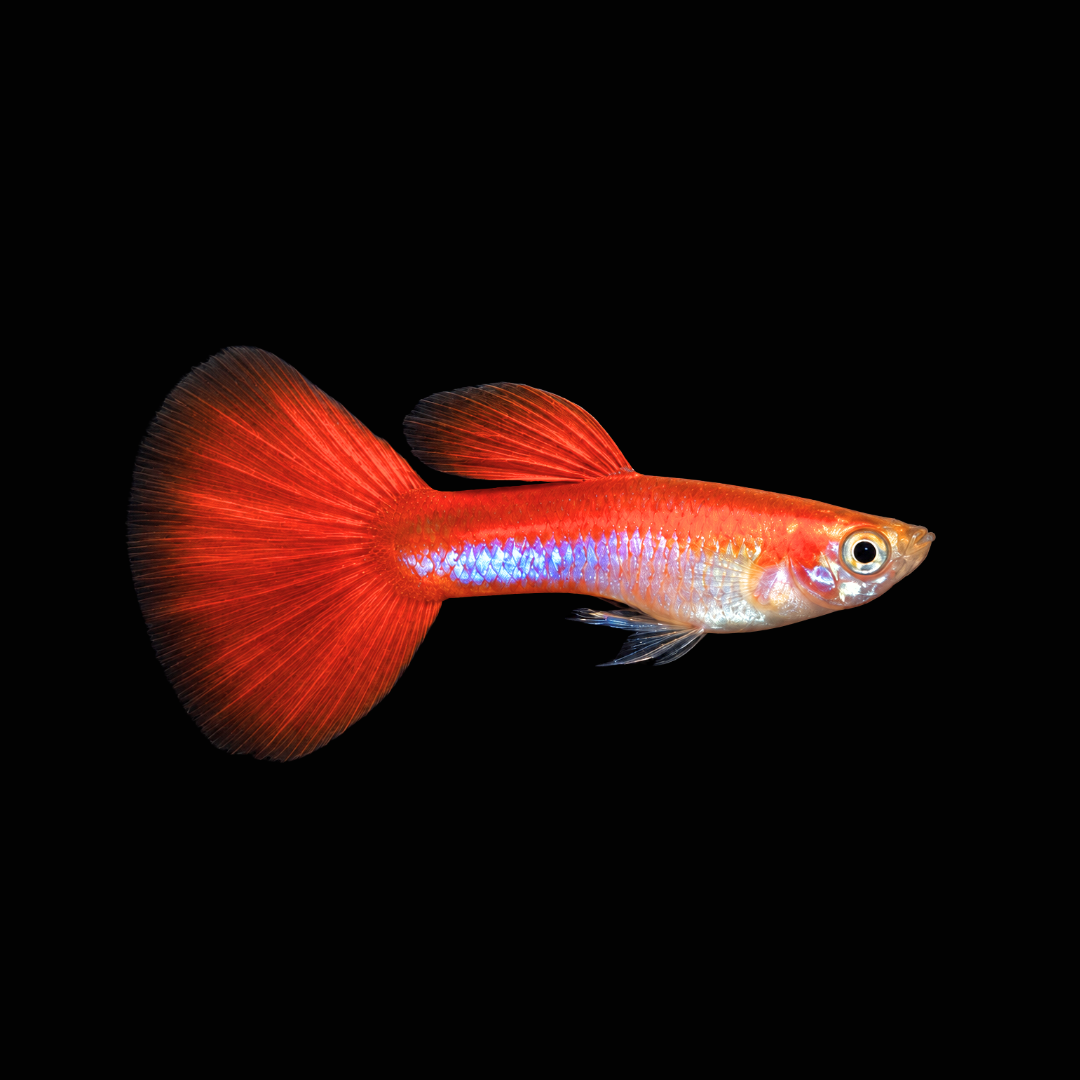
ミカリフレインボーグッピーは、スリランカで作出されたメタリック系統「ミカリフ(Micariff)」の仲間です。銀白色から淡い黄白色に輝く体と、鮮やかな赤い尾ビレのくっきりとした対比が持ち味で、その光沢はウロコ一枚一枚がきらめくというより、体の面全体が金属のように光るのが特徴です。照明の角度や個体によって銀白に見えたり、ほんのり黄色みを帯びて見えたりする表情の変化も楽しめます。国内では外国産グッピーの定番として継続的に入荷しており、尾ビレに黄と赤が並ぶ「ミカリフサンセット」、白から黄色へのグラデーションが美しい「ミカリフゴールデンイエロー」とあわせて「ミカリフ3兄弟」と呼ばれることもあります。昔からの定番品種であるフラミンゴ(ゴールデンレッドテール)を思わせる配色から、「フラミンゴのメタリック版」とたとえられることも多い品種です。ミカリフ系統が広まった背景には、1980年代にシンガポールの養殖場で病気が広がり、各国の輸入業者が新たな仕入れ先を探したことがあったと伝えられています。1990年代初めには、健康で体格がよく発色も鮮やかなスリランカ産グッピーが評価を高め、その流れの中で登場したミカリフは欧州で大きな人気を集め、同じ頃に日本にも輸入されました。店頭では観賞用のオスのみのセットで販売されることがほとんどで、手頃な価格で水槽を華やかにしてくれます。その一方で、発色は複数の遺伝子の組み合わせによって成り立っていると考えられており、繁殖に踏み込むほど奥の深さが見えてくる品種でもあります。The Micariff Rainbow guppy belongs to the Micariff line, a metallic strain developed in Sri Lanka. Its signature is the crisp contrast between a body that gleams silvery white to pale yellowish white and a vivid red tail. Rather than individual scales sparkling, the whole body surface shines like polished metal. Depending on the angle of the light and the individual fish, the body may look pure silver or carry a soft yellow tint, giving it a changing character. In Japan it is a staple among imported guppies and arrives regularly. Together with the Micariff Sunset, whose tail shows yellow and red side by side, and the Micariff Golden Yellow, with its graceful white-to-yellow gradient, it is sometimes called one of the “three Micariff brothers.” Because its color scheme recalls the long-established Flamingo (golden red tail) variety, it is often described as “a metallic Flamingo.” The spread of the Micariff line is said to trace back to the 1980s, when disease broke out at fish farms in Singapore and importers around the world looked for new suppliers. By the early 1990s, Sri Lankan guppies had earned a reputation for being healthy, robust and brightly colored, and Micariff, which emerged in this setting, became a major hit in Europe and was imported into Japan around the same time. In shops it is almost always sold as males-only sets for display, offering an affordable way to brighten up an aquarium. At the same time, its coloration is thought to depend on a combination of several genes, making it a variety whose depth becomes clearer the further you go into breeding.
基本情報 / Basic Information
学名 / Scientific Name
Poecilia reticulata var.
通称 / Common Name
ミカリフレインボーグッピー、ミカリフレインボー、外国産ミカリフ(ミックスグッピーの一員として販売されることもあります)Micariff Rainbow guppy, Rainbow guppy, Micariff (also sold as part of mixed guppy assortments)
分類 / Family
カダヤシ目カダヤシ科ポエキリア属(卵胎生メダカの仲間)Order Cyprinodontiformes, family Poeciliidae, genus Poecilia (livebearers)
英名 / English Name
Micariff Rainbow Guppy
分布 / Distribution
原種のグッピーは、ベネズエラやガイアナなどの南米北東部と、トリニダード・トバゴなどカリブ海南部の島々に分布し、現在では世界各地に移入されています。ミカリフ系統はスリランカで作出された改良品種で、国内に流通する個体の多くもスリランカなどアジアの養殖場から輸入されています。Wild guppies are native to northeastern South America, including Venezuela and Guyana, and to islands of the southern Caribbean such as Trinidad and Tobago, and have since been introduced worldwide. The Micariff line is a cultivated variety developed in Sri Lanka, and most fish sold in Japan are imported from farms in Sri Lanka and elsewhere in Asia.
最大体長 / Max Size
オスは全長3〜4cmほど、メスはひと回り大きく5〜6cmほどに育ちます。Males reach about 3–4 cm in total length, while females grow a size larger, to about 5–6 cm.
寿命 / Lifespan
おおむね1〜2年ですが、よい環境で飼育すれば2〜3年ほど生きることもあります。Roughly 1–2 years, though fish kept in good conditions may live about 2–3 years.
飼育環境 / Aquarium Environment
水槽サイズ / Tank Size
数匹であれば30cm規格水槽(約12L)でも飼育できますが、群泳や繁殖を楽しむなら45cm規格水槽(約35L)以上がおすすめです。収容数は体長1cmあたり水量1Lが目安で、60cm規格水槽(約57L)なら15〜20匹ほどが無理のない数です。A few fish can be kept in a standard 30 cm tank (about 12 L), but for group display or breeding a standard 45 cm tank (about 35 L) or larger is recommended. A good stocking guideline is 1 L of water per 1 cm of body length, so a standard 60 cm tank (about 57 L) comfortably holds around 15–20 fish.
水温 / Temperature
23〜26℃が適温で、25℃前後が理想です。20℃を下回ると免疫力が落ちて白点病などにかかりやすくなるため、冬場のヒーターは欠かせません。真夏は水温が30℃を超えないよう、冷却ファンなどで対策しましょう。The suitable range is 23–26 °C, with around 25 °C being ideal. Below 20 °C the fish’s immunity drops and they become more prone to diseases such as ich, so a heater is essential in winter. In midsummer, use cooling fans or similar measures to keep the water below 30 °C.
水質 / Water Quality
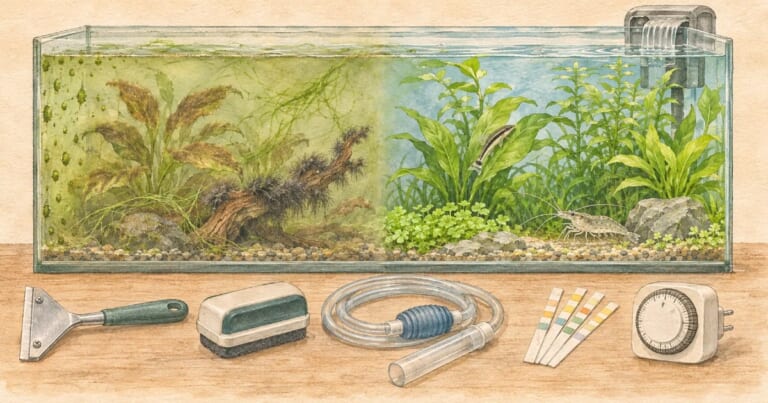
pH6.8〜7.8の中性〜弱アルカリ性で、やや硬めの水を好みます。日本の水道水は多くの地域で軟水ですが、カルキを抜けばそのまま使って飼育できます。大切なのは数値をぴったり合わせることより、水質を安定させ、急な変化や極端な軟水化・酸性化を避けることです。水槽の水はろ過が進むにつれてpHが下がっていきやすいため、週1回、全体の4分の1〜3分の1程度を目安に水換えをしましょう。軟水の地域では、少量のサンゴ砂や貝殻を底床やろ過槽に加えておくと、pHや硬度が下がりすぎるのを穏やかに防げます。Prefers neutral to slightly alkaline water at pH 6.8–7.8 that is moderately hard. Tap water in most of Japan is soft, but once dechlorinated it can be used as is. What matters more than hitting exact numbers is keeping conditions stable and avoiding sudden changes or very soft, acidic water. Because aquarium water tends to become more acidic as biological filtration proceeds, change about a quarter to a third of the water once a week. In soft-water areas, adding a small amount of coral sand or crushed shell to the substrate or filter gently keeps pH and hardness from dropping too far.
レイアウト / Layout
底床は大磯砂などの砂利が扱いやすく、水を軟水・酸性に傾ける吸着系ソイルやゼオライトは、グッピーが主役の水槽では控えたほうが無難です。緑の水草を背景にすると銀白と赤のコントラストが映え、ミカリフ3兄弟を一緒に泳がせると、ぐっと華やかな景観になります。金属光沢は光の当たり方で印象が大きく変わるため、演色性の高いLED照明を選ぶといっそう美しく見えます。強い水流は長いヒレの負担になるので、スポンジフィルターなど流れの穏やかなろ過器が向いています。Gravel such as Oiso sand is easy to work with, while adsorbing soils and zeolite, which soften and acidify the water, are best avoided in a tank where guppies are the main feature. Green plants in the background make the silver-and-red contrast stand out, and keeping all three Micariff brothers together creates a strikingly colorful scene. Since the impression of the metallic sheen changes greatly with lighting, high color-rendering LED lighting shows the fish at their best. Strong currents tax the long fins, so a filter with gentle flow, such as a sponge filter, is ideal.
注意点 / Precautions
最も大切なのは、外国産グッピーと国産グッピーを同じ水槽で飼わないことです。外国産の個体は、現地の病原体に対して抵抗力を持ちながら症状を出さずに保菌している可能性があり、抵抗力を持たない国産グッピーと混泳させると、深刻な病気が一気に広がるおそれがあると考えられています。同じ家で両方を飼う場合は、水槽だけでなく網やスポイト、換水用のホース、ろ過器まで分け、作業は国産の水槽から先に行うなど、徹底して分離しましょう。また、輸入されたばかりの個体は長旅で体力が落ちていることがあるため、水合わせは時間をかけて丁寧に行ってください。The most important rule is never to keep imported guppies and domestically bred guppies in the same tank. Imported fish may carry pathogens from their home farms without showing symptoms, having built up resistance to them, and keeping them with domestic guppies that lack that resistance is thought to risk a rapid outbreak of serious disease. If you keep both at home, separate not only the tanks but also nets, pipettes, siphon hoses and filters, and always service the domestic tank first. Newly imported fish may also be weakened by the long journey, so take your time and acclimate them carefully.
餌と給餌 / Feeding
餌の種類 / Diet
雑食性で、浮上性のフレークフードやグッピー用の細かい粒状飼料をよく食べます。冷凍赤虫やブラインシュリンプも喜んで食べます。アスタキサンチンなどのカロテノイドを含む色揚げ用飼料を取り入れると、赤い尾ビレの発色を引き立てる助けになり、スピルリナ入りの餌を併用するのもよいでしょう。Omnivorous; readily accepts floating flake food and fine guppy pellets, and also eagerly eats frozen bloodworms and brine shrimp. Color-enhancing foods containing carotenoids such as astaxanthin help bring out the red of the tail, and foods with spirulina make a good addition as well.
給餌のポイント / Feeding Tips
成魚には1日1〜2回、数分で食べきれる量を与えます。成長期の若魚は1日2〜3回に増やすと、体格よく育ちます。稚魚には孵化させた活きブラインシュリンプが最も効果的で、粉末状の稚魚用飼料や栄養価の高い微粒飼料と組み合わせると、骨格のしっかりした体に育ちます。食べ残しは水質悪化の原因になるので、与えすぎには注意しましょう。Feed adults once or twice a day, only as much as they can finish in a few minutes. Growing juveniles develop better body size when fed two or three times a day. For fry, freshly hatched live brine shrimp is the most effective food, and combining it with powdered fry food or nutrient-rich fine pellets helps them grow sturdy skeletons. Uneaten food degrades water quality, so be careful not to overfeed.
性格と混泳 / Temperament and Tank Mates
性格 / Temperament
温和な性格で、中層から上層をゆったりと泳ぎます。他の魚を攻撃することはほとんどありませんが、オスはメスを熱心に追いかけるため、メスの数が少ないと特定の個体に負担が集中することがあります。Peaceful, swimming leisurely in the middle to upper water column. It rarely attacks other fish, but males chase females persistently, so when there are few females the stress can fall heavily on particular individuals.
混泳の相性 / Compatibility
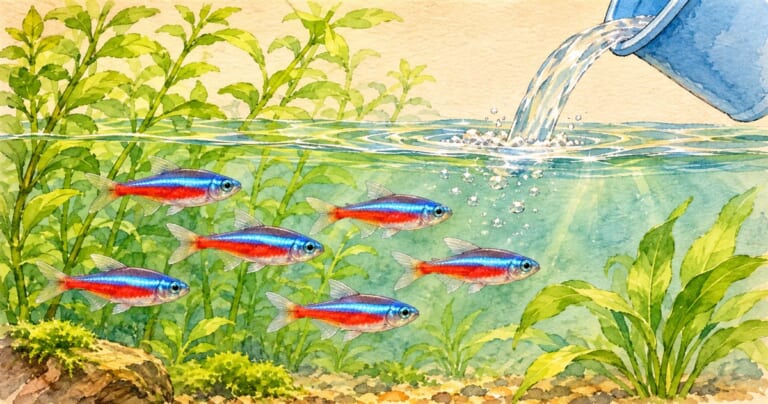
プラティ、モーリー、コリドラス、ネオンテトラ、ラスボラ、小型のエビ類などとは相性良く暮らせます。ヒレをかじる傾向のあるスマトラやベタ、小さな魚を食べてしまう大型シクリッドとの混泳は避けましょう。近縁のエンドラーズとは容易に交雑するため、純系を守りたい場合は同居させないでください。また、注意点で触れたとおり、国産グッピーとの混泳も避けるべきです。It gets along well with platies, mollies, Corydoras, neon tetras, rasboras and small shrimp. Avoid keeping it with fin-nipping tiger barbs and bettas, or with large cichlids that eat small fish. It hybridizes readily with the closely related Endler’s livebearer, so do not keep them together if you want to maintain a pure line. As noted under Precautions, it should also not be kept with domestically bred guppies.
病気と対策 / Diseases and Prevention
かかりやすい病気 / Common Diseases
白点病は体やヒレに白い小さな点がつく病気で、低水温や水温の急変がきっかけになりやすいものです。尾ぐされ病・口ぐされ病はカラムナリス菌による病気で、ヒレが白く濁って溶けたり、充血したりします。とくに警戒したいのが、国内で俗に「グッピーエイズ」と呼ばれる原因のはっきりしない衰弱や、テトラヒメナ症です。いずれも急に元気をなくし、次々と死んでしまうことがあり、テトラヒメナ症は発症後の治療が非常に難しいとされています。Ich (white spot disease) causes small white dots on the body and fins and is often triggered by low or fluctuating temperatures. Fin rot and mouth rot are caused by columnaris bacteria, with fins turning cloudy white, disintegrating or reddening. Of particular concern are the wasting condition of unclear cause known informally in Japan as “guppy AIDS,” and tetrahymenosis. In both cases fish can suddenly lose vigor and die one after another, and tetrahymenosis is considered very difficult to treat once it appears.
対策と予防 / Prevention
新しく迎えた個体は、できれば別の容器で1週間ほど様子を見てから本水槽に移すと安心です。白点病には、水温を28℃前後まで段階的に上げたうえで、メチレンブルー系などの魚病薬と0.5%程度の塩水浴を組み合わせて対処します。尾ぐされ病は病魚を隔離し、グリーンFゴールド顆粒や観パラDなどの抗菌剤で薬浴しながら、0.3〜0.5%の塩水浴(水10Lに対して塩30〜50g)を併用しましょう。塩水浴を始めるときは時間をかけて水合わせをし、塩に弱い水草や魚は必ず別にしておきます。テトラヒメナ症などは治療よりも予防が第一で、外国産と国産を器具まで含めて完全に分けておくことが最大の対策になります。薬浴をしても保菌状態がなくなるとは限らないため、元気そうに見えても油断しないことが大切です。If possible, observe new fish in a separate container for about a week before moving them to the main tank. For ich, raise the temperature gradually to around 28 °C and combine a methylene blue–type medication with a salt bath of about 0.5%. For fin rot, isolate affected fish and treat them with an antibacterial such as Green F Gold granules or Kanpara D, together with a 0.3–0.5% salt bath (30–50 g of salt per 10 L of water). When starting a salt bath, acclimate the fish slowly, and always keep salt-sensitive plants and fish separate. With tetrahymenosis and similar diseases, prevention comes first, and the most effective measure is to keep imported and domestic guppies completely separate, including all equipment. Medication does not necessarily clear carrier status, so never let your guard down just because a fish looks healthy.
増やし方(繁殖) / Breeding
雌雄の判別 / Sexing
オスは小柄で色彩が鮮やかで、尻ビレが細長い交接器(ゴノポディウム)に変化しています。メスは体が大きく色彩は控えめで、お腹に丸みがあり、成熟すると腹部の後方に黒っぽい斑紋(妊娠マーク)が見えるようになります。Males are smaller and more brightly colored, with the anal fin modified into a slender copulatory organ called the gonopodium. Females are larger with subdued coloring and a rounded belly, and when mature they show a dark patch, known as the gravid spot, toward the rear of the abdomen.
繁殖形態 / Reproduction
メスのお腹の中で卵をかえし、泳げる状態の稚魚を産む卵胎生です。妊娠期間はおよそ25〜30日で、1回に20〜40匹ほどの稚魚が生まれます。メスは精子を体内に蓄えておけるため、1度の交尾で何回か続けて出産することがあります。A livebearer: eggs hatch inside the female, which then gives birth to free-swimming fry. Gestation takes about 25–30 days, with around 20–40 fry per brood. Because females can store sperm, a single mating may lead to several consecutive broods.
繁殖のポイント / Breeding Tips
オス1匹に対してメス2〜3匹の割合にすると、オスの追尾によるストレスがメスに集中しにくくなります。親魚は稚魚を食べてしまうため、産卵箱や水草の茂みで隠れ家をつくってあげましょう。国内で流通する外国産ミカリフはオスのみの販売が中心で、同じ品種のメスはあまり出回りません。計画的に交配したい場合は、他のオスと接触していない若いメスを早めに分けておく必要があります。種親を選ぶときは色の派手さだけでなく、成長が早くて体格がよく、大きな尾ビレを支えられる太い尾筒を持つ個体を選びましょう。ミカリフは尾ビレが大きくなりにくい傾向があると指摘されています。尾形を改良する目的で他品種と掛け合わせると、1代目(F1)ではミカリフらしい体色がほとんど現れずスネークスキン模様になりやすく、その子ども同士を交配した2代目(F2)以降で再び現れると考えられています。つまり、交配の結果は1代で判断せず、2代目以降まで見通して計画することが大切です。ブロンド体色を持ち尾形の優れた品種を相手に選び、毎世代の産仔数や体型を記録しながら数世代かけて揃えていくのが近道です。A ratio of one male to two or three females keeps the males’ chasing from concentrating on any single female. Adults will eat fry, so provide a breeding box or dense plants as hiding places. Imported Micariff guppies in Japan are mostly sold as males only, and females of the same variety are rarely available. For planned breeding, separate young females early, before they have contact with other males. When choosing breeders, look beyond showy color and pick fish that grew fast, have good body size, and possess a thick caudal peduncle capable of supporting a large tail. Micariff guppies have been noted to have a tendency toward smaller tails. When crossed with another variety to improve tail shape, the first generation (F1) rarely shows the Micariff coloration and tends to display snakeskin patterns instead, and the coloration is thought to reappear in the second generation (F2), bred from those offspring, and beyond. In other words, it is important not to judge a cross by one generation but to plan with the second generation and later in mind. The shortcut is to choose a blond-bodied variety with an excellent tail as the partner and refine the line over several generations while recording brood size and body shape each time.
雑学と豆知識 / Trivia and Fun Facts
1. 「ミカリフ」は2人の作出者の名前から / 1. “Micariff” Comes from Two Breeders’ Names
ミカリフという不思議な響きの名前は、スリランカのブリーダーであるマイケル・コール(Michael Cole)氏のファーストネームから取った「Mic」と、デニス・アリフ(Denis Ariff)氏の姓「Ariff」を組み合わせた造語だと伝えられています。そのため正しいつづりは末尾にfが2つ重なる「Micariff」で、国内外でよく見かける「Mikarif」は本来の表記ではありません。命名に関わった人物については別の証言もありますが、欧米の専門的な文献の多くはこの2人を作出者として記録しています。品種名そのものに、生みの親たちの名前が刻まれているのです。The curious name “Micariff” is said to be a blend of “Mic,” taken from the first name of Sri Lankan breeder Michael Cole, and the surname of Denis Ariff. That is why the correct spelling ends with a double f, and the commonly seen “Mikarif” is not the original form. There are other accounts of who was involved in naming the strain, but most specialist literature in Europe and North America records these two as its creators. The variety’s very name carries the names of the people who made it.
2. 「レインボー」はグッピーの古い呼び名の里帰り / 2. “Rainbow” Echoes the Guppy’s Old Nickname
グッピーという名前は、19世紀にトリニダード島で本種を採集して英国に送ったロバート・ジョン・レクメア・グッピー氏に由来します。一方、ヨーロッパに紹介されて間もないころには、虹のような色彩から「レインボーフィッシュ」、繁殖力の強さから「ミリオンフィッシュ」という愛称でも親しまれていました。ミカリフレインボーという流通名は、意図して付けられたものではないにせよ、グッピーが初めに愛された頃の呼び名を受け継いでいるともいえます。The name “guppy” honors Robert John Lechmere Guppy, who collected the fish in Trinidad in the 19th century and sent specimens to Britain. Soon after the fish was introduced to Europe, however, it was also affectionately known as the “rainbow fish” for its colors and the “millions fish” for its prolific breeding. Whether intended or not, the trade name Micariff Rainbow carries on a nickname from the days when the guppy first won people’s hearts.
3. 日本のメタリック品種とのつながり / 3. Ties to Japanese Metallic Strains
ミカリフの全身を包むメタリックには、1969年ごろにドイツで作出されたとされる劣性のメタリック形質「シュテルツバッハ・メタル」と同じ系統の遺伝子が関わっているという見方があります。この形質は1980年代後半に日本へもたらされ、国内では「ソリッド」などの名前で独自の改良が進みました。日本のフルゴールド系統とミカリフが同じメタリック遺伝子を共有しているという指摘もあり、スリランカ生まれのミカリフは、ドイツと日本を行き来したメタリック品種の歴史とも交わっていると考えられています。ただし、遺伝子の正確な組み合わせはまだはっきりしておらず、ミカリフ独自の劣性遺伝子を想定する説なども並んでいます。かつて広く語られた「ハーフブラックレッドのオスとイエロースネークスキンのメスを掛け合わせて誕生した」という逸話については、遺伝の仕組みからみてつじつまが合わないと専門家から指摘されています。One view holds that the metallic sheen covering Micariff’s whole body involves a gene of the same kind as Stoerzbach Metal, a recessive metallic trait said to have been developed in Germany around 1969. That trait was brought to Japan in the late 1980s and developed independently under names such as “Solid.” Some have pointed out that Japanese full-gold strains and Micariff share the same metallic gene, so this Sri Lankan variety is thought to be linked with a history of metallic guppies passing between Germany and Japan. However, the exact genetic combination is still unclear, and other theories, including one proposing a recessive gene unique to Micariff, also exist. As for the once widely told story that Micariff was born from crossing a half-black red male with a yellow snakeskin female, specialists have pointed out that it does not make sense in terms of how the genes are inherited.
4. 赤と黄が混ざらない不思議 / 4. Why Red and Yellow Don’t Blend
グッピーの体色は、黄色、赤、黒の色素を持つ細胞と、光を反射して金属光沢や白さを生む細胞が、皮膚の中で重なり合うことで生まれます。ふつうは黄色と赤が同じ場所にあるとオレンジ色に混ざりやすいのですが、ミカリフ系統では赤や黒の色素が黄色や銀白の部分から押し出されるように分かれ、尾ビレや体の後方にまとまって現れる傾向があります。ミカリフレインボーの銀白と赤、サンセットの黄と赤がくっきり分かれて見えるのは、この性質によるものと考えられています。さらに、多くのミカリフは黒い色素の少ないブロンド体色を土台にしているため、その下にある黄色や白の反射が覆い隠されず、明るい輝きとして浮かび上がるのです。Guppy coloration arises from layers of skin cells containing yellow, red and black pigments, together with cells that reflect light to create metallic sheen or whiteness. Normally, yellow and red in the same spot tend to blend into orange, but in the Micariff line red and black pigments tend to be pushed out of the yellow or silvery areas and gather in the tail and rear of the body. This is thought to explain why the silver and red of the Micariff Rainbow, and the yellow and red of the Sunset, appear so sharply separated. In addition, because many Micariff guppies are built on a blond body color with reduced black pigment, the yellow and white reflections beneath are not masked and shine through as a bright glow.
5. ミックスグッピーは「雑種」ではない / 5. Mixed Guppies Are Not Mongrels
ホームセンターなどで見かける外国産ミックスグッピーの中にミカリフレインボーが泳いでいるのを見て、適当に掛け合わせた雑種だと思う方もいるかもしれません。実際には、現地の養殖場では品種ごとに池を分けて育て、出荷のときに複数の品種を混ぜて梱包するのが一般的です。ただし、お店のミックス水槽で他品種のオスと一緒に過ごしていたメスは、すでに別の品種と交配している可能性が高いため、繁殖の親に選ぶときはその点を頭に入れておきましょう。Seeing a Micariff Rainbow swimming among imported mixed guppies at a home center, some people may assume they are random crossbreeds. In reality, overseas farms usually raise each variety in separate ponds and only mix several varieties together when packing them for shipment. However, a female that has lived in a shop’s mixed tank alongside males of other varieties has very likely already mated with them, so keep this in mind if you choose her as a breeder.
まとめ / Conclusion
ミカリフレインボーグッピーは、スリランカで生まれ、銀白の体と赤い尾ビレのコントラストで多くのアクアリストを魅了してきたメタリック品種です。手頃な価格で迎えられ、水槽に入れたその日から群泳のきらめきで楽しませてくれる一方、その発色の裏には複数の遺伝子が関わる奥深い仕組みがあり、繁殖に挑むほど新しい発見が待っています。The Micariff Rainbow guppy is a metallic variety born in Sri Lanka that has captivated many aquarists with the contrast between its silvery body and red tail. It can be acquired at an affordable price and delights from the very first day with the shimmer of a swimming group, while behind its coloration lies an intricate mechanism involving several genes, offering fresh discoveries to anyone who takes up breeding.
長く美しい姿を楽しむためには、国産グッピーとは器具まで分けた専用の水槽で、軟水に傾きすぎない安定した水質を保つことが何よりのコツです。緑の水草を背景に群れで泳ぐミカリフレインボーは、水槽の中に小さな虹のような輝きを添えてくれます。The key to enjoying their beauty for a long time is a dedicated tank, kept separate from domestic guppies down to the equipment, with stable water that does not drift too soft. Swimming in a group against a backdrop of green plants, Micariff Rainbows add a glow like a tiny rainbow to the aquarium.
Peters, W. C. H. (1859). Eine neue vom Herrn Jagor im atlantischen Meere gefangene Art der Gattung Leptocephalus, und über einige andere neue Fische des Zoologischen Museums. Monatsberichte der Königlichen Preussischen Akademie der Wissenschaften zu Berlin 1859: 411–413.
Magurran, A. E. (2005). Evolutionary Ecology: The Trinidadian Guppy. Oxford University Press, Oxford.
Houde, A. E. (1997). Sex, Color, and Mate Choice in Guppies. Princeton University Press, Princeton.
Deacon, A. E., Ramnarine, I. W. & Magurran, A. E. (2011). How reproductive ecology contributes to the spread of a globally invasive fish. PLoS ONE 6(9): e24416. https://doi.org/10.1371/journal.pone.0024416
Bagnara, J. T., Taylor, J. D. & Hadley, M. E. (1968). The dermal chromatophore unit. Journal of Cell Biology 38(1): 67–79.
Kottler, V. A., Fadeev, A., Weigel, D. & Dreyer, C. (2013). Pigment pattern formation in the guppy, Poecilia reticulata, involves the Kita and Csf1ra receptor tyrosine kinases. Genetics 194(3): 631–646. https://doi.org/10.1534/genetics.113.151738
Matthews, R. A. (2005). Ichthyophthirius multifiliis Fouquet and ichthyophthiriosis in freshwater teleosts. Advances in Parasitology 59: 159–241.
Declercq, A. M., Haesebrouck, F., Van den Broeck, W., Bossier, P. & Decostere, A. (2013). Columnaris disease in fish: a review with emphasis on bacterium-host interactions. Veterinary Research 44: 27. https://doi.org/10.1186/1297-9716-44-27
Pimenta Leibowitz, M., Ariav, R. & Zilberg, D. (2005). Environmental and physiological conditions affecting Tetrahymena sp. infection in guppies, Poecilia reticulata Peters. Journal of Fish Diseases 28(9): 539–547.
Leibowitz, M. P. & Zilberg, D. (2009). Tetrahymena sp. infection in guppies, Poecilia reticulata Peters: parasite characterization and pathology of infected fish. Journal of Fish Diseases 32(10): 845–855.









コメント