

解説 / Description
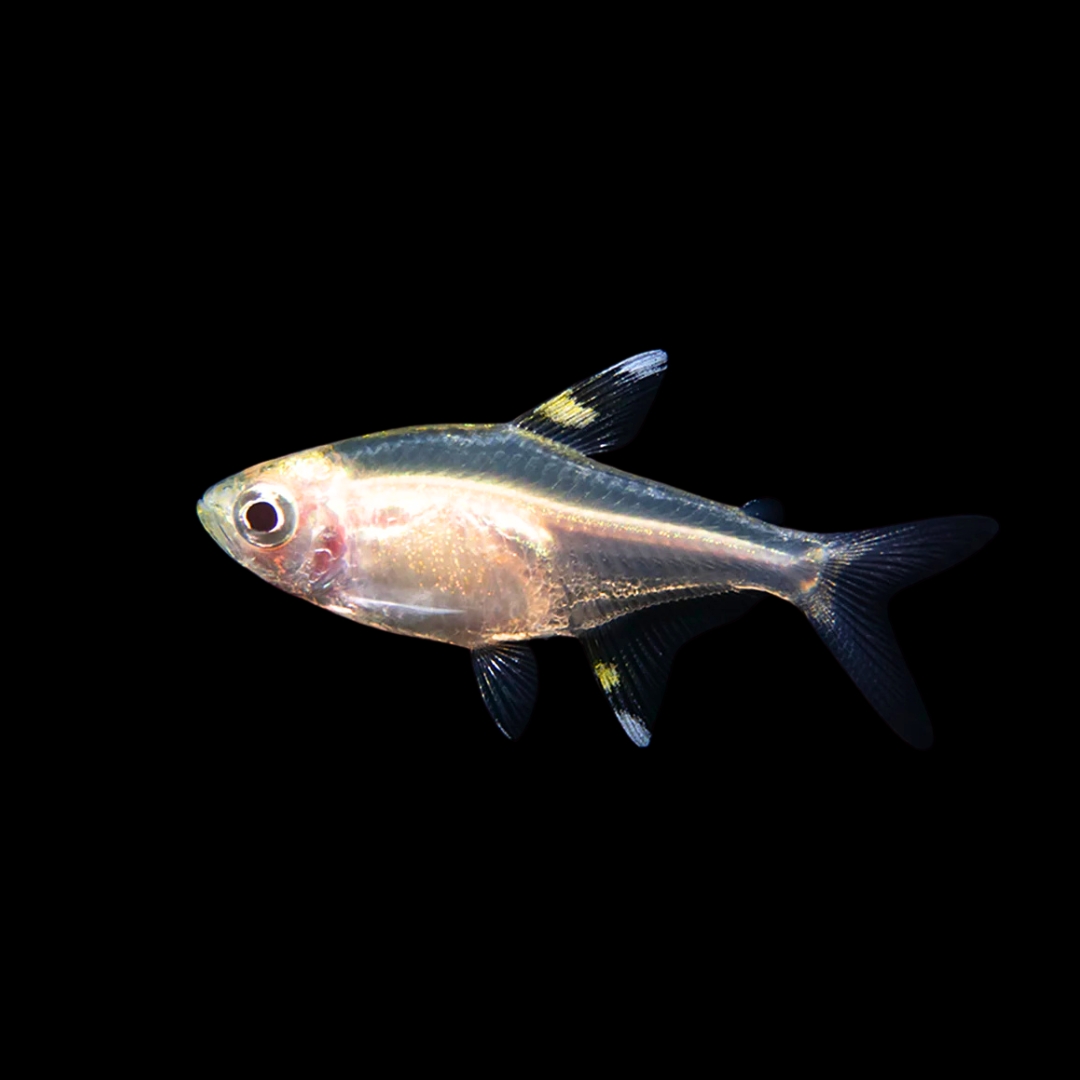
ゴールデンプリステラは、南米原産の小型カラシンであるプリステラをもとに、黄金色の体色が美しく見えるよう選択交配された改良品種です。半透明感のある明るい体に、赤みを帯びた尾びれと淡いヒレ模様が重なり、水草水槽やコミュニティタンクにやわらかな輝きを添えてくれます。性格はとても温和で、丈夫さにも優れているため、初めて熱帯魚を飼う方にも扱いやすい種類です。一方で、ウェーバー器官を備えたカラシン類としての感覚能力、雨季と乾季に対応する自然下での生活史、淡水から汽水域まで耐える水質適応力など、知れば知るほど奥深い生物学的魅力も持っています。 The Golden Pristella Tetra is a selectively bred form of Pristella maxillaris, a small characin native to South America. Its translucent golden body, reddish tail, and delicate fin markings add a soft glow to planted aquariums and peaceful community tanks. It is gentle, hardy, and highly suitable for beginner aquarists, yet it also has fascinating biological depth, including the Weberian apparatus typical of many characins, a life cycle adapted to seasonal floods, and a notable tolerance for a wide range of water conditions, including slightly brackish habitats in nature.
基本情報 / Basic Information
| 学名 / Scientific Name | Pristella maxillaris |
|---|---|
| 通称 / Common Name | ゴールデンプリステラ、アルビノプリステラ、プリステラGolden Pristella Tetra, Albino Pristella Tetra, Pristella Tetra |
| 分類 / Family | カラシン目 アセストロリンクス科 プリステラ属。なお、資料によっては旧来の分類体系に基づきカラシン科として扱われることもあります。Order Characiformes, family Acestrorhamphidae, genus Pristella. Some sources may still treat it under the older broad concept of Characidae. |
| 英名 / English Name | Golden Pristella Tetra, X-ray Tetra |
| 分布 / Distribution | 原種はブラジル、ベネズエラ、ガイアナ周辺を含むアマゾン川流域、オリノコ川流域、ギアナ地方やブラジルの沿岸河川に分布するとされています。ゴールデン個体は野生採集魚ではなく、主に商業的に繁殖された改良品種が流通しています。The wild form is reported from the Amazon and Orinoco basins and coastal river systems in the Guianas and Brazil, including areas of Brazil, Venezuela, and Guyana. Golden individuals in the aquarium trade are not wild-type fish but mainly commercially captive-bred strains. |
| 最大体長 / Max Size | 約4〜5cmAbout 4–5 cm |
| 寿命 / Lifespan | 一般的には3〜5年ほど。安定した環境では5年以上生きる個体もいます。Usually around 3–5 years, with some individuals living longer than five years under stable care. |
飼育環境 / Aquarium Environment
| 水槽サイズ / Tank Size | 少数なら30cm水槽から飼育可能ですが、群泳の美しさと安定した水質を考えると、6匹以上で60cm規格水槽、約57〜60L以上がおすすめです。より多くの個体を泳がせる場合は、90cm規格水槽以上にすると遊泳スペースに余裕が出ます。A small group can be kept in a 30 cm tank, but a standard 60 cm aquarium of roughly 57–60 L or larger is recommended for a group of six or more. For larger schools, a 90 cm standard tank or larger provides better swimming space. |
|---|---|
| 水温 / Temperature | 22〜28℃。日常管理では25℃前後が扱いやすく、繁殖を狙う場合はやや高めの27〜29℃が用いられることがあります。 22–28°C. Around 25°C is practical for everyday care, while slightly warmer water of 27–29°C may be used when conditioning fish for breeding. |
| 水質 / Water Quality | 弱酸性〜中性を中心に、pH6.0〜7.5程度が扱いやすい範囲です。硬度にも比較的幅広く適応しますが、急変には弱ることがあるため、数値そのものよりも安定した水質を保つことが大切です。下流域や沿岸河川にも見られることから、多少の塩分耐性を持つ可能性が示されていますが、通常の飼育では純淡水で管理します。Slightly acidic to neutral water, around pH 6.0–7.5, is a practical range for aquarium care. It is relatively adaptable to hardness, but stability is more important than chasing exact values. Its occurrence in lower river reaches and coastal drainages suggests some tolerance of mild salinity, but it should normally be kept in freshwater aquaria. |
| レイアウト / Layout | 暗めの底砂、流木、アヌビアス・ナナやミクロソリウムなどの陰性水草を組み合わせると、黄金色の体色がよく映えます。水草や流木で隠れ場所を作りつつ、前面や中央には群れで泳ぐための空間を残すと、本来の活発な遊泳が見られます。A darker substrate, driftwood, and hardy shade-tolerant plants such as Anubias and Microsorum make the golden body color stand out. Provide cover with plants and wood while leaving open swimming space in the front or center for schooling behavior. |
| 注意点 / Precautions | 丈夫な魚ですが、導入直後の水温差や水質差には注意が必要です。群れで安心する性質があるため、単独飼育では隠れがちになったり、まれに落ち着きのない行動を見せることがあります。購入後は点滴法などでゆっくり水合わせを行い、最低でも6匹前後のグループで飼育すると状態が安定しやすくなります。Although hardy, it should be acclimated carefully after purchase, especially when temperature or water chemistry differs greatly. This species feels more secure in groups, so single individuals may hide or show restless behavior. Slow acclimation and a group of at least about six individuals are recommended. |
餌と給餌 / Feeding
| 餌の種類 / Diet | 雑食性で、人工飼料への餌付きは非常に良好です。細かいフレークフード、小型魚用の顆粒飼料を主食にし、補助的に冷凍アカムシ、ミジンコ、ブラインシュリンプ、植物質を含むフードを与えると栄養バランスを整えやすくなります。It is omnivorous and readily accepts prepared foods. Fine flakes and small granules can be used as staples, supplemented with frozen bloodworms, daphnia, brine shrimp, and foods containing plant matter for nutritional balance. |
|---|---|
| 給餌のポイント / Feeding Tips | 1日1〜2回、数分で食べ切れる量を与えます。口が大きくないため、粒が大きい餌は指ですりつぶしてから与えると食べやすくなります。与えすぎは水質悪化の原因になるため、底に残った餌は早めに取り除きましょう。Feed once or twice daily, offering only what can be eaten within a few minutes. Because the mouth is small, crush larger foods before feeding. Remove uneaten food promptly to prevent water quality deterioration. |
性格と混泳 / Temperament and Tank Mates
| 性格 / Temperament | 非常に温和で、同種間でも他種に対しても強い攻撃性はほとんど見られません。群れで中層を泳ぐ姿が魅力で、落ち着いた環境ではよく前面に出て泳ぎます。It is very peaceful, showing little aggression toward its own kind or other species. It typically swims in the midwater layer, and in a calm aquarium it often becomes active and visible in the open areas. |
|---|---|
| 混泳の相性 / Compatibility | ネオンテトラ、カージナルテトラ、ラスボラ類、コリドラス、オトシンクルス、ドワーフグラミー、小型のアピストグラマやラミレジィなど、温和な小型魚との混泳に向いています。ヤマトヌマエビや成長したミナミヌマエビとも概ね共存できますが、稚エビは捕食される可能性があるため、ウィローモスなどの細かい隠れ家を用意すると安心です。大型魚やヒレをかじる魚、気性の荒い魚との混泳は避けます。It suits peaceful community aquariums with neon tetras, cardinal tetras, rasboras, Corydoras, Otocinclus, dwarf gouramis, and small cichlids such as Apistogramma or Mikrogeophagus ramirezi. It can generally coexist with Amano shrimp and adult Neocaridina shrimp, although newborn shrimp may be eaten unless dense moss or fine cover is provided. Avoid large, aggressive, or fin-nipping fish. |
病気と対策 / Diseases and Prevention
| かかりやすい病気 / Common Diseases | 特別に病気に弱い魚ではありませんが、輸送直後のストレス、水温の急変、水質悪化が重なると、白点病、尾腐れ病、エラ病、水カビ病など一般的な熱帯魚の病気を発症することがあります。It is not especially disease-prone, but stress after transport, sudden temperature changes, and poor water quality can lead to common aquarium diseases such as ich, fin rot, gill infections, and fungal infections. |
|---|---|
| 対策と予防 / Prevention | 予防の基本は、水温を安定させ、過密飼育を避け、定期的な換水でアンモニアや亜硝酸を抑えることです。体調を崩した個体は早めに隔離し、症状に応じて0.5%前後の塩水浴や市販の魚病薬を検討します。塩水浴は魚の浸透圧調整の負担を軽くする目的で使われますが、急に濃い塩水へ移すと負担になるため、時間をかけて少しずつ塩分濃度を上げます。薬浴を行う場合は、必ず製品の規定量と使用期間を守り、強めのエアレーションを併用します。Prevention begins with stable temperature, moderate stocking, and regular water changes to keep ammonia and nitrite low. Sick individuals should be isolated early, and treatment may include approximately 0.5% salt baths or appropriate aquarium medications depending on symptoms. Salt baths are used to reduce the burden of osmoregulation, but salinity should be raised gradually. When using medication, follow the product dosage and treatment period exactly and provide strong aeration. |
増やし方(繁殖) / Breeding
| 雌雄の判別 / Sexing | 成熟したメスは腹部がふっくらし、全体的にやや大柄で体高が出ます。オスは比較的スレンダーで、体つきが引き締まって見えます。透明感のある体を通して浮き袋の形状差が観察できる場合もあり、オスでは前方がやや鋭く見え、メスでは丸みを帯びる傾向があるとされます。Mature females become fuller-bodied and slightly deeper, especially when carrying eggs. Males are usually slimmer. Because the body is somewhat translucent, the swim bladder may sometimes be observed; males tend to show a more pointed anterior shape, while females appear rounder. |
|---|---|
| 繁殖形態 / Reproduction | 卵を水草や底面付近にばらまく卵散布型です。親魚は卵や稚魚を保護せず、産卵後に卵を食べてしまうことがあるため、繁殖を狙う場合は産卵用水槽や産卵ネットを用意します。It is an egg-scattering species that releases eggs among plants or near the substrate. Parents do not guard the eggs or fry and may eat them, so a separate breeding tank or spawning mesh is recommended. |
| 繁殖のポイント / Breeding Tips | 親魚には事前にブラインシュリンプや冷凍アカムシなど高タンパクな餌を与えてコンディションを整えます。産卵水槽は20〜30L程度でも可能で、弱酸性でやや軟らかい水、26〜27℃前後のやや高めの水温が目安です。ウィローモスや産卵ネットを入れて卵が親に食べられにくい構造にし、産卵後は親をすぐに戻します。卵はおよそ24〜72時間で孵化し、稚魚はヨークサックを吸収して泳ぎ出してから餌を必要とします。初期の口は非常に小さいため、最初はインフゾリアやゾウリムシなどの微小な餌を与え、成長に合わせてブラインシュリンプ幼生や稚魚用微粉末飼料へ移行します。Condition adults with protein-rich foods such as brine shrimp and frozen bloodworms. A 20–30 L breeding tank can be used, with slightly acidic, soft water and a slightly warmer temperature around 26–27°C. Add moss or spawning mesh so eggs fall out of reach of the parents, and remove the adults immediately after spawning. Eggs usually hatch in about 24–72 hours. Fry begin feeding after absorbing the yolk sac and becoming free-swimming. Their mouths are extremely small at first, so offer infusoria or Paramecium before transitioning to newly hatched brine shrimp and finely powdered fry food. |
雑学と豆知識 / Trivia and Fun Facts
| 1. 透ける体と「X-ray Tetra」という名前 / 1. A translucent body and the name “X-ray Tetra” | プリステラの原種は半透明の体を持ち、光の角度によって骨格や内臓の一部がほのかに透けて見えます。この特徴から英語圏では「X-ray Tetra」と呼ばれてきました。ゴールデンプリステラでは選択交配によって黄色みや白化傾向が強調され、透明感を残しながらも、より明るく柔らかな黄金色として楽しめます。水草の緑や暗色の底砂と組み合わせると、魚そのものが小さなランプのように浮かび上がるのは、この半透明の体質があってこその魅力です。The wild form of Pristella has a translucent body, and under certain lighting angles parts of the skeleton and internal structures can be faintly seen. This is why it became known in English as the “X-ray Tetra.” In the Golden Pristella, selective breeding emphasizes yellowish or pale traits while preserving that glassy appearance. Against green plants and a darker substrate, the fish can look like a tiny glowing lamp, a charm made possible by its translucent body. |
|---|---|
| 2. 学名に隠れた小さな歯の物語 / 2. The small teeth hidden in its scientific name | 属名のPristellaは、ノコギリを意味するギリシャ語系の言葉に小ささを示す語尾が加わったものとされ、種小名maxillarisは上顎に関係する言葉です。これは、上顎に沿って見られる微小な歯の特徴と関わりがあります。水槽の中では穏やかに群れる可憐な魚ですが、名前をたどると、微小な無脊椎動物を食べる小型捕食者としての姿が浮かび上がってきます。The genus name Pristella is considered to derive from a word associated with a saw, combined with a diminutive ending, while the species name maxillaris refers to the upper jaw. This relates to the tiny teeth found along the maxilla. In the aquarium it appears delicate and peaceful, but its name quietly reminds us that it is also a small predator of tiny invertebrates in nature. |
| 3. ウェーバー器官が支える鋭い聴覚 / 3. Sensitive hearing supported by the Weberian apparatus | プリステラを含む多くのカラシン類は、浮き袋と内耳を結びつけるウェーバー器官を持ちます。これは水中の振動を増幅して感知するための仕組みで、視界が悪い氾濫原や水草の茂みでも、周囲の動きや危険を感じ取る助けになると考えられています。半透明の体を持つプリステラでは、このような内部構造への想像がいっそう広がります。小さな体で群れを作りながら素早く向きを変える姿には、見た目以上に高度な感覚世界が隠れています。Many characins, including Pristella, possess the Weberian apparatus, a structure that links the swim bladder to the inner ear. It helps detect and amplify underwater vibrations, which is thought to be useful in turbid flooded areas or dense vegetation. In a translucent fish like Pristella, it is especially easy to imagine the hidden internal engineering behind its behavior. Its quick turns within a school hint at a sensory world far richer than its small size suggests. |
| 4. 雨季と乾季が育てた水質適応力 / 4. Water adaptability shaped by wet and dry seasons | 原種のプリステラは、アマゾン川やオリノコ川流域、ギアナ地方やブラジルの沿岸河川など、流れの緩やかな水域や水草の多い湿地的な環境に見られる魚です。下流域や潮汐の影響を受ける川にも記録があり、多少の塩分に耐える可能性が示されています。ただし、観賞魚としての通常管理では汽水魚として扱う必要はなく、安定した純淡水で十分に飼育できます。こうした幅広い環境への適応力を知ると、丈夫で飼いやすいという評価の背景にも、自然史の物語が宿っていることが分かります。The wild Pristella occurs in slow-moving waters, vegetated swamps, lower river reaches, and coastal drainages of South America, including the Amazon and Orinoco systems. Records from lower reaches and tidal-influenced rivers suggest possible tolerance of mild salinity, but in the aquarium it should normally be treated as a freshwater fish. This ecological flexibility helps explain its reputation as a hardy and adaptable aquarium species. |
| 5. ゴールデン品種と遺伝子組換え魚は別物 / 5. The golden strain is not the same as genetically modified fish | ゴールデンプリステラは、古典的な選択交配によって明るい体色を固定してきた改良品種です。海外には蛍光タンパク質の遺伝子を導入したプリステラ系の遺伝子組換え観賞魚も存在しますが、日本国内で一般に流通するゴールデンプリステラやアルビノプリステラとは別のものです。日本ではカルタヘナ法により、未承認の遺伝子組換え生物の輸入、販売、飼育などが厳しく規制されています。日本では遺伝子組換え観賞魚の扱いに特に注意が必要であり、国内の通常流通で見られるゴールデンプリステラは、従来型の選択交配品種として理解するとよいでしょう。Golden Pristella Tetras are traditional selectively bred strains with a pale golden body color. Genetically modified fluorescent Pristella-type aquarium fish exist overseas, but they are different from the Golden or Albino Pristella commonly distributed in Japan. Under Japan’s Cartagena Act, unapproved genetically modified organisms are strictly regulated in terms of import, sale, and keeping. In Japan, genetically modified ornamental fish require particular caution, while Golden Pristella Tetras normally seen in the domestic trade should be understood as conventional selectively bred strains. |
| 6. 低温に弱い熱帯魚としての一面 / 6. A tropical fish with limited cold tolerance | 丈夫な魚として知られるゴールデンプリステラですが、その丈夫さはあくまで熱帯魚として適した水温帯の中で発揮されるものです。カナダで行われた遺伝子組換えプリステラの環境リスク評価では、通常のプリステラを用いた低温耐性データにも触れられており、長期的な低水温には弱いことが示されています。つまり、水槽内での飼いやすさと、屋外の寒い環境で生き残れるかどうかは別問題です。日本でも不要になった観賞魚を自然水域へ放すことは絶対に避け、最後まで飼い切る責任が大切です。Golden Pristella Tetras are known as hardy aquarium fish, but that hardiness applies within a suitable tropical temperature range. Canadian environmental risk assessments for GloFish Pristella Tetras refer to cold-tolerance data for domesticated Pristella, showing that they do poorly under prolonged low temperatures. In other words, being easy to keep in an aquarium is not the same as being able to survive cold outdoor conditions. Aquarium fish should never be released into natural waters, and responsible lifelong care is essential. |
| 7. 繁殖で役立つインフゾリアという小さな世界 / 7. The tiny world of infusoria in breeding | ゴールデンプリステラの繁殖は産卵までは比較的狙いやすい一方で、稚魚育成には繊細さが求められます。泳ぎ出したばかりの稚魚は口が非常に小さく、ブラインシュリンプ幼生でさえ大きすぎることがあります。そこで役立つのが、ゾウリムシなどを含むインフゾリアです。親魚が産卵する前からインフゾリアを培養しておき、稚魚が泳ぎ出すタイミングに合わせて与えることで、初期の餌切れを防ぎやすくなります。小さな熱帯魚を増やす作業は、水槽の中にもう一つの微生物の世界を育てる作業でもあります。Breeding Golden Pristella Tetras is often easier up to the spawning stage than during early fry rearing. Newly free-swimming fry have extremely small mouths, and even newly hatched brine shrimp may be too large at first. Infusoria, including organisms such as Paramecium, fill this critical feeding gap. By culturing infusoria before spawning and timing its availability with the fry’s first free-swimming days, the breeder can reduce the risk of early starvation. Raising small tetras is also, in a sense, raising a hidden microbial world. |
まとめ / Conclusion
ゴールデンプリステラは、美しい黄金色、温和な性格、丈夫さを兼ね備えた、非常に扱いやすい小型カラシンです。60cm規格水槽ほどの余裕ある環境で6匹以上を群れで泳がせると、個々の色彩だけでなく、群泳そのものの美しさを楽しめます。水質への適応幅は広いものの、急変を避け、安定した水温と清潔な水を保つことが長期飼育の基本です。 The Golden Pristella Tetra is a beautiful, peaceful, and hardy small characin that is very easy to enjoy. In a spacious setup such as a standard 60 cm aquarium, a group of six or more shows not only attractive individual coloration but also graceful schooling behavior. Although it tolerates a broad range of water conditions, avoiding sudden changes and maintaining stable, clean water are the keys to long-term success.
また、本種は単なる初心者向けの丈夫な魚にとどまらず、ウェーバー器官、広い水質適応力、選択交配の歴史、インフゾリアを使った稚魚育成など、アクアリウムを通じて生命科学の面白さに触れられる存在でもあります。水草水槽の中でやさしく輝く群れを眺めながら、その小さな体に詰まった進化と品種改良の物語を感じられるのが、ゴールデンプリステラの大きな魅力です。 This species is more than just a hardy beginner fish. Through it, aquarists can encounter the fascination of life science, from the Weberian apparatus and broad water tolerance to selective breeding history and fry rearing with infusoria. As a softly glowing school moves through a planted aquarium, the Golden Pristella offers a small but rich story of evolution, adaptation, and aquarium culture.

気になる道具や飼い方を見つけてみませんか?
 アイのアクアグッズ案内水槽ライトの選び方|魚の見え方・水草・海水で選ぶおすすめ照明道具の特徴や使い方、選ぶときのポイントをアイが紹介します。記事はコチラ →
 アイのアクアグッズ案内水草水槽のCO₂添加|3つの方式の選び方とおすすめ用品道具の特徴や使い方、選ぶときのポイントをアイが紹介します。記事はコチラ →
さまざまな飼育テーマをご紹介。リンク先の記事には広告・商品紹介が含まれます。
案内・紹介記事一覧へ →参考文献・参照資料
本記事では、分類、分布、生態、飼育条件、繁殖、遺伝子組換え観賞魚に関する法規制および環境リスク評価について、以下の資料を参照しました。
- Fricke, R., Eschmeyer, W. N. & Van der Laan, R. eds. Eschmeyer’s Catalog of Fishes. California Academy of Sciences. “Pristella maxillaris (Ulrey, 1894)” species record. https://researcharchive.calacademy.org/research/ichthyology/catalog/fishcatget.asp?spid=32998
- Fricke, R., Eschmeyer, W. N. & Van der Laan, R. eds. Eschmeyer’s Catalog of Fishes. California Academy of Sciences. Synonym record for Holopristis riddlei and related taxonomic notes. https://researcharchive.calacademy.org/research/ichthyology/catalog/fishcatget.asp?spid=4316
- Froese, R. & Pauly, D. eds. FishBase. “Pristella maxillaris, X-ray tetra.” Species summary. https://www.fishbase.se/summary/10697
- Froese, R. & Pauly, D. eds. FishBase. “Pristella maxillaris.” Common names list. https://fishbase.se/ComNames/CommonNamesList.php?GenusName=Pristella&ID=10697&SpeciesName=maxillaris&StockCode=11020
- Canada. Department of Fisheries and Oceans. Canadian Science Advisory Secretariat. “Environmental and indirect human health risk assessment of GloFish Electric Green, Starfire Red, Sunburst Orange, and Galactic Purple Pristella Tetras (Pristella maxillaris): transgenic ornamental fishes.” Science Advisory Report 2024/017. https://publications.gc.ca/site/eng/9.934696/publication.html
- Canada. Department of Fisheries and Oceans. “Environmental and indirect human health risk assessment of GloFish Electric Green, Starfire Red, Sunburst Orange, and Galactic Purple Pristella Tetras (Pristella maxillaris): transgenic ornamental fishes.” PDF version. https://publications.gc.ca/collections/collection_2024/mpo-dfo/fs70-6/Fs70-6-2024-017-eng.pdf
- 環境省. “遺伝子組換えベタの未承認使用の確認について.” 報道発表資料, 2024年1月17日. https://www.env.go.jp/press/press_02654.html
- 国立環境研究所. “警視庁より感謝状をいただきました.” 2023年度ニュース, 2023年12月7日. https://www.nies.go.jp/pr/news-and-updates/2023/20231207.html
- Seriously Fish. “Pristella maxillaris – X-ray Tetra.” Species profile. https://www.seriouslyfish.com/species/pristella-maxillaris/
注記:店舗、通販サイト、販売価格ページは参考文献から除外しました。観賞魚としての一般的な飼育情報については、学術データベース、公的機関資料、専門魚類データベースを優先して参照しています。




コメント