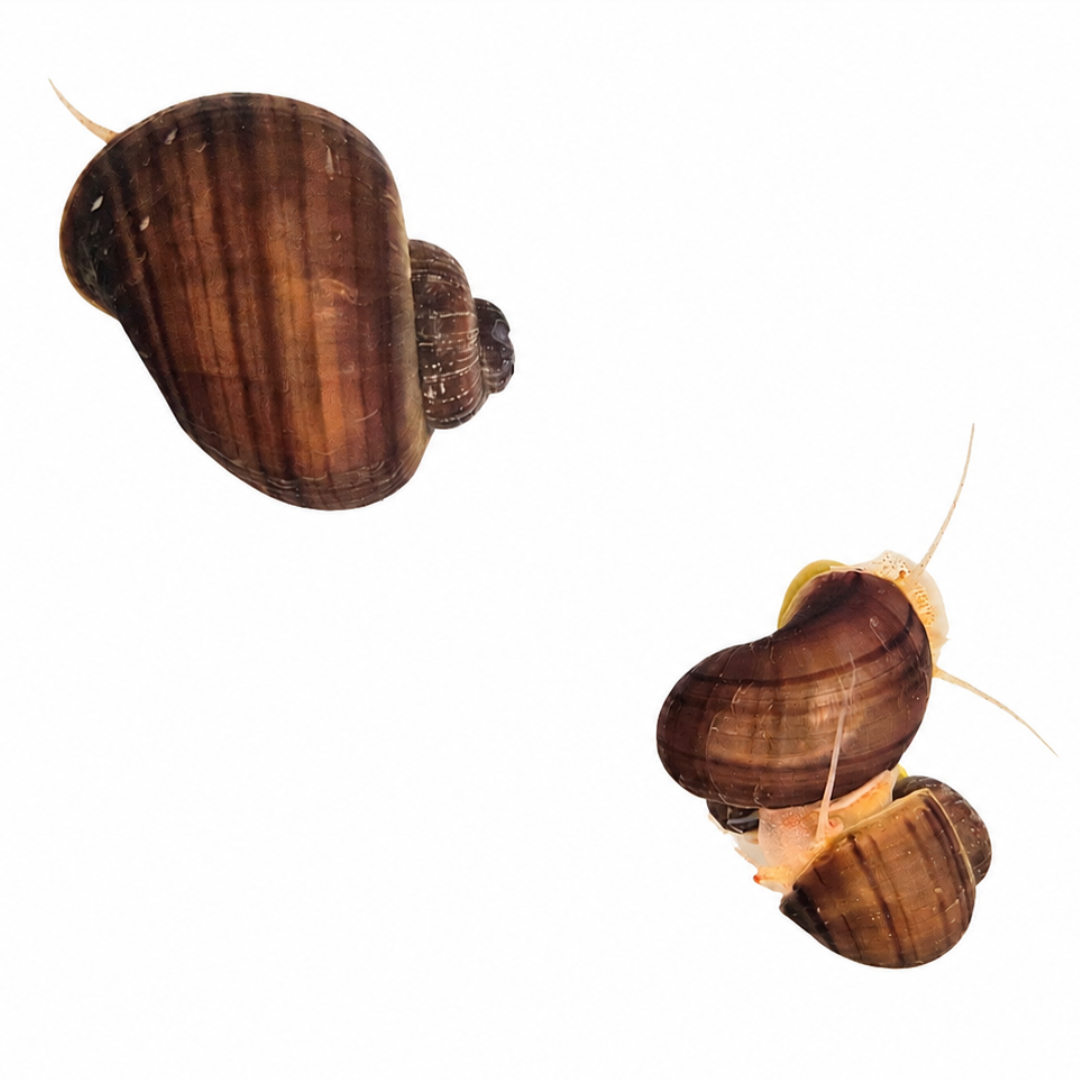
バイオレットアップルスネールは、南米アマゾン川流域に分布するリンゴガイ科の淡水巻貝ポマケア・ディフューサ(Pomacea diffusa)から、観賞用に選抜を重ねて作られた紫色系の品種です。海外では軟体部(足)の色で2系統に分けられ、暗い色の足を持つものを「パープル」、白〜クリーム色の明るい足を持つものを「マゼンタ」と呼びます。日本ではこの2つをまとめてバイオレットアップルスネールとして扱うことが多くなっています。半透明の殻に浮かぶ紫の縞模様は、光の当たり方によって深い暗紫色から華やかな赤紫まで表情を変え、水槽の中で静かに目を引きます。P. diffusaは健全な水草をほとんど食べず、付着藻類や枯れ葉、残り餌などを主に食べる穏やかな貝なので、水草水槽の仲間としても親しまれています。ただし日本で飼育するうえでは、知っておきたいことが三つあります。一つ目は、水稲の害虫として知られる近縁種スクミリンゴガイ(通称ジャンボタニシ)と見分けることです。二つ目は、リンゴガイ科全体が植物防疫法で輸入禁止となっているため、国内で流通する個体は、規制前に持ち込まれた血統を国内で繁殖し続けてきたものが中心だという点です。三つ目は、日本の水道水が世界的に見ても軟らかいため、殻を守るにはカルシウムの補給と弱アルカリ性の水づくりが欠かせないことです。こうしたポイントを押さえれば、愛嬌のある行動と奥深い色の遺伝を楽しめる、魅力的な巻貝です。The Violet Apple Snail is a purple variety developed through repeated selective breeding from Pomacea diffusa, a freshwater snail of the family Ampullariidae native to the Amazon River basin of South America. Overseas, it is divided into two lines by the color of the soft body (foot): those with a dark foot are called “Purple,” and those with a white to cream-colored light foot are called “Magenta.” In Japan, the two are usually treated together as the Violet Apple Snail. The purple stripes floating on its translucent shell shift from deep dark violet to vivid reddish purple depending on the light, quietly catching the eye in the aquarium. P. diffusa rarely eats healthy plants and feeds mainly on algae films, decaying leaves, and leftover food, so it is a popular, peaceful companion for planted tanks. Keepers in Japan, however, should be aware of three things. First, it must be distinguished from its close relative, the Channeled Apple Snail (known locally as “jumbo tanishi”), a well-known rice pest. Second, because the entire family Ampullariidae is banned from import under Japan’s Plant Protection Act, snails available in Japan are mostly descendants of bloodlines brought in before the regulation and bred domestically ever since. Third, Japanese tap water is among the softest in the world, so calcium supplementation and slightly alkaline water are essential for protecting the shell. With these points in mind, it is a charming snail that offers endearing behavior and fascinating color genetics.
基本情報 / Basic Information
学名 / Scientific Name
Pomacea diffusa Blume, 1957
通称 / Common Name
バイオレットアップルスネール、パープルアップルスネール、マゼンタアップルスネール、ミステリースネール(旧来の学名ポマケア・ブリッジシーの名で流通することもある)Violet Apple Snail, Purple Mystery Snail, Magenta Mystery Snail (sometimes still sold under the outdated name Pomacea bridgesii)
Spike-topped Apple Snail, Mystery Snail (Purple / Magenta)
分布 / Distribution
原種はブラジル、ペルー、ボリビアなど南米アマゾン川流域に広く分布する。模式産地はボリビアのサンタクルス。紫色系統は飼育下で作られた品種で、野生には存在しないThe wild species is widespread in the Amazon River basin of South America, including Brazil, Peru, and Bolivia. The type locality is Santa Cruz, Bolivia. The purple lines were developed in captivity and do not occur in the wild.
最大体長 / Max Size
殻径4〜5cm前後で、大きなものは約6.5cmに達する。成貝はゴルフボールほどの大きさになるShell diameter around 4–5 cm, with large individuals reaching about 6.5 cm. Adults grow to roughly the size of a golf ball.
寿命 / Lifespan
飼育下で平均1〜2年、長いもので3年程度。水温が高いと短く、やや低めだと長くなる傾向があるAn average of 1–2 years in captivity, and up to about 3 years. Lifespan tends to be shorter at higher temperatures and longer at slightly cooler ones.
飼育環境 / Aquarium Environment
水槽サイズ / Tank Size
成貝はよく食べ、フンの量も多いため、1匹あたり約20〜40Lの水量が目安です。1〜2匹なら30cmキューブ水槽(約27L)や45cm規格水槽(約35L)以上、複数匹を飼う場合や魚と一緒に飼う場合は60cm規格水槽(約57L)以上が安心です。1匹増やすごとに10〜20Lほど水量を上乗せすると考えると、余裕を保てます。ろ過能力は水槽容量の2倍程度を目安にし、吸水口には稚貝や触角を吸い込まないようスポンジカバーを付けましょうAdults eat a lot and produce plenty of waste, so allow roughly 20–40 L of water per snail. For one or two snails, a 30 cm cube tank (about 27 L) or a standard 45 cm tank (about 35 L) or larger is suitable; for several snails or a tank shared with fish, a standard 60 cm tank (about 57 L) or larger is recommended. Adding about 10–20 L of water volume for each additional snail keeps conditions comfortable. Aim for a filter with a turnover of about twice the tank volume, and fit a sponge cover over the intake to protect juveniles and tentacles.
水温 / Temperature
20〜29℃に耐えられますが、活発さと寿命のバランスが取れるのは22〜26℃です。26〜28℃の高めの水温では成長や繁殖が活発になる一方、寿命は1年〜1年半ほどに縮みやすく、21〜23℃前後では代謝が穏やかになり、2年以上生きることも期待できます。水換えで水温が2〜3℃以上急に下がると、殻の奥深くに閉じこもってしまうことがあるため、新しい水の温度は丁寧に合わせましょうThey tolerate 20–29°C, but 22–26°C offers the best balance between activity and lifespan. At 26–28°C, growth and breeding become more active, but lifespan tends to shorten to about 1–1.5 years; at around 21–23°C, metabolism slows and they may live more than two years. A sudden drop of 2–3°C or more during a water change can cause the snail to withdraw deep into its shell, so match the temperature of new water carefully.
水質 / Water Quality
理想はpH7.5〜8.5(最低でも7.0以上)、総硬度(GH)8〜18、炭酸塩硬度(KH)5〜15の、弱アルカリ性でやや硬めの水です。日本の水道水の硬度は全国平均で炭酸カルシウム換算約50mg/L(総硬度にして約3)と非常に軟らかく、そのまま使うと殻が少しずつ溶けやすくなります。対策としては、サンゴ砂や砕いた貝殻を底床やろ過槽に入れて水質を安定させる、カトルボーン(イカの甲)を水槽に入れておく、餌からもカルシウムを補う、という三つを組み合わせるのがおすすめです。酸性に傾いた水槽のpHを上げるときは、1日あたり0.5以内を目安にゆっくり調整してくださいThe ideal is slightly alkaline, moderately hard water: pH 7.5–8.5 (at least 7.0), GH 8–18, and KH 5–15. Japanese tap water averages only about 50 mg/L as calcium carbonate (roughly 3 GH) nationwide, so if used as is, the shell tends to dissolve little by little. A combination of three measures is recommended: add crushed coral or crushed shells to the substrate or filter to stabilize the water, keep a cuttlebone in the tank, and supplement calcium through food. When raising the pH of an acidic tank, adjust slowly, by no more than about 0.5 per day.
レイアウト / Layout
底床は砂や細かめの砂利に、サンゴ砂や貝殻片を混ぜると水質が安定しやすくなります。水を酸性に傾けるソイルや多量の流木は、本種とはあまり相性が良くありません。最も大切なのは隙間なく閉まるガラスフタです。壁面を伝って水面より上に登る習性があるため、配管やコード周りの切り欠きも塞いで脱走を防ぎましょう。その一方で、呼吸と産卵のために水面からフタまで5〜10cmほどの空間を残しておくことも必要です。ウィローモスやカボンバなどの水草は貝の足場になり、後で紹介する「パラ・スネイリング」と呼ばれる行動も見られるようになりますA sand or fine gravel substrate mixed with crushed coral or shell fragments helps keep water conditions stable. Aqua soils and large amounts of driftwood, which acidify the water, are not a good match for this species. The most important item is a tightly fitting glass lid. Because these snails climb the walls above the waterline, seal any gaps around tubing and cables to prevent escapes. At the same time, leave about 5–10 cm of space between the water surface and the lid for breathing and egg-laying. Plants such as Java moss and Cabomba give the snails footholds, and you may also see the behavior known as “parasnailing,” described later.
注意点 / Precautions
水槽から床に落ちると、数時間で乾いて死んでしまうおそれがあるため、脱走対策は徹底しましょう。巻貝は銅に非常に弱く、銅を含む魚病薬や一部の水草用液肥、銅を含む石材からのわずかな銅でも中毒を起こします。購入時には後述する縫合線の形を確認し、スクミリンゴガイ系の貝ではないことを確かめておくと安心です。リンゴガイ科は植物防疫法により海外からの輸入が原則禁止されており、近縁種のスクミリンゴガイについては、田畑への持ち込みや野外への放流を条例で規制している自治体もあります。飼っている貝や卵、稚貝は決して野外に放したり排水に流したりせず、屋外の容器で水換えをするときは水切りネットを使いましょうA snail that falls onto the floor can dry out and die within a few hours, so take thorough measures against escape. Snails are extremely sensitive to copper, and even trace amounts from copper-based fish medications, some liquid plant fertilizers, or copper-bearing rocks can poison them. When buying, check the shape of the suture (described later) to make sure the snail is not of the Channeled Apple Snail type. Under Japan’s Plant Protection Act, importing any member of Ampullariidae from abroad is prohibited in principle, and some municipalities have ordinances restricting the Channeled Apple Snail from being brought into fields or released into the wild. Never release your snails, eggs, or juveniles outdoors or flush them down the drain, and use a mesh strainer when changing water in outdoor containers.
餌と給餌 / Feeding
餌の種類 / Diet
植物質を中心に何でも食べる雑食性で、水槽内の付着藻類やバイオフィルム、枯れ葉、残り餌をよく食べます。ただし、コケだけでは大きな体を維持できないため、スピルリナ入りの沈下性タブレット、クリルや赤虫などの動物性の餌、湯通しした野菜(ズッキーニ、ホウレンソウ、ケール、キュウリ、ブロッコリーなど)を与えましょう。殻づくりと色の維持には、海外で定番の手作りジェル飼料「スネロ」も役立ちます。無香料のゼラチン(エビと一緒に飼う場合は寒天)に、裏ごしした野菜、炭酸カルシウムの粉末、動物性の餌、スピルリナを混ぜて固めたものですThey are omnivores that eat mostly plant matter, and readily feed on algae films, biofilm, decaying leaves, and leftover food in the tank. Algae alone, however, cannot sustain their large bodies, so offer sinking tablets containing spirulina, animal foods such as krill or bloodworms, and blanched vegetables (zucchini, spinach, kale, cucumber, broccoli, etc.). For shell building and color, the homemade gel food “Snello,” a staple overseas, is also helpful. It is made by mixing puréed vegetables, calcium carbonate powder, animal food, and spirulina into unflavored gelatin (or agar if kept with shrimp) and letting it set.
給餌のポイント / Feeding Tips
「コケ取り用の貝だから餌はいらない」という思い込みは、餓死のいちばんの原因です。沈下性タブレットは2匹に1粒を目安に、1日おき〜数日おきに夜間に与えるとよいでしょう。野菜は30〜60秒ほど湯通しして冷まし、重りで沈めて週2〜3回与えます。食べ残した野菜は水を急激に汚すため、24時間以内に必ず取り除きましょう。餌が足りないと、ふだんは口にしない水草をかじることもあるため、日頃からしっかり餌を与えることが水草を守ることにもつながりますThe belief that “an algae-eating snail needs no food” is the leading cause of starvation. Give about one sinking tablet per two snails at night, every other day to every few days. Blanch vegetables for 30–60 seconds, let them cool, and sink them with a weight two to three times a week. Leftover vegetables quickly foul the water, so always remove them within 24 hours. Underfed snails may also nibble plants they normally ignore, so feeding them well every day helps protect your plants too.
性格と混泳 / Temperament and Tank Mates
性格 / Temperament
攻撃性はまったくなく、とても温厚です。ガラス面をゆっくり這い回ったり、水面で逆さまになって足を漏斗のように丸め、浮いた餌を引き寄せて食べたりと、見ていて飽きない動きを見せてくれます。蓋(ふた)を閉じて1〜2日まったく動かずに休むこともありますが、それ自体は異常ではありませんIt is completely non-aggressive and very gentle. It crawls slowly along the glass and sometimes hangs upside down at the surface, curling its foot into a funnel to draw in floating food, offering endless entertainment. It may also close its operculum and rest without moving for one or two days, which in itself is not a sign of trouble.
混泳の相性 / Compatibility
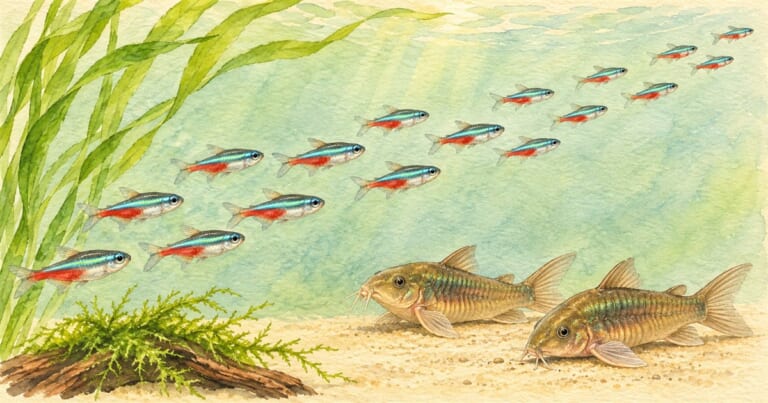
一緒に飼えるかどうかは、相手が貝を攻撃するかどうかで決まります。小型カラシン(テトラ類)、グッピー、ラスボラ、コリドラス、メダカ、ミナミヌマエビ、ヤマトヌマエビ、チェリーシュリンプ、イシマキガイなどとは問題なく暮らせます。とくにエビ類とは相性が良く、アップルスネールのフンはエビの補助食にもなります。ベタは個体差が大きく、気の荒い個体は触角をかじることがあるため、一緒にした直後はよく様子を見てください。フグ類、クラウンローチなどのボティア系ドジョウ、大型シクリッド、金魚、ザリガニ類、巻貝を食べるキラースネールとの同居は避けましょうWhether tank mates are suitable depends on whether they will attack the snail. It lives happily with small characins (tetras), guppies, rasboras, Corydoras, medaka, Neocaridina and Amano shrimp, cherry shrimp, and nerite snails. It pairs especially well with shrimp, and its droppings even serve as supplementary food for them. Bettas vary greatly by individual, and aggressive ones may nip the tentacles, so watch closely right after introducing them. Avoid keeping it with pufferfish, botiid loaches such as clown loaches, large cichlids, goldfish, crayfish, and snail-eating assassin snails.
病気と対策 / Diseases and Prevention
かかりやすい病気 / Common Diseases
感染症よりも、飼育環境が原因のトラブルが中心です。最も多いのは殻の浸食で、殻の先端が白くガサガサに削れる、小さな穴が開く、新しく伸びた殻が薄く脆くなるといった症状が出ます。主な原因は軟らかい水や酸性の水です。次に深刻なのが銅中毒で、わずかな量でも命に関わります。このほか、急な水温低下や水質の変化で、殻の奥に強く閉じこもってしまうこともあります。殻に大きな穴が開いて内側の外套膜腔がむき出しになると、肺がしぼんでしまう危険もありますProblems are mostly caused by the tank environment rather than infections. The most common is shell erosion: the tip of the shell becomes white and rough, small holes appear, or newly grown shell is thin and brittle. The main cause is soft or acidic water. Next in severity is copper poisoning, which can be fatal even in tiny amounts. Snails may also withdraw deep into their shells in response to a sudden temperature drop or change in water quality. If a large hole exposes the mantle cavity inside, there is a risk of lung collapse.
対策と予防 / Prevention
pH7.5以上、GH10以上、KH5以上を保ち、カトルボーンとカルシウムの多い餌を続けると、6〜8週間ほどを目安に殻口から滑らかで丈夫な新しい殻が伸びてきます。小さな穴は貝が内側から塞ぎますが、大きな穴については、卵の殻などの小片を医療用接着剤で貼って補う方法が海外で紹介されています。魚に薬浴させるときは必ず貝を別の水槽に移し、銅が混じった疑いがあるときは50%以上の水を換え、活性炭や銅を吸着するろ材を入れましょう。動かない貝は水から出して臭いを確かめ、強い腐敗臭がして体がだらりと出ている場合は死んでいるので、すぐに取り出してください。なお、リンゴガイの仲間は人に重い病気を起こす寄生虫、広東住血線虫の中間宿主になることが知られています。ただ、この寄生虫は野生のネズミと貝の間を行き来して生活しているため、ネズミと接することのない屋内の水槽で代々繁殖された貝では、寄生のリスクは極めて低いと考えられています。それでも、世話の後は石けんで手を洗い、卵塊は素手で潰さず、飼育している貝を食べないことを習慣にしましょうKeep pH at 7.5 or higher, GH at 10 or higher, and KH at 5 or higher, and continue providing a cuttlebone and calcium-rich food; as a rough guide, smooth, sturdy new shell will start growing from the aperture within about 6–8 weeks. The snail can seal small holes from the inside, and for larger holes, a method of patching them with a fragment of eggshell and medical-grade adhesive has been described overseas. Always move snails to a separate tank before medicating fish, and if copper contamination is suspected, change at least 50% of the water and add activated carbon or a copper-absorbing filter medium. If a snail stops moving, lift it out and smell it; if there is a strong rotten odor and the body hangs limply out of the shell, it has died and should be removed at once. Apple snails are also known to be intermediate hosts of the rat lungworm (Angiostrongylus cantonensis), a parasite that can cause serious illness in people. However, because this parasite completes its life cycle by passing between wild rats and snails, the risk is considered extremely low for snails bred for generations in indoor tanks with no contact with rats. Even so, make it a habit to wash your hands with soap after maintenance, avoid crushing egg clutches with bare hands, and never eat aquarium snails.
増やし方(繁殖) / Breeding
雌雄の判別 / Sexing
オスとメスが分かれているため、繁殖には両方が必要です。貝を水から出し、殻口を上に向けて持つと、しばらくして体が出てきます。このとき殻口の奥を観察し、左側にある呼吸管とは別に、右側(右の触角の上あたり、外套膜のふちの奥)に白っぽい管状の交接器の鞘が見えればオス、見当たらなければメスの可能性が高いと判断できます。蓋をこじ開けたり体を引っ張ったりすると致命傷になるため、絶対にやめましょう。いちばん確実なのは、若い貝を何匹か一緒に飼い、オスがメスの殻に乗って数時間じっとしている交尾の様子を観察することですThe sexes are separate, so both a male and a female are needed for breeding. Hold the snail out of the water with the aperture facing up, and after a while its body will emerge. Look deep inside the aperture: apart from the breathing siphon on the left, if a whitish tubular penis sheath is visible on the right (above the right tentacle, behind the edge of the mantle), it is likely male, and if not, it is likely female. Never pry open the operculum or pull on the body, as this can be fatal. The most reliable approach is to keep several young snails together and watch for mating, in which the male rides on the female’s shell and stays there for several hours.
繁殖形態 / Reproduction
卵を産む卵生で、水中ではなく水面より上に産卵します。メスは主に夜間から早朝にかけて水面より上へ這い上がり、ガラス面やフタの裏に50〜200個ほどの卵が集まった卵塊を産み付けます。卵は産まれた直後は白く、だんだんとクリーム色から淡いサーモンピンクへ変わり、湿った空気の中で2〜4週間かけて育ちます。孵化した稚貝は自分で水中に落ち、そこで暮らし始めます。メスは一度の交尾で数週間から数ヶ月にわたって精子を蓄えておけるため、オスがいない水槽でも有精卵を産むことがありますThis species lays eggs, and it does so above the waterline rather than underwater. Mainly between night and early morning, the female climbs above the water and attaches a clutch of about 50–200 eggs to the glass or the underside of the lid. The eggs are white when freshly laid and gradually turn cream and then pale salmon pink, developing over 2–4 weeks in humid air. The hatchlings drop into the water on their own and begin their lives there. Because a female can store sperm for weeks to months after a single mating, she may lay fertile eggs even in a tank with no male.
繁殖のポイント / Breeding Tips
水面からフタまで5〜10cmの空間を残し、水温を25〜27℃ほどのやや高めに保ち、タンパク質とカルシウムをしっかり与えると産卵しやすくなります。カルシウムが足りないメスの卵は孵化しにくくなるため、繁殖させたい時期はカトルボーンと栄養のある餌を切らさないようにしましょう。卵塊は水に浸かると中の稚貝が呼吸できず死んでしまうため、絶対に水没させないでください。卵を別に管理したい場合は、産卵から24〜48時間ほど待ち、表面が硬くなってから優しく剥がし、湿らせたキッチンペーパーを敷いたフタ付きの容器で温度と湿度を保ちます。孵化が近づくと卵が黒っぽくなり、中の稚貝が透けて見えるようになります。増やしたくない場合は、産卵から24〜48時間以内の柔らかいうちに卵塊を取り除き、野外に出ないよう確実に処分すれば、数を管理できます。紫色の系統を保ちたいときは、ゴールドやチェスナット、野生型など、殻の地色が黄色い個体と同じ水槽で飼わないことが基本です。ペアの相手を選ぶなら、黄色の地色の遺伝子を持たないと考えられているブルーやアイボリーにすると、子どもが野生型の色に戻りにくいとされていますLeave 5–10 cm of space between the water and the lid, keep the water slightly warm at about 25–27°C, and feed plenty of protein and calcium to encourage egg-laying. Eggs from calcium-deficient females hatch poorly, so keep a cuttlebone and nutritious food available whenever you want them to breed. Never let a clutch become submerged, as the developing babies cannot breathe underwater and will die. To care for the eggs separately, wait about 24–48 hours until the surface hardens, gently detach the clutch, and keep it warm and humid in a lidded container lined with damp paper towel. As hatching approaches, the eggs darken and the babies become visible inside. If you do not want more snails, remove clutches within 24–48 hours while they are still soft and dispose of them securely so they cannot reach the wild; this lets you control their numbers. To maintain a purple line, the basic rule is not to keep it in the same tank as snails with a yellow shell base color, such as Gold, Chestnut, or Wild Type. When choosing a mate, Blue or Ivory snails, which are thought not to carry the yellow base gene, are said to make it less likely that offspring revert to the wild-type coloration.
雑学と豆知識 / Trivia and Fun Facts
1. 名前の由来と学名の移り変わり / 1. The Origin of the Name and a Changing Scientific Name
アップルスネール(リンゴガイ)という名前は、丸く大きな殻がリンゴを思わせることに由来するといわれています。バイオレットアップルスネールの原種は、1957年にドイツのヴェルナー・ブルーメによって、ボリビアのサンタクルスで採集された標本をもとに、Pomacea bridgesiiの小型の亜種として記載されました。そのためアクアリウムの世界では長くブリッジシーの名で親しまれ、今でもお店でこの名前を見かけることがあります。しかしその後、ミトコンドリアDNAの解析などによって、限られた地域にだけすむ大型の本来のP. bridgesiiと、アマゾン流域に広く分布し観賞用に繁殖されてきた小型のP. diffusaは、別の種であると考えられるようになりました。つまり、長年「ブリッジシー」と呼ばれて店頭に並んできた貝の多くは、実はP. diffusaだったということです。見慣れた水槽の巻貝にも、分類学の地道な積み重ねが刻まれているのですThe name “apple snail” is said to come from its large, round shell resembling an apple. The ancestral species of the Violet Apple Snail was described in 1957 by the German Werner Blume as a small subspecies of Pomacea bridgesii, based on specimens collected in Santa Cruz, Bolivia. As a result, it was long known in the hobby as “bridgesii,” a name still seen in some shops today. Later, however, mitochondrial DNA analysis and other studies led researchers to regard the true P. bridgesii, a large snail found only in a limited area, and the smaller P. diffusa, widespread in the Amazon basin and bred for the aquarium trade, as separate species. In other words, most of the snails sold for years as “bridgesii” were actually P. diffusa. Even this familiar aquarium snail carries the record of patient taxonomic work.
2. 紫色はどう生まれるのか:3つの遺伝子座による仮説 / 2. How Purple Is Made: The Three-Locus Hypothesis
野生のP. diffusaは、暗い色の体に黄褐色の殻と暗褐色の縞を持つ、いわゆる野生型しか見られません。さまざまな色の品種は、1960年代後半ごろから始まった商業的な繁殖の中で作られてきたとされています。米国の淡水貝類研究者ロブ・ディロン博士は、愛好家と協力する市民科学プロジェクトの中で、この色が三つの独立した遺伝子の組み合わせで決まるという仮説を示しています。一つ目は体の色を決める遺伝子で、優性なら暗い足、劣性の遺伝子を2つそろえると白〜クリーム色の明るい足になります。二つ目は殻の地色を決める遺伝子で、優性なら黄色、劣性を2つそろえると色のない半透明になります。三つ目は縞模様を決める遺伝子で、優性なら暗い紫〜暗褐色の縞が現れ、劣性を2つそろえると無地になります。この仮説の面白いところは、殻の地色が無色で、そこに縞があるときに初めて紫色に見えるという点です。地色が黄色だと縞と重なって茶色に見え、野生型やチェスナットと呼ばれる色になります。さらに、暗い足が殻越しに透けると濃い紫の「パープル」に、明るい足が内側から光を返すと華やかな赤紫の「マゼンタ」になると説明されています。ただし、この考え方はまだ論文として正式に検証されたものではなく、繁殖の経験から導かれた仮説の段階です。縞のない一色の紫や赤褐色といった中間的な色も報告されており、ほかの要因が関わっている可能性も指摘されています。紫の一匹一匹には、まだ解き明かされていない遺伝の謎が秘められているのですWild P. diffusa occurs only in the so-called wild type: a dark body with a yellowish-brown shell and dark brown stripes. The many color varieties are said to have been developed through commercial breeding that began around the late 1960s. American freshwater mollusk researcher Dr. Rob Dillon, through a citizen-science project with hobbyists, has proposed a hypothesis that color is determined by a combination of three independent genes. The first controls body color: the dominant form gives a dark foot, and two copies of the recessive form give a white to cream light foot. The second controls the shell base color: dominant gives yellow, and two recessive copies give a colorless, translucent shell. The third controls stripes: dominant produces dark purple to dark brown bands, and two recessive copies give a plain shell. What makes this hypothesis interesting is that the shell looks purple only when the base color is clear and stripes are present. With a yellow base, the stripes overlap the yellow and look brown, producing the colors called Wild Type or Chestnut. A dark foot showing through the shell creates the deep “Purple,” while a light foot reflecting light from within produces the vivid reddish “Magenta.” This idea, however, has not yet been formally tested in published research and remains a hypothesis drawn from breeding experience. Intermediate colors, such as solid purple without stripes and reddish brown, have also been reported, suggesting that other factors may be involved. Each purple snail carries genetic mysteries yet to be solved.
3. 水槽を舞い降りる「パラ・スネイリング」 / 3. “Parasnailing” Down Through the Tank
ガラス面のいちばん上や背の高い水草のてっぺんまで登った貝が、突然足を離し、殻の中の空気による浮力や水の流れに乗って、ふわりと舞い降りることがあります。パラセーリングのようなこの動きは、海外の愛好家の間で「パラ・スネイリング」と呼ばれ、ネット上の愛好家コミュニティから広まった呼び名とされています。歩いて降りるより素早く、少ない力で底へ移動できるほか、自然の川では流れに乗って新しい餌場へ移る手段になっているのではないかと考えられています。のんびりした巻貝が見せる意外な身軽さは、飼い主にとってうれしい驚きですA snail that has climbed to the top of the glass or a tall plant may suddenly let go and drift gently down, carried by the buoyancy of air in its shell or by the current. This paragliding-like movement is called “parasnailing” among hobbyists overseas, a name said to have spread from online hobbyist communities. It is thought to let the snail reach the bottom faster and with less effort than crawling, and in natural rivers it may be a way to ride the current to new feeding grounds. The unexpected agility of this leisurely snail is a delightful surprise for its keepers.
4. エラと肺を使い分ける呼吸 / 4. Breathing with Both Gills and a Lung
リンゴガイの仲間は、エラと肺の両方で呼吸できるという特徴を持っています。酸素の少ない熱帯の淀んだ水に適応した結果、殻の内側にある外套膜腔が肺の役割を果たすようになり、体の左側から伸び縮みする呼吸管を、シュノーケルのように水面へ伸ばして空気を取り込みます。水面近くで管を伸ばし、ポンプのように動かしている姿を見かけたら、ちょうど息継ぎをしているところです。また、リンゴガイ属には、水が干上がっても蓋を閉じたり泥に潜ったりして、数ヶ月の乾燥に耐えるものがいることが知られています。アマゾンでP. diffusaに近い仲間を調べた研究でも、水位が下がる時期には砂に潜り、蓋を閉じて動きを止め、体の水分が失われるのを防ぐ様子が観察されています。ただし、水槽から落ちた貝は乾いた室内で急速に弱るため、この能力を当てにしてはいけませんApple snails can breathe with both gills and a lung. Adapted to oxygen-poor, stagnant tropical waters, the mantle cavity inside the shell functions as a lung, and the snail extends a retractable siphon from the left side of its body to the surface like a snorkel to take in air. If you see one stretching its tube at the surface and pumping it, it is taking a breath. Some members of the genus Pomacea are also known to survive months of drought by closing their operculum or burrowing into mud when the water dries up. A study of a close relative of P. diffusa in the Amazon likewise observed the snails burying themselves, closing their operculum, and becoming inactive during low-water periods to limit water loss. However, a snail that falls out of the tank weakens quickly in a dry room, so this ability should never be relied upon.
5. 「ミステリースネール」という名前の謎 / 5. The Mystery Behind “Mystery Snail”
英名のミステリースネールの由来には諸説ありますが、飼い主の驚きから生まれた名前だとする説がよく知られています。この貝はオスとメスが分かれていますが、メスは一度の交尾で長いあいだ精子を蓄えておけます。そのため、交尾の場面を見ていなかったり、ペアだと気づいていなかったりしても、ある朝突然、水面の上に卵塊が現れることがあるのです。お店から1匹だけ連れて帰ったメスが、家の水槽で思いがけず卵を産む。そんな「謎」に出会った多くの飼い主の体験が、この親しみやすい名前につながったと考えられていますThere are several theories about the origin of the English name “Mystery Snail,” but a well-known one holds that it came from keepers’ surprise. Although this snail has separate sexes, females can store sperm for a long time after a single mating. So even if no one saw them mate or realized they were a pair, a clutch of eggs may suddenly appear above the waterline one morning. A single female brought home from a shop may unexpectedly lay eggs in your tank. The many keepers who encountered this “mystery” are thought to have inspired this friendly name.
6. スクミリンゴガイとの見分け方 / 6. Telling It Apart from the Channeled Apple Snail
日本で特に気をつけたい近縁種が、水稲の害虫として知られるスクミリンゴガイと、それによく似たラプラタリンゴガイ(ポマケア・マクラタ)です。見分けるときにいちばん頼りになるのは、殻の巻きと巻きの継ぎ目にあたる「縫合線」です。バイオレットアップルスネールは縫合線の溝が浅く、それぞれの巻きの肩がほぼ直角の段になっていて、殻の先端(螺塔)がやや高く尖って見えます。一方スクミリンゴガイは縫合線に深い溝が刻まれ、肩は鋭くなで下がり、螺塔は低めです。卵塊の色も大きく異なり、本種が白からクリーム色、淡いサーモンピンクへと変わるのに対し、スクミリンゴガイは鮮やかな濃いピンクで、一度に数百個もの卵を産みます。米国フロリダで8種の水草を使って行われた比較実験では、侵略的とされるリンゴガイが一部の水草をよく食べて大きく育ったのに対し、P. diffusaはどの水草もほとんど食べず、成長もわずかだったと報告されています。日本で「バイオレットアップルスネールは水草を食べる」と言われることがあるのは、スクミリンゴガイ系の色違いの貝との取り違えや、餌不足でかじってしまったケースが背景にあると考えられていますThe relatives to watch for most carefully in Japan are the Channeled Apple Snail, a known rice pest, and the very similar Island Apple Snail (Pomacea maculata). The most reliable feature for telling them apart is the suture, the seam between one whorl of the shell and the next. The Violet Apple Snail has a shallow suture, with the shoulder of each whorl forming a nearly right-angled step and a somewhat taller, pointed spire. The Channeled Apple Snail has a deeply grooved suture, sharply sloping shoulders, and a lower spire. Egg clutches also differ greatly: this species’ eggs change from white to cream and then pale salmon pink, while the Channeled Apple Snail lays vivid deep pink clutches of several hundred eggs at a time. In a comparative experiment in Florida using eight aquatic plants, invasive apple snails ate some of the plants heavily and grew large, whereas P. diffusa ate very little of any plant and grew only slightly. Claims in Japan that Violet Apple Snails eat plants are thought to stem from confusion with color variants of the Channeled Apple Snail type, or from cases where underfed snails nibbled plants.
7. 日本でのリンゴガイの歴史と輸入規制 / 7. The History of Apple Snails in Japan and Import Restrictions
日本におけるリンゴガイの歴史は、観賞用の本種ではなく、別の種によって大きく形づくられました。1980年ごろ、食用として養殖するために、スクミリンゴガイが台湾や原産地のアルゼンチンから持ち込まれ、各地で養殖が始まります。しかし食材としての需要は伸びず、養殖をやめた施設から逃げ出したり捨てられたりした貝が水田に広がり、イネの苗を食べる被害が深刻になりました。これを受けて、1984年にスクミリンゴガイは植物防疫法上の有害動物に指定され、輸入が禁止されます。さらに2011年の植物検疫制度の見直しによって、規制の対象はリンゴガイ科全体へと広がりました。水草をほとんど食べないP. diffusaもこの中に含まれたため、日本で出会えるバイオレットアップルスネールは、国内で大切に繁殖が続けられてきた貝たちなのです。飼い主一人ひとりが決して放流しないことを守り続けることが、この美しい貝とこれからも付き合っていくための前提になっていますThe history of apple snails in Japan was shaped largely not by this ornamental species but by a different one. Around 1980, the Channeled Apple Snail was brought in from Taiwan and from its native Argentina to be farmed for food, and farming began in many places. Demand for it as food never grew, however, and snails that escaped or were abandoned from closed farms spread into rice paddies, causing serious damage to rice seedlings. In response, the species was designated a harmful animal under the Plant Protection Act in 1984, and its import was banned. Then, with a revision of the plant quarantine system in 2011, the restriction was extended to the entire family Ampullariidae. Because P. diffusa, which rarely eats plants, was included, the Violet Apple Snails available in Japan are snails that have been carefully bred within the country. Every keeper’s commitment never to release them is the foundation for continuing to enjoy this beautiful snail.
8. 卵に秘められた「植物の種」のような守り方 / 8. A Seed-Like Defense Hidden in the Eggs
リンゴガイの卵は、水面の上という目立つ場所に産み付けられるため、天敵から身を守る仕組みが発達しています。面白いことに、その守り方は系統によって大きく異なります。スクミリンゴガイの鮮やかなピンクの卵には、神経や腸を傷つける毒性のタンパク質が含まれており、派手な色は「食べると危険」と知らせる警告色として働いていると考えられています。一方、2020年に発表されたP. diffusaの卵の研究では、毒ではなく、「PdPV1」と名付けられた消化されにくいタンパク質が大量に蓄えられていることがわかりました。このタンパク質は煮沸や強い酸・アルカリにも壊れにくく、消化酵素でも分解されません。マウスに与えても消化されないまま排出され、腸の表面にくっつくことで、食べた相手に「これは食べても得にならない」と感じさせる働きがあると考えられています。毒で撃退するのではなく、食べても栄養にならない卵にしてしまうこの方法は、植物の種子が身を守る仕組みによく似ており、動物では珍しい例として注目されています。淡い色の卵塊には、静かながら巧みな守りが備わっているのですBecause apple snail eggs are laid in conspicuous places above the water, they have developed ways to protect themselves from predators. Interestingly, the strategy differs greatly between lineages. The bright pink eggs of the Channeled Apple Snail contain a toxic protein that harms the nerves and intestines, and the vivid color is thought to act as a warning that they are “dangerous to eat.” In contrast, a study of P. diffusa eggs published in 2020 found that instead of a toxin, they store large amounts of a hard-to-digest protein named PdPV1. This protein resists boiling and strong acids and alkalis, and is not broken down by digestive enzymes. When fed to mice, it passed through undigested, and by binding to the gut surface it is thought to make predators feel that “eating this is not worth it.” Rather than repelling enemies with poison, this approach makes the eggs useless as food, much like the way plant seeds defend themselves, and it has attracted attention as a rare example among animals. The pale egg clutches carry a quiet but clever defense.
9. 眼がまるごと再生する:最新の研究から / 9. Regrowing an Entire Eye: From Recent Research
リンゴガイの仲間は、再生医学の分野でも注目を集めています。2025年に科学誌ネイチャー・コミュニケーションズで発表された研究では、近縁種のスクミリンゴガイが持つ、角膜、水晶体、網膜を備えた人間とよく似た「カメラ眼」が、切り取られても約28日でほぼ元通りの形に再生することが示されました。再生は、傷がふさがる段階から始まり、最終的に眼の各部分が成熟していくまで、いくつかの段階を追って進むことがわかっています。28日目の時点でも、もとの眼とは働き方の異なる遺伝子が1,000個以上残っていたことから、見た目が整った後もしばらく成熟が続いていると考えられています。研究チームはゲノム編集の技術も確立し、人間を含む脊椎動物の眼づくりに欠かせない遺伝子pax6を働かなくすると、リンゴガイでも眼が作られないことを確かめました。これは、貝と人間の眼が遺伝子のレベルでも共通の仕組みを持っていることを示しています。人間の眼は一度大きく傷つくと元に戻りませんが、研究者たちは、リンゴガイの再生の仕組みを調べることで、将来、眼の病気やけがの治療を考える手がかりが得られると期待しています。水槽で見慣れた巻貝の仲間が、最先端の科学の舞台にも立っているのですApple snails are also drawing attention in regenerative medicine. A study published in Nature Communications in 2025 showed that the camera-type eye of the related Channeled Apple Snail, which, much like the human eye, has a cornea, lens, and retina, regrows to nearly its original form about 28 days after being removed. Regeneration proceeds in several stages, starting with wound closure and ending with the maturation of each part of the eye. Even on day 28, more than 1,000 genes were still behaving differently from those in the original eye, suggesting that maturation continues for some time after the eye looks complete. The team also established genome-editing techniques and confirmed that when pax6, a gene essential for eye development in vertebrates including humans, is disabled, apple snails also fail to form eyes. This shows that snail and human eyes share common mechanisms even at the genetic level. Human eyes cannot recover from serious damage, but researchers hope that studying how apple snails regenerate will offer clues for treating eye diseases and injuries in the future. A relative of this familiar aquarium snail is also standing on the stage of cutting-edge science.
まとめ / Conclusion
バイオレットアップルスネールは、半透明の殻に浮かぶ紫の縞模様と、ゆったりした動きの合間に見せる意外な身軽さで、水槽に穏やかな彩りと楽しさを添えてくれる巻貝です。健全な水草をほとんど食べない性質は水草水槽の仲間として心強く、エビや小型魚とも自然に暮らしをともにします。日本の軟らかい水に負けないよう、弱アルカリ性の水とたっぷりのカルシウムを用意してあげることが、つややかな紫を長く楽しむいちばんの近道です。With purple stripes floating on its translucent shell and a surprising agility that appears between its leisurely movements, the Violet Apple Snail brings gentle color and delight to the aquarium. Its tendency to leave healthy plants alone makes it a reliable companion for planted tanks, and it lives naturally alongside shrimp and small fish. Providing slightly alkaline water and plenty of calcium to counter Japan’s soft water is the surest way to enjoy its glossy purple shell for a long time.
パープルとマゼンタの微妙な色の違いを見比べたり、色の遺伝を考えながら繁殖に挑んだりと、付き合うほどに奥深さを感じられるのもこの貝ならではの魅力です。国内で受け継がれてきた貴重な血統だからこそ、決して野外に放さず、水槽の中で最後まで責任を持って見守りたいものです。そうして迎えた小さな紫の殻は、毎日水槽をのぞく時間をきっと豊かなものにしてくれるでしょう。Comparing the subtle color differences between Purple and Magenta, or trying your hand at breeding while thinking about color genetics, this snail reveals more depth the longer you keep it. Because these are precious bloodlines carried on within Japan, they deserve to be cared for responsibly in the aquarium for their whole lives and never released into the wild. A small purple shell welcomed this way will surely enrich every moment you spend looking into your tank.
Crusio, W. (1979). A revision of Anubias Schott (Araceae). (Primitiae Africanae XII). Mededelingen Landbouwhogeschool Wageningen, 79(14), 1–48.
Brown, N. E. (1901). Araceae. In: Thiselton-Dyer, W. T. (ed.), Flora of Tropical Africa, 8(1). London: Lovell Reeve & Co.
Mayo, S. J. et al. (2024). Araceae. Flore du Gabon, 63, 1–137. Paris: Muséum National d’Histoire Naturelle; Weikersheim: Margraf Publishers; Meise Botanic Garden.
Govaerts, R. & Frodin, D. G. (2002). World Checklist and Bibliography of Araceae (and Acoraceae). Kew: The Board of Trustees of the Royal Botanic Gardens, Kew.
Kasselmann, C. (2003). Aquarium Plants. Malabar, Florida: Krieger Publishing Company.
Larkin, P. J. & Scowcroft, W. R. (1981). Somaclonal variation — a novel source of variability from cell cultures for plant improvement. Theoretical and Applied Genetics, 60, 197–214. https://doi.org/10.1007/BF02342540
Korth, K. L. et al. (2006). Medicago truncatula mutants demonstrate the role of plant calcium oxalate crystals as an effective defense against chewing insects. Plant Physiology, 141(1), 188–195. https://doi.org/10.1104/pp.106.076737






コメント