

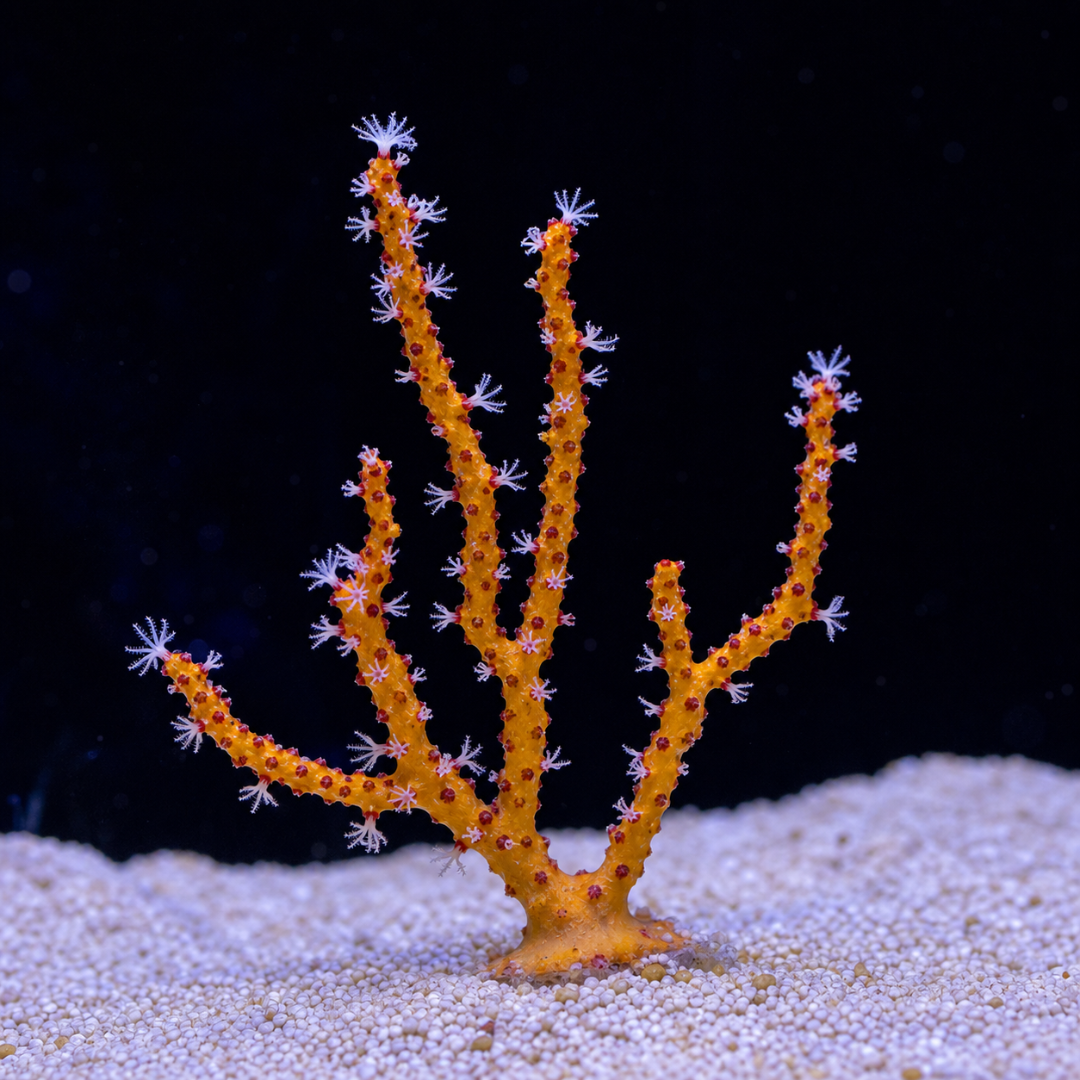
解説 / Description
カリビアンゴルゴニアは、カリブ海、西部大西洋、メキシコ湾のサンゴ礁に広く見られる八放サンゴの総称です。一本の硬い石灰質骨格で形を保つイシサンゴとは異なり、ゴルゴニンと呼ばれるしなやかな軸と、共肉に埋め込まれた微小な骨片によって、樹枝状、羽状、扇状などの立体的な群体をつくります。流れを受けて枝全体がゆっくり揺れる姿は、水槽に自然な奥行きと動きを与えてくれます。日本で「カリビアンゴルゴニア」として流通する個体には複数の属や種が含まれるため、飼育前には褐虫藻を持つ好日性タイプか、給餌に全面的に依存する陰日性タイプかを見分けることが重要です。ここでは、国内で比較的多く見られる好日性タイプを中心に解説します。 Caribbean gorgonians are a broad group of octocorals found throughout coral reefs of the Caribbean Sea, the western Atlantic, and the Gulf of Mexico. Unlike stony corals supported by a rigid calcareous skeleton, they form branching, feather-like, or fan-shaped colonies with a flexible proteinaceous axis called gorgonin and microscopic calcareous sclerites embedded in the living tissue. Their colonies sway gently in moving water, adding depth and natural motion to an aquarium. Because specimens sold as “Caribbean gorgonians” may belong to several genera and species, the first essential step is to determine whether the colony is photosynthetic and contains symbiotic algae, or non-photosynthetic and fully dependent on frequent feeding. This guide focuses mainly on the photosynthetic forms more commonly encountered in the Japanese aquarium trade.
基本情報 / Basic Information
| 学名 / Scientific Name | Octocorallia: Malacalcyonacea 流通名が総称であるため種を一つに特定できません。代表的な属には Eunicea、Plexaura、Antillogorgia、Pterogorgia などがあります。The trade name refers to a group rather than a single species. Representative genera include Eunicea, Plexaura, Antillogorgia, and Pterogorgia. |
|---|---|
| 通称 / Common and English Names | カリビアンゴルゴニア、カリブ産ヤギ、ヤギ類、ウミウチワ類Caribbean gorgonian, sea rod, sea plume, sea fan |
| 分類 / Classification | 刺胞動物門・八放サンゴ亜綱・無孔目。従来はウミウチワ科やムチヤギ科などに整理されてきましたが、分子系統解析によって一部の伝統的な科が多系統または側系統であることが示され、分類は現在も見直しが続いています。Phylum Cnidaria, subclass Octocorallia, order Malacalcyonacea. These corals were traditionally arranged in families such as Gorgoniidae and Plexauridae, but molecular phylogenetic studies have shown that some traditional families are polyphyletic or paraphyletic, and their classification continues to be revised. |
| 分布 / Distribution | カリブ海、西部大西洋、メキシコ湾。浅いサンゴ礁から中深度サンゴ礁生態系まで、属や種に応じた水深と流況に分布します。Caribbean Sea, western Atlantic Ocean, and Gulf of Mexico. Depending on the genus and species, they occur from shallow coral reefs to mesophotic coral ecosystems. |
| 最大サイズ / Maximum Size | 属や種、群体形によって大きく異なるため、一律の最大値は定められません。購入時には枝の高さだけでなく、揺れ幅と将来の分枝スペースも含めて設置場所を考えます。Maximum colony size varies greatly among genera, species, and growth forms, so no single value applies to the entire group. Plan aquarium space not only for the present height but also for the colony’s swaying range and future branching. |
| 寿命 / Lifespan | 種ごとの正確な寿命は十分に明らかではありません。群体性で成熟後も成長を続けるため、安定した環境では長期維持と継続的な枝分かれを楽しめます。Precise species-specific lifespans are not well established. As colonial organisms with continued growth after maturity, they can be maintained for long periods and may keep producing new branches under stable conditions. |
飼育環境 / Aquarium Environment
| 水槽サイズ / Tank Size | 実用上の目安は60cm規格水槽以上、約57L以上です。大きな群体や複数個体をゆったり配置する場合は、90cm規格水槽、約157L以上が扱いやすくなります。必要水量そのものよりも、枝が壁や他のサンゴへ触れず、太い水流を通せる空間を確保できることが重要です。A practical starting point is a standard 60 cm aquarium of about 57 L or larger. For a large colony or several specimens, a standard 90 cm aquarium of about 157 L or more is easier to manage. More important than volume alone is having enough open space for broad water movement and for the branches to sway without touching the glass or neighboring corals. |
|---|---|
| 水温・比重 / Temperature and Specific Gravity | 水温24~27℃、比重1.024~1.026を目安にします。28℃以上の高温や急激な変化は、ポリプの閉鎖、白化、組織壊死につながるおそれがあります。夏季は水槽用クーラーを用い、蒸発による比重変化は自動給水器で抑えると安定します。Maintain 24–27°C and a specific gravity of 1.024–1.026. Temperatures above 28°C or rapid fluctuations may lead to closed polyps, bleaching, or tissue necrosis. An aquarium chiller is valuable during hot summers, and an automatic top-off system helps prevent salinity swings caused by evaporation. |
| 水質 / Water Quality | 好日性タイプでは硝酸塩2.0~15.0ppm、リン酸塩0.03~0.10ppmが示された目安です。硝酸塩とリン酸塩を完全なゼロへ追い込む極端な貧栄養環境は避けます。栄養塩の枯渇は共生藻や微小生物群の働きを損ない、渦鞭毛藻の増殖を招く一因になり得ます。pH、KH、カルシウム、マグネシウムは急変させず、一般的なリーフ水槽として安定した状態を保つことを優先します。For photosynthetic forms, nitrate of 2.0–15.0 ppm and phosphate of 0.03–0.10 ppm are useful target ranges. Avoid forcing both nutrients to absolute zero in an extreme ultra-low-nutrient system. Nutrient depletion can impair symbiotic algae and beneficial microbial communities and may contribute to dinoflagellate outbreaks. Keep pH, alkalinity, calcium, and magnesium stable within a normally maintained reef-aquarium range rather than allowing abrupt changes. |
| 光量 / Lighting | 好日性タイプは中程度からやや強めの光を好み、PAR50~150程度が目安です。青色と白色を含むフルスペクトルLEDを用い、新規導入時は底面付近や日陰から始め、1~2週間かけて徐々に明るい位置へ移して光順応させます。赤や黄色が鮮やかで白いポリプを持つ陰日性タイプは、光量よりも頻繁な給餌が重要です。Photosynthetic forms generally prefer moderate to moderately strong light, with a target of roughly PAR 50–150. A full-spectrum LED combining blue and white light is suitable. Begin a newly introduced colony near the bottom or in partial shade and increase exposure gradually over one to two weeks. Bright red or yellow non-photosynthetic forms with white polyps depend far more on frequent feeding than on light intensity. |
| 水流 / Water Flow | 最も重要な管理項目の一つです。枝全体が左右へ大きく、ゆっくり揺れるような太い間欠水流やランダムフローを与えます。ポンプからの細く強い一方向流を直撃させると、組織が傷んだり剥離したりするおそれがあります。表面にデトリタス、糸状藻類、シアノバクテリアが残らない流れを目指します。Water movement is one of the most important husbandry factors. Provide broad, alternating, or randomized flow that makes the entire colony sway slowly from side to side. A narrow, powerful, one-directional jet aimed directly at the tissue may cause abrasion or peeling. The flow should keep detritus, filamentous algae, and cyanobacteria from accumulating on the branches. |
| レイアウト・配置 / Layout and Placement | 群体を立てた状態で安定させ、枝の両面へ水が回る開けた場所に配置します。根元は小さな岩やフラグ基部へ確実に固定し、転倒して砂をかぶったり、他のサンゴへ接触したりしないようにします。照明だけで位置を決めず、水流の通り道を優先してください。Secure the colony upright in an open position where water can pass across both sides of the branches. Fix the base firmly to a small rock or frag support so that the colony cannot fall into sand or against neighboring corals. Placement should be chosen primarily for water movement, not for light alone. |
| 注意点 / Precautions | 購入時には好日性か陰日性かを必ず確認します。高温、比重の急変、栄養塩の完全枯渇、枝への糸状藻類の付着は大きな負担になります。数日から数週間ポリプを閉じ、表面に薄い膜をつくる「脱皮」が見られることがありますが、膜を手で剥がさず、適切な水流の中で自然に落ちるのを待ちます。Always determine whether the specimen is photosynthetic or non-photosynthetic before purchase. High temperature, rapid salinity changes, complete nutrient depletion, and filamentous algae growing on the branches are major stressors. A colony may close its polyps for days or weeks and form a thin surface film during a normal shedding cycle. Do not peel the film by hand; maintain suitable flow and allow it to detach naturally. |
餌と給餌 / Feeding
| 栄養の得方・餌 / Nutrition and Diet | 好日性の Eunicea、Plexaura、Antillogorgia、Pterogorgia などは、組織内の共生褐虫藻による光合成から多くのエネルギーを得ます。同時にポリプで微細な餌を捕らえるため、微粉末状のコーラルフード、生きた植物プランクトン、コペポーダ、細かく砕いた冷凍ホワイトシュリンプなどを利用できます。陰日性の Diodogorgia や Swiftia は光合成に頼れず、外部からの給餌が生命線になります。Photosynthetic genera such as Eunicea, Plexaura, Antillogorgia, and Pterogorgia obtain much of their energy from symbiotic algae in their tissues. Their polyps also capture fine suspended food, so suitable options include powdered coral foods, live phytoplankton, copepods, and finely minced frozen white shrimp. Non-photosynthetic genera such as Diodogorgia and Swiftia cannot rely on photosynthesis and must obtain their energy from external feeding. |
|---|---|
| 給餌のポイント / Feeding Tips | 好日性タイプでも週に数回の給餌を行うと、ポリプの伸び、肉付き、枝の成長を支えやすくなります。ポリプが開いている時間に、ごく細かな餌を水流へ乗せて群体全体へ行き渡らせます。給餌中はプロテインスキマーなどの主ろ過を10~15分ほど止め、ウェーブメーカーは動かしたままにすると捕食しやすくなります。陰日性タイプは1日数回の継続給餌が必要で、水質悪化を抑える強力なろ過も欠かせません。Even photosynthetic forms benefit from feeding several times per week, which can support polyp extension, tissue condition, and branch growth. Feed very fine particles while the polyps are open and let the current distribute them across the whole colony. Turning off the protein skimmer and main filtration for about 10–15 minutes while leaving circulation pumps running can improve capture. Non-photosynthetic forms require repeated feeding several times each day and equally strong filtration to control the resulting nutrient load. |
性質と相性 / Characteristics and Compatibility
| 形態・成長 / Form and Growth | 多数の小さなポリプが共肉でつながった群体性の八放サンゴです。柔軟なゴルゴニン軸、または分類群に応じた石灰質成分を含む軸を持ち、樹枝状、羽状、扇状に成長します。成長は基本的に不定成長で、成熟後もポリプと枝を反復的に増やします。自然界では嵐などで折れた枝が定着し、新しいクローン群体になることがあります。These are colonial octocorals composed of many small polyps connected by common tissue. Depending on the group, they are supported by a flexible gorgonin axis or an axis containing different amounts of calcareous material, and they grow into branching, feather-like, or fan-shaped colonies. Growth is generally indeterminate, with new polyps and branches added repeatedly after maturity. In nature, fragments broken during storms may attach and develop into new clonal colonies. |
|---|---|
| 攻撃性 / Aggression | 目立つスイーパー触手を伸ばすタイプとしては扱われませんが、刺胞動物であり、組織にはテルペノイドやプロスタグランジンなどの二次代謝産物を持つ種類があります。種ごとの接触毒性や化学的干渉の強さは一律ではないため、他のサンゴとは直接触れない間隔を確保します。They are not generally managed as corals with conspicuous long sweeper tentacles, but they are cnidarians, and some species contain secondary metabolites such as terpenoids and prostaglandins. Because contact effects and chemical interactions vary among species, maintain enough space to prevent direct contact with neighboring corals. |
| 相性 / Compatibility | 水質と水流の要求が近いリーフ水槽の生体と同居できますが、枝をかじる可能性があるブダイ類、ヤッコ類などのサンゴ食性・雑食性魚には注意が必要です。大型の貝や甲殻類が根元を押して転倒させないよう、固定を確実にします。他のサンゴやイソギンチャクとは接触しない配置が安全です。They can be kept with reef organisms that share similar water-quality and flow requirements, but coral-feeding or omnivorous fishes such as some parrotfishes and angelfishes may bite the branches. Secure the base so that large snails or crustaceans cannot topple the colony. Avoid direct contact with other corals and anemones. |
病気と対策 / Diseases and Prevention
| 不調・病気・害虫 / Problems, Diseases, and Pests | 飼育下で目立つ不調は、ポリプの長期閉鎖、色落ち、白化、枝先や根元からの組織壊死、糸状藻類やシアノバクテリアの付着です。高温、急な水質変化、水流不足、極端な栄養塩不足が引き金になります。表面の薄い膜が剥がれる脱皮は正常な清掃行動の場合があるため、病変との見分けが必要です。自然界のウミウチワ類では、真菌 Aspergillus sydowii に関連するアスペルギルス症が知られています。Common signs of trouble in aquaria include prolonged polyp closure, fading, bleaching, tissue necrosis beginning at branch tips or the base, and overgrowth by filamentous algae or cyanobacteria. High temperature, sudden water-quality changes, insufficient flow, and extreme nutrient depletion may trigger these problems. A thin peeling film can be part of a normal shedding and cleaning cycle, so it must be distinguished from true tissue lesions. In wild sea fans, aspergillosis associated with the fungus Aspergillus sydowii is a documented disease. |
|---|---|
| 対策と予防 / Prevention | 水温、比重、栄養塩を安定させ、枝全体を洗う太い水流を保つことが基本です。新規個体は観察しやすい環境で状態を確認し、付着藻や組織障害を持ち込まないようにします。脱皮中は触らず、水流で自然に膜が落ちるのを待ちます。壊死が進行する場合は原因となる環境を先に是正し、必要に応じて隔離します。ディップや患部の切除は属種と原因によって適否が異なるため、無理に一律処置を行わないことが大切です。The foundation of prevention is stable temperature, salinity, and nutrients together with broad flow that washes the full colony. Observe new specimens closely in a controlled setting to reduce the risk of introducing algae or damaged tissue. During normal shedding, avoid handling and let the film detach under suitable flow. If necrosis progresses, correct the environmental cause first and isolate the colony when necessary. Dips and surgical removal of damaged tissue are not universally appropriate and should not be applied indiscriminately without considering the genus, species, and cause. |
増やし方(繁殖・株分け) / Reproduction and Propagation
| 無性生殖・株分け / Asexual Reproduction and Fragmentation | 枝を切り分けて新しい基質へ固定するフラッギングが可能です。自然界でも物理的に折れた枝が基質へ定着し、親群体と同じ遺伝的個体を増やすことがあります。Plexaura kuna では、一定の力で折れやすい骨格上の薄い部分が断片化による増殖を助ける例として知られています。Propagation by fragmentation is possible by cutting a healthy branch and securing it to a new substrate. In nature, physically broken branches may settle and produce colonies genetically identical to the parent. Plexaura kuna is known for localized thinner skeletal points that can facilitate fragmentation under physical force. |
|---|---|
| 有性生殖 / Sexual Reproduction | 有性生殖の方式や雌雄のあり方は属や種によって異なり、カリビアンゴルゴニア全体を一つの型で説明することはできません。少なくとも Plexaura homomalla では、プラヌラ幼生が無節石灰藻に覆われた基質を選んで定着することが知られ、石灰藻が幼生にとって重要な環境シグナルになることが示されています。Modes of sexual reproduction and sexual organization vary among genera and species, so the entire group cannot be described by a single pattern. In Plexaura homomalla, planula larvae are known to preferentially settle on substrates covered with crustose coralline algae, showing that these algae can provide an important environmental cue. |
| 増殖のポイント / Propagation Tips | ポリプがよく開き、組織に欠損や藻類の付着がない健康な親株を選びます。清潔な刃物で枝を切り、切断面をつぶさないようにして小岩やフラグ基部へ固定します。回復中は強い直撃流を避けつつ、切断部に汚れがたまらない水流を与えます。作業後は親株とフラグの両方を観察し、組織壊死が広がらないか確認します。Choose a healthy parent colony with good polyp extension and no tissue loss or algal overgrowth. Cut a branch with a clean blade, avoid crushing the cut surface, and secure it to a small rock or frag base. During recovery, avoid a harsh direct jet while maintaining enough movement to prevent debris from settling on the cut. Observe both the parent and the fragment afterward for spreading tissue necrosis. |
毒性と取り扱い / Toxicity and Handling
| 毒性 / Toxicity | 刺胞動物として刺胞を持つほか、種類によってテルペノイド、プロスタグランジンなどの生理活性を持つ二次代謝産物を高濃度に蓄えます。これらは自然界で捕食者や病原体への化学防御として働きます。人への影響は種や接触状況で異なるため、無害と決めつけないことが大切です。As cnidarians, they possess nematocysts, and some species accumulate high concentrations of biologically active secondary metabolites, including terpenoids and prostaglandins. These compounds function as chemical defenses against predators and pathogens in nature. Effects on people vary by species and exposure, so the animals should not be assumed to be harmless. |
|---|---|
| 取り扱い上の注意 / Handling Precautions | 移動、固定、フラッギングの際は防水手袋を着用し、切断作業では保護眼鏡も使用します。傷口、目、口へ組織や粘液を触れさせず、作業後は器具と手を十分に洗います。枝を強く握ると共肉や軸を傷めるため、根元や固定基部を支えて短時間で扱います。Wear waterproof gloves when moving, mounting, or fragmenting a colony, and use eye protection during cutting. Keep tissue and mucus away from wounds, eyes, and the mouth, and wash tools and hands thoroughly afterward. Do not squeeze the branches; support the base or mounting point and keep handling brief. |
雑学と豆知識 / Trivia and Fun Facts
| 小さな骨片が分類の地図になった / Tiny Sclerites Became a Taxonomic Map | ゴルゴニアは水深や波の強さによって枝の太さや群体形が変わりやすく、外見だけでは種を見分けにくい生き物です。20世紀後半、フレデリック・M・ベイヤーは組織内の骨片を走査型電子顕微鏡で詳しく観察し、その形や配列が分類に使えることを示しました。水槽では同じ仲間に見える二つの群体も、顕微鏡の世界へ入ると異なる装飾を持つ骨片が並び、まるで小さな標識のように系統を語っています。Gorgonian colony shape changes readily with depth and wave energy, making identification by appearance alone difficult. In the latter half of the twentieth century, Frederick M. Bayer used scanning electron microscopy to study the minute sclerites embedded in their tissues and demonstrated that their shapes and arrangements could guide classification. Two colonies that look similar in an aquarium may reveal very different microscopic ornaments, like tiny signposts recording their lineage. |
|---|---|
| カリブ海の羽状ヤギに戻った名前 / A Name Restored to Caribbean Sea Plumes | カリブ海の羽状ゴルゴニアは、長い間インド太平洋の仲間とともに Pseudopterogorgia 属へ入れられていました。しかし分子系統と形態を組み合わせた再検討によって、カリブ海の系統が独自に進化したことが示され、Antillogorgia 属が復活しました。化粧品原料で知られた Pseudopterogorgia elisabethae も、現在は Antillogorgia elisabethae と呼ばれます。学名は固定された札ではなく、研究の進展とともに生物の歴史へ近づいていく仮説なのです。Caribbean sea plumes were long placed in the genus Pseudopterogorgia together with Indo-Pacific relatives. A combined molecular and morphological reassessment showed that the Caribbean lineage had evolved independently, leading to the restoration of the genus Antillogorgia. The species once known as Pseudopterogorgia elisabethae, famous as a source of cosmetic ingredients, is now called Antillogorgia elisabethae. Scientific names are not permanent labels; they are hypotheses refined as research reveals more of evolutionary history. |
| 扇のような群体は海の立体都市 / Fan-Shaped Colonies Form Underwater Cities | カリブ海のサンゴ礁でゴルゴニアが広がると、平坦だった海底に枝と隙間が生まれます。その複雑な三次元構造は、小魚や無脊椎動物に隠れ家や生活場所を提供します。一本の群体が流れを受ける姿は優雅ですが、生態系の視点では、多数の生物が行き交う小さな立体都市でもあります。水槽内で十分な揺れ幅を確保することは、美観のためだけでなく、この生き物本来の構造を尊重することにもつながります。When gorgonians spread across a Caribbean reef, their branches and spaces add complexity to an otherwise flatter seabed. This three-dimensional structure provides shelter and living space for small fishes and invertebrates. A single colony swaying in the current may look graceful, but ecologically it also resembles a small underwater city used by many organisms. Giving the colony enough room to move in an aquarium respects not only its beauty but also its natural structural role. |
| 病原体に応じて防御を強める / Defenses Intensify Where Infection Appears | カリブ海のウミウチワ類を襲ったアスペルギルス症は、ゴルゴニアが受け身の生き物ではないことを明らかにしました。病原体を感知すると、キチン分解酵素、メラニン形成、活性酸素など複数の防御反応が動き、病変周辺では抗真菌活性が高まります。健康な群体では成長の最前線に防御力が集まり、感染が起きると必要な場所へ反応を集中させるという、植物の誘導防衛にも似た仕組みが見られます。Aspergillosis in Caribbean sea fans revealed that gorgonians are far from passive organisms. When a pathogen is detected, several defenses can be activated, including chitin-degrading enzymes, melanin-related responses, and reactive oxygen production, while antifungal activity rises around the lesion. Healthy colonies concentrate protection near actively growing margins, yet redirect defensive activity toward infected areas when necessary, resembling inducible defenses known from plants. |
| 海の化学防御が化粧品へつながった / Marine Chemical Defense Reached the Cosmetics Industry | Antillogorgia elisabethae から見つかったプセウドプテロシン類は、ゴルゴニアが生み出す三環式ジテルペン配糖体です。自然界では生物間の競争や防御に関わる化学物質が、抗炎症作用と皮膚修復作用に注目され、1990年代にはスキンケア製品へ利用されました。サンゴ礁で生き残るために進化した化学が、人の暮らしへ別の形で現れた、海洋生物探索の象徴的な事例です。Pseudopterosins discovered from Antillogorgia elisabethae are tricyclic diterpene glycosides produced by the gorgonian. Compounds involved in ecological competition and defense attracted attention for anti-inflammatory and skin-repair properties and were used in skin-care products during the 1990s. It is a landmark example of chemistry evolved for survival on a coral reef finding an entirely different role in human life. |
| 切り取ることが再生を促す収穫モデル / A Harvest Model Built Around Regrowth | プセウドプテロシンの需要が高まったバハマでは、群体を根元から除去せず、枝先だけを刈り取る方法が採用されました。残った基部は再び枝とポリプを増やし、調査では剪定後も収穫前と同等、あるいは対照群以上の速度で再生する例が示されました。ゴルゴニアの不定成長と断片化という生物学を理解したからこそ成立した、資源利用と保全を結ぶモデルです。As demand for pseudopterosins increased in the Bahamas, harvesters clipped branch tips rather than removing whole colonies from the base. The remaining colony resumed the production of branches and polyps, and field studies found examples of regrowth at rates comparable to, or faster than, unharvested controls. The model connects resource use with conservation by working with the biology of indeterminate growth and fragmentation. |
| 日本へ届くまでを支える採集規制 / Collection Rules Shape the Route to Japan | フロリダ州では観賞用八放サンゴの商業採集に年間最大70,000群体の枠があり、ウミウチワの一部は採集禁止です。根元に付けられる基質も周囲1インチ以内に制限され、電動工具や化学物質の使用は認められていません。日本で見かける一群体の背後には、ライセンスを持つ採集者、輸出施設、空輸、輸入卸という経路と、サンゴ礁の岩まで持ち去らないための細かな管理があります。Florida regulates commercial collection of ornamental octocorals with a combined annual quota of up to 70,000 colonies, while certain sea fans are prohibited from collection. The amount of attached substrate is restricted to within one inch of the holdfast, and powered tools or chemicals are not permitted. Behind a single colony seen in Japan is a chain of licensed collectors, export facilities, air transport, and import wholesalers, together with detailed rules designed to prevent the reef rock itself from being removed. |
まとめ / Conclusion
カリビアンゴルゴニアは、しなやかな枝と細かなポリプが水流に応じて動き、水槽へ静かな躍動感を生み出す八放サンゴです。長期飼育の鍵は、好日性と陰日性を取り違えないこと、24~27℃の安定した水温、ゼロへ追い込みすぎない栄養塩、そして枝全体をゆっくり揺らす太い間欠水流にあります。光だけで維持しようとせず、好日性タイプにも細かな餌を補うことで、より充実したポリプと成長を支えられます。 Caribbean gorgonians bring quiet motion to an aquarium as their flexible branches and fine polyps respond to the current. Long-term success depends on correctly distinguishing photosynthetic from non-photosynthetic forms, maintaining a stable temperature of 24–27°C, avoiding complete nutrient starvation, and providing broad alternating flow that moves the whole colony gently. Even photosynthetic colonies benefit from fine supplemental foods rather than being maintained by light alone.
環境に慣れた群体がポリプをそろえて開き、新しい枝先を伸ばしていく様子は、日々の水流と水質管理が目に見える形で返ってくる楽しさがあります。やがて健康な枝を分けて次の群体へ育てられるようになれば、カリブ海から届いた一株を大切に受け継ぎながら、水槽内でその生命の広がりを見守ることができます。 A settled colony that opens its polyps in unison and extends fresh branch tips offers a visible response to careful flow and water-quality management. Once a healthy colony can be propagated, a single specimen originating from the Caribbean can be maintained and shared through aquarium-grown fragments while its continuing growth is observed over time.
気になる道具や飼い方を見つけてみませんか?
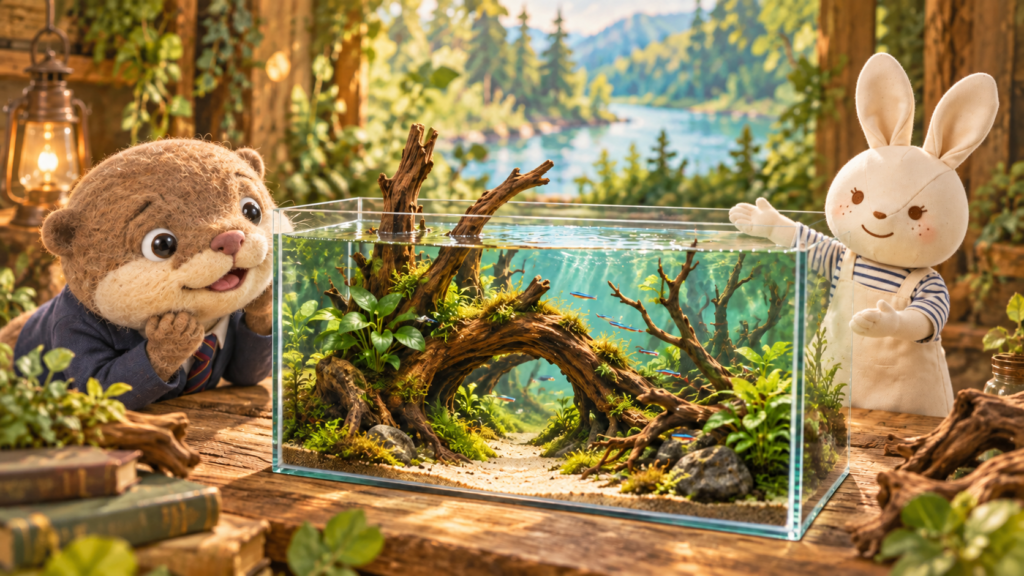 アイのアクアグッズ案内水槽の流木の選び方|枝・マングローブ・アク抜きとおすすめ商品水槽に小さな森を作る流木。枝流木やマングローブという名前の違いから、魚の隠れ家、水草の取り付け、浮く・水が茶色くなるときの準備まで、アイとコタロウが商品とともに案内します。記事はコチラ →
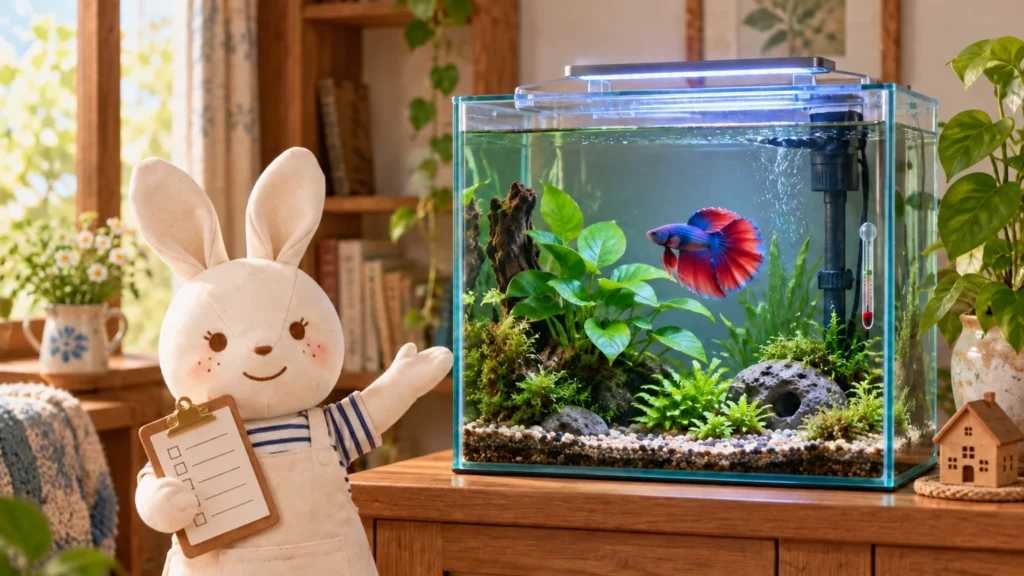 アイのアクアグッズ案内ベタの一匹飼いを楽しむ|水槽・ヒーター・ふた・フィルターの選び方ベタの一匹飼いに向く水槽容量、ふたと空気層、ヒーターと水温計、弱い水流のフィルターを、コタロウとアイの会話で分かりやすく解説します。記事はコチラ →
 アイのアクアグッズ案内ダニオの仲間に合わせる飼育用品|ゼブラダニオから超小型種まで水槽・ろ過・餌を選ぶ道具の特徴や使い方、選ぶときのポイントをアイが紹介します。記事はコチラ →
 アイのアクアグッズ案内水槽のエアーポンプの選び方|水深・音・泡で選ぶおすすめ用品道具の特徴や使い方、選ぶときのポイントをアイが紹介します。記事はコチラ →
さまざまな飼育テーマをご紹介。リンク先の記事には広告・商品紹介が含まれます。
案内・紹介記事一覧へ →分布マップ
カリビアンゴルゴニアは、カリブ海、西部大西洋、メキシコ湾の浅いサンゴ礁から中深度のサンゴ礁環境まで広く分布します。地図の印は分布域を確認するための概略代表地点であり、実際の採集地点や厳密な生息範囲を示すものではありません。
※この地図は記事の分布情報を基にした概略表示です。印の位置は実際の採集地点、個体の確認地点、厳密な分布境界を示すものではありません。属や種によって分布域、水深、生息環境は異なります。
地図データ: © OpenStreetMap協力者
参考文献
分類・学名
- McFadden, C. S., van Ofwegen, L. P., & Quattrini, A. M. (2022). Revisionary systematics of Octocorallia (Cnidaria: Anthozoa) guided by phylogenomics. Bulletin of the Society of Systematic Biologists, 1(3), Article 8735. https://doi.org/10.18061/bssb.v1i3.8735
- World Register of Marine Species. World List of Octocorallia. 参照日:2026年8月3日. https://www.marinespecies.org/octocorallia/
- Williams, G. C., & Chen, J.-Y. (2012). Resurrection of the octocorallian genus Antillogorgia for Caribbean species previously assigned to Pseudopterogorgia, and a taxonomic assessment of the relationship of these genera with Leptogorgia (Cnidaria, Anthozoa, Gorgoniidae). Zootaxa, 3505(1), 39–52. https://doi.org/10.11646/zootaxa.3505.1.3
分布・生息環境・生態
- Bayer, F. M. (1961). The shallow-water Octocorallia of the West Indian region. Studies on the Fauna of Curaçao and Other Caribbean Islands, 12(1), 1–373. https://repository.naturalis.nl/pub/506065
- Sánchez, J. A., Dueñas, L. F., Rowley, S. J., González-Zapata, F. L., Vergara, D. C., Montaño-Salazar, S. M., Calixto-Botía, I., Gómez, C. E., Abeytia, R., Colin, P. L., Cordeiro, R. T. S., & Pérez, C. D. (2019). Gorgonian corals. In Y. Loya, K. A. Puglise, & T. C. L. Bridge (Eds.), Mesophotic Coral Ecosystems (pp. 729–747). Springer. https://doi.org/10.1007/978-3-319-92735-0_39
飼育条件・光・水流・給餌
- Borneman, E. H. (2001). Aquarium Corals: Selection, Husbandry, and Natural History. Microcosm/TFH Professional Series. ISBN 978-1-890087-47-0. Google Books
- Ribes, M., Coma, R., & Gili, J.-M. (1998). Heterotrophic feeding by gorgonian corals with symbiotic zooxanthellae. Limnology and Oceanography, 43(6), 1170–1179. https://doi.org/10.4319/lo.1998.43.6.1170
- Leversee, G. J. (1976). Flow and feeding in fan-shaped colonies of the gorgonian coral, Leptogorgia. The Biological Bulletin, 151(2), 344–356. https://doi.org/10.2307/1540667
- Goulet, T. L., Shirur, K. P., Ramsby, B. D., & Iglesias-Prieto, R. (2017). The effects of elevated seawater temperatures on Caribbean gorgonian corals and their algal symbionts, Symbiodinium spp. PLOS ONE, 12(2), e0171032. https://doi.org/10.1371/journal.pone.0171032
繁殖・断片化・株分け
- Lasker, H. R. (1984). Asexual reproduction, fragmentation, and skeletal morphology of a plexaurid gorgonian. Marine Ecology Progress Series, 19, 261–268. https://doi.org/10.3354/meps019261
- Kahng, S. E., Benayahu, Y., & Lasker, H. R. (2011). Sexual reproduction in octocorals. Marine Ecology Progress Series, 443, 265–283. https://doi.org/10.3354/meps09414
病気・診断
- Geiser, D. M., Taylor, J. W., Ritchie, K. B., & Smith, G. W. (1998). Cause of sea fan death in the West Indies. Nature, 394, 137–138. https://doi.org/10.1038/28079
- Becker, A. A. M. J., Freeman, M. A., & Dennis, M. M. (2023). A combined diagnostic approach for the investigation of lesions resembling aspergillosis in Caribbean sea fans (Gorgonia spp.). Veterinary Pathology, 60(5), 640–651. https://doi.org/10.1177/03009858231173355
採集・流通上の規制
- Florida Fish and Wildlife Conservation Commission. Marine Life: Commercial Harvest Regulations. 参照日:2026年8月3日. https://myfwc.com/fishing/saltwater/commercial/marine-life/




コメント