

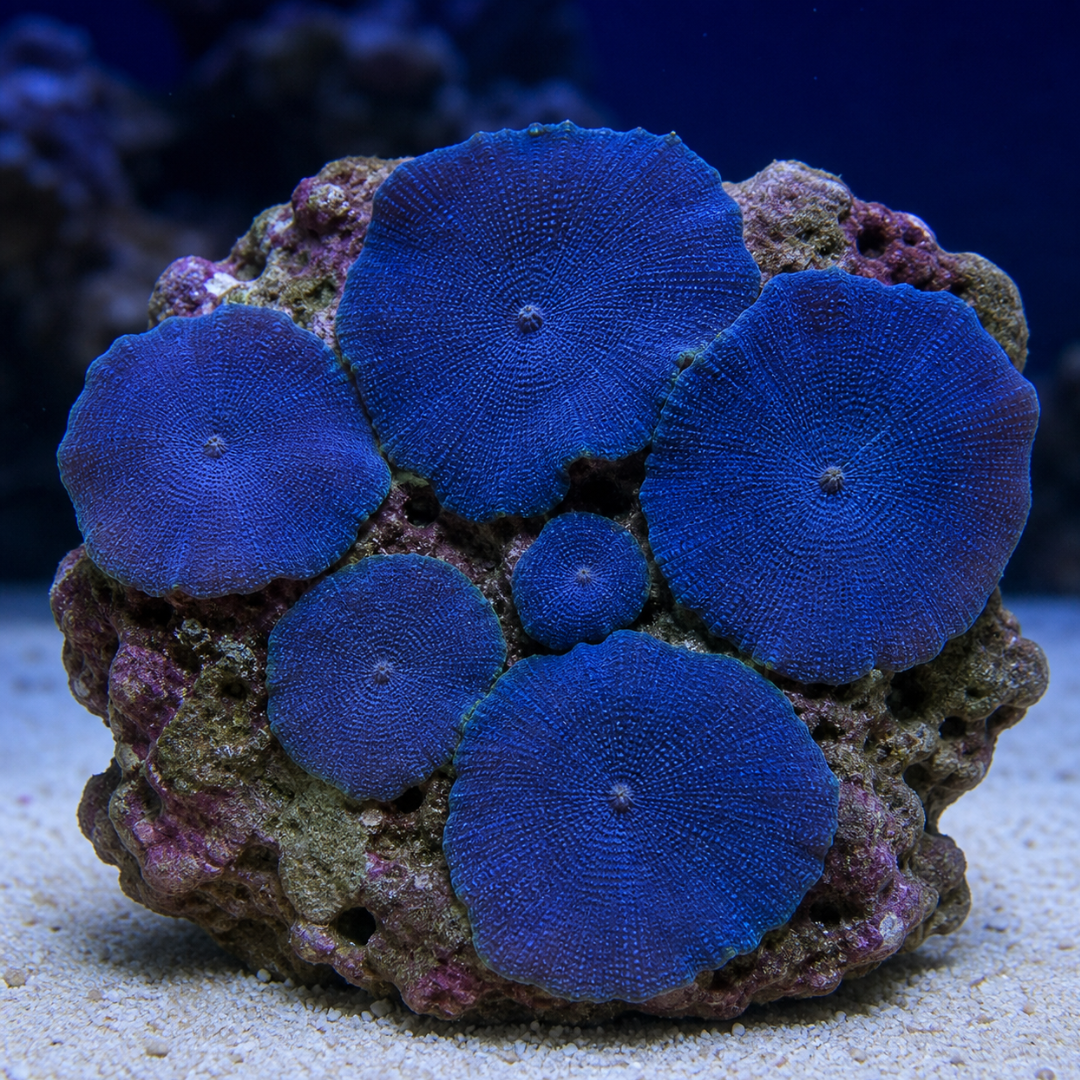
解説 / Description
イソギンチャクモドキは、日本の海水アクアリウム市場で「ディスクコーラル」として親しまれるホネナシサンゴ目の仲間です。炭酸カルシウムの骨格を持たず、岩の上に柔らかな円盤状の体を広げます。口盤には短い数珠状または球状の触手が放射状に並び、褐色、緑色、青色、赤色、ピンク色など多彩な色彩を見せます。刺激を受けると体の外縁にある筋肉を収縮させ、巾着のように閉じる姿も特徴的です。丈夫で環境への適応力が高く、適度な照明と穏やかな水流を整えれば、初心者でも長期飼育に取り組みやすい生体です。ただし、旺盛な増殖力と他のサンゴへ影響を及ぼす性質があるため、配置には配慮が必要です。 Discosoma corallimorphs are widely known in the Japanese marine aquarium trade as disc corals or mushroom corals. They lack a calcium carbonate skeleton and spread a soft, disc-shaped body over rock surfaces. Their oral discs bear short bead-like or rounded tentacles arranged radially, and their colors range from brown and green to blue, red, and pink. When disturbed, the marginal muscles contract and the animal may close like a drawstring pouch. Their hardiness and adaptability make them approachable for beginners when moderate lighting and gentle flow are provided. However, their rapid propagation and competitive effects on neighboring corals require careful placement.
基本情報 / Basic Information
| 学名 / Scientific Name | Discosoma nummiforme(流通個体は種まで確定されず、Discosoma spp.として扱われることもあります) (Aquarium specimens are not always identified to species level and may be listed as Discosoma spp.) |
|---|---|
| 通称 / Common and English Names | イソギンチャクモドキ、ディスクコーラル。日本の流通市場では近縁のホネナシサンゴ類まで含めてディスクコーラルと総称されることがあり、表面形状や色彩によってヘアリーディスク、バブルディスクなどの名称が使われる場合もあります。Mushroom coral, disc coral, disc anemone, and corallimorph. In the aquarium trade, related corallimorphs may also be grouped under these names, with labels such as hairy mushroom or bubble mushroom based on surface form and color. |
| 分類 / Classification | 刺胞動物門、花虫綱、六放サンゴ亜綱、ホネナシサンゴ目、イソギンチャクモドキ科、イソギンチャクモドキ属。Phylum Cnidaria, Class Anthozoa, Subclass Hexacorallia, Order Corallimorpharia, Family Discosomatidae, Genus Discosoma. |
| 分布 / Distribution | 主にインド太平洋のサンゴ礁域から温帯域の浅海に分布し、岩礁やサンゴの死骸、コーラルラブルなどの硬い基質に付着します。種類によっては青色光が優勢となるやや深い環境にも適応します。Primarily distributed from Indo-Pacific coral reefs to temperate shallow seas, where they attach to rocky substrates, dead coral skeletons, and coral rubble. Some forms are also adapted to deeper habitats dominated by blue light. |
| 最大サイズ / Maximum Size | 口盤径は種類や飼育条件によって大きく異なり、一般的な流通個体では数cmから10cm前後が目安です。近縁の大型種では直径20cmほどに達する例もあります。Oral-disc diameter varies widely by species and conditions. Common aquarium forms are often several centimeters to around 10 cm across, while some related large corallimorphs may reach approximately 20 cm. |
| 寿命 / Lifespan | 個体としての正確な寿命は詳しく分かっていません。良好な環境では無性生殖を繰り返しながら群落を長期間維持できます。The precise lifespan of an individual is not well documented. Under stable conditions, a colony can persist for many years through repeated asexual reproduction. |
飼育環境 / Aquarium Environment
| 水槽サイズ / Tank Size | 少数の個体だけなら30cmキューブ水槽(約25L)以上でも飼育できますが、水温と水質を安定させ、増殖後の余裕を確保するためには60cm規格水槽(約55〜65L)以上が扱いやすい目安です。複数種のサンゴを混養する場合は、より大きな水槽ほど距離を確保しやすくなります。A small number can be maintained in a 30 cm cube aquarium of roughly 25 L, but a standard 60 cm aquarium of about 55–65 L or larger is easier for maintaining stable temperature, water quality, and future colony growth. Larger systems make it easier to separate different corals. |
|---|---|
| 水温・比重 / Temperature and Specific Gravity | 水温24〜26℃、比重1.023〜1.026を目安に安定させます。28℃を超える高水温は褐虫藻の光合成系に負担をかけ、白化につながるため、日本の夏季は水槽用クーラーや空調による対策が重要です。蒸発分は塩水ではなくRO水などの淡水で補い、急な比重変化を避けます。Maintain 24–26°C and a specific gravity of 1.023–1.026. Temperatures above 28°C can stress the symbiotic algae and may cause bleaching, so aquarium cooling or room climate control is important during hot Japanese summers. Replace evaporated water with fresh purified water rather than saltwater to avoid salinity swings. |
| 水質 / Water Quality | 飼育には、アンモニアと亜硝酸塩が検出されない成熟した水槽が必要です。pH8.1〜8.4、硝酸塩2〜10ppm、リン酸塩0.05〜0.1ppmを目安に、極端な貧栄養にも過剰な富栄養にも偏らない状態を保ちます。定期的な水換えでアルカリニティと微量元素を安定させます。Keep specimens in a mature aquarium with undetectable ammonia and nitrite. As practical targets, maintain pH 8.1–8.4, nitrate 2–10 ppm, and phosphate 0.05–0.1 ppm, avoiding both extreme nutrient depletion and excessive enrichment. Regular water changes help stabilize alkalinity and trace elements. |
| 光量 / Lighting | 中程度の光量が適し、PAR50〜150程度が目安です。400〜470nmの青色・紫色域を含む照明は蛍光色を観察しやすくします。照射時間は1日8〜10時間程度とし、導入直後は光量の弱い場所から始め、数週間かけて徐々に照明へ順応させます。強光へ急に移すと縮みや白化を招くことがあります。Moderate lighting is suitable, with an approximate PAR range of 50–150. Blue and violet wavelengths around 400–470 nm make fluorescence more visible. Provide roughly 8–10 hours of light daily, beginning new specimens in a dimmer position and acclimating them gradually over several weeks. Sudden exposure to intense light can cause contraction or bleaching. |
| 水流 / Water Flow | 弱めから中程度の、ランダムで間接的な水流が適します。口盤が前後左右へ柔らかく揺れる程度を目安にし、一方向から強く当たり続けるジェット水流は避けます。強すぎる水流が続くと、足盤を基質から離して漂流することがあります。Provide low to moderate, random, indirect flow. The disc should sway gently rather than being blasted continuously from one direction. Prolonged excessive flow may cause the animal to release its hold on the substrate and drift. |
| レイアウト・配置 / Layout and Placement | 水槽の下段から中段にある安定した岩へ配置し、足盤がしっかり活着できるようにします。増殖して周囲へ広がるため、取り外しやすい独立した小岩に載せると管理しやすくなります。他のサンゴとは十分な距離を空け、砂が口盤に積もる場所や直射水流の正面は避けます。Place it on stable rock in the lower to middle portion of the aquarium and allow the pedal disc to attach securely. Because colonies can spread, an isolated removable rock makes management easier. Keep ample space from other corals and avoid areas where sand accumulates on the oral disc or where pump flow strikes directly. |
| 注意点 / Precautions | 導入時は温度と比重を急変させず、照明にも段階的に順応させます。漂流した個体が水流ポンプへ吸い込まれる事故を防ぐため、吸水口にはスポンジや専用ガードを装着してください。長く縮んだままの場合は、水温、水質、光量、水流、付着状態を順に見直します。Avoid sudden changes in temperature and salinity, and acclimate the specimen gradually to aquarium lighting. Fit pump intakes with a sponge or protective guard to prevent detached animals from being pulled into the impeller. If a specimen remains contracted, review temperature, water quality, light intensity, flow, and attachment in that order. |
餌と給餌 / Feeding
| 栄養の得方・餌 / Nutrition and Diet | 体内の褐虫藻がつくる光合成産物を主要な栄養源とします。魚の餌の微粒子や排泄物由来の溶存有機物も利用し、必要に応じてサンゴ用液体フード、アミノ酸、ビタミン、冷凍コペポーダ、LPS用の細粒・粉末フードなどを取り込めます。Most energy is obtained from photosynthetic products supplied by symbiotic algae. They can also use fine food particles and dissolved organic matter from fish feeding and waste. Suitable supplemental foods include liquid coral foods, amino acids, vitamins, frozen copepods, and fine or powdered LPS foods. |
|---|---|
| 給餌のポイント / Feeding Tips | 健康な個体では積極的な給餌は必須ではありません。白化気味の個体を立て直す場合や成長を促したい場合は、週1〜2回、水流を一時的に弱めて口元へ少量をそっと与えます。無理に押し込まず、食べ残しは吸い出して水質悪化を防ぎます。Target feeding is not essential for a healthy specimen. For a pale individual or when faster growth is desired, gently offer a small amount near the mouth once or twice per week with flow temporarily reduced. Do not force food into the mouth, and remove leftovers to prevent water-quality deterioration. |
性質と相性 / Characteristics and Compatibility
| 形態・成長 / Form and Growth | 石灰質の骨格を持たず、柔らかな口盤と足盤で構成されます。単体のポリプが密集して群落状になり、分裂や足盤の一部からの再生によって数を増やします。環境が合うと成長は比較的速く、足盤を剥がして短距離を移動したり、水流で漂流したりすることもあります。The body has no calcareous skeleton and consists of a soft oral disc and pedal disc. Individual polyps often form dense colonies and increase through fission and regeneration from pedal tissue. Growth can be relatively rapid under favorable conditions, and individuals may detach, move a short distance, or drift in the current. |
|---|---|
| 攻撃性 / Aggression | 空間競争力は強めです。接触した相手へ刺胞や隔膜糸を用いて組織障害を与えるほか、水中へ放出する二次代謝産物によって他のサンゴの成長を抑えるアレロパシーも示します。直接触れない距離を確保し、混養水槽では活性炭の使用と定期的な水換えが有効です。Their competitive ability is strong. They may damage neighboring tissue through cnidae and extruded mesenterial filaments, and dissolved secondary metabolites may suppress the growth of other corals through allelopathy. Prevent direct contact, and in mixed reefs use activated carbon together with regular water changes. |
| 相性 / Compatibility | 一般的な海水魚や多くの無脊椎動物とは同居できますが、サンゴをついばむ魚や、口盤の上へ乗って刺激を与え続ける生物には注意します。SPSや毒性の弱いLPS、他のソフトコーラルとは十分に離してください。クマノミの本来の宿主ではないため、安定した共生行動は期待せず、接触で個体が縮む場合は距離を取ります。They can coexist with many marine fishes and invertebrates, but caution is needed with coral-picking fishes or animals that continually crawl over and irritate the oral disc. Keep them well separated from SPS corals, less aggressive LPS corals, and other soft corals. They are not a natural host for clownfish, so stable hosting behavior should not be expected; separate them if repeated contact causes contraction. |
病気と対策 / Diseases and Prevention
| 不調・病気・害虫 / Problems, Diseases, and Pests | 高水温や急な強光では色落ち、長期収縮、白化が起こります。ヒラムシが口盤上で増えると光を遮り、組織を傷めることがあります。物理的な傷や水質悪化をきっかけに細菌感染が進むと、組織が茶色く崩れるブラウンジェリー状の症状が見られる場合もあります。High temperature or sudden intense lighting may cause fading, prolonged contraction, or bleaching. Flatworms can multiply on the oral disc, block light, and damage tissue. Physical injury or deteriorating water quality may also permit bacterial infection, sometimes producing a brown, disintegrating, jelly-like lesion. |
|---|---|
| 対策と予防 / Prevention | 新規個体は本水槽へ入れる前に隔離観察し、サンゴ用洗浄剤を規定量で使用してディップします。水質と水温を安定させ、光と水流を急変させないことが基本です。感染が疑われる組織は健全部を残すよう大きめに切除し、ヨウ素系消毒液などで薬浴します。必要に応じてプロテインスキマーや紫外線殺菌灯を活用し、病原菌密度を抑えます。Quarantine and observe new specimens before introduction, and dip them in a properly diluted commercial coral-cleaning solution. Stable water quality and temperature, together with gradual changes in light and flow, are the foundation of prevention. If infection is suspected, remove affected tissue with a margin of healthy tissue and use an iodine-based dip. A protein skimmer or ultraviolet sterilizer may help reduce pathogen load when appropriate. |
増やし方(繁殖・株分け) / Reproduction and Propagation
| 無性生殖・株分け / Asexual Reproduction and Fragmentation | 自然に分裂したり、足盤の一部を残して新個体を再生したりします。人為的なフラグ化では、清潔なメスを使い、中央の口を通るよう放射状に切り分けます。傘状の口盤を切り取った場合も、残った柄と切片の両方から再生することがあります。They reproduce naturally by fission and by regenerating from portions of pedal tissue. For artificial fragmentation, use a clean scalpel and divide the disc radially through the central mouth. If the cap-like oral disc is removed, both the remaining stalk and the cut tissue may regenerate. |
|---|---|
| 有性生殖 / Sexual Reproduction | 自然下での有性生殖は知られていますが、イソギンチャクモドキ属の流通個体について、雌雄、放卵放精の時期、幼生飼育条件などの詳細は十分に整理されていません。家庭水槽では有性生殖よりも無性生殖による増殖が一般的です。Sexual reproduction occurs in nature, but detailed information on sex, spawning timing, and larval culture conditions is not well established for many aquarium-traded Discosoma forms. In home aquaria, propagation is far more commonly achieved through asexual reproduction. |
| 増殖のポイント / Propagation Tips | 十分に開き、色と反応が良い健康な親株を選びます。器具を洗浄・消毒し、本水槽の飼育水を入れた別容器で作業してください。組織は清潔な刃物で一度に滑らかに切り分け、粘液をある程度放出させた後、セラミック製フラグプラグへゼリー状のシアノアクリレート系接着剤で固定します。回復中は弱い間接水流と十分な酸素を確保し、1〜2週間を目安に傷口が閉じるまで観察します。Choose a healthy parent that opens fully and shows good color and responsiveness. Clean and disinfect tools, and perform the procedure in a separate container filled with aquarium water. Divide the tissue with one clean, smooth cut, allow excess mucus to disperse, and secure the fragment to a ceramic plug with gel cyanoacrylate adhesive. During recovery, provide gentle indirect flow and ample oxygen, monitoring for roughly one to two weeks until the wound closes. |
毒性と取り扱い / Toxicity and Handling
| 毒性 / Toxicity | 刺胞を備え、粘液や体液には他の生物へ影響する成分が含まれる可能性があります。皮膚、傷口、目に触れると、刺激やアレルギー反応を起こすおそれがあります。近縁のマメスナギンチャク類で問題となるパリトキシンと同等の危険性は確認されていませんが、安全を優先して直接接触を避けます。They possess cnidae, and their mucus or tissue fluids may contain compounds that affect other organisms. Contact with skin, open wounds, or eyes may cause irritation or an allergic reaction. A hazard equivalent to the palytoxin associated with some zoanthids has not been established for Discosoma, but direct contact should still be avoided as a precaution. |
|---|---|
| 取り扱い上の注意 / Handling Precautions | 移動、切断、接着の作業では使い捨て手袋と保護眼鏡を着用し、傷のある手で触れないでください。顔を近づけず、飛沫が目や口に入った場合は直ちに十分な水で洗い流します。作業水は本水槽へ戻さず廃棄し、器具と手をよく洗浄します。付着岩には別の刺胞動物が混在する可能性があるため、岩や生体を加熱・煮沸して処理しないでください。Wear disposable gloves and protective eyewear when moving, cutting, or gluing specimens, and do not handle them with open wounds. Keep your face away from splashes; if material enters the eyes or mouth, rinse immediately with plenty of water. Discard procedure water rather than returning it to the display, and wash tools and hands thoroughly. Because attached rocks may contain other cnidarians, never heat or boil rock or living material as a disposal method. |
雑学と豆知識 / Trivia and Fun Facts
| 「裸のサンゴ」仮説を巡る進化の物語 / The Evolutionary Story of the “Naked Coral” Hypothesis | ホネナシサンゴ目は、見た目こそイソギンチャクに似ていますが、体内の隔膜構造や遺伝的特徴はイシサンゴに近く、その進化上の位置づけが長く議論されてきました。かつては、海洋酸性化の時代に一部のイシサンゴが骨格を捨てて生き延びたという「裸のサンゴ」仮説が注目されました。その後、核遺伝子や多数の分子マーカーを用いた解析が進み、現在は、ホネナシサンゴ目とイシサンゴ目が共通祖先から分岐した姉妹群であり、それぞれ独自の進化を遂げたという見方が広く支持されています。Corallimorphs resemble sea anemones externally, yet their internal mesenteries and genetic traits show a close relationship to stony corals. This unusual combination led to the influential “naked coral” hypothesis, which proposed that some stony corals survived ancient ocean acidification by abandoning their skeletons. Later analyses using nuclear genes and multiple molecular markers supported the view that corallimorphs and stony corals are sister lineages that diverged from a common ancestor and followed separate evolutionary paths. |
|---|---|
| 骨格を持たなくても残る「骨格づくりの道具箱」 / A Skeletal Toolkit Without a Skeleton | イソギンチャクモドキは石灰質の骨格を作りません。それでも、イシサンゴの骨格形成に関わるガラキシンなどの骨格有機マトリックスタンパク質に似た遺伝子や、炭酸脱水酵素の複雑な遺伝子群を持つことが示されています。これは、石灰化の基礎となる遺伝的な道具箱が、イシサンゴとホネナシサンゴ目が分かれる以前の共通祖先ですでに備わっていた可能性を物語ります。Although Discosoma produces no mineral skeleton, it retains genes related to skeletal organic matrix proteins such as galaxin, along with a complex repertoire of carbonic anhydrases. This suggests that much of the genetic toolkit underlying biomineralization may already have existed in the common ancestor of stony corals and corallimorphs. |
| 赤色蛍光タンパク質DsRedの故郷 / The Origin of the Red Fluorescent Protein DsRed | 1999年、Discosoma属から鮮やかな赤色蛍光タンパク質DsRedが単離されました。野生型は非常に明るい一方、四量体を作り、成熟にも時間がかかるため、細胞内の目的タンパク質と融合させて使うには扱いにくさがありました。研究者たちは多数のアミノ酸変異と指向性進化を重ね、単量体のmRFP1を経て、光安定性と成熟速度に優れるmCherryなどのmFruitシリーズを生み出しました。水槽で静かに蛍光を放つディスクコーラルのタンパク質が、今日の細胞生物学や医学を支える観察技術へとつながっています。In 1999, the vivid red fluorescent protein DsRed was isolated from a Discosoma species. Wild-type DsRed was bright but formed tetramers and matured slowly, making it difficult to use as a fusion tag for proteins inside cells. Through extensive mutation and directed evolution, researchers produced monomeric mRFP1 and later the mFruit family, including the fast-maturing and photostable mCherry. A fluorescent protein first found in a quietly glowing aquarium corallimorph thus became part of the foundation of modern cellular and medical imaging. |
| 環境変化の後に海底を覆う強さ / The Ability to Dominate After Disturbance | 高水温、富栄養化、台風などで造礁サンゴが弱ると、環境耐性が高く、無性生殖による増殖力に優れるホネナシサンゴ目が、空いた場所へ急速に広がることがあります。高知県土佐清水市の姫島周辺では、2023年7月から2024年8月の調査で、ホネナシサンゴ類が約2100平方メートルの群落を形成し、底生生物被度の70%以上を占める場所が確認されました。美しい観賞生物としての顔と、生態系の構造を変えるほどの競争者としての顔を併せ持つことが分かります。When reef-building corals decline after heat stress, nutrient enrichment, or typhoon disturbance, environmentally tolerant corallimorphs with strong asexual propagation may occupy the newly available space. Surveys around Himeshima in Tosashimizu, Kochi, from July 2023 to August 2024 reported a corallimorph-dominated area of about 2,100 square meters, with more than 70 percent benthic cover in some locations. The same organism admired in aquaria can therefore also act as a powerful ecological competitor. |
| 流通では付着している「台座」にも注意 / In Trade, the Substrate Matters Too | 骨格を持たないイソギンチャクモドキそのものは、イシサンゴとしてのCITES附属書II規制を直接受けません。しかし、野生個体がイシサンゴの死骸であるライブロックへ付着した状態で国境を越える場合、その付着基盤が規制対象となり、適正な輸出許可書が必要になります。人工のセラミック製フラグプラグに固定し、国内で増殖された個体は、こうした付着基盤に由来する問題を避けやすくなります。個体の由来を確認して選ぶことは、より持続可能な流通にもつながります。The soft-bodied Discosoma itself is not directly regulated as an Appendix II stony coral. However, a wild specimen transported internationally while attached to dead stony-coral skeleton may require CITES documentation because the substrate is regulated. Domestically propagated specimens attached to artificial ceramic plugs are less likely to involve these substrate-related complications. Checking the origin of a specimen also supports more sustainable trade. |
まとめ / Conclusion
イソギンチャクモドキは、柔らかな円盤状の姿、多彩な蛍光色、丈夫さを備えた魅力的なホネナシサンゴです。24〜26℃の安定した水温、青色・紫色域を含む中程度の照明、穏やかな間接水流を整え、急な環境変化を避けることが健康維持の基本です。強い増殖力とアレロパシーを持つため、独立した岩へ配置し、他のサンゴとの距離を確保すると美しさを保ちながら管理しやすくなります。 Discosoma is an appealing corallimorph that combines a soft disc-shaped form, vivid fluorescence, and notable hardiness. Stable temperatures of 24–26°C, moderate lighting that includes blue and violet wavelengths, gentle indirect flow, and avoidance of abrupt environmental changes form the basis of successful care. Because it can spread rapidly and exert allelopathic effects, placement on an isolated rock with ample distance from other corals makes long-term management easier.
環境に慣れた個体がゆっくりと口盤を広げ、色彩を深め、やがて足元から新しい個体を増やしていく姿は、日々の観察に変化と発見をもたらします。その小さな体は、サンゴ類の進化を考える手がかりであると同時に、蛍光タンパク質研究の発展にもつながってきました。丈夫さだけでは語り切れない奥深さがあり、丁寧に向き合うほど長く付き合いたくなる存在です。 Watching an acclimated specimen slowly expand its disc, deepen in color, and eventually produce new polyps from its base brings continual change and discovery to the aquarium. Its small body offers clues to coral evolution and also connects to the development of fluorescent-protein research. This depth, beyond its reputation for hardiness, makes Discosoma a rewarding animal to observe and care for over the long term.

気になる道具や飼い方を見つけてみませんか?
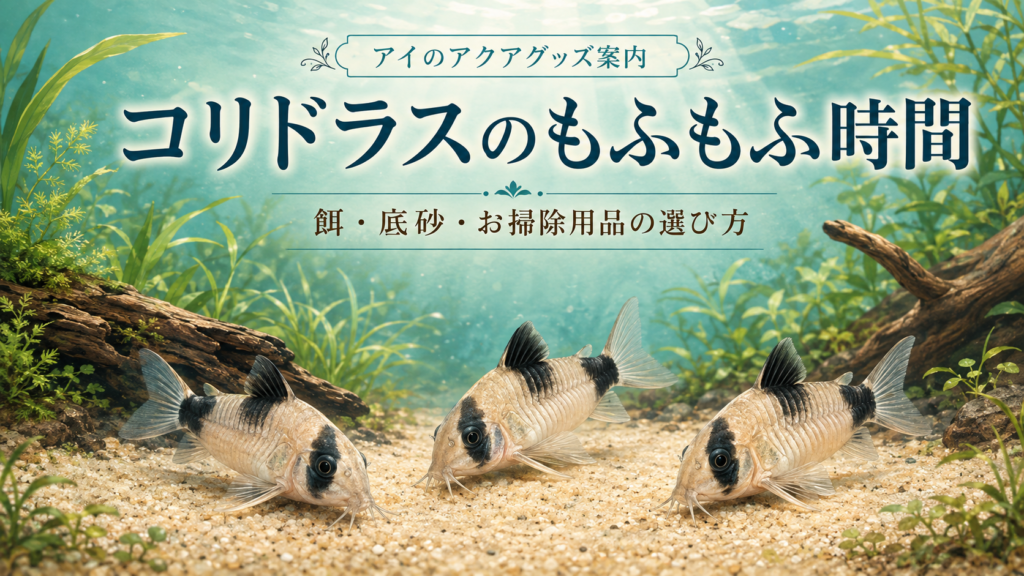 アイのアクアグッズ案内コリドラスのもふもふ時間を楽しむ|餌・底砂・お掃除用品の選び方コリドラスのもふもふする食事風景を楽しむために。沈む餌2種類の違い、口元に配慮した底砂、食べ残しを回収する道具を、アクアグッズナビゲーターのアイが紹介します。記事はコチラ →
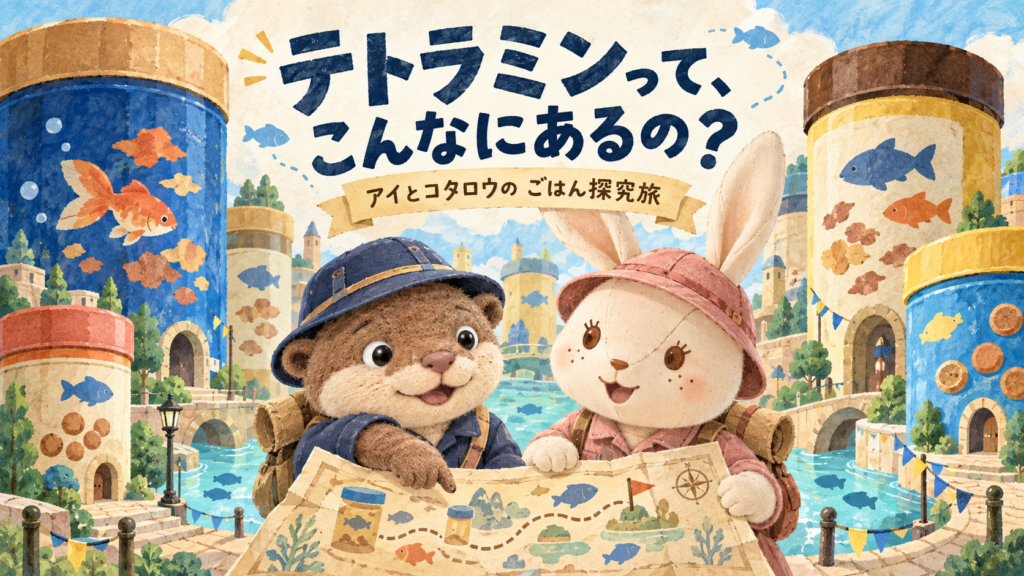 アイのアクアグッズ案内テトラミンって、こんなにあるの? アイとコタロウのごはん探究旅道具の特徴や使い方、選ぶときのポイントをアイが紹介します。記事はコチラ →
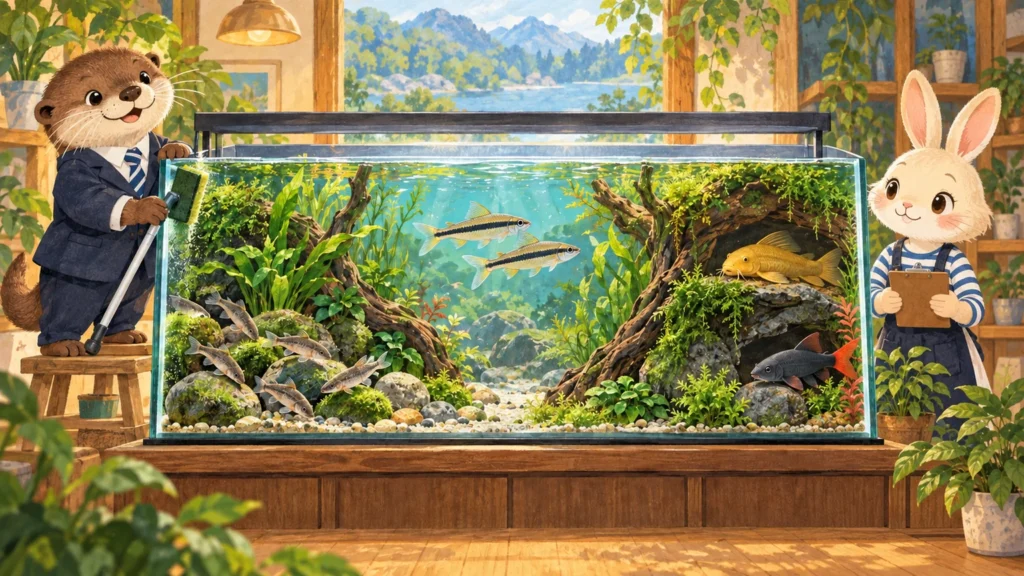 アイのアクアグッズ案内コケを食べるコイの仲間に合わせる飼育用品|フライングフォックス・アルジイーター・ガラ道具の特徴や使い方、選ぶときのポイントをアイが紹介します。記事はコチラ →
 アイのアクアグッズ案内アフリカンシクリッドの飼育用品|水槽・ろ過・底砂・岩組み・餌の選び方道具の特徴や使い方、選ぶときのポイントをアイが紹介します。記事はコチラ →
さまざまな飼育テーマをご紹介。リンク先の記事には広告・商品紹介が含まれます。
案内・紹介記事一覧へ →分布マップ
イソギンチャクモドキ(Discosoma nummiforme)は、主にインド太平洋のサンゴ礁域から温帯域の浅海に分布するとされます。地図では、この広域分布を示すための概略範囲と代表位置を表示しています。
Google Earthで開くこの地図は記事の分布情報をもとにした概略表示です。表示範囲と代表位置は、実際の採集地点、確認地点、個体群の境界、厳密な生息範囲を示すものではありません。
参考文献
イソギンチャクモドキおよびホネナシサンゴ類の分類、分布、生息環境、飼育管理、繁殖、病気、安全な取り扱いに関する参考資料です。
分類・系統関係
-
World Register of Marine Species(WoRMS).
Discosoma nummiforme Rüppell & Leuckart, 1828.
WoRMSの分類情報 -
Lin, M.-F. et al. (2016).
Corallimorpharians are not “naked corals”: insights into relationships between Scleractinia and Corallimorpharia from phylogenomic analyses.
PeerJ, 4, e2463.
https://doi.org/10.7717/peerj.2463
分布・生息環境・生理生態
-
Oh, R. M., Neo, M. L., Yap, N. W. L., Jain, S. S., Tan, R., Chen, C. A. & Huang, D. (2019).
Citizen science meets integrated taxonomy to uncover the diversity and distribution of Corallimorpharia in Singapore.
Raffles Bulletin of Zoology, 67, 306–321.
https://doi.org/10.26107/RBZ-2019-0022 -
Kuguru, B., Chadwick, N. E., Achituv, Y., Zandbank, K. & Tchernov, D. (2008).
Mechanisms of habitat segregation between corallimorpharians: photosynthetic parameters and Symbiodinium types.
Marine Ecology Progress Series, 369, 115–129.
https://doi.org/10.3354/meps07651 -
Kuguru, B., Winters, G., Beer, S., Santos, S. R. & Chadwick, N. E. (2007).
Adaptation strategies of the corallimorpharian Rhodactis rhodostoma to irradiance and temperature.
Marine Biology, 151, 1287–1298.
https://doi.org/10.1007/s00227-006-0589-5
飼育管理・繁殖・他種との関係
-
Langmead, O. & Chadwick-Furman, N. E. (1999).
Marginal tentacles of the corallimorpharian Rhodactis rhodostoma. 2. Induced development and long-term effects on coral competitors.
Marine Biology, 134, 491–500.
https://doi.org/10.1007/s002270050565 -
Leewis, R. J. & Janse, M.(eds.)(2008).
Advances in Coral Husbandry in Public Aquariums.
Public Aquarium Husbandry Series, Volume 2. Burgers’ Zoo.
ISBN 978-90-813805-1-5.
書誌情報 -
Leal, M. C., Ferrier-Pagès, C., Petersen, D. & Osinga, R. (2016).
Coral aquaculture: applying scientific knowledge to ex situ production.
Reviews in Aquaculture, 8(2), 136–153.
https://doi.org/10.1111/raq.12087 -
Chen, C.-L. A., Chen, C.-P. & Chen, I.-M. (1995).
Sexual and asexual reproduction of the tropical corallimorpharian Rhodactis (= Discosoma) indosinensis (Cnidaria: Corallimorpharia) in Taiwan.
Zoological Studies, 34(1), 29–40.
論文PDF
病気・害虫・安全な取り扱い
-
Institut Océanographique de Monaco / European Union of Aquarium Curators (2026).
Coral Pathology: Identification and Management in Aquaria.
専門ハンドブックPDF -
Sweet, M., Craggs, J., Robson, J. & Bythell, J. (2013).
Assessment of the microbial communities associated with white syndrome and brown jelly syndrome in aquarium corals.
Journal of Zoo and Aquarium Research, 1(1), 20–27.
https://doi.org/10.19227/jzar.v1i1.21 -
Maggioni, G. et al. (2022).
The association of Waminoa with reef corals in Singapore and its impact on putative immune- and stress-response genes.
Diversity, 14(4), 300.
https://doi.org/10.3390/d14040300 -
Hamade, A. K. et al. / U.S. Centers for Disease Control and Prevention (2015).
Suspected Palytoxin Inhalation Exposures Associated with Zoanthid Corals in Aquarium Shops and Homes — Alaska, 2012–2014.
MMWR, 64(31), 852–855.
CDC報告 -
Government of South Australia, SA Health.
Coral handling safety tips for aquarium owners.
安全資料PDF




コメント