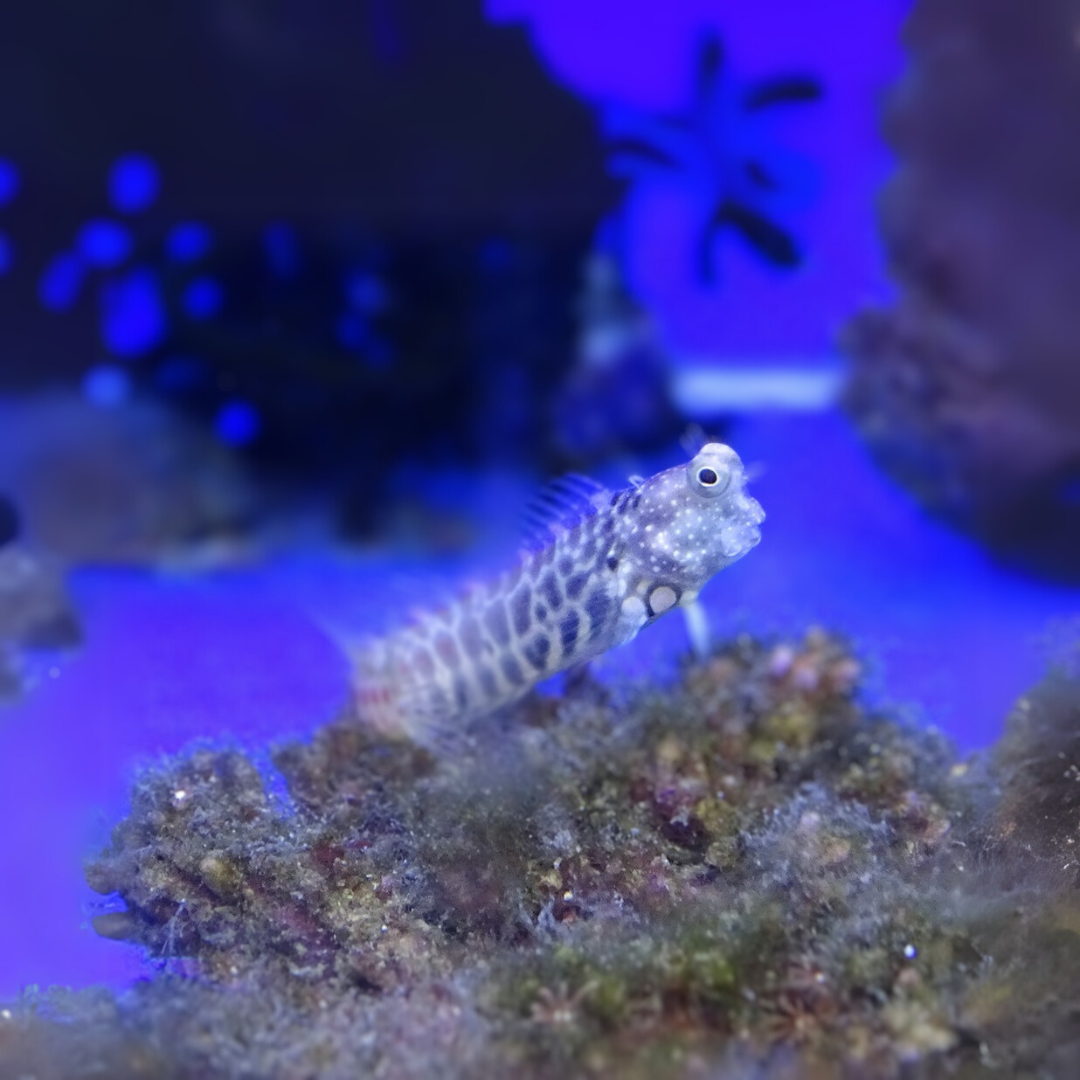
セグメントブレニーは、西部中央太平洋の浅い岩礁域に暮らすカエルウオの仲間です。体表には淡い黄褐色から赤褐色をベースに、体を区切るような明色の網目模様が入り、この「セグメント状」の見た目が名前の由来になっています。水槽内ではライブロックの上にちょこんと止まり、岩肌の藻類や有機物を削り取るように食べる姿がよく観察できます。コケ対策に役立つ一方、長期飼育では植物質の餌を切らさないこと、飛び出しを防ぐこと、類似した底生魚との縄張り争いを避けることが大切です。The Segmented Blenny is a combtooth blenny from shallow reef habitats in the western central Pacific. Its pale tan to reddish-brown body is patterned with light, segment-like markings, which give it a segment-like appearance. In aquaria, it often perches on live rock and grazes algae and detritus from hard surfaces. It is useful for algae control, but long-term care depends on steady vegetable-based feeding, secure lids to prevent jumping, and careful management of territorial conflicts with similar bottom-dwelling fishes.
スズキ目または近年の分類体系でギンポ亜目に置かれることがあるイソギンポ科カエルウオ亜科カエルウオ属Family Blenniidae, subfamily Salariinae, genus Salarias; traditionally placed within Perciformes, though modern classifications may treat blennies within Blenniiformes or related groupings.
英名 / English Name
Segmented Blenny
分布 / Distribution
インドネシア、ニューギニア周辺、ソロモン諸島、パラオを含む西部中央太平洋。主に水深0〜12mほどの浅いリーフフラットやラグーンの岩礁域に生息します。Western central Pacific, including Indonesia, the New Guinea region, the Solomon Islands, and Palau. It inhabits shallow reef flats, lagoons, and rocky reef areas, generally from about 0 to 12 m depth.
最大体長 / Max Size
最大で約11cm。国内流通では4〜6cm前後の若い個体が見られることが多いです。Up to about 11 cm total length. Specimens in the Japanese aquarium trade are often around 4 to 6 cm.
寿命 / Lifespan
明確な飼育下寿命の公的データは多くありませんが、適切な給餌と安定した海水環境を維持できれば数年単位の飼育が期待できます。Well-documented captive lifespan data are limited, but with stable marine conditions and adequate vegetable-based feeding, multi-year care can be expected.
飼育環境 / Aquarium Environment
水槽サイズ / Tank Size
最低でも60cm規格水槽、可能であれば60cmワイド水槽以上が安心です。水量でいえば約60L以上を目安にし、藻類の供給と水質安定を重視するなら90cm規格水槽、またはオーバーフロー式の余裕あるシステムがより適しています。A standard 60 cm aquarium is a practical minimum, while a 60 cm wide tank or larger is safer. Aim for at least about 60 L, and consider a 90 cm aquarium or a larger overflow system if you want greater water stability and a more reliable natural algal film.
水温 / Temperature
24℃前後を基本に、22〜27℃の範囲で安定させます。急な水温変化は白点病などの誘因になりやすいため、ヒーターとファンまたはクーラーで季節変動を抑えます。Keep the temperature around 24°C, with a stable acceptable range of about 22 to 27°C. Sudden temperature swings can encourage stress-related diseases, so seasonal changes should be controlled with a heater and fan or chiller.
水質 / Water Quality
比重は1.020〜1.026、pHは8.0〜8.5を目安にします。硝酸塩やリン酸塩が過剰な水槽では藻類が増えやすい一方、栄養塩を急に落とし過ぎると本種の自然採食資源も減るため、プロテインスキマー、換水、給餌量のバランスを取りながら安定させます。Specific gravity should be about 1.020 to 1.026, and pH about 8.0 to 8.5. Excess nitrate and phosphate can encourage nuisance algae, but reducing nutrients too aggressively can also reduce natural grazing resources, so balance protein skimming, water changes, and feeding.
レイアウト / Layout
ライブロックを多めに組み、岩肌、平坦な休憩場所、隠れ家を複数作ります。本種は砂の上を泳ぎ回るというより、岩に腹鰭を添えて止まる「パーチング」をよく行うため、観察しやすい場所にも止まり木のような岩面を用意すると落ち着きやすくなります。Use plenty of live rock, with grazing surfaces, flat resting ledges, and multiple shelters. This fish often perches with its pelvic fins against the rock rather than swimming continuously over sand, so visible ledges and safe hiding places help it settle in.
注意点 / Precautions
飛び出し事故が非常に多い魚です。ガラス蓋、メッシュカバー、配管まわりの隙間ふさぎを徹底してください。また、導入初期は痩せ、白点病、餌不足を見落とさないように腹部の厚みと採食行動を毎日確認します。Jumping is a major risk. Use a glass lid, mesh cover, and block gaps around plumbing. During acclimation, check the belly profile and feeding behavior daily so that weight loss, marine ich, or inadequate food intake are not missed.
餌と給餌 / Feeding
餌の種類 / Diet
主食は岩肌の糸状藻類、珪藻、有機堆積物を含む藻類フィルムです。飼育下では、スピルリナや海藻成分を多く含む植物質中心の人工飼料、沈下性の海水魚用フード、乾燥海苔、海藻シートを組み合わせます。痩せた個体や餌付きが悪い個体には、冷凍コペポーダや冷凍ブラインシュリンプを補助的に使い、反応を見ながら植物質の餌へ移行します。Its staple food is algal film, including filamentous algae, diatoms, and detritus on rock surfaces. In captivity, combine vegetable-rich prepared foods with spirulina or marine algae, sinking marine pellets, dried nori, and algae sheets. For thin or reluctant individuals, frozen copepods or frozen brine shrimp can be used temporarily to stimulate feeding before shifting toward vegetable-based foods.
給餌のポイント / Feeding Tips
「水槽のコケを食べ尽くしたら仕事が終わり」ではなく、そこからが長期飼育の本番です。藻類が少ない水槽では1日1〜2回、植物質の餌を岩肌や底面に届くように与えます。海苔や海藻シートをクリップで固定すると、自然界のように少しずつついばむ行動を再現しやすくなります。腹部がへこんできた場合は、すでにエネルギー不足が始まっている可能性があるため、早めに給餌内容と頻度を見直します。Algae control is only the beginning of long-term care. Once visible algae are reduced, feed vegetable-based foods once or twice daily so the food reaches the rocks or bottom. Clipping nori or algae sheets in place lets the fish graze gradually, similar to natural behavior. A sunken belly can signal an energy deficit, so adjust feeding before the fish becomes severely weakened.
性格と混泳 / Temperament and Tank Mates
性格 / Temperament
基本的には人前にも出てきやすく、表情豊かで観察しやすい魚ですが、同じ岩場を餌場とする魚に対してはやや気が強くなります。特に同種、ヤエヤマギンポ、フタイロカエルウオなど、体型や食性が近い魚とは競合しやすいです。It is generally visible, expressive, and easy to observe, but it can become assertive toward fishes that use the same rocky grazing territory. It may compete strongly with conspecifics and similar blennies such as lawnmower blennies and bicolor blennies.
混泳の相性 / Compatibility
原則として1水槽1匹が安全です。遊泳層が異なる小型ヤッコ、クマノミ、ハナダイ類などとは比較的合わせやすい一方、底生のハゼやカエルウオ類とは水槽サイズとレイアウト次第で小競り合いが起こります。リーフタンクでは概ねサンゴに無害とされますが、空腹時やSPS主体の水槽ではミドリイシやコモンサンゴのポリプ、共肉、粘液をつつくことがあります。十分な植物質給餌が、食害リスクを下げる最も現実的な対策です。Keeping one per aquarium is the safest approach. It usually mixes more easily with fishes that occupy different swimming levels, such as clownfish, small angelfish, and anthias, but territorial disputes can occur with bottom-dwelling gobies and blennies depending on tank size and rockwork. It is generally considered reef-compatible, but hungry individuals or those in SPS-dominated tanks may nip at Acropora or Montipora polyps, tissue, or mucus. Adequate vegetable-based feeding is the most practical way to reduce this risk.
病気と対策 / Diseases and Prevention
かかりやすい病気 / Common Diseases
導入直後のストレスによる白点病、輸送疲れに伴う拒食、餌不足による痩せ細りに注意します。特に痩せ細りは病原体だけが原因ではなく、自然発生の藻類が減った後に追加給餌が足りないことで起こる場合があります。Watch for marine ich after introduction, refusal to feed from shipping stress, and progressive weight loss from inadequate food. Wasting is not always caused by pathogens; it can occur when natural algae are depleted and supplemental feeding is insufficient.
対策と予防 / Prevention
導入時は水合わせを丁寧に行い、できれば検疫水槽で観察します。水温、比重、pHを安定させ、飛び出しによる外傷を防ぎます。毎日、腹部のふくらみ、岩肌をついばむ回数、人工飼料への反応を確認し、痩せの兆候があれば早めに海苔、海藻シート、植物質人工飼料、冷凍餌の補助を増やします。Acclimate carefully and, ideally, observe the fish in quarantine. Maintain stable temperature, salinity, and pH, and prevent injuries from jumping. Check the belly profile, grazing frequency, and response to prepared foods daily; if weight loss begins, increase nori, algae sheets, vegetable-based prepared foods, and temporary frozen-food support.
増やし方(繁殖) / Breeding
雌雄の判別 / Sexing
一般的な観賞魚流通個体では、雌雄判別は容易ではありません。成熟した個体では体格、頭部の発達、繁殖期の行動差が手がかりになる可能性がありますが、家庭水槽で確実に判別する方法は限られます。Sexing is difficult in typical aquarium specimens. Mature individuals may show differences in body size, head development, or breeding behavior, but reliable sexing methods for home aquaria are limited.
繁殖形態 / Reproduction
卵生です。自然界では岩の隙間や死サンゴの窪みなどに接着性の卵を産み付けると考えられ、卵は基質に固定されます。孵化した仔魚はプランクトン生活を経て、成長後に底生生活へ移行します。It is oviparous. In nature, adhesive eggs are thought to be laid in rock crevices or depressions in dead coral and attached to the substrate. After hatching, larvae enter a planktonic phase before settling into a benthic life.
繁殖のポイント / Breeding Tips
家庭水槽での安定した繁殖・育成例は一般的ではありません。仮にペア形成を狙う場合は、十分な水量、複雑なライブロック、複数の隠れ家、栄養状態の良い親魚が必要です。仔魚は微細な初期餌と安定した育成環境を要求すると考えられるため、一般的な観賞用水槽での繁殖は難易度が高いです。Consistent breeding and larval rearing in home aquaria are not common. Attempting a pair would require ample water volume, complex live rock, multiple shelters, and well-conditioned adults. Larvae are likely to require very small first foods and stable rearing conditions, making breeding difficult in ordinary display aquaria.
雑学と豆知識 / Trivia and Fun Facts
1. 名前に刻まれた「分節」の物語 / 1. Segmented fin rays behind the name
種小名のsegmentatusは、背鰭と臀鰭の分節した鰭条に由来します。水槽内では照明、ストレス、縄張り主張、周囲の色に応じて体色の濃淡が変わり、同じ個体でも落ち着いている時と興奮している時で印象が大きく変わります。これは単なる「色あせ」ではなく、色素胞の働きによる生理的な体色変化で、岩礁の上で目立ち過ぎず、必要な時には相手に存在を示すための小さなサインでもあります。The specific epithet segmentatus refers to the segmented dorsal- and anal-fin rays. In aquaria, the same individual can look quite different depending on lighting, stress, territorial behavior, and background color. This is not merely fading; it is a physiological color change involving chromatophores, helping the fish blend with rock surfaces or signal its presence when needed.
2. 「コケ取り名人」に見えて、実は給餌管理が重要 / 2. An algae grazer that still needs deliberate feeding
セグメントブレニーはコケをよく食べるため、水槽の掃除役として迎えられます。しかし自然界の浅い岩礁では、太陽光と水流によって藻類や微細な有機物が絶えず供給されます。家庭水槽ではその供給が有限で、魚が熱心に働くほど餌場はきれいになり、やがて食べるものが足りなくなります。長期飼育のコツは、コケを食べる能力に頼り切るのではなく、海苔や植物質フードで「次の餌場」を飼育者が用意し続けることです。Because this fish grazes algae actively, it is often introduced as a cleanup helper. In nature, shallow reefs continually receive sunlight and water movement that renew algae and fine organic matter. In a home aquarium, that supply is limited; the more efficiently the fish grazes, the cleaner and poorer its feeding ground becomes. Long-term success comes from providing the next grazing opportunity with nori and vegetable-based foods rather than relying only on naturally occurring algae.
3. ゴールデンタイガーブレニーという呼び名の注意点 / 3. Caution with the name Golden Tiger Blenny
流通名としてゴールデンタイガーブレニーと呼ばれることがありますが、この名前は別属のEcsenius tigrisを指す場合もあります。黄色みのある体色や虎斑模様という印象が似ているため、輸入リストや販売名で混同が起こりやすいのです。購入時は名前だけで判断せず、体型、頭部の皮弁、尾部側面の赤色斑点、胸部の暗色斑などを合わせて確認すると、より確実に本種を見分けられます。It may appear in the trade under the name Golden Tiger Blenny, but that name can also refer to Ecsenius tigris, a different genus. Similar impressions of yellowish coloration and tiger-like markings can lead to confusion on import lists and sales labels. When purchasing, rely not only on the trade name but also on body shape, head cirri, small red spots on the rear body, and the dark blotch on the breast area.
4. リーフセーフは「絶対に何もしない」という意味ではない / 4. Reef-safe does not mean risk-free
本種は多くの場合リーフタンクで飼育できますが、サンゴの粘液や表面に付着した微細な有機物に興味を示すことがあります。特に小さなSPSフラグは、何度もつつかれるだけでポリプが開きにくくなったり、共肉が傷んだりすることがあります。これは本種が突然サンゴ食になったというより、餌を探す行動がサンゴの表面に向かった結果と見る方が自然です。十分な植物質給餌と、成熟したライブロック環境がトラブルを減らす鍵になります。This species can often be kept in reef aquaria, but it may investigate coral mucus or fine organic matter on coral surfaces. Small SPS frags are especially vulnerable because repeated nipping can keep polyps closed or damage tissue. This is better understood as grazing behavior directed at the coral surface rather than a sudden shift to coral predation. Adequate vegetable feeding and a mature live-rock environment are key to reducing problems.
まとめ / Conclusion
セグメントブレニーは、独特のセグメント模様と愛嬌のある表情、そして優れた藻類採食能力を併せ持つ魅力的な海水魚です。ライブロックを多く配置した安定した水槽では、岩の上で休みながらコケをついばむ自然な行動を楽しめます。The Segmented Blenny is an appealing marine fish with distinctive segment-like markings, an expressive face, and excellent grazing behavior. In a stable aquarium with plenty of live rock, it displays natural perching and algae-grazing behavior that is enjoyable to observe.
一方で、長期飼育では「痩せさせないこと」が最重要です。水槽内のコケが減ってからも、海苔や植物質人工飼料を継続して与え、飛び出し防止と類似種との混泳管理を徹底しましょう。掃除役としてだけでなく、ひとつの個性ある主役として扱うことで、本種の魅力はより長く楽しめます。For long-term care, preventing weight loss is the most important point. Even after visible algae decline, continue offering nori and vegetable-based prepared foods, secure the aquarium against jumping, and manage tank mates carefully. Treating it not merely as a cleanup fish but as a distinctive aquarium resident will let you enjoy its character for much longer.



 アイのアクアグッズ案内水槽の中に陸地がある!? コタロウと探るアクアテラリウムのメカニズム滝の水はどこから来るの? 白い霧の正体は? アイとコタロウが、水の循環、隠れたポンプ、霧の装置、陸上の植物と水草の葉の変化から、アクアテラリウムのメカニズムを探ります。記事はコチラ →
 アイのアクアグッズ案内水草水槽のCO₂添加|3つの方式の選び方とおすすめ用品道具の特徴や使い方、選ぶときのポイントをアイが紹介します。記事はコチラ →



コメント