

解説Description
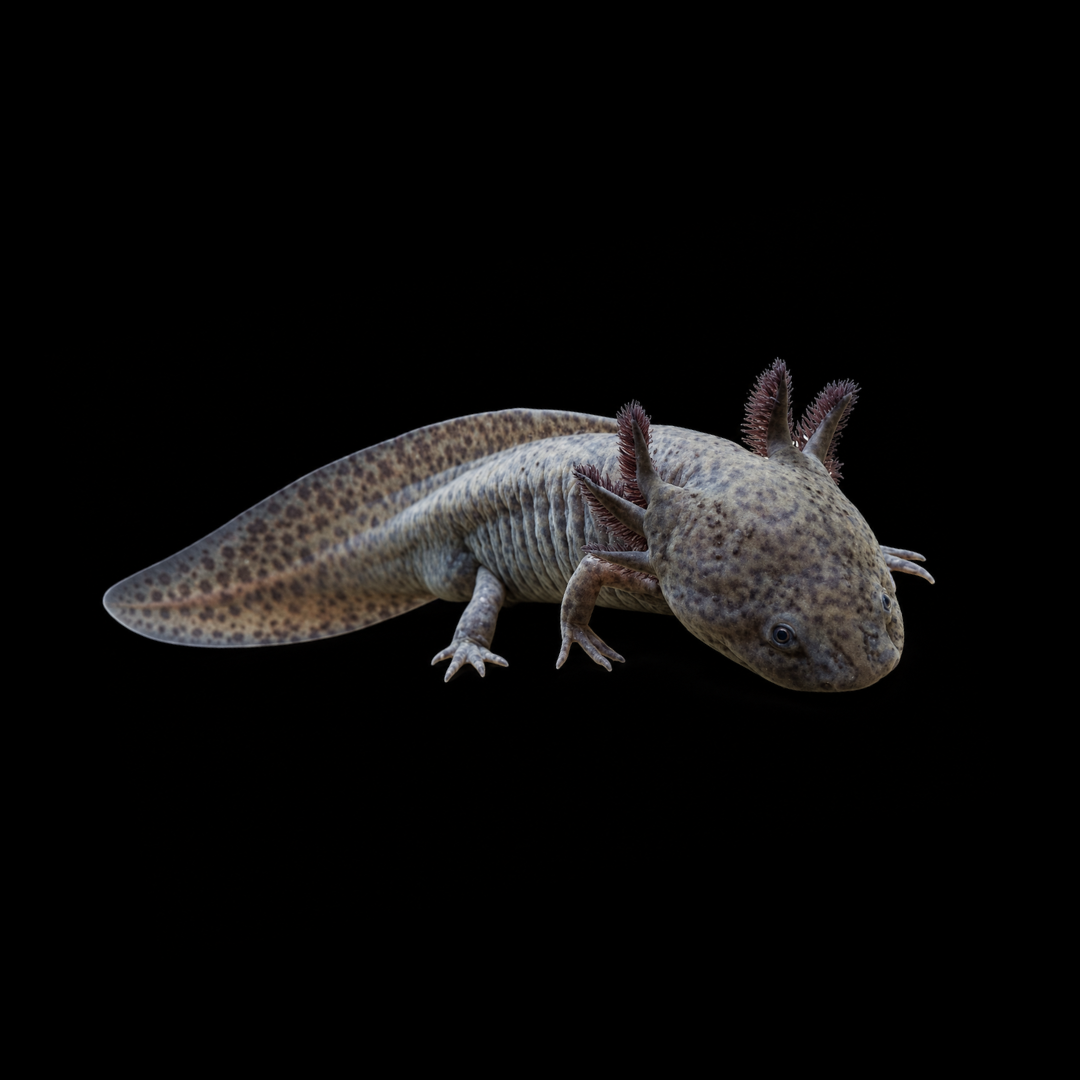
マーブルウーパールーパーは、日本の流通で「マーブル」や「ワイルドタイプ」と呼ばれる、メキシコサラマンダー(アホロートル)の体色モルフです。褐色からオリーブ色の地に黒褐色の斑が重なり、野生個体に近い色彩を示します。白い体色の個体とは趣が異なり、水草や泥底を思わせる迷彩模様、瞳の周囲に見える金色の環、成長とともに深まる色合いが魅力です。別種や亜種ではなく、同じAmbystoma mexicanumの色彩変異です。 In the Japanese pet trade, the marbled axolotl is a color morph of the Mexican salamander, or axolotl, commonly sold as “marbled” or “wild type.” Its brown-to-olive ground color is overlaid with dark mottling and resembles the coloration of wild animals. Unlike pale morphs, it is admired for its natural-looking pattern, golden ring around the pupil, and colors that deepen with maturity. It is not a separate species or subspecies, but a color variant of Ambystoma mexicanum.
本種は、外鰓や尾鰭といった幼生の特徴を残したまま成熟する幼形成熟で知られています。この性質は一般にネオテニーとも呼ばれ、生涯を水中で過ごす本種の姿を形づくっています。丈夫そうに見えても、高温、強い水流、急な水質変化には敏感です。清浄で冷たい水と安定した生物ろ過を用意できるかどうかが、長期飼育の成否を大きく左右します。 This species is known for paedomorphosis, commonly described as neoteny: it matures while retaining larval features such as external gills and a tail fin and remains aquatic throughout life. Despite its robust appearance, it is sensitive to heat, strong current, and sudden changes in water chemistry. Long-term success depends above all on clean, cool water and a stable biological filter.
基本情報Basic Information
| 学名Scientific Name | Ambystoma mexicanum |
|---|---|
| 通称Common Name | ウーパールーパー、アホロートル、メキシコサラマンダー、マーブル、ワイルドタイプAxolotl, Mexican axolotl, Mexican salamander, marbled axolotl, wild type |
| 分類Classification | 両生綱・有尾目(サンショウウオ目)・トラフサンショウウオ科・トラフサンショウウオ属Class Amphibia, Order Caudata, Family Ambystomatidae, Genus Ambystoma |
| 英名English Name | Axolotl / Mexican Axolotl |
| 分布Distribution | メキシコ中央部、メキシコシティ南部のソチミルコに残る水路・湿地の固有種。かつての分布域はより広かったものの、現在の野生個体群は著しく限られています。日本で流通する個体は基本的に飼育下繁殖個体です。Endemic to the remaining canals and wetlands of Xochimilco in southern Mexico City, central Mexico. Its historical range was broader, but the present wild population is severely restricted. Animals in the Japanese pet trade are generally captive-bred. |
| 成体サイズAdult Size | 全長およそ20~30cm。個体差があり、条件によっては30cmを超えることもあります。Usually about 20–30 cm in total length, with some individuals exceeding 30 cm. |
| 寿命Lifespan | 飼育下では10年以上生きる例があり、寿命は水温、水質、食餌などの管理条件によって大きく変わります。Captive axolotls may live for more than 10 years, although lifespan varies substantially with temperature, water quality, diet, and other aspects of care. |
飼育環境Enclosure Environment
| 飼育容器・サイズEnclosure and Size | 成体1匹には、底面積を重視した幅60cm程度の水槽を一つの目安とし、体を伸ばして向きを変えられる空間と、水質を安定させやすい十分な水量を確保します。完全水生なので陸地は不要です。飛び出し防止の蓋を付け、強い水流を作らない、ろ過能力に余裕のあるフィルターを使います。For one adult, a tank about 60 cm long is a useful starting point. Prioritize floor space, room to turn comfortably, and enough water volume to keep conditions stable. No land area is required because the animal is fully aquatic. Fit a secure lid and use adequately sized filtration without creating strong current. |
|---|---|
| 温度Temperature | 水温15~20℃を安定して保つのが理想で、22℃を超える状態はできるだけ長引かせません。日本の夏は水槽用クーラーまたは部屋の冷房を前提に計画し、温度計で常時確認します。冷水や氷を直接入れて急変させる方法は避けてください。A stable 15–20°C is ideal, and prolonged temperatures above 22°C should be avoided. In Japanese summers, plan on an aquarium chiller or room air-conditioning and monitor continuously with a thermometer. Never cause a sudden change by adding ice or very cold water directly. |
| 環境管理Environmental Management | 必ず塩素やクロラミンを中和した水を使い、生体を迎える前に生物ろ過を立ち上げます。アンモニアと亜硝酸は検出されない状態を保ち、硝酸塩の蓄積を水質検査で確認しながら、週1回・全量の3分の1程度を出発点に部分換水の頻度を調整します。pHはおおむね6.5~8.0の範囲で急変させず、極端な軟水は避けます。排泄物と食べ残しは早めに除去し、ろ材は取り出した飼育水で軽くすすいで硝化菌を守ります。Always use water treated to remove chlorine and chloramine, and establish biological filtration before introducing the animal. Ammonia and nitrite should remain undetectable. Monitor nitrate with water tests and use a weekly change of roughly one-third of the water as a starting point, adjusting the schedule to the aquarium. Keep pH stable within about 6.5–8.0 and avoid extremely soft water. Remove feces and leftover food promptly, and rinse filter media gently in removed tank water to preserve nitrifying bacteria. |
| レイアウトLayout | 誤飲による閉塞の危険を抑えるため、底面は底材なしにするか、粒の細かな砂を薄く敷きます。口に入る大きさの砂利や小石は使いません。角のない洞窟、塩ビ管、流木などで暗い隠れ家を作り、丈夫な水草や人工水草を添えると落ち着きます。外鰓や皮膚を傷つける尖った飾りは避け、照明は弱めにします。To reduce the risk of obstruction from swallowed substrate, use either a bare bottom or a thin layer of fine sand. Do not use gravel or small stones that can fit in the mouth. Provide dim retreats such as smooth caves, PVC pipe, or rounded wood; robust live or artificial plants can add cover. Avoid sharp decor that may damage the gills or skin, and keep lighting subdued. |
| 注意点Precautions | 皮膚と外鰓は傷つきやすいため、素手で触ったり網で追い回したりせず、移動には水ごとすくえる容器を使います。水温と水質は「適正値」に合わせるだけでなく、変化を小さく保つことが重要です。食欲や活動性が落ちる、外鰓の状態がいつもと異なる、浮上が急に増えるといった変化が続く場合は、環境と健康状態を確認します。強制的な変態処置、河川や池への放流、飼育水・生餌・底材の自然環境への廃棄は行わないでください。The skin and external gills are easily damaged. Avoid handling with bare hands or chasing with a net; transfer the animal in a container filled with its water. Stability matters as much as target values for temperature and chemistry. Persistent changes in appetite, activity, gill condition, or surfacing frequency warrant a check of both the environment and the animal’s health. Never induce metamorphosis, release an axolotl outdoors, or dispose of tank water, live food, or substrate into natural waterways. |
餌と給餌Feeding
| 餌の種類Diet | 主食には、清潔なミミズ類と、ウーパールーパー用または肉食性水生有尾類向けの沈下性人工飼料を組み合わせます。冷凍アカムシは小型個体の補助食として便利ですが、成体の主食には栄養が偏りやすいため依存しません。由来不明の小魚・両生類・野外採集餌は、寄生虫や病原体を持ち込むおそれがあるため避けます。Use clean earthworms and a quality sinking diet formulated for axolotls or carnivorous aquatic salamanders as staples. Frozen bloodworms are useful as supplementary food for smaller animals but are nutritionally limited as an adult staple. Avoid wild-caught prey and feeder fish or amphibians of uncertain origin because they may introduce parasites or pathogens. |
|---|---|
| 給餌のポイントFeeding Tips | 成長期の幼体には少量を毎日、成体には体格と水温に応じて週3~4回を出発点に与えます。腹部の張り、活動量、成長の様子を見ながら量と頻度を調整し、肥満を避けます。ピンセットやスポイトで顔の前に落とすと認識しやすく、食べ残しは水質悪化を防ぐため速やかに回収します。Offer growing juveniles modest daily meals; for adults, begin with three to four feedings per week and adjust for body size and temperature. Use abdominal condition, activity, and growth to fine-tune portions and frequency while avoiding obesity. Dropping food in front of the animal with feeding tongs or a pipette helps it locate the meal; remove leftovers promptly. |
行動と同居Behavior and Cohabitation
| 行動・性質Behavior | 薄暗い時間帯に動きやすく、日中は水底や隠れ家で静止していることが多い動物です。視覚だけでなく、水の動きや匂いを頼りに素早く吸い込むように捕食します。人に慣れると給餌時に近寄ることがありますが、触れ合いを楽しむ動物ではなく、水槽越しの観察に向いています。Axolotls are most active in dim conditions and often rest on the bottom or in shelters during the day. They detect movement and scent as well as visual cues, capturing prey with a rapid suction strike. They may approach a familiar keeper at feeding time, but they are best appreciated through observation rather than handling. |
|---|---|
| 同居の相性Compatibility | 単独飼育が最も安全です。同程度の大きさの個体同士は、十分な床面積と隠れ家があり、給餌を個別に管理できれば同居例もありますが、餌と間違えて外鰓や四肢を噛む事故は起こり得ます。大きさの違う個体、幼生、魚、エビ、ほかの両生類との同居は、捕食・外傷・病原体・温度条件の不一致を招くため勧められません。Solitary housing is safest. Similarly sized adults are sometimes kept together when there is ample floor space, several shelters, and individually supervised feeding, but accidental bites to limbs or gills can still occur. Do not mix different sizes, larvae, fish, shrimp, or other amphibians because of predation, injury, disease transmission, and incompatible environmental needs. |
病気と対策Diseases and Prevention
| かかりやすい病気・不調Common Diseases and Health Problems | 高温やアンモニア・亜硝酸への曝露による食欲低下と外鰓の縮れ、外傷に続く水カビ様の白い付着物、細菌性の皮膚炎、誤飲による消化管閉塞、便秘、浮力異常、腹部の異常な膨張などに注意します。白い付着物や浮遊は原因が一つとは限らず、見た目だけで水カビ病や「ぷかぷか病」と決めつけるのは危険です。新規個体や共用器具から、両生類のツボカビ類などが持ち込まれる可能性にも配慮します。Watch for appetite loss and gill deterioration associated with heat or ammonia/nitrite exposure, white fungal-like growth following injury, bacterial dermatitis, obstruction from swallowed objects, constipation, abnormal buoyancy, and unusual abdominal swelling. White growth or floating can have several causes, so a diagnosis should not be made from appearance alone. New animals and shared equipment can also introduce amphibian pathogens, including chytrid fungi. |
|---|---|
| 対策と予防Prevention and Care | まず水温、アンモニア、亜硝酸、硝酸塩、pHを測り、原因になり得る環境を急変させないように是正します。新規個体は隔離して観察し、水槽ごとに器具を分けます。食欲不振が続く、外鰓が急に退縮する、出血・潰瘍・著しい腫れがある、姿勢を保てないといった場合は、両生類を診療できる獣医師へ早めに相談してください。薬浴、抗菌薬、塩浴、低温療法は原因や方法を誤ると悪化させるため、自己判断で行いません。飼育水は河川や池へ流さず、地域のルールと獣医師の指示に沿って安全に処理します。Test temperature, ammonia, nitrite, nitrate, and pH first, then correct any environmental cause without creating another abrupt change. Quarantine new arrivals and dedicate separate equipment to each enclosure. Seek an amphibian-experienced veterinarian promptly if appetite loss persists, the gills recede rapidly, bleeding, ulcers, or marked swelling appear, or the animal cannot maintain its posture. Medication baths, antibiotics, salt treatments, and chilling can worsen disease when the cause or method is wrong and should not be improvised. Never discharge aquarium water into natural waterways; dispose of it according to local guidance and veterinary advice. |
増やし方(繁殖)Breeding
| 雌雄の判別Sexing | 成熟したオスは総排泄孔がはっきり膨らみ、体つきは比較的すっきりしています。メスは総排泄孔の膨らみが小さく、成熟すると腹部に丸みが出やすくなります。未成熟個体の判別は難しく、一般に生後1年前後から特徴が明瞭になります。Mature males have a conspicuously swollen cloaca and tend to have a straighter outline. Females have a less prominent cloaca and often develop a rounder abdomen at maturity. Juveniles are difficult to sex; differences generally become clear at around one year of age. |
|---|---|
| 繁殖形態Reproduction | オスは求愛しながら、精子の入った精包を水底に置き、メスが総排泄孔から取り込みます。受精は体内で進み、その後メスは透明なゼリー層に包まれた卵を水草や産卵床へ一粒ずつ付着させます。産卵数は個体の大きさや状態によって幅があり、数百粒に達することがあります。適温では2~3週間ほどで孵化します。During courtship the male deposits sperm packets called spermatophores on the bottom, which the female takes into her cloaca. Fertilization occurs internally, after which she attaches individual jelly-coated eggs to plants or spawning material. Clutch size varies with the female’s size and condition and may reach several hundred eggs. At suitable temperatures, hatching usually occurs in about two to three weeks. |
| 繁殖のポイントBreeding Tips | 親には十分な栄養と成熟期間を与え、急激な冷却やホルモンで無理に産卵させません。産卵後は親による捕食を防ぐため卵または親を分け、死卵を取り除きながら清潔で弱い水流を保ちます。幼生は卵黄を吸収して泳ぎ始めてから、孵化直後のブラインシュリンプなど動く小餌を少量ずつ与えます。成長差が出ると共食いが起きやすいため、サイズ別に分け、過密を避けます。数百匹を終生管理できる譲渡先と設備を確保できない場合は、繁殖させない判断が重要です。Condition mature parents well and do not force spawning through sudden chilling or hormones. After laying, separate the eggs or adults to prevent predation, remove dead eggs, and maintain clean water with gentle circulation. Once larvae have absorbed their yolk and begin swimming, offer small live foods such as newly hatched brine shrimp in frequent modest portions. Because size differences promote cannibalism, grade larvae by size and avoid crowding. Do not breed unless responsible lifelong placements and facilities are secured for potentially hundreds of offspring. |
雑学と豆知識Trivia and Fun Facts
| 1. 「マーブル」は野生型に近い色1. “Marbled” Is Close to the Wild Type | マーブルの複雑な模様は、黒色素胞、黄色素胞、光を反射する虹色素胞という三つの色素胞が重なって生まれます。虹色素胞が瞳の周囲に集まることで見える金色の環は、虹色素胞を欠くメラノイドとの見分けに役立つ特徴です。ただし「野生型」という呼び名は体色の表現型を指すもので、ペットのマーブルが野生採集個体であるという意味ではありません。Its intricate pattern is produced by three pigment-cell types: dark melanophores, yellow xanthophores, and reflective iridophores. Concentrated iridophores around the pupil form the golden eye ring that helps distinguish wild type from melanoid animals, which lack iridophores. “Wild type” describes appearance; it does not mean that a pet marbled axolotl was collected from the wild. |
|---|---|
| 2. 幼い姿のまま大人になる2. An Adult in a Larval Body | 多くのサンショウウオが成長に伴って外鰓を失い、陸上生活に適した姿へ変態するのに対し、メキシコサラマンダーは外鰓や尾鰭を残したまま性成熟します。甲状腺ホルモンの投与によって変態が誘導されることはありますが、生体に大きな負担をかけます。外見を変える目的で試みるべき処置ではありません。Unlike many salamanders that lose their external gills and transform into a form suited to life on land, axolotls become sexually mature while retaining external gills and a tail fin. Metamorphosis can be induced with thyroid hormone, but the process places a substantial burden on the animal and should never be attempted for cosmetic reasons. |
| 3. 再生研究を支えるモデル生物3. A Model for Regeneration Research | メキシコサラマンダーは、四肢や尾をはじめ、脊髄や心臓など複数の組織を再生できるため、発生生物学と再生医学のモデルとして長く研究されてきました。四肢の再生では切断部に再生芽(ブラステマ)と呼ばれる細胞の集まりができ、失われた部分が再び形づくられます。つまり、傷をふさぐだけでなく、元の構造を作り直す仕組みを調べられる動物です。ただし、再生力が高くても痛みや感染の危険がなくなるわけではなく、飼育下の外傷を軽視してよい理由にはなりません。Axolotls have long served as models in developmental and regenerative biology because they can regenerate limbs, tails, and several other tissues, including parts of the spinal cord and heart. During limb regeneration, a collection of cells called a blastema forms at the cut surface and rebuilds the missing structures. In other words, researchers can study how an animal reconstructs complex anatomy rather than merely closing a wound. This ability does not eliminate pain or infection risk, however, and captive injuries must never be dismissed. |
| 4. アホロートルと日本の呼び名4. Axolotl and Its Japanese Nickname | 「axolotl(アホロートル)」はナワトル語に由来し、メシカ(アステカ)神話の神ショロトルとも結び付けられてきました。日本では1980年代の広告やキャラクター展開を通じて「ウーパールーパー」の名が広く定着しました。この名称は正式な標準和名というより、親しみやすい流通名・愛称として使われています。“Axolotl” comes from Nahuatl and has long been associated with Xolotl, a deity in Mexica (Aztec) mythology. In Japan, the nickname “wooper looper” became widely established through advertising and merchandising in the 1980s. It is best understood as a familiar trade name or nickname rather than a formal standard name. |
| 5. 水槽では身近でも、野生では深刻な危機5. Common in Aquaria, Critically Threatened in Nature | 世界中で飼育繁殖される一方、ソチミルコの野生個体群は、都市化、水質汚染、生息地の縮小、外来魚による捕食などによって深刻な危機にあります。国際自然保護連合(IUCN)では深刻な絶滅危惧状態として評価され、国際取引はワシントン条約(CITES)附属書IIの管理対象です。飼育個体を放流しても保全にはならず、生態系への影響や病原体・遺伝子の持ち込みにつながります。Although captive-bred axolotls are kept worldwide, the wild population in Xochimilco is in severe danger from urbanization, pollution, habitat loss, and introduced predatory fish. The species is assessed as Critically Endangered by the IUCN and international trade is controlled under CITES Appendix II. Releasing captive animals does not aid conservation; it risks ecological disruption and the introduction of pathogens or unsuitable genes. |
| 6. 飼育系統と野生個体群は同じではない6. Captive Stocks Are Not the Wild Population | 研究・愛玩用の個体は、長年にわたって飼育下で維持され、さまざまな体色モルフが選抜されてきた系統です。現地の野生個体群とは同じ集団ではないため、水槽で多数繁殖していても、野生個体群が安全だということにはなりません。保全に必要なのは、ソチミルコの水路環境と遺伝的多様性を守り、科学的な管理のもとで野生個体群を支えることです。Research and pet axolotls belong to lineages maintained in captivity for many generations and selected for a variety of color morphs. They are not the same population as the animals remaining in Xochimilco, so abundance in aquaria does not mean that the wild population is secure. Conservation depends on protecting the waterways and genetic diversity of Xochimilco and supporting the wild population through scientifically managed programs. |
まとめConclusion
マーブルウーパールーパーの魅力は、野生個体に近い迷彩色と、外鰓を残したまま水中で成熟する独特の生き方にあります。十分な底面積のある水槽、安定した生物ろ過、穏やかな水流、そして15~20℃を目安とした冷涼な水環境を整えることが、長く健康に飼育するための基本です。 The marbled axolotl is distinguished by its wild-type camouflage and its unusual aquatic life as a mature animal that retains external gills. Adequate floor space, stable biological filtration, gentle current, and cool water around 15–20°C form the basis of healthy long-term care.
優れた再生能力を持つ一方で、熱や水質悪化、乱暴な扱いには弱い繊細な両生類でもあります。むやみに触れず、日々の小さな変化を見守り、自然へ放すことなく最後まで飼い切る姿勢が、この生き物の魅力と命の両方を大切にすることにつながります。 Despite its remarkable regenerative ability, this is a delicate amphibian vulnerable to heat, poor water quality, and rough handling. Avoiding unnecessary contact, noticing small daily changes, and providing lifelong care without release protect both the animal’s welfare and the qualities that make it so compelling.

気になる道具や飼い方を見つけてみませんか?
 アイのアクアグッズ案内水槽の流木の選び方|枝・マングローブ・アク抜きとおすすめ商品水槽に小さな森を作る流木。枝流木やマングローブという名前の違いから、魚の隠れ家、水草の取り付け、浮く・水が茶色くなるときの準備まで、アイとコタロウが商品とともに案内します。記事はコチラ →
 アイのアクアグッズ案内マジックリーフ物語|一枚の葉がアクアリウム用品になるまで道具の特徴や使い方、選ぶときのポイントをアイが紹介します。記事はコチラ →
 アイのアクアグッズ案内金魚を長く楽しむ飼育用品|水槽・フィルター・エアレーション・水換え道具の特徴や使い方、選ぶときのポイントをアイが紹介します。記事はコチラ →
 アイのアクアグッズ案内バルブの仲間に合わせる飼育用品|チェリーバルブ・スマトラ・中型種の水槽とろ過道具の特徴や使い方、選ぶときのポイントをアイが紹介します。記事はコチラ →
さまざまな飼育テーマをご紹介。リンク先の記事には広告・商品紹介が含まれます。
案内・紹介記事一覧へ →分布マップ
メキシコサラマンダー(Ambystoma mexicanum)は、メキシコシティ南部のソチミルコに残る水路や湿地に分布する固有種です。
表示範囲は分布地域を把握するための概略です。マーカーはソチミルコ周辺を示す代表地点であり、実際の採集地点や個体の確認地点を示すものではありません。
参考文献
-
Frost, Darrel R. Amphibian Species of the World: an Online Reference, Version 6.2 — Ambystoma mexicanum (Shaw and Nodder, 1798). American Museum of Natural History.
主な参照範囲:学名、分類、現在および過去の分布
資料を開く -
AmphibiaWeb. Ambystoma mexicanum. University of California, Berkeley.
主な参照範囲:形態、分布、生息環境、生態
資料を開く -
IUCN SSC Amphibian Specialist Group. 2020. Ambystoma mexicanum. The IUCN Red List of Threatened Species 2020: e.T1095A53947343.
主な参照範囲:分布、生息環境、野生個体群、脅威、保全状況
資料を開く -
Duhon, Susan T. Guide to Axolotl Husbandry. Ambystoma Genetic Stock Center, University of Kentucky.
主な参照範囲:水質、温度、水流、給餌、雌雄判別、繁殖、幼生管理、健康管理
資料を開く -
Khattak, S., Murawala, P., Andreas, H., Kappert, V., Schuez, M., Sandoval-Guzmán, T., Crawford, K. & Tanaka, E. M. 2014. Optimized axolotl (Ambystoma mexicanum) husbandry, breeding, metamorphosis, transgenesis and tamoxifen-mediated recombination. Nature Protocols, 9(3), 529–540.
主な参照範囲:飼育条件、給餌、繁殖、卵・幼生の管理、変態誘導
資料を開く -
Yandulskaya, A. S. & Monaghan, J. R. 2023. Establishing a New Research Axolotl Colony. Methods in Molecular Biology, 2562, 27–39.
主な参照範囲:飼育設備、水温、水質、個体管理、繁殖コロニーの維持
資料を開く -
Densmore, C. L. & Green, D. E. 2007. Diseases of Amphibians. ILAR Journal, 48(3), 235–254.
主な参照範囲:飼育環境と疾病の関係、細菌・真菌などによる疾病、予防と衛生管理
資料を開く




コメント