

解説 / Description
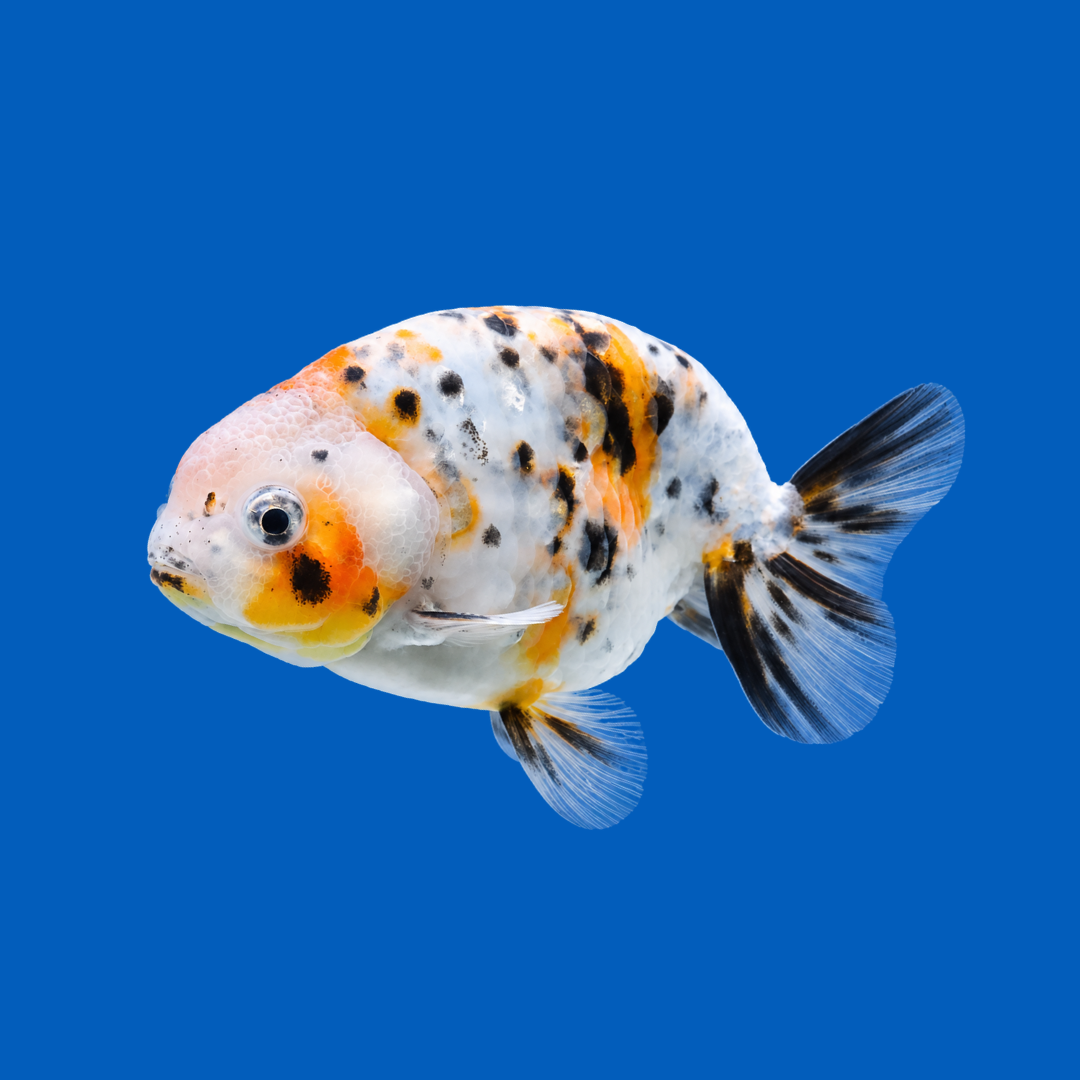
江戸錦は、背びれを持たない丸みのあるらんちゅう体型に、赤、白、黒、浅葱色が複雑に入り交じるキャリコ柄を備えた日本生まれの金魚です。1951年にらんちゅうと東錦の交配から作出されたとされ、らんちゅう型の体型と、モザイク透明鱗が生み出す繊細な色彩を同時に楽しめる品種として知られています。特に水面から見下ろす「上見」では、滑らかな背なり、左右に開く尾、そして浅葱色と墨色がつくる奥行きのある模様がよく映えます。泳ぎは和金型の金魚ほど俊敏ではないため、強い水流や急な環境変化を避け、落ち着いた飼育環境を整えることが長期飼育の大切なポイントです。 Edo Nishiki is a Japanese fancy goldfish with the rounded, dorsal-finless body shape of a Ranchu and a calico pattern combining red, white, black, and distinctive asagi blue-gray tones. It is generally described as having been developed in 1951 from a cross between Ranchu and Azuma Nishiki, combining the Ranchu-type form with the delicate coloration produced by mosaic transparent scales. It is especially impressive when viewed from above, where the smooth back line, spreading tail, and layered contrast of asagi and black markings can be appreciated. Because it is not as strong a swimmer as long-bodied goldfish, gentle water movement and stable environmental conditions are important for long-term care.
基本情報 / Basic Information
| 学名 / Scientific Name | Carassius auratus |
|---|---|
| 通称 / Common Name | 江戸錦(海外では「Calico Ranchu」と表現されることがあります)Edo Nishiki; sometimes described overseas as a Calico Ranchu |
| 分類 / Family | コイ目コイ科フナ属の金魚改良品種Order Cypriniformes, family Cyprinidae, genus Carassius; a domesticated goldfish variety |
| 英名 / English Name | Edo Nishiki / Calico Ranchu |
| 分布 / Distribution | 日本で作出された改良品種で、野生分布はありません。現在は日本国内のほか、海外の観賞魚市場にも流通しています。A domesticated variety developed in Japan with no natural wild distribution. It is now traded both in Japan and in overseas ornamental fish markets. |
| 最大体長 / Max Size | およそ15〜20cm。系統、給餌、飼育環境によって差があります。Approximately 15–20 cm, depending on lineage, feeding, and rearing conditions. |
| 寿命 / Lifespan | 江戸錦だけを対象とした統一的な寿命データは乏しく、個体差や飼育環境の影響を大きく受けます。金魚全般では長期飼育例が知られているため、水質と給餌を安定させることが長生きの基本です。There is limited lifespan data specific to Edo Nishiki, and longevity varies greatly with individual condition and husbandry. Goldfish in general are capable of long-term survival, so stable water quality and careful feeding are fundamental to longevity. |
飼育環境 / Aquarium Environment
| 水槽サイズ / Tank Size | 成魚1匹につき75〜80L前後以上を一つの目安とし、日本の規格水槽では水量と底面積を確保しやすい60cmワイド水槽などが扱いやすい選択肢です。複数飼育や大きく育てたい場合は90cm規格水槽、または80〜120L程度のプラ舟など、より底面積の広い容器が適しています。必要な水量は個体数やろ過能力、換水頻度によっても変わるため、余裕を持って確保してください。As a practical guideline, allow around 75–80 L or more per adult. In common Japanese aquarium sizes, a wide 60 cm tank that provides adequate water volume and floor area is a manageable option. For multiple fish or growth-focused keeping, a standard 90 cm tank or a broad 80–120 L tub is more suitable. Actual requirements vary with stocking level, filtration, and water-change frequency, so generous capacity is preferable. |
|---|---|
| 水温 / Temperature | 15〜25℃を目安にし、特に18〜24℃前後では安定して管理しやすいです。急激な水温変化は消化不良や体調低下につながるため避けます。 A practical range is 15–25°C, with approximately 18–24°C being especially manageable. Avoid rapid temperature changes because they can contribute to digestive and general health problems. |
| 水質 / Water Quality | 中性〜弱アルカリ性を基本とし、pH7.0〜8.0程度が目安です。アンモニアと亜硝酸は検出されない状態を保ち、硝酸塩も低く維持します。金魚は排泄量が多いため、十分なろ過と定期的な換水が重要です。Neutral to slightly alkaline water is preferred, with a target around pH 7.0–8.0. Keep ammonia and nitrite undetectable and nitrate low. Because goldfish produce a large amount of waste, adequate biological filtration and regular water changes are essential. |
| レイアウト / Layout | 遊泳を妨げない開けた空間を広く確保し、強い水流を避けます。背びれがなく丸い体型のため、鋭利な石や複雑な障害物は少なめにし、底床を使う場合も口や体を傷つけにくい素材を選びます。上見を楽しむ場合は、浅めで底面積の広い容器も相性が良く、屋外では適切に管理された青水飼育が用いられることもあります。Provide a large open swimming area and avoid strong currents. Because of the rounded dorsal-finless body, keep sharp rocks and complex obstacles to a minimum, and use smooth substrate materials if substrate is included. Broad, relatively shallow containers work well for top-view appreciation, and carefully managed green-water systems are also used outdoors. |
| 注意点 / Precautions | 江戸錦は泳ぎが緩やかで、強い水流や急激な環境変化の負担を受けやすい品種です。過密飼育、急な水温変化、過食を避け、日々の泳ぎ方や浮き方を観察してください。青水を利用する場合は、夜間の酸素低下に備えてエアレーションを確保し、濃くしすぎないことが重要です。Edo Nishiki are relatively slow swimmers and can be stressed by strong currents or rapid environmental changes. Avoid crowding, abrupt temperature shifts, and overfeeding, and monitor swimming posture and buoyancy daily. When using green water, provide aeration to prevent nighttime oxygen depletion and avoid excessive algal density. |
餌と給餌 / Feeding
| 餌の種類 / Diet | 金魚用の良質な沈下性人工飼料を主食にします。育成期には十分なタンパク質を含む専用飼料が利用され、補助的に消化しやすい生餌や植物質を取り入れることもできます。体調や水温に合わせて、消化負担の少ない内容を選びます。Use a high-quality sinking goldfish pellet as the staple diet. During growth, nutrient-dense feeds with adequate protein are commonly used, while easily digested live foods or plant-based items may be offered as supplements. Adjust the diet to water temperature and the fish’s condition. |
|---|---|
| 給餌のポイント / Feeding Tips | 一度に大量に与えるより、食べ切れる量を少量ずつ与える方法が向きます。浮上性飼料では水面で空気を飲み込みやすい個体がいるため、江戸錦では沈下性飼料が扱いやすい選択肢です。低水温時や消化が落ちているときは給餌量を減らし、食後の浮き方に異常がないか確認してください。Small portions are preferable to large single meals. Some individuals gulp air when feeding at the surface, so sinking food is often easier to manage with Edo Nishiki. Reduce feeding when temperatures are low or digestion appears sluggish, and check for abnormal buoyancy after meals. |
性格と混泳 / Temperament and Tank Mates
| 性格 / Temperament | 基本的に温和で、他魚を積極的に攻撃するタイプではありません。人に慣れる個体も多く、給餌時には飼育者の姿に反応して寄ってくることがあります。Generally peaceful and not actively aggressive toward other fish. Many individuals become accustomed to their keeper and may approach when they recognize feeding time. |
|---|---|
| 混泳の相性 / Compatibility | 同じように泳ぎが穏やかな丸手の金魚との混泳が向きます。和金、コメットなど泳ぎの速い品種と一緒にすると餌を取り負けやすく、体力差が出ることがあります。サイズ差が大きい個体同士の同居も避け、給餌時に全個体へ餌が行き渡るか確認してください。Best kept with similarly slow-swimming fancy goldfish. Fast varieties such as Common Goldfish or Comets may outcompete them for food and create a difference in condition. Avoid large size disparities and make sure every fish receives food during feeding. |
病気と対策 / Diseases and Prevention
| かかりやすい病気 / Common Diseases | 丸みの強い体型の金魚では、消化不良や浮き袋機能の乱れに伴う転覆症状が問題になりやすいほか、エラに寄生するギロダクチルスやダクチロギルスなどの単生類による呼吸障害にも注意が必要です。一般的な金魚と同様、白点病、細菌性感染症、尾ぐされ症状なども水質悪化や導入時のストレスをきっかけに発生することがあります。In strongly rounded fancy goldfish, buoyancy disorders associated with digestive problems or swim bladder dysfunction can be an important concern. Gill parasites such as Gyrodactylus and Dactylogyrus may also cause respiratory distress. As with other goldfish, white spot disease, bacterial infections, and fin deterioration can occur when water quality declines or newly introduced fish are stressed. |
|---|---|
| 対策と予防 / Prevention | 最も重要なのは、過食を避け、アンモニアと亜硝酸を蓄積させない安定した水質管理です。転覆する、沈んだままになるなどの浮力異常が見られた場合は、まず水質を確認し、給餌量や餌の種類も見直します。呼吸が速い、エラを強く動かす、体をこすりつけるなどの症状がある場合は、寄生虫や細菌感染など別の原因も考えられるため、症状だけで決めつけずに原因を見極めることが大切です。新魚は本水槽へ入れる前に隔離観察すると、病原体の持ち込みリスクを下げられます。The most important prevention is stable water quality, especially avoiding overfeeding and any buildup of ammonia or nitrite. If the fish floats, sinks, or shows another buoyancy abnormality, check water quality first and review both feeding quantity and food type. Rapid breathing, excessive gill movement, or flashing can have other causes, including parasites or bacterial disease, so symptoms should not be treated as proof of a single diagnosis. Quarantining new fish before introduction helps reduce the risk of bringing pathogens into the main aquarium. |
増やし方(繁殖) / Breeding
| 雌雄の判別 / Sexing | 繁殖期になると、オスはエラぶたや胸びれの前縁に白い追星が現れることがあります。メスは成熟して抱卵すると腹部が丸みを増し、上から見たときにふっくら見える傾向があります。ただし若魚や繁殖期外では判別が難しい場合があります。During the breeding season, males may develop small white breeding tubercles on the gill covers and leading edges of the pectoral fins. Mature females carrying eggs tend to become fuller in the abdomen, especially when viewed from above. Sexing can be difficult in young fish or outside the breeding season. |
|---|---|
| 繁殖形態 / Reproduction | 卵生で、春を中心に水温上昇をきっかけとして繁殖行動が活発になります。オスがメスを追尾し、水草や産卵床などに粘着性の卵を産み付けます。親魚は卵を食べるため、採卵後は親魚と卵を分けて管理します。Oviparous. Breeding activity increases mainly in spring as water temperatures rise. Males chase females, which release adhesive eggs onto plants or spawning media. Because adults may eat the eggs, eggs and parents should be separated after spawning. |
| 繁殖のポイント / Breeding Tips | 江戸錦らしい背びれのない体型とキャリコ柄を次世代で揃えるには、単に産卵させるだけでなく、稚魚期から多数の個体を選別する必要があります。背なり、尾形、体型、色彩のバランスなど複数の形質を同時に見るため、狙った特徴を揃えるには長期的な選抜が欠かせません。家庭繁殖では、まず健康な親魚を用意し、十分な水量と産卵床、孵化後の稚魚用の微細な餌を準備しておくと管理しやすくなります。Producing offspring that consistently show the dorsal-finless body and calico pattern of Edo Nishiki requires more than successful spawning; large numbers of fry must be selected from an early stage. Breeders evaluate several traits at once, including back line, tail shape, overall form, and color balance, so long-term selection is essential when trying to reproduce a particular appearance. For home breeding, prepare healthy parents, adequate water volume, spawning media, and suitably fine first foods for the fry. |
雑学と豆知識 / Trivia and Fun Facts
| 1. 江戸錦はどのように生まれたのか / 1. How Edo Nishiki Was Created | 江戸錦の作出は1951年とされ、二代目・秋山吉五郎氏が、背びれを持たないらんちゅうと、モザイク透明鱗のキャリコ柄を持つ東錦を交配して作った品種として伝えられています。体型と色柄という異なる特徴を一つの系統にまとめるには選別を重ねる必要があり、その後も改良が続けられました。「江戸錦」という名は産地にちなむものとされ、昭和期に生まれた日本の改良金魚として現在まで受け継がれています。Edo Nishiki is generally described as having been developed in 1951 by second-generation breeder Yoshigoro Akiyama from a cross between dorsal-finless Ranchu and calico, mosaic-transparent-scaled Azuma Nishiki. Combining these different body-shape and color traits required continued selection and refinement. The name “Edo Nishiki” is associated with its place of production, and the variety has been maintained as a Japanese fancy goldfish developed in the Showa period. |
|---|---|
| 2. 浅葱色は「青い色素」ではない / 2. The Asagi Color Is Not a Blue Pigment | 江戸錦を眺めると、体表に青みがかった浅葱色が浮かび上がって見えます。この色は、単純に青い色素が表面にあるためではありません。モザイク透明鱗の下にある深い位置の黒色素胞が淡い青灰色として見えることが大きく関わり、さらに鱗や皮膚のグアニン由来の反射性の違いも全体の見え方に影響します。つまり、浅葱色は「黒が透けて青く見える」だけでなく、色素の位置と組織の透明度、反射の状態が重なって生まれる色として捉えると分かりやすいでしょう。Edo Nishiki often shows a soft blue-gray asagi tone, but this is not simply a surface blue pigment. A major part of the effect comes from deeper melanophores appearing pale blue-gray through mosaic transparent scales, while differences in guanine-based reflectivity in the scales and skin also influence the final appearance. In practical terms, asagi is best understood as a layered color produced by pigment depth, tissue transparency, and reflective structures rather than simply as “black showing through as blue.” |
| 3. モザイク透明鱗がつくるキャリコ柄 / 3. Mosaic Transparent Scales and the Calico Pattern | 江戸錦のキャリコ柄を支えているのが「モザイク透明鱗」です。こうした鱗では、グアニンによる反射の強い部分と、反射が弱く半透明から透明に見える部分が混在するため、体表の色と体内側の色素が重なり、赤、白、黒、浅葱色に奥行きが生まれます。育種では色の数だけでなく、どの色がどこに現れ、上から見たときに全体としてどのようなバランスになるかも重要です。そのため、江戸錦は同じ品種でも個体ごとに大きく異なる表情を見せます。The calico pattern of Edo Nishiki is supported by its mosaic transparent scale type. In these scales, areas with stronger guanine-based reflectivity are mixed with areas that are less reflective and appear translucent to transparent. This allows surface colors and deeper pigments to overlap visually, giving red, white, black, and asagi tones greater depth. In breeding, not only the number of colors but also their placement and overall balance in top view are important, so individuals of the same variety can look markedly different from one another. |
| 4. 「上見」が育てた体型美 / 4. A Body Shape Designed for Top Viewing | 江戸錦の魅力を理解するうえで欠かせないのが、日本の金魚文化で重視されてきた「上見」です。透明なガラス水槽が一般化する以前、金魚は鉢やたらいなどに泳がせ、水面の上から眺めることが多くありました。らんちゅう系統では、背びれのない滑らかな背なりや左右に開く尾など、上から見たときの体形が重要な鑑賞点となってきました。江戸錦もこの美意識を受け継いでおり、横から見るだけでは分かりにくい体の幅や尾の開き、色柄の配置が、上見では一つのまとまりとして見えてきます。A key to understanding Edo Nishiki is the tradition of top-view appreciation that has long been important in Japanese goldfish culture. Before transparent glass aquariums became common, goldfish were often kept in bowls, tubs, or other open containers and admired from the water’s surface. In Ranchu-type fish, features such as a smooth dorsal profile without a dorsal fin and a tail that spreads to both sides have therefore been important visual qualities. Edo Nishiki inherits this aesthetic, and details such as body width, tail spread, and color placement become especially clear in top view. |
| 5. 江戸錦を支える各地の金魚文化 / 5. Regional Goldfish Traditions Supporting Edo Nishiki | 「江戸錦」という名には東京で作出された歴史が刻まれています。一方、現在の日本の金魚生産と流通は、東京だけでなく、愛知県弥富市や埼玉県加須市など複数の地域によって支えられています。弥富には東京からの移転とは別に長い金魚養殖の歴史があり、各地で培われてきた養殖技術と流通網が、現在の金魚文化を形づくっています。江戸錦も、作出地の歴史を持ちながら、地域を越えて飼育・改良されてきた品種の一つです。The name “Edo Nishiki” preserves the history of a variety developed in the Tokyo area. Modern Japanese goldfish production and distribution, however, are supported by several regions, including Yatomi in Aichi Prefecture and Kazo in Saitama Prefecture. Yatomi has its own long history of goldfish culture rather than simply representing a relocation from Tokyo, and the breeding traditions and distribution networks of different regions together support today’s industry. Edo Nishiki is one of the varieties that has continued to be kept and refined beyond its place of origin. |
| 6. 桜錦へつながった育種の枝分かれ / 6. The Breeding Path Toward Sakura Nishiki | 桜錦は、江戸錦とらんちゅうを交配し、浅葱色や黒を目立たせず、赤と白を中心とした柔らかな色彩を選抜して作られた品種です。つまり、江戸錦の繁殖から偶然に赤白の個体だけを拾い上げたというより、江戸錦の特徴を土台にしながら、らんちゅうとの交配と選抜によって別の方向へ表現を整えていった品種と考える方が正確です。江戸錦と桜錦を見比べると、同じらんちゅう型でも、色彩の選び方によって印象が大きく変わることがよく分かります。Sakura Nishiki was developed by crossing Edo Nishiki with Ranchu and selecting for a softer red-and-white appearance in which asagi and black are not prominent. It is therefore more accurate to understand the variety not as a simple accidental red-and-white offshoot from Edo Nishiki, but as a deliberately selected direction built from Edo Nishiki traits and further Ranchu crossing. Comparing the two varieties shows how strongly color selection can change the impression of fish that share a Ranchu-type body form. |
| 7. 透明金魚は研究モデルにも使われる / 7. Transparent Goldfish as a Research Model | 2026年には、全身がほぼ透明な実験用の金魚系統を使い、蛍光標識したマイクロプラスチックが体内へ取り込まれる様子を生きたまま追跡した研究が報告されています。透明な体を利用することで、解剖せずに時間経過を追って観察できることが研究上の利点になりました。ただし、この研究で使われたのは実験用に確立された透明金魚であり、江戸錦そのものや、江戸錦のモザイク透明鱗を直接利用した研究ではありません。江戸錦の色彩と「透明金魚」の研究は、同じ金魚の透明性に関わる話題ではあっても、区別して理解する必要があります。In 2026, researchers reported a study using a laboratory strain of almost fully transparent goldfish to track fluorescently labeled microplastics inside living fish over time. The transparent body made it possible to monitor internal changes without dissecting the fish. However, the study did not use Edo Nishiki itself, nor did it directly use the mosaic transparent scales of Edo Nishiki. The ornamental coloration of Edo Nishiki and research using fully transparent laboratory goldfish are related to transparency in goldfish, but they should be understood as distinct subjects. |
まとめ / Conclusion
江戸錦は、らんちゅう型の背びれのない体型と、東錦から受け継いだモザイク透明鱗のキャリコ柄をあわせ持つ、個体差の大きな金魚です。浅葱色の見え方、黒の入り方、赤白の配置、背なりや尾形が一匹ずつ異なり、上見でも横見でもそれぞれの表情を楽しめます。 Edo Nishiki combines the dorsal-finless Ranchu-type form with the mosaic transparent-scale calico pattern inherited from Azuma Nishiki. The appearance of the asagi tone, placement of black, balance of red and white, back line, and tail shape vary from fish to fish, giving each individual a distinct character in both top and side view.
その一方で、丸い体型と穏やかな泳ぎを持つため、強い水流や過食を避け、十分な水量と安定した水質を用意することが大切です。日々の浮き方や食べ方を丁寧に観察しながら飼い込むことで、体調を保ちやすくなり、個体ごとに異なる色柄や体型の魅力を長く楽しめます。 At the same time, its rounded form and gentle swimming style make calm water movement, generous water volume, stable water quality, and careful feeding especially important. Careful observation of buoyancy and feeding behavior helps maintain good condition while allowing the individual color pattern and body form to be appreciated over the long term.

気になる道具や飼い方を見つけてみませんか?
 アイのアクアグッズ案内水槽ライトの選び方|魚の見え方・水草・海水で選ぶおすすめ照明道具の特徴や使い方、選ぶときのポイントをアイが紹介します。記事はコチラ →
 アイのアクアグッズ案内水槽フィルターの選び方|外掛け・外部・上部から小型オーバーフローまで道具の特徴や使い方、選ぶときのポイントをアイが紹介します。記事はコチラ →
さまざまな飼育テーマをご紹介。リンク先の記事には広告・商品紹介が含まれます。
案内・紹介記事一覧へ →分布マップ
江戸錦(Carassius auratus)は日本で作出された観賞用の金魚で、自然下での野生分布はありません。現在は日本国内をはじめ海外の観賞魚市場にも流通しています。記事中に具体的な海外の分布地点が示されていないため、地図では作出国である日本全体が見える範囲を概略表示しています。
※この地図は分布・流通地域を理解するための概略表示です。マーカーは日本を代表する地点として設定したもので、実際の採集地点、生息地点、養殖場、販売地点を示すものではありません。江戸錦は改良品種のため、自然下の野生分布を示す地図ではありません。
参考文献
- 弥富市「金魚図鑑」弥富市公式ホームページ。 江戸錦の品種成立、らんちゅう型の体型、東錦由来のモザイク透明鱗などの確認に参照。 https://www.city.yatomi.lg.jp/shisei/kanko/1001203/1001204.html
- National Center for Biotechnology Information (NCBI), “Taxonomy Browser: Carassius auratus.” 学名、コイ目・コイ科・フナ属という分類の確認に参照。 https://www.ncbi.nlm.nih.gov/Taxonomy/Browser/wwwtax.cgi?id=7957&mode=Info
- RSPCA Australia, “How should I care for my goldfish?” RSPCA Knowledgebase, updated May 1, 2024. 水槽容量、水温・pH・窒素化合物、水流、ろ過、給餌、沈下性飼料、混泳など一般的な金魚の飼育条件に参照。 https://kb.rspca.org.au/categories/companion-animals/fish/how-should-i-care-for-my-goldfish
- Department for Environment, Food & Rural Affairs, “Selling animals as pets licensing: statutory guidance for local authorities,” Part L – Fish, GOV.UK, updated June 1, 2026. 金魚・丸手金魚の温度範囲、急変回避、アンモニア・亜硝酸などの水質管理、飼育環境上の注意点に参照。 https://www.gov.uk/government/publications/animal-activities-licensing-guidance-for-local-authorities/selling-animals-as-pets-licensing-statutory-guidance-for-local-authorities–2
- Kobayashi, M., Iwata, E., Sorensen, P. W. “Environmental and Physiological Regulation of Reproduction in the Goldfish: Gonadal Development, Maturation, and Spawning Behavior: A Review.” Animals, 16(5), 775, 2026. 水温・光周期と繁殖、成熟雄の追星、産卵行動など金魚の繁殖生理の確認に参照。 https://doi.org/10.3390/ani16050775
- Al-Khalaifah, H. S., Amer, S. A., Al-Sadek, D. M. M., Khalil, A. A., Zaki, E. M., El-Araby, D. A. “Optimizing the Growth, Health, Reproductive Performance, and Gonadal Histology of Broodstock Fantail Goldfish (Carassius auratus, L.) by Dietary Cacao Bean Meal.” Animals, 10(10), 1808, 2020. 金魚の粘着性卵、産卵床への付着、採卵後の卵管理など繁殖記述の確認に参照。 https://doi.org/10.3390/ani10101808
- Merck Veterinary Manual, “Parasitic Diseases of Fish.” 金魚にみられるギロダクチルス類・ダクチロギルス類などの単生類、エラ障害、呼吸促迫、体をこすりつける症状の確認に参照。 https://www.merckvetmanual.com/exotic-and-laboratory-animals/aquarium-fish/parasitic-diseases-of-fish
- Merck Veterinary Manual, “Management of Aquarium Fish.” アンモニア・亜硝酸を含む水質確認、新魚の隔離、外部寄生虫の持ち込み防止など疾病予防上の注意点に参照。 https://www.merckvetmanual.com/exotic-and-laboratory-animals/aquarium-fish/management-of-aquarium-fish
ど





コメント