

解説 / Description
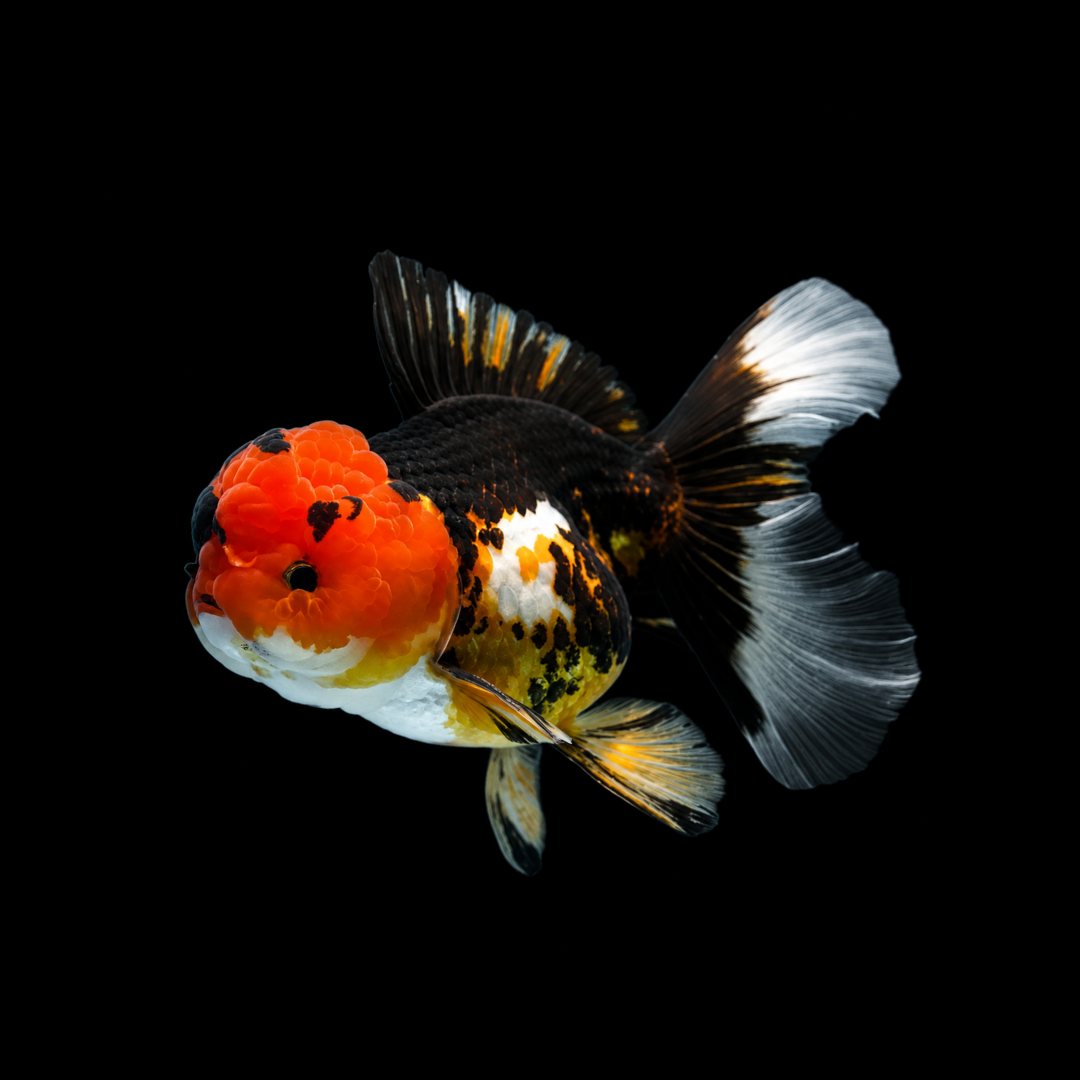
トリカラーオランダ獅子頭は、オランダ獅子頭の特徴である頭部の豊かな肉瘤と、赤・白・黒を中心とした華やかな色彩を併せ持つ改良金魚です。日本では、中国やタイなどから輸入されるショートテール系統や、ローズテールと呼ばれる複雑に開く尾型の個体も流通しています。伝統的な東錦と同じく、キャリコ表現に関わる網目透明鱗の性質を背景に持ちますが、「トリカラーオランダ」という呼び名は、赤・白・黒の三色が目立つオランダ型の金魚に流通上用いられています。背景色は金魚の体色の見え方や色調変化に影響しますが、黒色が将来どの程度残るかは背景色だけで決まるものではなく、遺伝や成長の影響も受けます。また、胴が短く丸い改良体型では浮力異常が見られることがあるため、過食を避け、安定した水質を保つことが大切です。十分な水量とろ過、適量の給餌を基本に、体型と泳ぎ方を観察しながら育てたい品種です。 The Tricolor Oranda is a selectively bred fancy goldfish combining the characteristic fleshy head growth of the Oranda with a vivid pattern centered on red, white, and black. In Japan, imported short-tail strains and fish with elaborately folded tails marketed as rose-tail types are also seen. Like the traditional Azuma Nishiki, these fish are associated with the nacreous scale trait underlying calico coloration. The name “Tricolor Oranda” is used in the aquarium trade for Oranda-type goldfish in which red, white, and black are prominent. Background color can influence the apparent body tone and reversible color responses of goldfish, but it does not by itself determine whether black markings will remain throughout life; genetics and growth also play important roles. Compact, deep-bodied fancy forms can also show buoyancy problems, making controlled feeding and stable water quality especially important. Generous water volume, effective filtration, and close observation of body condition and swimming posture form the basis of long-term care.
基本情報 / Basic Information
| 学名 / Scientific Name | Carassius auratus (Linnaeus, 1758) (トリカラーオランダ獅子頭は改良品種であり、独立した正式学名はありません) (the Tricolor Oranda is a domestic variety and has no separate formal scientific name) |
|---|---|
| 通称 / Common Name | トリカラーオランダ、トリカラーオランダ獅子頭、三色オランダTricolor Oranda, Tricolor Oranda Goldfish |
| 分類 / Family | コイ目・コイ科・フナ属Cypriniformes, Cyprinidae, genus Carassius |
| 英名 / English Name | Tricolor Oranda Goldfish |
| 分布 / Distribution | 野生に自然分布する品種ではなく、人為的な選択交配によって維持されています。中国やタイなどで養殖されたオランダ系統も日本に流通しています。金魚そのものは、東アジアのフナ属魚類を祖先とする家畜化魚です。This is a captive-bred ornamental variety with no natural wild population. Oranda strains raised in countries such as China and Thailand are also distributed in Japan. Goldfish are domesticated fish derived from East Asian populations of the genus Carassius. |
| 最大体長 / Max Size | 20〜30cm程度まで成長することがあります。尾鰭の長さや系統、飼育環境による個体差が大きいため、若魚の大きさだけで将来の水槽サイズを決めないことが大切です。They may grow to roughly 20–30 cm, with substantial variation according to strain, fin length, and husbandry. Tank planning should therefore be based on expected adult size rather than the size of a juvenile at purchase. |
| 寿命 / Lifespan | 適切な管理下で10〜15年程度が目安です。水質、給餌、遺伝的な体型、病気の有無によって大きく左右されます。Around 10–15 years under good care, although lifespan varies greatly with water quality, diet, body conformation, and disease history. |
飼育環境 / Aquarium Environment
| 水槽サイズ / Tank Size | 成魚1〜2匹を長期飼育するなら、90cm規格水槽(約180L)を基準にすると管理しやすくなります。複数飼育や大型のショートテール、ローズテールでは120cm規格水槽や120cmワイド水槽を検討してください。幼魚期でも将来の成長を見越し、水量と底面積に余裕を持たせます。For long-term care of one or two adults, a 90 cm standard aquarium of roughly 180 L provides a practical baseline. Groups or especially large short-tail and rose-tail fish benefit from 120 cm standard or wide tanks. Even juveniles should be housed with their eventual adult size in mind. |
|---|---|
| 水温 / Temperature | 20〜24℃は、室内で安定して飼育する際の一つの目安です。金魚は変温動物のため、水温が下がるにつれて代謝も低下します。季節的に低水温になる環境では、魚の食欲と活動量に合わせて給餌量を調整し、急激な温度変化は避けてください。 A stable 20–24°C is a useful reference range for indoor care. Because goldfish are ectothermic, their metabolism decreases as water temperature falls. In seasonally cool conditions, feeding should be adjusted to the fish’s appetite and activity level, and rapid temperature changes should be avoided. |
| 水質 / Water Quality | pH6.5〜7.5程度を一つの目安とし、アンモニアと亜硝酸は検出されない状態を目標に管理します。硝酸塩も定期的な水換えで低く保ちます。金魚は排泄量が多いため、数値を細かく追うこと以上に、十分な生物ろ過と酸素供給を確保し、水質を急変させないことが重要です。A pH of roughly 6.5–7.5 is a useful reference range, with ammonia and nitrite kept at non-detectable levels and nitrate controlled through regular partial water changes. Goldfish produce substantial waste, so effective biological filtration, good oxygenation, and avoidance of sudden water-quality changes are more important than chasing overly narrow target numbers. |
| レイアウト / Layout | 丸い体型と大きな尾鰭を傷めないよう、遊泳空間を広く取り、尖った石や枝は避けます。底床は薄敷き、または掃除しやすいベアタンクも相性が良好です。背景色によって体色の見え方が変わるため、暗色の背景では全体が濃く見えることがありますが、黒色の長期的な維持を保証するものではありません。水草を入れる場合は、掘り返しや食害を受けにくい丈夫な種類を選びます。Keep a broad open swimming area and avoid sharp rocks or branches that could damage the rounded body, fins, or head growth. A thin substrate or easy-to-clean bare-bottom setup works well. Background color can alter the apparent tone of a goldfish, and darker surroundings may make the fish look darker, but this does not guarantee long-term retention of black markings. If live plants are used, choose robust species that tolerate digging and grazing. |
| 注意点 / Precautions | 胴が短く体高のあるショートテール系では浮力異常が見られることがあるため、過密飼育と過剰給餌を避け、泳ぐ姿勢の変化を日常的に確認します。肉瘤が発達した個体は視界が狭くなることがあるため、餌を確実に食べられているかにも注意してください。背景色は体色の見え方に影響するため、色の変化を観察するときは照明や背景条件を大きく変えない方が比較しやすくなります。新規導入魚は、本水槽へ入れる前に別環境で状態を観察すると安全です。Compact, deep-bodied short-tail strains can show buoyancy problems, so avoid crowding and overfeeding and regularly observe swimming posture. Mature head growth may also reduce vision, making it important to confirm that each fish is actually finding food. Because background and lighting affect apparent body color, keeping those conditions reasonably consistent makes color changes easier to judge. Newly acquired fish are safest when observed separately before introduction to the main aquarium. |
餌と給餌 / Feeding
| 餌の種類 / Diet | 主食は金魚用の良質な沈下性ペレットを中心とし、ゼリー状飼料、冷凍赤虫、ミジンコ類などを補助的に利用します。植物質と食物繊維の補給として、消化しやすく処理したグリーンピースや青菜、藻類を含む飼料などを組み合わせると食事に変化を付けられます。Use a high-quality sinking goldfish pellet as the staple, supplemented with gel food, frozen bloodworms, daphnia, and similar foods. Properly prepared peas, leafy greens, or algae-containing foods can provide additional plant matter and fiber. |
|---|---|
| 給餌のポイント / Feeding Tips | 金魚は胃を持たない魚ですが、それだけを理由に給餌回数を増やす必要はありません。大切なのは、一日の総量を過剰にせず、食べ残しが出ない量を与えることです。成長期には高タンパク飼料が利用されることもありますが、肉瘤の発達だけを目的に量を増やし過ぎないようにします。胴の短い改良金魚では、水面で空気を飲み込み続けることが浮力異常につながる場合があるため、沈下性の餌は有効な選択肢です。低水温期は食欲と活動量に合わせて給餌量を減らし、食後に浮き方や腹部の状態が変わった場合は、まず給餌量、水温、水質を確認します。Goldfish lack a true stomach, but this does not mean they must simply be fed more frequently. The key is to keep the total daily amount modest and avoid uneaten food. Higher-protein diets may be used during growth, but feeding should not be increased excessively in an attempt to enlarge the head growth. In compact fancy goldfish, repeated air intake at the surface can contribute to buoyancy problems, so sinking food is a useful option. As water temperature falls, adjust feeding to appetite and activity, and review food quantity, temperature, and water quality if swimming posture or abdominal condition changes after feeding. |
性格と混泳 / Temperament and Tank Mates
| 性格 / Temperament | 基本的には温和で、人や餌の気配に反応しやすい親しみやすい金魚です。単独でも飼育できますが、同程度の遊泳力を持つ金魚同士では落ち着いた群れ行動が見られます。ショートテールや肉瘤の大きな個体は速く泳ぐのが得意ではありません。Generally peaceful and responsive to people and feeding routines. They can be kept singly, but compatible fancy goldfish often show relaxed social behavior together. Short-tail fish and individuals with heavy head growth are not strong or fast swimmers. |
|---|---|
| 混泳の相性 / Compatibility | 琉金、出目金、東錦、ランチュウ系など、泳ぎの速さが近い丸手の金魚との混泳が基本です。コメットや和金のように速く泳ぐ単尾系金魚は、給餌時にトリカラーオランダが餌を取り負けやすいため注意が必要です。ヒレをかじる魚、攻撃的な魚、極端に水温要求が異なる魚との混泳は避けます。小型のエビや稚魚は口に入れば食べられる可能性があります。Best kept with similarly slow fancy goldfish such as Ryukin, telescope-eye varieties, Azuma Nishiki, and ranchu-type fish. Fast single-tailed goldfish such as common goldfish and comets can outcompete Orandas at feeding time. Avoid fin-nipping or aggressive species and fish with very different temperature requirements. Small shrimp and fry may be eaten if they fit in the mouth. |
病気と対策 / Diseases and Prevention
| かかりやすい病気 / Common Diseases | 特に注意したいのは、体が傾く、浮き続ける、沈み続けるといった浮力異常です。一般に「転覆病」と一括して呼ばれることがありますが、見た目だけで原因を一つに決めることはできません。胴の短い改良金魚では、水面での空気の飲み込みなどが浮力異常に関与することがあります。そのほか、水質悪化に伴う皮膚や鰭のトラブル、肉瘤部の炎症、白点病、水カビ病など、一般的な金魚の疾病にも注意します。Particular attention should be paid to buoyancy abnormalities such as persistent floating, sinking, or tilting. These signs are often grouped under the informal label “swim bladder disease,” but their cause cannot be determined from appearance alone. In compact fancy goldfish, repeated air intake at the surface can contribute to buoyancy problems. As with other goldfish, also watch for skin and fin problems associated with poor water quality, inflammation of the head growth, ich, and fungal disease. |
|---|---|
| 対策と予防 / Prevention | 予防の基本は、アンモニアと亜硝酸が検出されない安定した水質、十分な酸素、過剰にならない給餌量を保つことです。浮き方に異常が出た場合は、給餌をいったん控え、水温、水質、直前の給餌内容、腹部の状態を確認します。症状が続く、出血や潰瘍がある、呼吸が速い、肉瘤が眼やエラを覆うなどの問題がある場合は、観賞魚診療に対応できる獣医師へ相談してください。肉瘤の切除や麻酔を伴う処置は家庭で安易に行わず、専門家の管理下で実施するのが安全です。Prevention begins with stable water quality, non-detectable ammonia and nitrite, good oxygenation, and avoiding excessive feeding. If buoyancy changes appear, temporarily withhold food and check water temperature, water quality, recent feeding, and abdominal condition. Persistent signs, bleeding, ulcers, rapid breathing, or head growth obstructing the eyes or gills warrant consultation with a veterinarian experienced in ornamental fish. Surgical trimming or anesthesia of the head growth should not be attempted casually at home and is safest under professional supervision. |
増やし方(繁殖) / Breeding
| 雌雄の判別 / Sexing | 繁殖期のオスでは、エラ蓋や胸鰭の前縁に白い小粒状の追星が現れることが代表的な目印です。メスは成熟して抱卵すると腹部がふっくらし、総排泄孔がやや突出して見えることがあります。ただし、繁殖期以外は体型差だけでの判別が難しく、複数の特徴を合わせて判断します。During the breeding season, males commonly develop small white breeding tubercles on the gill covers and leading edges of the pectoral fins. Mature egg-bearing females often become fuller through the abdomen and may show a more protruding vent. Outside breeding condition, sexing can be difficult, so several traits should be considered together. |
|---|---|
| 繁殖形態 / Reproduction | 卵生で、水草や産卵床に粘着性の卵をばらまくタイプです。オスは繁殖期にメスを追尾し、産卵時に放精します。親魚には卵や稚魚を守る習性がなく、産卵後に卵を食べることもあるため、採卵後は親魚と卵を分けて管理します。Egg-scattering and oviparous. Adhesive eggs are released among plants or spawning media while males chase females and release milt. The parents provide no brood care and may eat the eggs, so adults are normally separated from the spawn afterward. |
| 繁殖のポイント / Breeding Tips | 春の水温上昇が繁殖のきっかけになりやすく、親魚は事前に十分な栄養を与えて体力を整えます。産卵床には柔らかな水草や人工の産卵モップを用い、産卵後は卵へ穏やかに通水・エアレーションします。孵化した稚魚は口に入る大きさの微細な餌から始め、成長に合わせて餌を切り替えます。トリカラーの色彩や体型は単純に親と同じ形で固定されるわけではなく、多数の稚魚の中から鱗質、色の配置、肉瘤、尾型、泳ぎを長期間かけて選別することが必要です。網目透明鱗同士の交配では、古典的には網目透明鱗、普通鱗、透明鱗が分離するため、三色表現を狙う繁殖では選別そのものが大きな作業になります。Rising spring temperatures commonly stimulate spawning, and broodfish should be well conditioned beforehand. Soft plants or artificial spawning mops can be used, followed by gentle water movement and aeration around the eggs. Newly hatched fry begin on suitably fine foods and move to larger feeds as they grow. Tricolor pattern, body shape, head growth, and tail form do not reproduce as exact copies of the parents, so breeders must raise and select large numbers of juveniles over time. In classic nacreous-to-nacreous crosses, nacreous, metallic, and matt scale types segregate, making careful selection a central part of producing tricolor offspring with the desired scale type and pattern. |
雑学と豆知識 / Trivia and Fun Facts
| 1. 「オランダ」なのに、オランダ生まれではない / 1. “Oranda” does not mean it came from the Netherlands | オランダ獅子頭の名前は、日本の江戸時代の国際感覚を今に残しています。この金魚はオランダで作られたわけではなく、中国から琉球を経て長崎へ伝わったとされます。当時の日本では、海外から届く珍しい品物に「オランダ物」というイメージが重ねられることがあり、見慣れない豪華な頭部を持つ金魚にもその言葉が結び付いたと考えられています。獅子のたてがみを思わせる肉瘤と、舶来品への憧れが一つの名前の中で出会ったわけです。The name Oranda preserves a trace of Edo-period Japan’s view of the outside world. The fish was not developed in the Netherlands; it is generally described as having reached Japan from China through the Ryukyu Islands and Nagasaki. At a time when unusual imported goods were often associated with “Oranda,” meaning something foreign or exotic, the unfamiliar lion-like head growth of this goldfish became linked to that image. Its Japanese name therefore reflects history and cultural imagination rather than geographic origin. |
|---|---|
| 2. 東錦とトリカラーオランダは、名前の成り立ちが同じではない / 2. Azuma Nishiki and Tricolor Oranda are not names of the same kind | 日本では昭和初期に、オランダ獅子頭と三色出目金の交配から東錦が作出され、浅葱色を含むキャリコ表現が親しまれてきました。一方、「トリカラーオランダ」は赤・白・黒が目立つオランダ型の金魚に使われる流通上の呼び名で、東錦のように特定の作出経緯そのものを示す品種名とは性格が異なります。どちらもキャリコ系の色彩を背景に持つため外見が重なることはありますが、名称の由来まで同じというわけではありません。In Japan, Azuma Nishiki was developed in the early Showa period by crossing Oranda and calico telescope-eye goldfish and became known for its calico coloration, often including a bluish ground. By contrast, “Tricolor Oranda” is a trade name used for Oranda-type goldfish in which red, white, and black are prominent, rather than a name defined by the same specific breeding history as Azuma Nishiki. Their appearance can overlap because both draw on the broader calico color background, but the origins of the names are not the same. |
| 3. 三色は「色素」だけでなく、鱗の透明度がつくる / 3. The three-color effect depends on scale transparency as well as pigments | トリカラーの赤・白・黒は、単に三種類の絵の具が皮膚に塗られているわけではありません。黒をつくるメラノフォア、赤を担うエリスロフォア、黄色を担うザンソフォア、光を反射する虹色素胞などが皮膚の異なる深さに分布し、そこへ網目透明鱗の部分的なグアニン層が重なります。深い位置にある黒色素は、組織を通過した光の散乱によって青灰色に見えることもあります。つまり一匹の体表は、色素細胞と反射層、光の通り道が重なって完成する小さな光学装置でもあるのです。The red, white, and black pattern is not simply three pigments painted onto the skin. Melanophores, erythrophores, xanthophores, reflective iridophores, and the partial guanine layer of nacreous scales interact at different tissue depths. Dark pigment located deeper in the skin may even appear bluish gray because of light scattering through overlying tissues. A Tricolor Oranda is therefore not only a genetic mosaic of pigment cells, but also a tiny optical system in which reflection and transparency shape what the eye sees. |
| 4. 肉瘤は「完成品」として生まれてくるわけではない / 4. The head growth develops gradually rather than appearing fully formed | オランダ獅子頭を象徴する肉瘤は、稚魚の時点ですでに大きく完成しているものではありません。成長に伴って頭頂部や頬周りに厚みが増し、個体ごとの差も目立つようになります。そのため若魚を選ぶときは、現在の肉瘤の大きさだけでなく、頭部の幅や左右の均整、体型との釣り合いも見どころになります。発達の程度には遺伝的な差が大きく、成長状態や飼育条件も最終的な見え方に影響します。The Oranda’s signature head growth is not fully formed in young fish. As the fish matures, the crown and cheek areas gain volume and individual differences become more obvious. When choosing a juvenile, the present size of the head growth is therefore only one factor; head width, symmetry, and balance with the body are also worth observing. Genetics strongly influence development, while overall growth and husbandry can also affect the final appearance. |
| 5. 金魚には、私たちが想像する「胃」がない / 5. Goldfish lack the kind of stomach most people imagine | 金魚は胃を持たず、食べ物は咽頭歯で処理された後、腸管へ送られて消化されます。ただし、「胃がないから何度も餌を与えるべき」と単純に考えるのは適切ではありません。飼育下では、回数よりも一日の総量を過剰にしないこと、食べ残しを出さないことが重要です。肉瘤を大きくしたいからと高タンパク飼料を多量に与えるのではなく、体調と水温に合わせて適量を続ける方が、長期的な健康につながります。Goldfish lack a true stomach, and food passes from the pharyngeal teeth into the intestine for digestion. However, this should not be simplified into the idea that a stomachless fish must be fed many times a day. In captivity, controlling the total amount and avoiding uneaten food are more important than feeding frequency alone. Rather than overfeeding high-protein foods in an attempt to enlarge the head growth, steady portions matched to body condition and water temperature support better long-term health. |
| 6. ショートテールやローズテール、尾型の選択改良も続いている / 6. Selective breeding continues to diversify tail forms | 従来のオランダ獅子頭には長く優雅な尾鰭を持つタイプが多く見られますが、現在は短い尾で丸い胴体を強調するショートテールも広く流通しています。さらに、タイなどのオランダ系統では、尾鰭が幾重にも折り重なるように開くものが「ローズテール」などの名称で扱われています。こうした尾型の呼称は系統や販売者によって使われ方に幅がありますが、オランダ獅子頭が現在も体型や尾型の選択によって多様化していることを示しています。Traditional Orandas are often associated with long, flowing fins, while modern short-tail strains are also widely traded and emphasize the rounded body through a shortened caudal fin. In Oranda lines from Thailand and elsewhere, heavily folded tails may be marketed under names such as “rose-tail.” Usage of these tail-form names varies among strains and sellers, but they illustrate how Orandas continue to diversify through selective breeding for body and fin shape. |
| 7. 墨は一生同じではなく、環境と成長で表情を変える / 7. Black pigmentation can change with age and environment | トリカラーオランダの黒色、いわゆる墨は、成長に伴って見え方が変わることがあります。また、金魚では白い背景と黒い背景への順応によって体色の濃淡が可逆的に変化することが実験的に確認されています。ただし、この背景適応と、特定の黒斑が長期的に残るかどうかは同じ問題ではありません。購入時の墨が将来も同じ形で残るとは限らず、遺伝、成長、飼育環境が重なって模様の印象が変化していきます。The black markings, often called sumi by Japanese keepers, can change in appearance as the fish grows. Experiments in goldfish have also shown reversible shifts in overall body tone during adaptation to white and black backgrounds. That background response, however, is not the same as determining whether a particular black patch will persist for years. Markings seen at purchase may change with age as genetics, growth, and husbandry interact. |
| 8. 一匹の背景には、中国・東南アジアと日本を結ぶ金魚文化がある / 8. Each fish reflects a living trade and breeding culture linking Asia and Japan | 日本で流通するオランダ系の金魚には、中国やタイなど海外で養殖された個体も含まれ、対象となる生きたふな属魚類の輸入には水産防疫上の手続きが関わります。国内では、愛知県弥富市が金魚の生産地であると同時に有数の流通拠点として長く知られてきました。中国由来の品種が日本で独自の名前と鑑賞文化を得て、さらに現代の海外養殖系統が日本へ入ってくる流れを見ると、オランダ獅子頭が地域を越えながら姿を変えてきた金魚であることがよく分かります。Oranda-type goldfish distributed in Japan include fish bred overseas in countries such as China and Thailand, and the importation of live Carassius species is subject to aquatic-animal health requirements. Within Japan, Yatomi in Aichi Prefecture has long been known both as a goldfish-producing area and as a major distribution center. The history of a Chinese-derived goldfish receiving a distinct Japanese name and appreciation culture, followed by the arrival of modern overseas-bred strains, shows how the Oranda has continued to change as it moved across regions. |
まとめ / Conclusion
トリカラーオランダ獅子頭の魅力は、赤・白・黒の華やかな色彩だけではありません。成長とともに存在感を増す肉瘤、丸みのある体型、ショートテールやローズテールなど多様な尾型が重なり、一匹ごとに異なる姿を見せます。とりわけ墨を含む体色は成長の中で印象が変わることがあり、迎えた時の模様だけでなく、その後の変化も含めて向き合える金魚です。 The appeal of the Tricolor Oranda extends beyond its vivid red, white, and black coloration. Its developing head growth, rounded body, and varied tail forms such as short-tail and rose-tail combine to create a distinct appearance in each individual. Dark markings and overall coloration can also change in appearance as the fish matures, making its development over time part of the experience of keeping it.
十分な水量とろ過、清潔な水、過食を避けた適量の給餌を続けることが、長期飼育の基本です。豪華な外見に目を奪われやすい一方で、健康を支えるのは水質と泳ぎ、食欲を日々観察する地道な管理です。肉瘤や体つきが成熟し、三色の印象も少しずつ変化していく姿を見守れることが、トリカラーオランダ獅子頭を長く飼う大きな楽しみになります。 Generous water volume, effective filtration, clean water, and controlled feeding without overfeeding are the foundations of long-term care. Its extravagant appearance may attract attention first, but health depends on consistent observation of water quality, swimming posture, and appetite. Watching the head growth and body mature while the three-color pattern subtly changes over time is one of the lasting pleasures of keeping a Tricolor Oranda.

気になる道具や飼い方を見つけてみませんか?
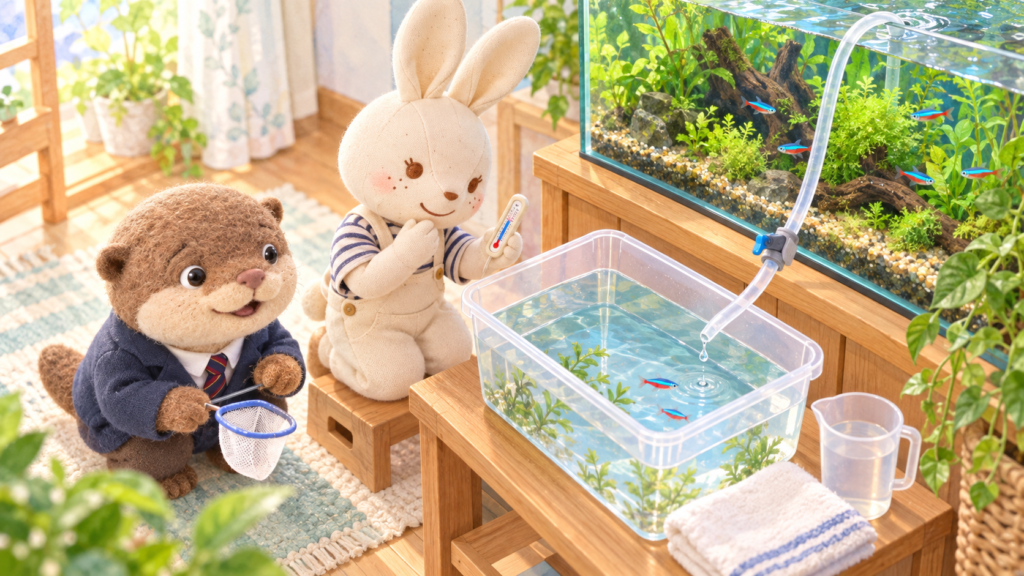 アイのアクアグッズ案内水合わせの道具とやり方|魚を迎える前にそろえたい容器・点滴キット・ネット買ってきた魚はすぐ水槽に入れていい? 水温合わせと水合わせの違いから、透明ケース・点滴キット・ネットの選び方、時間をかけすぎない注意点まで、アイとコタロウが紹介します。記事はコチラ →
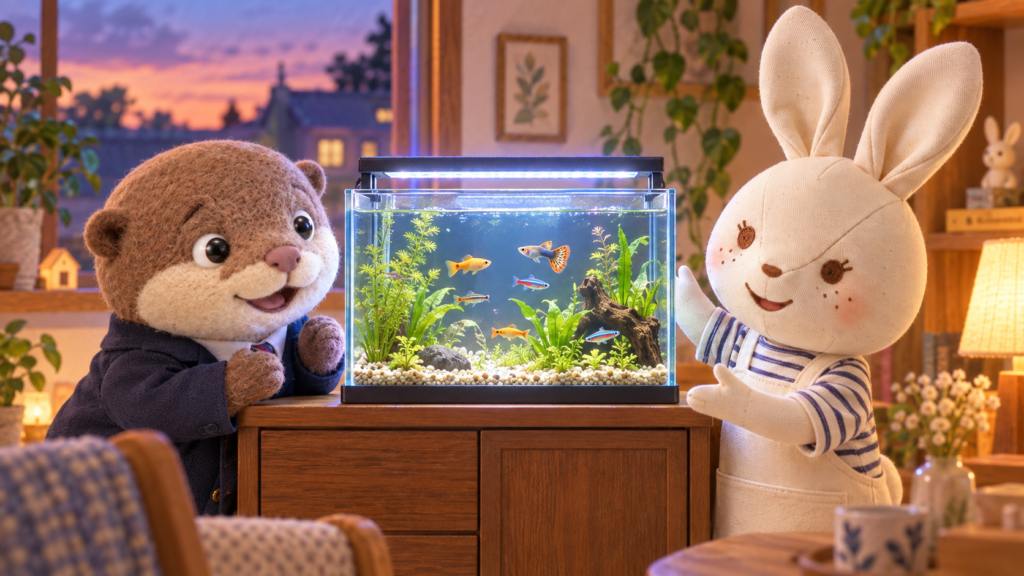 アイのアクアグッズ案内水槽ライトの選び方|魚の見え方・水草・海水で選ぶおすすめ照明道具の特徴や使い方、選ぶときのポイントをアイが紹介します。記事はコチラ →
さまざまな飼育テーマをご紹介。リンク先の記事には広告・商品紹介が含まれます。
案内・紹介記事一覧へ →分布マップ
トリカラーオランダ獅子頭は野生に自然分布する品種ではなく、人為的な選択交配によって維持されている金魚です。中国やタイなどで養殖されたオランダ系統が日本にも流通しており、金魚そのものは東アジアのフナ属魚類を祖先とする家畜化魚です。
※この地図は、記事中の「東アジア」「中国」「タイ」「日本」という記述をもとに周辺地域を概略表示したものです。トリカラーオランダ獅子頭には自然の野生分布域がないため、表示範囲は生産・流通地域と祖先系統の地理的背景を示す目安です。マーカーは地図を見やすくするために設定した代表地点であり、実際の採集地点・産地・養殖場の位置を示すものではありません。
参考文献
-
Integrated Taxonomic Information System (ITIS), “Carassius auratus (Linnaeus, 1758), TSN 163350”学名、命名者、種としての有効性、分類体系の確認。ITIS Species Report
-
U.S. Geological Survey, Nonindigenous Aquatic Species, “Goldfish (Carassius auratus) — Species Profile”東アジアを中心とする原産域、野外での生息環境、体サイズ、生態的特徴の確認。USGS Species Profile
-
RSPCA Australia, “How should I care for my goldfish?”水槽容量の考え方、水温、pH、アンモニア・亜硝酸・硝酸塩、ろ過、酸素供給、給餌、過食防止、沈下性飼料、混泳時の注意点の確認。RSPCA Knowledgebase
-
Watson, C. A., Hill, J. E. & Pouder, D. B. (2004), “Species Profile: Koi and Goldfish,” Southern Regional Aquaculture Center, SRAC Publication No. 7201オランダを含む金魚の改良品種、親魚選抜、春季の産卵、粘着卵、産卵床、繁殖後の選別に関する確認。SRAC Publication No. 7201
-
Petty, B. D., Francis-Floyd, R. & Yanong, R. P. E., “Management of Aquarium Fish,” Merck Veterinary Manual水温と魚類の生理、水質評価、隔離・バイオセキュリティ、浮き袋の基礎構造、診断および麻酔・外科処置を専門家管理下で行う必要性の確認。Merck Veterinary Manual
-
Petty, B. D., Francis-Floyd, R. & Yanong, R. P. E., “Parasitic Diseases of Fish,” Merck Veterinary Manual白点病を起こす Ichthyophthirius multifiliis をはじめ、淡水魚の外部寄生性疾患や水カビ類を含む病原体の診断・管理に関する確認。Merck Veterinary Manual
-
Canadian Veterinary Medical Association, “Swim Bladder Problems in Goldfish”オランダなどの丸手の改良金魚でみられる浮力異常と、体型・浮き袋の関係に関する確認。Canadian Veterinary Medical Association
-
Mones, A. et al. (2021), “Surgical management and histopathology of wen overgrowth and neoplasia in four oranda goldfish (Carassius auratus),” Veterinary Record Case Reportsオランダ獅子頭の肉瘤の過形成・病変と、麻酔を伴う外科的処置が獣医学的管理を要することの確認。Veterinary Record Case Reports




コメント