

解説 / Description
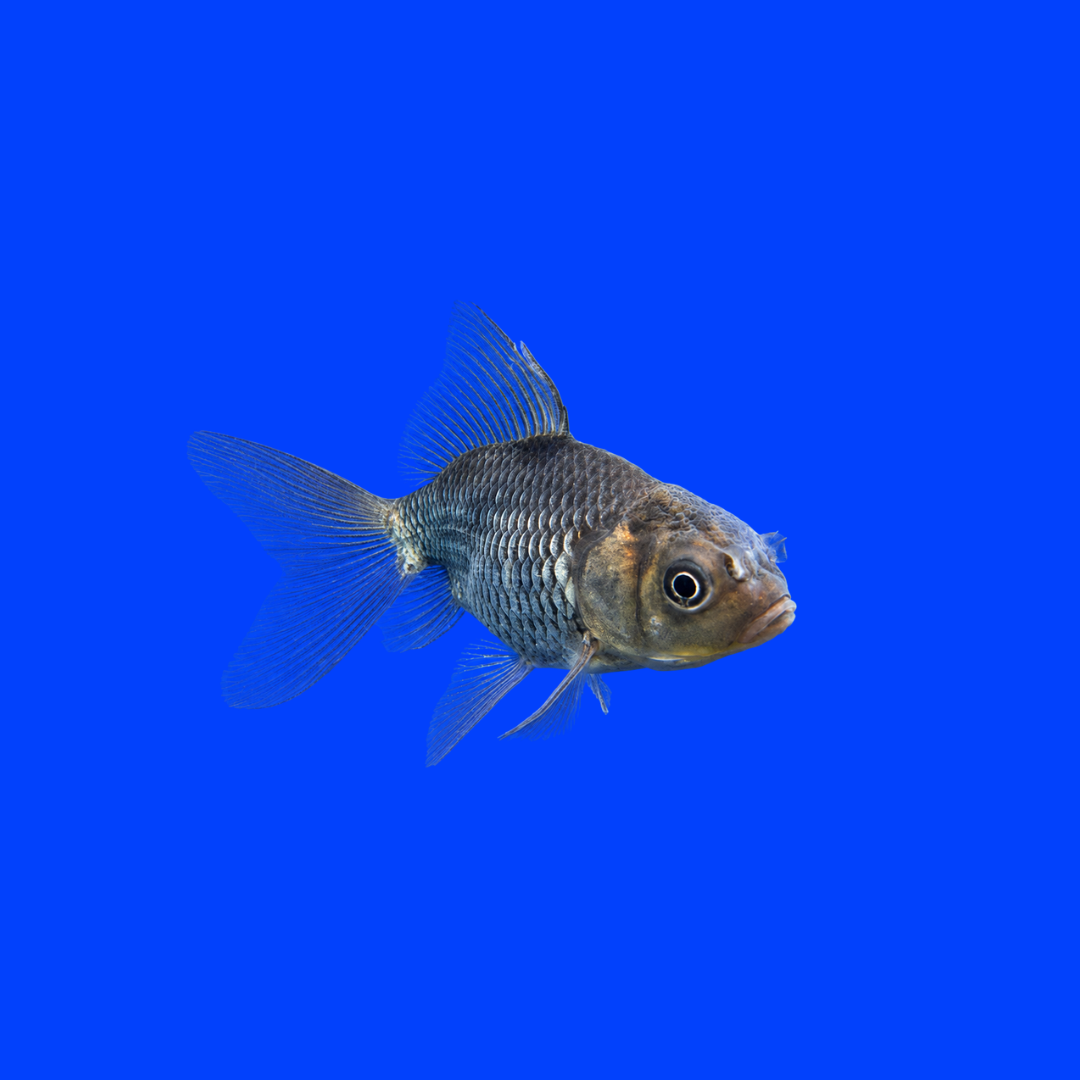
青文魚(せいぶんぎょ)は、丸みのある体型と長く広がる尾びれ、金属的な青灰色から青黒色に見える独特の体色を楽しむ中国原産の金魚です。頭部の肉瘤には個体差があり、よく発達した個体は「高頭青文」と呼ばれます。赤や白が目立つ金魚の中ではひときわ渋い色合いを持ち、ゆったりと泳ぐ姿には落ち着いた華やかさがあります。成長に伴って体色が変化する個体もおり、青黒い部分と白い部分が混ざった状態は「羽衣」、さらに全身が白く褪色したものは「白鳳」と呼ばれます。青色を保つ個体もいるため、色の変化には大きな個体差があります。 Seibungyo is a Chinese-origin fancy goldfish known for its rounded body, flowing tail, and distinctive metallic blue-gray to blue-black appearance. Development of the fleshy headgrowth varies among individuals, and specimens with strongly developed headgrowth are called Koto Seibun in Japan. Its subdued coloration gives it a calm, elegant presence among the more familiar red and white goldfish. Some individuals change color as they mature: a mixed blue-black and white stage is called Hagoromo, while a fully faded white form is called Paihon. Other individuals retain their dark coloration, so the degree of color change varies greatly from fish to fish.
基本情報 / Basic Information
| 学名 / Scientific Name | Carassius auratus |
|---|---|
| 通称 / Common Name | 青文魚(セイブンギョ)Seibungyo, Blue Oranda |
| 分類 / Family | コイ目コイ科フナ属のキンギョ。青文魚はキンギョの改良品種の一つOrder Cypriniformes, family Cyprinidae, genus Carassius; Seibungyo is a domesticated variety of goldfish |
| 英名 / English Name | Seibungyo / Blue Oranda |
| 分布 / Distribution | 野生の地域個体群を指す名称ではなく、中国原産の改良金魚。日本を含む各国で飼育・繁殖されているA domesticated ornamental goldfish of Chinese origin rather than the name of a wild population. It is now kept and bred in Japan and many other countries. |
| 最大体長 / Max Size | 約20〜30cm程度が目安。比較的大きく育つ品種で、飼育環境や血統によって差があるRoughly 20–30 cm as a practical guide. It is a comparatively large fancy goldfish, with size varying according to lineage and husbandry. |
| 寿命 / Lifespan | 10〜15年程度が一つの目安。寿命は飼育環境や個体差に大きく左右されるAbout 10–15 years is a useful general guide, although lifespan varies greatly with the individual and husbandry conditions. |
飼育環境 / Aquarium Environment
| 水槽サイズ / Tank Size | 比較的大きく育ち排泄量も多いため、長期飼育では90cm規格水槽以上を目安にすると管理しやすいです。小型の幼魚を60cm規格水槽で育成する場合も、成長に合わせて早めに水量を増やします。複数飼育では匹数と成長後の体格に応じ、さらに余裕のある水量を確保します。Because Seibungyo can grow comparatively large and produces substantial waste, a standard 90 cm aquarium or larger is a practical target for long-term care. If small juveniles are temporarily raised in a standard 60 cm aquarium, increase the water volume as they grow. Multiple fish require additional space according to their number and adult size. |
|---|---|
| 水温 / Temperature | 18〜25℃前後を目安に、急激な変化を避けて安定させます。15〜28℃程度の範囲に対応するとされますが、上限・下限付近での長期維持を前提にせず、低水温では活動や消化の低下に合わせて給餌量を調整します。 Aim for a stable temperature of about 18–25°C and avoid sudden changes. A broader range of roughly 15–28°C is often cited, but the extremes should not be treated as preferred long-term conditions. Activity and digestion slow in colder water, so feeding should be adjusted accordingly. |
| 水質 / Water Quality | pH6.5〜8.0程度の範囲に対応しますが、数値そのものより急変させないことが重要です。アンモニアと亜硝酸は検出されない状態を維持し、硝酸塩や有機物の蓄積を抑えるため、十分なろ過と定期的な換水を行います。A pH of roughly 6.5–8.0 is generally workable, but stability is more important than chasing a particular number. Ammonia and nitrite should remain undetectable, while adequate filtration and regular water changes help limit nitrate and organic waste buildup. |
| レイアウト / Layout | 広い遊泳スペースを優先し、鋭い石や尖った流木など、ヒレや発達した肉瘤を傷つけるおそれのある物は避けます。底床を使う場合は角のない素材を管理しやすい厚さで敷きます。背景や底床の明暗によって体色の見え方が変わることがあるため、色の濃淡だけで健康状態を判断しないことも大切です。強すぎる水流は避け、ゆるやかに循環する環境を作ります。Prioritize open swimming space and avoid sharp rocks or pointed wood that could injure the fins or a well-developed headgrowth. If substrate is used, choose smooth material and keep it at a manageable depth. Background and substrate brightness can affect how dark the fish appears, so apparent color intensity alone should not be used to judge health. Keep water movement gentle rather than creating a strong current. |
| 注意点 / Precautions | 丸手の金魚では、消化状態や摂餌の仕方などに関連して浮力異常が問題になることがあります。肉瘤や体格を育てようとして高栄養の餌を過剰に与えると、肥満や水質悪化につながるため、成長と体調を見ながら給餌量を調整します。また、成長に伴う褪色には大きな個体差があり、特定の青色や模様が生涯維持されるとは限りません。In round-bodied fancy goldfish, buoyancy problems can occur in association with feeding and digestive issues. Excessively rich feeding intended to promote body or headgrowth can lead to obesity and deteriorating water quality, so feeding should be adjusted to growth and condition. Color fading also varies greatly among individuals, and a particular blue shade or pattern may not remain unchanged for life. |
餌と給餌 / Feeding
| 餌の種類 / Diet | 金魚用の良質な沈下性または緩やかに沈む人工飼料を主食にし、冷凍赤虫、ミジンコなどを補助的に利用できます。育成期は成長に必要なタンパク質を確保しつつ、消化性と総合的な栄養バランスを優先します。肉瘤の発達には個体差が大きく、給餌だけで形を決められるものではありません。Use a high-quality sinking or slow-sinking goldfish pellet as the staple diet, with foods such as frozen bloodworms or daphnia as supplements. Growing fish need adequate protein, but digestibility and overall nutritional balance should remain the priority. Headgrowth development varies greatly among individuals and cannot be determined by feeding alone. |
|---|---|
| 給餌のポイント / Feeding Tips | 一度に大量に与えるより、活動期は少量ずつ与え、短時間で食べ切れる量を目安にします。食べ残しは早めに取り除き、低水温時や消化状態が悪い時は給餌量を減らします。若魚をしっかり育てたい場合も、体型や水質を崩さない範囲で給餌量を調整することが重要です。Rather than giving a large meal at once, offer small portions during active periods, using an amount the fish can finish quickly. Remove leftovers promptly and reduce feeding in cold water or when digestion appears poor. Even when raising young fish for strong growth, adjust the amount without compromising body condition or water quality. |
性格と混泳 / Temperament and Tank Mates
| 性格 / Temperament | 基本的に温和で、同じ金魚同士では強い攻撃性が問題になりにくい品種です。丸みのある体型と長い尾びれを持つため、和金やコメットのような細長い体型の金魚と比べると泳ぎはゆったりしています。Generally peaceful, Seibungyo is not known for strong aggression toward other goldfish. Its rounded body and long tail make it a slower, more deliberate swimmer than streamlined varieties such as Wakin or Comet goldfish. |
|---|---|
| 混泳の相性 / Compatibility | オランダ獅子頭、丹頂、東錦など、泳ぐ速さや体型が近い丸手の金魚と合わせやすい品種です。和金やコメットのように泳ぎが速い金魚と同居させる場合は、餌を十分に取れているか確認します。体格や泳力が大きく異なる相手との混泳は避けると管理しやすくなります。It is easiest to keep with similarly paced, round-bodied fancy goldfish such as Oranda, Redcap Oranda, or Azumanishiki. When housed with faster goldfish such as Wakin or Comets, make sure the Seibungyo is getting enough food. Tank mates with very different body size or swimming ability are generally more difficult to manage. |
病気と対策 / Diseases and Prevention
| かかりやすい病気 / Common Diseases | 丸手の金魚では、転覆などの浮力異常が問題になることがあります。また、青文魚に限った病気ではありませんが、金魚一般に見られる白点病や尾ぐされ病などの感染症にも注意が必要です。鱗が松かさ状に逆立つ症状は、重い全身状態の異常を示すことがあります。過剰給餌と水質悪化が重ならないよう管理することが重要です。Round-bodied fancy goldfish can develop buoyancy disorders, including abnormal floating or rolling. Seibungyo is also susceptible to the same common infections seen in other goldfish, such as white spot disease and fin rot. Pinecone-like raised scales can indicate a serious systemic problem. Avoiding the combination of overfeeding and poor water quality is an important part of prevention. |
|---|---|
| 対策と予防 / Prevention | 予防の基本は、過密を避け、アンモニアと亜硝酸が検出されないろ過環境を維持し、急な水温変化を防ぐことです。浮力異常が見られた場合は、まず水質と給餌内容を確認します。感染症が疑われる場合は症状をよく観察し、必要に応じて隔離したうえで、日本国内で観賞魚用として流通している魚病薬を表示どおりに使用します。症状が重い場合や原因が判別できない場合は、魚類を診療できる獣医師などの専門家に相談します。Prevention begins with avoiding overcrowding, maintaining filtration that keeps ammonia and nitrite undetectable, and preventing sudden temperature changes. If buoyancy problems appear, first check water quality and feeding. When infection is suspected, observe the symptoms carefully, isolate the affected fish when appropriate, and use ornamental-fish medications according to the product label and local regulations. Severe or uncertain cases are best discussed with a veterinarian or other professional experienced in fish health. |
増やし方(繁殖) / Breeding
| 雌雄の判別 / Sexing | 成熟期のオスは繁殖期になるとエラぶたや胸びれ前縁に白い追星が現れやすく、メスは抱卵すると腹部がふっくらして見えることがあります。ただし、若魚や繁殖期以外では外見だけの判別が難しい個体も多く、複数の特徴を合わせて判断します。During the breeding season, mature males often develop small white breeding tubercles on the gill covers and leading edges of the pectoral fins, while females may appear fuller in the abdomen when carrying eggs. Outside the breeding season, especially in young fish, visual sexing can be difficult and should be based on several traits rather than one sign alone. |
|---|---|
| 繁殖形態 / Reproduction | 卵生で、水草や人工産卵床などに粘着性の卵を産み付けるタイプです。春に向けて水温が上昇する時期に繁殖行動が起こりやすく、産卵後は親魚が卵を食べることがあるため、卵または親魚を速やかに分けて管理します。An egg-laying fish that scatters adhesive eggs onto aquatic plants or artificial spawning media. Spawning activity commonly increases as water warms toward spring. Because adults may eat the eggs, the eggs or parents should be separated promptly after spawning. |
| 繁殖のポイント / Breeding Tips | 20〜25℃前後では受精卵が数日で孵化することが多く、卵黄嚢を吸収して遊泳を始めた稚魚にはブラインシュリンプ幼生などの小さな餌を与えます。青文魚は体色、尾形、体型、肉瘤の発達にばらつきが出るため、親魚が美しくても同じ特徴がそのまま子に現れるとは限りません。育成では成長段階ごとに体型や尾、発色を確認し、十分な飼育スペースと安定した水質を確保します。At around 20–25°C, fertile eggs often hatch within several days. Once the yolk sac has been absorbed and the fry begin free swimming, offer very small foods such as newly hatched brine shrimp. Color, tail form, body shape, and headgrowth can vary widely among Seibungyo offspring, so attractive parents do not necessarily produce young with identical traits. During rearing, monitor body form, tail structure, and coloration while maintaining adequate space and stable water quality. |
雑学と豆知識 / Trivia and Fun Facts
| 1. 中国原産の青い「文魚」 / 1. A Blue “Wengyo” of Chinese Origin | 青文魚は中国原産の改良金魚です。「文魚」という呼び名については、背びれを持ち、三つ尾や四つ尾に広がる魚を上から見た姿を漢字の「文」になぞらえたものだとする説明が、金魚の解説で広く紹介されています。ただし、品種名の成立過程には資料によって表記や説明の違いもあるため、語源を一つの説だけで断定するより、「青黒い体色を持つ中国由来の文魚」という背景を押さえておくと分かりやすいでしょう。上見で尾の開きを眺めると、名前と金魚の鑑賞文化が結び付いていることを感じられます。Seibungyo is a domesticated goldfish of Chinese origin. A commonly repeated explanation of the term “Wengyo” links it to the top-view silhouette of a dorsal-finned fish with a three- or four-lobed tail, said to resemble the Chinese character for “wen.” Historical explanations of the variety name are not completely uniform across hobby references, so it is safer not to treat a single etymology as conclusively established. What is clear is the connection between the name, the dark bluish coloration, and the traditional appreciation of goldfish from above. |
|---|---|
| 2. 青い色素だけで「青く」見えているわけではない / 2. Its Blue Is More Than a Simple Blue Pigment | 青文魚の鉄青色は、単一の「青い色素」だけで説明できる色ではありません。金魚の体色には黒色色素胞などの色素細胞と、光を反射する虹色素胞が関わっており、魚類の虹色素胞ではグアニン結晶による反射が構造色の一部を作ります。青系金魚の色変化については、黒色色素であるメラニンの分布や移動が関わることも研究されています。つまり、青文魚の青黒い見え方は、一種類の色素だけではなく、色素細胞と反射の組み合わせとして捉えるのが適切です。照明や背景によって濃淡の印象が変わるのも、そのためです。The steel-blue appearance of Seibungyo should not be explained as the effect of a single “blue pigment.” Goldfish coloration involves pigment cells such as melanophores together with reflective iridophores; in fishes, guanine crystals within iridophores contribute to structural reflection. Research on blue or cyan goldfish has also shown that the distribution and movement of melanin can be involved in color transformation. The safest interpretation, therefore, is that the blue-black appearance results from a combination of pigment-cell behavior and reflected light. This also helps explain why lighting and background can change how dark the same fish appears. |
| 3. 羽衣と白鳳は、褪色の途中とその先に現れる姿 / 3. Hagoromo and Paihon Reveal the Story of Fading Color | 青文魚を迎えた時の色が、そのまま一生続くとは限りません。成長に伴って青黒い部分が抜け、白と青黒色が混ざった状態になると「羽衣」と呼ばれます。さらに褪色して全身が白くなったものは「白鳳(パイフォン)」と呼ばれます。一方で、青黒い体色を長く保つ個体や、羽衣の状態で変化が落ち着く個体もいます。どこまで色が変わるかを飼育者が正確に予測したり、任意の段階で止めたりすることは難しいため、青文魚では色の変化そのものが個体ごとの特徴になります。The color seen when a Seibungyo is acquired does not necessarily remain unchanged for life. When blue-black areas fade and white areas appear, the mixed form is called Hagoromo in Japan. If fading progresses until the fish becomes white overall, it is called Paihon. Other individuals retain their dark color for many years, while some remain in the Hagoromo stage. Because the course of this color change is difficult to predict or deliberately stop at a chosen stage, the changing coloration becomes part of each fish’s individual character. |
| 4. 肉瘤は「餌だけ」では作れない / 4. Headgrowth Is Not Created by Food Alone | 青文魚は、頭部の肉瘤がよく発達する個体と、あまり発達しない個体がいます。肉瘤の発達が目立つものは「高頭青文」と呼ばれ、この違いは青文魚を見分けるうえでも重要なポイントです。育成期に十分な栄養を与えることは必要ですが、肉瘤の大きさを餌だけで決められるわけではありません。過剰給餌は肥満や水質悪化につながるため、見栄えを急いで作るより、個体の成長に合わせて健康を保つことが優先されます。Some Seibungyo develop a prominent fleshy headgrowth, while others develop very little. Individuals with strongly developed headgrowth are known in Japan as Koto Seibun, making this variation an important feature of the variety. Good nutrition is necessary during growth, but feeding alone does not determine the final size of the headgrowth. Overfeeding can lead to obesity and deteriorating water quality, so maintaining health should take priority over trying to force a particular appearance. |
| 5. 「青を残す」こと自体が育種の難しさ / 5. Preserving the Blue Is a Breeding Challenge in Itself | 青文魚の繁殖では、親魚が美しい鉄青色でも、子どもたちが同じ色や体型にそろうとは限りません。尾の開き、背びれ、体型、肉瘤、体色はそれぞれ個体差が大きく、幼魚の時点では成長後の色まで読み切れないことがあります。実際に青系の金魚では、成長に伴って青色から黒色や白色へ変化する個体が研究対象にもなっています。飼育者から見ると、青文魚の繁殖は「青い親から青い子を得る」だけでは終わらず、成長を見ながら一匹ずつ特徴を確かめていく作業になります。Breeding attractive steel-blue Seibungyo does not guarantee offspring with identical color or body form. Tail spread, dorsal-fin quality, body shape, headgrowth, and coloration can all vary, and the final color of a juvenile may be difficult to predict. Research on cyan goldfish has documented individuals that change toward black or white during development. For the breeder, this means that producing Seibungyo is not simply a matter of pairing two blue parents; each young fish must be evaluated as it grows. |
まとめ / Conclusion
青文魚は、鉄青色の体色と丸みのある体型、ゆったりと広がる尾びれが印象的な金魚です。肉瘤の発達には個体差がありますが、よく発達した高頭青文にはまた異なる迫力があります。比較的大きく育つことを前提に十分な水量を確保し、安定した水質と無理のない給餌を続けることが、長く付き合うための基本です。 Seibungyo is distinguished by its steel-blue coloration, rounded body, and gently spreading tail. Headgrowth varies among individuals, while strongly developed Koto Seibun have a distinctive presence of their own. Because the variety can grow comparatively large, generous water volume, stable water quality, and moderate feeding are the foundations of long-term care.
青文魚の魅力は、青黒い体色だけでなく、その色が個体ごとに異なる経過をたどるところにもあります。鉄青色を長く保つ個体、羽衣へ変わる個体、白鳳まで褪色する個体のどれも、同じ青文魚が見せる姿の一つです。体調と水質を丁寧に見ながら育てていくと、年齢とともに変わる色や体つきを落ち着いて楽しめます。 The appeal of Seibungyo lies not only in its blue-black color but also in the different paths that coloration can take from one individual to another. Some retain their steel-blue appearance, some become Hagoromo, and others fade to Paihon; all are expressions of the same variety. With careful attention to health and water quality, the keeper can enjoy the gradual changes in color and body form that come with age.

気になる道具や飼い方を見つけてみませんか?
 アイのアクアグッズ案内水草トリミングの道具とやり方|ハサミ・ピンセットを水草に合わせて選ぼう伸びすぎた水草は切っていい? 有茎草の差し戻し、前景草の絨毯、流木のモスを整える場面から、水草用ハサミ・ピンセット・ゴミ取りネットの選び方と片付けを紹介します。記事はコチラ →
 アイのアクアグッズ案内エビのおうち、食べちゃっていいの!? コタロウと探る、不思議なエビのごはん道具の特徴や使い方、選ぶときのポイントをアイが紹介します。記事はコチラ →
さまざまな飼育テーマをご紹介。リンク先の記事には広告・商品紹介が含まれます。
案内・紹介記事一覧へ →分布マップ
青文魚(Carassius auratus)は中国原産の改良金魚で、現在は日本を含む世界各国で飼育・繁殖されています。下の地図では、原産地域である中国全体を見渡せる概略範囲を表示しています。
※この地図は分布・原産地域を把握するための概略表示です。マーカーは中国のおおよその代表地点を示したもので、実際の採集地点や特定個体の産地を示すものではありません。また、青文魚は野生の地域個体群ではなく改良品種のため、現在の飼育・繁殖地域はこの表示範囲に限定されません。
-
弥富市「金魚図鑑」弥富市公式ホームページ
https://www.city.yatomi.lg.jp/shisei/kanko/1001203/1001204.html -
Integrated Taxonomic Information System (ITIS), “Carassius auratus (Linnaeus, 1758), TSN 163350”
https://itis.gov/servlet/SingleRpt/SingleRpt?search_topic=TSN&search_value=163350 -
U.S. Geological Survey, Nonindigenous Aquatic Species, “Species Profile — Carassius auratus”
https://nas.er.usgs.gov/queries/greatLakes/FactSheet.aspx?Species_ID=508 -
Southern Regional Aquaculture Center, “Species Profile: Koi and Goldfish,” SRAC Publication No. 7201
https://srac.tamu.edu/fact-sheets/serve/178 -
University of Florida IFAS Extension, “The Ornamental Fish Trade: An Introduction with Perspectives for Responsible Aquarium Fish Ownership,” FA124
https://edis.ifas.ufl.edu/publication/FA124 -
University of Florida IFAS Extension, Francis-Floyd R., Yanong R.P.E., Pouder D., “Ichthyophthirius multifiliis (White Spot) Infections in Fish,” CIR920
https://edis.ifas.ufl.edu/publication/FA006 -
Merck Veterinary Manual, Petty B.D., Francis-Floyd R., Yanong R.P.E., “Bacterial Diseases of Fish”
https://www.merckvetmanual.com/exotic-and-laboratory-animals/aquarium-fish/bacterial-diseases-of-fish -
Marramà G. et al., “Goldfish phenomics reveals commonalities and a lack of universality in the domestication process for ornamentation,” Evolution Letters, 2024, 8(6):774–792
https://academic.oup.com/evlett/article/8/6/774/7712283




コメント