

解説 / Description
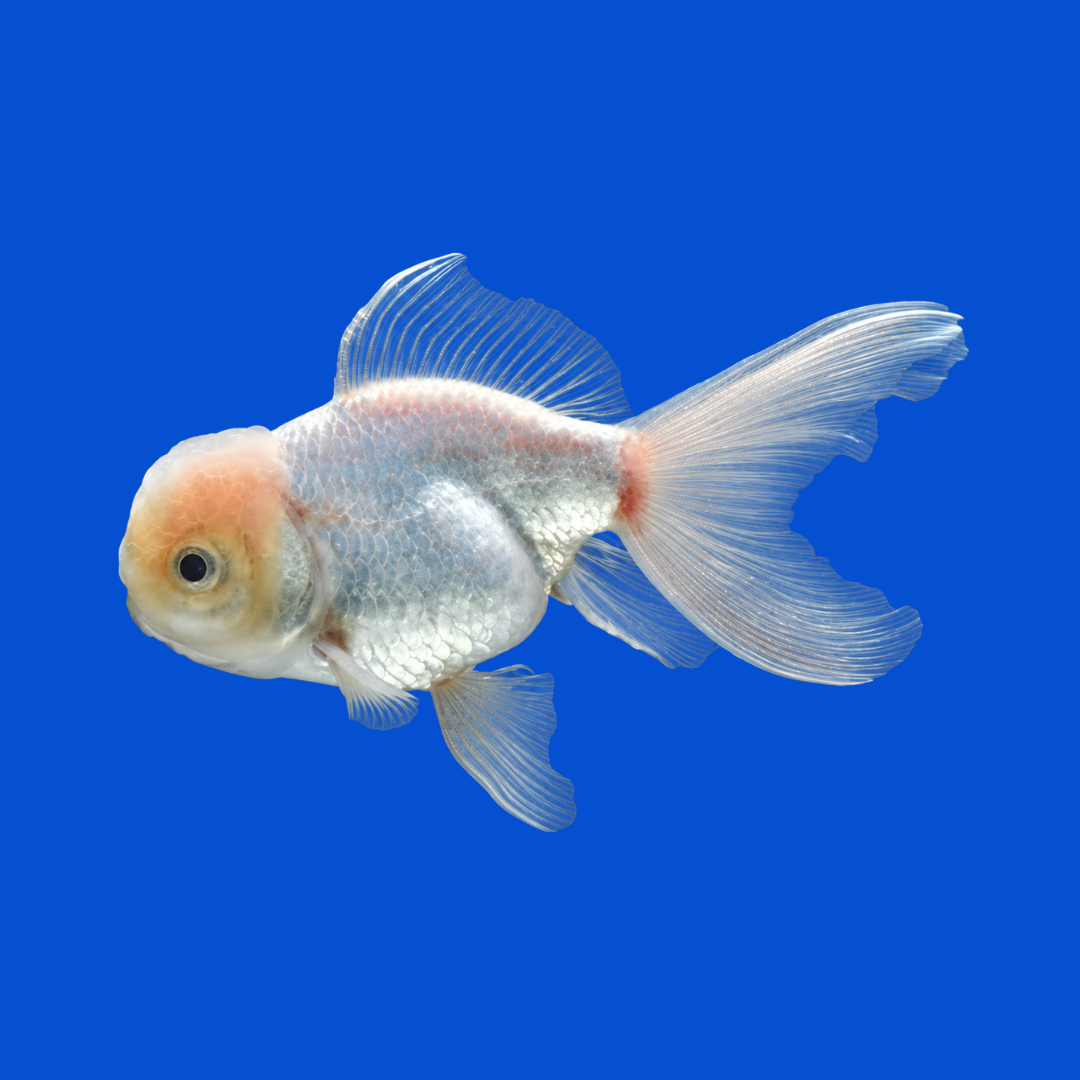
白オランダは、オランダ獅子頭の中でも赤や橙の色彩をほとんど持たず、全身が白く見える「素白」の個体を中心に呼ばれる観賞用金魚です。丸みのある体型、左右に分かれた優雅な尾、しっかりと立つ背鰭、そして頭部を包むように発達する肉瘤が大きな魅力です。白い体色は肉瘤の凹凸や鱗の反射を繊細に浮かび上がらせ、光の当たり方によって乳白色から銀白色まで表情を変えます。一般的な白オランダは眼に黒い色素を保つため、典型的なアルビノとは区別されます。排泄量が多く、肉瘤や丸い体型に由来する健康上の注意点もあるため、小さな容器よりも余裕のある水量と安定した濾過環境でじっくり育てることが、美しさと健康を両立させる近道です。 White Oranda is a white-bodied ornamental form of the Oranda goldfish, especially prized in Japan when the fish shows a clean solid-white appearance with little or no red or orange pigmentation. Its appeal comes from the rounded body, divided flowing tail, upright dorsal fin, and the fleshy head growth known as the wen. The pale body makes the contours of the wen and the reflective quality of the scales especially visible, shifting from milky white to silvery white depending on the light. Typical White Orandas retain dark pigment in the eyes and are therefore distinct from classic albino goldfish. Because goldfish produce substantial waste and the Oranda body shape and wen can create additional health concerns, generous water volume, stable filtration, and careful long-term husbandry are far more suitable than small containers.
基本情報 / Basic Information
| 学名 / Scientific Name | Carassius auratus |
|---|---|
| 通称 / Common Name | 白オランダ、素白オランダ、白オランダ獅子頭White Oranda, Solid White Oranda |
| 分類 / Family | コイ目・コイ科・フナ属。キンギョの改良品種であるオランダ獅子頭の白色系統Order Cypriniformes, family Cyprinidae, genus Carassius; a white ornamental form of the Oranda goldfish |
| 英名 / English Name | White Oranda Goldfish |
| 分布 / Distribution | 野生分布を持つ独立種ではなく、人為選択によって維持される観賞用品種です。日本国内で繁殖された個体のほか、中国やタイなどで養殖された系統も流通しています。This is a domesticated ornamental form rather than a separate wild species with its own natural range. Captive-bred lines are produced in Japan, China, Thailand, and other regions involved in ornamental goldfish culture. |
| 最大体長 / Max Size | 目安として20〜30cm前後。系統、尾の長さ、給餌量、飼育水量などによって差が大きく、良好な環境では大型化します。Typically around 20–30 cm in total length, although size varies greatly with lineage, tail form, diet, and available water volume. Well-kept individuals can become substantial fish. |
| 寿命 / Lifespan | 10年以上を目指せる長寿の魚で、安定した水質、適切な給餌、病気の早期対応ができれば、さらに長期間飼育される例もあります。A lifespan of more than 10 years is realistic under good care, and some goldfish live considerably longer when water quality, feeding, and disease prevention remain consistently well managed. |
飼育環境 / Aquarium Environment
| 水槽サイズ / Tank Size | 幼魚の一時的な飼育なら60cm規格水槽(約60L級)から可能ですが、成魚1尾を長期飼育するなら90cm規格水槽(約160〜180L級)を推奨します。複数飼育や大型個体では120cm規格水槽・120cmワイド水槽など、さらに水量を確保すると安定しやすくなります。金魚は排泄量が多いため、単純な遊泳スペースだけでなく水質の安定性を基準に余裕を持たせます。A 60 cm standard aquarium of roughly 60 L can serve for juveniles temporarily, but a 90 cm standard aquarium in the roughly 160–180 L class is recommended for the long-term care of one adult. For multiple fish or large specimens, a 120 cm standard or wide aquarium provides substantially better stability. The goal is not only swimming room but enough water volume to buffer the heavy waste output typical of goldfish. |
|---|---|
| 水温 / Temperature | 18〜24℃前後を目安に、急変を避けて安定させます。金魚は比較的低温に耐えますが、白オランダのような丸手の改良品種では、極端な低温や短時間での大きな温度変化を避ける方が消化や体調を管理しやすくなります。 Keep the water roughly around 18–24°C and avoid rapid temperature swings. Goldfish tolerate cool water, but rounded fancy varieties such as Orandas are generally easier to manage when extreme cold and sudden daily temperature changes are avoided. |
| 水質 / Water Quality | pH6.5〜7.5程度の中性付近を基準に、アンモニアと亜硝酸は検出されない状態を維持します。硝酸塩も蓄積させすぎず、定期的な換水と強力な生物濾過を組み合わせます。硬度への適応幅は比較的広いものの、数値そのものより急変を防ぐことが重要です。Aim for water near neutral, around pH 6.5–7.5, with ammonia and nitrite kept undetectable. Prevent excessive nitrate accumulation through regular water changes and robust biological filtration. Goldfish tolerate a reasonably broad hardness range, but stability is more important than chasing a particular number. |
| レイアウト / Layout | 中央部に広い遊泳空間を残し、肉瘤や長い尾を傷つける尖った石・流木・硬い装飾は避けます。底床は誤飲しにくい細かな砂、または清掃性を優先したベアタンクが扱いやすい方法です。水草を入れる場合は、アヌビアス類やミクロソリウムなど比較的丈夫な種類をしっかり固定し、食害や掘り返しを想定します。水流は強すぎないようにしつつ、酸素供給と濾過能力は十分に確保します。Leave a broad open swimming area and avoid sharp rocks, rough driftwood, or hard ornaments that could injure the wen or flowing fins. Fine sand that is difficult to swallow, or a bare-bottom setup chosen for easy cleaning, works well. If live plants are used, robust species such as Anubias or Java fern should be secured firmly because goldfish may nibble or uproot them. Keep the current gentle to moderate while maintaining strong filtration and oxygenation. |
| 注意点 / Precautions | 排泄量が多いため、過密飼育と濾過不足は水質悪化に直結します。肉瘤が過度に発達すると眼や鰓蓋周辺を覆うことがあり、視認性や呼吸に影響する場合があります。また、丸い体型の個体は浮力異常を起こしやすいため、急な水温低下、過食、消化不良、長時間の水質悪化を避けます。肉瘤の切除やトリミングが必要なほど発達した場合は、自己処置ではなく観賞魚を診療できる獣医師に相談します。Heavy waste production makes overcrowding and inadequate filtration especially risky. An excessively developed wen can sometimes cover the eyes or areas near the gill covers and may interfere with vision or respiration. Rounded fancy goldfish are also prone to buoyancy problems, so avoid sudden chilling, overfeeding, digestive upset, and prolonged poor water quality. If the wen becomes severe enough to require trimming or surgery, seek a veterinarian experienced with ornamental fish rather than attempting the procedure at home. |
餌と給餌 / Feeding
| 餌の種類 / Diet | 雑食性です。主食は金魚用の高品質な沈下性ペレットを中心にし、消化しやすい植物質を含む餌、柔らかくした野菜類、冷凍赤虫などを補助的に組み合わせます。肉瘤の発達だけを狙って高タンパク餌へ極端に偏らせるより、消化性と水質への負荷を含めたバランスを優先します。Omnivorous. Use a high-quality sinking goldfish pellet as the staple and supplement it with easily digested plant-based foods, softened vegetables, and occasional frozen bloodworms. Rather than pushing protein excessively in an attempt to enlarge the wen, prioritize digestibility, nutritional balance, and the impact of the diet on water quality. |
|---|---|
| 給餌のポイント / Feeding Tips | 1回に大量に与えず、少量を1日1〜2回、短時間で食べ切れる量に抑えます。沈下性の餌は水面で空気を飲み込みにくく、浮力トラブルが気になる個体に使いやすい選択肢です。食後に浮く、逆立ちする、腹部が張るといった変化が出る場合は給餌量と餌の種類を見直し、症状が続く場合は病気として評価します。Avoid large meals. Offer small portions once or twice daily, limiting each feeding to an amount consumed promptly. Sinking foods reduce surface gulping and can be useful for fish prone to buoyancy trouble. If the fish repeatedly floats, tilts, or becomes bloated after feeding, reassess portion size and food type and treat persistent signs as a health problem rather than assuming they are normal. |
性格と混泳 / Temperament and Tank Mates
| 性格 / Temperament | 基本的に温和で、人に慣れると餌をねだったり、水槽前に寄ってきたりする個体も多く見られます。縄張り性は強くありませんが、餌の時間には活発になり、同居個体との体格差が大きいと小さい魚が十分に食べられないことがあります。Generally peaceful and often quite responsive to people, with many individuals learning to approach the front of the aquarium at feeding time. They are not strongly territorial, but they become energetic around food, so large size differences among tank mates can lead to weaker fish receiving less food. |
|---|---|
| 混泳の相性 / Compatibility | 同程度の大きさで、泳ぐ速さが近い琉金、東錦、キャリコオランダなどの丸手の金魚と相性を取りやすいです。和金やコメットのような速泳性の金魚は餌取りで優位になりやすく、肉瘤の大きい個体には不利になる場合があります。ヒレをかじる魚、小型で口に入る魚、高水温を必要とする熱帯魚との混泳は避けるのが無難です。They are most compatible with similarly sized, similarly paced fancy goldfish such as Ryukin, Azuma Nishiki, and other Oranda forms. Fast-bodied goldfish such as Common Goldfish or Comets may dominate feeding and can disadvantage heavily wen-developed fish. Avoid fin-nipping species, fish small enough to be swallowed, and tropical species that require consistently warmer water. |
病気と対策 / Diseases and Prevention
| かかりやすい病気 / Common Diseases | 転覆・浮力異常、白点病、細菌性の尾ぐされや潰瘍、外部寄生虫、肉瘤周辺の炎症などに注意します。肉瘤は正常な増殖組織ですが、過形成や腫瘤性病変が報告されており、急速に大きくなる、出血する、表面が崩れる、片側だけ異常に盛り上がるといった変化は単なる「肉瘤の成長」と決めつけないことが大切です。Watch for buoyancy disorders, ich, bacterial fin rot or ulcers, external parasites, and inflammation around the wen. The wen is a normal proliferative tissue, but hyperplasia and neoplastic lesions have been reported. Rapid enlargement, bleeding, surface breakdown, or strongly asymmetric growth should not automatically be dismissed as ordinary wen development. |
|---|---|
| 対策と予防 / Prevention | 新しい個体はすぐ本水槽へ入れず、別容器で状態を観察してから合流させます。最も重要なのはアンモニア・亜硝酸を出さない安定した濾過、十分な酸素、過密回避、適量給餌です。塩水浴は状況によって補助的に使われる方法ですが、健康な個体への長期常用や、病名を確認せず一律に0.5%塩水へ入れる方法は避け、症状と目的に合わせて判断します。薬浴が必要な場合も、用法・用量を守り、原因が不明な重症例は観賞魚を診療できる獣医師へ相談します。Quarantine and observe new fish before adding them to the main aquarium. The most effective prevention is stable filtration with no measurable ammonia or nitrite, strong oxygenation, sensible stocking density, and controlled feeding. Salt baths are sometimes useful as supportive treatment, but prolonged routine use in healthy fish or automatically placing every new fish into 0.5% salt without a specific purpose should be avoided. When medication is needed, follow the labeled dose carefully and seek an aquatic veterinarian for severe or unclear cases. |
増やし方(繁殖) / Breeding
| 雌雄の判別 / Sexing | 繁殖期のオスは、鰓蓋や胸鰭の前縁に白い追星が現れやすく、メスは成熟すると腹部がふっくらして見える傾向があります。ただし若魚や繁殖期以外では判別が難しく、体型だけで断定することはできません。During the breeding season, males often develop small white breeding tubercles on the gill covers and the leading rays of the pectoral fins. Mature females may appear fuller through the abdomen. Sexing juveniles or fish outside the breeding season can be difficult, and body shape alone is not fully reliable. |
|---|---|
| 繁殖形態 / Reproduction | 卵生で、水草や産卵床に粘着性の卵を多数産みつけるタイプです。オスがメスを追尾しながら放精し、体外受精します。親魚は卵を保護せず、産卵後に卵を食べることがあるため、採卵後は親魚と卵を分けます。Egg-laying and external fertilization. The female scatters numerous adhesive eggs onto plants or spawning media while males pursue her and release milt. The parents provide no care and may eat the eggs, so adults are normally separated from the eggs after spawning. |
| 繁殖のポイント / Breeding Tips | 繁殖用水槽には産卵モップや柔らかい水草を用意し、成熟した親魚を十分にコンディショニングします。産卵後は卵を清潔でよく酸素化された水に移し、カビた卵を早めに除去します。白い体色、肉瘤の形、背鰭、双尾、体型などは複数の遺伝要因と選別の影響を受けるため、親が白オランダでも子がすべて同じ外見になるとは限りません。成長過程で色調が変化する個体も含め、長期的な選別が必要です。Provide spawning mops or soft plants and condition mature breeders well before spawning. Afterward, keep the eggs in clean, well-oxygenated water and remove fungused eggs promptly. White coloration, wen form, dorsal fin, twin-tail structure, and body shape are influenced by multiple genetic factors and selective breeding, so two White Orandas will not necessarily produce offspring that all look identical. Color may also change during growth, making long-term selection an important part of breeding. |
雑学と豆知識 / Trivia and Fun Facts
| 1. 「オランダ」は原産国の名前ではない / 1. “Oranda” Does Not Mean the Fish Came from Holland | オランダ獅子頭の「オランダ」は、ヨーロッパで作られた品種という意味ではありません。江戸時代の日本では、海外から入ってきた珍しい品物や生き物に対して「オランダ物」と呼ぶ感覚がありました。中国系の金魚が琉球を経由して日本へ入った時代、その異国的な姿と、頭部の肉瘤が獅子のたてがみを思わせることが重なり、「オランダ獅子頭」という日本独特の名称が定着したとされています。名前の中には、当時の人々が遠い海外へ抱いていた憧れまで残っているのです。The “Oranda” in Oranda goldfish does not mean the variety originated in Europe. In Edo-period Japan, the word “Oranda” was often associated with unusual imported goods and living things from overseas. As Chinese-derived fancy goldfish entered Japan through international trade routes, their exotic appearance and lion-like head growth became linked with the name “Oranda Shishigashira,” literally suggesting a foreign or Dutch-style lion head. The name preserves a small piece of Japan’s historical fascination with the outside world. |
|---|---|
| 2. 優雅な双尾の裏側にある発生遺伝学 / 2. The Developmental Genetics Behind the Twin Tail | 白オランダの左右に分かれた尾は、単なるヒレの形の違いではありません。金魚の双尾系統では、胚の背腹軸形成に関わるchordin遺伝子の一つに、E127Xと呼ばれる途中終止変異が固定されていることが研究で示されています。金魚は全ゲノム重複を経験した系統で、chordinにも複数のコピーがあるため、重要な発生機能の一部を別のコピーが補いながら、尾部骨格が大きく分岐する独特の形態が成立したと考えられています。さらに2026年には、BMPシグナルを調節するsizzled遺伝子をCRISPR/Cas9で破壊すると、単尾系統にも双尾に似た尾部の分岐が誘導されることが報告されました。長年の品種改良で選ばれてきた姿が、現代の分子発生学によって少しずつ解き明かされています。The divided tail of a White Oranda is more than a superficial fin shape. Research on twin-tail goldfish has identified a premature stop mutation known as E127X in one chordin paralogue, a gene involved in dorsal–ventral patterning during embryonic development. Goldfish belong to a lineage shaped by whole-genome duplication, leaving duplicated developmental genes that can partly buffer one another while allowing dramatic changes in the caudal skeleton. In 2026, CRISPR/Cas9 disruption of duplicated sizzled genes, which regulate BMP signaling, was also shown to induce twin-tail-like caudal bifurcation in single-tail goldfish. A form selected by breeders for centuries is now being explained at the molecular level. |
| 3. 「白い金魚=アルビノ」ではない / 3. A White Goldfish Is Not Automatically an Albino | 一般的な白オランダは体が白くても眼が黒く、その点でメラニン形成が全身的に強く失われる典型的なアルビノとは見た目からも区別できます。金魚の体色は、黒色素胞、黄色素胞、虹色素胞など複数の色素細胞と、それぞれが持つ色素や反射構造の組み合わせで決まります。古くから金魚では成長に伴う褪色が知られ、近年は色素細胞の密度変化やカロテノイド代謝、プリン代謝と虹色素胞の働きまで研究されています。白オランダの「白」は、単純に何か一色が抜けただけというより、複数の細胞系が作る色彩のバランスとして見る方が実態に近いのです。Most White Orandas are white-bodied but retain dark eyes, clearly separating them in appearance from classic albinism, where melanin formation is profoundly disrupted. Goldfish coloration is created by several chromatophore types, including melanophores, xanthophores, and iridophores, together with the pigments and reflective structures they contain. Goldfish have long been known to change color as they mature, and modern studies now examine chromatophore density, carotenoid metabolism, purine metabolism, and iridophore function. The white appearance of a White Oranda is therefore better understood as a balance among several pigment-cell systems rather than the simple absence of a single color. |
| 4. 白さを支える「反射する細胞」 / 4. Reflective Cells Help Build the White Appearance | 魚の肌には、色素だけでなく光を反射する仕組みがあります。虹色素胞はグアニンなどのプリン系結晶を含み、光を反射・散乱することで銀色や白色の輝きに寄与します。2026年に報告された透明系金魚の研究では、プリン代謝が乱れてグアニン量が低下すると虹色素胞の反射構造が十分に作られず、体色形成全体にも連鎖的な影響が及ぶことが示されました。白オランダを観察するとき、白さを「色がない状態」ではなく、鱗の内部で光を扱う細胞が作る構造的な美しさとして眺めると、見え方が少し変わってきます。Fish skin uses reflection as well as pigment. Iridophores contain purine-based reflective structures, including guanine crystals, that scatter and reflect light to create silvery and pale visual effects. A 2026 study of transparent goldfish showed that disruption of purine metabolism and reduced guanine availability impaired iridophore reflector formation and produced wider effects across the pigmentation system. Seen this way, the white body of an Oranda is not simply “a lack of color,” but part of an optical system built by living cells beneath the scales. |
| 5. 肉瘤は脂肪の塊ではなく、複雑な皮膚組織 / 5. The Wen Is Complex Skin Tissue, Not a Simple Lump of Fat | 白オランダの象徴である肉瘤は、単純な脂肪組織ではありません。組織学的には表皮と真皮が大きく増殖した構造で、2026年の比較研究ではオランダ、丹頂、ランチュウの肉瘤が、表皮が真皮側へ不規則に入り込む「融合型」の特徴を示すことが報告されています。一方、過剰な肉瘤では視界や鰓周辺への影響が問題になるほか、過形成や腫瘍性病変も獣医学的に報告されています。大きければ大きいほど良いと単純に考えるのではなく、左右の均整、魚が無理なく見て呼吸できること、表面が健全であることまで含めて美しさを評価したい部分です。The wen, the defining feature of an Oranda, is not simply a fatty mass. Histologically it is a markedly proliferated skin structure involving epidermal and dermal tissues. A 2026 comparative study described Oranda, Red Cap Oranda, and Ranchu as showing a “fused” hood type in which the epidermis extends irregularly into the dermis. Excessive growth can interfere with the eyes or areas around the gill covers, and veterinary reports have also documented hyperplasia and neoplastic lesions. A healthy wen is therefore not just a question of maximum size; symmetry, intact surface tissue, and the fish’s ability to see and breathe comfortably matter just as much. |
| 6. 日本の輸入防疫は2026年に更新されている / 6. Japan Updated Its Aquatic Import Quarantine Rules in 2026 | 海外産の白オランダが日本へ入る背景には、観賞魚店からは見えにくい防疫制度があります。農林水産省の2026年6月9日更新情報では、きんぎょその他のフナ属魚類について、輸入防疫対象疾病としてコイ春ウイルス血症(SVC)とレッドマウス病が掲げられています。管理命令が必要となる場合の期間は原則10日で、SVCの病原体を広げるおそれがないと認められない場合は15日とされています。つまり「輸入金魚は必ず15日隔離」という単純な仕組みではなく、疾病リスクと輸入条件に応じて制度上の管理が行われています。店頭に並ぶ一尾の背景には、品種改良だけでなく国境を越える防疫の仕組みも存在しています。Imported White Orandas reach Japan through an aquatic animal biosecurity system that is largely invisible at the retail level. Under information updated by Japan’s Ministry of Agriculture, Forestry and Fisheries on June 9, 2026, goldfish and other Carassius species are subject to import controls for spring viremia of carp and enteric redmouth disease. When an official management order is required, the period is generally 10 days, extending to 15 days when the risk of spreading SVC cannot be ruled out. In other words, the system is more nuanced than saying that every imported goldfish automatically undergoes a fixed 15-day quarantine. Behind a fish in a shop lies not only selective breeding, but also a formal framework designed to reduce disease movement across borders. |
| 7. 上見と横見で変わる「理想のオランダ」 / 7. The Ideal Oranda Changes with Top View and Side View | 日本の伝統的な金魚鑑賞では、池や水鉢を上から見る「上見」が重要でした。その視点では、背中の線、肉瘤の左右の張り、尾の開きが大きな見どころになります。一方、現在の家庭ではガラス水槽を横から眺める「横見」が中心です。タイで発達したショートテール系などは、短い尾と高い体高、左右へ大きく体を振る泳ぎが横見で映えやすく、伝統的な上見とは違う美意識を広げました。白オランダにも長手から短手まで幅広い体型があり、どの角度から楽しみたいかによって「美しい個体」の印象は少しずつ変わります。Traditional Japanese goldfish appreciation placed great importance on viewing fish from above in ponds and bowls. From that angle, the dorsal outline, left-right balance of the wen, and the spread of the tail become major aesthetic points. Modern home aquariums, however, are usually viewed from the side. Short-tail forms developed in Thailand, for example, emphasize a compact body, short caudal fin, and pronounced side-to-side swimming that can be especially attractive through glass. White Orandas now range from more elongated to very compact forms, and the idea of the “best” fish changes subtly depending on whether it is appreciated from above or from the side. |
まとめ / Conclusion
白オランダは、純白の静かな色彩と、肉瘤・背鰭・双尾が作る立体的な姿を同時に楽しめる金魚です。華やかな赤を持たないからこそ、鱗の反射、肉瘤の陰影、尾の動き、体型のわずかな違いまで目に入りやすく、一尾ごとの個性をじっくり観察する楽しさがあります。 White Oranda combines quiet white coloration with the sculptural form created by the wen, dorsal fin, and divided tail. Without bright red pigment dominating the view, subtle details become easier to appreciate: the reflection of the scales, the shadows across the wen, the movement of the tail, and small differences in body shape that make each fish distinctive.
その美しさを長く保つ鍵は、十分な水量、強い濾過、穏やかな水流、無理のない給餌、そして毎日の観察です。白い体は小さな傷や充血、肉瘤の変化にも気づきやすいため、飼育者が魚の状態を丁寧に読むほど応えてくれる品種でもあります。ゆったりと泳ぐ純白の姿は、落ち着いた水景の中でも確かな存在感を放ち、年月とともに育つ肉瘤や体格の変化まで含めて長く付き合える魅力を持っています。 The key to preserving that beauty is generous water volume, strong filtration, gentle flow, restrained feeding, and daily observation. The pale body makes small injuries, redness, and changes in the wen easier to notice, rewarding attentive keepers who learn to read the fish’s condition. Its slow, white silhouette has a strong presence even in a calm aquascape, and the gradual changes in body size and wen development make it a fish that can be appreciated over many years.

気になる道具や飼い方を見つけてみませんか?
 アイのアクアグッズ案内エーハイム、安いのと高いのは何が違う? コタロウと見比べる外部フィルター道具の特徴や使い方、選ぶときのポイントをアイが紹介します。記事はコチラ →
 アイのアクアグッズ案内コードもホースもないのに酸素が出る? アイとコタロウのオキシデーター探訪道具の特徴や使い方、選ぶときのポイントをアイが紹介します。記事はコチラ →
さまざまな飼育テーマをご紹介。リンク先の記事には広告・商品紹介が含まれます。
案内・紹介記事一覧へ →分布マップ
白オランダは独立した野生種ではなく、人為選択によって維持される観賞用金魚です。日本国内で繁殖されるほか、中国やタイなどでも養殖されているため、地図ではこれらの主要な生産地域を含む東アジアから東南アジアを概略表示しています。
※この地図は、記事に記載された日本・中国・タイなどの養殖・流通地域を把握するための概略表示です。マーカーは表示範囲の代表地点として設定したもので、実際の採集地点・養殖場・生息地点を示すものではありません。
参考文献
分類・分布・生息環境
-
Froese, R. & Pauly, D. (eds.). FishBase: Carassius auratus (Linnaeus, 1758).分類、東アジアを中心とする分布、淡水・汽水域での生態、pH、最大体長、食性、産卵環境などの基礎情報。
-
U.S. Geological Survey. Goldfish (Carassius auratus) — Nonindigenous Aquatic Species Species Profile.分布、生息環境、一般的な体長・寿命、温度・pH耐性、食性などの生態情報。
飼育条件・水質
-
Blanco, A. M. & Unniappan, S. (2022). Goldfish (Carassius auratus): biology, husbandry, and research applications.In Laboratory Fish in Biomedical Research, pp. 373–408.金魚の生物学、飼育環境、温度・水質、給餌、繁殖をまとめた専門書章。
-
Francis-Floyd, R., Watson, C., Petty, D. & Pouder, D. B. (2022). Ammonia in Aquatic Systems.UF/IFAS Extension, FA16.アンモニア、亜硝酸、硝酸塩、硝化、生物ろ過、pH・温度との関係、水換えと水質管理の根拠。
-
Petty, B. D., Francis-Floyd, R. & Yanong, R. P. E. Management of Aquarium Fish.Merck Veterinary Manual. Full review 2022; updated 2024.水温、水質、飼育密度、診断、隔離、バイオセキュリティ、薬剤使用など観賞魚管理全般。
繁殖
-
Kobayashi, M., Iwata, E. & Sorensen, P. W. (2026). Environmental and Physiological Regulation of Reproduction in the Goldfish: Gonadal Development, Maturation, and Spawning Behavior: A Review.Animals, 16(5), 775.金魚の性成熟、季節変化、産卵行動、環境条件と生殖生理を整理した総説。
-
Li, I.-J., Lee, S.-H., Abe, G. & Ota, K. G. (2019). Embryonic and postembryonic development of the ornamental twin-tail goldfish.Developmental Dynamics, 248(4), 251–283.オランダ系統を含む双尾金魚の発生、成長、成魚の雌雄形質、追星などを記載した研究。
病気・注意点
-
Francis-Floyd, R. & Petty, B. D. Disorders and Diseases of Fish.Merck Veterinary Manual. Updated 2026.水質悪化、過密、ストレス、細菌・寄生虫感染、アンモニア障害など、観賞魚の疾病と予防管理。
-
Mones, A., Schreeg, M., Sommer, S., Linder, K. & Lewbart, G. (2021). Surgical management and histopathology of wen overgrowth and neoplasia in four oranda goldfish (Carassius auratus).Veterinary Record Case Reports, 9, e27.オランダの肉瘤過形成、眼を覆う過剰増殖、腫瘍性病変、外科的管理を扱った獣医学的症例報告。
-
Zhang, J., Zhou, J., Pan, Y., He, W. & Li, C. (2026). Comparative study of the histology and Micro-CT scan of the goldfish hood.Aquaculture and Fisheries, 11(1), 152–159.オランダを含む肉瘤の組織構造、真皮・表皮の増殖、頭蓋部の構造変化を比較した研究。
-
農林水産省(2026)「水産輸入防疫制度について」更新日:2026年6月9日。きんぎょその他のフナ属魚類に関する輸入防疫対象疾病、輸入許可、管理命令、コイ春ウイルス血症およびレッドマウス病に関する現行制度。




コメント