

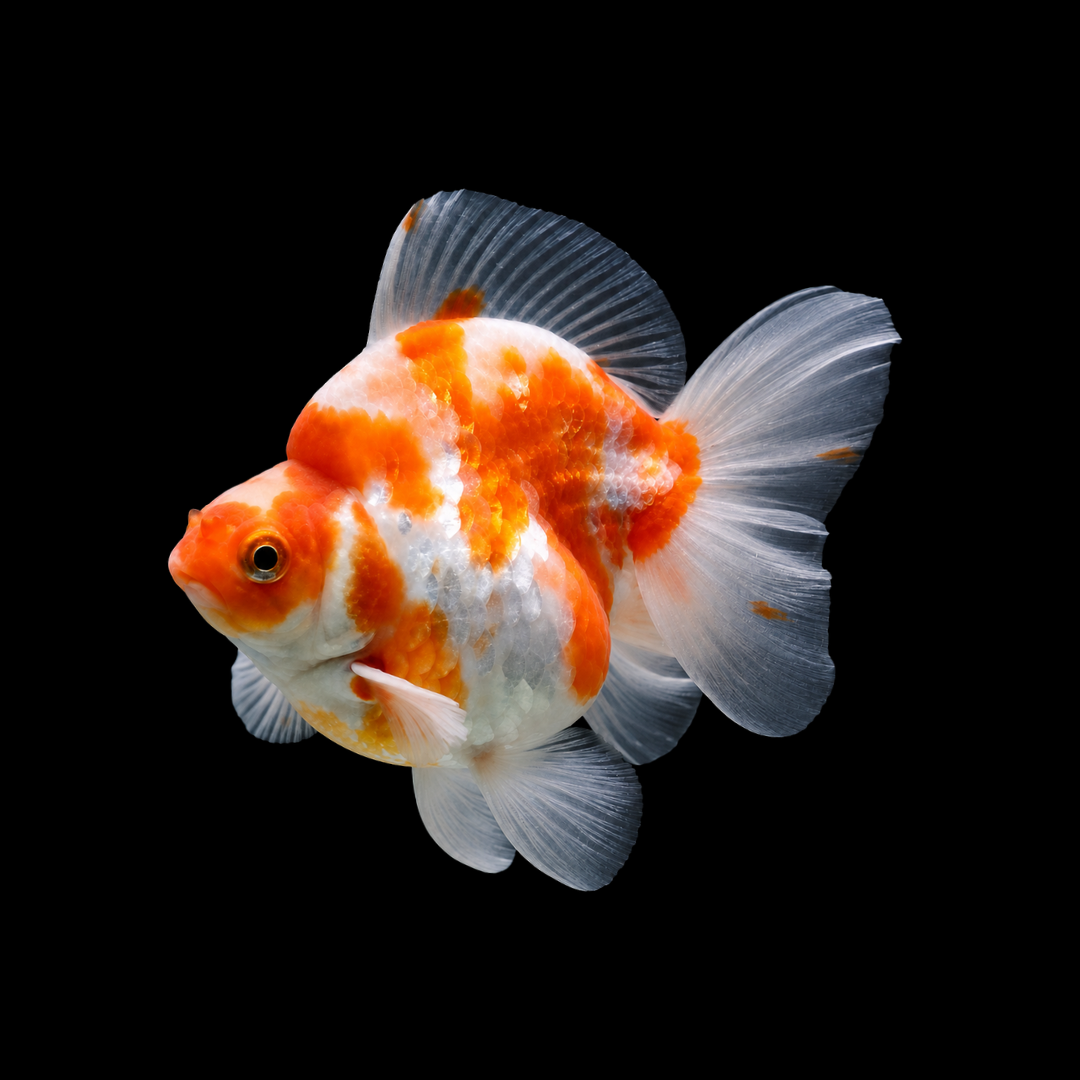
解説 / Description
桜だるま琉金は、琉金らしい高い体高と丸い腹部をさらに強調した短胴の体型、短くまとまるショートテール、そして紅白の更紗模様をモザイク透明鱗で表現する「桜」の色彩を組み合わせた観賞用金魚です。「桜だるま琉金」という名称は分類学上の亜種や独立した種を示すものではなく、日本の観賞魚流通で、桜色の表現を持つショートテール型の琉金を分かりやすく呼ぶ名称として用いられています。個体によって赤の入り方、白地の面積、透明鱗と反射性のある鱗の配置が大きく異なるため、同じ名称で販売される魚でも一尾ごとの印象がかなり違います。 The Sakura Daruma Ryukin is an ornamental goldfish that combines the high-backed, deep-bodied form of the Ryukin with an even more compact body, a short tail, and the red-and-white nacreous coloration known in Japan as “sakura.” The name Sakura Daruma Ryukin is a trade and hobby name rather than a separate taxonomic species or subspecies. It is used in the Japanese aquarium trade for short-tail Ryukin showing the soft red-and-white appearance associated with mosaic transparent scales. Because the distribution of red pigment, pale areas, transparent scales, and reflective scales varies greatly among individuals, no two fish look exactly alike.
基本情報 / Basic Information
| 学名 / Scientific Name | Carassius auratus |
|---|---|
| 通称 / Common Name | 桜だるま琉金、桜ショートテール琉金、桜琉金ショートテールSakura Daruma Ryukin, Sakura Short-tail Ryukin |
| 分類 / Family | コイ目・コイ科・フナ属。金魚はフナ属の魚から長期の家畜化と選択育種によって成立した観賞魚で、桜だるま琉金はその中の琉金系統に属する改良型です。Order Cypriniformes, Family Cyprinidae, Genus Carassius. Goldfish are domesticated ornamental forms derived from crucian-carp relatives, and the Sakura Daruma Ryukin belongs to the broader Ryukin variety group. |
| 英名 / English Name | Sakura Short-tail Ryukin Goldfish |
| 分布 / Distribution | 野生分布を持つ独立品種ではなく、人為的に維持される観賞魚です。日本国内では国産個体に加え、中国や東南アジアで生産されたショートテール系琉金も流通します。基礎となる金魚は東アジアで長い家畜化の歴史を持ちます。This is a domesticated ornamental form and has no natural wild distribution of its own. In Japan, locally bred fish are sold alongside short-tail Ryukin imported from China and Southeast Asia. Goldfish as a whole have a long domestication history in East Asia. |
| 最大体長 / Max Size | 一般に全長15cm前後まで育つ個体が多く、大型の系統や十分な飼育空間では20cm前後に達することがあります。販売時のサイズ表記は全長、体長、尾を含まない長さなど店舗によって異なるため、購入時には基準の確認が安心です。Many individuals reach around 15 cm in total length, while large strains kept under spacious conditions may approach 20 cm. Retail size measurements may refer to total length, body length, or measurements excluding part of the tail, so it is useful to confirm the seller’s measuring method. |
| 寿命 / Lifespan | 目安として8〜10年ほど。安定した水質、適切な給餌、十分な遊泳空間を維持できれば10年以上飼育される例もあります。寿命は系統、体型の極端さ、導入時の健康状態、飼育密度などに大きく左右されます。A practical expectation is around 8–10 years, although well-kept goldfish can live for more than a decade. Longevity varies substantially with lineage, degree of body compression, health at purchase, stocking density, diet, and long-term water quality. |
飼育環境 / Aquarium Environment
| 水槽サイズ / Tank Size | 成魚1匹でも60cm規格水槽(実水量およそ50〜60L前後)を推奨します。45cm規格水槽(約30〜40L)は小型の若魚を一時的に管理するには使えますが、成長後は水量と遊泳幅が不足しやすくなります。複数飼育では60cmワイド水槽や90cm規格水槽を選び、魚の大きさとろ過能力に応じて余裕を持たせます。A standard 60 cm aquarium holding roughly 50–60 L of actual water is recommended even for one adult. A 45 cm tank of around 30–40 L can be used temporarily for a small juvenile, but it often becomes restrictive as the fish grows. For multiple fish, a 60 cm wide tank or a standard 90 cm aquarium is preferable, with stocking adjusted to adult size and filtration capacity. |
|---|---|
| 水温 / Temperature | 日常管理では20〜24℃前後が扱いやすく、18〜26℃程度の範囲でも急変を避ければ飼育できます。重要なのは特定の数値に固定することより、短時間で大きく変化させないことです。冬季に活動や消化が落ちる室内ではヒーターで緩やかな下限を設けると管理しやすくなります。 Around 20–24°C is convenient for routine indoor care, and fish can be maintained roughly within 18–26°C when changes are gradual. Stability is more important than forcing a single exact temperature. In cool indoor conditions, a heater can be used to prevent abrupt drops that reduce activity and digestion. |
| 水質 / Water Quality | 中性付近から弱アルカリ性を中心に、pH6.5〜8.0程度を目安とします。アンモニアと亜硝酸は検出されない状態を維持し、硝酸塩の蓄積も定期的な換水で抑えます。金魚は排泄量が多いため、数値上のpHだけでなく、十分な生物ろ過と酸素供給、安定した換水習慣が重要です。Neutral to mildly alkaline water is generally suitable, with approximately pH 6.5–8.0 as a practical range. Ammonia and nitrite should remain undetectable, while nitrate accumulation should be controlled through regular water changes. Because goldfish produce substantial waste, biological filtration, oxygenation, and a stable maintenance routine matter more than chasing a single pH value. |
| レイアウト / Layout | 清掃しやすいベアタンク、または角のない砂や砂利を薄く敷いたシンプルな構成が向きます。短い尾と丸い体で方向転換がゆっくりなため、尖った石、狭い隙間、硬い流木など、接触時に鱗やヒレを傷つける物は避けます。水流は強くしすぎず、上部式フィルターや外部式・スポンジフィルターなどを使う場合も、吐出口を壁面へ向けるなどして休める場所を作ります。A bare-bottom tank or a simple layout with a thin layer of smooth sand or rounded gravel is suitable and easy to maintain. Because the compact body and short tail make turning slower, avoid sharp rocks, narrow gaps, and hard driftwood that can damage scales or fins. Filtration should be efficient but not create a constant strong current; direct outlets toward a wall or diffuse the flow so the fish can rest comfortably. |
| 注意点 / Precautions | 極端な短胴個体は、泳ぎの安定性や消化管・浮袋周辺の空間的制約から、姿勢異常や浮力障害が目立ちやすい傾向があります。購入時は体高だけでなく、停止時に傾かないか、前後に過度に沈み込まないか、尾が左右均等に開くか、呼吸が速すぎないかまで観察してください。新規導入魚は既存魚とすぐに混ぜず、可能なら別容器で健康状態を確認してから合流させます。Extremely compact individuals may show buoyancy or posture problems more readily because of their body conformation and limited internal space. When selecting a fish, look beyond body depth: check whether it can hover without listing, whether the head or tail sinks excessively, whether the caudal fin opens symmetrically, and whether respiration appears normal. New arrivals should ideally be observed separately before introduction to an established aquarium. |
餌と給餌 / Feeding
| 餌の種類 / Diet | 主食には金魚用の良質な配合飼料を用います。浮力障害を起こしやすい個体では、沈下性またはゆっくり沈む小粒ペレットが扱いやすい選択肢です。補助的に消化しやすい植物質を含む飼料や、適切に処理した野菜類を少量使うこともできますが、単一の食品に偏らせず、総合栄養食を基本にします。Use a high-quality complete goldfish food as the staple diet. For individuals prone to buoyancy problems, small sinking or slow-sinking pellets are often easier to manage. Plant-rich foods or small amounts of suitably prepared vegetables can be offered as supplements, but they should not replace a nutritionally complete staple diet. |
|---|---|
| 給餌のポイント / Feeding Tips | 1日1〜2回を目安に、短時間で食べ切れる少量を与えます。大切なのは「何分食べたか」より、魚の腹の張り、便、活動量、水温を見ながら過食を防ぐことです。低水温時や体調不良時は量を減らします。沈下性飼料は水面で激しく空気をのみ込む個体には役立ちますが、浮上性飼料だけが転覆の原因と証明されているわけではありません。絶食日も必須ではなく、肥満や便通の状態に応じて短期間の休餌を利用します。Feed small portions once or twice daily, adjusting the amount to body condition, feces, activity, and temperature rather than relying only on a fixed feeding time. Reduce food in cool water or during illness. Sinking food can help fish that gulp vigorously at the surface, but floating food alone has not been proven to be the sole cause of swim-bladder disorders. Routine fasting days are optional; short periods without food can be used selectively when overfeeding or digestive problems are suspected. |
性格と混泳 / Temperament and Tank Mates
| 性格 / Temperament | 基本的には温和で、人の気配や給餌の時間を覚えて前面に寄ってくる個体も多い金魚です。攻撃性は低い一方、餌への反応は強く、同居魚との体格差が大きいと押し合いや餌の取り合いが起こります。短尾・短胴の個体は俊敏さに欠けるため、落ち着いて食べられる環境が向きます。They are generally peaceful and often learn to approach the front of the aquarium when people appear or feeding time approaches. Aggression is low, but enthusiasm for food can cause jostling when tank mates differ greatly in size or swimming ability. Compact short-tail fish benefit from a calm environment where they can feed without competition. |
|---|---|
| 混泳の相性 / Compatibility | 同程度の大きさと遊泳力を持つ琉金、オランダ獅子頭、らんちゅう系などの丸物金魚と合わせやすい傾向があります。ただし、らんちゅうは背ビレがなく泳ぎ方も異なるため、実際の相性は個体差を見て判断します。和金、コメット、朱文金などの長物は素早く、給餌競争で不利になりやすいので長期混泳は慎重にします。小型熱帯魚やエビは水温・食性・サイズ差の面から基本的に組み合わせません。They are usually easiest to keep with similarly sized fancy goldfish of comparable swimming ability, such as Ryukin, Oranda, and some Ranchu-type fish. Ranchu lack a dorsal fin and move differently, so compatibility still depends on individual behavior. Fast single-tail goldfish such as Common Goldfish, Comets, and Shubunkins can outcompete them for food and are generally poor long-term companions. Small tropical fish and shrimp are not recommended because of temperature, diet, and size differences. |
病気と対策 / Diseases and Prevention
| かかりやすい病気 / Common Diseases | 短胴系で特に目立ちやすいのは、転覆・沈下・傾きなどとして現れる浮力調整障害です。原因は体型、浮袋の形態、消化状態、過食、感染、臓器の異常、水温変化など複数が関与し、単純な「腸内ガス」だけで説明できないことがあります。そのほか、白点病、尾ぐされ病、細菌性の皮膚炎、エラの異常、寄生虫症など、一般的な金魚の疾病にも注意が必要です。The most conspicuous problem in compact-bodied fish is abnormal buoyancy, which may appear as floating, sinking, listing, or difficulty maintaining posture. Causes can include body conformation, swim-bladder anatomy, digestion, overfeeding, infection, organ disease, and temperature changes, so the condition should not automatically be attributed to intestinal gas alone. Standard goldfish diseases such as white spot disease, fin rot, bacterial skin infections, gill disease, and parasites also occur. |
|---|---|
| 対策と予防 / Prevention | 予防の基本は、過密を避け、アンモニアと亜硝酸を蓄積させず、急な水温変化や大量給餌を避けることです。姿勢異常が出た場合は、まず給餌を止めるか減らし、水質と水温、便、腹部の張り、呼吸、外傷や発赤を確認します。症状が続く、片側だけが膨れる、出血や鱗の逆立ちを伴う、呼吸が苦しそうといった場合は、単純な転覆として扱わず魚病に詳しい専門家へ相談します。塩水浴は一部の状況で補助的に用いられますが万能ではなく、濃度や期間を目的に合わせて管理する必要があります。Prevention depends on avoiding overcrowding, keeping ammonia and nitrite at zero, and preventing sudden temperature changes and heavy feeding. If posture changes occur, first reduce or pause feeding and check water quality, temperature, feces, abdominal swelling, respiration, wounds, and redness. Persistent symptoms, one-sided swelling, hemorrhage, raised scales, or respiratory distress should not be treated as a simple buoyancy problem and warrant specialist advice. Salt baths can be supportive in selected cases but are not a universal treatment and must be used at an appropriate concentration and duration. |
増やし方(繁殖) / Breeding
| 雌雄の判別 / Sexing | 繁殖期のオスでは、エラぶたや胸ビレ前縁に白い粒状の追星が現れ、メスを追尾する行動が見られます。メスは成熟すると腹部がふっくらし、産卵前には左右差を伴って張ることがあります。総排泄口の形も参考になりますが、若魚では判別が難しく、追星や繁殖行動を合わせて判断するのが確実です。During the breeding season, males often develop small white breeding tubercles on the gill covers and leading rays of the pectoral fins and actively chase females. Mature females become fuller in the abdomen before spawning and may show slight asymmetry as eggs develop. Vent shape can provide additional clues, but juveniles are difficult to sex reliably, so breeding tubercles and behavior are more useful. |
|---|---|
| 繁殖形態 / Reproduction | 卵生で、水草や産卵用の人工藻などに粘着性の卵をばらまくタイプです。春の水温上昇をきっかけに繁殖行動が活発になり、オスがメスを追いながら産卵・放精します。親魚は卵を食べるため、採卵後は親と卵を分ける方法が一般的です。Goldfish are egg-layers that scatter adhesive eggs among plants or artificial spawning media. Breeding activity often increases as temperatures rise in spring, with males chasing females during egg release and fertilization. Adults readily eat eggs, so breeders commonly separate the parents from the spawning medium after spawning. |
| 繁殖のポイント / Breeding Tips | 桜だるま琉金を狙って繁殖する場合、単に桜色の親同士を掛ければ同じ表現がそろうわけではありません。透明鱗の主要形質は古典的に不完全優性として扱われ、モザイク透明鱗同士では普通鱗、モザイク透明鱗、全透明鱗が理論上およそ1対2対1に分離します。普通鱗と全透明鱗を交配したF1ではモザイク透明鱗がそろうことが期待されますが、赤白の柄、短胴、体高、尾の短さ、左右対称性まで一度に固定できるわけではありません。繁殖では多くの稚魚から目的形質を段階的に選別し、極端すぎる体型や遊泳に支障のある個体を親に使わないことが健康面でも重要です。Breeding two attractive Sakura Daruma Ryukin does not guarantee uniform offspring. The major transparent-scale trait is classically described as an incomplete-dominant system: nacreous-by-nacreous matings are expected to produce roughly 1 metallic : 2 nacreous : 1 matt phenotype. A metallic-by-matt cross can theoretically yield nacreous F1 offspring, but red-and-white pattern, compact body, high back, short tail, and symmetry are not all controlled by that single locus. Breeding therefore requires selection across many fry, and fish with excessively deformed bodies or impaired swimming should not be chosen as breeders simply because their silhouette is extreme. |
雑学と豆知識 / Trivia and Fun Facts
| 1. 「桜」「だるま」「琉金」が一つの名前に重なっている / 1. Three Different Ideas Are Combined in One Name | 「桜だるま琉金」という名前を分解すると、この魚の特徴がそのまま見えてきます。「琉金」は、丸い体と高い背、双尾を持つ古い金魚品種群の名称です。「だるま」は、観賞魚流通で尾が短く、胴の丸さが強調されたショートテール型を表す呼び方として使われます。そして「桜」は、普通鱗の更紗とは違い、モザイク透明鱗を通して淡い紅白が見える色彩表現を示します。つまり一つの固定された学術分類名ではなく、体型、尾型、鱗と色彩という複数の観賞形質を重ねた、日本の金魚文化らしい実用的な呼び名です。The Japanese name can be read almost like a description of the fish. “Ryukin” identifies the old fancy-goldfish group with a deep body, high back, and paired tail. “Daruma” is used in the aquarium trade for compact short-tail forms whose rounded body is visually emphasized. “Sakura” refers to the pale red-and-white appearance created by nacreous or mosaic transparent scaling rather than ordinary metallic red-and-white scales. The full name therefore combines body form, fin form, and scale-color expression rather than defining a separate taxonomic unit. |
|---|---|
| 2. chordinの研究が説明するのは主に「双尾」で、短胴そのものではない / 2. Chordin Research Mainly Explains the Twin Tail, Not the Entire Compact Body | 金魚の形態遺伝学で特に有名なのが、chordin系遺伝子と双尾の関係です。琉金、オランダ獅子頭、らんちゅうなど多くの双尾品種では、胚の背腹軸形成に関わるchordinの重複遺伝子の一方に機能低下型の変異が固定され、尾部の軸骨格が二分する特徴と結びついていることが示されています。金魚の祖先系統ではゲノム重複によって遺伝子コピーが増えており、その冗長性が大きな形態変化を生存可能にしたと考える研究があります。ただし、これをそのまま「だるま体型の短い背骨を作る遺伝子」と言い換えることはできません。ショートボディや極端な体高は、別の遺伝的背景と長期の選抜が組み合わさった形質として見るのが現在は安全です。One of the best-known findings in goldfish developmental genetics concerns chordin-family genes and the twin-tail phenotype. In many paired-tail varieties, including Ryukin, Oranda, and Ranchu, a reduced-function mutation in one duplicated chordin gene is associated with bifurcation of the posterior axial skeleton and formation of the paired tail. Goldfish ancestors experienced genome duplication, creating extra gene copies, and researchers have proposed that this redundancy helped make otherwise drastic developmental changes viable. However, this does not mean that the same chordin mutation fully explains the shortened spine or the “daruma” body shape. Extreme body depth and compactness should be treated as additional traits shaped by other genetic factors and long-term selection. |
| 3. モザイク透明鱗は、教科書のような1対2対1を見せる / 3. Nacreous Scales Show a Classic 1:2:1 Genetic Pattern | 金魚の透明鱗は、魚類の古典遺伝学で長く研究されてきた形質です。伝統的な遺伝表記では、普通鱗に相当する金属光沢型、普通鱗と透明鱗が混在するモザイク透明鱗型、反射性のグアニンが非常に少ない全透明鱗型の三つが、不完全優性の一つの主要遺伝座によって区別されます。モザイク透明鱗同士を交配すると、理論上は普通鱗25%、モザイク透明鱗50%、全透明鱗25%となります。ところが、ここから「美しい桜」だけをそろえるのは別問題です。赤の面積、白地の抜け方、鱗の反射、体型、尾型は一つの遺伝子で決まらないため、生産者は多数の稚魚から目的の組み合わせを選び続けます。このため、同じ兄弟魚でも完成した印象が大きく違うのです。Transparent scaling in goldfish is a classic subject in fish genetics. In the traditional model, metallic scaling, heterozygous nacreous or mosaic scaling, and homozygous matt scaling are produced by an incompletely dominant major locus. When two nacreous fish are crossed, the expected phenotypic ratio is approximately 25% metallic, 50% nacreous, and 25% matt. Producing beautiful Sakura fish is much harder than obtaining that ratio, however. The area of red, quality of pale ground color, reflective scales, body depth, and tail form are not controlled by a single gene, so breeders must repeatedly select the desired combination from many siblings. This is why fish from the same spawn can look remarkably different as adults. |
| 4. 「桜」という金魚の美意識は、桜錦の成立で大きく広がった / 4. Sakuranishiki Helped Establish “Sakura” as a Goldfish Color Concept | 紅白のモザイク透明鱗を観賞価値として積極的に磨いた代表例が桜錦です。愛知県弥富の深見光春氏は1970年ごろから江戸錦とらんちゅうを基礎に、浅葱色や黒の少ない紅白のモザイク透明鱗を選び、1980年ごろまでに系統を固定したと伝えられています。桜錦は1996年に新品種として認められ、その淡い紅白表現が「桜」という呼び名を金魚の色彩概念として広める大きなきっかけになりました。現在の桜琉金や桜東錦などは、体型はそれぞれ異なっても、モザイク透明鱗と紅白を組み合わせる美意識を共有しています。Sakuranishiki is one of the key varieties that elevated red-and-white nacreous coloration into a deliberate aesthetic goal. Around 1970, breeder Mitsuharu Fukami in Yatomi, Aichi, began selecting red-and-white mosaic-scaled fish from crosses involving Edonishiki and Ranchu, gradually reducing black and blue-gray coloration. The line is reported to have been stabilized around 1980, and Sakuranishiki was recognized as a new variety in 1996. Its soft coloration helped establish “sakura” as a widely understood goldfish color concept. Modern Sakura Ryukin, Sakura Azumanishiki, and related forms differ in body type but share this red-and-white nacreous aesthetic. |
| 5. 琉金とショートテールには、国境を越えて変化してきた歴史がある / 5. Ryukin and Short-tail Forms Reflect Cross-border Breeding History | 琉金の名は、中国から琉球を経由して日本へ伝来したとされる歴史に由来します。日本では長く伸びた尾を美点とする琉金が発達しましたが、現代のショートテール琉金は中国など海外の生産地で強く磨かれ、日本へ輸入される形で広く知られるようになりました。現在では中国だけでなく東南アジアでも短尾の金魚が盛んに作られ、国内生産もあります。そのため「だるま琉金」という名前だけでは特定の国や一つの血統を意味しません。同じ桜だるま琉金でも、産地や生産者によって背の立ち上がり、尾筒の太さ、尾の開き、体の丸さにかなり違いがあります。The name Ryukin is traditionally linked to the route by which the variety reached Japan from China through the Ryukyu Islands. Japanese Ryukin breeding historically favored long, elegant tails, while modern short-tail Ryukin were strongly developed in overseas production centers, especially China, and later became widely known in Japan through importation. Short-tail fancy goldfish are now bred in several parts of East and Southeast Asia as well as domestically. Consequently, the name “Daruma Ryukin” does not identify one country or one bloodline. Fish sold under the same name can differ markedly in shoulder rise, caudal peduncle thickness, tail spread, and overall roundness. |
| 6. 埼玉県加須市は、関東の観賞魚流通を支える実際の市場拠点 / 6. Kazo in Saitama Is a Real Wholesale Hub for Ornamental Fish | 埼玉県加須市北小浜には、埼玉県養殖漁業協同組合の水産流通センターがあります。組合は観賞魚の卸売市場を運営し、埼玉県産の金魚、メダカ、錦鯉、川魚、水草などを関東を中心とした業者へ流通させています。水曜日は市場開催日で、出荷者と買参人の登録者以外は立ち入りできない運用になっています。桜だるま琉金そのものが毎週必ず出品されるという意味ではありませんが、加須が関東の金魚流通と品評文化を支える重要拠点の一つであることは確かです。国内の小売市場では、手頃な小型魚から写真付きの一点物、大型輸入セレクトまで価格差が非常に大きく、サイズだけでなく体型、泳ぎ、柄、産地、希少性によって価値が変わります。The Fisheries Distribution Center operated by the Saitama Aquaculture Fisheries Cooperative is located in Kitakobama, Kazo City. The cooperative runs a wholesale ornamental-fish market and distributes Saitama-bred goldfish, medaka, koi, native freshwater fish, aquatic plants, and related stock mainly to businesses in the Kanto region. Wednesdays are market days, when entry is restricted to registered shippers and buyers. This does not mean Sakura Daruma Ryukin are guaranteed to appear every week, but Kazo is clearly an important hub in the regional goldfish trade and show culture. Retail prices vary enormously, from inexpensive juveniles to individually photographed select fish and large imported specimens, with value influenced by body shape, swimming quality, pattern, origin, and rarity as well as size. |
| 7. 透明金魚は、ゲノム編集による生体イメージング研究にも使われている / 7. Transparent Goldfish Are Also Used in Genome-editing Research | 透明鱗という特徴は、観賞価値だけでなく研究材料としても注目されています。静岡大学の研究グループは、透明金魚で成長とともに増える白色色素細胞に着目し、CRISPR-Cas9を用いてpax7b遺伝子を破壊することで白色色素細胞を減少させ、成魚でも体内を観察しやすい高透明化系統を作出しました。これは「桜だるま琉金を透明にする」ための研究ではなく、透明金魚を生体イメージングのモデルとして改良する試みです。それでも、観賞魚育種で古くから知られてきた色素と鱗の変異が、現代の発生学や生殖生物学へつながっている点は金魚ならではの面白さです。Transparent scaling is scientifically useful as well as ornamental. A research group at Shizuoka University focused on white pigment cells that appear as transparent goldfish mature and used CRISPR-Cas9 to disrupt the pax7b gene. The resulting line developed fewer leucophores and remained more transparent as adults, making internal tissues easier to observe. This work was not intended to create a more transparent Sakura Daruma Ryukin; it was designed to improve transparent goldfish as a biological imaging model. Even so, it is a striking example of how color and scale mutations familiar to ornamental-fish breeders now intersect with modern developmental and reproductive biology. |
| 8. 金魚の「3秒記憶」は迷信で、音の聞き分けも学習できる / 8. The “Three-second Memory” Myth Is Wrong | 金魚の記憶が3秒しか続かないという話には科学的根拠がありません。金魚は迷路や位置手掛かりを学習し、長期記憶を示す実験が行われています。また、行動実験ではバッハとストラヴィンスキーの異なる楽曲を手掛かりとして識別する学習にも成功しています。これは金魚が人間と同じように音楽を「鑑賞」しているという意味ではありませんが、視覚だけでなく聴覚情報も条件付けに利用できることを示しています。毎日決まった時間に餌を与えていると、飼育者の接近や時刻に反応して水槽前面へ集まる行動が見られるのも、こうした学習能力を実感しやすい場面です。The claim that goldfish remember things for only three seconds has no scientific basis. Goldfish can learn maze routes and spatial cues and have demonstrated long-term retention in behavioral experiments. They have also been trained to distinguish between different pieces of music, including works by Bach and Stravinsky, as discriminative cues. This does not mean that goldfish appreciate music in a human sense, but it does show that they can use auditory information in learned tasks. In home aquariums, their learning ability is easy to notice when fish begin approaching the front at familiar feeding times or in response to a keeper’s routine. |
| 9. 人には見えにくい紫外線側の情報を利用できる / 9. Goldfish Can Use Ultraviolet Wavelengths Beyond Human Vision | 金魚の網膜には複数タイプの錐体細胞があり、紫外線に感度を持つ視物質も確認されています。条件によっては四つの波長域を利用する色覚が示されており、人間の三色型色覚とは異なる世界を見ていると考えられます。一方、「赤外線まで見える」とまで言い切るのは適切ではありません。金魚は人より長波長側にも感度を持ちますが、通常の意味で熱赤外線を視覚として捉える証拠とは別物です。桜だるま琉金の淡いピンク、白銀の反射、透明部分の重なりも、同種の魚にとっては人間とは少し違う色彩情報になっている可能性があります。The goldfish retina contains several cone types, including photoreceptors sensitive to ultraviolet wavelengths. Under suitable conditions, behavioral studies support a four-channel color-vision system, giving goldfish a spectral world different from the trichromatic vision of humans. However, it is not accurate to say that goldfish simply “see infrared.” Their long-wavelength sensitivity extends differently from ours, but that is not the same as visually detecting thermal infrared radiation. The pale pink, silvery reflection, and transparent areas of a Sakura Daruma Ryukin may therefore provide conspecifics with color information that is not identical to what a human observer perceives. |
| 10. 1994年には金魚がスペースシャトルで微小重力実験に参加した / 10. Goldfish Flew on a Space Shuttle in 1994 | 1994年7月、スペースシャトル・コロンビア号のSTS-65、第二次国際微小重力実験室IML-2では、日本が用意した水生動物実験装置を使って金魚を含む複数の水生動物実験が行われました。金魚では微小重力下での姿勢制御や前庭系への適応が研究され、耳石を処置した個体を含む魚の遊泳行動が記録されました。金魚が選ばれたのは、その姿勢制御を映像で追いやすく、脊椎動物の重力感覚を調べる実験動物として利用できるためです。鉢の中で何世紀も観賞されてきた魚が、やがて宇宙酔いや重力適応の研究対象になったという流れは、金魚の文化史と生命科学が思いがけない場所で交差した出来事です。In July 1994, Space Shuttle Columbia flew the STS-65 mission carrying the Second International Microgravity Laboratory, IML-2. Japan provided aquatic-animal experiment hardware used for several studies involving animals including goldfish. Goldfish experiments examined posture control and vestibular adaptation in microgravity, recording the swimming behavior of fish that included individuals with manipulated otolith organs. Goldfish were useful because their orientation and swimming responses could be observed directly as a vertebrate model of gravity sensing. A fish domesticated for centuries as a living ornament thus became part of research into space motion sickness and adaptation to weightlessness. |
まとめ / Conclusion
桜だるま琉金の魅力は、丸い体をただ極端に見せることだけではありません。背の立ち上がり、腹部の張り、短い尾の開き、紅白の配置、モザイク透明鱗の柔らかな反射が調和し、しかも無理なく姿勢を保って泳げる個体ほど、長く見ていて飽きない美しさがあります。購入時には「より丸い」「より短い」といった一つの特徴だけを追わず、健康な呼吸と安定した遊泳まで含めて選ぶことが大切です。 The appeal of the Sakura Daruma Ryukin is not simply an ever-rounder body. The most satisfying fish balance shoulder rise, abdominal depth, a compact but functional tail, harmonious red-and-white patterning, and the soft reflection of nacreous scales while still maintaining stable, effortless swimming. When choosing a fish, it is better to value healthy respiration and balanced movement alongside body shape rather than pursuing only the shortest or roundest silhouette.
十分な水量、穏やかな水流、安定した水質、控えめな給餌を整えると、桜だるま琉金は水槽の中でゆっくりと人に慣れ、一尾ごとの柄と仕草をじっくり楽しませてくれます。数百年にわたる金魚育種の美意識と、現代の遺伝学や生物学につながる奥深さを同時に感じられる、非常に個性豊かな丸物金魚です。 With generous water volume, gentle flow, stable water quality, and restrained feeding, a Sakura Daruma Ryukin can become a calm, familiar presence in the aquarium, rewarding close observation of its individual pattern and behavior. It is an unusually expressive fancy goldfish in which centuries of selective breeding meet questions now explored by modern genetics and biology.

気になる道具や飼い方を見つけてみませんか?
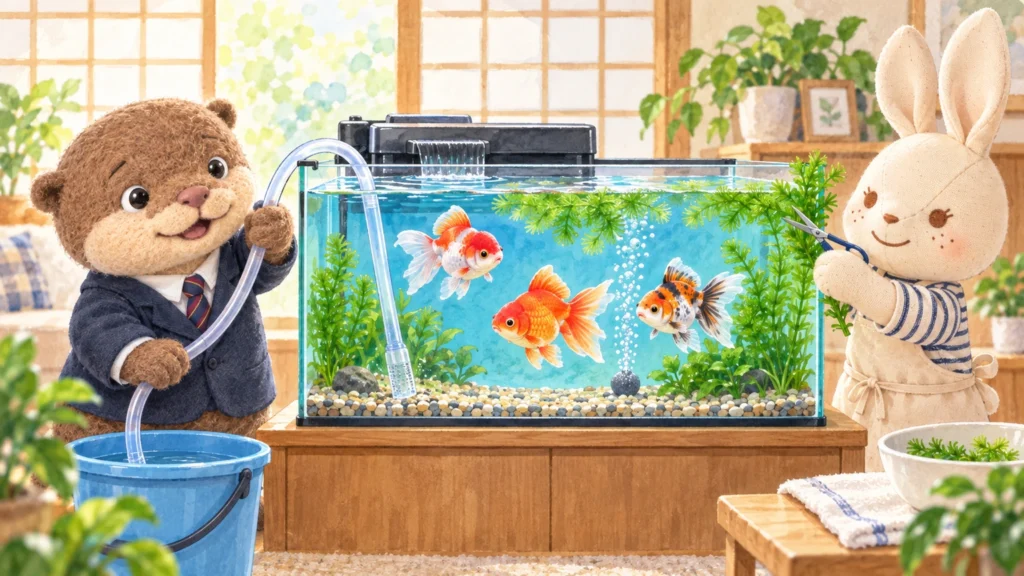 アイのアクアグッズ案内金魚を長く楽しむ飼育用品|水槽・フィルター・エアレーション・水換え道具の特徴や使い方、選ぶときのポイントをアイが紹介します。記事はコチラ →
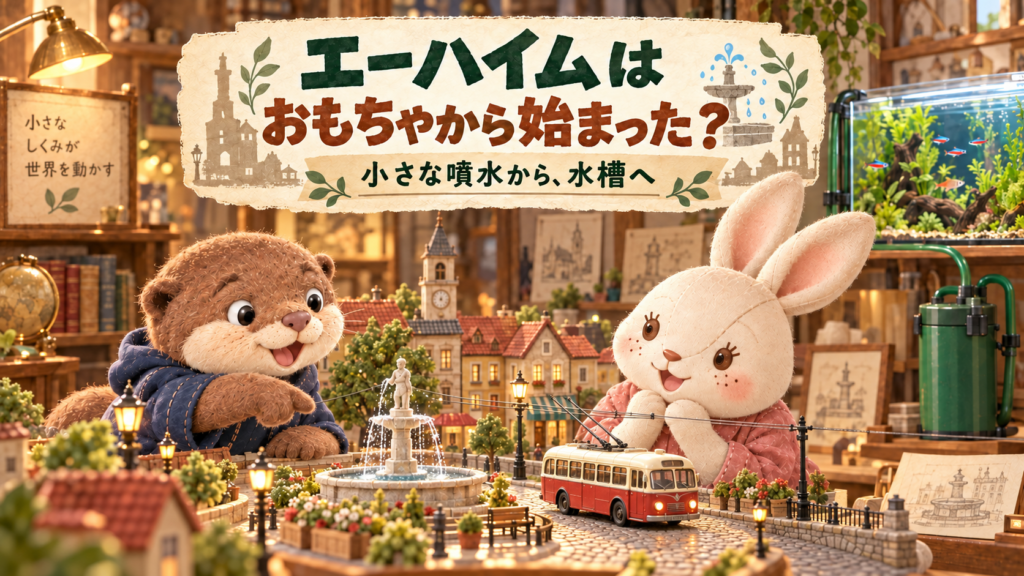 アイのアクアグッズ案内エーハイムはおもちゃから始まった? 小さな噴水から水槽へ、アイとコタロウの探訪道具の特徴や使い方、選ぶときのポイントをアイが紹介します。記事はコチラ →
さまざまな飼育テーマをご紹介。リンク先の記事には広告・商品紹介が含まれます。
案内・紹介記事一覧へ →分布マップ
桜だるま琉金は野生分布をもつ独立した品種ではなく、人為的に維持されている観賞魚です。日本のほか、中国や東南アジアで生産・流通しており、基礎となる金魚は東アジアで長い家畜化の歴史を持ちます。
※この地図は、記事中の分布・生産地域をもとに東アジアから東南アジアを概略表示したものです。マーカーは地域を把握しやすくするための代表地点であり、実際の採集地点や特定の生産地を示すものではありません。
参考文献
- California Academy of Sciences, Eschmeyer’s Catalog of Fishes. “Carassius auratus (Linnaeus, 1758).” Online Version, updated 13 Aug. 2026. https://researcharchive.calacademy.org/research/ichthyology/catalog/fishcatget.asp?genus=Carassius&species=auratus&tbl=species
- FishBase. “Carassius auratus (Linnaeus, 1758) — Goldfish.” 分類、分布、生息環境、水質範囲、生態の基礎資料。 https://www.fishbase.org/summary/Carassius_auratus.html
- 大和郡山市「金魚の品種(古来中国より伝来)」2021年3月19日更新。琉金の由来と基本的な体型・品種情報。 https://www.city.yamatokoriyama.lg.jp/kanko_bunka_sports/kingyo/kingyonokeitotohinshu/6266.html
- Ornamental Aquatic Trade Association (OATA). “How to look after fancy goldfish.” ファンシーゴールドフィッシュの水温、水質、ろ過、水流、給餌、混泳、雌雄判別などの飼育指針。 https://ornamentalfish.org/what-we-do/advice-information/care-sheets/caresheets-coldwater-fish/how-to-look-after-fancy-goldfish/
- Royal Society for the Prevention of Cruelty to Animals (RSPCA). “Choosing an Aquarium for Pet Fish.” 水槽容量、過密回避、酸素交換、水量と水質安定性に関する飼育環境資料。 https://www.rspca.org.uk/adviceandwelfare/pets/fish/environment
- FishBase. “Reproduction of Carassius auratus.” 体外受精、粘着卵、産卵場所、繁殖期の産卵行動に関する資料。 https://www.fishbase.se/Reproduction/271
- Francis-Floyd, R.; Petty, B. D. “Routine Health Care of Fish.” Merck Veterinary Manual. Full review Feb. 2020; last updated Apr. 2026. 水質管理、清掃、換水、隔離、疾病徴候、投薬判断などの健康管理資料。 https://www.merckvetmanual.com/all-other-pets/fish/routine-health-care-of-fish
- Tanaka, D.; Wada, S.; Hatai, K. “Gross, Radiological and Anatomical Findings of Goldfish with Tenpuku Disease.” Aquaculture Science, 46(2), 293–299, 1998. DOI: 10.11233/aquaculturesci1953.46.293. 丸い体型の金魚にみられる転覆病の姿勢異常、浮袋形態、水温低下との関連を検討した学術報告。 https://www.jstage.jst.go.jp/article/aquaculturesci1953/46/2/46_2_293/_article/-char/ja/




コメント