

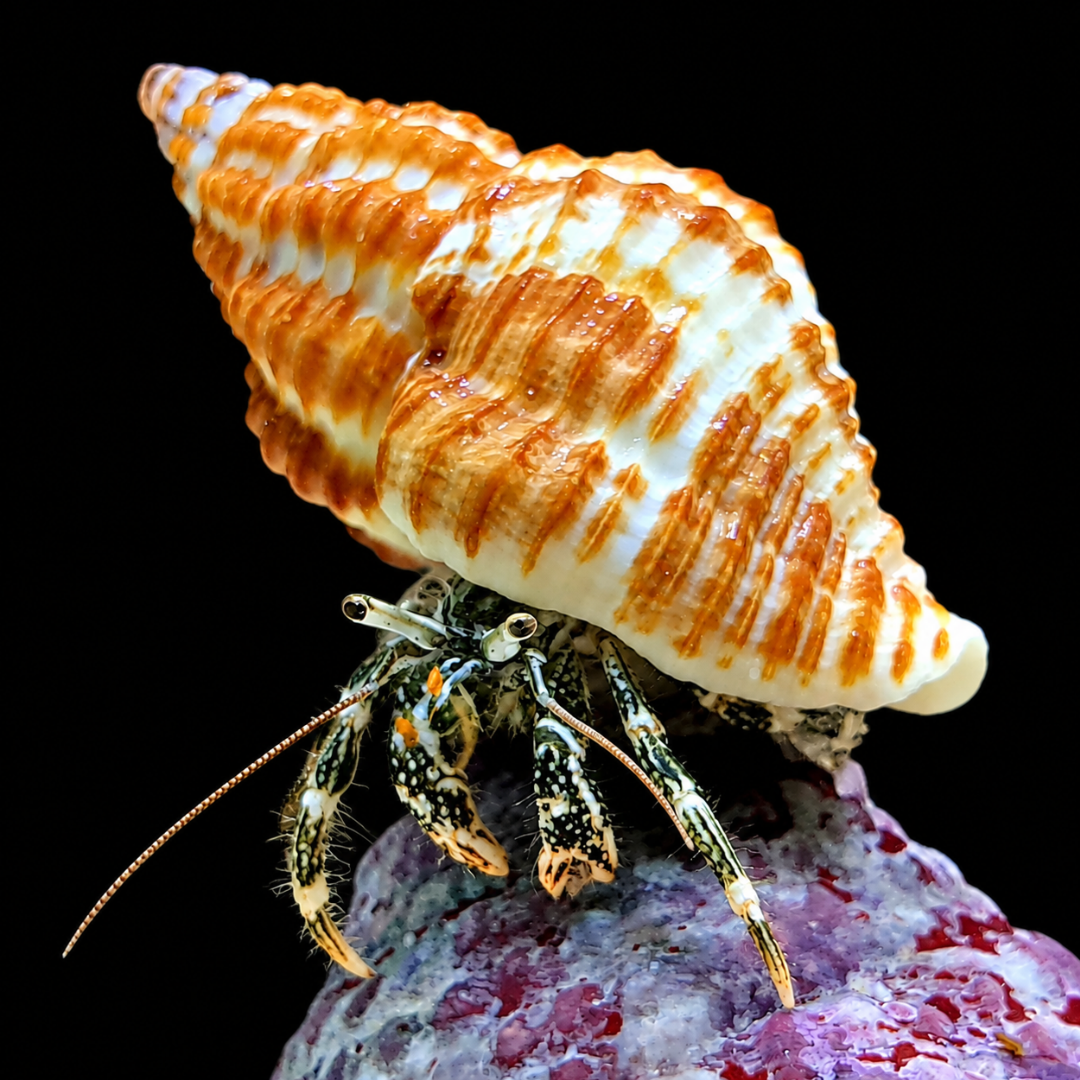
解説 / Description
マダラヨコバサミは、暖かい海の岩礁や潮だまりに暮らす、小型の海産ヤドカリです。巻貝の殻を背負い、左右のハサミを器用に使って、岩の表面や砂の上にある餌を拾います。体や脚の模様、触角を動かしながら歩く姿には、じっくり眺めたくなる魅力があります。海水水槽では付着藻類や残餌を食べるお掃除役として親しまれていますが、健康に暮らすためには、十分な餌と交換用の貝殻が必要です。安定した海水環境を整え、脱皮中に落ち着ける隠れ家を用意することが、飼育の基本となります。 Clibanarius humilis is a small marine hermit crab inhabiting rocky shores and tide pools in warm seas. Carrying a gastropod shell, it uses its two claws to collect food from rocks and sand. Its patterned body and legs, together with its exploring antennae, reward close observation. In marine aquariums it is appreciated for grazing on attached algae and eating leftover food, but adequate nutrition and suitable replacement shells are essential to its welfare. Stable seawater conditions and sheltered places for molting are fundamental to its care.
基本情報 / Basic Information
| 学名 / Scientific Name | Clibanarius humilis (Dana, 1851) |
|---|---|
| 通称 / Common Name | マダラヨコバサミ。Humble hermit crab; known in Japan as Madara-yokobasami. |
| 分類 / Family | 節足動物門・甲殻亜門・軟甲綱・十脚目・異尾下目・ホンヤドカリ上科・ヤドカリ科・ヨコバサミ属。左右のハサミの大きさが比較的近い、海産ヤドカリの仲間です。Phylum Arthropoda, subphylum Crustacea, class Malacostraca, order Decapoda, infraorder Anomura, superfamily Paguroidea, family Diogenidae, genus Clibanarius. Its two claws are relatively similar in size. |
| 英名 / English Name | Humble Hermit Crab |
| 分布 / Distribution | インド太平洋の熱帯・亜熱帯域。国内では南西諸島などの暖かい沿岸に生息し、岩礁の潮間帯や潮だまり、サンゴ礁の浅い場所で見られます。Tropical and subtropical Indo-Pacific waters. In Japan it occurs along warm coasts, including the Ryukyu Islands, in rocky intertidal habitats, tide pools, and shallow reef environments. |
| 最大体長 / Max Size | 小型種ですが、最大体長として示せる確かな数値は不明です。大きさを比較する際は、貝殻の寸法、体全体の長さ、頭胸甲の前部を測る「前甲長」を区別する必要があります。背負っている貝殻の大きさだけでは、本体の大きさを正確に判断できません。A small species, but a reliable maximum body length is not established here. Shell dimensions, overall body length, and shield length—the length of the anterior part of the carapace—are different measurements. Shell size alone does not accurately indicate the crab’s body size. |
| 寿命 / Lifespan | 本種の寿命について、十分な裏付けのある数値は不明です。ほかのヤドカリ類の長寿記録を、そのまま本種に当てはめることはできません。短期間のお掃除役と考えず、継続して世話のできる環境で迎えましょう。A well-supported species-specific lifespan is not available. Longevity records for other hermit crabs should not be applied directly to this species. Provide an environment suitable for ongoing care rather than treating it as a temporary cleanup animal. |
飼育環境 / Aquarium Environment
| 水槽サイズ / Tank Size | 少数を飼育する場合は、水質の安定を図りやすい45cm規格水槽(約45×30×30cm、満水時の容量約40L)以上を管理上の目安にできます。ほかの生体と混泳させる場合は、60cm規格水槽(約60×30×36cm、満水時の容量約65L)以上が扱いやすくなります。これらは本種の最低必要水槽サイズを示すものではありません。岩や底砂を入れると実際の水量は減るため、水量、餌の供給量、混泳相手を考慮し、少数から導入してください。For a few individuals, a standard Japanese 45cm aquarium, approximately 45 × 30 × 30cm with a full volume of about 40L, is a practical management guideline for maintaining stable conditions. A standard 60cm aquarium, approximately 60 × 30 × 36cm and about 65L when full, is easier to manage for a mixed community. These are practical guidelines, not established minimum requirements for the species. Rock and substrate reduce actual water volume. Begin with few crabs, considering water volume, food availability, and tank mates. |
|---|---|
| 水温 / Temperature | 飼育の目安は22~26℃程度です。一般的な海水水槽で管理しやすい範囲であり、本種の最適温度が厳密に確定しているわけではありません。急な温度変化や夏の高水温を避け、水面を適度に動かして酸素を確保します。 Approximately 22–26°C is a practical husbandry range for a typical marine aquarium, rather than a precisely established optimum for this species. Avoid sudden temperature changes and summer overheating, and maintain oxygenation through appropriate surface agitation. |
| 水質 / Water Quality | 人工海水などで作った海水を使用します。一般的な海水水槽の管理目安として、塩分33~35‰程度、pH8.0~8.4を保ちます。比重で管理する場合は約1.025~1.026が目安ですが、水温や測定器の条件によって値が変わるため、使用する測定器の説明に従い、校正して測定してください。アンモニアと亜硝酸は検出されない状態を維持し、硝酸塩の蓄積は水換えなどで抑えます。蒸発した水の補充には淡水を使い、塩分の上昇を防ぎます。Use seawater prepared with an appropriate marine salt mix or another suitable seawater source. General marine aquarium targets are approximately 33–35‰ salinity and pH 8.0–8.4. If using specific gravity, approximately 1.025–1.026 is a practical guide, but readings depend on temperature and instrument conditions. Follow the instrument’s instructions and calibrate it appropriately. Keep ammonia and nitrite undetectable and limit nitrate accumulation through maintenance. Replace evaporated water with freshwater to prevent salinity from rising. |
| レイアウト / Layout | ライブロックや海水用の岩を倒れないように配置し、体を隠せる小さな隙間を複数作ります。薄く敷いたサンゴ砂は歩行や採餌の場になりますが、厚い底砂を用意する必要はありません。水槽全体に穏やかな水の流れを作り、残餌がたまりやすい場所を減らします。交換用の空の貝殻は、ヤドカリが近づきやすい場所に置いてください。Arrange securely supported live rock or marine-safe rock with several small retreats. A thin layer of coral sand provides a surface for walking and foraging; a deep sand bed is not required. Provide gentle circulation throughout the aquarium and minimize places where uneaten food accumulates. Place spare shells where the crabs can readily reach them. |
| 注意点 / Precautions | 導入時は輸送水と水槽の水温・塩分を確認し、差がある場合は個体の状態を見ながら段階的に水合わせをします。点滴法を使う場合も、一定の時間を守ることだけを優先せず、輸送水の汚れや容器内の水温低下に注意してください。長時間の輸送後は、袋を開けてpHが上昇すると、蓄積したアンモニアの毒性が高まることがあります。輸送水は本水槽へ入れません。銅を含む魚病薬や、無脊椎動物に使用できるか不明な薬剤は避けます。陸上で暮らすオカヤドカリとは異なり、水中で飼育する生き物です。Compare the temperature and salinity of transport water with those of the aquarium, and acclimate gradually when needed while monitoring the crab. If using drip acclimation, do not prioritize a fixed duration over water quality and temperature. After extended shipping, a pH rise following bag opening can increase the toxicity of accumulated ammonia. Keep transport water out of the display aquarium. Avoid copper-based fish medications and treatments of uncertain invertebrate compatibility. Unlike terrestrial hermit crabs, this species is kept underwater. |
餌と給餌 / Feeding
| 餌の種類 / Diet | 雑食性で、付着藻類、動植物由来の有機物、残餌などを食べます。飼育下では海水の甲殻類に適した沈下性の人工飼料を使い、植物質を含む餌、味付けのない海苔、冷凍アミ、細かくした魚介類などを少量ずつ組み合わせます。藻類の種類によって食べ方は異なるため、藍藻や特定のコケを確実に除去する目的だけで導入することはおすすめできません。An omnivore feeding on attached algae, organic material of plant and animal origin, and leftover food. Offer sinking prepared food suitable for marine crustaceans, supplemented sparingly with plant-containing foods, unseasoned nori, frozen mysids, or finely chopped marine seafood. Grazing varies with the type of growth present, so it should not be introduced solely to guarantee removal of cyanobacteria or a particular alga. |
|---|---|
| 給餌のポイント / Feeding Tips | 水槽内のコケや魚の残餌だけで足りると決めつけず、各個体が実際に餌をつまんで食べているか観察します。少量を与え、食べ残しは傷む前に回収してください。夕方や消灯後など、ほかの生体に餌を取られにくい時間に与える方法もあります。複数飼育では給餌場所を分け、各個体に餌が行き渡るようにします。栄養バランスのよい人工飼料を活用しながら、食べる様子と残餌の量に合わせて内容や量を調整しましょう。Do not assume algae and fish leftovers provide enough food; observe whether each crab actually picks up and eats it. Offer small portions and remove uneaten food before it deteriorates. Feeding in the evening or after lights out may reduce competition from other animals. Use several feeding locations when keeping multiple crabs. Make use of nutritionally balanced prepared foods and adjust the diet and quantity according to feeding behavior and leftovers. |
性格と混泳 / Temperament and Tank Mates
| 性格 / Temperament | 普段は岩や砂の上を歩いて餌を探し、危険を感じると貝殻へ引っ込みます。小型魚を積極的に追い回すことは通常ありませんが、餌や貝殻を巡ってほかのヤドカリと争うことがあります。自然界では集まる姿も見られますが、水槽で多数を一緒に飼う必要はありません。個体数に対して、餌場と隠れ家に余裕を持たせることが大切です。Usually occupied with foraging on rocks and sand, it retreats into its shell when disturbed. It does not normally pursue small fish, but disputes over food or shells can occur with other hermit crabs. Natural aggregations do not mean large groups are necessary in captivity. Provide sufficient feeding space and shelter for the number kept. |
|---|---|
| 混泳の相性 / Compatibility | 小型で甲殻類を捕食しないハゼ類やテンジクダイ類などが候補になります。ただし、相性は魚の種類や個体差、ヤドカリの大きさによって変わります。フグ類、モンガラカワハギ類、大型のベラ類、ゴンベ類など、甲殻類を捕食する魚との混泳は避けてください。サンゴ水槽でも飼育できますが、歩行中に小さなサンゴを動かしたり、ポリプに触れて刺激したりすることがあります。巻貝は餌や殻を目的に襲われる可能性があり、十分な給餌と予備の貝殻を用意しても、その危険を完全にはなくせません。Small gobies and cardinalfish that do not prey on crustaceans may be suitable companions, but compatibility depends on species, individual behavior, and crab size. Avoid crustacean-eating fish, including puffers, triggerfish, large wrasses, and hawkfish. It can be kept in reef aquariums, although its movements may displace small corals or disturb polyps through contact. Snails may be attacked for food or shells; adequate feeding and spare shells cannot eliminate that risk entirely. |
病気と対策 / Diseases and Prevention
| かかりやすい病気 / Common Diseases | 本種で特に多い感染症については、十分な情報がありません。飼育中に注意したい不調として、脱皮の失敗、栄養不足、水質の急変、酸素不足、薬剤による障害、混泳相手による負傷が挙げられます。脚の欠損や活動の低下だけで、原因を特定することはできません。脱皮前後には活動が減ることもあるため、動かないという理由だけで死亡と判断しないでください。There is insufficient information to identify infections particularly common in this species. Important health concerns include unsuccessful molts, inadequate nutrition, abrupt water changes, oxygen shortage, medication-related harm, and injuries from tank mates. Missing limbs or reduced activity alone do not identify the cause. Activity may decrease around molting, so inactivity should not by itself be taken as evidence of death. |
|---|---|
| 対策と予防 / Prevention | ろ過が安定した水槽で塩分と水温を保ち、定期的な水換え、適量の給餌、隠れ家の確保を続けます。脱皮中の個体を引っ張ったり、無理に貝殻から出したりしないでください。軽い脚や触角の欠損は、その後の脱皮を重ねることで回復する場合があります。脱皮の失敗を見て、直ちにヨウ素不足と判断することはできません。ヨウ素などの添加剤は、必要性や濃度を確認せずに使用しないようにします。魚の薬浴は別の水槽で行い、本水槽へ薬剤を持ち込まないことも大切です。Maintain stable salinity and temperature in an aquarium with established filtration, supported by regular water changes, appropriate feeding, and shelter. Never pull a molting crab or force it from its shell. Minor losses of legs or antennae may recover over subsequent molts. A failed molt does not automatically indicate iodine deficiency. Do not use iodine or other supplements without confirming the need and relevant concentrations. Medicate fish in a separate aquarium and prevent treatment chemicals from entering the display. |
増やし方(繁殖) / Breeding
| 雌雄の判別 / Sexing | 貝殻に入ったままでは判別しにくく、体の大きさや色だけで確実に見分けることはできません。ヤドカリ類では生殖孔の位置が判別の手掛かりとなり、一般に雌では第3胸脚、雄では第5胸脚の基部にあります。本種は小さく、これらを観察するのは容易ではありません。確認のために無理に殻から引き出すことは避けてください。腹部に卵を抱えている個体は雌です。Sex is difficult to determine while the crab remains inside its shell, and size or color alone is unreliable. In hermit crabs, gonopore position provides a clue: female openings generally occur at the bases of the third pereopods and male openings at the fifth. These features are difficult to inspect in this small species. Never force it from its shell for examination. An individual carrying eggs on its abdomen is female. |
|---|---|
| 繁殖形態 / Reproduction | 卵生です。雌は腹部の付属肢に卵を抱え、孵化した幼生を水中へ放出します。幼生は浮遊生活を送り、成長と変態を経て、底で暮らす稚ヤドカリになります。親と同じ姿で生まれるわけではなく、幼生期に適した環境と餌が必要なため、抱卵を確認しても通常の水槽で自然に数が増えるとは限りません。Oviparous. Females carry eggs on abdominal appendages and release the hatched larvae into the water. The larvae pass through a planktonic phase before growth and metamorphosis produce bottom-dwelling juvenile hermit crabs. They are not born as miniature adults and require conditions and food suited to the larval stage, so egg-bearing females do not necessarily lead to population growth in a display aquarium. |
| 繁殖のポイント / Breeding Tips | 一般家庭で安定して繁殖させるための飼育手順については、十分な情報がありません。幼生の育成には、親とは別の容器での管理、吸水口への吸い込み防止、清浄な海水、成長段階に合った微小な餌が必要になります。また、着底後の稚ヤドカリが使える非常に小さな空の貝殻も課題となります。餌の種類や給餌量など、本種に適した具体的な条件が不明な部分は、一般的なヤドカリ類の育成方法だけで断定することはできません。There is insufficient information to provide a reliable home-breeding protocol. Larval rearing requires separate containers, protection from intake suction, clean seawater, and small foods appropriate to each developmental stage. Extremely small empty shells for settled juveniles are another challenge. Specific conditions, including suitable foods and feeding quantities, should not be assumed solely from general hermit crab rearing methods. |
雑学と豆知識 / Trivia and Fun Facts
| 1. 学名に残る19世紀の足跡 / 1. A Nineteenth-Century Legacy in Its Name | マダラヨコバサミは、アメリカの博物学者ジェームズ・ドワイト・デーナによって、1851年に Pagurus humilis として記載されました。現在は、1852年に設けられたヨコバサミ属 Clibanarius に分類されています。学名の後ろにある「(Dana, 1851)」の括弧は、最初に記載されたときとは属が異なることを示します。つまり、名前をたどるだけでも、このヤドカリの仲間分けが見直されてきたことが分かるのです。種小名 humilis はラテン語で「低い」「小さい」などを意味します。ただし、その意味だけから、命名者が本種の小ささを理由に名付けたとまでは断定できません。James Dwight Dana described this species in 1851 as Pagurus humilis. It is now classified in Clibanarius, a genus established in 1852. The parentheses around “Dana, 1851” indicate that its current genus differs from the original one. The name itself therefore records a revision in its classification. The Latin humilis can mean “low” or “small,” but that meaning alone does not establish that Dana named the species specifically for its small size. |
|---|---|
| 2. 殻は成長しない、だから引っ越す / 2. A Shell That Cannot Grow | 巻貝は成長に合わせて自分の殻を大きくしますが、ヤドカリが使う空の貝殻は、入居者と一緒には成長しません。ヤドカリの体が大きくなると、より適した住まいへ引っ越す必要が生じます。選ぶ条件は大きさだけでなく、入口の形、内部の空間、重さなどにも及びます。予備の貝殻は、現在使っているものと同程度から少し大きいものまで、形の異なるものを用意すると選択肢が広がります。一匹あたり3~5個は準備の目安になりますが、個数よりも、実際に使える形と大きさであることが重要です。塗装や接着剤の付いていない清潔な天然の空殻を選び、生きた巻貝を交換用の殻として扱わないようにしましょう。A living snail enlarges its shell as it grows, but an empty shell cannot grow with a hermit crab. As the crab becomes larger, it needs to move into more suitable housing. Selection depends on the opening, internal space, and weight as well as size. Offer differently shaped spare shells ranging from the current size to slightly larger. Three to five per crab is a preparation guideline, but suitable shapes and sizes matter more than the count. Choose clean, naturally empty shells without paint or glue, and do not regard living snails as replacement housing. |
| 3. お掃除役も栄養を循環させる一員 / 3. A Cleanup Animal Still Recycles Nutrients | 岩をつつき、残餌を拾う姿を見ると、水槽の汚れを消してくれるように感じられます。実際には、食べた有機物の一部は成長や活動に使われ、残りは排泄物などの形で水槽へ戻ります。餌を食べても、水槽の外へ汚れを取り出しているわけではないのです。マダラヨコバサミは、有機物を食べ、その形を変えながら水槽内の物質循環に関わります。その働きを生かすには、水換えやろ過、適量の給餌を続けることが大切です。砂の表面を歩くことはありますが、深い底砂全体を攪拌して硫化水素の発生を防ぐ役割まで期待することはできません。Watching a crab pick at rocks and collect leftovers can make it seem as though aquarium waste disappears. In reality, some ingested material supports growth and activity, while the remainder returns as waste products. Eating food does not remove that material from the aquarium. Clibanarius humilis participates in nutrient cycling by consuming and transforming organic matter. Water changes, filtration, and controlled feeding remain necessary. Walking across the sand surface does not mean it thoroughly mixes a deep substrate or prevents hydrogen sulfide formation. |
| 4. 脱皮の抜け殻は、置き忘れた体のように見える / 4. A Shed Exoskeleton Can Resemble the Crab | ヤドカリは硬い外骨格を脱いで成長します。水槽にハサミや脚の形をしたものが残っていると驚きますが、脱皮の抜け殻である場合があります。脱皮を終えた個体は、岩陰で新しい外骨格が硬くなるのを待っているかもしれません。まずは別の場所に個体がいないか静かに確認し、隠れ家を崩して探し回ることは避けましょう。抜け殻を食べることもあるため、水質に影響していなければ、しばらく残しておけます。なお、外骨格を脱ぐ「脱皮」と、背負う貝殻を替える「引っ越し」は別の出来事です。脱皮のたびに、必ず新しい貝殻へ移るわけではありません。Hermit crabs grow by shedding their hard exoskeleton. Finding something shaped like claws and legs can be alarming, but it may be a molt. The crab may be sheltered among the rocks while its new exoskeleton hardens. Look quietly for the individual elsewhere without dismantling its retreats. Crabs may eat shed material, so it can remain temporarily if water quality is unaffected. Shedding the exoskeleton and changing the carried shell are separate events; a shell change does not necessarily follow every molt. |
| 5. 脚の模様からたどる、仲間たちの進化 / 5. Following Evolution Through Leg Patterns | ヨコバサミ属には、体の形がよく似ていても、脚の帯や縦線、斑点の配置が異なる種がいます。こうした色彩は、生きた個体を見分ける手掛かりになります。DNAを使って種同士の関係を調べた研究では、この属の進化の過程で、岩礁などの硬い底から、泥干潟などの柔らかい底への適応が少なくとも2回起きた可能性が示されました。これは、異なる系統の仲間が、それぞれ別に似た環境へ進出した可能性を意味します。また、縦線や単色といった色彩の特徴も、異なる系統で繰り返し現れたと考えられています。そのため、模様が似ているだけで、系統的に近い種だとは判断できません。これらはヨコバサミ属全体を比較した結果であり、マダラヨコバサミの模様が迷彩や求愛に役立つことを直接示したものではありません。小さな脚の模様には、見た目の楽しさだけでなく、仲間たちの進化を読み解く手掛かりも含まれています。Clibanarius species can be structurally similar while differing in the arrangement of leg bands, stripes, and spots. These colors help identify living animals. A study using DNA to examine relationships among species suggested that adaptation from hard substrates, such as rocky shores, to soft sediments, including mudflats, may have occurred at least twice during the genus’s evolution. This means separate lineages may have independently adapted to similar environments. Features such as stripes and solid coloration also appear to have evolved repeatedly in different lineages. Similar patterns alone therefore do not establish a close evolutionary relationship. These findings concern comparisons across the genus and do not directly demonstrate camouflage or courtship functions for the markings of Clibanarius humilis. Its small patterned legs offer clues to evolutionary history as well as visual interest. |
まとめ / Conclusion
マダラヨコバサミは、岩陰や砂の上を歩く小さな姿で、海水水槽に観察の楽しみを添えてくれます。付着藻類や残餌をつまむ姿だけでなく、貝殻を調べ、触角を動かして周囲を探る様子にも魅力があります。安定した海水環境、十分な餌、選べる空の貝殻を用意することが、その暮らしを支えます。 Clibanarius humilis adds rewarding observations to a marine aquarium as it moves among rocks and across the sand. Its appeal extends beyond grazing and collecting leftovers to inspecting shells and exploring with its antennae. Stable seawater, adequate food, and a choice of empty shells support its daily life.
脱皮で姿を隠したときは静かに見守り、普段は餌の食べ方や混泳相手との関わりに目を向けてみてください。小さなハサミを動かし、自分に合った殻を背負って歩く姿からは、お掃除役という呼び名だけでは伝わらない、海の生き物としての豊かな表情が感じられるでしょう。 Give it peace when it retreats to molt, and observe its feeding and interactions with tank mates during everyday activity. Watching its tiny claws at work as it walks in a suitable shell reveals a marine animal whose appeal goes well beyond its role in aquarium cleanup.

気になる道具や飼い方を見つけてみませんか?
 アイのアクアグッズ案内水槽用ヒーターの選び方|固定式・温度調節式と、水量に合うW数の考え方水槽の魚は冬に寒くない? アイとコタロウが水温計から固定式・温度調節式・分離式ヒーターまで比較。水量と室温に合うW数、設置場所、水換えや交換の注意点を、国内メーカーの商品とともに紹介します。記事はコチラ →
 アイのアクアグッズ案内エーハイムはおもちゃから始まった? 小さな噴水から水槽へ、アイとコタロウの探訪道具の特徴や使い方、選ぶときのポイントをアイが紹介します。記事はコチラ →
 アイのアクアグッズ案内バルブの仲間に合わせる飼育用品|チェリーバルブ・スマトラ・中型種の水槽とろ過道具の特徴や使い方、選ぶときのポイントをアイが紹介します。記事はコチラ →
 アイのアクアグッズ案内ローチの仲間に合わせる飼育用品|クーリー・流水性・ボーシャの水槽と底砂道具の特徴や使い方、選ぶときのポイントをアイが紹介します。記事はコチラ →
さまざまな飼育テーマをご紹介。リンク先の記事には広告・商品紹介が含まれます。
案内・紹介記事一覧へ →分布マップ
マダラヨコバサミ(Clibanarius humilis)は、インド太平洋の熱帯・亜熱帯域に分布します。国内では南西諸島などの暖かい沿岸に生息し、岩礁の潮間帯や潮だまり、サンゴ礁の浅い場所で見られます。
地図は分布地域を含む概略表示です。日付変更線をまたぐ太平洋も含めて確認できるよう、広い範囲を表示しています。表示範囲全体に生息することや、正確な分布境界を示すものではありません。マーカーは沖縄本島周辺に設定した代表地点で、実際の採集地点ではありません。Google Earthのリンクも同じ代表地点を開きます。
参考文献
-
海洋研究開発機構(JAMSTEC).BISMaL「Clibanarius humilis マダラヨコバサミ」
学名、和名、分類体系、旧学名および登録された分布記録を確認できる海洋生物情報データベース。
-
McLaughlin, P. A., Rahayu, D. L., Komai, T. & Chan, T.-Y.(2007).A Catalog of the Hermit Crabs (Paguroidea) of Taiwan.National Taiwan Ocean University.マダラヨコバサミ:pp. 129–130.
本種の分類史、形態、色彩、分布、生息環境を記載した専門資料。標本の計測値や抱卵雌の記録も収録されています。
-
Yoshikawa, A. et al.(2019).Molecular phylogeny of Clibanarius Dana, 1852 from the Indo-West Pacific: Evolution of pereopod colour pattern and habitat adaptation.Crustaceana, 92(7), 799–839.
ヨコバサミ属のDNAに基づく系統関係、脚の色彩の進化、硬い底質から柔らかい底質への生息環境の変化を検討した研究。
-
Ornamental Aquatic Trade Association(OATA).How to look after marine crustaceans.
業界団体による海産甲殻類の飼育ガイド。水温・水質の一般的な管理目安、水槽設備、給餌、脱皮、混泳、水合わせを扱っています。
-
Harms, J.(1992).Larval development and delayed metamorphosis in the hermit crab Clibanarius erythropus (Latreille) (Crustacea, Diogenidae).Journal of Experimental Marine Biology and Ecology, 156(2), 151–160.
同属の別種を対象とした幼生育成研究。幼生の発育と変態、稚ヤドカリになる段階での貝殻の役割を理解するための比較資料。
-
Yanong, R. P. E..Use of Copper in Marine Aquaculture and Aquarium Systems.University of Florida, IFAS Extension.FA165.
海水飼育施設での銅の使用と毒性を解説した大学の技術資料。無脊椎動物への影響、底砂や装飾物への吸着と再溶出、投薬時の水質管理を扱っています。
-
Merck Veterinary Manual.Environmental Diseases of Aquatic Animals in Aquatic Systems.
水生動物の環境性疾患を扱う獣医学資料。酸素不足、水温や水質の変化、アンモニアの毒性とpH・水温の関係についての基礎情報。
オンライン資料の閲覧日:2026年10月5日




コメント