

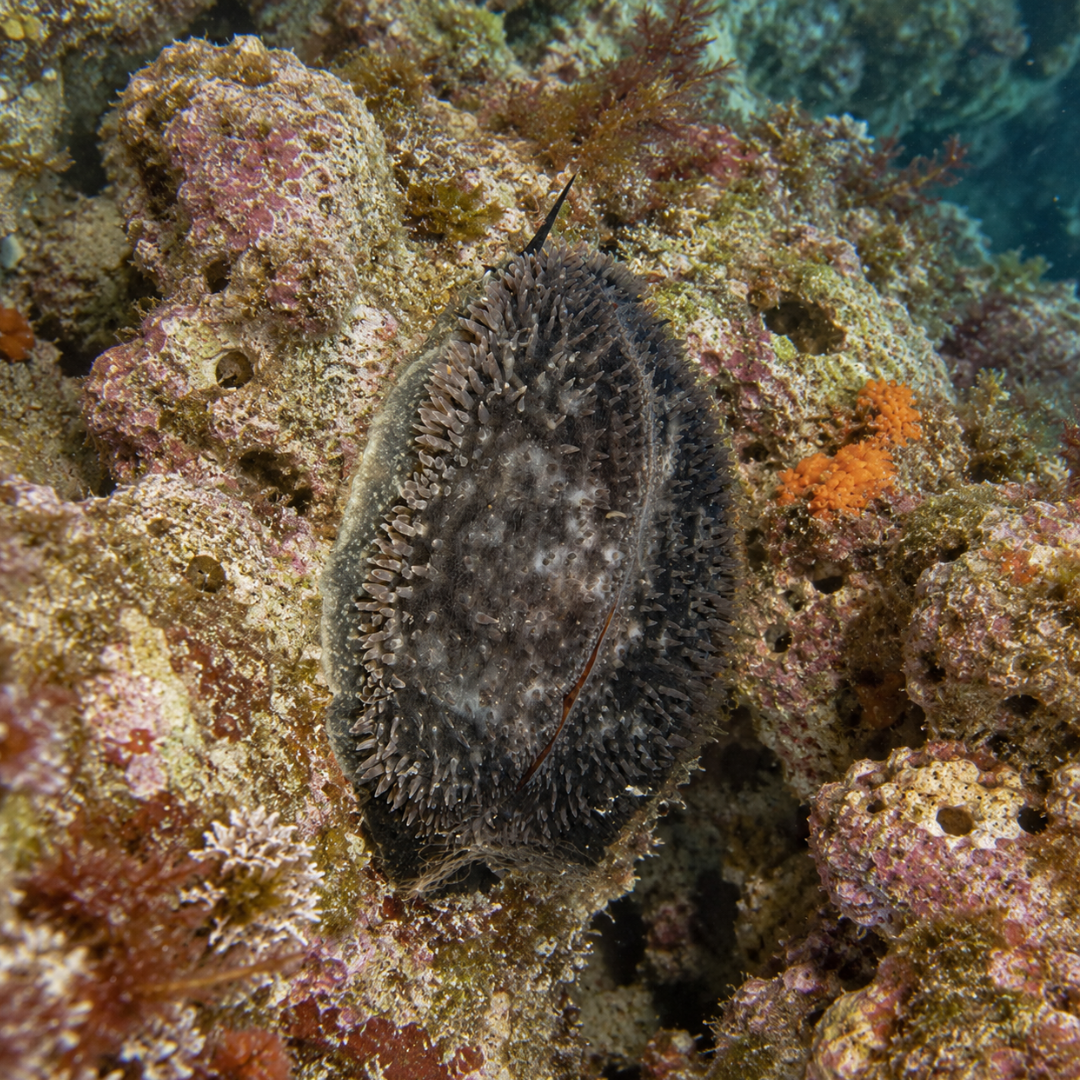
解説 / Description
シマウマダカラは、西大西洋の熱帯から亜熱帯域に分布する大型のタカラガイです。滑らかで強い光沢を持つ褐色の殻には淡い斑点が散り、側面には斑点の中央が濃色になる特徴的な眼状斑が見られます。生きているときには外套膜が殻の表面を広く覆うため、貝殻標本から受ける印象とは大きく異なります。主に夜間に活動し、藻類のほか、小型の巻貝や多毛類、ヒドロ虫類などの小型無脊椎動物を摂食します。胃内容物からは海綿の断片も確認されており、単純な藻食性や海綿食性のどちらか一方ではなく、さまざまな餌を利用する種として捉えるのが適切です。飼育例の情報は多くないため、一般的なコケ取り貝と同じ役割を期待して導入するのではなく、本来の食性と夜行性の行動を理解したうえで管理する必要があります。 Macrocypraea zebra is a large cowrie distributed through tropical and subtropical parts of the western Atlantic. Its smooth, highly glossy brown shell bears pale spots, with distinctive ocellated markings along the sides in which the center of each spot is darker. A living animal looks very different from an empty shell because the mantle can spread widely across the shell surface. The species is mainly active at night and feeds on algae as well as various small invertebrates, including small gastropods, polychaetes and hydroids. Sponge fragments have also been recorded among stomach contents. It is therefore more accurate to regard the species as having a varied diet rather than describing it simply as an algae grazer or a sponge specialist. Published information on long-term aquarium keeping is limited, so it should not be introduced with the same expectations as a typical algae-control snail.
基本情報 / Basic Information
| 学名 / Scientific Name | Macrocypraea zebra (Linnaeus, 1758) |
|---|---|
| 通称 / Common Name | シマウマダカラMeasled Cowrie, Zebra Cowrie |
| 分類 / Family | 軟体動物門・腹足綱・吸腔目・タカラガイ科・シマウマダカラ属Phylum Mollusca, Class Gastropoda, Order Littorinimorpha, Family Cypraeidae, Genus Macrocypraea |
| 英名 / English Name | Measled Cowrie / Zebra Cowrie |
| 分布 / Distribution | 西大西洋。アメリカ合衆国ノースカロライナ州からフロリダ周辺、メキシコ湾、カリブ海を経て、ブラジル南部まで広く分布します。岩礁やサンゴ礁などの浅海域で見られ、0〜37mの水深から記録されています。Western Atlantic, ranging from North Carolina and Florida through the Gulf of Mexico and Caribbean region to southern Brazil. It occurs in shallow marine habitats associated with rocks and coral reefs and has been recorded from depths of 0–37 m. |
| 最大体長 / Max Size | 成体の平均的な殻長はおよそ60〜70mmですが、大型個体では100mmを超えます。最大級では殻長約133mmに達する記録があります。Adult shell length averages around 60–70 mm, although large individuals can exceed 100 mm. Exceptional specimens have been recorded at approximately 133 mm in shell length. |
| 寿命 / Lifespan | シマウマダカラの寿命を具体的な年数で示す信頼性の高い情報は十分ではありません。飼育下でも長期維持に関する記録が限られているため、明確な寿命を断定することはできません。Reliable species-specific information defining the lifespan of Macrocypraea zebra in years is insufficient. Records of long-term aquarium maintenance are also limited, so a definite captive lifespan cannot currently be stated. |
飼育環境 / Aquarium Environment
| 水槽サイズ / Tank Size | 本種について、最低限必要な水槽サイズを示した確立された飼育資料は確認されていません。最大殻長が13cmを超える大型種であることを考えると、小型水槽よりも十分な底面積を確保できる環境が扱いやすく、目安として90cm規格水槽程度の余裕があるとレイアウトや水質を管理しやすくなります。ただし、これは生物学的な最低条件ではなく、個体サイズや収容生体数、ろ過能力に応じて判断するための飼育上の目安です。No firmly established minimum aquarium size has been documented specifically for this species. Because it is a large cowrie capable of exceeding 13 cm in shell length, an aquarium with generous floor space is easier to manage than a small tank. A standard 90 cm aquarium can be used as a practical reference for providing adequate space and stable water conditions, but this should be regarded as a husbandry guideline rather than a biological minimum. |
|---|---|
| 水温 / Temperature | 熱帯から亜熱帯の海域に分布するため、飼育では25℃前後をひとつの目安として大きな変動を避けます。特定の一点に固定することよりも、短時間で急激に水温が変化しないよう安定させることが重要です。 Because the species inhabits tropical and subtropical waters, a temperature around 25°C can be used as a practical aquarium reference. Maintaining stability and avoiding rapid temperature fluctuations is more important than holding the aquarium at one exact value. |
| 水質 / Water Quality | 一般的な海水水槽と同様に、安定した海水環境を維持します。比重は1.023〜1.025程度を目安とし、急激な変化を避けてください。大型個体では水槽への負荷も無視できないため、十分なろ過能力を確保し、有機物や硝酸塩などが過度に蓄積しないよう管理します。Maintain stable marine conditions as for other tropical marine aquariums. A specific gravity of approximately 1.023–1.025 can be used as a general reference, while sudden changes should be avoided. Because large individuals can contribute a noticeable bioload, adequate filtration and regular water-quality management are important. |
| レイアウト / Layout | 自然下では岩やサンゴ礁周辺で見られ、日中は物陰にいることが多いため、ライブロックなどで暗く落ち着ける隠れ場所を用意します。大型個体が移動しても崩れないよう、岩組みは安定させてください。飼育情報が少ない種なので、行動や摂餌を確認しやすいシンプルなレイアウトや、本種を中心とした専用水槽も管理しやすい選択肢です。In the wild, the species occurs around rocks and coral habitats and commonly remains sheltered during the day. Provide shaded crevices and hiding places using stable live rock or similar structures. Rockwork should be secure enough to remain stable as a large animal moves through the aquarium. Because detailed husbandry information is limited, a relatively simple layout or a dedicated species tank can make feeding and behavior easier to monitor. |
| 注意点 / Precautions | 最大の注意点は、一般的なコケ取り貝のように藻類だけで維持できると考えないことです。本種の自然下の食性には小型無脊椎動物も含まれるため、付着藻類だけの水槽では本来の食性を十分に満たせない可能性があります。また、サンゴを積極的に捕食する種と断定できる資料は確認できませんが、さまざまな底生生物を摂食するため、小型無脊椎動物を重視した水槽では相性を慎重に判断してください。The most important precaution is not to assume that this species can be sustained solely as an algae-grazing cleanup snail. Its natural diet also includes small invertebrates, so a tank containing only incidental algae may not provide the full range of food it uses in nature. Reliable evidence identifying it as an active coral predator was not confirmed, but its varied feeding habits mean that compatibility should still be considered carefully in aquariums containing valuable small benthic invertebrates. |
餌と給餌 / Feeding
| 餌の種類 / Diet | 自然下では藻類と小型無脊椎動物の両方を利用します。胃内容物からは、ヒドロ虫類、有孔虫、小型の巻貝、多毛類、海綿の断片、糸状藻類、小型巻貝の卵塊などが確認されています。そのため、「海綿を主食とする肉食性」や「コケだけを食べる草食性」と単純化するのは適切ではなく、幅広い餌を利用する雑食的な食性と考えるのが自然です。In the wild, the species uses both algae and small invertebrates as food. Recorded stomach contents include hydroids, foraminiferans, small gastropods, polychaetes, sponge fragments, filamentous algae and egg masses of small gastropods. It is therefore misleading to describe it simply as a sponge-eating carnivore or as an algae-only herbivore; its natural feeding ecology is better characterized as varied and omnivorous. |
|---|---|
| 給餌のポイント / Feeding Tips | 夜行性なので、消灯後に活動と摂餌の様子を確認すると状態を把握しやすくなります。長期飼育時の標準的な人工飼料や給餌方法は十分に確立されていないため、特定の代替餌だけで飼育できると決めつけないことが大切です。付着藻類や自然発生する小型生物を含む環境を用意し、実際に継続して摂餌しているかを観察してください。Because the species is nocturnal, its activity and feeding are easiest to assess after the aquarium lights are turned off. A standardized long-term captive diet has not been well established, so it is unwise to assume that one substitute food will be sufficient. Providing an environment containing natural algal growth and small benthic organisms, while confirming that the animal is actually feeding over time, is particularly important. |
性格と混泳 / Temperament and Tank Mates
| 性格 / Temperament | 主に夜間に活動する夜行性で、日中は岩陰などに潜んでいることが多い種類です。魚を追い回すような行動を特徴とする生物ではありませんが、餌として小型の底生無脊椎動物を利用します。飼育では「おとなしい貝」という印象だけで判断せず、夜間の採餌行動まで含めて観察する必要があります。This is mainly a nocturnal species and often remains sheltered beneath or among rocks during the day. It is not characterized by actively chasing fish, but it does consume small benthic invertebrates as part of its natural diet. Aquarium compatibility should therefore be judged from its nighttime feeding behavior rather than from the impression that it is simply a passive snail. |
|---|---|
| 混泳の相性 / Compatibility | 本種を捕食しない魚類との同居は可能と考えられますが、野生下では殻を壊す魚類やカニ類などが捕食者として知られています。そのため、貝類を捕食する大型魚や大型甲殻類との同居は避けたほうが安全です。一方、本種自身も小型の底生無脊椎動物を摂食するため、そうした生物を大切に飼育している水槽では注意が必要です。サンゴそのものを常食するという根拠は確認できないため、単純に「サンゴを食べる貝」と扱うのも適切ではありません。It may be possible to keep the species with fish that do not prey on mollusks, while shell-crushing reef fishes and crabs are among its known natural predators. Large fish or crustaceans that commonly attack mollusks are therefore poor tank mates. At the same time, Macrocypraea zebra itself consumes small benthic invertebrates, so caution is appropriate in aquariums where such animals are valuable. Available information does not justify simply labeling the species as a habitual coral-eating snail. |
病気と対策 / Diseases and Prevention
| かかりやすい病気 / Common Diseases | シマウマダカラに特有の病気について、一般のアクアリウム飼育で利用できる詳しい情報はほとんどありません。そのため、特定の病名を「かかりやすい病気」として挙げるのは適切ではありません。飼育では、餌不足による衰弱や水質の悪化、急激な水温・比重の変化など、基本的な環境ストレスに注意します。Detailed information on diseases specifically associated with Macrocypraea zebra in aquariums is scarce. It is therefore not appropriate to list a particular disease as being characteristically common in this species. In captivity, more general problems such as nutritional decline, deteriorating water quality and rapid changes in temperature or salinity deserve attention. |
|---|---|
| 対策と予防 / Prevention | 水温や比重を安定させ、ろ過と定期的な水換えによって水質を維持します。特に重要なのは、動きがあることだけを健康の基準にせず、夜間に実際の摂餌が続いているかを確認することです。活動量の低下や外套膜の状態に変化が見られた場合は、水質、餌の確保状況、同居生物からの攻撃など基本的な飼育条件から順に確認します。Maintain stable temperature and salinity and preserve water quality through adequate filtration and regular water changes. Movement alone should not be used as proof of good condition; continued feeding during the animal’s active nighttime period should also be confirmed. If activity declines or the mantle appears abnormal, review basic factors such as water quality, food availability and possible attacks from tank mates. |
増やし方(繁殖) / Breeding
| 雌雄の判別 / Sexing | 雌雄が分かれた雌雄異体の種類です。ただし、一般的な飼育環境で外見だけから簡単に雌雄を判別する方法については、十分な情報がありません。殻の大きさや模様だけで性別を判断することはできません。Macrocypraea zebra is gonochoric, meaning that males and females are separate individuals. However, there is little practical information on reliably distinguishing the sexes by external appearance in an ordinary aquarium setting. Shell size or color pattern alone should not be used to determine sex. |
|---|---|
| 繁殖形態 / Reproduction | 受精は体内で行われ、卵は保護用のカプセルに包まれて基質へ産み付けられます。卵塊は岩の下面などに付着することがあり、雌は産卵後も卵の近くにとどまり、吻を使って表面のごみを取り除く行動が知られています。孵化後の幼生は水中を泳ぐ浮遊性の段階を持ち、その後に底生生活へ移行します。Fertilization is internal, and the eggs are deposited on the substrate inside protective capsules. Egg masses may be attached to the underside of rocks, and females have been observed remaining nearby and using the proboscis to clean debris from the egg mass. After hatching, the young pass through a free-swimming planktonic larval stage before eventually entering benthic life. |
| 繁殖のポイント / Breeding Tips | 産卵させることだけでなく、浮遊幼生を着底後の稚貝まで育てることが大きな課題になります。本種について家庭水槽で累代繁殖するための確立された手順は確認されておらず、親貝を維持する通常の水槽管理だけで繁殖を完結できるとは考えないほうがよいでしょう。繁殖を試みる場合は、親個体とは別に幼生期を管理する必要があることを前提に考えます。The major challenge is not merely obtaining eggs but raising the planktonic larvae through settlement and into juvenile cowries. No established protocol for completing successive generations of this species in a typical home aquarium was confirmed. Breeding attempts should therefore assume that the larval stage will require management separate from ordinary adult husbandry. |
雑学と豆知識 / Trivia and Fun Facts
| 1. 250年以上前から知られているタカラガイ / 1. A Cowrie Known to Science for More Than 250 Years | シマウマダカラは、リンネが1758年に刊行した「自然の体系」第10版でCypraea zebraとして記載された、分類学上も長い歴史を持つ種類です。その後は分類の見直しによって属名が変わり、現在はMacrocypraea zebraという学名が受け入れられています。古い文献では別の属名や異名が使われていることがあるため、昔の資料を調べるときには名称の変遷を知っておくと理解しやすくなります。Macrocypraea zebra has a long taxonomic history. Linnaeus originally described it as Cypraea zebra in the tenth edition of Systema Naturae in 1758. Subsequent revisions changed its generic placement, and Macrocypraea zebra is now the accepted name. Older literature may therefore use different combinations or synonyms for the same species. |
|---|---|
| 2. 幼貝と成貝では殻の姿が大きく変わる / 2. Juveniles and Adults Have Very Different Shells | タカラガイ類の幼貝は、最初から成貝のような丸みのある厚い殻を持っているわけではありません。成長途中には「ブーラ期」と呼ばれる細長く薄い殻の段階があり、成長が進むと外唇が内側へ巻き込み、開口部が細くなって歯が形成されます。成熟後は殻の長さが大きく伸び続けるのではなく、殻物質の沈着によって厚みや重量が増していきます。この成長様式を知っていると、幼貝が成貝とまったく違う種類のように見える理由が分かります。Young cowries do not begin life with the thick, rounded shell familiar from adults. During growth they pass through a slender, thin-shelled form known as the bulla stage. As maturity approaches, the outer lip turns inward, the aperture narrows and the characteristic teeth develop. After maturity, shell length no longer increases substantially, while continued deposition of shell material can increase thickness and weight. This growth pattern explains why juvenile and adult cowries can look remarkably different. |
| 3. 近縁種との識別に役立つ「眼状斑」 / 3. Eye-like Spots Help Distinguish the Species | シマウマダカラを近縁種と見分ける際に分かりやすい特徴の一つが、殻の側面に並ぶ眼状斑です。淡い斑点の中央に濃褐色の部分が入り、小さな目のように見えます。よく似たシカダカラでは、このような眼状斑が見られないため、側面を確認すると識別しやすくなります。殻全体の色だけではなく、斑点の構造そのものを見ることが重要です。One useful feature for distinguishing Macrocypraea zebra from similar species is the series of ocellated spots along the shell margins. A darker brown center within a pale spot produces an eye-like appearance. Similar Macrocypraea cervus lacks these characteristic ocellated lateral spots, making the side of the shell particularly useful for identification. |
| 4. 生きている姿と貝殻標本では印象が大きく異なる / 4. A Living Cowrie Looks Very Different from an Empty Shell | 標本では滑らかな貝殻が全面に見えますが、生きたシマウマダカラが活動しているときには、外套膜が左右から伸びて殻の広い範囲を覆います。外套膜には細かな乳頭状の突起があり、光沢のある殻だけを見たときとはかなり違った外観になります。刺激を受けると外套膜を引き込み、その下から光沢のある殻が現れます。タカラガイの魅力は貝殻の模様だけではなく、この外套膜の動きにもあります。An empty specimen displays the smooth shell surface completely, but an active living Macrocypraea zebra can extend its mantle over much of the shell from both sides. Fine papillae on the mantle give the animal a very different appearance from the polished shell alone. When disturbed, the mantle can be withdrawn, revealing the glossy shell beneath. The movement of the mantle is therefore an important part of the living cowrie’s appearance. |
| 5. 歯舌は小さなヤスリのような摂食器官 / 5. The Radula Functions Like a Tiny Rasp | シマウマダカラを含む腹足類は、口の中に「歯舌」と呼ばれる帯状の摂食器官を持っています。歯舌には多数の微小な歯が並び、餌の表面を削り取るように働きます。シマウマダカラでは中央の歯、その左右の側歯、さらに外側の縁歯からなる歯舌が発達しています。岩や付着生物の表面をゆっくりとなぞるように食べる行動は、この小さな摂食器官によって支えられています。Like other gastropods, Macrocypraea zebra possesses a ribbon-like feeding organ called the radula. Numerous microscopic teeth are arranged on the radular ribbon and work by scraping food from surfaces. In this species the radula includes a central rachidian tooth, lateral teeth and marginal teeth. This structure allows the animal to graze gradually across algae and other food attached to surfaces. |
| 6. タカラガイの光沢は生きている間に作られる / 6. The Glossy Shell Surface Is Produced During Life | タカラガイの殻が滑らかで光沢を持つのは、標本になってから人の手で磨かれるからではありません。成貝では外套膜が殻の外側まで広がり、表面へ殻物質を加えることができます。成熟後も殻の長さが大きく伸びることはありませんが、殻物質の沈着は続くため、個体によっては殻が厚く重くなっていきます。手に取ったときの重厚感も、タカラガイ特有の成長様式によって生まれたものです。The smooth shine of a cowrie shell is not simply produced by polishing after the animal dies. In adult cowries, the mantle can extend over the outside of the shell and deposit additional shell material on its surface. Although shell length changes little after maturity, continued deposition can make the shell thicker and heavier. The substantial feel of an older cowrie shell is therefore closely connected with its distinctive mode of growth. |
| 7. 「海綿だけを食べる貝」ではない / 7. It Is Not Simply a Sponge-eating Cowrie | シマウマダカラについては、海綿を食べる大型タカラガイとして紹介されることがあります。しかし、確認されている胃内容物を見ると、海綿は食物の一部にすぎません。藻類、ヒドロ虫類、小型巻貝、多毛類など、さまざまな生物を利用しています。水槽での飼育を考えるときにも、この点は重要です。「コケ取り貝」や「海綿専食の貝」という一つの役割に当てはめるのではなく、自然下では幅広い餌を利用する生き物として考えるほうが、本種の生態を正確に理解できます。Macrocypraea zebra is sometimes described as a large cowrie that feeds on sponges. Stomach-content records, however, show that sponge material represents only part of a much broader diet. Algae, hydroids, small gastropods and polychaetes are among the other recorded food items. This distinction is important in aquariums as well: the species is better understood as a varied feeder than as either a simple algae-control snail or a specialized sponge eater. |
まとめ / Conclusion
シマウマダカラは、光沢のある大型の殻だけでなく、外套膜で殻を覆う生きた姿や、夜間に岩場を動きながら餌を探す行動にも魅力があるタカラガイです。幼貝から成貝へ殻の形が大きく変化することや、成熟後に殻を厚くしていく独特の成長様式を知ると、標本として目にする姿と生き物としての姿が自然につながって見えてきます。 Macrocypraea zebra is notable not only for its large, glossy shell but also for the appearance of the living animal with its extended mantle and its nocturnal behavior while searching for food among rocks. Understanding the dramatic change from juvenile to adult shell form and the continued thickening of the shell after maturity connects the familiar collected shell with the biology of the living cowrie.
飼育では、藻類だけを食べる一般的なコケ取り貝とは考えず、小型無脊椎動物も利用する幅広い食性を意識することが大切です。長期飼育に関する情報はまだ限られているため、水質を安定させるだけでなく、夜間の活動や実際の摂餌を継続して観察する必要があります。本種の性質を理解し、その行動を確認しながら環境を整えることが、シマウマダカラを無理なく飼育するための基本となります。 In captivity, the species should not be treated as an ordinary algae-grazing cleanup snail, because its natural diet also includes a variety of small invertebrates. Information on successful long-term husbandry remains limited, making continued observation of nighttime activity and actual feeding just as important as maintaining stable water quality. Providing conditions that reflect what is known about its natural behavior is the most appropriate basis for keeping this unusual cowrie responsibly.

気になる道具や飼い方を見つけてみませんか?
 アイのアクアグッズ案内水草用ライトの選び方|緑の絨毯と赤い水草を楽しむ照明・植栽用品道具の特徴や使い方、選ぶときのポイントをアイが紹介します。記事はコチラ →
 アイのアクアグッズ案内水槽の流木の選び方|枝・マングローブ・アク抜きとおすすめ商品水槽に小さな森を作る流木。枝流木やマングローブという名前の違いから、魚の隠れ家、水草の取り付け、浮く・水が茶色くなるときの準備まで、アイとコタロウが商品とともに案内します。記事はコチラ →
 アイのアクアグッズ案内水草の肥料の選び方|底床用・液肥・メネデールの使い分け道具の特徴や使い方、選ぶときのポイントをアイが紹介します。記事はコチラ →
 アイのアクアグッズ案内水草トリミングの道具とやり方|ハサミ・ピンセットを水草に合わせて選ぼう伸びすぎた水草は切っていい? 有茎草の差し戻し、前景草の絨毯、流木のモスを整える場面から、水草用ハサミ・ピンセット・ゴミ取りネットの選び方と片付けを紹介します。記事はコチラ →
さまざまな飼育テーマをご紹介。リンク先の記事には広告・商品紹介が含まれます。
案内・紹介記事一覧へ →分布マップ
シマウマダカラ(Macrocypraea zebra)は、西大西洋に広く分布し、アメリカ合衆国ノースカロライナ州からフロリダ周辺、メキシコ湾、カリブ海を経て、ブラジル南部まで見られます。
この地図は分布域全体を把握するための概略表示です。マーカーは西大西洋の分布域を示すために設定した代表地点であり、実際の採集地点や個体の確認地点を示すものではありません。
参考文献
- MolluscaBase eds. “Macrocypraea zebra (Linnaeus, 1758).” World Register of Marine Species (WoRMS). https://www.marinespecies.org/aphia.php?p=taxdetails&id=419723 分類・学名・シノニムの確認
- Simone, L. R. L. & Cavallari, D. C. (2020). “A new species of Macrocypraea (Gastropoda, Cypraeidae) from Trindade Island, Brazil, including phenotypic differentiation from remaining congeneric species.” PLOS ONE, 15(1), e0225963. https://doi.org/10.1371/journal.pone.0225963 分類・形態・分布・生息環境の確認
- Sabourin, N., Huet, S. & Müller, Y. “Macrocypraea zebra (Linnaeus, 1758).” DORIS, Fédération Française d’Études et de Sports Sous-Marins (FFESSM), fiche n°1220, mise à jour 21 juillet 2026. https://doris.ffessm.fr/ref/specie/1220 分布・生息環境・食性・夜行性・繁殖・捕食者の確認
- Caskey, P. (2023). “4-H Marine Aquarium Project Book: Youth Project Guide to Starting and Maintaining a Saltwater Aquarium System.” UF/IFAS Extension, University of Florida, 4-H433. https://doi.org/10.32473/edis-4H433-2022 海水水槽の水温・塩分・ろ過・水質管理など、一般的な飼育条件と注意点の確認




コメント