
商品を特定できませんでした。Amazonの商品ページで発行したリンク、または商品ページの完全URLに貼り替えてください。
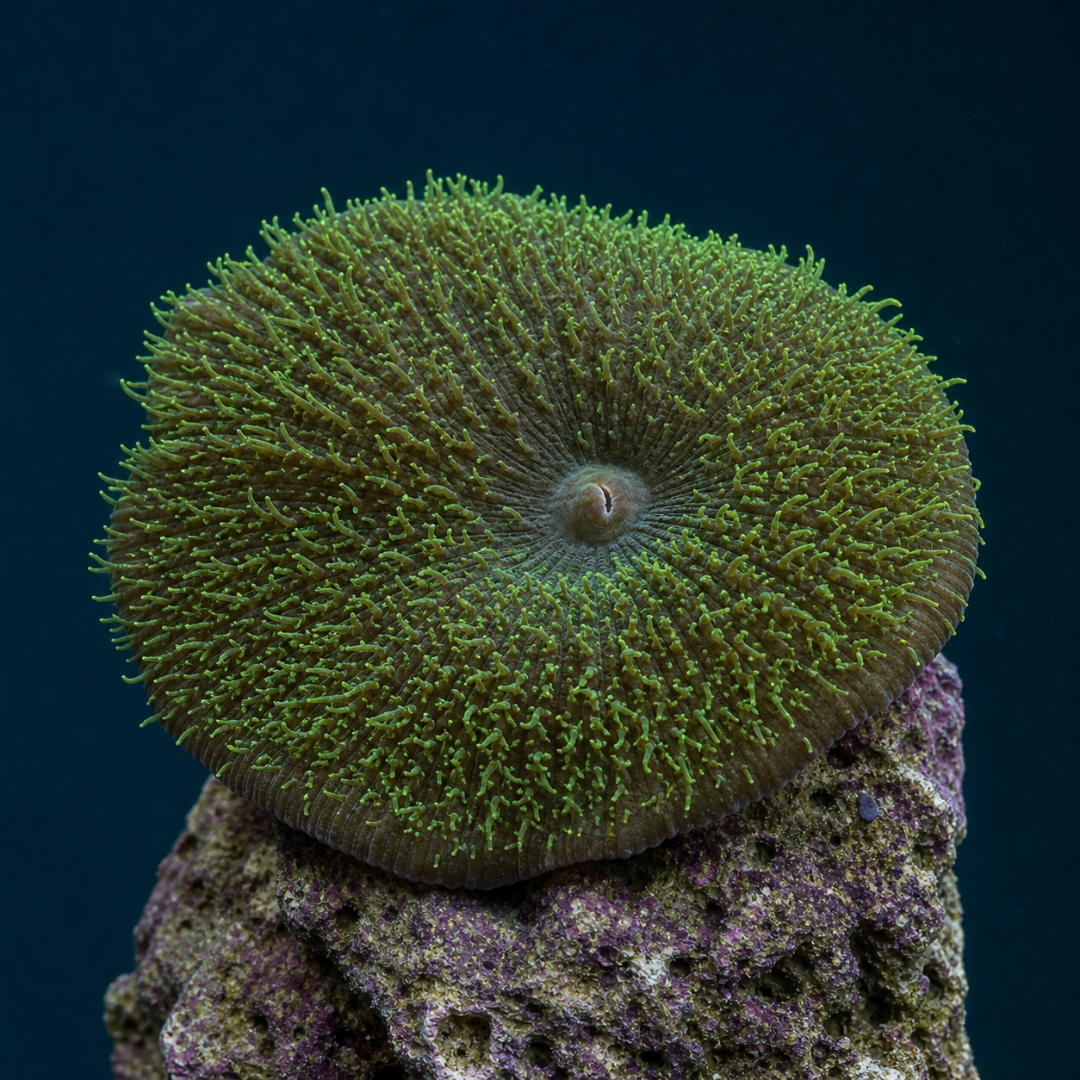
解説 / Description
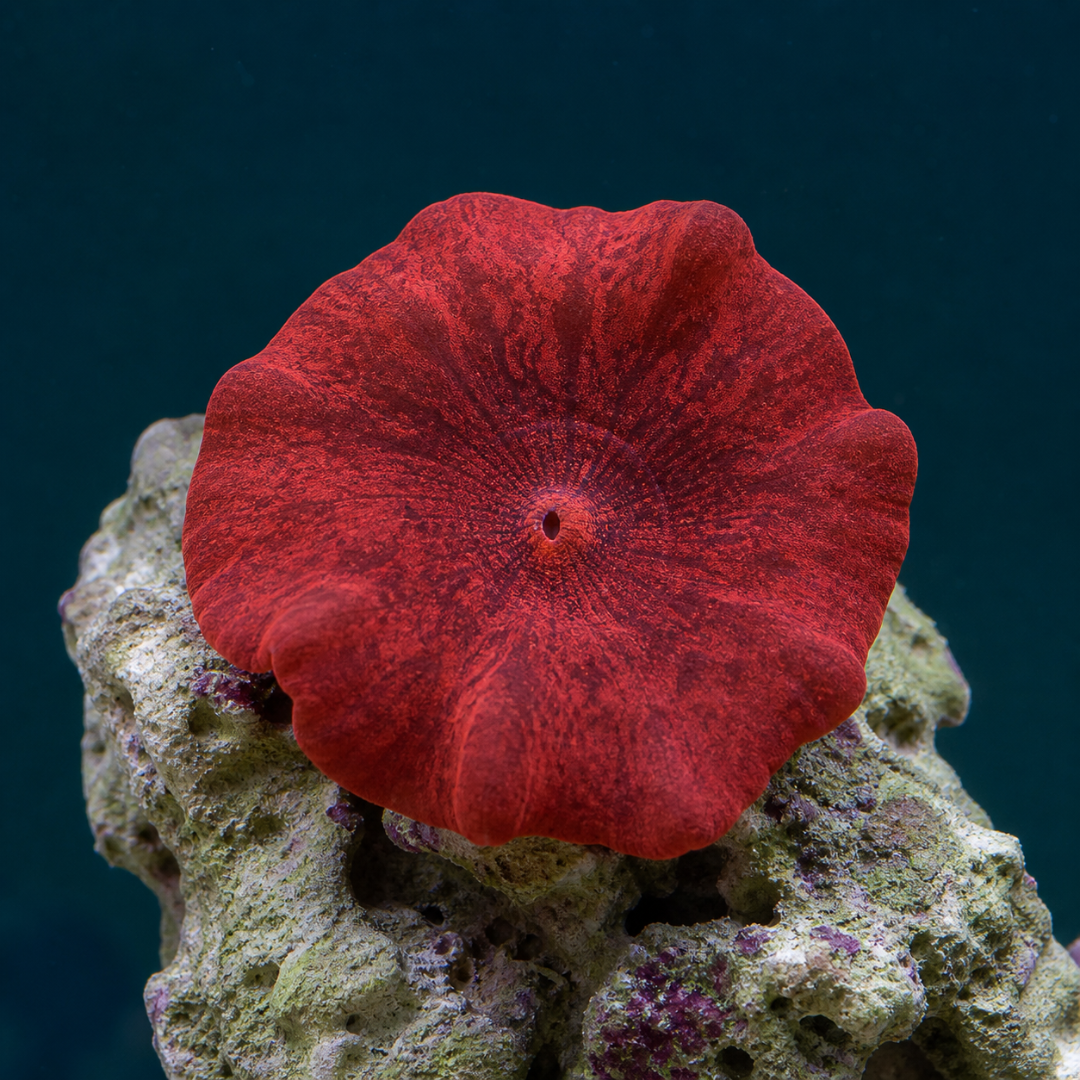
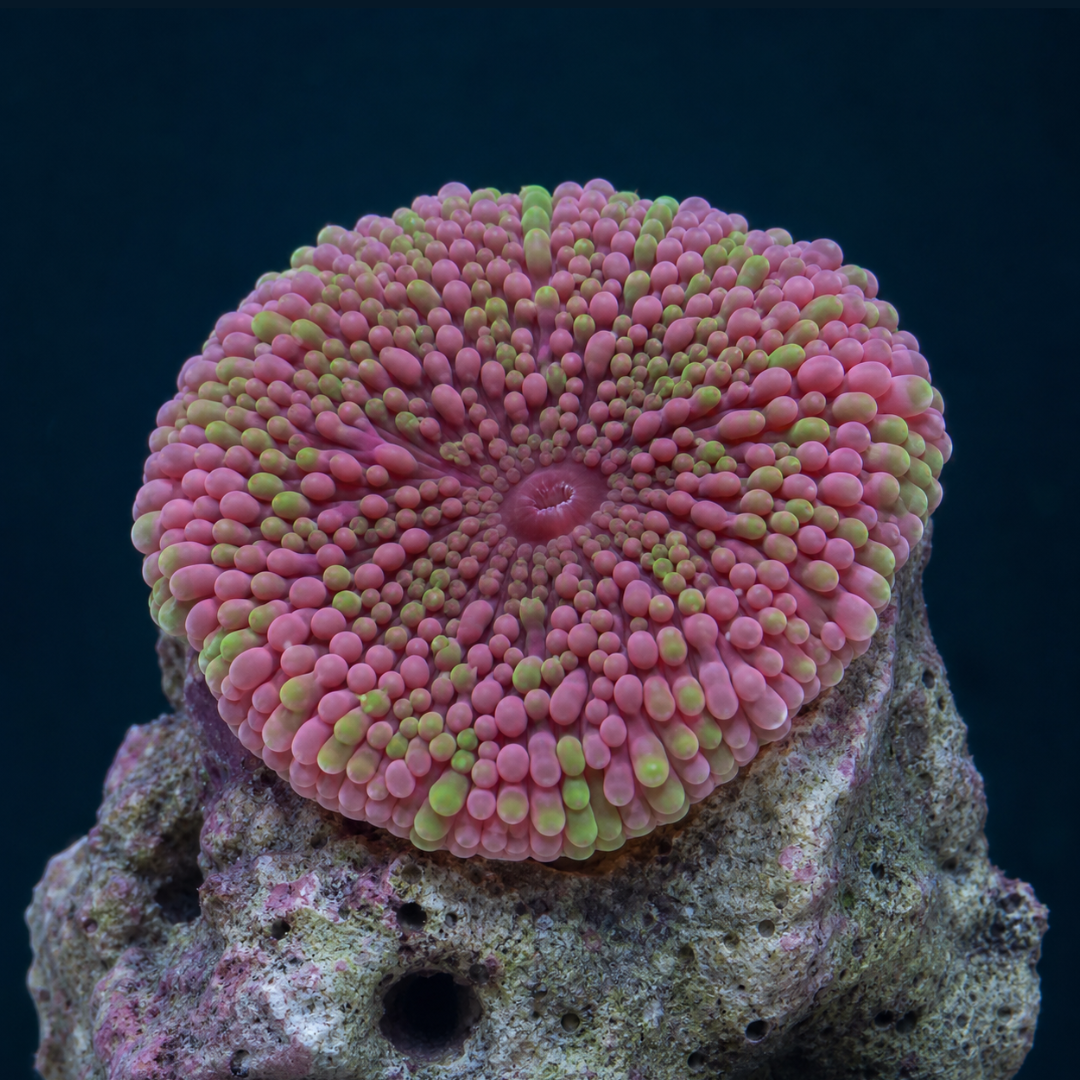
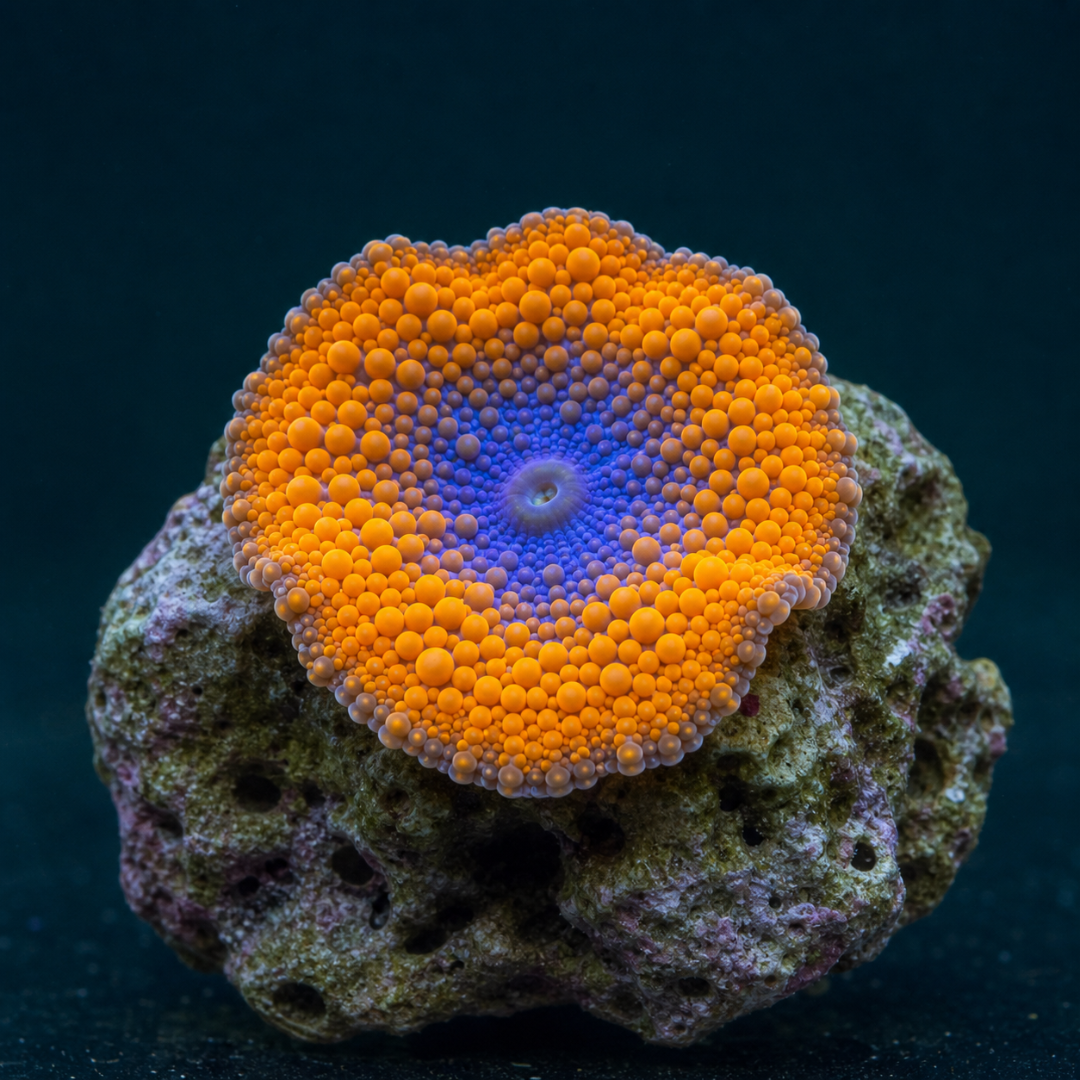
ディスクコーラルは、円盤状に広がる柔らかな体と、赤、緑、青、オレンジなどの豊かな色彩で親しまれている海産の刺胞動物です。英語圏ではマッシュルームコーラルと呼ばれますが、キノコそのものではなく、イソギンチャクモドキ目に属します。骨格を作らないため柔らかく、岩に足盤を密着させて暮らします。一般的なディスコソマ、毛羽立った触手を持つロダクティス、球状の突起が並ぶリコルデアなどが国内で流通し、丈夫さと個体ごとの模様の違いから、初めてのサンゴにもコレクションにも向く存在です。ただし、強すぎる光や水流を避け、急な環境変化を起こさないことが、美しい口盤を大きく開かせる基本になります。 Disc corals are marine cnidarians admired for their soft, round oral discs and their broad range of red, green, blue, orange, and multicolored patterns. Commonly called mushroom corals, they are not fungi but members of the order Corallimorpharia. They lack a hard skeleton and attach to rock with a muscular pedal disc. The aquarium trade commonly includes smooth Discosoma, textured Rhodactis, and bubble-covered Ricordea. Their resilience and highly individual coloration make them suitable both for first-time coral keepers and dedicated collectors. Their best form is maintained by avoiding excessive light, direct flow, and sudden environmental changes.
基本情報 / Basic Information
| 学名 / Scientific Name | Corallimorpharia spp. (主な流通属:Discosoma、Rhodactis、Ricordea) (major aquarium genera include Discosoma, Rhodactis, and Ricordea) |
|---|---|
| 通称・英名 / Common and English Names | ディスクコーラル、マッシュルームコーラル、バブルディスク、ロダクティス、リコルデア。膨らんだ小胞が目立つロダクティスは、バウンスマッシュルームの名で流通することがあります。Mushroom coral, disc coral, corallimorph, Rhodactis mushroom, Ricordea, and bounce mushroom for selected Rhodactis forms with enlarged vesicles. |
| 分類 / Classification | 刺胞動物門、花虫綱、六放サンゴ亜綱、イソギンチャクモドキ目。イシサンゴ目に近縁ですが、石灰質の骨格を形成しません。Phylum Cnidaria, class Anthozoa, subclass Hexacorallia, order Corallimorpharia. They are close relatives of stony corals but do not produce a massive calcareous skeleton. |
| 分布 / Distribution | 熱帯から温帯の海域に広く分布し、多くは浅いサンゴ礁の岩陰、斜面、礁池などに付着します。Ricordea floridaはカリブ海周辺、Ricordea yumaはインド太平洋に分布します。属や種によって、明るい浅場から陰になる場所まで生息環境は幅広くなります。Widely distributed in tropical and temperate seas, usually attached to reef rock, shaded ledges, slopes, and lagoons. Ricordea florida occurs around the Caribbean, while Ricordea yuma is Indo-Pacific. Habitat ranges from illuminated shallows to comparatively shaded areas depending on genus and species. |
| 最大サイズ / Maximum Size | 口盤径は一般的な小型個体で約3~8cm、大型のロダクティスでは10~20cm前後に達することがあります。環境、給餌、系統による差が大きく、複数個体が広がると岩面を面状に覆います。The oral disc is commonly about 3–8 cm across, while large Rhodactis can reach roughly 10–20 cm. Size varies substantially with lineage, feeding, and environment, and expanding colonies may cover broad areas of rock. |
| 寿命 / Lifespan | 野生下の個体寿命を一律に示す資料は乏しく、詳細は不明です。安定した水槽では同じクローン系統を長期間維持でき、足盤裂断や分裂で世代をつなぐため、群体としては長く残ります。A single universal lifespan is not well established. In a stable aquarium, a clonal line can persist for many years through pedal laceration and fission, allowing the colony to remain even as individual polyps change. |
飼育環境 / Aquarium Environment
| 水槽サイズ / Tank Size | 単独の小型フラグなら約30L以上、30cmキューブ水槽でも飼育できますが、水質の安定性を考えると45~60cm規格水槽、約40~60L以上が扱いやすい目安です。大型ロダクティスを複数育てる場合や他のサンゴと距離を確保する場合は、60cm規格水槽以上が安心です。A small frag can be kept from about 30 L, including a 30 cm cube, but a 45–60 cm standard aquarium of roughly 40–60 L or more is easier to stabilize. A 60 cm standard tank or larger is preferable for multiple large Rhodactis or for maintaining safe spacing from other corals. |
|---|---|
| 水温・比重 / Temperature and Specific Gravity | 水温24~26℃を中心に安定させ、短時間でも急激な上下を避けます。比重は1.023~1.026程度を目安とし、蒸発による上昇を足し水で補正します。購入個体は販売水との水温・比重差を確認し、ゆっくり水合わせします。Maintain a stable 24–26°C and avoid rapid swings. A specific gravity of about 1.023–1.026 is a practical range, with evaporative increases corrected by freshwater top-off. Check the difference between store water and aquarium water and acclimate new specimens gradually. |
| 水質 / Water Quality | pH8.0~8.4、KH7~10dKHを安定させます。骨格を作らないためカルシウム消費はイシサンゴほど大きくありませんが、海水水槽全体の安定のためカルシウム380~450mg/L、マグネシウム1250~1400mg/L程度を保つと管理しやすくなります。硝酸塩とリン酸塩を完全なゼロに固定するより、少量の栄養塩が継続して存在する環境のほうが萎縮を防ぎやすい傾向があります。目安として硝酸塩1~10mg/L程度、リン酸塩0.02~0.1mg/L程度から、生体の開き方と藻類の発生を見ながら調整します。Keep pH around 8.0–8.4 and alkalinity near 7–10 dKH. Although they consume less calcium than stony corals, maintaining roughly 380–450 mg/L calcium and 1250–1400 mg/L magnesium supports overall reef stability. Rather than forcing nitrate and phosphate to absolute zero, a consistently detectable low nutrient level often helps prevent chronic shrinking. A practical starting range is about 1–10 mg/L nitrate and 0.02–0.1 mg/L phosphate, adjusted according to polyp expansion and nuisance algae. |
| 光量 / Lighting | 弱~中光量が基本で、目安は30~150 PARです。導入直後や輸送で縮んだ個体は30~50 PAR程度から始め、通常は50~150 PARの範囲で様子を見ます。150 PARを超える場所では、色抜け、収縮、白化が起きないか慎重に観察してください。最初は水槽下部や岩陰に置き、1~2週間かけて少しずつ明るい場所へ移すと安全です。Low to moderate light is generally suitable, approximately 30–150 PAR. Newly introduced or transport-stressed specimens can begin near 30–50 PAR, while 50–150 PAR is a common long-term range. Above 150 PAR, watch closely for paling, contraction, or bleaching. Start low or partially shaded and increase exposure gradually over one to two weeks. |
| 水流 / Water Flow | 弱めから中程度の、間接的で不規則な流れが適します。口盤の縁がわずかに揺れ、表面に汚れが積もらない程度が目安です。ポンプの直線的な強い水流を当てると、口盤がめくれ、足盤が剥がれたり、漂流してポンプに巻き込まれたりすることがあります。Use gentle to moderate, indirect, irregular flow. The edge of the disc should move slightly while debris is kept from settling. A strong direct jet can fold the tissue, detach the pedal disc, or send the animal drifting toward a pump. |
| レイアウト・配置 / Layout and Placement | 水槽下部から中層の、穏やかな水流が当たる岩面が基本です。購入時に小石やフラグプラグへ活着している場合は、その土台ごと安定した場所に固定します。未活着の個体は接着剤で無理に押さえ込まず、小粒のサンゴ砂や瓦礫を入れた浅い容器で足盤が自然に付着するのを待つ方法が安全です。増殖後に周囲へ広がるため、他のサンゴとの間隔を最初から確保します。Place them on stable rock in the lower to middle area where flow is gentle. If the specimen is attached to rubble or a frag plug, secure the base rather than the soft tissue. For an unattached polyp, avoid forcing it down with glue; instead, place it in a shallow container with coarse coral sand or rubble until the pedal disc attaches naturally. Allow space for future spreading. |
| 注意点 / Precautions | 急な強光、比重変化、高水温、直接水流が主な失敗原因です。剥がれた個体が吸水口へ入らないようポンプガードを使用し、砂や沈殿物が口盤に積もったときはスポイトでやさしく吹き飛ばします。購入後しばらく開かなくても、状態が悪化していなければ頻繁に位置を変えず、数日単位で反応を見ます。The most common problems are sudden bright light, salinity change, overheating, and direct flow. Use pump guards so detached animals cannot enter an intake, and gently blow accumulated sand or debris away with a pipette. A newly purchased polyp may remain closed for a while; unless its condition is actively worsening, avoid moving it repeatedly and evaluate changes over several days. |
餌と給餌 / Feeding
| 栄養の得方・餌 / Nutrition and Diet | 多くの流通種は体内の共生褐虫藻が作る光合成産物を利用し、海水中の溶存有機物や微小な生物も栄養源にします。追加給餌には、細かくしたイサザアミ、細粒の海水魚用人工飼料、適度な粒径のサンゴ用フードなどが使えます。液体の濁りだけより、口で包み込める小さな固形物のほうが摂食反応を確認しやすい傾向があります。Most aquarium forms host symbiotic dinoflagellates and use their photosynthetic products, while also taking advantage of dissolved organics and small prey. Supplemental foods include finely chopped mysid shrimp, small marine fish pellets, and appropriately sized coral foods. A small solid particle that can be enclosed by the oral disc often produces a clearer feeding response than cloudy liquid alone. |
|---|---|
| 給餌のポイント / Feeding Tips | 通常は無給餌でも維持できますが、成長や分裂を促したい場合は週1~2回、少量を口付近へ与えます。水流を数分だけ弱め、餌が口盤にとどまるようにします。大きすぎる餌は吐き出しや組織の傷みにつながるため、口径より十分小さくします。食べ残しは取り除き、過剰給餌による硝酸塩・リン酸塩の上昇を避けます。They can usually be maintained without direct feeding, but one or two small feedings per week may encourage growth and division. Reduce flow briefly so the food remains on the disc. Food should be much smaller than the mouth; oversized pieces may be rejected or damage tissue. Remove leftovers and avoid nutrient accumulation from overfeeding. |
性質と相性 / Characteristics and Compatibility
| 形態・成長 / Form and Growth | 石灰質の骨格を持たず、柔らかな口盤と足盤で構成されます。ディスコソマは比較的滑らかで平たい形、ロダクティスは毛羽立つような触手や小胞が目立つ形、リコルデアは球状の突起が密に並ぶ形が代表的です。ディスコソマとロダクティスは移動時に足盤の一部を残す足盤裂断で増えやすく、リコルデアでは縦分裂もよく見られます。環境が合うと岩面を徐々に覆い、想定以上に広がることがあります。They lack a mineral skeleton and consist of a soft oral disc and pedal disc. Discosoma is usually flatter and smoother, Rhodactis often has a fuzzy or vesicular surface, and Ricordea is densely covered in rounded vesicles. Discosoma and Rhodactis commonly multiply by leaving pedal tissue behind as they move, while longitudinal fission is also frequent in Ricordea. Under favorable conditions, they may spread across rock more extensively than expected. |
|---|---|
| 攻撃性 / Aggression | 長いスイーパー触手は通常見られませんが、口盤の刺胞、接触、粘液、化学的な作用によって隣接するサンゴへ損傷を与えることがあります。大型ロダクティスや密集した群体は特に空間競争が強く、接触したイシサンゴの組織が後退する場合があります。種類と大きさに応じて、少なくとも5~10cm程度の間隔を取り、成長後も接触しないよう調整します。They generally do not produce long sweeper tentacles, but their nematocysts, physical contact, mucus, and chemical interactions can damage neighboring corals. Large Rhodactis and dense colonies can be strong space competitors and may cause tissue recession in stony corals. Keep at least about 5–10 cm of separation, increasing it for larger forms and future growth. |
| 相性 / Compatibility | 穏やかな海水魚や多くの無脊椎動物と同居できますが、サンゴをついばむチョウチョウウオ類、ヤッコ類の一部、組織を傷つけるカニ類などには注意します。他のサンゴとは接触を避けます。宿主イソギンチャクがいない水槽では、カクレクマノミが大型ロダクティスなどへ体を擦り付けて休むことがありますが、本来の宿主関係ではなく、頻繁な接触でディスクコーラルが縮む場合もあります。They are compatible with many peaceful marine fish and invertebrates, but caution is needed with coral-picking butterflyfish, some angelfish, and crabs that may damage tissue. Avoid contact with other corals. In the absence of a host anemone, clownfish may rest in a large Rhodactis, but this is not a normal obligate host relationship and repeated rubbing can cause the coral to remain contracted. |
病気と対策 / Diseases and Prevention
| 不調・病気・害虫 / Problems, Diseases, and Pests | 代表的な不調は、長期間の収縮、口の開き過ぎ、色抜け、白化、足盤の剥離、組織が崩れるような壊死です。高水温、急な比重変化、強光、強水流、輸送ストレス、切断後の傷口からの細菌感染が引き金になります。褐色の粘液状組織が広がる症状は早い対応が必要です。また、ヒラムシ類などが表面や土台に付着している場合があります。Common signs of trouble include prolonged contraction, a persistently gaping mouth, fading, bleaching, pedal detachment, and rapidly deteriorating tissue. Triggers include overheating, salinity swings, excessive light, direct flow, transport stress, and bacterial infection of a recent wound. A spreading brown, jelly-like mass requires prompt action. Flatworms and other hitchhikers may also occur on the tissue or base. |
|---|---|
| 対策と予防 / Prevention | まず水温、比重、pH、栄養塩、照明、水流を確認し、原因を一度に大きく変えず段階的に修正します。新規個体は観察用の隔離水槽で状態を確認し、必要に応じて市販のサンゴ用ディップ剤を製品の規定濃度と時間で使用します。壊死が進む場合は健康な組織まで余裕を持って切り分け、清潔な別容器で回復させます。ディップの種類や濃度を自己流で強くすると正常な組織まで傷めるため、製品表示を優先します。First check temperature, salinity, pH, nutrients, lighting, and flow, then correct the likely cause gradually rather than making several large changes at once. Observe new specimens in quarantine and, when appropriate, use a commercial coral dip strictly according to its labeled concentration and duration. If tissue loss continues, separate healthy tissue with a clean cut and recover it in a clean container. Excessively strong or improvised dipping can damage healthy tissue, so product directions take priority. |
増やし方(繁殖・株分け) / Reproduction and Propagation
| 無性生殖・株分け / Asexual Reproduction and Fragmentation | 自然には足盤裂断や縦分裂で増えます。人為的なフラグ化では、十分に健康で開いている親株を清潔な刃物で放射状に切り分けます。各片に口の一部が含まれるようにすると回復が早く、成功率も高くなります。柔らかい組織は接着剤で直接固定しにくいため、細かな瓦礫を入れた容器やネットで流出を防ぎ、自然に小石へ活着させてからフラグプラグへ固定する方法が安定します。They naturally reproduce by pedal laceration and longitudinal fission. For deliberate fragmentation, select a fully expanded, healthy parent and divide it radially with a clean, sharp blade. Recovery is generally faster when every piece includes part of the mouth. Because the soft tissue is difficult to glue directly, contain the pieces with rubble in a shallow cup or under loose mesh, allow natural attachment to a small stone, and then secure that stone to a frag plug. |
|---|---|
| 有性生殖 / Sexual Reproduction | イソギンチャクモドキ類では有性生殖も行われ、種によって雌雄のあり方や放卵放精の様式が異なります。ただし、一般的な家庭水槽で受精から幼生の定着までを計画的に再現する方法は確立が難しく、流通個体の増殖は主に無性生殖とフラグ化によって行われます。Corallimorpharians also reproduce sexually, with reproductive mode and sex organization varying among species. However, reliably completing fertilization, larval development, and settlement in a home aquarium is difficult, so aquarium propagation relies mainly on asexual reproduction and fragmentation. |
| 増殖のポイント / Propagation Tips | 親株が縮んでいるとき、購入直後、高水温期、水質が不安定なときは作業を避けます。刃物、容器、ピンセットを洗浄し、切断は迷わず一度で行って組織の潰れを減らします。回復中は弱めの水流と50~100 PAR程度の控えめな光を与え、粘液が滞留しないよう酸素供給を確保します。切断片が安定して開き、傷口が閉じるまでは給餌を急がず、異常な粘液や壊死がないか毎日観察します。Do not cut a contracted, newly imported, heat-stressed, or otherwise unstable specimen. Clean the blade, container, and tools, and make a decisive single cut to minimize crushing. During recovery, provide gentle flow, modest light around 50–100 PAR, and adequate oxygen so mucus does not stagnate. Delay feeding until the fragment opens reliably and the wound closes, and inspect daily for abnormal mucus or tissue loss. |
毒性と取り扱い / Toxicity and Handling
| 毒性 / Toxicity | 刺胞動物として刺胞と生理活性物質を持ち、接触した小動物や競合するサンゴへ作用します。一般的なディスクコーラルを、パリトキシンで知られるマメスナギンチャク類と同一視することはできませんが、種や個体ごとの毒性情報は十分ではありません。粘液や体液が目、口、傷口へ入ることは避けるべきです。As cnidarians, they possess nematocysts and bioactive compounds that affect prey and competing corals. Common mushroom corals should not automatically be equated with zoanthids known for palytoxin, but toxicity data are incomplete for many species and color forms. Mucus and tissue fluids should be kept away from eyes, mouth, and broken skin. |
|---|---|
| 取り扱い上の注意 / Handling Precautions | 移動、切断、ディップの作業ではニトリル手袋と保護眼鏡を使用し、顔を近づけず、換気のよい場所で扱います。作業中は飲食せず、使用した刃物や容器は他用途と分けて洗浄します。サンゴや付着岩を煮沸・加熱・電子レンジ処理しないでください。体液が目に入った場合や、作業後に強い痛み、腫れ、呼吸器症状などが現れた場合は、流水で洗浄し医療機関へ相談します。Wear nitrile gloves and eye protection when moving, cutting, or dipping specimens. Keep your face away from the work area, ensure ventilation, and do not eat or drink during handling. Clean tools and containers separately from household items. Never boil, heat, or microwave coral or attached rock. If fluid enters the eyes, or if severe pain, swelling, or respiratory symptoms occur, rinse with running water and seek medical advice. |
雑学と豆知識 / Trivia and Fun Facts
| 骨格を失ったサンゴではなかった / Not a Coral That Simply Lost Its Skeleton | ディスクコーラルは、骨格を失ったイシサンゴの末裔ではないかと考えられた時代があり、「裸のサンゴ」という仮説で語られてきました。ところが、核遺伝子を多数比較する系統解析が進むと、イシサンゴ目はまとまりのある単系統群で、イソギンチャクモドキ目はその姉妹群として位置づけられる見方が強く支持されました。現在は、ディスクコーラルが骨格を後から失ったというより、両者が分岐した後にイシサンゴ側で大きな石灰質骨格を作る仕組みが発達したと考えるほうが、遺伝子データと整合的です。水槽では柔らかく素朴に見える生き物が、サンゴの骨格進化を考える重要な比較対象になっています。Mushroom corals were once discussed under the “naked coral” hypothesis, which proposed that they descended from stony corals that had lost their skeleton. Broader analyses using many nuclear genes later strongly supported stony corals as a coherent monophyletic group, with corallimorpharians as a sister lineage. The current interpretation is therefore less about secondary skeleton loss and more about the stony-coral lineage evolving its extensive aragonite skeleton after the two groups diverged. The soft animal in an aquarium has consequently become an important reference point for understanding coral biomineralization. |
|---|---|
| 黎明期のリーフ水槽を支えた丈夫さ / Resilience That Supported Early Reef Aquaria | 生きたサンゴを家庭で長く維持することが難しかった時代、ライブロック、プロテインスキマー、強い照明を組み合わせたベルリンシステムが普及すると、ディスクコーラルは早い段階から水槽の主役になりました。当時は現在ほど精密な水流ポンプや測定機器が整っていませんでしたが、環境変化への適応幅が広いディスクコーラルは、愛好家に「サンゴが育つ水槽」を実感させました。初心者向けと呼ばれる丈夫さは、単なる扱いやすさではなく、近代リーフアクアリウムの技術が定着する過程を支えた歴史的な性質でもあります。When keeping living corals at home was still considered extremely difficult, the spread of the Berlin method—combining live rock, protein skimming, and strong lighting—gave mushroom corals an early place at the center of reef displays. Flow pumps and monitoring tools were far less refined than they are today, yet the broad tolerance of these animals allowed aquarists to experience a genuinely living coral aquarium. Their reputation for being beginner-friendly is therefore also part of the history of modern reef keeping. |
| 環境が変わるとサンゴ礁の勢力図を変える / Environmental Change Can Shift Reef Dominance | 自然のサンゴ礁では、ディスクコーラルは小さな脇役にとどまるとは限りません。栄養塩負荷や人為的な攪乱が起こると、耐性と増殖力を生かして急速に広がり、イシサンゴを覆うことがあります。パルミラ環礁では、座礁船から供給された鉄分と関連してロダクティスの一種が拡大し、周囲のイシサンゴへ大きな影響を与えた事例が知られています。水槽で他のサンゴと距離を取る必要があるのも、この空間競争の強さを小さな環境の中で再現しているためです。On a natural reef, corallimorpharians are not always minor background animals. Following nutrient enrichment or human disturbance, their tolerance and rapid clonal spread can allow them to overgrow stony corals. At Palmyra Atoll, the expansion of a Rhodactis species was associated with iron released from a grounded vessel and had major effects on nearby reef-building corals. The spacing required in an aquarium reflects the same capacity for intense competition on a smaller scale. |
| バウンスは色だけでなく形を楽しむコレクション / Bounce Mushrooms Are Collected for Form as Well as Color | ロダクティスの一部では、表面の小胞が風船のように大きく膨らむ個体が見られ、バウンスマッシュルームとして高い人気があります。蛍光色の組み合わせ、膨らみ方、口盤上の配置が一株ずつ異なるため、同じ流通名でも見え方は同一ではありません。高価な血統名だけを基準にせず、輸送後も小胞が保たれているか、足盤が安定しているか、口が開き過ぎていないかを確認することが、長く楽しめる個体選びにつながります。Some Rhodactis develop greatly enlarged, balloon-like vesicles and are sold as bounce mushrooms. Their fluorescent colors, vesicle size, and arrangement differ from specimen to specimen, so animals sharing a trade name may not look identical. Rather than relying only on an expensive lineage name, evaluate whether the vesicles remain inflated after transport, the pedal disc is secure, and the mouth is not persistently gaping. |
| リコルデア・フロリダとユマの見分け方 / Distinguishing Ricordea florida and Ricordea yuma | Ricordea floridaは口の周囲に突起が少ない空間が見えやすく、比較的扱いやすい種類として流通します。一方、Ricordea yumaは口のすぐ近くまで球状の突起が並び、放射状の配列が目立つ個体が多く、色彩のコントラストも強烈です。その美しさと引き換えに、輸送や導入直後の環境変化へ敏感な個体があり、最初から明るい場所に置かない慎重さが求められます。見分け方を知ることは、名前を当てるためだけでなく、導入時の管理を変える手がかりになります。Ricordea florida commonly shows a clearer, less-vesiculated area immediately around the mouth and is generally considered the more forgiving aquarium species. In Ricordea yuma, rounded vesicles often extend close to the mouth and form a more obvious radial pattern, frequently with intense color contrast. Some yuma specimens are sensitive to transport and rapid acclimation, so identification provides practical guidance for initial placement and care, not merely a name. |
| 輸入では生体より土台が規制対象になることがある / The Attached Base Can Matter More Than the Animal in Trade Rules | イソギンチャクモドキ目そのものは、イシサンゴ目のように石灰質骨格を作りません。しかし、海外から輸入される個体がイシサンゴ骨格やサンゴ由来のライブロックへ付着している場合、土台側が国際取引の規制対象として扱われる可能性があります。人工のフラグプラグへ完全に付け替えられた養殖個体と、天然のサンゴ骨格付き個体では、必要な書類や確認が同じとは限りません。商業輸入や海外からの個人購入では、生体名だけで判断せず、付着基質、原産国、輸出者の書類を含めて、事前に関係機関へ確認することが重要です。Corallimorpharians themselves do not form the calcareous skeleton characteristic of stony corals. However, an imported specimen attached to stony-coral skeleton or coral-derived live rock may be treated according to rules that apply to the base material. A fully aquacultured specimen on an artificial frag plug may therefore require different documentation from a wild specimen on natural coral substrate. Commercial importers and private buyers should verify the attachment material, origin, exporter documents, and current requirements with the relevant authorities before shipment. |
まとめ / Conclusion
ディスクコーラルは、弱~中程度の光、穏やかな間接水流、急変のない海水を用意すれば、柔らかな口盤を大きく広げて多彩な模様を見せてくれます。丈夫な種類が多い一方で、強光や直線的な水流には意外なほど敏感です。まずは控えめな位置から順応させ、他のサンゴとの距離を保つことが、長期飼育の要点になります。 Disc corals reward stable seawater, low to moderate light, and gentle indirect flow by expanding their soft oral discs and displaying vivid, individual patterns. Many are resilient, yet they can be surprisingly sensitive to direct current and sudden bright light. Starting conservatively and maintaining space from neighboring corals are the foundations of long-term success.
環境に慣れた個体が少しずつ移動し、足盤から小さな新個体を残していく姿には、骨格を持たない生き物ならではの変化があります。日々の開き方や色の変化を観察しながら、その個体に合う光と水流を探していく時間そのものが、ディスクコーラル飼育の大きな楽しみになります。 A settled specimen may slowly move and leave tiny new polyps behind, revealing a style of growth unique to a soft-bodied coral relative. Watching its daily expansion and color, then fine-tuning light and flow to suit that individual, becomes one of the most rewarding parts of keeping mushroom corals.
気になる道具や飼い方を見つけてみませんか?
 アイのアクアグッズ案内カルキ抜き・水質調整剤の選び方|水換えと水槽の種類に合わせて選ぶ道具の特徴や使い方、選ぶときのポイントをアイが紹介します。記事はコチラ →
 アイのアクアグッズ案内ベタの一匹飼いを楽しむ|水槽・ヒーター・ふた・フィルターの選び方ベタの一匹飼いに向く水槽容量、ふたと空気層、ヒーターと水温計、弱い水流のフィルターを、コタロウとアイの会話で分かりやすく解説します。記事はコチラ →
 アイのアクアグッズ案内ダニオの仲間に合わせる飼育用品|ゼブラダニオから超小型種まで水槽・ろ過・餌を選ぶ道具の特徴や使い方、選ぶときのポイントをアイが紹介します。記事はコチラ →
 アイのアクアグッズ案内水槽の底砂の選び方|砂・砂利の違いとおすすめ商品道具の特徴や使い方、選ぶときのポイントをアイが紹介します。記事はコチラ →
さまざまな飼育テーマをご紹介。リンク先の記事には広告・商品紹介が含まれます。
案内・紹介記事一覧へ →分布マップ
イソギンチャクモドキ目は熱帯から温帯、浅海から深海まで広く分布します。地図では、観賞用に多い暖海性ディスクコーラルの概略として、西部大西洋・カリブ海域とインド太平洋の範囲を示しています。表示地点と範囲は、実際の採集地点や厳密な生息範囲ではありません。
Google Earthで開く※この地図は記事の分布記述をもとにした概略表示です。マーカーは説明用の代表地点であり、実際の採集地点、個体の確認地点、厳密な生息範囲を示すものではありません。
参考文献
ディスクコーラルの記事に記載した分類、系統関係、分布、生息環境、光や水温への応答、繁殖、不調の見方、安全な取り扱いを確認するための資料です。店舗、通販サイト、個人ブログ、まとめサイトは含めず、分類データベース、査読論文、公的機関資料、専門書に限定しています。
飼育数値について
記事中のPAR、硝酸塩、リン酸塩、水槽サイズなどの具体的な数値は、複数の飼育資料と一般的なリーフ水槽管理をもとにした実用上の開始目安です。イソギンチャクモドキ目の全種に共通する最適値として、比較実験で確定されたものではありません。属、産地、共生藻、導入前の環境によって反応が異なるため、数値だけでなく、口盤の開き方、色、足盤の定着、組織の状態をあわせて判断する必要があります。
分類・系統・分布
-
Daly, M. & Fautin, D. G. World List of Corallimorpharia. World Register of Marine Species: Corallimorpharia.
分類階級、受容されている学名、科・属・種の位置づけを確認する基礎資料。
World Register of Marine Speciesで確認 -
Fautin, D. G. (2016). Catalog to families, genera, and species of orders Actiniaria and Corallimorpharia (Cnidaria: Anthozoa). Zootaxa, 4145(1), 1–449.
イソギンチャクモドキ目の科・属・種名、異名、原記載を整理した分類学的カタログ。
DOI: 10.11646/zootaxa.4145.1.1 -
Lin, M. F., Chou, W. H., Kitahara, M. V., Chen, C. L. A. & Miller, D. J. (2016). Corallimorpharians are not “naked corals”: insights into relationships between Scleractinia and Corallimorpharia from phylogenomic analyses. PeerJ, 4, e2463.
イシサンゴ目の単系統性と、イソギンチャクモドキ目が姉妹群に位置するという系統関係を支える資料。
DOI: 10.7717/peerj.2463 -
Fautin, D. G., Guinotte, J. M. & Orr, J. C. (2009). Comparative depth distribution of corallimorpharians and scleractinians (Cnidaria: Anthozoa). Marine Ecology Progress Series, 397, 63–70.
イソギンチャクモドキ目全体が浅海だけでなく深海にも分布することを示し、観賞用の浅海性グループとの区別を支える資料。
DOI: 10.3354/meps08271 -
Torres-Pratts, H., Lado-Insua, T., Rhyne, A. L., Rodríguez-Matos, L. & Miller, D. J. (2011). Two distinct, geographically overlapping lineages of the corallimorpharian Ricordea florida (Cnidaria: Hexacorallia: Ricordeidae). Coral Reefs, 30, 391–396.
Ricordea floridaのカリブ海域における分布と遺伝的多様性を支える資料。
DOI: 10.1007/s00338-010-0709-z
生息環境・生態・飼育条件
-
Kuguru, B., Winters, G., Beer, S., Santos, S. R. & Chadwick, N. E. (2007). Adaptation strategies of the corallimorpharian Rhodactis rhodostoma to irradiance and temperature. Marine Biology, 151, 1287–1298.
光量と水温への生理的応答、環境順応、強光や温度ストレスを段階的に考える根拠となる資料。記事中の特定PAR値そのものを全種の最適値として示す研究ではありません。
DOI: 10.1007/s00227-006-0589-5 -
Muhando, C. A., Kuguru, B. L., Wagner, G. M., Mbije, N. E. & Öhman, M. C. (2002). Environmental effects on the distribution of corallimorpharians in Tanzania. Ambio, 31(7–8), 558–561.
濁度、栄養負荷、人為的攪乱とイソギンチャクモドキ類の優占との関連を検討した資料。富栄養環境を飼育上の推奨条件とするものではありません。
PubMedで確認 -
Work, T. M., Aeby, G. S. & Maragos, J. E. (2008). Phase shift from a coral to a corallimorph-dominated reef associated with a shipwreck on Palmyra Atoll. PLoS ONE, 3(8), e2989.
Rhodactis howesiiのクローン増殖、イシサンゴの被覆、直接接触による組織障害を支える資料。座礁船由来の鉄が原因であることを単独で実証した研究ではありません。
DOI: 10.1371/journal.pone.0002989 -
Borneman, E. H. (2001). Aquarium Corals: Selection, Husbandry, and Natural History. Microcosm / T.F.H. Publications, 464 pp.
ディスコソマ、ロダクティス、リコルデアを含む観賞用刺胞動物の形態、光、水流、給餌、配置、相性、増殖を総合的に扱う専門書。ISBN 978-1-890087-47-0。
WorldCat書誌情報 -
Delbeek, J. C. & Sprung, J. (1997). The Reef Aquarium: A Comprehensive Guide to the Identification and Care of Tropical Marine Invertebrates, Volume Two. Ricordea Publishing, 546 pp.
イソギンチャク、ソフトコーラル、イソギンチャクモドキ類の照明、水流、給餌、固定、混泳・接触管理を扱う飼育専門書。ISBN 978-1-883693-13-8。
WorldCat書誌情報
繁殖・増殖
-
Chen, C. A., Chen, C. P. & Chen, I. M. (1995). Sexual and asexual reproduction of the tropical corallimorpharian Rhodactis (= Discosoma) indosinensis (Cnidaria: Corallimorpharia) in Taiwan. Zoological Studies, 34(1), 29–40.
分裂などの無性生殖と、放卵放精を含む有性生殖を扱った原著論文。属や種によって繁殖様式が異なることを確認する資料。
Zoological Studies掲載PDF -
Kaposi, K. L., Courtney, R. L. & Seymour, J. E. (2023). A note on the sexual reproductive biology of Ricordea yuma (Corallimorpharia). Coral Reefs, 42, 755–760.
Ricordea yumaが雌雄異体で、体外受精を行う放卵放精型である可能性を示した資料。足盤裂断、周縁出芽、縦分裂など、既報の無性生殖様式も整理されています。
DOI: 10.1007/s00338-023-02382-8
病気・不調の見方・取り扱い上の注意
-
Work, T. M. & Aeby, G. S. (2006). Systematically describing gross lesions in corals. Diseases of Aquatic Organisms, 70, 155–160.
白化、変色、組織損失などの外見的所見と、病因の診断を分けて考える必要性を示す資料。水槽内で組織が崩れた際に、外見だけで細菌感染などと断定しない記述の根拠です。
DOI: 10.3354/dao070155 -
Hamade, A. K. et al. (2015). Suspected palytoxin inhalation exposures associated with zoanthid corals in aquarium shops and homes—Alaska, 2012–2014. Morbidity and Mortality Weekly Report, 64(31), 852–855. U.S. Centers for Disease Control and Prevention.
付着岩に混在し得るマメスナギンチャク類を熱湯処理・加熱しないこと、切断や移動時に飛沫・エアロゾルへ注意することを支える公衆衛生資料。この報告はマメスナギンチャク類を対象としており、一般的なディスクコーラル自体がパリトキシンを含む証拠として引用するものではありません。
CDC MMWRで確認
最終確認日:2026年7月30日。分類名やオンラインデータベースの内容は更新されることがあるため、学名を厳密に扱う場合はWoRMSの最新版もあわせて確認してください。

コメント