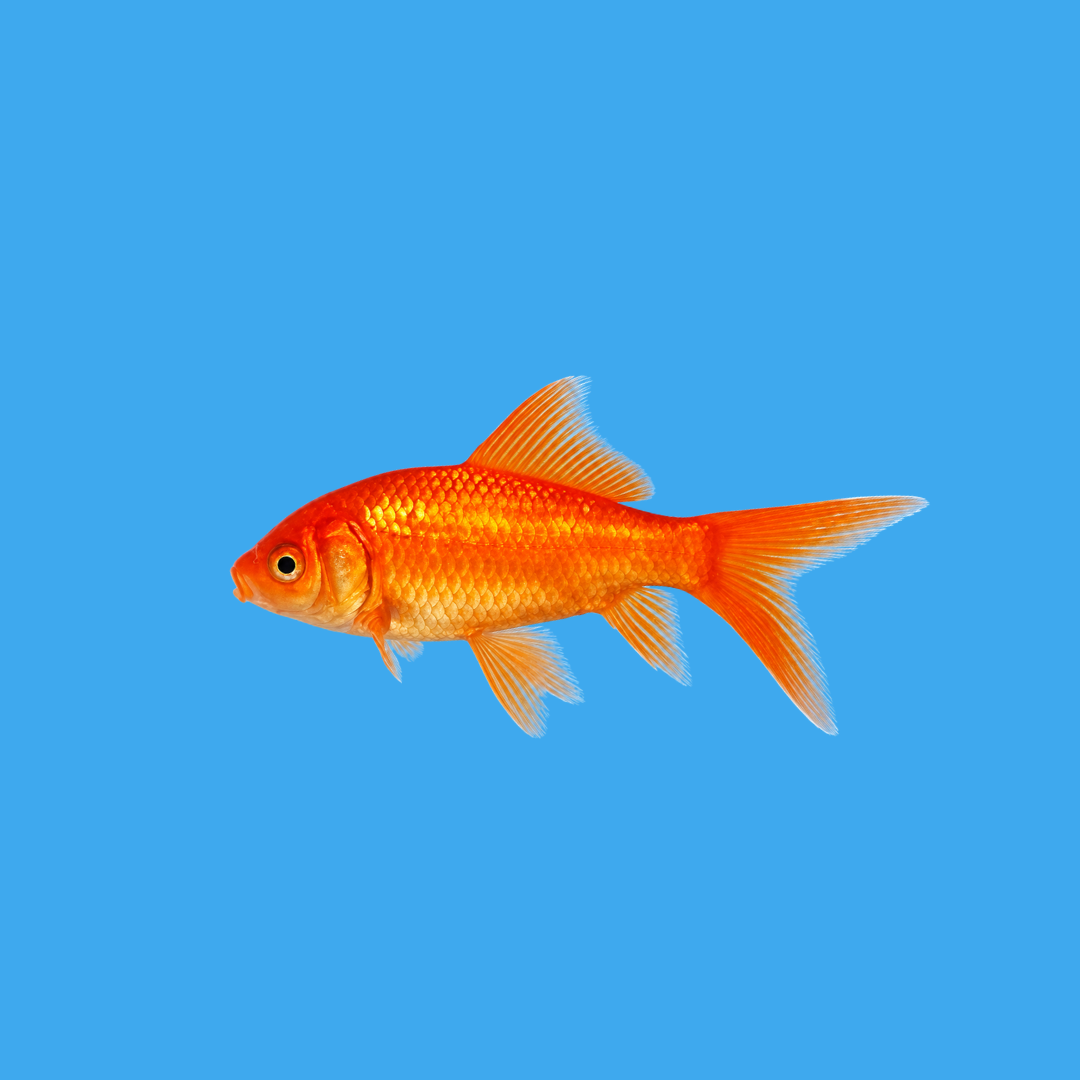
コメットは、キンギョの中でもフナ型・和金型に近い細長い体と、深く分かれて長く伸びる一枚尾を組み合わせた品種です。泳ぐたびに尾鰭が後方へ吹き流しのようになびき、その姿が彗星の尾を思わせることから「Comet」と呼ばれるようになったと伝えられています。日本では赤白の更紗模様が代表的ですが、赤、白、黄色から黄金色、黒色などの流通タイプも見られます。丈夫な金魚として扱われることが多い一方、実際にはよく泳ぎ、成長すると25cm前後、条件によってはさらに大きくなるため、長期飼育には十分な水量と遊泳距離が欠かせません。小さな幼魚の姿だけで将来の設備を決めず、成魚になったときの大きさと寿命を見越して飼育環境を整えることが、コメット本来の魅力を引き出す近道です。The Comet is a goldfish variety characterized by a slender, wild-type or Wakin-like body combined with a long, deeply forked single tail. As it swims, the caudal fin streams behind the fish like the tail of a comet, which is the traditional explanation for the name “Comet.” In Japan, red-and-white Sarasa patterning is especially familiar, although red, white, yellow to golden, and black market forms are also seen. Comets are often described as hardy goldfish, but they are also active swimmers that can reach around 25 cm in aquaria and may grow even larger under favorable conditions. Their adult size, swimming ability, and long potential lifespan make generous water volume and swimming space far more important than their usually small size at the time of purchase might suggest.
基本情報 / Basic Information
学名 / Scientific Name
Carassius auratus (Linnaeus, 1758)
通称 / Common Name
コメット、更紗コメット、長尾コメットなど。黄色系はゴールデンコメット、イエローコメット、黒色系はブラックコメットなどの商品名で流通することがあります。Comet, Sarasa Comet, long-fin or long-tail Comet. Yellow or golden forms may be sold as Golden Comet or Yellow Comet, while dark forms may be marketed as Black Comet.
分類 / Family
コイ目・コイ科・フナ属。コメットは独立種ではなく、キンギョ Carassius auratus の飼育品種です。Order Cypriniformes, family Cyprinidae, genus Carassius. The Comet is a domesticated variety of the goldfish Carassius auratus, not a separate species.
英名 / English Name
Comet goldfish / Comet
分布 / Distribution
原種としての野生分布をもつ魚ではなく、19世紀後半に米国で成立したとされるキンギョ品種です。現在は日本を含む世界各地で養殖・流通しています。The Comet is not a naturally occurring wild population but a domesticated goldfish variety believed to have been established in the United States in the late 19th century. It is now bred and traded in Japan and many other parts of the world.
最大体長 / Max Size
水槽飼育でも全長25cm前後に達する可能性があります。良好な環境では30cmを超える個体も想定され、キンギョ全体では40cmを超える例も知られています。Around 25 cm total length is possible even in aquaria. Well-grown individuals may exceed 30 cm, and exceptionally large goldfish of more than 40 cm are known.
寿命 / Lifespan
適切な環境では10~15年程度が一つの目安です。飼育条件によってはさらに長生きする可能性があります。About 10–15 years is a useful general guideline under suitable care, with the possibility of a longer lifespan under favorable conditions.
飼育環境 / Aquarium Environment
水槽サイズ / Tank Size
幼魚1匹であれば60cm規格水槽から始めることはできますが、これは成長途中の暫定的な環境と考えるのが安全です。終生飼育は90×45×45cm級の90cm規格水槽、実水量150~180L前後以上を基本にし、複数の成魚では120cm規格水槽または120cmワイド水槽、十分な容量の庭池を検討します。コメットは遊泳性が高いため、水量だけでなく横方向の泳げる距離も重視してください。A juvenile can be started in a standard 60 cm aquarium, but this should be regarded as temporary growing space rather than a lifetime setup. For long-term adult care, a 90 × 45 × 45 cm class aquarium of roughly 150–180 L or more is a practical baseline. Multiple adults are better suited to a 120 cm standard or wide aquarium, or to a suitably sized outdoor pond. Because Comets are active swimmers, horizontal swimming distance matters as much as total water volume.
水温 / Temperature
日常飼育では15~23℃前後の安定した範囲が扱いやすい目安です。キンギョはより広い温度帯に耐えることがありますが、急激な変化を避けることを優先します。A stable range of approximately 15–23°C is practical for routine care. Goldfish can tolerate a broader range, but avoiding rapid temperature changes is more important than aiming for extremes.
水質 / Water Quality
pH6.5~8.0前後を実務的な中心とし、極端な変動を避けます。参考範囲としてpH6.0~8.0、GH5~19°dH程度が挙げられます。アンモニアと亜硝酸は0mg/Lを維持し、硝酸塩は定期的な部分換水でできるだけ低く保ちます。排泄量が多いため、十分なろ材量を備えた生物ろ過と強めの酸素供給が重要です。A practical target is around pH 6.5–8.0 with minimal fluctuation; a broader reference range of pH 6.0–8.0 and GH 5–19°dH is often cited for goldfish. Ammonia and nitrite should remain at 0 mg/L, while nitrate should be kept as low as practical through regular partial water changes. Because goldfish produce substantial waste, generous biological filtration and good aeration are essential.
レイアウト / Layout
中央から前面に広い遊泳空間を確保し、底床や装飾は掃除しやすさを優先します。長い尾鰭を傷つけないよう、尖った石や粗い人工物は避けてください。水草を入れる場合は、食害や掘り返しを受ける可能性を考え、丈夫な種類を選ぶか、植栽を保護できる配置にします。上部式・大型外掛け式・外部式など、飼育数に見合うろ過とエアレーションを組み合わせると安定しやすくなります。Keep a broad open swimming area through the center and front of the aquarium, and prioritize easy cleaning. Avoid sharp rocks or rough ornaments that could tear the long fins. If live plants are used, choose robust species or protect the planting because goldfish may nibble or uproot them. Pair suitably sized filtration, such as overhead, large hang-on-back, or canister filtration, with additional aeration as needed.
注意点 / Precautions
販売時の5~8cmほどの幼魚サイズを成魚サイズと考えないことが最も重要です。過密、過給餌、ろ過不足は水質悪化と疾病リスクを急速に高めます。新しい個体は既存魚へすぐ混ぜず、健康状態を観察してから合流させます。屋外飼育では夏の高水温、冬の急な冷え込み、落ち葉、捕食者、ポンプ停止などにも備えてください。飼育できなくなっても河川や池へ放流してはいけません。The most important point is not to mistake the common 5–8 cm retail size for adult size. Overstocking, overfeeding, and insufficient filtration can quickly lead to poor water quality and disease. New fish should be observed separately before being introduced to an established group. Outdoor keepers should also plan for summer heat, sudden winter cooling, fallen leaves, predators, and pump failure. Unwanted goldfish must never be released into natural waterways or public ponds.
餌と給餌 / Feeding
餌の種類 / Diet
主食は品質のよい金魚用ペレットまたはフレークが適します。補助的に、冷凍・生餌のミジンコやブラインシュリンプ、加熱して柔らかくした植物質の餌などを組み合わせると食性に変化をつけられます。成長段階に応じて粒径を調整し、仔魚には口に入る微細な餌を使います。A good-quality goldfish pellet or flake is suitable as the staple diet. Frozen or live foods such as daphnia and brine shrimp, along with small amounts of softened vegetable-based foods, can be used as supplements for variety. Match food size to the fish’s growth stage, using very fine foods for newly free-swimming fry.
給餌のポイント / Feeding Tips
成魚は1日1回程度から始め、数分で食べ切れる量を基準に体格、水温、活動量に合わせて調整します。稚魚や成長期は少量を複数回に分ける方法も有効ですが、回数を増やすほど排泄物とアンモニア負荷も増えるため、ろ過能力と換水頻度を同時に見直してください。低水温期は代謝と食欲が落ちるため、通常期と同じ量を機械的に与えないことが大切です。For adults, start with roughly one feeding per day and offer only what can be consumed within a few minutes, adjusting for body condition, temperature, and activity. Juveniles can benefit from several small feedings during rapid growth, but more frequent feeding also increases waste and ammonia load, so filtration and water-change frequency must keep pace. In colder periods, metabolism and appetite decline, so feeding should be reduced rather than continued at warm-season levels.
性格と混泳 / Temperament and Tank Mates
性格 / Temperament
基本的には温和で、人に慣れると餌を求めて近寄ってくることも多い金魚です。ただし泳ぎは非常に活発で、餌への反応も素早いため、ゆっくり泳ぐ品種と同じ水槽では結果的に相手の採餌を妨げることがあります。繁殖期には雄が雌を強く追尾するため、狭い水槽では雌への負担にも注意が必要です。Comets are generally peaceful and often become responsive to their keeper, readily approaching at feeding time. However, they are very active and quick to food, which can unintentionally disadvantage slower goldfish varieties. During the breeding season, males may chase females persistently, so limited space can increase stress on females.
混泳の相性 / Compatibility
和金、朱文金など、同程度の体格と遊泳力をもつ単尾系金魚とは比較的合わせやすい組み合わせです。一方、らんちゅう、オランダ獅子頭など泳ぎの遅い丸手の金魚とは、餌の競争や接触による負担が起きやすいため、長期的には分けて飼う方が管理しやすくなります。熱帯魚とは適温や食性、活動性が異なるため、基本的には金魚同士での飼育を勧めます。口に入るほど小さな魚や、鰭をかじる習性のある魚との混泳も避けます。Comets are comparatively easy to keep with similarly sized, similarly active single-tailed goldfish such as Wakin and Shubunkin. Slow, deep-bodied fancy goldfish such as Ranchu or Oranda may be outcompeted for food or stressed by constant contact, so separate long-term housing is often easier to manage. Tropical fish generally differ in preferred temperature, feeding, and activity, so keeping Comets with other suitable goldfish is usually the safer approach. Avoid very small fish that could be swallowed and species known to nip fins.
病気と対策 / Diseases and Prevention
かかりやすい病気 / Common Diseases
白点病、尾ぐされ病、水カビ病、赤斑を伴う細菌性感染症、松かさ状の症状などが金魚でよく問題になります。コメットは尾鰭が長いため、尖った装飾物や網による裂傷が二次感染の入口になることにも注意が必要です。また、生産・流通段階ではキンギョヘルペスウイルス性造血器壊死症(CyHV-2)など、防疫上重要な感染症も知られています。Common goldfish health problems include white spot disease, fin rot, fungal infections, bacterial disease with redness or ulcers, and conditions that produce pinecone-like raised scales. Because Comets have long fins, tears caused by sharp decorations or rough handling can become entry points for secondary infection. At the production and trade level, important infectious diseases such as Cyprinid herpesvirus 2 disease are also recognized in goldfish.
対策と予防 / Prevention
予防の基本は、アンモニアと亜硝酸を0mg/Lに維持し、過密と過給餌を避け、水温を急変させず、新規個体をすぐ既存群へ混ぜないことです。尾や体表を傷つけるレイアウトも避けます。異常を見つけたら隔離、水質確認、酸素確保、外傷源の除去を優先し、魚病薬を使用する場合は商品ラベルの対象魚、効能、濃度、薬浴期間を必ず守ります。外見だけで病原体を断定したり、複数薬剤を自己流で混用したりせず、死亡が続く、鰓症状が強い、潰瘍が進行する場合は観賞魚を診療できる獣医師や魚病の専門家への相談を検討してください。Prevention starts with keeping ammonia and nitrite at 0 mg/L, avoiding overstocking and overfeeding, preventing rapid temperature changes, and not adding new fish directly to an established group. Avoid layouts that can damage fins or skin. When illness appears, prioritize isolation, water-quality checks, good oxygenation, and removal of injury sources. If fish medication is used, follow the product label for target species, indication, concentration, and treatment period. Do not identify a pathogen from appearance alone or mix medications casually. Repeated deaths, severe gill symptoms, or progressive ulcers warrant consultation with a veterinarian or fish-health specialist familiar with ornamental fish.
増やし方(繁殖) / Breeding
雌雄の判別 / Sexing
繁殖期の雄は鰓蓋や胸鰭に白い追星が現れることがあり、雌は成熟すると腹部が丸みを帯びやすくなります。ただし体型だけでの判別は確実ではなく、追星も白点病と見誤らないよう、位置や出方をよく観察してください。During the breeding season, males may develop small white breeding tubercles on the gill covers and pectoral fins, while mature females often become fuller through the abdomen. Body shape alone is not completely reliable, and breeding tubercles should not be confused with white spot disease, so their location and pattern should be observed carefully.
繁殖形態 / Reproduction
卵生で、水草、産卵モップ、魚巣などに粘着性の卵をばらまく散乱型です。親魚は卵や孵化した仔魚を食べるため、産卵後は親魚または卵を分離して管理します。Comets are egg-layers and scatter adhesive eggs among aquatic plants, spawning mops, or similar spawning media. Because the adults may eat both eggs and newly hatched fry, the parents or the eggs should be separated after spawning.
繁殖のポイント / Breeding Tips
日本では春の水温上昇が自然な繁殖刺激になります。冬から早春に親魚を健康に維持し、水温が徐々に上がる時期に新しい水を入れる部分換水を行うと、追尾や産卵につながることがあります。家庭繁殖では雄2匹に雌1匹程度が一つの目安です。産卵後は食卵を防ぎ、受精卵には十分な酸素を供給します。約25℃ではおよそ3日で孵化する例があり、仔魚が泳ぎ始めたら口径に合う微細な餌を少量ずつ与えます。成長に合わせて餌の粒を大きくし、過密にならないよう選別と密度調整を行うことが重要です。In Japan, the natural rise in spring water temperature provides a useful spawning cue. Keep the broodfish healthy through winter and early spring; as temperatures gradually rise, partial water changes with fresh water may help trigger chasing and spawning. A ratio of about two males to one female is a practical household guideline. After spawning, protect the eggs from predation and provide good oxygenation. At around 25°C, hatching may occur in roughly three days. Once the fry become free-swimming, offer very fine foods in small amounts, then increase food size as they grow and manage density through selection and thinning.
雑学と豆知識 / Trivia and Fun Facts
1. 日本生まれではなく、米国で成立した金魚 / 1. A Goldfish Variety Established in the United States
コメットは日本の金魚店でごく自然に見かけるため、和金や琉金と同じく日本で古くから作られた品種のように感じられます。しかし公的な産地資料では、米国で作出され、日本へ輸入された金魚として紹介されています。東アジアで長い時間をかけて改良されてきたキンギョが欧米へ渡り、そこで新しい姿を与えられ、再び日本へ戻って定着したという経路は、金魚文化が一方向に広がったのではなく、国境を越えて何度も姿を変えてきたことを物語っています。Because Comets are so familiar in Japanese aquarium shops, it is easy to imagine that they arose in Japan alongside older varieties such as Wakin or Ryukin. Japanese production-area sources, however, describe the Comet as a variety created in the United States and later imported into Japan. Goldfish developed over centuries in East Asia, traveled westward, acquired new forms abroad, and then returned to Japan. That journey shows how goldfish culture has repeatedly crossed borders rather than moving in only one direction.
2. 「コメット」という名は、尾そのものが主役 / 2. The Tail Is the Heart of the Name “Comet”
コメットを見分ける最大の手掛かりは、細長い胴よりも長く深く分かれた一枚尾です。泳ぐと尾の上下の葉が後方へ流れ、まるで夜空を横切る彗星の尾のように見えます。「Comet」という名称もこの印象に由来すると説明されています。つまり、コメットらしさは単に「細い金魚」であることではなく、活発な泳ぎと長い尾が一体になって生まれる動きの美しさにあります。The best clue for identifying a Comet is not simply its slender body but its long, deeply forked single tail. As the fish swims, the upper and lower lobes stream backward like the glowing tail of a comet crossing the night sky. The name “Comet” is traditionally explained from this visual impression. In other words, the essence of the variety lies not merely in being a slim goldfish, but in the movement created when an active swimmer carries a long flowing tail through the water.
3. 誕生時の「親魚」は、実は資料が一致していない / 3. The Founding Cross Is Still Uncertain
コメットの成立については、19世紀後半の米国で生まれたという大枠は比較的よく一致しています。一方で、どの魚を掛け合わせて最初のコメットが作られたのかについては、「琉金と和金」「琉金の変異個体とフナ」など説明が分かれています。そのため、特定の二品種を唯一の確定した祖先として語るより、東アジア由来の金魚素材から、細身の体と長い単尾をもつ個体が選抜され、品種として固定されたと理解する方が現在の資料にはよく合います。歴史は一本の系図としてきれいに残っているとは限らず、その曖昧さ自体が古い観賞魚の面白さでもあります。Sources largely agree that the Comet arose in the United States in the late 19th century, but they do not agree on the exact founding cross. Some accounts refer to Ryukin and Wakin, while others describe a Ryukin-type mutant crossed with crucian carp. It is therefore safer to understand the Comet as a variety selected from East Asian goldfish material for a slender body and elongated single tail rather than to present one pair of parent breeds as proven fact. The historical record of ornamental fish is not always preserved as a neat pedigree, and that uncertainty is itself part of their history.
4. Hugo Mulertt と1881年の逸話 / 4. Hugo Mulertt and the 1881 Tradition
英語圏では、米国の養魚家 Hugo Mulertt が1881年頃にコメットを作出し、当時空に見えた彗星になぞらえて命名したという逸話が広く語られています。Mulertt の19世紀の金魚飼育書が実在することから、この伝承には歴史的な重みがありますが、成立過程の細部や親魚構成までを一次資料で完全に確定できるわけではありません。そこで、この逸話は「有力な歴史説」として楽しみつつ、細部まで確定事実として言い切らない姿勢が適切です。In English-language goldfish history, a well-known tradition credits the American fish culturist Hugo Mulertt with developing the Comet around 1881 and naming it after a comet visible in the sky. Mulertt’s 19th-century goldfish book is a real historical work, giving the story considerable weight, but the exact details of the founding process and parentage cannot be treated as completely settled from the surviving evidence. The story is best enjoyed as a strong historical tradition rather than as a perfectly documented pedigree.
5. 祖先型に近い一枚尾と、キンギョの複雑な遺伝背景 / 5. A Single Tail on Top of a Remarkably Complex Goldfish Genome
キンギョは長い家畜化の歴史をもち、染色体数2n=100という複雑なゲノム背景の上に、体形、尾形、頭部、色彩など驚くほど多様な形態が作られてきました。双尾の品種では尾部骨格そのものが大きく変化していますが、コメットは一枚尾という点では祖先型に近い特徴を残しています。その一方で、尾鰭の長さと体色は強く観賞形質として選抜されています。つまりコメットは、「野生型に近い輪郭」と「人の選抜が生み出した華やかさ」が同居する品種と見ることができます。ただし、ゴールデン、ブラック、更紗などの流通名を、そのまま独立した遺伝系統や単一遺伝子の違いとみなせるだけの研究は、現時点では十分ではありません。Goldfish have a long history of domestication and a complex genomic background with 2n=100 chromosomes, upon which breeders have produced remarkable diversity in body shape, tail structure, head form, and color. Double-tailed varieties show major changes in the caudal skeleton, whereas the Comet retains the more ancestral single-tail condition. At the same time, fin length and coloration have been strongly selected for ornamental value. The Comet can therefore be viewed as a fish that combines a relatively ancestral outline with features greatly enhanced by human selection. However, market names such as Golden, Black, or Sarasa should not automatically be interpreted as separate genetic lineages or single-gene forms, because the research needed to support such claims is still limited.
6. 安価で丈夫でも、生涯飼育は小さくない / 6. Low Purchase Price Does Not Mean Small Lifetime Needs
コメットには、観賞魚として少し逆説的な面があります。小さな幼魚は比較的安価で、丈夫な金魚として初心者向けに見えます。しかし成長すれば25cm級になり得て、10年以上付き合う可能性があり、その間ずっとよく泳ぎ、多く食べ、多く排泄します。数百円の魚を迎えることと、その魚が必要とする水量、ろ過、換水、将来の大型水槽まで含めて暮らしを整えることは別の話です。設備を先に用意して長い時間を共有できたとき、コメットは「丈夫だから飼える魚」から、「長寿と遊泳力を存分に楽しめる魚」へと印象を変えてくれます。The Comet has a slightly paradoxical place in the aquarium hobby. Small juveniles are often inexpensive and are widely regarded as hardy beginner fish. Yet adults can reach around 25 cm, may live for more than a decade, swim constantly, eat enthusiastically, and produce substantial waste. Buying a low-cost fish is therefore very different from preparing the water volume, filtration, maintenance, and future larger aquarium that the fish may require throughout its life. When those needs are planned for in advance, the Comet stops being merely “a hardy fish that survives” and becomes a long-lived, powerful swimmer whose natural qualities can be fully appreciated.
まとめ / Conclusion
コメットは、和金型のすっきりした体に、彗星の尾を思わせる長い一枚尾を備えた、動きの美しさが際立つ金魚です。赤白更紗の鮮やかさはもちろん、長い尾をなびかせて広い水槽を力強く泳ぐ姿にこそ、この品種ならではの魅力があります。丈夫さに甘えず、十分な水量、成熟したろ過、豊富な酸素、安定した水質を用意することで、その成長力と遊泳力を自然な形で受け止めることができます。The Comet is a goldfish whose beauty comes from motion: a streamlined Wakin-like body carrying a long single tail that recalls the trail of a comet. The red-and-white Sarasa pattern is striking, but the variety is at its best when its flowing fins can be seen moving powerfully through a spacious aquarium. Rather than relying on its reputation for hardiness, providing generous water volume, mature filtration, ample oxygen, and stable water quality allows its growth and swimming ability to be expressed naturally.
小さな幼魚から迎えても、やがては大型の単尾金魚へ成長し、長い年月を共に過ごす存在になります。成魚になったときの大きさまで見越して環境を整えれば、季節ごとの変化や成熟していく体つき、長く伸びる尾の表情までじっくり楽しめます。広い水の中をのびのび泳ぐコメットは、派手さだけではなく、金魚そのものの生命力と優雅さを同時に感じさせてくれる品種です。Even when purchased as a small juvenile, a Comet can grow into a large single-tailed goldfish and become a companion for many years. Planning for adult size from the beginning makes it possible to enjoy seasonal changes, the development of the body, and the increasingly expressive flow of the tail over time. Given room to swim freely, the Comet shows not only ornamental brilliance but also the vigor and elegance that make goldfish such enduring aquarium animals.






コメント