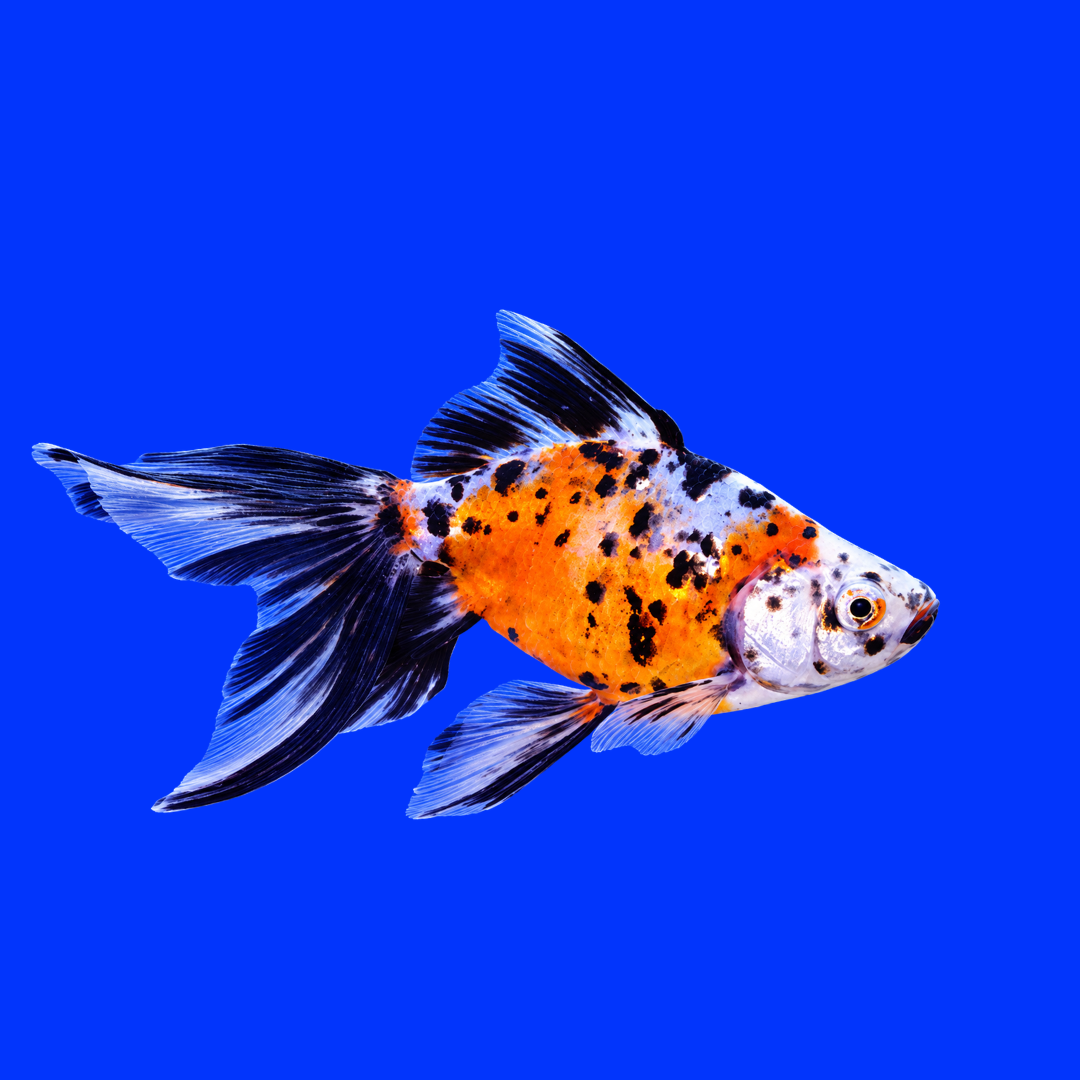
オーロラは、埼玉県坂戸市の養魚家・川原やどる氏が、江戸地金と朱文金の交配から作出したキンギョです。作出当初は「平成1号」と呼ばれ、のちに現在の名称が定着しました。和金に近い体型を基礎に、長く伸びる鰭と三つ尾または四つ尾を持ち、モザイク透明鱗に赤・白・黒・浅葱色が重なる複雑な体色を見せます。体高や尾の伸び方、色柄には個体差が大きく、同じ品種でも印象が一匹ずつ異なります。浅葱色は単純な青色素だけで説明される色ではなく、透明鱗系の金魚でみられるグアニン反射層の少なさや、皮膚の深い位置にある色素の見え方が関係する青みとして理解されています。Aurora is a Japanese goldfish variety developed by breeder Yadoru Kawahara of Sakado, Saitama, from a cross between Edo Jikin and Shubunkin. It was initially called “Heisei No. 1” before the name Aurora became established. The variety has a body form close to Wakin, elongated fins, and a three- or four-lobed tail, together with mosaic transparent scales carrying complex combinations of red, white, black, and asagi bluish tones. Body depth, fin length, and pattern vary considerably between individuals. The asagi tone is not best understood as a simple layer of blue pigment; in transparent-scale goldfish, reduced reflective guanine layers and the visibility of deeper pigment cells contribute to the bluish appearance.
基本情報 / Basic Information
学名 / Scientific Name
Carassius auratus
通称 / Common Name
オーロラ。作出当初の名称は「平成1号」。Aurora; originally called “Heisei No. 1” during its early development.
分類 / Family
コイ科フナ属。キンギョ Carassius auratus の改良品種Family Cyprinidae, genus Carassius; a domesticated variety of the goldfish Carassius auratus.
英名 / English Name
Aurora Goldfish
分布 / Distribution
野生分布はありません。日本で作出された改良品種で、埼玉県をはじめ国内の生産者・専門店を通じて流通しています。基礎となるキンギョは東アジアで家畜化された魚です。A domesticated variety with no natural wild distribution. It was developed in Japan and is distributed through breeders and specialist retailers, particularly in Saitama. Goldfish themselves were domesticated in East Asia.
最大体長 / Max Size
品種固有の最大値は確立されていません。国内流通では全長15〜20cm前後の成魚がみられます。A variety-specific maximum size has not been established. Adult Aurora around 15–20 cm in total length are seen in the Japanese trade.
寿命 / Lifespan
オーロラ固有の寿命資料はありません。キンギョ全般では10〜15年程度が一般的な目安で、適切な飼育ではさらに長生きする例があります。確認されたキンギョの最長記録として43年があります。No lifespan data specific to Aurora are established. Goldfish in general commonly live around 10–15 years with suitable care, and some live substantially longer. The verified longevity record for a goldfish is 43 years.
飼育環境 / Aquarium Environment
水槽サイズ / Tank Size
成魚の長期飼育では、1匹でも50〜75L程度を下回らない水量を最低限の目安とします。オーロラは比較的よく泳ぎ、尾鰭も長く伸びるため、余裕のある90cm規格水槽(約180L)を用意すると管理しやすくなります。小型の若魚を60cm規格水槽(約60L)から始める場合も、成長に合わせて拡張します。複数飼育では魚数とろ過能力に応じてさらに大きな水槽が必要です。For long-term adult care, avoid volumes below roughly 50–75 L even for a single fish. Because Aurora is fairly active and develops long fins, a roomy 90 cm standard Japanese aquarium of about 180 L is easier to manage. Juveniles may be started in a 60 cm standard tank of about 60 L, but the aquarium should be enlarged as they grow. Multiple fish require additional volume according to stocking level and filtration capacity.
水温 / Temperature
18〜24℃前後を日常管理の目安にすると扱いやすく、キンギョ自体はより低い水温にも適応します。重要なのは急激な水温変化を避けることです。低水温期は活動量と消化が落ちるため、給餌量も魚の動きに合わせて減らします。Around 18–24°C is a practical everyday range, although goldfish can adapt to cooler water. Avoid rapid temperature changes. As activity and digestion slow in cold water, reduce feeding according to the fish’s behavior and appetite.
水質 / Water Quality
pH6.5〜8.5程度の安定した中性〜弱アルカリ性を目安とします。アンモニアと亜硝酸は検出されない状態を保ち、硝酸塩はできるだけ低く、目安として20〜30ppm未満に維持します。硬度は一つの数値に固定するより、極端な軟水を避け、pHを含めて急変させないことを優先します。Aim for stable neutral to mildly alkaline water around pH 6.5–8.5. Ammonia and nitrite should remain undetectable, and nitrate should be kept as low as practical, preferably below about 20–30 ppm. Rather than chasing a single hardness value, avoid extremely soft water and prioritize stability in hardness and pH.
レイアウト / Layout
長い尾鰭を傷めないよう、遊泳スペースを広く取り、尖った流木や石、鋭い人工装飾品は避けます。水流は穏やかにし、常に流れへ逆らって泳がなければならない状態をつくらないことが大切です。底床や背景の色は体色の見え方に影響しますが、特定の色を使えば体色を恒久的に保てると考えるのではなく、観賞性と安全性を優先して選びます。上見では尾の広がり、横見ではモザイク透明鱗の色の重なりを楽しめます。Provide broad open swimming space and avoid sharp driftwood, rocks, or decorations that could tear the long fins. Keep the current gentle enough that the fish does not have to swim continuously against it. Substrate and background color can change how the body colors appear, but should not be treated as a guaranteed way to preserve coloration; choose them primarily for safety and viewing preference. Top viewing highlights the tail spread, while side viewing shows the layered mosaic coloration.
注意点 / Precautions
長い尾鰭は擦れや裂けの影響を受けやすいため、強い水流や尖ったレイアウト素材を避けます。キンギョは排泄量が多いので、水槽サイズに余裕を持たせ、十分なろ過と酸素供給、定期的な部分換水を行います。水質や水温を短時間で大きく変えないことも重要です。The long fins are vulnerable to abrasion and tearing, so avoid strong current and sharp décor. Goldfish produce a heavy waste load, so provide generous water volume, adequate filtration and oxygenation, and regular partial water changes. Avoid large, sudden changes in water quality or temperature.
餌と給餌 / Feeding
餌の種類 / Diet
金魚用のバランスのよいペレットや顆粒飼料を主食とし、個体が食べやすい粒径と沈み方を選びます。補助的に、やわらかくした葉物野菜などの植物質を少量取り入れることもできます。Use a balanced goldfish pellet or granule as the staple diet, choosing a particle size and sinking rate that the fish can eat comfortably. Small amounts of softened leafy vegetables may also be offered as supplementary plant material.
給餌のポイント / Feeding Tips
キンギョは哺乳類のような明瞭な胃を持たないため、一度に大量に与えず、通常は1日1〜2回、2〜3分程度で食べ切る量を目安にします。低水温では食欲と消化が落ちるため、同じ量を一年中与え続けず、魚の動きと摂餌を見ながら減らします。屋外越冬などでほとんど餌を追わない時期は無理に与えません。食べ残しは水質悪化の原因になるため除去します。Goldfish do not have a distinct stomach comparable to that of mammals, so avoid large single meals. As a general guide, feed once or twice daily in amounts consumed within about two to three minutes. Appetite and digestion decline in cold water, so do not feed the same amount year-round; reduce portions according to activity and feeding response. During cold overwintering periods when the fish barely feeds, do not force feeding. Remove uneaten food to protect water quality.
性格と混泳 / Temperament and Tank Mates
性格 / Temperament
和金に近い体型で比較的よく泳ぎますが、長い尾鰭を持つため、和金やコメットのような強い単尾系ほど速いとは限りません。攻撃性が強い品種として知られているわけではなく、混泳では性格よりも体格と遊泳力、餌を取る速さの差が問題になりやすい金魚です。Aurora has a body form close to Wakin and is a fairly active swimmer, although its long tail means it is not necessarily as fast as strong single-tail varieties such as Common goldfish or Comets. It is not known as a particularly aggressive variety; in mixed tanks, differences in size, swimming ability, and feeding speed are usually more important than aggression.
混泳の相性 / Compatibility
同程度の大きさで、遊泳力と餌を取る速さが近いキンギョ同士を合わせるのが基本です。和金、コメット、朱文金など非常に速い品種とは、オーロラが餌を取り負けていないか確認します。反対に、ランチュウ、頂天眼、出目金など泳ぎや採餌が遅くなりやすい品種は、オーロラ側が餌を先に取ってしまうことがあります。品種名だけで相性を決めず、実際の個体差を見て調整してください。Choose goldfish of similar size, swimming ability, and feeding speed. With very fast varieties such as Wakin, Comet, and Shubunkin, make sure Aurora is not being outcompeted for food. Conversely, slower-feeding varieties such as Ranchu, Celestial Eye, and Telescope may be disadvantaged by Aurora. Compatibility should be judged by the actual individuals rather than by variety name alone.
病気と対策 / Diseases and Prevention
かかりやすい病気 / Common Diseases
オーロラだけに特有、または特に多いと確認された病気については情報がありません。キンギョ一般と同様に、水質悪化をきっかけとする体調不良、寄生虫や細菌による疾患、浮力異常などに注意します。また、長い尾鰭は擦れや裂けなどの外傷を受けやすい部分です。No disease is established as unique to, or especially common in, Aurora. As with goldfish generally, watch for health problems associated with poor water quality, parasitic or bacterial disease, and buoyancy disorders. The long fins are also vulnerable to physical injury such as abrasions and tears.
対策と予防 / Prevention
安定した水質を保ち、アンモニアと亜硝酸を蓄積させないことが基本です。給餌量は水温と活動量に合わせ、強い水流や尖った装飾を避けて尾鰭の外傷を防ぎます。浮いたり沈んだりする症状を単純に「食べ過ぎ」と決めつけず、水質、水温、外傷、感染の兆候などをあわせて確認します。症状が続く場合は魚類を診療できる獣医師への相談を検討します。Prevention starts with stable water quality and keeping ammonia and nitrite from accumulating. Adjust feeding to temperature and activity, and prevent fin injuries by avoiding strong current and sharp décor. Do not assume that floating or sinking problems are caused only by overeating; also check water quality, temperature, injuries, and signs of infection. Persistent symptoms warrant consultation with a veterinarian experienced with fish.
増やし方(繁殖) / Breeding
雌雄の判別 / Sexing
オーロラ特有の判別法はありませんが、キンギョ一般では繁殖期の成熟した雄に、鰓蓋や胸鰭の前縁へ白い追星が現れることがあります。雌は抱卵すると腹部がふっくらし、産卵期には生殖孔が目立つことがあります。雄の追尾行動も手掛かりになりますが、行動だけで確定するのは避けます。There is no Aurora-specific sexing method. In mature goldfish, males may develop white breeding tubercles on the gill covers and leading edges of the pectoral fins during the breeding season. Females may become fuller when carrying eggs and the vent can become more prominent near spawning. Male chasing behavior is another clue, but behavior alone should not be treated as definitive.
繁殖形態 / Reproduction
水草や産卵床などに粘着性の卵を産み、体外受精する卵生です。キンギョでは春の水温上昇に伴って繁殖行動が活発になります。一般的な資料では1回に2,000〜4,000個程度の卵を産む例が示されていますが、産卵数には個体差があります。受精卵は水温などの条件によって、およそ2〜9日で孵化します。Aurora is an egg-laying goldfish that deposits adhesive eggs on plants or spawning material, with external fertilization. Spawning activity usually increases as water warms in spring. General goldfish references report about 2,000–4,000 eggs in a spawning event, although the number varies greatly among individuals. Fertilized eggs may hatch in roughly 2–9 days depending on temperature and other conditions.
繁殖のポイント / Breeding Tips
親魚は卵や孵化後の稚魚を保護せず、卵を食べることもあるため、産卵後は親魚と卵を分けます。産卵床を使うと卵を移しやすくなります。稚魚の体色は成長中に大きく変化するため、オーロラらしいモザイク透明鱗、浅葱色、尾型などは早い段階だけで判断せず、成長を見ながら選別します。Adults do not guard the eggs or fry and may eat the eggs, so separate the parents from the spawn after spawning. Spawning mops make the eggs easier to move. Juvenile coloration can change substantially during growth, so mosaic transparency, asagi coloration, and tail form should not be judged too early; selection is best made as the fish develop.
雑学と豆知識 / Trivia and Fun Facts
1. 「平成1号」から「オーロラ」へ / 1. From “Heisei No. 1” to “Aurora”
オーロラは作出当初、「平成1号」と呼ばれていました。現在伝わる命名の逸話では、長く伸びる尾と複雑な体色を見た女性が、その姿を「オーロラのようだ」と表現したことが改名のきっかけになったとされています。誰が、どの取材の場で発言したのかという細部には資料によって語り方の違いがありますが、「平成1号」という旧称と、そこから「オーロラ」へ改名された経緯そのものは広く伝えられています。幻想的な名前は、光の当たり方で印象が変わる浅葱色と長い尾を持つこの品種によく似合っています。Aurora was originally called “Heisei No. 1.” In the naming story commonly passed down, a woman who saw the long tail and complex coloration remarked that the fish looked like an aurora, inspiring the later name. Details about exactly who made the comment and in what setting vary among retellings, but the original name “Heisei No. 1” and the subsequent change to Aurora are widely documented. The evocative name suits a variety whose bluish tones and long fins change in appearance with light and movement.
2. 江戸地金と朱文金から生まれた個性 / 2. A Variety Born from Edo Jikin and Shubunkin
オーロラの直接の親品種は江戸地金と朱文金です。江戸地金は地金系らしい尾型と体高を持ち、朱文金は細長い体型、長い鰭、キャリコの体色で知られています。実際の遺伝形質は単純に「この特徴は片方の親から」と一対一で分けられるものではありませんが、異なる方向に発達した二つの品種を交配し、選抜を重ねたことで、オーロラ特有の体型、尾、色柄の幅が生まれました。細身の個体も体高のある個体も見られることは、この品種の成り立ちを感じさせる面白さの一つです。Aurora was created directly from Edo Jikin and Shubunkin. Edo Jikin is associated with the Jikin-type tail and a deeper body, while Shubunkin is known for a more streamlined form, elongated fins, and calico coloration. Genetic traits cannot be assigned to each parent in a simple one-to-one way, but crossing two varieties developed in different directions and then selecting their offspring produced Aurora’s broad range of body shapes, tails, and patterns. The coexistence of slender and deeper-bodied individuals is part of what makes the variety’s history visible in its appearance.
3. 浅葱色は「青い絵の具」のような色ではない / 3. Asagi Is Not a Simple Layer of Blue Pigment
オーロラの浅葱色を理解する鍵は、モザイク透明鱗にあります。キンギョの銀白色の反射には、虹色素胞に含まれるグアニン結晶が関わっています。透明鱗系ではこの反射層が少ない部分が生じるため、表面だけでなく皮膚の深い位置にある色素や組織の色が見えやすくなります。キャリコ金魚で見られる淡い青みは、こうした深部の黒色素胞などが透明感のある組織越しに見えることと関係すると説明されています。つまり浅葱色は、単純な青色素一色ではなく、鱗の透明度、反射層、色素の位置が重なって生まれる見え方なのです。The key to understanding Aurora’s asagi tone lies in its mosaic transparent scales. Silvery reflection in goldfish is associated with guanine crystals in iridophores. In transparent-scale forms, areas with reduced reflective material allow deeper pigments and tissues to be seen more clearly. The pale blue background prized in calico goldfish is commonly explained in relation to deeper melanophores viewed through these translucent tissues. In other words, asagi is not simply a coat of blue pigment; it is an appearance created by the interaction of scale transparency, reflective layers, and the depth of pigment cells.
4. 柄は成長とともに印象を変える / 4. Patterns Continue to Change as the Fish Grows
モザイク透明鱗では、反射の強い鱗と透明感のある鱗が混じり、そこへ赤、黒、白、浅葱色の見え方が重なります。そのため、同じオーロラでも模様の配置や色の比率は一匹ずつ異なります。さらにキンギョの体色は成長中に変化し、幼魚の黒が薄くなったり、全体の色のバランスが変わったりすることがあります。購入時の柄だけを完成形と考えるより、体型や尾の成長と一緒に色柄がどう変わるかを見守ることが、オーロラならではの楽しみにつながります。Mosaic transparent scales combine more reflective scales with translucent ones, overlaid by varying appearances of red, black, white, and asagi. As a result, pattern placement and color balance differ from fish to fish. Goldfish coloration can also change during growth, with juvenile black areas fading or the overall balance of colors shifting. Rather than treating the purchase-time pattern as a finished form, part of keeping Aurora is watching the body, tail, and coloration develop together.
5. 「キャリコ」は布地から広がった言葉 / 5. “Calico” Began as a Textile Term
観賞魚で使われる「キャリコ」という言葉は、もともと英語で更紗系の綿布を指す語です。色が不規則に重なる布地の印象から、複数の色がまだらに現れる動物や観賞魚の模様にも使われるようになりました。金魚では、モザイク透明鱗と赤・黒・白・青みのある地色が組み合わさる模様を表す言葉として定着しています。オーロラの一匹ごとに異なる色の重なりを見ると、「キャリコ」という言葉が布地の模様から広がったことにも納得できます。The word “calico” originally referred in English to a type of patterned cotton cloth. From the impression of irregularly mixed colors, the word came to be used for multicolored patterns in animals and ornamental fish. In goldfish, it is established as a term for coloration combining mosaic transparent scales with red, black, white, and bluish background tones. The highly individual patterning of Aurora makes the textile origin of the term easy to appreciate.
6. 埼玉の生産と流通は現在も続いている / 6. Production and Distribution in Saitama Continue Today
オーロラは過去の作出品種として残っているだけではなく、現在も埼玉県の生産者によって継続して作られています。志村養魚場ではオーロラや桜オーロラなどの稚魚販売が行われ、Webオークションによる成魚の販売も確認できます。また、加須市の埼玉県養殖漁業協同組合は県内産観賞魚の卸売市場を運営し、金魚を含む観賞魚流通の拠点になっています。作出から年月を経ても、オーロラが実際に飼育者の手へ渡り続けている背景には、こうした生産と流通の仕組みがあります。Aurora is not merely a historical variety; it continues to be produced by breeders in Saitama. Shimura Fish Farm currently offers Aurora and related fry and also sells adult fish through online auctions. The Saitama Aquaculture Fisheries Cooperative in Kazo operates a wholesale market that serves as a distribution hub for ornamental fish produced in the prefecture. This continuing network of production and distribution is why Aurora still reaches aquarists decades after its creation.
まとめ / Conclusion
オーロラは、江戸地金と朱文金の交配から生まれ、長い尾鰭とモザイク透明鱗の複雑な色彩を受け継いだキンギョです。浅葱色の見え方、体高、尾の伸び方、赤や黒の入り方には一匹ずつ違いがあり、同じ品種名の中でも幅広い表情を見せます。成長に伴って色柄の印象が変わることも、この品種を長く観察する楽しさの一部です。Aurora is a goldfish variety created from Edo Jikin and Shubunkin, combining long fins with the complex coloration of mosaic transparent scales. The appearance of its asagi tone, body depth, tail growth, and distribution of red and black vary from individual to individual, giving the variety a wide range of expressions. Changes in pattern and color during growth are also part of the pleasure of observing these fish over time.
飼育では、十分な水量とろ過を確保し、穏やかな水流、安定した水質、季節と食欲に合わせた給餌を心掛けます。長い尾鰭を傷めない環境を整え、混泳では遊泳力と餌を取る速さの差をよく見ることが大切です。落ち着いた環境で成長を見守るほど、オーロラは一匹ごとの色と姿の変化をじっくり楽しめる存在になります。Successful care depends on adequate water volume and filtration, gentle flow, stable water quality, and feeding adjusted to season and appetite. Protect the long fins from injury and pay close attention to differences in swimming and feeding speed when choosing tank mates. In a stable environment, Aurora rewards long-term care with gradual changes in color, form, and individual character.
Kodzhahinchev, V., Biancolin, A. & Bucking, C. (2018). Quantification of Mg2+, Ca2+ and H+ transport by the gastrointestinal tract of the goldfish, Carassius auratus, using the Scanning Ion-selective Electrode Technique (SIET).
Kobayashi, M., Iwata, E. & Sorensen, P. W. (2026). Environmental and Physiological Regulation of Reproduction in the Goldfish: Gonadal Development, Maturation, and Spawning Behavior: A Review.






コメント