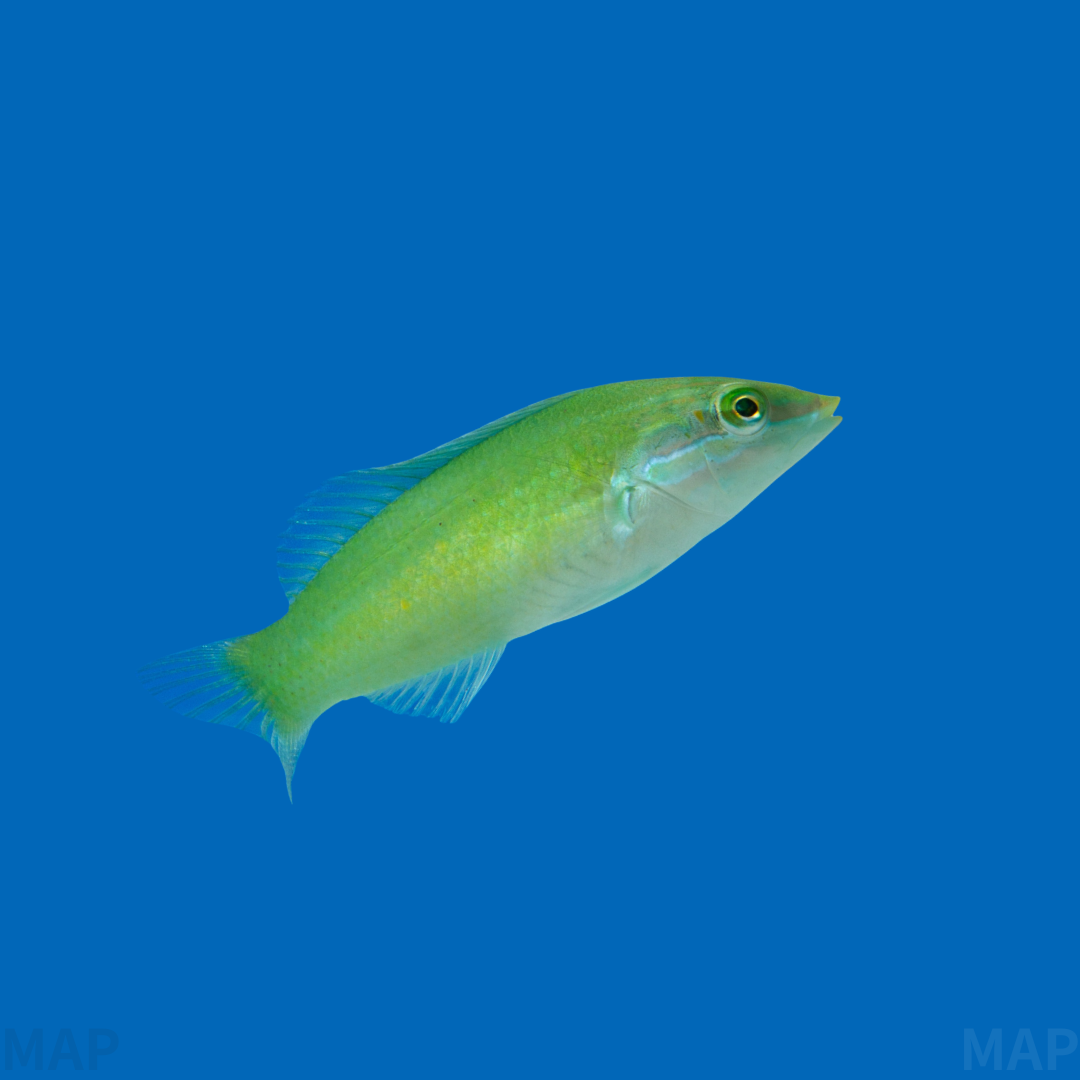
ライムラスは、その名の通りパステルグリーンの鮮やかな体色が美しいベラ科の海水魚です。西部太平洋から東部インド洋にかけての非常に浅いサンゴ礁域に生息しており、日本国内では琉球列島などでその姿を見ることができます。幼魚から成魚、あるいは雌から雄へと成長する過程で劇的に模様が変化する「個体発生的色彩変化」が特徴で、特に成熟した雄の頭部に現れる複雑な幾何学模様は、浅海に届く光を最大限に利用した進化の結晶といえます。観賞魚としてはその美しさだけでなく、水槽内の有害なヒラムシやシャコガイの寄生貝を捕食する「お掃除役」としての実用性も高く評価されています。The Pastel-green wrasse, also known as Lime wrasse, is a beautiful marine fish characterized by its vivid green body. It inhabits extremely shallow coral reefs across the western Pacific and eastern Indian Oceans. It is well-known for its dramatic ontogenetic color changes as it matures and transitions from female to male. In the aquarium hobby, it is highly valued not only for its aesthetics but also for its functional role in biological control, actively preying on pests like flatworms and parasitic snails.
基本情報 / Basic Information
学名 / Scientific Name
Halichoeres chloropterus
通称 / Common Name
ライムラスPastel-green wrasse, Dark-blotch wrasse
分類 / Family
スズキ目(またはベラ目)ベラ科キュウセン属Family Labridae, Genus Halichoeres
英名 / English Name
Pastel-green wrasse
分布 / Distribution
西部太平洋、東部インド洋(フィリピン、インドネシア、琉球列島、グレートバリアリーフなど)Western Pacific and Eastern Indian Ocean including Philippines, Indonesia, and Ryukyu Islands.
最大体長 / Max Size
約19cm(飼育下では環境により異なる)Approximately 19 cm (varies in aquarium conditions).
寿命 / Lifespan
約5年〜8年(適切な飼育環境下)Approximately 5 to 8 years under proper care.
飼育環境 / Aquarium Environment
水槽サイズ / Tank Size
150cm規格水槽(約500L)以上が理想。活発に泳ぎ回るため十分な遊泳スペースが必要です。A 150 cm standard tank (approx. 500L) or larger is ideal due to their active swimming nature.
水温 / Temperature
24℃〜26℃24°C to 26°C (75°F to 79°F)
水質 / Water Quality
pH 8.1〜8.4(弱アルカリ性)の安定した海水。比重は1.020〜1.025程度を維持します。Stable seawater with pH 8.1–8.4 and specific gravity around 1.020–1.025.
レイアウト / Layout
5cm以上の厚さでサンゴ砂を敷くことが必須です。また、隠れ家となるライブロックを複雑に配置します。A sand bed of at least 5 cm is essential. Include complex rockwork for hiding.
注意点 / Precautions
飛び出し事故が非常に多いため、水槽には隙間のないフタが必須。導入初期は砂に潜って出てこないことがありますが、そっとしておきましょう。A tight-fitting lid is mandatory as they are jumpers. They may stay buried in the sand when first introduced; avoid disturbing them.
餌と給餌 / Feeding
餌の種類 / Diet
イサザアミ、クリル、アルテミアなどの動物性飼料を好みます。人工のペレットやフレークにも容易に餌付きます。Prefer meaty foods such as mysis shrimp, krill, and brine shrimp. They also accept pellets and flakes.
給餌のポイント / Feeding Tips
非常に代謝が激しいため、1日2〜3回に分けて給餌します。殻付きのエビなどを与えると、自然界の捕食行動を観察できます。Feed 2-3 times daily due to high metabolism. Offering shell-on shrimp encourages natural predatory behaviors.
性格と混泳 / Temperament and Tank Mates
性格 / Temperament
基本的に温和ですが、同属や似た体型のベラに対しては縄張り意識を持つことがあります。Generally peaceful but can be territorial towards congeners or similar-shaped wrasses.
混泳の相性 / Compatibility
サンゴとの相性は抜群ですが、小型のエビや貝類、ケヤリムシなどは捕食されるリスクがあるため注意が必要です。Safe with corals, but small shrimp, snails, and feather dusters are at risk of being eaten.
病気と対策 / Diseases and Prevention
かかりやすい病気 / Common Diseases
白点病や、輸送時のストレスによる吻部(口先)の擦れによる細菌感染症。Cryptocaryon irritans (Ich) and bacterial infections of the snout caused by transport stress.
対策と予防 / Prevention
導入前のトリートメントを徹底し、水質の急変を避けます。砂床を清潔に保つことも感染症予防に繋がります。Thorough quarantine before introduction and maintaining stable water quality and clean sand beds.
増やし方(繁殖) / Breeding
雌雄の判別 / Sexing
雄は頭部に複雑なピンク色の網目模様があり、肛門付近に黒い斑点があります。雌や幼魚はより淡い色合いで斑点が散在します。Males have intricate pink facial patterns and a black spot near the anus. Females and juveniles are paler with scattered spots.
繁殖形態 / Reproduction
雌性先熟の性転換を行います。群れの中で優位な雌が雄へと変化し、ペアやハーレムを形成して産卵します。Protogynous hermaphrodites. The dominant female in a group transitions to a male.
繁殖のポイント / Breeding Tips
家庭水槽での繁殖は、十分な遊泳スペースと複数個体の収容が必要なため、難易度は極めて高いとされています。Extremely difficult in home aquariums due to the need for vast swimming space and specific social structures.
雑学と豆知識 / Trivia and Fun Facts
1. 学名の由来は「海の豚」? / 1. Origin of the Name: “Sea Pig”?
ライムラスが属するキュウセン属(Halichoeres)の語源は、ギリシャ語で「海の豚」を意味します。これは、ベラ特有の突き出した口先が豚の鼻を連想させることや、日中に砂を激しく掘り返して獲物を探す姿が、まるで餌を求めて地面を掘る豚のように見えたことから名付けられました。中国語でも「緑鰭海豬魚」と表記され、洋の東西を問わず「海の豚」という共通の認識を持たれているのは非常に面白い点です。The genus name Halichoeres comes from Greek for “sea pig,” referring to their snout shape and the way they root through the sand for food. This perception is shared globally, even appearing in its Chinese common name.
2. 驚異の「バッシング」行動 / 2. The Remarkable “Bashing” Behavior
ライムラスは非常に知能的な捕食行動をとります。自身よりも大きな獲物や、硬い殻を持つ甲殻類を捕まえた際、彼らはそれを口にくわえたまま近くの岩やサンゴに叩きつけます。この「バッシング」と呼ばれる行動によって獲物を粉砕し、食べやすく加工するのです。これは環境を道具のように利用する適応戦略であり、観察しているとその野生味あふれる生態に驚かされることでしょう。When catching hard-shelled prey, they perform “bashing,” smashing the prey against rocks to break it into manageable pieces. This display of environmental utilization highlights their intelligence.
3. ピンク色の模様が見える秘密 / 3. The Secret Behind the Pink Patterns
成熟した雄の顔には、鮮やかなピンク色や赤色の幾何学模様が浮かび上がります。深い海では赤い光は吸収されて見えなくなりますが、ライムラスが生息する水深10メートル以浅の明るい浅瀬では、この赤やピンクは非常に鮮明に見えます。近年の研究では、彼らの網膜がこれらの波長を感知するのに特化していることが分かっており、この複雑な模様は仲間同士で「俺はこんなに元気だぞ」とアピールするための視覚的な暗号としての役割を担っているのです。Terminal males develop intricate pink patterns on their faces. In the shallow waters they inhabit, these colors remain vivid and serve as critical visual signals for social communication, supported by a specialized visual system in their retinas.
4. 水槽の用心棒としての実力 / 4. A Reliable Guardian of the Reef Tank
サンゴ愛好家にとって、ライムラスは心強い用心棒です。彼らはサンゴを食害する厄介な「ヒラムシ」や、シャコガイを弱らせる「シャコガイの寄生貝(クチキレウキガイ類)」、景観を損ねる「ウミケムシ」などを一日中探して食べてくれます。他のベラ、例えばニセモチノウオなどは成長すると非常に攻撃的になることがありますが、ライムラスは比較的温和で、お掃除役としての仕事を黙々とこなしてくれる点も大きな魅力です。For reef keepers, they are invaluable biological controllers, actively hunting pests like flatworms, bristleworms, and parasitic pyramid snails while maintaining a relatively peaceful temperament compared to other aggressive wrasse species.
まとめ / Conclusion
ライムラスは、その輝くような緑色の体色で水槽を華やかに彩るだけでなく、水槽内の生態系バランスを整えてくれる非常に有能なパートナーです。彼らを長期にわたって健やかに飼育するためには、まず第一に「潜るための十分な砂床」と「飛び出し防止の徹底」という二つの絶対条件をクリアしてあげることが何よりも大切です。The Lime wrasse is not only a visual masterpiece with its glowing green body but also a functional asset to any reef aquarium’s ecosystem. Success in keeping them long-term hinges on providing a deep sand bed for sleeping and a secure lid to prevent jumping.
自然界で見せるダイナミックなバッシング行動や、成長と共に変化していく美しい模様の変化。ライムラスを家族に迎えることは、サンゴ礁の浅瀬が持つ生命の神秘を間近で観察できる素晴らしい機会となるはずです。適切な環境を整えて、この「海の豚」とのアクアリウムライフをぜひ楽しんでください。From their dynamic bashing behavior to the evolving beauty of their color patterns, welcoming a Lime wrasse into your home offers a unique window into the mysteries of the shallow reef. With the right environment, your journey with this “sea pig” will be truly rewarding.



 ポチップ
ポチップ




コメント