

解説 / Description
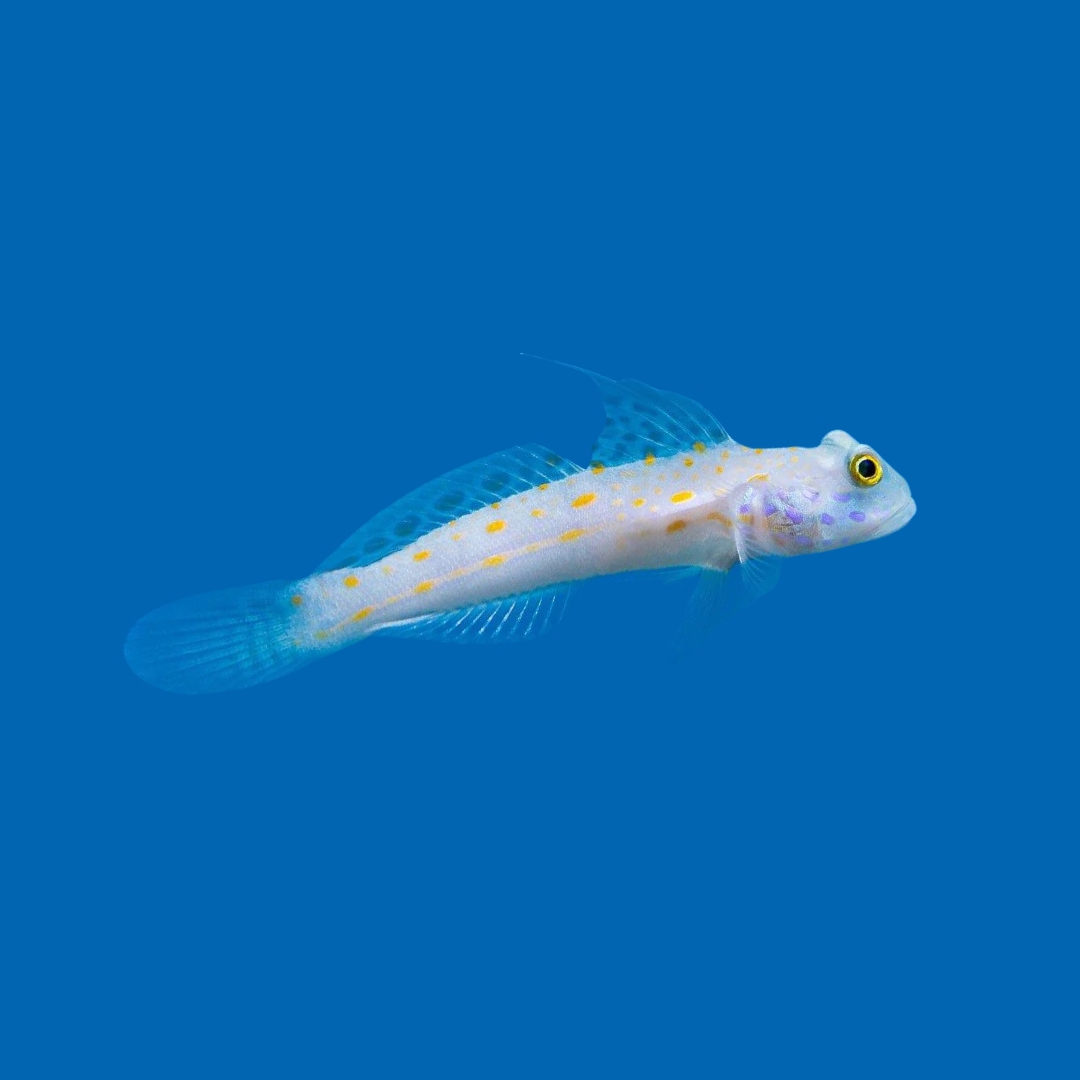
オトメハゼは、インド太平洋のサンゴ礁域やラグーンの砂底に暮らすクロイトハゼ属の海水魚です。淡い灰色から茶褐色の体に、オレンジ色の斑点や線、青白い頭部模様が入る上品な姿を持ちます。日中は底砂を大きな口で含み、砂中の小さな甲殻類や有機物を選び取って、不要な砂だけをエラから排出します。この砂ふるい行動によって底砂が動かされるため、日本の海水魚水槽では「砂掃除をしてくれるハゼ」として人気があります。 The Orange-dashed Goby is a marine goby of the genus Valenciennea that inhabits sandy bottoms around reefs and lagoons in the Indo-Pacific. It has an elegant pale grey to brownish body with orange spots or lines and bluish-white markings on the head. During the day, it takes mouthfuls of sand, selects tiny crustaceans and organic matter, and expels the unwanted sand through the gills. Because this sand-sifting behavior turns over the substrate, it is popular in Japanese marine aquariums as a goby that helps keep the sand bed clean.
飼育では、細かいサンゴ砂、底面積に余裕のある水槽、底まで届く十分な給餌、そして飛び出し防止のフタが重要です。砂をきれいに保つ働きが期待できる一方、餌不足による痩せ、サンゴへの砂かぶり、厚すぎる底床の嫌気層を掘り返すリスクには注意が必要です。 In captivity, the key points are fine coral sand, a tank with sufficient bottom area, reliable feeding that reaches the substrate, and a tight-fitting lid to prevent jumping. Although it can help keep the sand bed clean, aquarists must watch for starvation, sand being thrown onto corals, and the risk of disturbing anaerobic layers in overly deep sand beds.
基本情報 / Basic Information
| 学名 / Scientific Name | Valenciennea puellaris (Tomiyama, 1956) |
|---|---|
| 通称 / Common Name | オトメハゼ、砂ふるいハゼ、砂掃除ハゼMaiden Goby, Orange-dashed Goby, Orange-spotted Sleeper Goby, sand-sifting goby |
| 分類 / Family | ハゼ科 クロイトハゼ属。近年の体系ではハゼ目として扱われることが多く、旧来の表記ではスズキ目ハゼ亜目とされる場合もあります。Family Gobiidae, genus Valenciennea. In recent classifications it is often placed in the order Gobiiformes, while older treatments may list it under Perciformes, suborder Gobioidei. |
| 英名 / English Name | Maiden Goby, Orange-dashed Goby, Orange-spotted Sleeper Goby |
| 分布 / Distribution | 紅海からサモアにかけてのインド太平洋。北は日本南部、南はグレートバリアリーフやニューカレドニア周辺まで記録があります。主にサンゴ礁域やラグーン、礫の混じる砂底に見られます。Indo-Pacific, from the Red Sea to Samoa; north to southern Japan and south to the Great Barrier Reef and New Caledonia. It is mainly found on sandy substrates around reefs and lagoons, often with rubble nearby. |
| 最大体長 / Max Size | 標準体長で約20cm。流通個体は5〜14cm前後の若魚から成魚サイズが多く見られます。About 20 cm standard length. Aquarium specimens are commonly sold as juveniles to adults around 5–14 cm. |
| 寿命 / Lifespan | 種としての標準的な寿命は文献上は明確に示されにくいため、「数年飼育を目指す魚」と考えるのが安全です。実際の飼育期間は、餌不足、飛び出し、水質悪化、導入時の状態に大きく左右されます。A clearly established standard lifespan for this species is not consistently documented, so it is safest to treat it as a fish for which several years of care may be possible under good conditions. Actual survival depends greatly on avoiding starvation, jumping, water-quality problems, and stress at introduction. |
飼育環境 / Aquarium Environment
| 水槽サイズ / Tank Size | 単独飼育でも45cm規格水槽以上を最低ラインとし、長期飼育では60cm規格水槽から90cm規格水槽以上が安心です。よく泳ぎ回る中層魚ではありませんが、広い範囲の底砂を探るため、単純な水量よりも底面積の広さが重要です。A 45 cm standard tank is the minimum for a single specimen, while a 60–90 cm standard tank or larger is recommended for long-term care. It is not an active midwater swimmer, but because it searches broad areas of sand, bottom area is more important than volume alone. |
|---|---|
| 水温 / Temperature | 24〜27℃を目安に安定して維持します。自然分布の情報では22〜26℃前後の熱帯域にも対応しますが、水槽では急変を避けることが最も大切です。 Maintain a stable temperature around 24–27°C. Distribution records include tropical waters around 22–26°C, but in aquariums the most important point is avoiding sudden changes. |
| 水質 / Water Quality | 一般的な海水魚水槽の範囲で、比重1.023〜1.025を目安にします。砂を掘り返して有機物を舞い上げることがあるため、十分なろ過、プロテインスキマー、定期的な換水が有効です。アンモニアと亜硝酸は常に検出されない状態を目指します。Keep salinity within the usual marine aquarium range, around specific gravity 1.023–1.025. Because this fish can stir organic matter into the water column, strong filtration, a protein skimmer, and regular water changes are helpful. Ammonia and nitrite should remain undetectable. |
| レイアウト / Layout | 口やエラを傷つけにくい細かめのサンゴ砂を2〜3cm程度敷き、避難できるライブロックやサンゴ礫の陰を作ります。サンゴ水槽では、砂をかぶると弱りやすいサンゴを底面から離して配置し、オトメハゼが砂を吐き出す動線を考えてレイアウトします。Use fine coral sand, about 2–3 cm deep, to avoid damaging the mouth and gills, and provide shelter beneath live rock or coral rubble. In reef tanks, place sand-sensitive corals away from the bottom and consider where the goby may expel sand. |
| 注意点 / Precautions | 驚いたときの飛び出し事故が多いため、ガラスフタやポリカーボネート板などで水槽上部をしっかり覆ります。配管やコード周りの小さな隙間も塞いでください。底面式フィルターは、砂を掘る習性によってろ過構造が露出したり、吸い込み事故につながったりするため避けます。厚い底砂やDSBでは、深部の嫌気層を掘り返すことで硫化水素が放出される可能性があるため、導入前に底床設計を見直します。Jumping accidents can occur when the fish is startled, so cover the tank securely with a glass or polycarbonate lid, including small gaps around pipes and cords. Undergravel filters should be avoided because digging can expose the filter structure or cause intake accidents. In deep sand beds, review the substrate design before introduction because disturbing anaerobic layers may release hydrogen sulfide. |
餌と給餌 / Feeding
| 餌の種類 / Diet | 沈下性の動物質系人工飼料、冷凍ブラインシュリンプ、イサザアミ、アミエビなどを与えます。自然界では砂中や底面付近の小型甲殻類、有機物、微小な底生生物を選び取るため、水槽内の微生物だけに頼る飼育は避けます。Feed sinking meaty pellets, frozen brine shrimp, mysid shrimp, and small krill-like foods. In nature it selects small crustaceans, organic matter, and tiny benthic animals from sand and the bottom, so aquarium care should not rely solely on microorganisms in the substrate. |
|---|---|
| 給餌のポイント / Feeding Tips | 痩せやすい魚なので、1日2回以上、状態に応じて少量を複数回与えます。中層魚に餌を先取りされる場合は、ピペットやスポイトで底砂の上に直接落とすターゲット・フィーディングが有効です。給餌時に水流を一時的に弱めると、餌が底まで届きやすくなります。腹がへこんで見える個体は、餌の量や届き方をすぐに見直します。Because it can become thin easily, feed at least twice daily, or several smaller meals depending on condition. If midwater fish intercept the food, target feeding with a pipette or feeding tube directly onto the sand is effective. Temporarily reducing flow during feeding helps food reach the bottom. If the belly looks sunken, immediately review the amount and delivery of food. |
性格と混泳 / Temperament and Tank Mates
| 性格 / Temperament | 他種には比較的温和で、底面を中心に行動します。ただし、同じ底砂を利用する同種や近縁の砂ふるいハゼに対しては強い縄張り意識を見せることがあります。自然下ではペアで見られることが多い魚ですが、水槽内での無理な複数飼育は避けます。It is relatively peaceful toward different species and spends most of its time on or near the bottom. However, it may show strong territorial behavior toward conspecifics or similar sand-sifting gobies that use the same substrate. Although it is often seen in pairs in nature, forced group keeping in aquariums should be avoided. |
|---|---|
| 混泳の相性 / Compatibility | クマノミ、小型ヤッコ、ハナダイ、スズメダイなど、中層から上層を使う魚とは比較的合わせやすいです。同種、ミズタマハゼ、アカハチハゼなど、生活圏と食性が重なる魚とは争いや餌不足が起きやすいため、確実なペア以外は避けます。気の強い魚に追われると飛び出しや摂餌不良につながるため、導入後は底面で落ち着いて餌を食べられているか観察します。It is usually compatible with fish that occupy the middle and upper water layers, such as clownfish, dwarf angelfish, anthias, and damselfish. Avoid keeping it with conspecifics or similar benthic sand-sifting gobies, such as other Valenciennea species, unless they are a confirmed pair. Harassment by aggressive fish can cause jumping or poor feeding, so observe whether the goby can settle and feed calmly on the bottom. |
病気と対策 / Diseases and Prevention
| かかりやすい病気 / Common Diseases | 海水魚の白点病、ベルベット病、輸送ストレス後の細菌性二次感染に注意します。野生採取個体が多く流通するため、導入直後は寄生虫を持ち込む可能性を前提に観察します。痩せは病気ではありませんが、本種では死亡原因になりやすい重要な不調サインです。Watch for marine ich, marine velvet, and bacterial secondary infections after transport stress. Because most aquarium specimens are wild-collected, new arrivals should be observed with the assumption that parasites may be present. Emaciation is not a disease itself, but in this species it is a major warning sign that can lead to death. |
|---|---|
| 対策と予防 / Prevention | 導入時は可能であれば隔離水槽で状態を確認し、白点、呼吸の荒さ、体表の曇り、痩せを観察します。銅系薬剤は白点病対策として使われますが、製品ごとに有効濃度や測定方法が異なるため、必ず説明書と対応する銅テスターに従います。サンゴ、エビ、貝、ライブロック、底砂のある本水槽には入れず、隔離水槽で使用します。紫外線殺菌灯は水中を漂う病原体の密度を下げる補助として有効ですが、治療そのものの代替ではありません。日常管理では、水温の安定、急な比重変化を避けること、餌が十分に届く環境を作ることが最も大切です。When possible, observe new specimens in a quarantine tank and check for white spots, rapid breathing, cloudy skin, and weight loss. Copper-based medications are used against marine ich, but therapeutic concentration and testing vary by product, so follow the product instructions and use a compatible copper test kit. Do not add copper to a display tank containing corals, shrimp, snails, live rock, or sand; use it only in a quarantine tank. A UV sterilizer can help reduce the density of free-floating pathogens, but it is not a substitute for proper treatment. Daily prevention relies on stable temperature, avoiding sudden salinity changes, and ensuring that enough food reaches the goby. |
増やし方(繁殖) / Breeding
| 雌雄の判別 / Sexing | 成長した雄では第一背びれの第3棘が糸状に伸びることがあります。ただし、若い個体では背びれの形だけで判断しにくい場合があります。産卵期の雌は腹部が卵でふくらむため、ペアで観察すると判別しやすくなります。Adult males may develop a filamentous extension on the third spine of the first dorsal fin. However, in young fish, fin shape alone may not be reliable. Females in breeding condition can show a swollen abdomen filled with eggs, making sexing easier when a pair is observed. |
|---|---|
| 繁殖形態 / Reproduction | 自然下では一夫一婦制のペアで見られることが多く、巣穴や岩陰などの保護された場所に卵を産み付けます。家庭水槽での繁殖は、産卵よりも孵化後の仔魚育成が大きな課題になります。In nature, it is often observed in monogamous pairs and spawns in protected places such as burrows or sheltered areas beneath rocks. In home aquariums, the main challenge is usually not spawning itself but rearing the larvae after hatching. |
| 繁殖のポイント / Breeding Tips | 家庭水槽での繁殖は容易ではありません。ペア形成、安定した巣穴環境、十分な栄養状態に加え、孵化後の非常に小さな仔魚へ適切な微細餌を継続供給する必要があります。一般的な観賞目的の飼育では、繁殖よりもペアの相性維持と長期飼育を目標にするのが現実的です。Breeding in home aquariums is difficult. It requires pair formation, a stable burrow environment, excellent nutrition, and a continuous supply of suitable microscopic foods for the very small larvae after hatching. For most aquarists, maintaining a compatible pair and achieving long-term care is a more realistic goal than breeding. |
雑学と豆知識 / Trivia and Fun Facts
| 1. 「乙女」という名前に込められた色彩の物語 / 1. The color story behind the name “maiden” | 種小名の puellaris は、ラテン語で「少女」や「乙女」を思わせる語に由来します。オトメハゼという和名も、その可憐な印象とよく響き合っています。淡い体に走るオレンジ色の線や青い斑点は、砂を豪快に掘る行動とは対照的で、見た目の繊細さと行動の力強さが同居するところが本種の大きな魅力です。The specific name puellaris is derived from a Latin word associated with a girl or maiden. The Japanese name Otome-haze carries a similar delicate impression. Its pale body, orange lines, and blue spots contrast with its vigorous sand-digging behavior, making the species appealing because elegance and strength coexist in one fish. |
|---|---|
| 2. 日本の標本に由来して記載された魚 / 2. A fish described from Japanese material | 本種は1956年に冨山一郎によって Eleotriodes puellaris として記載され、現在は Valenciennea puellaris として扱われます。タイプ産地は高知県吉良川です。日本の海から得られた標本がこの魚の学名の基盤になっている点は、日本のアクアリストにとっても興味深い背景です。The species was described in 1956 by Ichiro Tomiyama as Eleotriodes puellaris and is now treated as Valenciennea puellaris. The type locality is Kiragawa, Kochi Prefecture, Japan. For Japanese aquarists, it is interesting that material from Japanese waters helped establish the scientific identity of this species. |
| 3. 砂を食べているのではなく、砂の中の小さな餌を選んでいる / 3. It is not eating sand; it is selecting tiny food within it | オトメハゼは砂そのものを栄養にしているわけではありません。口いっぱいに砂を含み、口腔内で小さな甲殻類や有機物を選び取り、不要な砂だけをエラから戻しています。この行動は底床の表面を動かし、デトリタスの滞留を抑えるため、自然のサンゴ礁では小さな土木作業員のような役割を果たしています。The Orange-dashed Goby does not gain nutrition from sand itself. It takes in mouthfuls of sand, selects tiny crustaceans and organic matter inside the mouth, and returns the unwanted sand through the gills. This behavior turns the surface of the substrate and reduces detritus accumulation, giving the fish a role much like a small engineer of the reef floor. |
| 4. ペアで暮らす魚だが、水槽では相性が重要 / 4. A pair-living fish, but compatibility matters in aquariums | クロイトハゼ属の仲間は、ペアで巣穴や採餌場所を守る一夫一婦制の生活が知られます。とはいえ、ただ2匹を入れれば自然に仲良くなるとは限りません。底面という限られた生活圏を使うため、相性が悪いと追い回しや餌の独占が起こります。ペア飼育を狙う場合でも、逃げ場の多いレイアウトと慎重な観察が必要です。Members of the genus Valenciennea are known for monogamous pair living, defending burrows and feeding areas together. However, placing two individuals together does not guarantee a peaceful pair. Because they use the same limited bottom area, incompatible fish may chase each other or monopolize food. Even when attempting pair care, a layout with multiple refuges and careful observation are necessary. |
| 5. 「砂をきれいにする魚」ほど餓死に注意 / 5. A “sand-cleaning fish” needs careful feeding | 水槽に入れると底砂を絶えずふるうため、つい「掃除役」として見てしまいがちです。しかし閉鎖環境の砂中生物はすぐに減ってしまいます。砂を探っている姿が元気そうに見えても、腹がへこんでいれば栄養不足の可能性があります。オトメハゼを長く飼うコツは、掃除を任せることではなく、働いたぶんをきちんと食べさせることです。Because it constantly sifts sand in the aquarium, it is easy to see this fish mainly as a cleaner. In a closed system, however, the tiny animals living in the sand are quickly depleted. Even if the goby appears active while sifting, a sunken belly may indicate underfeeding. The key to long-term care is not simply letting it clean the sand, but feeding it enough to support that work. |
まとめ / Conclusion
オトメハゼは、美しい模様と実用的な砂撹拌能力を兼ね備えた、海水水槽で非常に魅力的なハゼです。細かいサンゴ砂を用意し、底面積のある水槽で落ち着ける場所を作れば、本来の砂ふるい行動をじっくり観察できます。 The Orange-dashed Goby is a highly attractive marine goby that combines elegant markings with useful sand-sifting behavior. With fine coral sand, sufficient bottom area, and secure shelters, aquarists can observe its natural sand-filtering behavior in detail.
一方で、飛び出し、餌不足、同種・近縁種との争い、サンゴへの砂かぶり、深い底床の嫌気層など、独特の注意点もあります。十分なフタ、適切な底砂、底まで届く給餌、安定した水質管理をそろえることで、オトメハゼは水槽の底砂を生き生きと耕してくれる頼もしい存在になります。 At the same time, it has specific risks, including jumping, underfeeding, aggression with similar gobies, sand covering corals, and disturbance of anaerobic layers in deep substrates. With a secure lid, suitable sand, food delivered to the bottom, and stable water quality, this species can become a dependable and lively caretaker of the aquarium substrate.

気になる道具や飼い方を見つけてみませんか?
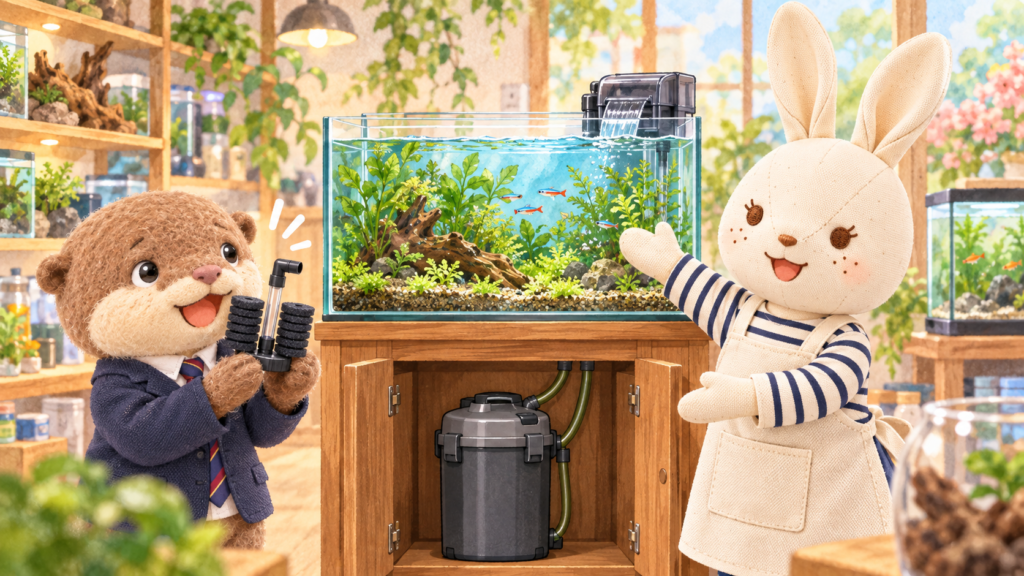 アイのアクアグッズ案内水槽フィルターの選び方|外掛け・外部・上部から小型オーバーフローまで道具の特徴や使い方、選ぶときのポイントをアイが紹介します。記事はコチラ →
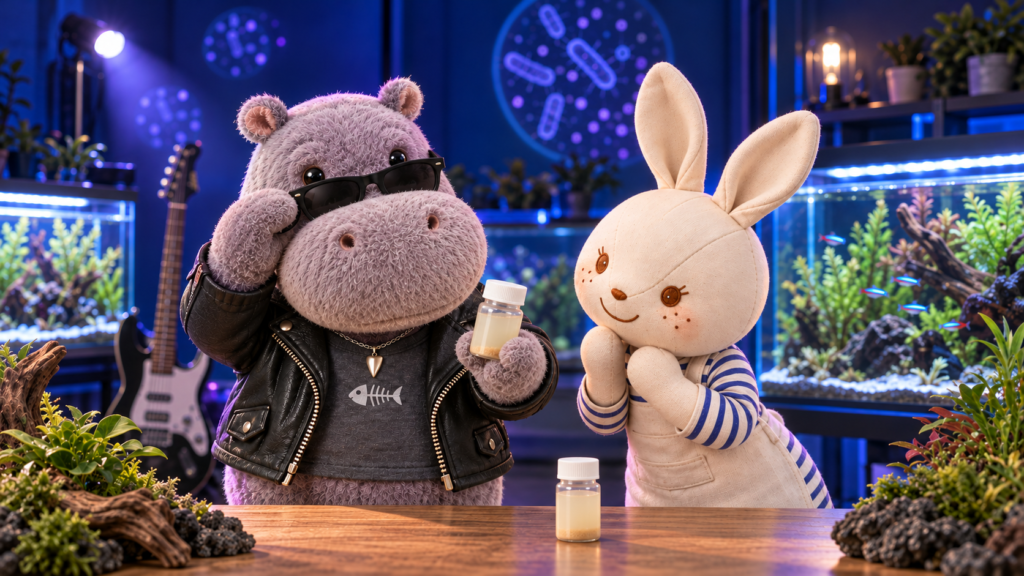 アイのアクアグッズ案内バクテリアって、結局なんなんだ? タマスとアイのボトル探究ロック好きのカバ・タマスが初登場。サイクル、ベストバイオ、バイコムのボトルから、菌の役割と保存の工夫、二本組の歴史をアイと探ります。記事はコチラ →
さまざまな飼育テーマをご紹介。リンク先の記事には広告・商品紹介が含まれます。
案内・紹介記事一覧へ →参考文献・参照資料
この記事では、店舗・通販サイト・個人ブログ・まとめサイトを参考文献から除外し、分類、分布、生息環境、飼育条件、繁殖、病気や注意点を確認できる学術データベース、博物館・公的機関、査読論文、大学・専門機関の資料を中心に選定しています。
-
Fricke, R., Eschmeyer, W. N. and Van der Laan, R. eds. Catalog of Fishes, California Academy of Sciences. “Eleotriodes puellaris Tomiyama 1956 / Valenciennea puellaris.”
用途:原記載、タイプ産地、高知県吉良川、ホロタイプ ZUMT 18924、現在の有効名の確認。
https://researcharchive.calacademy.org/research/ichthyology/catalog/fishcatget.asp?spid=25555 -
WoRMS Editorial Board. World Register of Marine Species. “Valenciennea puellaris (Tomiyama, 1956).”
用途:現在の受容学名、シノニム、海産生物分類データベース上の分類確認。
https://www.marinespecies.org/aphia.php?p=taxlist&tName=Valenciennea+puellaris -
BISMaL, Biological Information System for Marine Life, JAMSTEC. “Valenciennea puellaris (Tomiyama, 1956)” and “Eleotriodes puellaris Tomiyama, 1956 オトメハゼ.”
用途:日本語名、クロイトハゼ属、旧学名と現行学名の対応、日本国内向け表記の確認。
https://www.godac.jamstec.go.jp/bismal/e/view/9015640
https://www.godac.jamstec.go.jp/bismal/j/view/9039043 -
Froese, R. and Pauly, D. eds. FishBase. “Valenciennea puellaris, Maiden goby.”
用途:最大標準体長、分布、深度範囲、サンゴ礁性・海産・非回遊性、砂地のラグーンや礁外縁に生息すること、ペア生活・浅い巣穴の情報確認。
https://www.fishbase.se/summary/Valenciennea-puellaris.html -
Bray, D. J. Fishes of Australia. “Orangespotted Glidergoby, Valenciennea puellaris.”
用途:体色・外部形態、砂と礫のあるラグーン・礁外縁での生息、浅い巣穴、単独ではなくペアで見られる性質の補強。
https://fishesofaustralia.net.au/home/species/177 -
GBIF Secretariat. GBIF Backbone Taxonomy. “Valenciennea puellaris (Tomiyama, 1956).”
用途:分類階級、シノニム、英名、分布記録データベースへの接続確認。分類表記の差異を補助的に確認する資料。
https://www.gbif.org/species/2377331 -
Yanong, R. P. E. University of Florida IFAS Extension. “Cryptocaryon irritans Infections (Marine White Spot Disease) in Fish.”
用途:海水魚の白点病の病原体、生活環、隔離治療、銅、低塩分、タンク転送法などの疾病対策の確認。
https://ask.ifas.ufl.edu/publication/FA164 -
Yanong, R. P. E. University of Florida IFAS Extension. “Use of Copper in Marine Aquaculture and Aquarium Systems.”
用途:銅系薬剤の有効性、銅濃度管理、水質による銅の利用性変化、無脊椎動物や本水槽への注意点を支える資料。
https://ask.ifas.ufl.edu/publication/FA165 -
Yanong, R. P. E. and Erlacher-Reid, C. University of Florida IFAS Extension. “Ammonia in Aquatic Systems.”
用途:アンモニアが魚に与える影響、pH・水温・塩分によって非解離アンモニアの毒性が変化すること、水質検査の重要性の確認。
https://ask.ifas.ufl.edu/publication/FA031 -
Jayamanne, S. C. FAO. “A Preliminary Study of Hydrogen Sulphide Toxicity on Aquatic Organisms.”
用途:嫌気的な有機物分解で発生する硫化水素が水生生物に有害であること、深い底床や停滞部を扱う際の注意点を補強する資料。
https://www.fao.org/4/AC208E/AC208E00.htm - Randall, J.E. & van Egmond, J. (1994). Marine fishes from the Seychelles: 108 new records. Zoologische Verhandelingen 297. Valenciennea puellarisの項(p.64)で原記載名・タイプ産地を確認。
注:飼育水槽サイズ、給餌回数、混泳判断などは、上記資料で確認できる自然生態・体サイズ・食性・疾病管理の情報をもとに、家庭用海水魚水槽で安全側に解釈した実用目安です。製品名や薬剤濃度は商品ごとに異なるため、使用時は必ず各製品の説明書と対応する検査キットを確認してください。




コメント