

解説 / Description
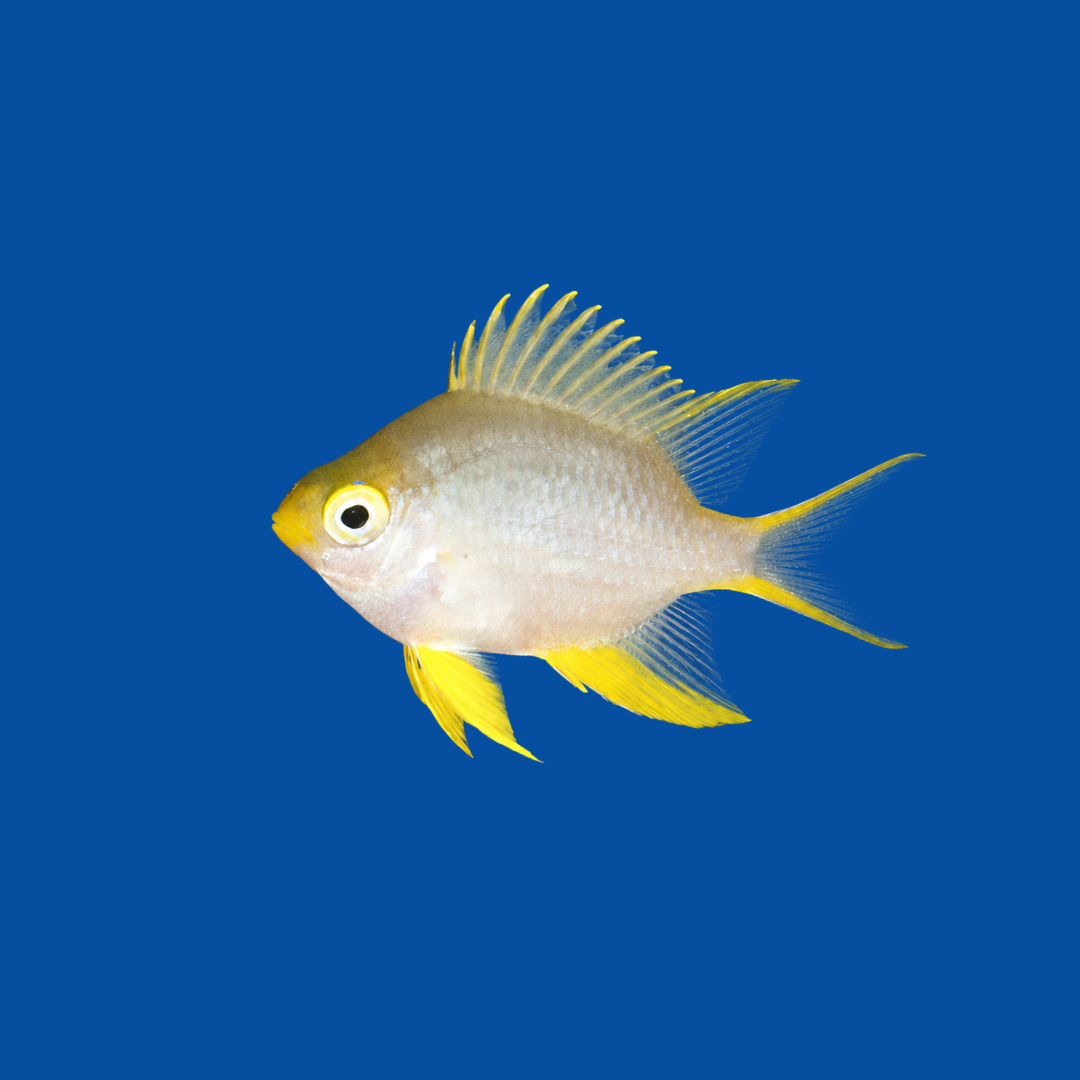
ヤマブキスズメダイは、山吹色の明るい体色が目を引くインド太平洋のスズメダイです。成魚は体高があり、丸みを帯びたシルエットと深く切れ込んだ尾びれを持ちます。顔まわりに青紫色の細かな斑点や線が入る個体もあり、サンゴ水槽では黄色いアクセントとして強い存在感を放ちます。丈夫で餌付きやすい反面、成長に伴って縄張り意識が強くなるため、長期飼育では水槽の広さ、隠れ家、混泳相手の選定が重要になります。 The Golden Damselfish is an Indo-Pacific damselfish known for its bright yellow coloration. Adults have a deep, rounded body shape and a deeply forked tail. Some individuals show fine bluish to purplish markings around the face, adding a vivid accent to reef aquariums. It is hardy and usually easy to feed, but it can become territorial as it matures, so long-term care requires adequate space, hiding places, and careful tank mate selection.
基本情報 / Basic Information
| 学名 / Scientific Name | Amblyglyphidodon aureus |
|---|---|
| 通称 / Common Name | ヤマブキスズメダイ、ゴールデンダムゼルGolden Damselfish, Golden Damsel, Golden Sergeant |
| 分類 / Family | スズメダイ科 PomacentridaeFamily Pomacentridae, the damselfishes and clownfishes |
| 英名 / English Name | Golden Damselfish, Golden Damsel, Golden Sergeant |
| 分布 / Distribution | アンダマン海やクリスマス島周辺を含む東部インド洋から、西部太平洋のフィジー、ニューカレドニア、トンガ周辺まで広く分布します。北限側では琉球列島周辺にも分布記録があります。Widely distributed from the eastern Indian Ocean, including the Andaman Sea and Christmas Island region, to the western Pacific around Fiji, New Caledonia, and Tonga. The Ryukyu Islands are included near the northern part of its recorded range. |
| 最大体長 / Max Size | 最大で13cm程度です。水槽内では個体差があり、成長を見越した余裕のある環境が適しています。Up to about 13 cm. Aquarium size should be planned with adult growth in mind. |
| 寿命 / Lifespan | 正確な寿命は飼育環境や個体差に左右されます。状態のよい環境では数年以上の長期飼育が期待できます。Its exact lifespan varies with husbandry and individual condition. With stable care, it can be maintained for several years or longer. |
飼育環境 / Aquarium Environment
| 水槽サイズ / Tank Size | 幼魚の一時的な単独飼育であれば60cm規格水槽、約60L前後から検討できますが、成魚まで安定して飼うなら90cm規格水槽以上が望ましいです。混泳を前提にする場合は、90cm規格水槽から120cm規格水槽以上の余裕ある環境が扱いやすくなります。A juvenile may be considered for temporary single keeping in a 60 cm standard tank of around 60 L, but a 90 cm standard tank or larger is preferable for stable adult care. For community aquariums, a 90 cm to 120 cm standard tank or larger is easier to manage. |
|---|---|
| 水温 / Temperature | 24〜26℃前後を目安に、急な変動を避けて安定させます。高水温が続く夏場や水温が下がる冬場は、クーラーやヒーターを使って安定した環境を保ちます。 Aim for a stable temperature around 24 to 26°C. Use a chiller or heater when needed to avoid prolonged summer heat or winter temperature drops. |
| 水質 / Water Quality | 比重は1.020〜1.026、pHは8.1〜8.4を目安にします。丈夫な魚ですが、急激な塩分変化やpH低下は負担になります。ろ過、プロテインスキマー、定期的な換水で安定した海水環境を維持します。A specific gravity of 1.020 to 1.026 and pH of 8.1 to 8.4 are suitable targets. Although hardy, it should not be exposed to sudden salinity swings or falling pH. Maintain stable marine water quality with filtration, protein skimming, and regular water changes. |
| レイアウト / Layout | ライブロックを立体的に組み、アーチ、オーバーハング、隠れ家を複数用意します。視線を遮る構造を作ることで、縄張り争いを緩和しやすくなります。野生では潮通しのよい外洋側のサンゴ礁斜面や水路壁、ヤギ類やムチカラマツ類の周辺で見られるため、中程度からやや強めの水流とも相性がよい魚です。Arrange live rock in a three-dimensional structure with arches, overhangs, and several hiding places. Visual barriers help reduce territorial pressure. In the wild, this species is associated with current-swept outer reef slopes, channel walls, gorgonians, and sea whips, so moderate to moderately strong water movement suits it well. |
| 注意点 / Precautions | 驚いた時に飛び出す可能性があるため、フタやスクリーンネットを設置すると安心です。また、黄色いスズメダイ類は流通名だけでは判別しにくい場合があります。購入時は体型、顔まわりの青紫色の模様、尾柄部や胸びれ基部の黒斑の有無などを落ち着いて確認すると、近縁種や類似個体との混同を避けやすくなります。A lid or screen top is recommended because startled fish may jump. Yellow damselfish can also be difficult to identify by trade name alone. When choosing a specimen, check the body shape, bluish to purplish facial markings, and the presence or absence of dark spots near the caudal peduncle or pectoral-fin base to reduce confusion with similar species or forms. |
餌と給餌 / Feeding
| 餌の種類 / Diet | 自然下では主に動物プランクトンを食べます。飼育下では小型海水魚用の顆粒飼料やフレークに餌付きやすく、冷凍ブラインシュリンプ、イサザアミ、スピルリナ配合飼料などを組み合わせると、栄養の偏りを抑えやすくなります。In nature, it feeds mainly on zooplankton. In aquaria, it usually accepts marine pellets and flakes readily. Frozen brine shrimp, mysid shrimp, and spirulina-based foods can be combined to provide a more balanced diet. |
|---|---|
| 給餌のポイント / Feeding Tips | 1日2〜3回、数分で食べ切れる量を与えます。少量をこまめに与えると痩せを防ぎやすく、空腹による他魚への圧力も軽減しやすくなります。食べ残しは水質悪化につながるため、過剰給餌は避けます。Feed small portions two to three times per day, offering only what can be eaten within a few minutes. Frequent small meals help prevent weight loss and may reduce pressure on tank mates caused by hunger. Avoid overfeeding, as uneaten food can degrade water quality. |
性格と混泳 / Temperament and Tank Mates
| 性格 / Temperament | 幼魚は比較的おとなしく見えることがありますが、成長すると縄張り意識がはっきり出やすくなります。特に同種や体型の似たスズメダイ類には強く出ることがあるため、導入時の小ささだけで判断せず、成魚になった後の性格を見越して計画します。Juveniles may appear relatively calm, but adults often become clearly territorial. They may be especially assertive toward their own kind or similarly shaped damselfish, so planning should be based on adult temperament rather than juvenile size alone. |
|---|---|
| 混泳の相性 / Compatibility | 混泳相手には、本種より体格があり、泳ぎがしっかりした魚が向いています。中型ヤッコ類、ハギ類、チョウチョウウオなどは候補になりますが、個体差と水槽サイズによって結果は変わります。おとなしいハゼ類、テンジクダイ類、小型で臆病な魚、近縁のスズメダイ類との組み合わせは慎重に検討します。サンゴに対しては比較的導入しやすい魚ですが、リーフタンクでは個体の行動を観察しながら管理します。Tank mates should generally be robust, confident fish of suitable size. Medium angelfish, tangs, and butterflyfish can be candidates, although results vary with individual temperament and tank size. Peaceful gobies, cardinalfish, timid small fish, and closely related damselfish require caution. It is often manageable in reef tanks, but individual behavior should always be observed. |
病気と対策 / Diseases and Prevention
| かかりやすい病気 / Common Diseases | 特別に病弱な魚ではありませんが、海水魚全般と同じく白点病、ウーディニウム病、細菌性の肌荒れ、ヒレの損傷には注意が必要です。混泳時の追い回しや小競り合いでできた傷が、二次感染につながることもあります。It is not especially delicate, but like many marine fish, it can be affected by marine ich, velvet disease, bacterial skin issues, and fin damage. Injuries caused by chasing or fighting can also lead to secondary infections. |
|---|---|
| 対策と予防 / Prevention | 導入前に体表、呼吸、痩せ、ヒレの状態を確認し、可能であれば隔離期間を設けます。水合わせは丁寧に行い、水温と比重を安定させます。特定の個体が追われ続ける、または本種が他魚を攻撃し続ける場合は、レイアウト変更や隔離を早めに検討します。Before introduction, check the body surface, breathing, body condition, and fins, and quarantine when possible. Acclimate carefully and keep temperature and salinity stable. If one fish is constantly chased, or if this species repeatedly attacks tank mates, rearranging the aquascape or separating fish should be considered early. |
増やし方(繁殖) / Breeding
| 雌雄の判別 / Sexing | 通常時の外見だけで雌雄を確実に見分けるのは難しい魚です。繁殖期にはオスが産卵場所を整え、卵を守る行動を見せるため、雌雄判別は外見よりも行動観察が手がかりになります。Reliable sexing by appearance alone is difficult. During breeding, males prepare the spawning site and guard the eggs, so behavior is a more useful clue than appearance. |
|---|---|
| 繁殖形態 / Reproduction | 基質産卵型の卵生魚です。卵は底生の粘着卵で、ヤギ類やムチカラマツ類の死んだ枝、岩、サンゴ骨格などに産み付けられます。産卵後はオスが卵を守り、ひれで水流を送って新鮮な海水を当てます。This is an egg-laying substrate spawner. The eggs are demersal and adhesive, and may be laid on dead gorgonian branches, sea whips, rocks, or coral skeletons. After spawning, the male guards the eggs and fans them with his fins to supply fresh water flow. |
| 繁殖のポイント / Breeding Tips | 水槽内で産卵行動が見られる可能性はありますが、仔魚の育成は難易度が高いです。孵化直後の仔魚は非常に小さく、ワムシやサイズの合うカイアシ類など、微小な生き餌を安定して準備する必要があります。一般的な家庭水槽では、繁殖を目指すよりも、親魚を健康に維持し、縄張り行動を管理することが現実的です。Spawning may occur in aquaria, but larval rearing is difficult. Newly hatched larvae are very small and require a stable supply of tiny live foods such as rotifers and appropriately sized copepods. In most home aquariums, maintaining healthy adults and managing territorial behavior are more realistic goals than raising larvae. |
雑学と豆知識 / Trivia and Fun Facts
| 1. 名前に込められた山吹色と黄金色 / 1. Yellow and gold in its names | 種小名のaureusは、ラテン語で「黄金の」を意味する語に由来します。英名のGolden Damselfishも、日本語のヤマブキスズメダイも、いずれも成魚の明るい黄色をよく表した名前です。学名、英名、和名が同じ方向を向いているため、名前から姿を想像しやすい魚といえます。The species name aureus comes from a Latin word meaning “golden.” Both the English name Golden Damselfish and the Japanese name Yamabuki-suzumedai point to the bright yellow color of the adult. Its scientific, English, and Japanese names all evoke the same visual impression. |
|---|---|
| 2. 成長や個体差で印象が変わる体色 / 2. Color that changes with growth and individuality | ヤマブキスズメダイは全身が鮮やかな黄色になる個体がよく知られていますが、顔や胸に青紫色の斑点や線が出ることがあります。また、地域や個体によっては、体が淡い灰色を帯び、腹びれ、しりびれ、尾びれの黄色が目立つ色彩型も知られています。水槽で迎える際は、単に黄色い魚として見るだけでなく、顔まわりやひれの色の入り方を観察すると、本種らしさをより深く楽しめます。Although it is best known as a bright yellow fish, some individuals show bluish to purplish spots or lines on the face and chest. A less common color phase is pale grayish, with yellow pelvic, anal, and caudal fins standing out. When observing this species, the details around the face and fins reveal more than a simple “yellow fish” impression. |
| 3. サンゴ礁の流れに適応した暮らし / 3. Life adapted to reef currents | 本種は、潮通しのよい外洋側のサンゴ礁斜面や水路壁のような場所でよく見られます。ヤギ類やムチカラマツ類が多い環境と関わりが深く、そこは餌となる動物プランクトンが流れてくる場所でもあります。水槽内である程度の水流を好むのは、野生での暮らしを考えると自然な性質といえます。This species is often associated with current-swept outer reef slopes and channel walls. It is closely linked with areas where gorgonians and sea whips are abundant, and where zooplankton is carried by the current. Its preference for some water movement in aquaria reflects its natural habitat. |
| 4. 卵を守るオスの行動 / 4. The male’s egg-guarding behavior | ヤマブキスズメダイの繁殖では、卵は岩やサンゴ骨格、ヤギ類の死んだ枝などに産み付けられます。産卵後、オスは卵を守り、ひれで水流を送り続けます。ダイビング中にスズメダイが近づいてきて追い払うような動きを見せる場合、その周辺に卵がある可能性があります。小さな魚が大きな相手に向かう姿は、サンゴ礁での繁殖行動の力強さを感じさせます。During breeding, the eggs are laid on surfaces such as rocks, coral skeletons, or dead gorgonian branches. After spawning, the male guards the eggs and fans them with his fins. If a damselfish repeatedly tries to drive away a diver, eggs may be nearby. This behavior shows the strength of parental care in a small reef fish. |
| 5. 丈夫さと気の強さはセットで考える / 5. Hardiness and territoriality should be considered together | 丈夫で餌付きやすい魚は、はじめての海水魚として紹介されることがあります。しかし、スズメダイ類の丈夫さは、狭い場所でも縄張りを主張しやすい性格と表裏一体になることがあります。ヤマブキスズメダイを扱う際は、飼いやすさだけでなく、成魚になった後の行動まで含めて環境を準備することが大切です。Hardy, easy-feeding fish are often introduced as beginner-friendly marine fish. However, in damselfish, hardiness can go hand in hand with strong territorial behavior. Keeping Golden Damselfish successfully means preparing not only for easy feeding, but also for the behavior it may show as an adult. |
| 6. 販売名だけに頼らない観察の楽しみ / 6. The value of observing beyond trade names | 黄色いスズメダイ類には似た印象の種やタイプが複数あり、販売名だけでは判断が難しいことがあります。尾柄部や胸びれ基部の黒斑、顔の模様、体高、尾びれの形などを見比べると、魚を選ぶ時の観察がより面白くなります。正確な同定に近づく姿勢は、飼育の楽しみだけでなく、生き物を丁寧に扱う意識にもつながります。Several yellow damselfish species or forms can look similar, and trade names alone may not be enough for identification. Comparing dark spots near the tail base or pectoral-fin base, facial markings, body depth, and tail shape makes specimen selection more interesting. Careful identification also supports more thoughtful animal care. |
まとめ / Conclusion
ヤマブキスズメダイは、明るい山吹色の体色と丈夫さを兼ね備えた、海水水槽で存在感を出しやすいスズメダイです。餌付きのよさやリーフタンクへの導入しやすさは魅力ですが、成長後の縄張り意識を前提に、十分な水量と隠れ家を備えた環境で管理することが望まれます。 The Golden Damselfish is a hardy damselfish with a bright yellow body that can add a strong visual presence to marine aquariums. Its easy feeding response and general suitability for reef tanks are appealing, but it should be kept with its adult territorial nature in mind, in a system with enough water volume and hiding places.
幼魚から成魚へ移り変わる体色、流れのあるサンゴ礁での暮らし、そしてオスによる卵の保護行動は、この魚が単なる黄色い観賞魚にとどまらないことを示しています。特徴を理解し、成長後の姿まで見据えて迎えられたヤマブキスズメダイは、水槽の中で長く鮮やかな存在感を保ってくれます。 Its changing coloration from juvenile to adult, its life on current-swept reefs, and the male’s egg-guarding behavior show that this fish is more than simply a yellow ornamental species. When its traits are understood and its adult needs are planned for, the Golden Damselfish can remain a vivid and lasting presence in the aquarium.

気になる道具や飼い方を見つけてみませんか?
 アイのアクアグッズ案内水槽用ヒーターの選び方|固定式・温度調節式と、水量に合うW数の考え方水槽の魚は冬に寒くない? アイとコタロウが水温計から固定式・温度調節式・分離式ヒーターまで比較。水量と室温に合うW数、設置場所、水換えや交換の注意点を、国内メーカーの商品とともに紹介します。記事はコチラ →
 アイのアクアグッズ案内水合わせの道具とやり方|魚を迎える前にそろえたい容器・点滴キット・ネット買ってきた魚はすぐ水槽に入れていい? 水温合わせと水合わせの違いから、透明ケース・点滴キット・ネットの選び方、時間をかけすぎない注意点まで、アイとコタロウが紹介します。記事はコチラ →
さまざまな飼育テーマをご紹介。リンク先の記事には広告・商品紹介が含まれます。
案内・紹介記事一覧へ →分布マップ
ヤマブキスズメダイは、アンダマン海やクリスマス島周辺を含む東部インド洋から、西部太平洋のフィジー、ニューカレドニア、トンガ周辺まで広く分布し、北限側では琉球列島周辺にも分布記録があります。地図では、この広い分布域を概略的に示しています。
この地図は分布イメージを示すための概略プロットです。表示している範囲や地点は、実際の採集地点や厳密な生息範囲を示すものではありません。
本種の分類、分布、生息環境、飼育条件、繁殖、病気や導入時の注意点を確認するため、店舗・通販サイト、個人ブログ、一般的なまとめサイトは除外し、魚類分類データベース、博物館・公的機関資料、専門書、大学・獣医学系資料を中心に選定しました。
-
Fricke, R., Eschmeyer, W. N. & Van der Laan, R. eds. Eschmeyer’s Catalog of Fishes. California Academy of Sciences.
Amblyglyphidodon aureus の分類・原記載情報
支える主な内容:学名、有効名、原記載、タイプ産地、分類上の位置づけ。 -
Froese, R. & Pauly, D. eds. FishBase.
Amblyglyphidodon aureus, Golden damselfish
支える主な内容:最大体長、分布、水深、生息環境、食性、底生粘着卵、オスによる卵保護、観賞魚としての利用。 -
Bray, D. J. Fishes of Australia.
Golden Damsel, Amblyglyphidodon aureus
支える主な内容:体色の特徴、色彩型、オーストラリア周辺を含む分布、生息環境、動物プランクトン食、繁殖時の卵保護。 -
Allen, G. R. 2001. Family Pomacentridae. In Carpenter, K. E. & Niem, V. H. eds. The Living Marine Resources of the Western Central Pacific, Volume 5. FAO Species Identification Guide for Fishery Purposes.
FAO: Volume 5, Bony fishes part 3
支える主な内容:スズメダイ科の分類・識別、インド太平洋域の魚類相、分布整理の基礎資料。 -
Michael, S. W. 2008. Reef Fishes, Volume IV: Damselfishes & Anemonefishes. T.F.H. Publications / Microcosm.
支える主な内容:スズメダイ類の水槽内での行動、縄張り性、混泳、餌、飼育管理の考え方。飼育条件に関する専門書として参照。 -
Wittenrich, M. L. 2007. The Complete Illustrated Breeder’s Guide to Marine Aquarium Fishes. T.F.H. Publications / Microcosm.
支える主な内容:海水魚の繁殖、親魚管理、卵管理、仔魚育成、ワムシ・カイアシ類など微小生き餌の必要性。 -
Yanong, R. P. E. Cryptocaryon irritans Infections (Marine White Spot Disease) in Fish. University of Florida IFAS Extension.
FA164: Cryptocaryon irritans Infections
支える主な内容:海水魚の白点病、症状、生活環、診断、予防と管理、導入時の注意点。 -
Merck Veterinary Manual. Disorders and Diseases of Fish.
Disorders and Diseases of Fish
支える主な内容:観賞魚の皮膚・鰓の疾患、白点病、ベルベット病、二次感染、栄養・水質・隔離管理の重要性。




コメント