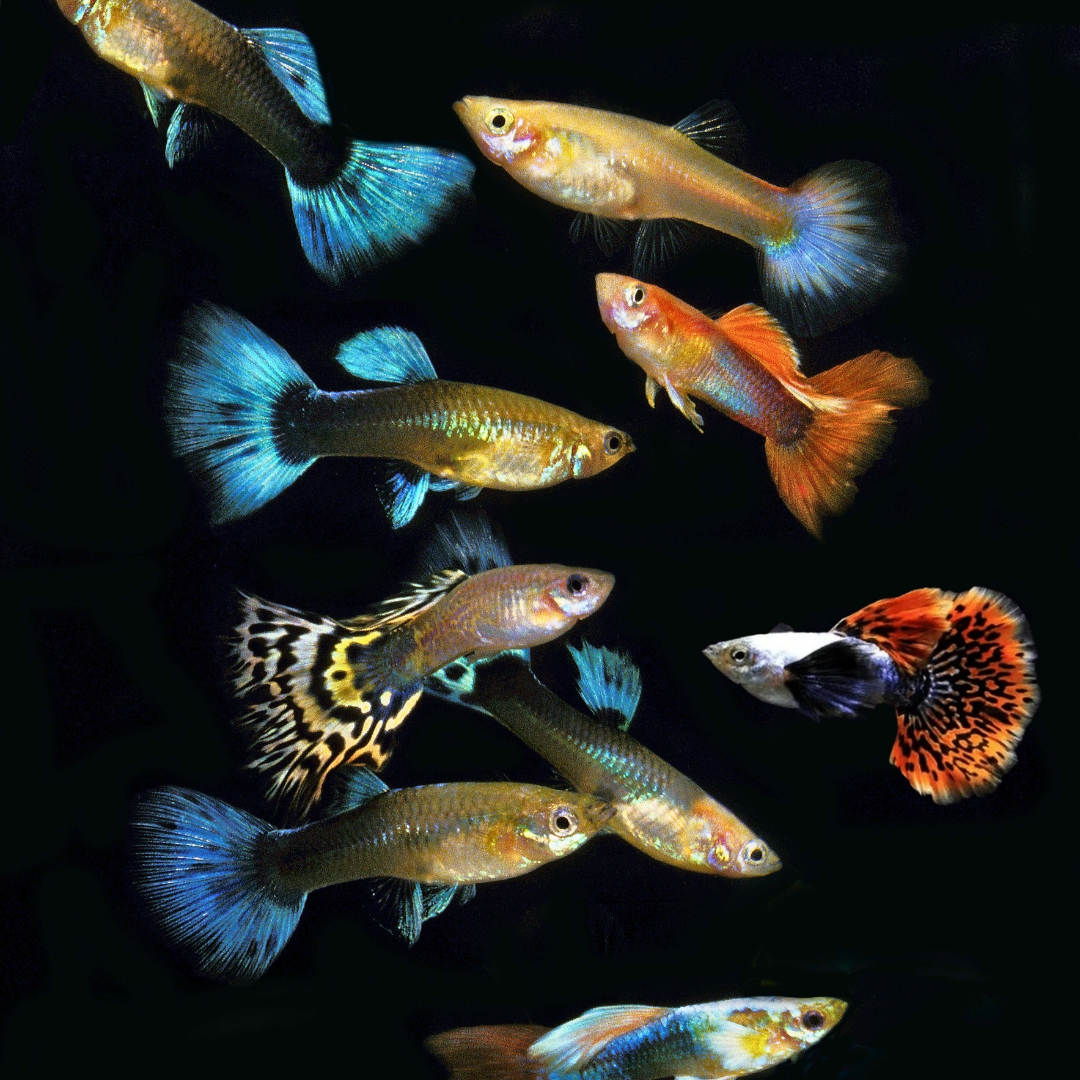
グッピーは、南米北部からカリブ海周辺を原産とする小型の卵胎生メダカの仲間です。丈夫で繁殖しやすく、はじめての熱帯魚として親しまれる一方で、オスの華やかな体色、尾びれの形、地色や柄の遺伝を組み合わせることで、非常に多くの改良品種が作られてきました。日本では、外国産グッピーと国産グッピーを分けて扱う文化が定着しており、ブルーグラス、ドイツイエロータキシード、フルレッド、RREA系など、品種ごとの美しさを楽しむ魚としても高い人気があります。The guppy is a small livebearing poeciliid fish native to northern South America and nearby Caribbean regions. It is hardy and easy to breed, making it a classic beginner tropical fish, yet its brilliant male coloration, fin shapes, body colors, and pattern genetics have also made it one of the most deeply developed ornamental fish groups. In Japan, imported guppies and domestically bred guppies are often treated as distinct categories, with varieties such as Blue Grass, German Yellow Tuxedo, Full Red, and RREA strains being especially popular.
基本情報 / Basic Information
学名 / Scientific Name
Poecilia reticulata
通称 / Common Name
グッピー、ポエキリア・レティキュラータGuppy, millionfish, rainbow fish
分類 / Family
カダヤシ目 カダヤシ科 ポエキリア属Order Cyprinodontiformes, family Poeciliidae, genus Poecilia
英名 / English Name
Guppy
分布 / Distribution
原産地はベネズエラ、ガイアナ、トリニダード・トバゴなど南米北部からカリブ海周辺の淡水域です。観賞魚や蚊の幼虫対策として世界各地に移入され、日本でも温泉地、温排水域、沖縄や小笠原などで定着例が知られています。Native to northern South America and nearby Caribbean areas, including Venezuela, Guyana, and Trinidad and Tobago. It has been introduced worldwide through the aquarium trade and mosquito-control programs, and feral populations are known from warm-water habitats in Japan.
最大体長 / Max Size
オスは約3〜4cm、メスは約5〜6cm。品種や飼育環境によって差があります。Males usually reach about 3–4 cm, while females may reach about 5–6 cm, depending on strain and conditions.
寿命 / Lifespan
一般的には約1〜2年です。水温を高めに保つと代謝が上がり、成長や繁殖は早まりますが、寿命はやや短くなる傾向があります。Generally about 1–2 years. Warmer water speeds growth and reproduction but may shorten lifespan by increasing metabolic rate.
飼育環境 / Aquarium Environment
水槽サイズ / Tank Size
少数飼育なら30cm規格水槽程度から可能ですが、水質の安定と繁殖を考えると30cmキューブ水槽、45cm規格水槽以上が扱いやすいです。ペアやトリオから増やす場合は、稚魚用の隔離容器や育成水槽も用意しておくと管理しやすくなります。A small group can be kept from around a standard 30 cm aquarium, but a 30 cm cube or standard 45 cm tank is easier for stable water quality and breeding. If breeding from pairs or trios, prepare a nursery container or grow-out tank for fry.
水温 / Temperature
23〜28℃が目安です。一般飼育では24〜26℃前後が扱いやすく、急な水温変化を避けることが大切です。23–28°C is suitable. Around 24–26°C is easy to manage for general keeping, and sudden temperature changes should be avoided.
水質 / Water Quality
中性〜弱アルカリ性を好みます。極端な軟水や酸性に傾きすぎる環境は避け、pHと硬度が急変しない安定した水を維持します。水草育成用ソイルは弱酸性に傾けやすいため、グッピー単独飼育では大磯砂や砂利系底床のほうが管理しやすい場合があります。Neutral to slightly alkaline water is preferred. Avoid extremely soft or acidic conditions, and keep pH and hardness stable. Plant-growing soils can acidify the water, so gravel or shell-influenced substrates may be easier for guppy-only aquariums.
レイアウト / Layout
遊泳スペースを確保しながら、ウィローモス、マツモ、浮草などを入れると稚魚の隠れ家になります。強すぎる水流は長い尾びれを持つ品種の負担になりやすいため、スポンジフィルターや緩やかな外掛け式フィルターなどが向いています。Provide open swimming space along with plants such as Java moss, hornwort, or floating plants for fry shelter. Strong currents can stress long-finned strains, so sponge filters or gentle hang-on filters are suitable.
注意点 / Precautions
繁殖力が高く、放置すると短期間で過密になりやすい魚です。水換え、稚魚の管理、増えた個体の受け入れ先をあらかじめ考えておきましょう。また、野外への放流は生態系に影響を与える可能性があるため、絶対に行ってはいけません。Guppies breed rapidly and can become overcrowded in a short time. Plan water changes, fry management, and the future placement of surplus fish in advance. Never release them outdoors, as they may affect local ecosystems.
餌と給餌 / Feeding
餌の種類 / Diet
主食はグッピー用のフレークフード、顆粒フード、微粒タイプの人工飼料で問題ありません。繁殖や体作りを重視する場合は、冷凍アカムシ、冷凍ミジンコ、ブラインシュリンプ、稚魚には孵化させたブラインシュリンプ幼生などを補助的に与えるとよいでしょう。Commercial guppy flakes, granules, and fine prepared foods work well as staple diets. For conditioning or breeding, frozen bloodworms, frozen daphnia, brine shrimp, and newly hatched brine shrimp for fry can be used as supplements.
給餌のポイント / Feeding Tips
1日1〜2回、数分で食べ切れる量を与えます。RREAなどアルビノ系の品種は視力が弱く、餌を見つけるのが遅いことがあるため、活発なノーマル系統と混泳させる場合は摂食できているか確認します。食べ残しは水質悪化につながるため、与えすぎに注意が必要です。Feed once or twice daily, only as much as they can finish within a few minutes. Albino strains such as RREA may have weaker eyesight and slower feeding response, so confirm that they are getting food when kept with more active normal strains. Avoid overfeeding, as leftovers quickly degrade water quality.
性格と混泳 / Temperament and Tank Mates
性格 / Temperament
基本的には温和で、よく泳ぎ回る社交的な魚です。オス同士が軽く追いかけ合うことや、オスがメスをしつこく追うことはありますが、隠れ家や十分な水量を用意すれば大きな問題になりにくいです。Generally peaceful, active, and social. Males may chase each other or pursue females persistently, but sufficient space and hiding places usually reduce serious stress.
混泳の相性 / Compatibility
小型で温和な魚、コリドラス、小型のオトシンクルス類、貝類などとは比較的相性がよいです。一方、尾びれをかじる魚、肉食性の強い魚、大型魚、極端な弱酸性軟水を好む魚との混泳は避けたほうが安全です。品種改良グッピーを美しく維持したい場合は、品種ごとの単独飼育が最も管理しやすいです。They are usually compatible with small peaceful fish, Corydoras, small Otocinclus, and snails. Avoid fin-nipping fish, predatory species, large fish, and species requiring very soft acidic water. For maintaining ornamental strains, strain-specific tanks are the easiest to manage.
病気と対策 / Diseases and Prevention
かかりやすい病気 / Common Diseases
白点病、尾ぐされ病、カラムナリス症、エロモナス症、稚魚のハリ病などに注意します。輸入個体や状態の落ちた個体では、グッピーに深刻な被害を出す繊毛虫性の感染症が問題になることもあります。初期症状が似ている病気もあるため、白い点、体表の粘液、ヒレの溶け、泳ぎ方の異常を日々観察することが大切です。Watch for ich, fin rot, columnaris, Aeromonas-related disease, and clamp-tail-like symptoms in fry. Imported or weakened individuals may also suffer from serious ciliate infections. Since early symptoms can look similar, observe white spots, excess mucus, fin damage, and abnormal swimming carefully.
対策と予防 / Prevention
基本は水質の安定、過密の回避、定期的な水換え、導入時の検疫です。新しく迎えた個体はすぐに本水槽へ入れず、数日から1〜2週間ほど別容器で様子を見るとリスクを下げられます。薬浴を行う場合は、魚病薬が水草や濾過バクテリアに影響することがあるため、隔離水槽で治療するのが安全です。Stable water quality, avoiding overcrowding, regular water changes, and quarantine are the foundation of prevention. New fish should be observed in a separate container for several days to one or two weeks before entering the main tank. If medication is needed, treatment in a hospital tank is safer because many fish medicines can harm plants and filter bacteria.
増やし方(繁殖) / Breeding
雌雄の判別 / Sexing
オスは小型で体色が鮮やかになりやすく、尻びれが交接器であるゴノポディウムに変形します。メスはオスより大きく、体色は控えめで、腹部がふっくらしやすいです。成熟したメスでは腹部後方に妊娠斑が見えることがあります。Males are smaller, usually more colorful, and have a gonopodium formed from the anal fin. Females are larger, less colorful, and often fuller-bodied. Mature females may show a gravid spot near the rear of the abdomen.
繁殖形態 / Reproduction
卵胎生です。メスは体内で受精卵を発育させ、すでに泳げる状態の稚魚を直接産みます。一度交尾したメスは体内に精子を貯蔵できるため、オスがいない環境でも複数回出産することがあります。Guppies are livebearers. Females develop fertilized eggs internally and give birth to free-swimming fry. Because females can store sperm, they may produce several broods even without a male present.
繁殖のポイント / Breeding Tips
繁殖自体は容易ですが、親魚が稚魚を食べることがあるため、産卵箱や水草の茂みを使って稚魚の逃げ場を作ります。稚魚には細かく砕いた人工飼料やブラインシュリンプ幼生を与えます。ブルーグラスのように遺伝比率によって表現型が分かれる品種では、目的の表現を残すために、選別と系統管理が重要です。Breeding is easy, but adults may eat fry, so use a breeding box or dense plants as shelter. Fry can be fed powdered prepared food or newly hatched brine shrimp. In strains such as Blue Grass, where phenotypes segregate genetically, selection and line management are important for maintaining the desired appearance.
雑学と豆知識 / Trivia and Fun Facts
1. 入門魚であり、研究魚でもある存在 / 1. A beginner fish and a research model
グッピーは「丈夫で増えやすい熱帯魚」として知られますが、科学の世界では進化や性淘汰を調べるモデル生物としても大きな役割を担ってきました。オスの色彩は、メスに選ばれやすくなる華やかさと、捕食者に見つかりやすくなる危険性の間で揺れ動きます。この小さな魚の体色には、自然界で生き残る力と、次世代へ遺伝子を残す力のせめぎ合いが表れています。Guppies are famous as hardy and prolific aquarium fish, but they are also important model organisms in studies of evolution and sexual selection. Male coloration reflects a balance between attractiveness to females and visibility to predators. In this tiny fish, survival and reproduction are written directly into the colors of the body.
2. 日本で発展した品種美と国産グッピー文化 / 2. Japanese strain culture and ornamental refinement
日本のグッピー文化では、単に派手な魚を楽しむだけでなく、品種ごとの血統、尾びれの形、色の抜け方、発色の安定性まで細かく見られてきました。国産グッピーという呼び方には、日本国内のブリーダーが選別と累代繁殖を重ね、形質を整えてきた歴史が含まれています。外国産の手軽さと、国産の緻密な美しさが並び立つ点は、日本市場ならではの面白さです。Japanese guppy culture values not only bright colors but also bloodlines, fin shape, color clarity, and stability of expression. The term “domestically bred guppy” reflects a history of careful selection and line breeding by Japanese breeders. The coexistence of affordable imported guppies and meticulously selected domestic strains is one of the distinctive features of the Japanese market.
3. 品種改良を支える遺伝の奥深さ / 3. The genetics behind guppy varieties
グッピーは、体色、尾びれの形、模様、地色など、さまざまな形質が組み合わさることで多彩な品種が作られてきました。見た目には一匹の小さな熱帯魚でも、その背景には常染色体や性染色体に関わる複数の遺伝要素が重なっています。親と同じ表現が必ずしもそのまま次世代に出るとは限らないため、品種を維持するには観察、選別、累代繁殖が欠かせません。この「育てるだけでなく、系統を読み解く楽しさ」が、グッピーを長く愛される魚にしてきた理由のひとつです。Guppies have produced countless varieties through combinations of body color, fin shape, patterns, and base coloration. Although each fish is small, its appearance can reflect multiple genetic factors involving autosomes and sex chromosomes. The offspring do not always show the same appearance as their parents, so maintaining a strain requires observation, selection, and line breeding. This enjoyment of not only keeping fish but also reading their inheritance is one reason guppies have remained so beloved.
4. メスの体内で続く繁殖のしくみ / 4. Reproduction continues inside the female
グッピーのメスは、オスと一度交尾すると体内に精子を貯蔵し、その後も出産を繰り返すことがあります。そのため、メスだけを購入したつもりでも、しばらくして稚魚が生まれることがあります。これは飼育者にとっては驚きであり、同時に水槽の将来計画を考えるきっかけにもなります。グッピーを迎えるときは、目の前の数匹だけでなく、数ヶ月後の水槽の姿まで想像しておくことが大切です。Female guppies can store sperm after mating and may give birth repeatedly afterward. Even when a keeper believes they purchased only females, fry may appear later. This can be surprising, but it is also a reminder to plan ahead. When keeping guppies, think not only about the few fish in front of you, but also about what the aquarium may look like several months later.
5. 放流してはいけない理由 / 5. Why guppies must never be released
グッピーはかつて、蚊の幼虫を食べる魚として各地に導入された歴史があります。しかし、繁殖力と適応力の高い魚を自然水域に放すと、在来の小魚や水生生物に影響する可能性があります。日本でも温かい水が流れる場所や南西諸島などで定着例が知られています。飼育しやすい魚だからこそ、最後まで水槽内で責任を持って管理することが大切です。Guppies have historically been introduced to many regions as mosquito-larva predators. However, releasing a highly adaptable and prolific fish into natural waters can affect native small fish and aquatic organisms. Feral populations are known from warm-water habitats and southern islands in Japan. Because guppies are easy to keep, responsible management within the aquarium is especially important.
まとめ / Conclusion
グッピーは、丈夫で繁殖しやすく、初心者にも親しみやすい熱帯魚です。中性〜弱アルカリ性の安定した水質、穏やかな水流、適度な水換え、与えすぎない給餌を意識すれば、家庭の水槽でも美しい姿を楽しめます。The guppy is a hardy, easy-breeding tropical fish suitable for beginners. With stable neutral to slightly alkaline water, gentle flow, regular water changes, and careful feeding, it can be enjoyed beautifully in a home aquarium.
一方で、品種改良、遺伝、繁殖管理、病気の予防まで掘り下げると、非常に奥深い魚でもあります。美しい品種を維持したい場合は、混泳よりも品種ごとの管理を基本にし、増えた個体を最後まで責任を持って扱うことが重要です。グッピーは「はじめての一匹」にも、「長く研究したい一匹」にもなれる、アクアリウムを象徴する存在です。At the same time, guppies become deeply complex when one explores strain breeding, genetics, reproduction, and disease prevention. To maintain beautiful strains, manage them by variety whenever possible and take responsibility for surplus offspring. The guppy can be both a first tropical fish and a lifelong subject of study, making it one of the symbolic fish of the aquarium hobby.
Endler, J. A. 1980. Natural Selection on Color Patterns in Poecilia reticulata. Evolution, 34(1), 76-91.
https://doi.org/10.1111/j.1558-5646.1980.tb04790.x
オスの体色、捕食圧、自然選択、性淘汰に関する雑学・豆知識部分の背景資料として参照しました。
Leibowitz, M. P. and Zilberg, D. 2009. Tetrahymena sp. infection in guppies, Poecilia reticulata: parasite characterization and pathology of infected fish. Journal of Fish Diseases, 32(10), 845-855.
https://pubmed.ncbi.nlm.nih.gov/16266327/
テトラヒメナ属原虫による感染がグッピーで問題となる点、および病理的な背景の確認に参照しました。



 アイのアクアグッズ案内お魚を撮ったのに、ボクが写ってる! スマホで楽しむ水槽撮影と便利な道具道具の特徴や使い方、選ぶときのポイントをアイが紹介します。記事はコチラ →
 アイのアクアグッズ案内ショップで見かけるカラフルなバケツ。いったい何が入ってる?道具の特徴や使い方、選ぶときのポイントをアイが紹介します。記事はコチラ →
 アイのアクアグッズ案内水換え・底砂掃除の道具の選び方|砂利・砂・ソイルに合うクリーナーとポンプ道具の特徴や使い方、選ぶときのポイントをアイが紹介します。記事はコチラ →
 アイのアクアグッズ案内ローチの仲間に合わせる飼育用品|クーリー・流水性・ボーシャの水槽と底砂道具の特徴や使い方、選ぶときのポイントをアイが紹介します。記事はコチラ →



コメント