

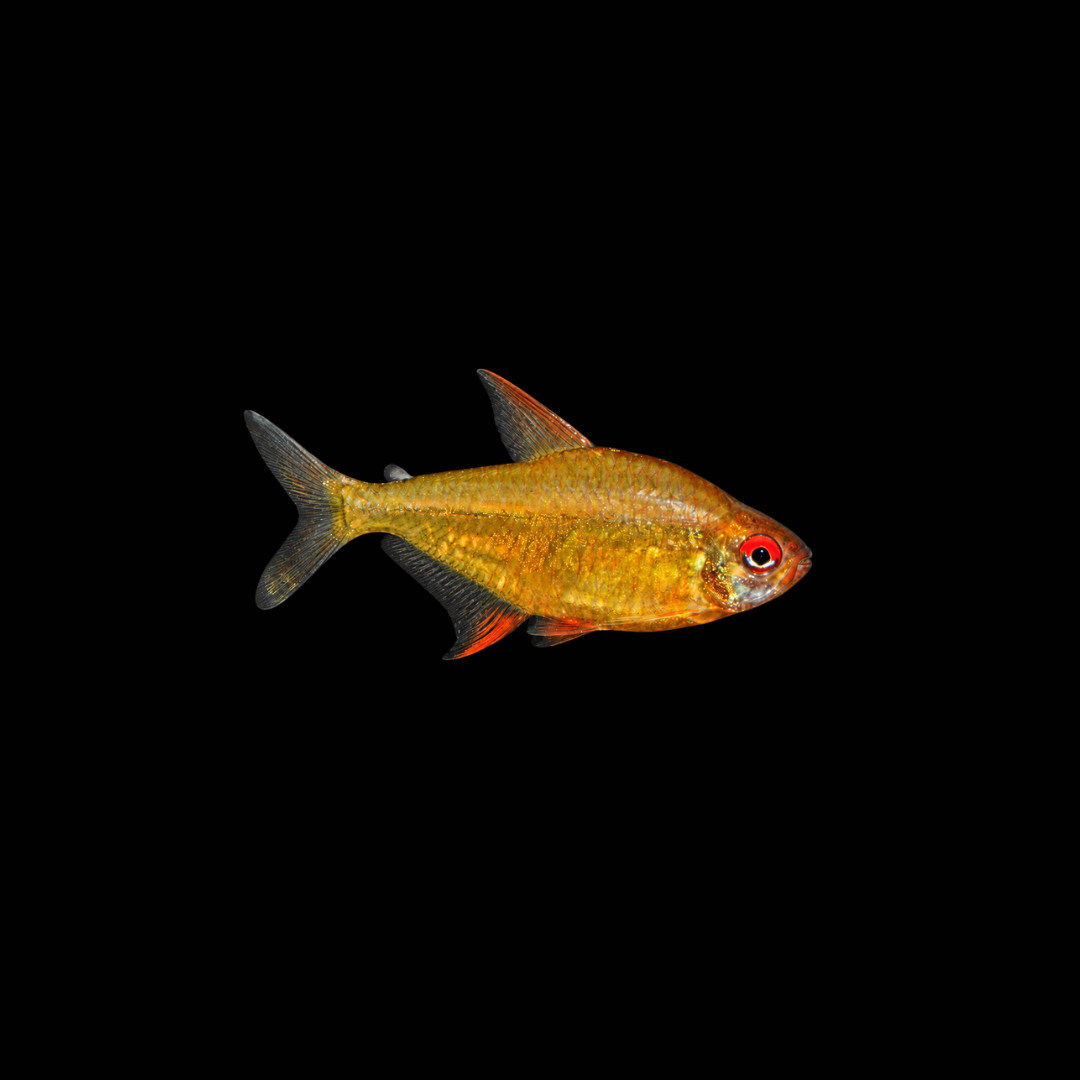
解説 / Description
ボリビアンレモンテトラは、レモンテトラに近い体型を持ちながら、成熟とともにオレンジから山吹色の発色を見せる小型カラシンです。流通名としてはボリビアンレモンテトラ、ボリビアンスーパーレモンテトラ、オレンジレモンテトラ、Orange Boliviaなどが使われます。現在のところ正式な記載種として安定した学名が与えられているわけではなく、観賞魚流通ではHyphessobrycon cf. pulchripinnis、またはHyphessobrycon sp. “Orange Bolivia”のように扱われることが多い魚です。名前に「ボリビアン」と付きますが、自然分布や標準的なレモンテトラとの関係には未確定な点が残るため、図鑑上では「レモンテトラ近縁の未記載種候補」として慎重に理解するのが安全です。 The Bolivian Lemon Tetra is a small characin with a body shape close to the classic Lemon Tetra, but mature individuals often develop warm orange to golden-yellow coloration. In the aquarium trade it is sold under names such as Bolivian Lemon Tetra, Bolivian Super Lemon Tetra, Orange Lemon Tetra, and Orange Bolivia. At present, it is not settled as a formally described species with a stable scientific name, and it is commonly treated in the trade as Hyphessobrycon cf. pulchripinnis or Hyphessobrycon sp. “Orange Bolivia.” Although the trade name includes “Bolivian,” its exact natural distribution and relationship to the classic Lemon Tetra remain uncertain, so it is safest to understand it as a likely undescribed form closely related to the Lemon Tetra.
基本情報 / Basic Information
| 学名 / Scientific Name | Hyphessobrycon cf. pulchripinnis / Hyphessobrycon sp. “Orange Bolivia” |
|---|---|
| 通称 / Common Name | ボリビアンレモンテトラ、ボリビアンスーパーレモンテトラ、オレンジレモンテトラ、スーパーレモンテトラ(ボリビア)、Orange BoliviaBolivian Lemon Tetra, Bolivian Super Lemon Tetra, Orange Lemon Tetra, Orange Bolivia |
| 分類 / Family | カラシン目 カラシン科(広義、観賞魚での一般的な表記)またはAcestrorhamphidae(近年のデータベースでの扱い) ハイフェソブリコン属Order Characiformes, family Characidae in the broad aquarium-trade sense or Acestrorhamphidae in some recent database treatments, genus Hyphessobrycon |
| 英名 / English Name | Bolivian Lemon Tetra / Orange Lemon Tetra / Orange Bolivia |
| 分布 / Distribution | 流通上はボリビアに由来するとされることがありますが、野生での正確な分布は未確定です。比較対象となる標準的なレモンテトラHyphessobrycon pulchripinnisはブラジルのタパジョス川水系に分布するとされます。本種については、ボリビア由来と伝えられる系統、またはレモンテトラ周辺の未記載フォームとして扱い、産地名を断定しない表記が適しています。流通個体にはブリード個体も多く含まれます。In the aquarium trade it is sometimes said to be of Bolivian origin, but its exact wild distribution is not settled. The classic Lemon Tetra, Hyphessobrycon pulchripinnis, is reported from the Rio Tapajós basin in Brazil. For this orange form, it is best to avoid treating the trade name as a confirmed locality and to present it as a reported Bolivian-origin line or as an undescribed form around the Lemon Tetra complex. Many specimens in the trade are captive-bred. |
| 最大体長 / Max Size | 約4〜4.5cmApproximately 4 to 4.5 cm |
| 寿命 / Lifespan | おおむね3〜4年程度。安定した水質、無理のない混泳、栄養バランスのよい給餌を保つことで、美しい発色を長く維持しやすくなります。Usually around 3 to 4 years. Stable water quality, suitable tank mates, and a balanced diet help maintain good condition and coloration for longer. |
飼育環境 / Aquarium Environment
| 水槽サイズ / Tank Size | 小型魚ですが、群れで落ち着かせることが大切です。少数なら30cmキューブ水槽(約27L)前後でも維持できますが、図鑑上の推奨は45cm規格水槽(約35〜40L)以上、できれば60cm規格水槽(約57L)以上です。8〜10匹以上で泳がせると本来の群泳感と小さな縄張り行動を観察しやすくなります。Although small, this tetra should be kept in a settled group. A tank around a 30 cm cube, about 27 L, can maintain a small group, but a standard 45 cm aquarium, about 35 to 40 L, or larger is recommended, and a standard 60 cm aquarium, about 57 L, or larger is preferable. Keeping 8 to 10 or more individuals makes it easier to observe natural schooling and small territorial displays. |
|---|---|
| 水温 / Temperature | 22〜28℃。日常管理では25℃前後を目安にすると、体調と発色を安定させやすいです。 22 to 28°C. Around 25°C is a practical everyday target for stable condition and coloration. |
| 水質 / Water Quality | 弱酸性から中性を中心に、pH6.0〜7.5前後を目安にします。近縁のレモンテトラはより広い範囲に適応しますが、本種の濃いオレンジ色を引き出すには、軟水寄りで弱酸性、硝酸塩の蓄積が少ない清浄な水が向いています。Aim for slightly acidic to neutral water, roughly pH 6.0 to 7.5. The related Lemon Tetra tolerates a wider range, but soft, slightly acidic, low-nitrate water is best for bringing out the deepest orange coloration in this form. |
| レイアウト / Layout | 流木、水草、浮き草を組み合わせ、明るすぎない落ち着いた環境を作るとよく映えます。ヤシャブシの実や落ち葉を少量使って軽いブラックウォーター風にすると、警戒心が和らぎやすく、色も落ち着いて見えます。中層をよく泳ぐため、前面や中央には泳ぐ余白を残すと観察しやすくなります。Use driftwood, aquatic plants, and floating plants to create a calm, moderately shaded aquarium. A light blackwater effect using a small amount of alder cones or leaf litter can help the fish feel secure and make the coloration appear richer. Because it swims mainly in the middle water layer, leave open swimming space at the front or center of the tank. |
| 注意点 / Precautions | 単独や少数では落ち着きにくいため、最低でも6匹以上、できれば8〜10匹以上で導入します。輸入直後や販売水槽では体色が薄いことがありますが、必ずしも状態不良とは限りません。急な水温低下、強すぎる照明、隠れ場所の少ないベアタンク、過密飼育では色飛びやストレスが起こりやすいので注意します。Keep at least 6 individuals, preferably 8 to 10 or more, because solitary or very small groups are less settled. Newly imported or shop-held specimens may look pale, which does not always indicate poor health. Sudden temperature drops, harsh lighting, bare tanks with few hiding places, and overcrowding can cause stress and faded coloration. |
餌と給餌 / Feeding
| 餌の種類 / Diet | 雑食性で、小型魚用のフレーク、細かな顆粒フード、ブラインシュリンプ、冷凍赤虫、ミジンコ、細かくしたクリル、スピルリナ配合フードなどをよく食べます。近縁のレモンテトラでは、自然下で小型の水生動物や植物質を利用することが知られており、本種も同じように動物質と植物質を組み合わせた給餌が向きます。It is omnivorous and readily accepts fine flakes, small granules, brine shrimp, frozen bloodworms, daphnia, finely crushed krill, and spirulina-based foods. The related Lemon Tetra is known to feed on small aquatic animals and plant material, so a combination of animal- and plant-based foods is appropriate for this form as well. |
|---|---|
| 給餌のポイント / Feeding Tips | 1日1〜2回、数分で食べきれる量を与えるのが基本です。発色を狙う場合は、アスタキサンチンなどのカロテノイドを含む餌を定期的に取り入れると効果が期待できます。ただし、色揚げ用の餌だけに偏らせず、複数の餌を組み合わせて体調を崩さないことを優先します。過給餌は水質悪化に直結するため、残餌を出さない量に抑えます。Feed once or twice daily, giving only what the fish can finish within a few minutes. For color development, foods containing carotenoids such as astaxanthin can be included regularly. However, do not rely only on color-enhancing foods; varied feeding is better for overall condition. Avoid overfeeding because leftover food quickly degrades water quality. |
性格と混泳 / Temperament and Tank Mates
| 性格 / Temperament | 温和で、群れの中で行動する小型テトラです。オス同士がヒレを広げて見せ合うことはありますが、深刻な争いになることは少なく、適度な広さと水草や流木の区切りがある水槽では観察の楽しみになります。This is a peaceful, group-oriented small tetra. Males may display to each other with spread fins, but serious fighting is uncommon. In a tank with adequate space and visual barriers such as plants and driftwood, these displays become part of the fish’s appeal. |
|---|---|
| 混泳の相性 / Compatibility | ネオンテトラ、カージナルテトラ、グリーンネオンテトラ、ラスボラ類、小型コリドラス、小型ロリカリア、温和な小型シクリッドなど、同程度のサイズで穏やかな魚と好相性です。口に入るほど小さな稚魚や、ヒレをかじる魚、極端に攻撃的な魚、大型魚との混泳は避けます。青や緑の魚、水草の緑と合わせると、本種のオレンジ色が美しく引き立ちます。Good tank mates include peaceful fish of similar size, such as neon tetras, cardinal tetras, green neon tetras, rasboras, small Corydoras, small loricariids, and calm dwarf cichlids. Avoid tiny fry that may be swallowed, fin-nipping species, highly aggressive fish, and large predators. Blue or green fish and green aquatic plants create a pleasing contrast with this tetra’s orange coloration. |
病気と対策 / Diseases and Prevention
| かかりやすい病気 / Common Diseases | 特別に病弱な魚ではありませんが、導入直後のストレス、水温低下、水質悪化が重なると、白点病、尾ぐされ病、肌荒れなど一般的な熱帯魚の病気が出やすくなります。色が急に抜ける、群れから離れる、ヒレをたたむ、呼吸が荒いといった変化は早めに確認します。It is not especially delicate, but stress after introduction, low temperature, and deteriorating water quality can lead to common aquarium problems such as ich, fin rot, and skin irritation. Sudden fading, isolation from the group, clamped fins, or rapid breathing should be checked promptly. |
|---|---|
| 対策と予防 / Prevention | 導入時は点滴法などでゆっくり水合わせを行い、ヒーターで水温を安定させます。新規導入魚は可能であれば検疫し、日常管理では定期的な換水、残餌の除去、ろ過能力に余裕を持たせることを重視します。発病時は症状を見極め、隔離治療や白点病薬などを適切に用います。Acclimate new fish slowly, such as by drip acclimation, and keep the temperature stable with a heater. Quarantine new arrivals when possible. Routine prevention should focus on regular water changes, removing leftovers, and maintaining adequate filtration. If disease occurs, identify the symptoms and use isolation or suitable medications as needed. |
増やし方(繁殖) / Breeding
| 雌雄の判別 / Sexing | 成熟したオスはややスリムで、発情時には体側やヒレのオレンジ色が濃くなり、背びれや尻びれを広げてアピールします。メスは全体にふっくらし、特に抱卵時は腹部の丸みが目立ちます。ただし若魚や状態が上がっていない個体では判別しにくいことがあります。Mature males tend to be slimmer and show stronger orange coloration on the body and fins when in breeding condition, often displaying with spread dorsal and anal fins. Females are generally fuller-bodied, especially around the abdomen when carrying eggs. Juveniles and poorly conditioned fish can be difficult to sex. |
|---|---|
| 繁殖形態 / Reproduction | 卵をばらまくタイプの卵生魚です。親魚は卵や稚魚を保護せず、卵を食べることがあるため、繁殖を狙う場合は専用の繁殖水槽を用意します。近縁のレモンテトラでは、オスが朝の産卵時間帯に小さな場所を守り、メスがそこへ入って産卵する行動が観察されています。It is an egg-scattering species. Adults do not guard the eggs or fry and may eat the eggs, so a separate breeding aquarium is recommended when intentional breeding is attempted. In the related Lemon Tetra, males have been observed defending small territories during the morning spawning period, with females entering those areas to spawn. |
| 繁殖のポイント / Breeding Tips | 30cm水槽程度の繁殖用タンクに、弱酸性の軟水、暗めの照明、ウィローモスや細葉の水草、メッシュ、ビー玉などを用意して卵を守ります。冷凍赤虫、ブラインシュリンプ、ミジンコなどで親魚のコンディションを上げ、産卵後は親魚を取り出します。卵は水温により1〜2日前後で孵化することが多く、自由遊泳後はインフゾリアや極微細パウダーフードから始め、成長に合わせて沸かしたてのブラインシュリンプへ移行します。稚魚期は水質変化に弱いため、少量の換水をこまめに行います。Prepare a breeding tank around 30 cm with soft, slightly acidic water, dim lighting, and egg protection such as Java moss, fine-leaved plants, mesh, or marbles. Condition the adults with frozen bloodworms, brine shrimp, daphnia, and other nutritious foods, then remove the adults after spawning. Eggs often hatch in about 1 to 2 days depending on temperature. Once the fry become free-swimming, start with infusoria or very fine powdered fry food before moving on to newly hatched brine shrimp. Small, frequent water changes are important because young fry are sensitive to water quality changes. |
雑学と豆知識 / Trivia and Fun Facts
| 1. 「cf.」が示す分類上の保留 / 1. What “cf.” means | 学名表記で見かける「cf.」は、「比較せよ」「その種に近いが同一とは断定しない」という含みを持つ略号です。ボリビアンレモンテトラの場合、レモンテトラに似ている一方で、濃いオレンジ色、尻びれの黒い縁取りの弱さ、繁殖行動の違いなどが語られており、観賞魚として親しまれながらも学術的にはまだ余白のある存在です。The abbreviation “cf.” means “compare with” and indicates that the fish resembles a named species but is not confidently identified as the same. In the case of the Bolivian Lemon Tetra, its rich orange coloration, weak or absent black edging on the anal fin, and reported differences in spawning behavior leave room for taxonomic caution even though it is already familiar in the aquarium hobby. |
|---|---|
| 2. 「ボリビアン」という名前をどう読むか / 2. How to read the “Bolivian” name | 観賞魚の流通名は、必ずしも正確な採集地点を示すとは限りません。輸出国、問屋のインボイス名、初期入荷時の説明がそのまま通称として残ることがあります。本種も、祖先がボリビア由来とされる一方で、確定的な野外分布としては扱いにくい魚です。水槽の名札では便利な名前でも、自然史を語るときには「ボリビア産と伝えられる」程度に留めると誤解が少なくなります。Trade names do not always indicate a precise collection locality. Export routes, invoice names, and early import descriptions can become permanent common names. This fish is said in the trade to have Bolivian ancestry, but that should not be treated as a fully confirmed wild distribution. The name is useful on aquarium labels, while natural-history descriptions are better phrased as “reported from Bolivia” or “sold as Orange Bolivia.” |
| 3. レモンテトラとの見分け方 / 3. How it differs from the classic Lemon Tetra | 標準的なレモンテトラは透明感のある黄色い体と、尻びれや背びれ前方に入る黒い縁取りが特徴です。ボリビアンレモンテトラは成長するとオレンジ色が強くなり、尻びれの黒線がない、または非常に薄い個体が多いとされます。尾びれが透明な点は共通するため、体色、尻びれ、背びれ、目の赤みを合わせて観察すると違いが分かりやすくなります。The classic Lemon Tetra is known for its translucent yellow body and black edging near the front of the anal and dorsal fins. The Bolivian Lemon Tetra tends to become more orange with age, and the black anal-fin line is usually absent or very faint. Because both forms have a transparent caudal fin, look at the body color, anal fin, dorsal fin, and red eye coloration together when comparing them. |
| 4. 飼い込むほど色が深まる楽しみ / 4. The joy of color development through long-term care | 若魚や入荷直後の個体は、驚くほど淡い色に見えることがあります。しかし、群れで落ち着ける環境、弱酸性寄りの安定した水、暗すぎず明るすぎない照明、カロテノイドを含む餌がそろうと、少しずつ橙色が深まっていきます。完成された派手さを一瞬で楽しむ魚ではなく、水槽環境と時間が色を育てていく魚です。Juveniles or newly arrived fish can look surprisingly pale. With the security of a group, stable slightly acidic water, moderate lighting, and carotenoid-rich foods, the orange coloration gradually deepens. This is not a fish whose full beauty is always obvious on day one; it is a fish whose color is brought out by time and a well-tuned aquarium. |
| 5. レモンテトラ周辺には複数のフォームがいる / 5. Several forms surround the Lemon Tetra | 近年の観賞魚流通では、標準的なレモンテトラだけでなく、Orange Bolivia、Muzel Red Cherry、Muzel Yellowなど、レモンテトラに似た鮮やかなフォームが話題になることがあります。これらは色やヒレの発色、肩の斑紋、尾びれの色などで区別されます。似た名前で販売される魚がすべて同一とは限らないため、購入時は流通名だけでなく、写真、入荷名、尾びれや尻びれの特徴を確認すると安心です。In recent aquarium trade discussions, several vivid lemon-tetra-like forms have appeared alongside the classic Lemon Tetra, including Orange Bolivia, Muzel Red Cherry, and Muzel Yellow. They can differ in body color, fin coloration, humeral marks, and caudal-fin color. Fish sold under similar names are not always identical, so it is wise to check photos, import names, and fin details rather than relying only on the common name. |
| 6. 価値を伝えるには「育つ姿」を見せたい魚 / 6. A fish whose value is best shown through development | 本種は、入荷直後の販売水槽では本来の色が出にくい魚です。そのため店頭では「高価なのに色が薄い小型テトラ」に見えてしまうことがあります。成魚の写真、飼い込み後の変化、弱酸性の水草水槽での群泳展示があると、その魅力は格段に伝わりやすくなります。育てる過程を含めて楽しむ魚である点こそ、ボリビアンレモンテトラの商業的な難しさであり、同時に大きな魅力でもあります。This species often fails to show its true color in newly arrived shop tanks. As a result, it may appear to customers as an expensive but pale little tetra. Adult photos, explanations of the color development process, and display tanks with soft acidic planted layouts communicate its appeal far more effectively. Its commercial challenge is also its charm: it is a fish whose beauty develops through care. |
| 7. 「セント・クレメンツ・テトラ」という呼び名について / 7. About the name “St. Clements tetra” | 一部の愛好家の間では、英国の童謡「オレンジとレモン」にちなみ、オレンジ色のレモンテトラ型魚を「セント・クレメンツ・テトラ」と呼ぶ案が語られることがあります。ただし、主要な学術名や広く定着した標準流通名として確認できる呼称ではないため、図鑑上では補足的な豆知識として扱うのが適切です。色彩と文化的連想を結びつけた、観賞魚らしい遊び心のある名前といえます。Some hobbyist discussions have used or proposed the name “St. Clements tetra” for orange lemon-type tetras, alluding to the English nursery rhyme “Oranges and Lemons.” However, it is not a formal scientific name or a widely confirmed standard trade name, so it is best treated as a supplementary piece of trivia. It is a playful aquarium-style name that links the fish’s color with a cultural reference. |
まとめ / Conclusion
ボリビアンレモンテトラは、レモンテトラに似た親しみやすさの中に、未記載種候補としての奥行きと、飼い込むほど色づく楽しさを秘めた小型カラシンです。名前や産地にはまだ慎重に扱うべき点がありますが、群れで泳ぐ姿、ヒレを広げる小さな駆け引き、時間とともに深まる橙色は、水草水槽の中で静かに目を引く魅力になります。 The Bolivian Lemon Tetra is a small characin with the familiar appeal of the Lemon Tetra, the depth of a likely undescribed form, and the pleasure of watching its color develop with care. Its name and origin should be treated cautiously, but its schooling behavior, subtle fin displays, and gradually deepening orange coloration give it a quiet yet striking presence in a planted aquarium.
派手さだけを求めて迎えるよりも、弱酸性寄りの落ち着いた水、安心できる群れ、変化を待つ時間を用意してこそ真価が見えてきます。透明感のある若魚が少しずつ暖かな色をまとっていく過程は、飼育者の手で水槽が成熟していく時間そのものを映し出し、長く付き合うほど味わいが増す存在として記憶に残ります。 Its true appeal appears most clearly when it is given calm, slightly acidic water, the security of a group, and enough time to settle. Watching a pale juvenile gradually take on warm color mirrors the maturation of the aquarium itself, making this a fish that becomes more memorable the longer it is kept.

気になる道具や飼い方を見つけてみませんか?
 アイのアクアグッズ案内コリドラスのもふもふ時間を楽しむ|餌・底砂・お掃除用品の選び方コリドラスのもふもふする食事風景を楽しむために。沈む餌2種類の違い、口元に配慮した底砂、食べ残しを回収する道具を、アクアグッズナビゲーターのアイが紹介します。記事はコチラ →
 アイのアクアグッズ案内水槽フィルターの選び方|外掛け・外部・上部から小型オーバーフローまで道具の特徴や使い方、選ぶときのポイントをアイが紹介します。記事はコチラ →
 アイのアクアグッズ案内水槽のエアーポンプの選び方|水深・音・泡で選ぶおすすめ用品道具の特徴や使い方、選ぶときのポイントをアイが紹介します。記事はコチラ →
 アイのアクアグッズ案内水槽の底砂の選び方|砂・砂利の違いとおすすめ商品道具の特徴や使い方、選ぶときのポイントをアイが紹介します。記事はコチラ →
さまざまな飼育テーマをご紹介。リンク先の記事には広告・商品紹介が含まれます。
案内・紹介記事一覧へ →分布マップ
ボリビアンレモンテトラは、流通上ボリビア由来とされることがありますが、野生での正確な分布は未確定です。この地図では、分布イメージ用としてボリビア低地周辺の概略代表地点を示しています。
※この位置は、分布欄の「ボリビア由来と伝えられる」という情報から作成した概略プロットです。実際の採集地点や厳密な生息範囲を示すものではありません。
参考文献
ボリビアンレモンテトラの分類、分布、生息環境、飼育管理などに関する参考文献です。店舗、通販、個人ブログ、まとめサイトは除外し、学術データベース、査読論文、大学・公的機関系の資料を中心に絞っています。
注記:ボリビアンレモンテトラは流通名として扱われることが多く、Hyphessobrycon cf. pulchripinnis または Hyphessobrycon sp. とされる未記載種候補です。そのため、直接の学術資料が限られる部分は、標準的なレモンテトラ Hyphessobrycon pulchripinnis と近縁小型カラシンの基礎資料を補助的に用いる前提で整理しています。
-
Melo, B. F., Ota, R. P., Benine, R. C., Carvalho, F. R., Lima, F. C. T., Mattox, G. M. T., Souza, C. S., Faria, T. C., Reia, L., Roxo, F. F., Valdez-Moreno, M., Near, T. J. & Oliveira, C. (2024). Phylogenomics of Characidae, a hyper-diverse Neotropical freshwater fish lineage, with a phylogenetic classification including four families (Teleostei: Characiformes). Zoological Journal of the Linnean Society, 202(1), zlae101.
支える内容:旧来のCharacidae周辺分類の再編、Acestrorhamphidaeを含む近年の分類体系を説明するための基礎資料。
-
Fricke, R., Eschmeyer, W. N. & van der Laan, R. (eds.). Eschmeyer’s Catalog of Fishes: Classification. California Academy of Sciences. Accessed 2026-06-25.
支える内容:現行の魚類分類体系、Characiformes内でのAcestrorhamphidaeおよびHyphessobryconinaeの位置づけの確認。
-
Froese, R. & Pauly, D. (eds.). FishBase: Hyphessobrycon pulchripinnis Ahl, 1937, Lemon tetra. Accessed 2026-06-25.
支える内容:標準的なレモンテトラの学名、分布、最大体長、水温・pH、食性、群れでの飼育、60cm水槽目安などの基礎情報。
-
GBIF Secretariat (2023). GBIF Backbone Taxonomy: Hyphessobrycon pulchripinnis Ahl, 1937.
支える内容:学名、命名者、記載年、原記載文献の照合。分類表記が資料間で更新・差異を持つ可能性を確認する補助資料。
-
Cole, B., Kotol, P. & Haring, M. (1999). Spawning and Production of the Lemon Tetra Hyphessobrycon pulchripinnis. Center for Tropical and Subtropical Aquaculture, Publication Number 142; University of Hawaii Sea Grant Extension Service.
支える内容:レモンテトラの飼育水質、繁殖水槽、採卵、親魚による卵食の回避、稚魚の初期飼料、育成温度帯など。
-
Burt, A., Kramer, D. L., Nakatsuru, K. & Spry, C. (1988). The tempo of reproduction in Hyphessobrycon pulchripinnis (Characidae), with a discussion on the biology of “multiple spawning” in fishes. Environmental Biology of Fishes, 22, 15–27.
支える内容:レモンテトラの産卵周期、複数回産卵、卵数、繁殖行動の基礎情報。
-
Nakatsuru, K. & Kramer, D. L. (1982). Is sperm cheap? Limited male fertility and female choice in the lemon tetra (Pisces, Characidae). Science, 216(4547), 753–755.
支える内容:レモンテトラの繁殖行動、雄の連続産卵能力、雌の配偶者選択に関する学術的背景。
-
Svobodová, Z., Lloyd, R., Máchová, J. & Vykusová, B. (1993). Water Quality and Fish Health. EIFAC Technical Paper No. 54. Food and Agriculture Organization of the United Nations.
支える内容:水温、pH、溶存酸素、アンモニアなどの水質要因が魚の健康へ与える影響を説明するための一般基礎資料。
-
Francis-Floyd, R., Yanong, R. P. & Pouder, D. B. Ichthyophthirius multifiliis (White Spot) Infections in Fish. UF/IFAS Extension, University of Florida.
支える内容:白点病の原因生物、症状、感染拡大、温度変化や過密との関係、導入魚の隔離と予防管理。




コメント