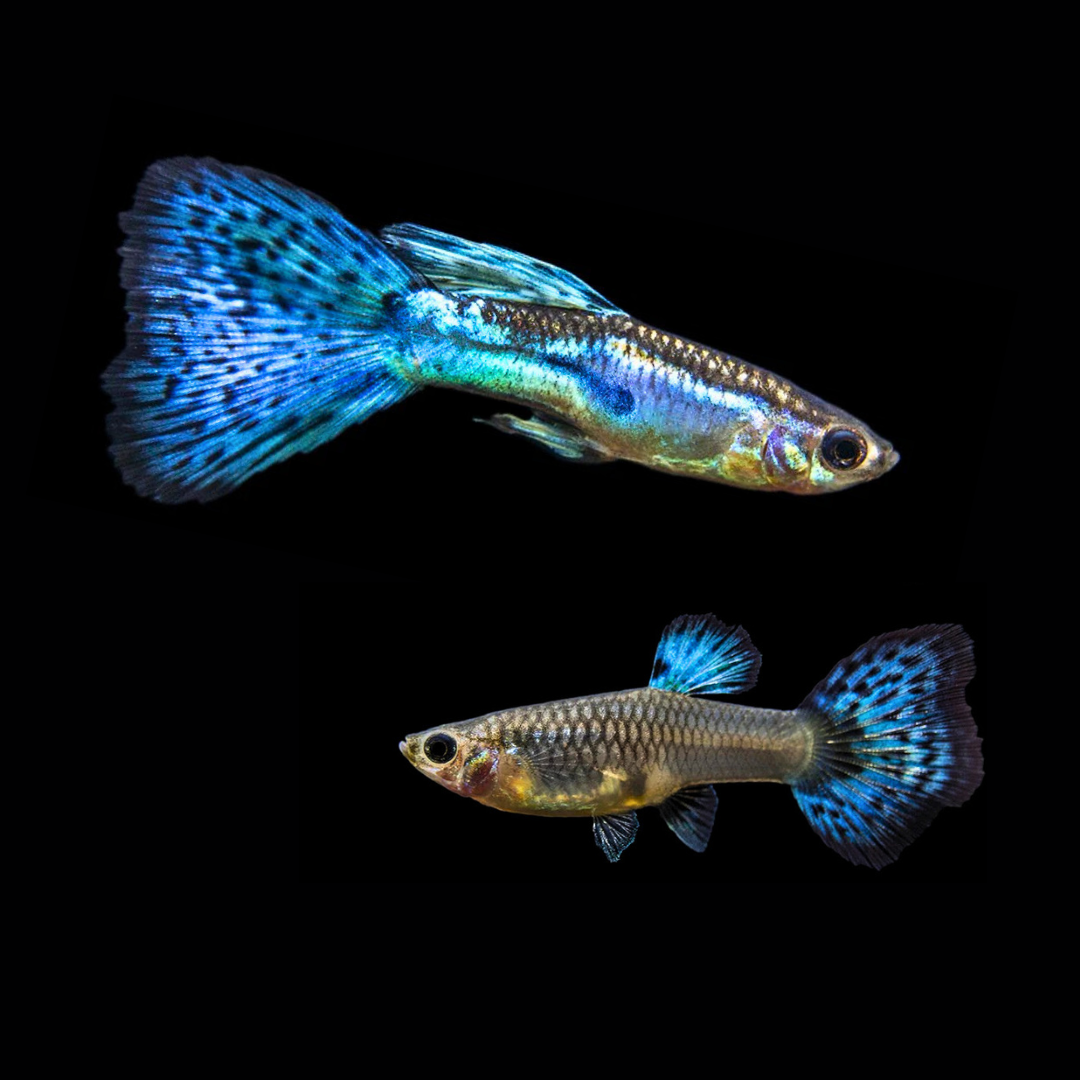
ブルーグラスグッピーは、透明感のある青い尾びれと、細かなスポットが散るグラス模様が魅力の改良グッピーです。国産グッピーを代表する人気品種のひとつとして知られ、涼しげな青色、メタリックに輝く体、背びれと尾びれに入る繊細な模様が見どころになります。一般的なグッピーと同じく小型水槽でも飼育しやすい一方で、良い発色と整った尾びれを保つには、水質の安定、強すぎない水流、こまめな選別を意識することが大切です。The Blue Grass Guppy is a selectively bred guppy variety admired for its translucent blue caudal fin and fine grass-like spotting. It is one of the well-known Japanese fancy guppy strains, valued for its cool blue coloration, metallic body sheen, and delicate patterns on the dorsal and caudal fins. Like many guppies, it can be kept in a relatively small aquarium, but stable water quality, gentle water flow, and careful selection are important for maintaining good color and fin shape.
基本情報 / Basic Information
学名 / Scientific Name
Poecilia reticulata
通称 / Common Name
ブルーグラスグッピー、ブルーグラス、国産ブルーグラスBlue Grass Guppy, Blue Grass fancy guppy
分類 / Family
カダヤシ目カダヤシ科グッピー属Order Cyprinodontiformes, family Poeciliidae, genus Poecilia
英名 / English Name
Blue Grass Guppy
分布 / Distribution
原種のグッピーは南米北部からカリブ海周辺に自然分布します。ブルーグラスグッピーは飼育下で作出・維持される改良品種で、野生分布を持つ独立した種ではありません。Wild guppies are native to northern South America and nearby Caribbean regions. The Blue Grass Guppy is a captive-bred ornamental strain and does not have a natural wild distribution as a separate species.
最大体長 / Max Size
オス約3〜4cm、メス約4〜6cm。メスの方が体格が大きく、オスは尾びれや体色の美しさが目立ちます。Males reach about 3 to 4 cm, while females reach about 4 to 6 cm. Females are generally larger, while males show more developed coloration and fins.
寿命 / Lifespan
およそ1〜2年。水温が高いほど代謝が上がり、成長や繁殖は早まりますが、寿命は短くなりやすい傾向があります。Approximately 1 to 2 years. Higher temperatures tend to increase metabolism, growth, and breeding activity, but may shorten lifespan.
飼育環境 / Aquarium Environment
水槽サイズ / Tank Size
ペア飼育なら30cmキューブ水槽でも可能ですが、水質の安定を考えると45cm規格水槽以上がおすすめです。複数ペアや稚魚の育成まで考える場合は、60cm規格水槽を用意すると管理しやすくなります。A 30 cm cube aquarium can house a pair, but a standard 45 cm aquarium or larger is recommended for more stable water conditions. For multiple pairs or raising fry, a standard 60 cm aquarium is easier to manage.
水温 / Temperature
23〜26℃前後が目安です。20〜28℃程度でも飼育は可能ですが、急な水温変化は白点病や体調不良の原因になりやすいため、冬はヒーター、夏は冷却ファンなどで安定させます。A temperature of around 23 to 26°C is ideal. They can be kept at about 20 to 28°C, but sudden temperature changes can trigger white spot disease and general stress. Use a heater in winter and cooling equipment if needed in summer.
水質 / Water Quality
中性から弱アルカリ性を好み、目安はpH7.0〜7.8前後です。日本の水道水は軟水寄りの地域も多く、長期管理では水槽内が酸性に傾きやすいため、必要に応じてカキ殻や少量のサンゴ砂を使い、pHとKHを穏やかに安定させると飼育しやすくなります。They prefer neutral to slightly alkaline water, roughly pH 7.0 to 7.8. In areas with soft tap water, aquarium water may gradually become acidic over time. Oyster shell or a small amount of coral sand can help stabilize pH and carbonate hardness when used carefully.
レイアウト / Layout
遊泳スペースを広く取り、強い水流を避けたレイアウトが向いています。マツモ、ナヤス、ウィローモスなどを入れると、稚魚の隠れ家や水質安定の補助になります。尾びれが大きいオスは水流に疲れやすいため、フィルターの吐出口は弱めに調整します。Provide open swimming space and avoid strong currents. Hornwort, guppy grass, and Java moss can provide shelter for fry and help stabilize the environment. Males with large caudal fins may tire easily in strong flow, so filter output should be kept gentle.
注意点 / Precautions
国産グッピーと外国産グッピーの混泳は避けるのが無難です。流通経路や管理環境の違いにより、片方が持ち込んだ病原体にもう片方が弱い場合があります。また、ブルーグラスの美しい系統を維持したい場合は、他品種との交雑を防ぐため単独系統で管理します。It is generally safer not to mix domestically bred Japanese guppies with imported guppies. Differences in origin and husbandry may expose one group to pathogens to which it has little resistance. To preserve the Blue Grass strain, keep it separately from other guppy varieties.
餌と給餌 / Feeding
餌の種類 / Diet
人工飼料を主食にし、フレーク、顆粒、グッピー用フードを与えます。発育や繁殖を重視する場合は、ブラインシュリンプ、冷凍アカムシ、イトメなどを補助的に使うと効果的です。稚魚には孵化直後のブラインシュリンプや細かく砕いた人工飼料が向いています。Use prepared foods such as flakes, granules, and guppy-specific diets as the staple. For growth and breeding, newly hatched brine shrimp, frozen bloodworms, or tubifex can be offered as supplements. Fry do well on newly hatched brine shrimp and finely crushed prepared foods.
給餌のポイント / Feeding Tips
1日2〜3回、数分で食べきれる量を与えます。与えすぎは水質悪化につながり、尾腐れ病や稚魚の不調を招きやすくなります。特に稚魚育成では、少量をこまめに与えつつ、スポンジフィルターや水換えで水を清潔に保つことが大切です。Feed small portions 2 to 3 times a day, only as much as they can finish within a few minutes. Overfeeding can quickly degrade water quality and contribute to fin rot or poor fry condition. When raising fry, feed small amounts frequently while maintaining clean water with a sponge filter and regular water changes.
性格と混泳 / Temperament and Tank Mates
性格 / Temperament
基本的には温和で、人にもよく慣れる飼いやすい魚です。オス同士で軽く追い合うことはありますが、広さと隠れ場所があれば大きな問題になりにくいです。繁殖力が高いため、雌雄を一緒にすると自然に数が増えていきます。They are generally peaceful and easy to keep, often becoming accustomed to their keeper. Males may chase each other mildly, but this is usually manageable with enough space and cover. They breed readily when males and females are kept together.
混泳の相性 / Compatibility
小型で温和な魚との混泳に向いています。コリドラス、小型カラシン、オトシンクルス、ミナミヌマエビなどが候補になります。ただし、ヒレをかじる魚、大型魚、動きの激しい魚との混泳は避けます。系統維持を目的にする場合は、他のグッピー品種とは混泳させないことが重要です。They are suitable for community aquariums with small, peaceful tank mates such as Corydoras, small tetras, Otocinclus, and dwarf shrimp. Avoid fin-nipping species, large fish, and overly active tank mates. If maintaining the strain is the goal, do not keep them with other guppy varieties.
病気と対策 / Diseases and Prevention
かかりやすい病気 / Common Diseases
白点病、尾腐れ病、カラムナリス感染症、エロモナス症、稚魚期のハリ病などに注意します。特にグッピーは水質悪化や急な水温変化、導入時のストレスで体調を崩しやすく、尾びれの大きい個体ではヒレの裂けや傷から感染が広がることがあります。Watch for white spot disease, fin rot, columnaris infections, Aeromonas-related problems, and pin-tail symptoms in fry. Guppies can become stressed by poor water quality, sudden temperature changes, and transport stress. Individuals with large fins may develop infections from torn or damaged fins.
対策と予防 / Prevention
もっとも重要なのは、導入時の隔離、急な水温変化を避けること、過密飼育と餌の与えすぎを避けることです。軽度の体調不良では0.3〜0.5%程度の塩水浴が補助的に使われることがありますが、薬浴が必要な場合は症状に合う観賞魚用薬を選び、必ず用法に従います。稚魚のハリ病は、親魚の健康状態や水質の影響を強く受けるため、発生後の治療よりも予防管理が重要です。The most important preventive measures are quarantine, stable temperature, avoiding overcrowding, and preventing overfeeding. A 0.3 to 0.5% salt bath may be used as supportive care for mild stress, but if medication is needed, choose an aquarium treatment appropriate to the symptoms and follow the instructions carefully. Pin-tail symptoms in fry are strongly influenced by parent condition and water quality, so prevention is more reliable than treatment after symptoms appear.
増やし方(繁殖) / Breeding
雌雄の判別 / Sexing
オスは体が小さめで色彩が強く、尾びれや背びれが美しく発達します。また、尻びれが交接器に変化しています。メスは体が大きく、腹部がふっくらしやすく、体色はオスより控えめです。ブルーグラス系では、メスの表現だけでブルーグラス系かレッドグラス系かを厳密に見分けることが難しい場合があります。Males are smaller, more colorful, and have more developed dorsal and caudal fins. Their anal fin is modified into a gonopodium. Females are larger, usually fuller-bodied, and less colorful. In Blue Grass lines, it may be difficult to determine the exact genetic background of females by appearance alone.
繁殖形態 / Reproduction
卵胎生です。メスは体内で卵を育て、稚魚の形で産みます。環境が安定していれば繁殖は比較的容易で、成魚が稚魚を食べることもあるため、稚魚を多く残したい場合は産卵箱や育成水槽、水草の茂みを利用します。They are livebearers. Females carry developing eggs internally and give birth to free-swimming fry. Breeding is relatively easy in stable conditions, but adults may eat fry, so a breeder box, separate rearing tank, or dense plants are useful if you want to raise many fry.
繁殖のポイント / Breeding Tips
ブルーグラスは、青い表現を維持するうえで遺伝の分離を理解しておくと扱いやすい品種です。ブルーグラス同士を交配しても、すべてがブルーグラスになるわけではなく、レッドグラスやブラオに近い表現が生まれることがあります。よい系統を維持するには、尾びれの形、グラス模様の細かさ、黄色い斑の少なさ、体格、健康状態を見ながら、次世代の親魚を丁寧に選びます。Understanding genetic segregation is helpful when maintaining Blue Grass lines. Pairing Blue Grass guppies does not produce only Blue Grass offspring; red grass-like or blau-like individuals may also appear. To maintain a high-quality line, select breeders based on caudal fin shape, fine spotting, minimal yellow staining, body condition, and overall health.
雑学と豆知識 / Trivia and Fun Facts
1. ブルーグラスは日本のグッピー文化を象徴する品種 / 1. A strain that symbolizes Japanese guppy culture
ブルーグラスグッピーは、日本国内で磨かれてきた国産グッピー文化を語るうえで欠かせない品種です。透明感のある青い尾びれに、細かな点が霧のように広がる姿は、単に派手というよりも、繊細な美しさを楽しむタイプのグッピーだといえます。赤や黄色の強い品種が華やかさで目を引くのに対し、ブルーグラスは水草水槽にも自然に溶け込み、青い光沢が角度によってふっと浮かび上がるような魅力を持っています。The Blue Grass Guppy is an important strain when discussing Japan’s fancy guppy culture. Its translucent blue caudal fin, covered with fine mist-like spots, offers a delicate beauty rather than simple showiness. While red and yellow strains attract attention with vivid colors, Blue Grass blends naturally into planted aquariums and reveals a soft blue sheen as the viewing angle changes.
2. 青い色素があるのではなく、赤が抑えられて青く見える / 2. The blue appearance comes from reduced red coloration
ブルーグラスの青さは、絵の具のような青い色素だけで作られているわけではありません。グッピーの体色は、赤・黄・黒・構造色など複数の色素細胞の組み合わせによって見え方が決まります。ブルーグラスでは、赤い色素の発現が抑えられることで、下層にある虹色細胞の青みや銀色の輝きが目立ちやすくなり、結果として透明感のある青に見えると考えられています。この仕組みを知ると、ブルーグラスの色が単なる青ではなく、光と色素のバランスによって成立していることが分かります。The blue color of the Blue Grass Guppy is not simply produced by a blue pigment like paint. Guppy coloration is created by a combination of red, yellow, black, and structural color cells. In Blue Grass, reduced red pigmentation allows the bluish and silvery reflection of iridophores to become more visible, producing a translucent blue appearance. This makes the color a balance of light and pigmentation rather than a simple blue stain.
3. ブルーグラス同士からブルーだけが生まれるわけではない / 3. Blue Grass pairs do not produce only Blue Grass offspring
ブルーグラスを繁殖させるときに面白いのは、親がどちらもブルーグラスに見えても、次世代がすべて同じ青い個体になるとは限らない点です。系統によっては、レッドグラスに近い赤い表現や、ブラオと呼ばれる青黒い表現が現れることがあります。これは失敗というより、品種を支える遺伝的な仕組みが表に出たものです。ブリーダーはその中から、尾びれの形、グラス模様、発色、体格を見ながら次の親を選び、世代を重ねて美しさを維持していきます。One fascinating aspect of breeding Blue Grass guppies is that even two Blue Grass-looking parents do not necessarily produce only blue offspring. Depending on the line, offspring with red grass-like coloration or darker blau-like expression may appear. This is not simply a failure, but a visible result of the genetic system behind the strain. Breeders select the next generation by judging fin shape, grass pattern, color, and body quality.
4. 良いブルーグラスは青さだけでなく、模様と尾びれの形で評価される / 4. Quality is judged by pattern and fin shape, not only color
ブルーグラスの魅力は青い尾びれだけではありません。良い個体では、尾びれの根元から先端まで細かなスポットが入り、背びれにも似た雰囲気の模様が乗るため、全体に統一感が生まれます。反対に、黄色い斑が強く出たり、スポットが粗くなったり、尾びれの形が崩れたりすると、観賞価値は下がりやすくなります。つまりブルーグラスは、色、模様、ヒレの形、体格がそろったときに初めて本来の美しさが引き立つ品種です。The appeal of Blue Grass is not only the blue caudal fin. High-quality individuals show fine spotting from the base to the edge of the tail, often with a matching pattern on the dorsal fin, creating a balanced appearance. Strong yellow staining, coarse spotting, or a distorted tail shape can reduce ornamental value. Blue Grass shows its true beauty when color, pattern, fin shape, and body condition come together.
5. 初心者向きでありながら、奥深いブリーディング品種 / 5. Beginner-friendly, yet deeply rewarding for breeders
ブルーグラスグッピーは、日常の飼育だけを楽しむなら比較的扱いやすい魚です。しかし、同じ美しさを次世代にも残そうとすると、急に奥深い品種になります。雌雄の選び方、稚魚の育て方、レッドグラスやブラオの扱い、尾びれの選別など、考えることが多くなります。だからこそ、初めての熱帯魚として楽しむ人にも、長く品種改良を追いかけたい愛好家にも、それぞれ違った楽しみ方を与えてくれるグッピーだといえます。Blue Grass Guppies are relatively easy to keep if the goal is simple enjoyment. However, maintaining the same beauty across generations makes the strain much deeper. Breeder selection, fry rearing, managing red grass-like and blau-like offspring, and selecting fin shape all become important. This is why the strain can appeal both to beginners keeping their first tropical fish and to dedicated hobbyists interested in long-term breeding.
まとめ / Conclusion
ブルーグラスグッピーは、透明感のある青い尾びれと繊細なグラス模様が美しい、国産グッピーを代表する改良品種です。基本的な飼育は難しすぎませんが、良い状態を保つには中性から弱アルカリ性寄りの安定した水質、強すぎない水流、清潔な環境を意識する必要があります。The Blue Grass Guppy is a representative Japanese fancy guppy strain known for its translucent blue tail and delicate grass-like pattern. Basic care is not overly difficult, but stable neutral to slightly alkaline water, gentle flow, and a clean environment are important for keeping it in good condition.
また、繁殖を楽しむ場合は、ブルーグラス同士から必ずしもブルーだけが生まれるわけではない点を理解しておくと、この品種の奥深さがより見えてきます。観賞魚としての美しさと、ブリーディング品種としての面白さをあわせ持つブルーグラスグッピーは、初心者から愛好家まで長く楽しめる魅力的なグッピーです。When breeding them, it is helpful to understand that Blue Grass pairs do not always produce only blue offspring. This reveals the deeper appeal of the strain. Combining ornamental beauty with fascinating breeding potential, the Blue Grass Guppy is an attractive guppy that can be enjoyed by beginners and advanced hobbyists alike.
CABI Digital Library. Poecilia reticulata (guppy). CABI Compendium, 2023.
グッピーの原産地、世界各地への導入、外来魚としての扱い、基礎的な生態情報を確認するために参照しました。
Global Invasive Species Database. Poecilia reticulata. IUCN Invasive Species Specialist Group.
原種グッピーの分布域、環境適応性、蚊対策目的での導入、外来個体群に関する背景情報を確認するために参照しました。
Kitanishi, S. et al. Origin of the guppy Poecilia reticulata in Japan: sequence analysis of the mitochondrial cytochrome b gene. Aquaculture Science / J-STAGE.
日本国内に定着したグッピーの由来や、日本における導入・定着の背景を確認するために参照しました。
Kottler, V. A., Fadeev, A., Weigel, D. and Dreyer, C. Pigment Pattern Formation in the Guppy, Poecilia reticulata, Involves the Kita and Csf1ra Receptor Tyrosine Kinases. Genetics, 2013.
グッピーの体色が黒色素胞、黄色・赤色系色素胞、虹色素胞など複数の色素細胞によって構成されることを確認するために参照しました。
Khoo, G., Lim, T. M., Chan, W. K. and Phang, V. P. E. Genetic Basis of the Variegated Tail Pattern in the Guppy, Poecilia reticulata. Zoological Science, 1999.
グッピーの尾びれ模様が遺伝的要因によって表現されること、観賞用品種における模様形質の理解を補強するために参照しました。
Shaddock, P. The See-thru Guppy: A Transparent Fish Model. AACL Bioflux, 2009.
グッピーの色素細胞、アルビノ、アジアン・ブラオ、グラスベリーなどの色彩関連形質を理解する補助資料として参照しました。
Bias, A. S. and Squire, R. D. The phenotypic expression of Purple Body (Pb) in domestic guppies. Poeciliid Research, 2017.
アジアン・ブラオが赤橙系の表現を抑え、青みや虹色素胞の見え方に影響するという説明を補強するために参照しました。
Walstad, D. Breeding Guppies: Genetic Pitfalls and Successes. 2022.
グッピーの近親交配、系統維持、アジアン・ブラオ遺伝子を含むブリーディング上の注意点を整理するために参照しました。
Deacon, A. E., Ramnarine, I. W. and Magurran, A. E. How Reproductive Ecology Contributes to the Spread of a Globally Invasive Fish. PLoS ONE, 2011.
グッピーが卵胎生で繁殖力の高い魚であること、メスの繁殖生態や導入先での定着しやすさを確認するために参照しました。
Kent, M. I. A., Herbert, N. A. and McKenzie, D. J. The effect of water temperature on routine swimming behaviour in the guppy Poecilia reticulata. Journal of Fish Biology, 2015.
グッピーが比較的広い水温範囲に適応する一方で、水温が行動や代謝に影響することを確認するために参照しました。
U.S. Fish and Wildlife Service. Guppy (Poecilia reticulata) Ecological Risk Screening Summary.
グッピーが温暖な水域を必要とすること、外来魚としての定着条件、基礎的な生態情報を確認するために参照しました。



 アイのアクアグッズ案内水槽のエアーポンプの選び方|水深・音・泡で選ぶおすすめ用品道具の特徴や使い方、選ぶときのポイントをアイが紹介します。記事はコチラ →
 アイのアクアグッズ案内水草水槽のCO₂添加|3つの方式の選び方とおすすめ用品道具の特徴や使い方、選ぶときのポイントをアイが紹介します。記事はコチラ →



コメント