

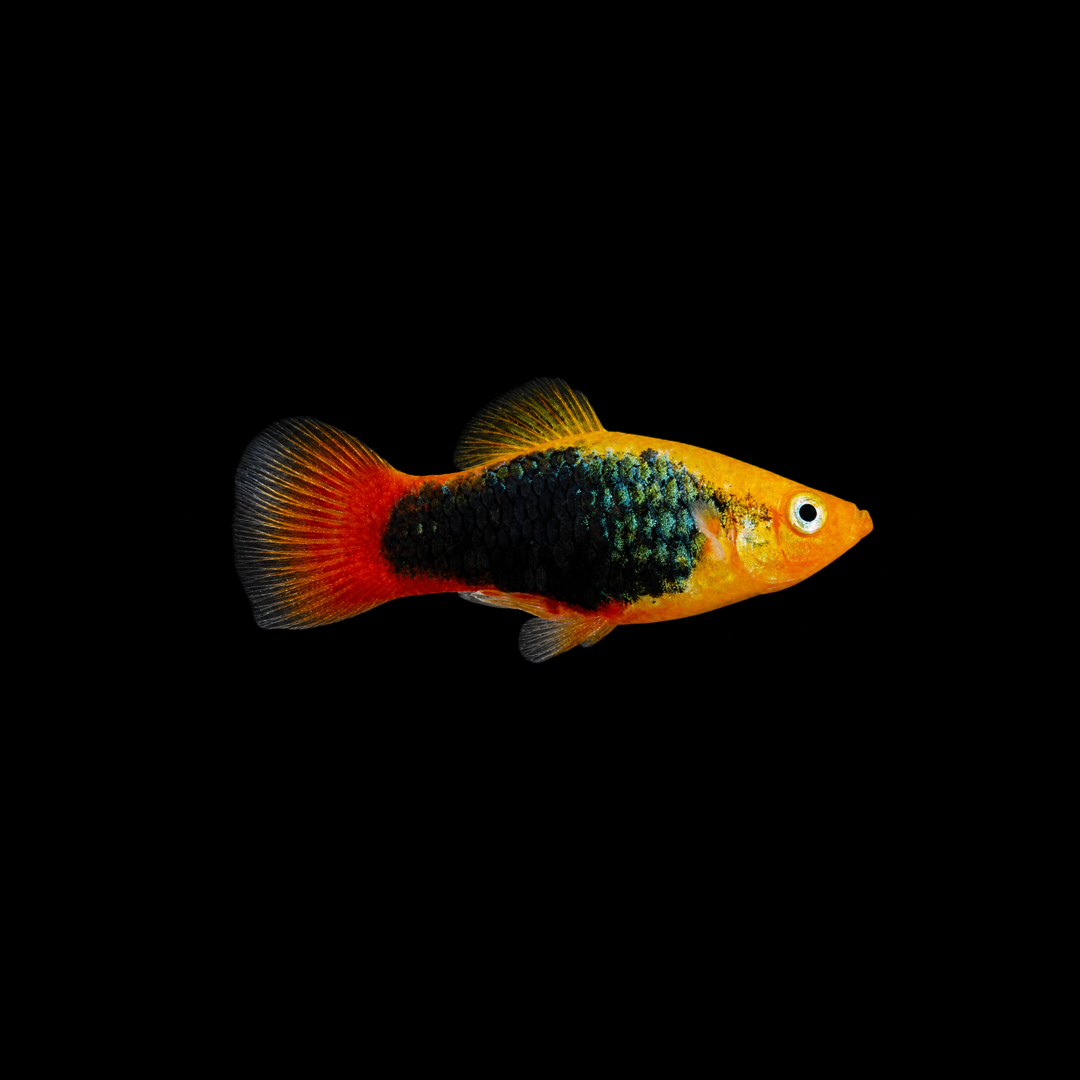
解説 / Description
ゴールデンタキシードバリアタスは、Xiphophorus variatus 系の観賞魚として流通する改良品種で、黄色から黄金色の地色と、体側に広がる黒いタキシード模様を特徴とします。日本では「ゴールデンタキシードバリアタス」の名で流通が確認でき、ハイフィン個体などの派生タイプも販売されています。一方、「ハワイアンバリアタス」など似た流通名の魚が同じ系統を指すとは限らないため、名称だけで血統を断定することはできません。観賞用のプラティ、バリアタス、ソードテールでは長年にわたり交雑と選抜育種が行われてきましたが、この流通名のすべての個体が同一の交雑履歴を持つと確認できるわけではありません。そのため、ここでは X. variatus 系の流通改良品種として扱います。比較的低い水温にも適応しやすく、活発で繁殖も楽しみやすい魚です。また、クシフォフォルス属そのものは遺伝学や腫瘍研究のモデル生物として長く研究されてきました。 Golden Tuxedo Variatus is an ornamental strain traded as a Xiphophorus variatus-type fish, characterized by a yellow-to-golden body and broad black “tuxedo” markings along the flanks. In Japan, the name Golden Tuxedo Variatus is clearly used in the aquarium trade, and derivative forms such as high-fin fish are also sold. Similar trade names, including Hawaiian Variatus, do not necessarily identify the same strain, so pedigree should not be inferred from a retail name alone. Platies, variatus, and swordtails have a long history of hybridization and selective breeding in the aquarium hobby, but the exact breeding history of every fish sold under this particular trade name cannot be assumed to be identical. For that reason, this guide treats it as a commercial X. variatus-type ornamental strain. It is active, relatively tolerant of cooler water, and easy to enjoy as a livebearer. The genus Xiphophorus itself also has a long history as a model in genetics and tumor research.
基本情報 / Basic Information
| 学名 / Scientific Name | Xiphophorus variatus 系(観賞用改良品種)Xiphophorus variatus-type ornamental strain |
|---|---|
| 通称 / Common Name | ゴールデンタキシードバリアタス。ハイフィン個体は「ハイフィンゴールデンタキシードバリアタス」として流通することがあります。類似する流通名があっても、同一系統とは限りません。Golden Tuxedo Variatus. High-fin individuals may be sold as High-fin Golden Tuxedo Variatus. Similar trade names do not necessarily indicate the same strain. |
| 分類 / Family | カダヤシ目 カダヤシ科 クシフォフォルス属Order Cyprinodontiformes, Family Poeciliidae, Genus Xiphophorus |
| 英名 / English Name | Variable platyfish / Golden Tuxedo Variatus |
| 分布 / Distribution | 原種の Xiphophorus variatus は、メキシコのタマウリパス州南部からベラクルス州北部にかけての大西洋側水系に自然分布します。ゴールデンタキシードなどの観賞用改良品種は、自然分布を持つ野生型ではなく、飼育下で維持・流通している系統です。Wild Xiphophorus variatus is native to Atlantic-draining waters of Mexico from southern Tamaulipas to northern Veracruz. Ornamental forms such as Golden Tuxedo are captive-bred strains rather than naturally distributed wild forms. |
| 最大体長 / Max Size | 最大で約7cmが目安です。雌雄や系統、飼育条件によって体格には差が出ます。Maximum total length is about 7 cm. Body size varies with sex, strain, and husbandry conditions. |
| 寿命 / Lifespan | ゴールデンタキシード系統として一律に示せる信頼性の高い寿命データは乏しく、飼育環境や系統差によって変わります。Reliable lifespan data specific to the Golden Tuxedo strain are limited, and longevity varies with husbandry and genetic background. |
飼育環境 / Aquarium Environment
| 水槽サイズ / Tank Size | 60cm規格水槽をひとつの目安にすると、成魚を複数飼育しやすくなります。活発に泳ぐため、水量だけでなく横方向の遊泳スペースも確保してください。A standard 60 cm aquarium is a practical reference size for keeping several adults. Because these fish are active swimmers, provide adequate horizontal swimming space as well as sufficient water volume. |
|---|---|
| 水温 / Temperature | 15〜25℃が目安です。比較的低い水温にも適応できる魚ですが、15℃が常に最適という意味ではありません。下限を試すより、急激な温度変化を避けて安定させることを優先します。 A reference range is 15–25°C. The species tolerates relatively cool water, but this does not mean that 15°C is always optimal. Stable conditions are more important than testing the lower limit. |
| 水質 / Water Quality | pH 7.0〜8.0、硬度9〜19°dH程度が原種の目安として示されています。中性から弱アルカリ性で、ある程度ミネラルを含む水を維持し、数値を急に変えないことが大切です。日本の水道水が軟らかい地域では、必要な場合だけ水質を測定しながら緩やかに調整してください。For the wild species, a reference range of pH 7.0–8.0 and about 9–19°dH is reported. Maintain neutral to mildly alkaline, reasonably mineralized water and avoid abrupt changes. In soft-water areas, make adjustments only when needed and monitor the actual water parameters. |
| レイアウト / Layout | 中央から前面に遊泳空間を残し、後景や側面に水草を配置すると飼育しやすくなります。浮き草や細かな葉の水草は、追われた個体や生まれた稚魚の隠れ場所にもなります。底床の種類よりも、安定した水質と十分な遊泳スペースを優先してください。Leave open swimming space through the front and center, with plants arranged toward the back and sides. Floating plants and fine-leaved vegetation can provide refuge for chased fish and newborn fry. Stable water conditions and adequate swimming room are more important than any particular substrate. |
| 注意点 / Precautions | 丈夫な魚ですが、急激な水質変化や輸送直後のストレスには注意が必要です。オスはメスを繰り返し追うことがあるため、追尾が続く場合はメスを多めにする、隠れ場所を増やす、個体を分けるなどして負担を減らします。また、原産地外での移入例が知られる魚なので、河川や池などへの放流は行わず、終生飼育を徹底してください。Although hardy, they are still sensitive to abrupt water changes and post-transport stress. Males may repeatedly pursue females; if chasing becomes persistent, reduce pressure by keeping more females, increasing cover, or separating individuals. Because introduced populations are known outside the native range, never release aquarium fish into rivers, ponds, or other natural waters. |
餌と給餌 / Feeding
| 餌の種類 / Diet | 雑食性で、自然下では小型の無脊椎動物や昆虫、植物質などを利用します。飼育下では良質なフレークフードや小粒の人工飼料を主食にし、植物質を含む餌も組み合わせます。補助的にブラインシュリンプなどを与えると、餌の種類に変化をつけられます。This omnivorous fish feeds in nature on small invertebrates, insects, and plant matter. In aquariums, use quality flakes or small pellets as the staple diet and include foods containing plant material. Brine shrimp and similar foods can be offered occasionally for variety. |
|---|---|
| 給餌のポイント / Feeding Tips | 1日1〜2回、短時間で食べ切れる量を少量ずつ与えます。食欲が旺盛でも過剰給餌は避け、残餌や排泄物による水質悪化を防ぐことが大切です。Feed small portions once or twice daily, offering only what can be eaten promptly. Even when appetite is strong, avoid overfeeding so that uneaten food and waste do not degrade water quality. |
性格と混泳 / Temperament and Tank Mates
| 性格 / Temperament | 基本的には温和で活発です。中層をよく泳ぎ、複数匹で飼うと動きのある水景になります。ただし、オス同士の小競り合いやメスへの追尾が見られることがあるため、個体同士の様子を観察し、隠れ場所を確保します。Generally peaceful and active, they spend much of their time in mid-water and make a lively group display. Males may spar or persistently chase females, so observe social interactions and provide adequate cover. |
|---|---|
| 混泳の相性 / Compatibility | 同程度の水温・水質に適応でき、攻撃性の強くない小型魚と合わせやすい魚です。混泳相手は性格だけでなく、水質条件と成魚サイズもそろえて選びます。小さな稚エビは捕食される可能性があるため、エビ類と同居させる場合は水草などの隠れ場所を十分に用意してください。They are generally compatible with peaceful small fishes that tolerate similar temperature and water chemistry. Choose tank mates by adult size and water requirements as well as temperament. Very small shrimp may be eaten, so provide dense plant cover if shrimp are kept in the same aquarium. |
病気と対策 / Diseases and Prevention
| かかりやすい病気 / Common Diseases | 特定の病気に極端に弱い魚ではありませんが、輸送直後や水質が不安定なときには、白点病、体表の細菌感染、ヒレの傷みなど一般的な観賞魚のトラブルが起こることがあります。病名を外見だけで決めつけず、呼吸、食欲、体表、ヒレ、糞などを合わせて観察します。The fish is not known for exceptional susceptibility to one particular disease, but common aquarium problems such as ich, bacterial skin infections, and fin damage can occur after transport or when water conditions are unstable. Do not diagnose from a single visible sign; assess respiration, appetite, skin, fins, and feces together. |
|---|---|
| 対策と予防 / Prevention | 安定した水温と水質、十分なろ過、過密を避けた飼育が予防の基本です。新しく迎えた魚は、可能であれば別水槽で状態を観察してから本水槽へ移します。塩水浴や魚病薬を使う場合は、症状と対象魚に適した方法を選び、製品の用法・用量を守ってください。Stable temperature and water chemistry, effective filtration, and avoiding overcrowding are the foundation of prevention. When possible, observe newly acquired fish separately before introducing them to the main aquarium. If salt or medication is used, choose a treatment appropriate to the symptoms and species and follow the product directions precisely. |
増やし方(繁殖) / Breeding
| 雌雄の判別 / Sexing | オスは臀ビレが細長い交接器「ゴノポディウム」に変化し、メスの臀ビレは扇状のままです。成熟すると体格にも差が出ることがありますが、雌雄判別では臀ビレの形を見るのが最も分かりやすい方法です。Males develop a narrow modified anal fin called a gonopodium, while the female anal fin remains fan-shaped. Body size may also differ at maturity, but anal-fin shape is the most reliable visual feature for sexing adults. |
|---|---|
| 繁殖形態 / Reproduction | 卵胎生の観賞魚として扱われ、メスは体内で発育した稚魚を産みます。クシフォフォルス属のメスは交尾後に精子を体内へ貯蔵でき、オスがいなくなった後も複数回の出産が起こることがあります。X. variatus では妊娠期間約24日、1回に最大100匹ほどの仔魚という記録がありますが、実際の数や間隔はメスの大きさ、状態、系統、飼育環境によって変わります。They are livebearers: females retain developing young internally and give birth to free-swimming fry. Female Xiphophorus can store sperm after mating and may produce several broods even after males are removed. For X. variatus, a gestation of about 24 days and broods of up to roughly 100 young have been reported, but actual brood size and timing vary with female size, condition, strain, and husbandry. |
| 繁殖のポイント / Breeding Tips | 親魚が稚魚を捕食することがあるため、繁殖を重視する場合は浮き草や細かな葉の水草を増やし、稚魚が逃げ込める場所を作ります。出産間近のメスをブリーディングボックスへ移す方法もありますが、狭い容器での長時間管理は避けます。稚魚は細かく砕いた人工飼料やブラインシュリンプ幼生などを食べられます。品種維持を目的とする場合は、成長後の体色、黒色斑、ヒレの形などを見ながら選別します。Adults may eat newborn fry, so breeding setups should include floating plants or fine-leaved vegetation that provide refuge. A breeding box can be used briefly for a female close to giving birth, but prolonged confinement in a small container should be avoided. Fry can take finely crushed prepared food and newly hatched brine shrimp. When maintaining a strain, select breeders only after evaluating mature body color, black patterning, and fin shape. |
雑学と豆知識 / Trivia and Fun Facts
| 1. 「variatus」という名が示す、変化に富んだ魚 / 1. A name that reflects variation | Xiphophorus variatus の種小名「variatus」は、変化や多様さを表す語に由来します。実際、この種では色彩や斑紋の変異がよく知られ、野生集団でも黒色斑の多型が研究されてきました。観賞魚では、そうした変異に加えて長年の選抜育種が重なり、多彩な色や模様の系統が作られています。The species name “variatus” refers to variation or diversity. The species is indeed well known for variation in color and pigmentation, and polymorphic dark markings have also been studied in wild populations. In aquarium strains, this natural variation has been further shaped by generations of selective breeding. |
|---|---|
| 2. 観賞魚の黒斑とメラノーマ研究は分けて考える / 2. Ornamental black markings are not the melanoma model itself | クシフォフォルス属は、遺伝性メラノーマを研究するモデルとして長い歴史を持ちます。ただし、古典的なモデルで特によく知られるのは、特定系統の X. maculatus と X. hellerii を交雑し、さらに戻し交配したときに腫瘍感受性が分離する実験系です。そこでは、がん遺伝子 xmrk と、それを抑制する調節遺伝子座R(Diffとも呼ばれる)の組み合わせが重要です。Rの分子的実体は完全には確定していません。したがって、市販のゴールデンタキシードバリアタスの黒い模様を、そのまま「メラノーマ遺伝子が強く出たもの」と説明するのは正確ではありません。意味するところは、同じクシフォフォルス属の色素細胞研究が、がんの仕組みを理解する重要なモデルへ発展した、ということです。The genus Xiphophorus has a long history as a model for hereditary melanoma. The classic system is best known from particular crosses between strains of X. maculatus and X. hellerii, followed by backcrossing that segregates melanoma susceptibility. In that system, the oncogene xmrk and a regulatory locus called R (also termed Diff) are important, although the molecular identity of R is not fully resolved. Therefore, the black pattern of a commercial Golden Tuxedo Variatus should not be described simply as “strong expression of a melanoma gene.” The important connection is broader: pigment-cell genetics in the same genus became a valuable model for understanding cancer biology. |
| 3. Xiphophorus Genetic Stock Centerが守る「生きた遺伝資源」 / 3. Living genetic resources at the Xiphophorus Genetic Stock Center | Xiphophorus Genetic Stock Center(XGSC)は1939年に設立され、現在は米国テキサス州のTexas State Universityで、クシフォフォルス属の系統を厳密な血統管理のもとで維持しています。研究では、同じ遺伝的背景を持つ系統を長期間保存することが、実験結果を比較・再現するうえで重要です。水槽で世代をつなぐ魚そのものが研究資源になる点は、この属の大きな特徴です。The Xiphophorus Genetic Stock Center (XGSC) was established in 1939 and is now maintained at Texas State University, where pedigreed Xiphophorus lines are preserved under controlled breeding. In research, long-term maintenance of known genetic backgrounds is important for comparing and reproducing experimental results. The living fish lines themselves therefore function as scientific resources. |
| 4. ハイフィンは「シンプソン・フィン」とも呼ばれる / 4. High-fin forms are also called Simpson-fin types | 背ビレが大きく伸びるハイフィン形質は、観賞魚の文献ではThelma Simpsonが育成したソードテールに由来する「Simpson fin」として知られ、その後、交雑育種によってプラティやバリアタス系統にも導入されたとされています。一方、現在流通するハイフィン系統は背景となる血統や選抜の程度が一定ではありません。外見だけから遺伝子型を断定したり、すべての系統に同じ出現比率を当てはめたりするのは避けた方が安全です。In aquarium literature, the enlarged high-fin trait is associated with swordtails developed by Thelma Simpson and is often called the “Simpson fin.” The trait was later introduced into platy and variatus strains through crossbreeding. Modern commercial high-fin strains, however, do not all share an identical breeding background. It is therefore safer not to infer genotype from appearance alone or to apply a single fixed offspring ratio to every strain. |
| 5. 15℃は「飼育の目標温度」ではなく、記録上の温度域の下限 / 5. 15°C is a reported lower range, not a target temperature | X. variatus には15〜25℃という温度域が資料上示されており、多くの一般的な熱帯魚と比べると低い水温にも対応しやすい魚です。ただし、これは15℃で常時飼うことを勧める数字ではありません。飼育では、魚の状態を見ながら急変を避け、安定した温度を保つことの方が重要です。A reported temperature range for X. variatus is 15–25°C, indicating comparatively good tolerance of cooler water for a commonly kept tropical fish. This does not mean that 15°C should be used as a routine target. In practice, avoiding abrupt change and maintaining stable conditions are more important. |
| 6. メスは交尾後の精子を貯蔵できる / 6. Females can store sperm after mating | クシフォフォルス属のメスは、交尾後に精子を生殖器内へ貯蔵し、オスがいない状態でも複数回の出産につなげることができます。研究では、1回の交尾に由来する精子で3〜5回程度の出産が可能とされています。そのため、購入時点ですでに交尾していたメスを単独で飼っていても、後から稚魚が生まれることがあります。Female Xiphophorus can store sperm in the reproductive tract after mating and use it for multiple later broods even when no male is present. Research describes sufficient stored sperm for roughly three to five broods from a single mating. A female that had already mated before purchase may therefore produce fry later while being kept alone. |
| 7. 丈夫だからこそ、野外へ放さない / 7. Hardiness is a reason not to release them outdoors | X. variatus は原産地外への移入例が知られており、FishBaseでも導入先で生態学的な悪影響が報告された国があるとされています。影響の程度は地域ごとに異なり、一律には語れませんが、丈夫で繁殖しやすい観賞魚を自然へ放すことは避けるべきです。河川、池、用水路などへ放流せず、最後まで飼育します。X. variatus has been introduced outside its native range, and FishBase notes that adverse ecological effects have been reported in at least one introduced country. The degree of impact varies by region and should not be overstated, but hardy, prolific aquarium fish should never be released into natural waters. Keep them out of rivers, ponds, and canals and provide responsible lifetime care. |
| 8. 野生集団のテイルスポット多型は、単一の理由では説明できない / 8. Wild tailspot polymorphism is not explained by one simple mechanism | 野生の X. variatus では、尾柄から尾ビレ基部にかけて現れる黒色斑に複数の型があり、同じ集団内で共存する「テイルスポット多型」が研究されています。研究では環境の時間的・空間的な不均一性と多型の維持との関連が示される一方、雌の配偶者選択だけでは多型を維持する十分な説明にならないことも報告されています。つまり、複数の生態学的要因が関わる現象として考えるのが適切です。Wild X. variatus populations show several dark tailspot patterns around the caudal peduncle and tail base, creating a well-studied polymorphism within populations. Research links maintenance of this variation with spatial and temporal environmental heterogeneity, while female mate choice alone appears insufficient to explain it. The most accurate interpretation is therefore that multiple ecological factors are involved. |
まとめ / Conclusion
ゴールデンタキシードバリアタスは、黄金色の地色と黒いタキシード模様の対比が印象的な、Xiphophorus variatus 系の流通改良品種です。比較的低い水温にも適応しやすい一方、飼育では温度の下限を試すのではなく、中性から弱アルカリ性で適度な硬度を持つ水を安定させ、十分な遊泳空間と過不足のない給餌を整えることが基本になります。 Golden Tuxedo Variatus is a commercial Xiphophorus variatus-type ornamental strain distinguished by the strong contrast between its golden body and black tuxedo markings. Although it tolerates comparatively cool water, successful care is based on stability rather than testing lower limits: maintain neutral to mildly alkaline water with appropriate mineral content, provide adequate swimming space, and feed without excess.
繁殖のしやすさや精子貯蔵といった卵胎生魚ならではの特徴に加え、野生のテイルスポット多型や、クシフォフォルス属が遺伝学・腫瘍研究に使われてきた歴史も、この魚を知るうえで興味深い背景です。ただし、市販個体の黒い模様を研究用メラノーマ系統と直接結び付けることはできません。丈夫さに甘えず、安定した環境で最後まで飼育することで、色彩だけでなく行動や繁殖まで長く観察を楽しめます。 Beyond easy breeding and sperm storage typical of livebearers, the wild tailspot polymorphism and the long use of Xiphophorus in genetics and tumor research provide an interesting scientific background. Commercial black markings, however, should not be directly equated with laboratory melanoma strains. With stable conditions and responsible lifetime care, the fish can be appreciated not only for its color but also for its behavior and reproduction.

気になる道具や飼い方を見つけてみませんか?
 アイのアクアグッズ案内海水魚の底砂の選び方|サンゴ砂・ライブサンドとおすすめ商品道具の特徴や使い方、選ぶときのポイントをアイが紹介します。記事はコチラ →
 アイのアクアグッズ案内旅行中、お魚のごはんはどうする? 自動給餌器・使える餌・スマート水槽の選び方旅行中の魚の餌やりを助ける自動給餌器を、アイとコタロウが紹介。時間指定、おかわり給餌、対応するフレークや顆粒、設置台、スマホ管理、一体型水槽、留守番フードまで、使いどころと選び方を案内します。記事はコチラ →
さまざまな飼育テーマをご紹介。リンク先の記事には広告・商品紹介が含まれます。
案内・紹介記事一覧へ →分布マップ
原種の Xiphophorus variatus は、メキシコのタマウリパス州南部からベラクルス州北部にかけての大西洋側水系に自然分布します。地図では、この分布地域を含む範囲を概略表示しています。
※この地図は記事中の分布記述をもとにした概略表示です。マーカーは分布域を把握しやすくするために設定した代表地点であり、実際の採集地点・標本記録地点を示すものではありません。また、ゴールデンタキシードなどの観賞用改良品種そのものの自然分布を示すものではありません。
参考文献
- Froese, R. and Pauly, D. (eds.). FishBase. Xiphophorus variatus (Meek, 1904), Variable platyfish. 分類、原産分布、最大体長、生息環境、水温・pH・硬度、食性、飼育水槽の目安。 https://www.fishbase.org/summary/Xiphophorus_variatus.html
- U.S. Geological Survey. Nonindigenous Aquatic Species Database. Xiphophorus variatus (Variable Platyfish) Species Profile. 分類、原産分布、原産地外での定着記録、観賞魚由来の放流・逸出に関する注意。 https://nas.er.usgs.gov/queries/factsheet.aspx?SpeciesID=874
- Yang, H., Cuevas-Uribe, R., Savage, M. G., Walter, R. B. and Tiersch, T. R. (2012). Sperm Cryopreservation in Live-Bearing Xiphophorus Fishes: Offspring Production from Xiphophorus variatus and Strategies for Establishment of Sperm Repositories. Zebrafish, 9(3), 126–134. 卵胎生、体内受精、精子貯蔵、出産周期などの繁殖生物学。 https://doi.org/10.1089/zeb.2012.0737
- Crosby, T. C., Hill, J. E., Martinez, C. V., Watson, C. A., Pouder, D. B. and Yanong, R. P. E. On-Farm Transport of Ornamental Fish. UF/IFAS Extension, University of Florida, FA-119. 輸送ストレス、溶存酸素、水温・pH差、アンモニア、順応、塩の利用と予防的薬剤使用に関する注意。 https://ask.ifas.ufl.edu/publication/FA119
- Petty, B. D., Francis-Floyd, R. and Yanong, R. P. E. Parasitic Diseases of Fish. Merck Veterinary Manual. 淡水魚の白点病(Ichthyophthirius multifiliis)を含む寄生虫性疾患の発症、診断、管理。 https://www.merckvetmanual.com/exotic-and-laboratory-animals/aquarium-fish/parasitic-diseases-of-fish
- Petty, B. D., Francis-Floyd, R. and Yanong, R. P. E. Bacterial Diseases of Fish. Merck Veterinary Manual. 水質悪化、過密、輸送・取り扱い、温度変化などのストレスと細菌性疾患の関係、予防と診断。 https://www.merckvetmanual.com/exotic-and-laboratory-animals/aquarium-fish/bacterial-diseases-of-fish





コメント