

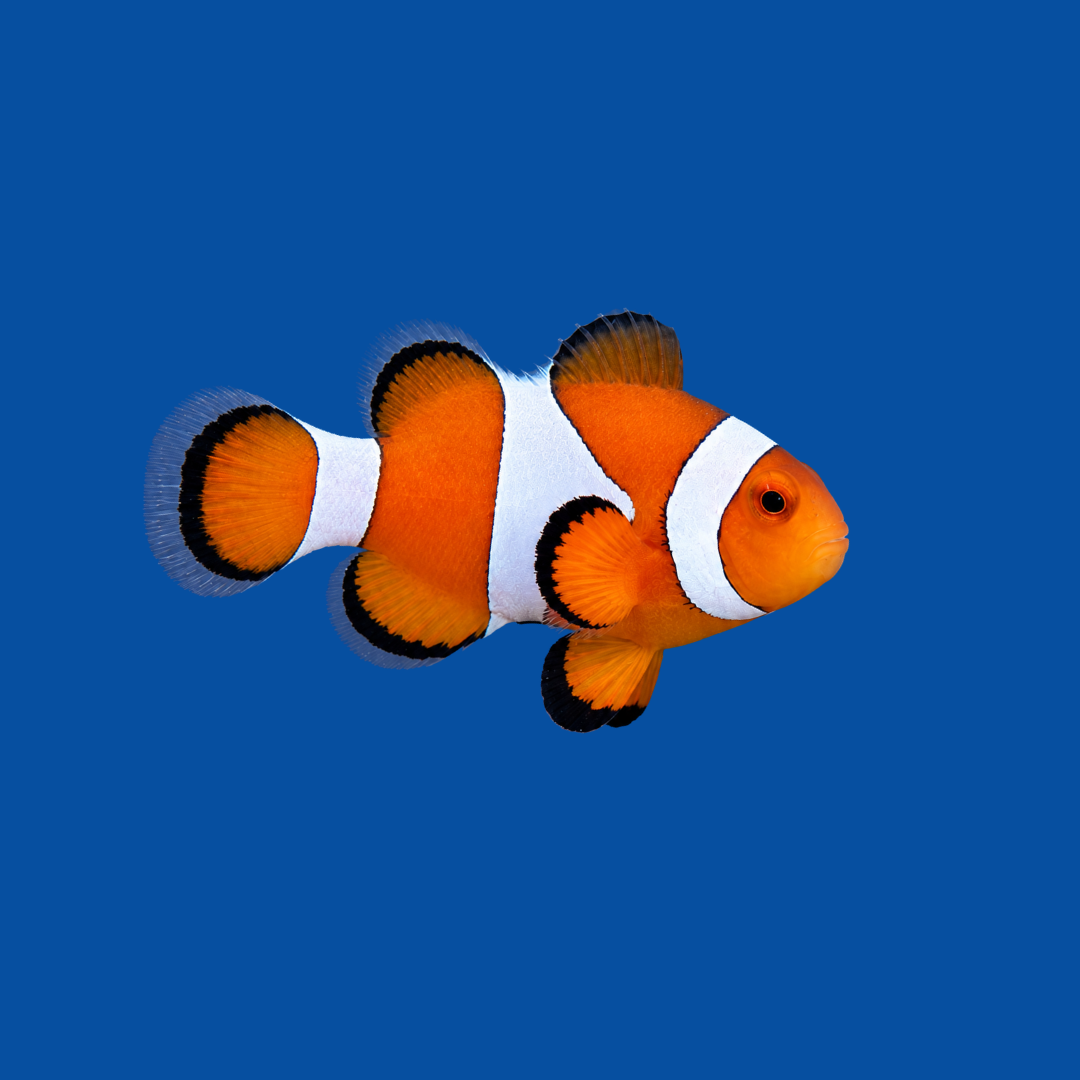
解説 / Description
ペルクラクラウンは、鮮やかなオレンジ色の体に3本の白い帯が入り、その周囲に太い黒色の縁取りが発達する小型のクマノミです。近縁のカクレクマノミとよく似ていますが、黒色部が広くなりやすく、輪郭のはっきりした体色を楽しめます。自然界では主にセンジュイソギンチャクやハタゴイソギンチャクと共生し、イボハタゴイソギンチャクとの組み合わせも報告されています。人工繁殖個体は人工飼料に慣れていることが多いものの、長期飼育には安定した塩分、水温、ろ過環境が欠かせません。また、同種間には体の大きさに基づく明確な順位が生じるため、飼育数と組み合わせを慎重に決める必要があります。 The percula clownfish is a small anemonefish with a vivid orange body, three white bars, and broad black edging that often develops around the bars and fins. It closely resembles the ocellaris clownfish, but usually shows more extensive black coloration and a more sharply defined pattern. In nature it is most commonly associated with the magnificent sea anemone and giant carpet anemone, and association with Mertens’ carpet anemone has also been reported. Captive-bred fish are often accustomed to prepared foods, but long-term care still depends on stable salinity, temperature, and filtration. Stocking must also be planned carefully because conspecifics establish a clear size-based hierarchy.
基本情報 / Basic Information
| 学名 / Scientific Name | Amphiprion percula (Lacepède, 1802) |
|---|---|
| 通称 / Common Name | ペルクラクラウン、ペルクラ・クラウン、トゥルー・ペルクラPercula clownfish, True percula clownfish |
| 分類 / Family | スズメダイ科・クマノミ属Family Pomacentridae, genus Amphiprion |
| 英名 / English Name | Orange clownfish |
| 分布 / Distribution | 西太平洋の熱帯域に分布します。主な範囲はオーストラリア北東部のクイーンズランド沿岸とグレートバリアリーフ北部、ニューギニア北部、ニューブリテン島、ソロモン諸島、バヌアツなどです。カクレクマノミより分布域が限られ、日本近海での自然分布は知られていません。Tropical western Pacific, principally Queensland and the northern Great Barrier Reef, northern New Guinea, New Britain, the Solomon Islands, and Vanuatu. Its range is more restricted than that of the ocellaris clownfish, and it is not known to occur naturally in Japanese waters. |
| 最大体長 / Max Size | 最大全長は約11cmです。水槽内では6〜9cmほどで見られることが多く、群れの中では成熟したメスが最も大きくなります。Maximum reported total length is about 11 cm. Aquarium specimens are often around 6–9 cm, and the mature female becomes the largest member of the social group. |
| 寿命 / Lifespan | 飼育下の寿命は環境や個体によって大きく異なりますが、適切な管理のもとで10年以上生きる例があります。野生個体を対象とした2007年の研究では、直接確認された最高齢ではなく、個体群モデルによる推定として、メスの平均余命が約30.8年と算出されました。Lifespan in captivity varies substantially with conditions and individual health, although survival beyond 10 years is reported under good care. A 2007 study of a wild population estimated an average female life expectancy of about 30.8 years from a population model; this was a model-based estimate rather than a directly observed maximum age. |
飼育環境 / Aquarium Environment
| 水槽サイズ / Tank Size | 単独または相性の安定した1ペアでは、45cm規格水槽(約35〜45L)が飼育開始時の目安になります。ただし、水質を安定させながら長期飼育するには、60cm規格水槽(約55〜65L)以上のほうが管理しやすくなります。イソギンチャクを収容する場合や、ほかの魚と混泳させる場合は、60cmワイド水槽(約80〜100L)以上を目安に、ろ過能力と遊泳空間にも余裕を持たせます。A 45 cm standard aquarium of roughly 35–45 L can serve as a starting point for one fish or a settled pair, but a 60 cm standard aquarium of approximately 55–65 L or larger is easier to keep stable over the long term. For a host anemone or a mixed-species community, use a 60 cm wide aquarium of roughly 80–100 L or more, with adequate filtration and open swimming space. |
|---|---|
| 水温 / Temperature | 24〜27℃を目安とし、通常は25〜26℃前後で安定させます。短時間でも急激な温度変化を避け、夏季は水槽用クーラーや室温管理で高水温を防ぎます。繁殖個体は26〜28℃で管理されることもありますが、高温ほど溶存酸素が低下しやすいため、十分な通水とエアレーションが必要です。 Aim for 24–27°C, with approximately 25–26°C suitable for routine care. Avoid abrupt temperature changes and prevent overheating in summer with a chiller or room climate control. Breeding pairs are sometimes maintained at 26–28°C, but warmer water holds less oxygen, so circulation and aeration must be adequate. |
| 水質 / Water Quality | 塩分はおよそ33〜35ppt、比重では1.023〜1.026程度、pHは8.0〜8.4を目安にします。アンモニアと亜硝酸は検出されない状態を保ち、魚のみの水槽でも硝酸塩はできるだけ20mg/L未満に抑えます。蒸発で失われるのは水分だけなので、足し水には人工海水ではなく、カルキを除去した淡水または純水を用い、比重を急変させないよう少量ずつ補給します。Aim for a salinity of roughly 33–35 ppt, a specific gravity of about 1.023–1.026, and a pH of 8.0–8.4. Ammonia and nitrite should remain undetectable, and nitrate should preferably stay below 20 mg/L even in a fish-only aquarium. Evaporation removes water but leaves salt behind, so replace evaporated water gradually with dechlorinated freshwater or purified water rather than newly mixed seawater. |
| レイアウト / Layout | 安定した岩組みで視線を遮る場所と休息できるくぼみを作り、前面には遊泳空間を残します。岩は崩れないよう固定し、吸水口や水流ポンプには巻き込み防止カバーを取り付けます。イソギンチャクはペルクラクラウンの健康維持に必須ではありません。導入する場合は、十分に立ち上がった水槽、種に合った強い照明と水流、安定した水質を用意し、移動したイソギンチャクがポンプやサンゴに接触しないよう対策します。Create stable rockwork with visual barriers and sheltered resting places while retaining open swimming space. Secure the rocks and fit guards to pump intakes and wavemakers. A host anemone is not required for the fish to remain healthy. When an anemone is included, provide a mature aquarium, species-appropriate lighting and flow, stable water quality, and protection against contact with pumps or neighboring corals if the anemone moves. |
| 注意点 / Precautions | 同種を無計画に複数飼育すると、順位争いによって弱い個体が追い詰められることがあります。一般的な家庭水槽では、単独または相性の確認できた1ペアを基本とします。ペア形成を試みる場合は体格差のある個体を選び、執拗な追尾、餌を食べられない状態、ヒレの損傷が続くときは速やかに隔離します。新しく迎えた魚は本水槽へ入れる前に別水槽で観察し、サンゴやイソギンチャクのいる水槽では銅を含む治療薬を使用しないでください。Unplanned groups of conspecifics may develop severe rank-related aggression, leaving weaker fish unable to feed or rest. In most home aquariums, keep a single fish or one confirmed compatible pair. When attempting pair formation, select fish with a clear size difference and separate them promptly if relentless chasing, feeding suppression, or fin damage continues. Observe new arrivals in a separate tank before introduction, and never use copper medication in an aquarium containing corals or anemones. |
餌と給餌 / Feeding
| 餌の種類 / Diet | 雑食性で、自然界では動物プランクトンや小型の底生生物、藻類などを利用します。飼育下では、海水魚用の小粒ペレットやフレークを主食とし、冷凍イサザアミ、冷凍ブラインシュリンプ、細かく刻んだエビや貝の身などを補助的に与えます。単一の餌だけに偏らず、たんぱく質、脂質、ビタミン、植物質を含む複数の餌を組み合わせます。An omnivore that feeds naturally on zooplankton, small benthic organisms, and algae. In captivity, use small marine pellets or flakes as the staple diet and supplement them with frozen mysid shrimp, frozen brine shrimp, and finely chopped shrimp or mollusc flesh. Combine several foods so that protein, lipids, vitamins, and plant material are represented rather than relying on one product alone. |
|---|---|
| 給餌のポイント / Feeding Tips | 成魚には1日1〜2回、短時間で食べ切れる量を与えます。小型個体や繁殖を目指すペアには、1回量を少なくして1日2〜3回に分ける方法も適しています。口の大きさに合う粒を選び、導入直後は食べる位置や沈下速度も確認します。残餌は早めに取り除き、肥満と水質悪化を防ぎます。Feed adults once or twice daily in portions consumed within a short period. Smaller fish and conditioned breeding pairs may benefit from two or three smaller meals. Match particle size to the mouth and watch where and how quickly the food sinks after introduction. Remove uneaten food promptly to prevent obesity and deterioration of water quality. |
性格と混泳 / Temperament and Tank Mates
| 性格 / Temperament | 環境に慣れると物おじしにくく、活発に泳ぐ一方、宿主に見立てた場所や産卵床の周囲では縄張り意識が強くなります。ペアでは大きいメスが優位に立ち、小さいオスが従う明確な順位関係が形成されます。水槽へ手や器具を入れた際につつくことがありますが、多くは縄張りや卵を守るための行動です。Once settled, this is an active and generally confident fish, but it may become strongly territorial around a chosen host site or spawning surface. In a pair, the larger female is dominant and the smaller male is subordinate. It may nip at hands or tools placed in the aquarium, most often while defending territory or eggs. |
|---|---|
| 混泳の相性 / Compatibility | 同程度の大きさで温和な小型海水魚とは混泳できることが多いものの、相性は魚種、個体差、水槽サイズによって変わります。小型ハゼ類や一部のギンポ類などは候補になりますが、それぞれの必要水量と食性を優先して選びます。大型の肉食魚、攻撃性の強いスズメダイ類、著しく臆病で餌を奪われやすい魚は避けます。別種を含むクマノミ同士は宿主や縄張りをめぐって争いやすいため、一般的な家庭水槽では原則として1ペアに絞るのが安全です。It can often share a tank with peaceful marine fishes of similar size, although compatibility varies with species, individual temperament, and aquarium volume. Small gobies and some blennies may be suitable, but each species’ space and feeding requirements must take priority. Avoid large predators, highly aggressive damselfishes, and very timid fish that may be prevented from feeding. Different clownfish species frequently compete for hosts and territory, so one pair is the safest rule for a typical home aquarium. |
病気と対策 / Diseases and Prevention
| かかりやすい病気 / Common Diseases | クマノミ類で特に注意したいのが、繊毛虫 Brooklynella hostilis によるブルックリネラ症です。体表の粘液が異常に増える、白い膜が広がる、呼吸が速くなる、食欲が落ちるなどの症状が見られ、進行が速い場合があります。ほかに、海水性白点病、海水性ベルベット病、外傷に続く細菌感染なども起こります。体をこする、呼吸が荒い、ヒレを閉じる、細かな白点や金色の粉状感が現れるといった変化を見逃さないことが重要です。Clownfishes require particular vigilance for brooklynellosis, caused by the ciliate Brooklynella hostilis. Excess mucus, a spreading whitish film, rapid breathing, and loss of appetite may occur, and the disease can progress quickly. Marine ich, marine velvet, and bacterial infection following injury are also possible. Watch for rubbing, labored breathing, clamped fins, small white spots, or a fine gold-dust appearance. |
|---|---|
| 対策と予防 / Prevention | 購入個体は可能であれば治療しやすい隔離水槽で十分に観察し、網、ホース、容器を本水槽と共用しないようにします。病気が疑われる場合は、症状だけで決めつけず、病原体に合った治療を選ぶことが重要です。ブルックリネラ症ではホルマリン系の処置、海水性白点病やベルベット病では銅などを用いた治療が行われることがありますが、いずれも治療用水槽で正確な濃度管理が必要です。薬剤はサンゴや甲殻類、イソギンチャクに有害な場合があるため、製品表示と海水魚治療に詳しい専門家の助言に従ってください。淡水浴は体表の寄生生物を一時的に減らす補助法であり、原因に対する完全な治療の代わりにはなりません。Whenever possible, observe new fish in a separate hospital tank and do not share nets, hoses, or containers with the display aquarium. When disease is suspected, avoid diagnosing from one sign alone and select treatment for the actual pathogen. Formalin-based procedures may be used for brooklynellosis, while copper-based treatment may be used for marine ich or velvet, but both require accurate concentration control in a hospital tank. Many medications are dangerous to corals, crustaceans, and anemones, so follow the product label and seek guidance from an experienced marine-fish professional. A freshwater dip may temporarily reduce some external parasites, but it is an adjunct rather than a complete cure for the underlying infection. |
増やし方(繁殖) / Breeding
| 雌雄の判別 / Sexing | 若い個体を外見だけで雌雄判別することは困難です。本種は雄性先熟で、未成熟個体はまずオスとして成熟し、社会的な必要に応じてメスへ性転換します。安定した群れでは最も大きい個体がメス、次に大きい個体が繁殖オスです。メスが失われると繁殖オスがメスへ変わり、下位個体のうち最も大きい個体が新しいオスになります。メスからオスへ戻る逆方向の性転換は通常起こりません。Young fish cannot be sexed reliably by external appearance alone. This species is a protandrous sequential hermaphrodite: immature fish mature first as males and may later change into females when the social structure requires it. In a stable group, the largest fish is the female and the second largest is the breeding male. If the female disappears, the male changes sex and the largest subordinate becomes the new male. Reversal from female back to male does not normally occur. |
|---|---|
| 繁殖形態 / Reproduction | ペアで繁殖する基質産卵型です。メスは岩、タイル、素焼き鉢などの平らな面に数百個の粘着卵を産み、オスが受精させます。産卵後は主にオスが胸ビレで卵へ水を送り、死卵や付着物を取り除きながら守ります。孵化までの日数は水温や個体差で変わりますが、おおむね6〜8日で、通常は消灯後の暗い時間帯に孵化します。A pair-forming substrate spawner. The female places several hundred adhesive eggs on a flat rock, tile, or clay pot, and the male fertilizes them. The male then performs most of the care, fanning the clutch and removing dead eggs or debris. Incubation varies with temperature and the pair, but hatching commonly occurs after about 6–8 days, usually during darkness after the lights go out. |
| 繁殖のポイント / Breeding Tips | 成熟したペアへ栄養バランスのよい餌を少量ずつ複数回与え、水温と照明時間を安定させます。取り外せる素焼き鉢やタイルを産卵面にすると、孵化直前に卵を仔魚用水槽へ移しやすくなります。孵化直後の仔魚にはシオミズツボワムシを用い、微細藻類や海産仔魚用の栄養強化剤で栄養価を補います。成長と口径に合わせて孵化直後のアルテミア幼生を併用し、その後は細粒の人工飼料へ段階的に移行します。仔魚水槽では穏やかな通水と弱いエアレーションを保ち、餌密度と水質をこまめに確認します。Condition a mature pair with several small, balanced meals and keep temperature and photoperiod consistent. A removable clay pot or tile makes it easier to transfer the clutch to a larval tank shortly before hatching. Newly hatched larvae require marine rotifers enriched with microalgae or a marine-larval enrichment product. Add newly hatched Artemia nauplii as mouth size increases, then wean the juveniles gradually onto fine prepared food. Maintain gentle circulation and aeration in the larval tank and monitor both prey density and water quality closely. |
雑学と豆知識 / Trivia and Fun Facts
| 1. フエダイとして始まった学名の歴史 / 1. A scientific name that began among snappers | 本種は1802年、フランスの博物学者ラセペードによって Lutjanus percula として記載されました。現在のクマノミ属ではなく、当時はフエダイ属に置かれていたことになります。その後の分類研究によって Amphiprion percula へ移され、現在も有効な学名として扱われています。属名 Amphiprion は、ギリシャ語の「両側」を表す amphi と「のこぎり」を表す prion に由来し、頭部の両側にある鰓ぶた周辺の骨が鋸歯状になる特徴を指すと説明されています。鮮やかな色彩だけでなく、名前の変遷にも魚類分類学の歩みが残されています。The species was described by the French naturalist Lacépède in 1802 as Lutjanus percula, placing it among snappers rather than in the modern clownfish genus. Later taxonomic work transferred it to Amphiprion percula, which remains the accepted name. Amphiprion is derived from the Greek amphi, meaning “on both sides,” and prion, meaning “saw,” referring to the serrated bones around both sides of the gill cover. Its taxonomic history preserves an early stage in the development of fish classification. |
|---|---|
| 2. カクレクマノミとの見分け方 / 2. Distinguishing it from the ocellaris clownfish | ペルクラクラウンとカクレクマノミは外見がよく似ています。ペルクラクラウンは白帯の周囲に太い黒色が発達しやすく、カクレクマノミは黒い縁取りが比較的細い傾向があります。ただし、養殖品種では模様の個体差が大きいため、体色だけで確実に判別することはできません。形態上の重要な目安は背ビレの棘数で、ペルクラクラウンは9〜10本、カクレクマノミは通常11本です。黒色の幅、背ビレの形、棘数を合わせて見ることで、より慎重に識別できます。Percula and ocellaris clownfish are extremely similar. Percula usually develops broad black edging around the white bars, whereas ocellaris generally has narrower edging. Color alone is not conclusive, especially among selectively bred strains. An important morphological guide is dorsal-fin spine count: percula has 9–10, while ocellaris usually has 11. Identification is most reliable when black edging, dorsal-fin shape, and spine count are considered together. |
| 3. イソギンチャクの中に築かれる順位社会 / 3. A social hierarchy within the anemone | 野生の群れは、最大の繁殖メス、次に大きい繁殖オス、その下に続く小型の非繁殖個体という順序で成り立ちます。下位個体は上位個体より小さい体格を保ち、順位を乱さないことで群れに残る機会を得ています。メスが失われると、オスがメスへ性転換し、下位個体のうち最も大きい個体が新しいオスになります。宿主イソギンチャクから離れることが大きな危険につながる環境で、遠くへ配偶者を探しに行かずに繁殖ペアを再編できる仕組みです。A wild group is organized as the largest breeding female, the second-largest breeding male, and progressively smaller non-breeders. Subordinates maintain a smaller body size than the fish above them, helping them remain within the group without destabilizing rank. When the female is lost, the male changes sex and the largest subordinate becomes the new male. This allows a breeding pair to be rebuilt without the dangerous journey of leaving the host anemone to search for a mate. |
| 4. 毒の触手を安全な住みかに変える仕組み / 4. How venomous tentacles become a safe home | クマノミ類がイソギンチャクに刺されにくい理由には、体表粘液の性質が深く関わっています。2025年の研究では、ペルクラクラウンを含む9種のクマノミ類で、非共生性のスズメダイ類よりも皮膚粘液中のシアル酸が少ないことが示されました。イソギンチャクの刺胞発射には化学的な刺激が関わるため、シアル酸を低く保つことが発射を避ける有力な仕組みの一つと考えられています。一方、仔魚期の耐性変化を直接調べた実験はカクレクマノミで行われており、また別のクマノミ類では皮膚の微生物群集が宿主との接触前後に変化することも報告されています。したがって、共生への適応は一つの物質だけで説明されるのではなく、粘液、発生段階、微生物群集、行動などが重なる複合的な仕組みとして理解するのが適切です。The properties of skin mucus are central to the ability of anemonefishes to avoid being stung. A 2025 study found lower mucus sialic-acid levels in nine anemonefish species, including Amphiprion percula, than in non-symbiotic damselfishes. Because chemical cues help trigger nematocyst discharge, maintaining low sialic-acid levels is considered one important protective mechanism. Direct experiments on changing larval resistance were performed in A. ocellaris, and studies of other anemonefishes have also reported shifts in the skin microbiome around host association. The symbiosis is therefore best understood as a combination of mucus chemistry, development, microbes, and behavior rather than the result of a single substance. |
| 5. 海洋熱波の中で体長を縮めた魚 / 5. Fish that shortened their bodies during a marine heatwave | 2025年に発表された研究では、パプアニューギニアのキンベ湾で67組、計134匹の野生の繁殖個体を5か月にわたり繰り返し測定しました。その結果、101匹が少なくとも一度、全長を短くしていました。これは単なる体重減少ではなく、同じ個体の体長が月ごとの測定で短くなる現象です。縮小した個体は生存しやすく、繁殖ペアがそろって体格を調整することも生存と関連していました。ただし、どの組織がどのように変化して体が短くなるのかはまだ解明されていません。環境ストレスと厳格な順位関係の双方に対応する、個体レベルの可塑性を示した重要な発見です。A 2025 study repeatedly measured 67 wild breeding pairs, 134 fish in total, in Kimbe Bay, Papua New Guinea, over five months. Of those fish, 101 shortened their total length at least once. This was not simply weight loss; repeated measurements showed the same individuals becoming shorter. Fish that shrank were more likely to survive, and coordinated size adjustment by both members of a breeding pair was also associated with survival. The tissue-level mechanism remains unresolved. The finding demonstrates individual plasticity in response to both environmental stress and a strict social hierarchy. |
| 6. 一匹ごとに異なる改良品種の模様 / 6. Selectively bred patterns unique to each fish | ペルクラクラウンには、白帯が不規則につながるピカソ、黒色部が広がるオニキス、体の大部分が白くなるプラチナなどの改良品種があります。同じ品種名でも模様は一匹ずつ異なり、成長に伴って黒色の面積や輪郭が変化する場合もあります。人工繁殖は多彩な表現を生み出すだけでなく、人工飼料に慣れた個体を供給し、野生個体の採集に依存しない選択肢を広げます。その背景には、親魚の健康管理、仔魚用の生餌培養、栄養強化、世代を重ねた選抜という継続的な技術があります。Selectively bred forms include Picasso, with irregular connected white bars; Onyx, with expanded black areas; and Platinum, with most of the body covered in white. Patterns differ from fish to fish even within the same strain, and the area or outline of black may change during growth. Captive breeding not only produces diverse appearances but also supplies fish accustomed to prepared foods and expands alternatives to wild collection. Each strain depends on sustained broodstock care, live-feed culture, nutritional enrichment, and selection across generations. |
まとめ / Conclusion
ペルクラクラウンは、太い黒色の縁取りと3本の白帯が生み出す鮮明な体色に加え、性転換を伴う順位社会やイソギンチャクとの共生を備えた、観察価値の高い海水魚です。丈夫な印象を持たれやすい一方で、健康を長く保つには、安定した塩分と水温、十分なろ過、過密を避けた飼育環境が必要です。 The percula clownfish combines a vivid pattern of three white bars and heavy black edging with a sex-changing social hierarchy and a close association with sea anemones. Although often regarded as hardy, lasting health depends on stable salinity and temperature, effective filtration, and stocking that avoids crowding and social conflict.
適切に管理された水槽では、決まった場所を拠点に行動し、ペアの関係を保ちながら、産卵や卵の保護といった多様な姿を見せます。鮮やかな色彩だけでなく、日々の行動や個体間の関係まで観察できる点が、ペルクラクラウンの大きな魅力です。 In a well-managed aquarium, it establishes a familiar home range, maintains a pair bond, and may display behaviors ranging from courtship to dedicated egg care. Its enduring appeal lies not only in its color, but also in the social relationships and changing behaviors that become visible through careful observation.

気になる道具や飼い方を見つけてみませんか?
 アイのアクアグッズ案内コリドラスのもふもふ時間を楽しむ|餌・底砂・お掃除用品の選び方コリドラスのもふもふする食事風景を楽しむために。沈む餌2種類の違い、口元に配慮した底砂、食べ残しを回収する道具を、アクアグッズナビゲーターのアイが紹介します。記事はコチラ →
 アイのアクアグッズ案内水草用ソイルの選び方|土・砂の違いとおすすめ商品道具の特徴や使い方、選ぶときのポイントをアイが紹介します。記事はコチラ →
さまざまな飼育テーマをご紹介。リンク先の記事には広告・商品紹介が含まれます。
案内・紹介記事一覧へ →分布マップ
ペルクラクラウンは、西太平洋の熱帯域に分布します。オーストラリア北東部のクイーンズランド沿岸とグレートバリアリーフ北部、ニューギニア北部、ニューブリテン島、ソロモン諸島、バヌアツを含む主な分布域を概略表示しています。
この地図は分布イメージを伝えるための概略表示です。マーカーは分布域を代表する便宜上の地点であり、実際の採集地点や個体の確認地点を示すものではありません。また、円の範囲は厳密な生息境界ではありません。
参考文献・根拠資料
ペルクラクラウンの分類、分布、生息環境、社会構造、飼育管理、給餌、繁殖、疾病および薬剤使用上の注意を確認するため、査読論文、公的機関の報告書、学術データベース、大学の専門資料、獣医学資料を選定しています。店舗、通販サイト、個人ブログ、まとめサイトは含めていません。
資料の読み方: 分類、自然分布、宿主イソギンチャク、繁殖様式などは、本種を直接扱った資料を優先しています。一方、水槽容量、硝酸塩の目標値、隔離期間などの実務的な数値は、ペルクラクラウンだけを対象とした比較試験によって普遍的な限界値が確定しているわけではありません。クマノミ類の飼育研究、海産魚の水質管理、養殖試験および魚病学資料を合わせて判断するための管理目安です。
分類・分布・生息環境
- WoRMS Editorial Board. “Amphiprion percula (Lacepède, 1802).” World Register of Marine Species. WoRMSの分類情報を確認する 対応項目:有効学名、原記載名、分類階級、海産種としての位置づけ。
- Maison, K. A. & Graham, K. S. (2016). Status Review Report: Orange Clownfish (Amphiprion percula). NOAA Technical Memorandum NMFS-PIFSC-52. DOI: 10.7289/V5J10152. NOAAの報告書を確認する 対応項目:分布域、生息環境、形態、宿主イソギンチャク、社会構造、繁殖および飼育下で報告される疾病の概説。
- Froese, R. & Pauly, D. (eds.). “Amphiprion percula, Orange clownfish.” FishBase. FishBaseの種情報を確認する 対応項目:最大全長、礁湖・外洋側礁での生息、食性、サイズ順位、雄性先熟、基質産卵。
- Fautin, D. G. & Allen, G. R. (1992). Field Guide to Anemonefishes and Their Host Sea Anemones. Western Australian Museum. Smithsonian Institutionの書誌情報を確認する 対応項目:クマノミ類の同定、自然史、分布、宿主イソギンチャクとの組み合わせ。
飼育条件・給餌・社会行動
- Gendron, M. E. & Buston, P. M. (2023). “Review of housing and husbandry of anemonefishes for use in research.” Journal of Fish Biology, 103(5), 924–938. DOI: 10.1111/jfb.15492. 論文を確認する 対応項目:クマノミ類の水槽設備、収容条件、環境管理、給餌、研究・飼育条件のばらつきと標準化上の注意。
- Buston, P. (2003). “Social hierarchies: size and growth modification in clownfish.” Nature, 424(6945), 145–146. DOI: 10.1038/424145a. PubMedの書誌情報を確認する 対応項目:ペルクラクラウンのサイズに基づく順位、下位個体の成長調整、同種複数飼育時の社会的摩擦。
- Johnston, G., Kaiser, H., Hecht, T. & Oellermann, L. (2003). “Effect of ration size and feeding frequency on growth, size distribution and survival of juvenile clownfish, Amphiprion percula.” Journal of Applied Ichthyology, 19(1), 40–43. DOI: 10.1046/j.1439-0426.2003.00351.x. 論文を確認する 対応項目:幼魚の給餌量、給餌回数、成長、生存およびサイズ差。
繁殖・仔魚育成
- Dhaneesh, K. V., Ajith Kumar, T. T., Swagat, G. & Balasubramanian, T. (2012). “Breeding and mass scale rearing of clownfish Amphiprion percula: feeding and rearing in brackishwater.” Chinese Journal of Oceanology and Limnology, 30, 528–534. DOI: 10.1007/s00343-012-1184-x. 論文を確認する 対応項目:親魚管理、産卵、孵化、ワムシやアルテミアを用いた仔魚育成、飼育水温・塩分条件。
- Önal, U., Langdon, C. & Çelik, İ. (2008). “Ontogeny of the digestive tract of larval percula clownfish, Amphiprion percula (Lacépède 1802): a histological perspective.” Aquaculture Research, 39(10), 1077–1086. DOI: 10.1111/j.1365-2109.2008.01968.x. 論文を確認する 対応項目:仔魚の消化管発達、生餌から人工飼料へ移行する時期を考えるための発生学的根拠。
病気・隔離・薬剤使用上の注意
- Lom, J. & Nigrelli, R. F. (1970). “Brooklynella hostilis n. g., n. sp., a pathogenic cyrtophorine ciliate in marine fishes.” Journal of Protozoology, 17(2), 224–232. DOI: 10.1111/j.1550-7408.1970.tb02361.x. 原記載論文を確認する 対応項目:ブルックリネラ症の原因となる繊毛虫の記載、海産魚への病原性、鰓への影響。
- Yanong, R. P. E. (2021). “Cryptocaryon irritans Infections (Marine White Spot Disease) in Fish.” UF/IFAS Extension, FA164. University of Floridaの資料を確認する 対応項目:海水性白点病の症状、生活環、診断、隔離、再感染防止および治療上の考え方。
- Smith, S. A. & Schwarz, M. H. (2024 review). “Getting Acquainted with Amyloodinium ocellatum.” Virginia Cooperative Extension, 600-200 (CNRE-39P). Virginia Techの専門資料を確認する 対応項目:海水性ベルベット病の原因生物、皮膚・鰓への障害、生活環、早期発見および制御方法。
- Francis-Floyd, R. & Pouder, D. B. (2023). “Use of Formalin to Control Fish Parasites.” UF/IFAS Extension, VM061. University of Floridaの資料を確認する 対応項目:ホルマリン浴の用途、濃度管理、強いエアレーションの必要性、魚と作業者に対する安全上の注意。
- MSD Veterinary Manual. “Management of Aquarium Fish” および “Parasitic Diseases of Fish.” 水槽魚の管理資料を確認する 寄生虫病の資料を確認する 対応項目:銅薬の濃度測定、無脊椎動物への強い毒性、ろ過細菌への影響、海水魚寄生虫の診断・治療上の注意。
参照日は2026年7月12日です。リンク先の改訂日や公開状態は変更される場合があります。疾病が疑われる場合は、外観だけで病原体を断定せず、可能な限り顕微鏡検査や魚病に詳しい獣医師・専門機関の判断を優先してください。





コメント