

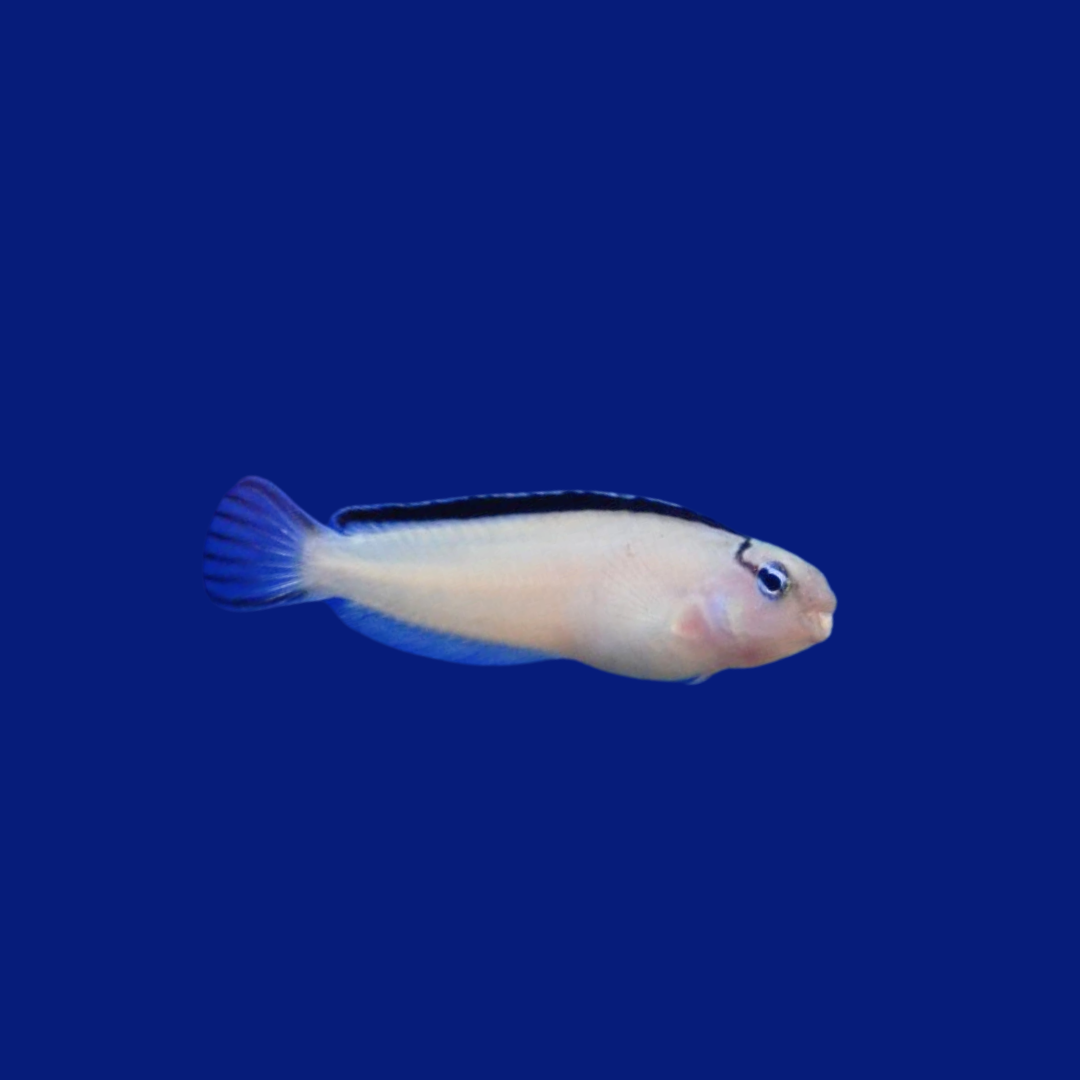
解説 / Description
スミスズファングブレニーは、淡い白からクリーム色の体に黒いラインが入る、すっきりとした印象の海水魚です。一般的なギンポ類には岩上や底面で過ごす種類も多い一方、本種を含むヒゲニジギンポ属は中層をよく泳ぐため、水槽内でも姿を見つけやすく、観察しやすい魅力があります。下顎の奥には防衛用の毒牙を持ちますが、飼育下では温和な性格を見せることが多く、サンゴを傷めにくいリーフタンク向きの魚として扱われます。日本語表記は「スミスズファングブレニー」を基本に、流通や検索では「スミスズファンブレニー」と書かれることもあります。 Smith’s fangblenny is a clean-looking marine fish with a pale white to cream-colored body and a distinct black line. While many blennies spend much of their time on rocks or near the bottom, species of the genus Meiacanthus often swim actively in the midwater, making them easy to observe in aquariums. It has defensive venomous fangs hidden in the lower jaw, but in captivity it is usually peaceful and is commonly treated as a reef-suitable fish that is unlikely to damage corals. In Japanese aquarium use, スミスズファングブレニー is used here as the main spelling, while スミスズファンブレニー may also appear in trade and search contexts.
基本情報 / Basic Information
| 学名 / Scientific Name | Meiacanthus smithi Klausewitz, 1962 |
|---|---|
| 通称 / Common Name | スミスズファングブレニー、スミスズファンブレニー、ディスコブレニーSmith’s fangblenny, Disco blenny, Smith’s harptail-blenny |
| 分類 / Family | 条鰭類・ギンポ目・イソギンポ科・ヒゲニジギンポ属Ray-finned fishes, order Blenniiformes, family Blenniidae, genus Meiacanthus |
| 英名 / English Name | Smith’s fangblenny, Disco blenny, Smith’s harptail-blenny |
| 分布 / Distribution | インド洋東部からインド西太平洋域のサンゴ礁性海域に分布するとされ、FishBaseでは北部スリランカ、西部ジャワ海、インド南東部からの記録が示されています。水深1から20mほどの浅い沿岸礁や内湾のリーフ環境で見られます。It is regarded as an Indo-West Pacific reef-associated species. FishBase lists records from northern Sri Lanka, the western Java Sea, and southeastern India. It occurs in shallow coastal and inner reef habitats at roughly 1 to 20 m depth. |
| 最大体長 / Max Size | 約8.5cmAbout 8.5 cm total length |
| 寿命 / Lifespan | 本種単独の明確な寿命データは多くありません。安定した海水環境と十分な給餌を維持できれば、家庭水槽でも数年単位の長期飼育が期待できます。Clear species-specific lifespan data are limited. With stable marine conditions and sufficient feeding, long-term care over several years can be expected in home aquariums. |
飼育環境 / Aquarium Environment
| 水槽サイズ / Tank Size | 最低でも100L前後を目安にし、日本の規格水槽では60cmワイド水槽以上が扱いやすいです。小型魚ではありますが、中層を泳ぐ時間が長いため、岩組みだけで水槽を埋めず、前面から中央に遊泳スペースを残すとよいでしょう。A volume of around 100 liters or more is a useful guideline. In Japanese standard aquarium sizes, a 60 cm wide tank or larger is easier to manage. Although this is a small fish, it spends much of its time swimming in the midwater, so leave open swimming space toward the front and center rather than filling the tank entirely with rockwork. |
|---|---|
| 水温 / Temperature | 24から27℃前後。一般的なサンゴ礁性海水魚の範囲で管理します。 Around 24 to 27°C, within the usual range for tropical reef fishes. |
| 水質 / Water Quality | 比重1.023から1.026、pH8.0から8.4を目安にします。急な比重変化や水質悪化に弱りやすいため、導入時の水合わせと、硝酸塩の蓄積を抑える通常管理が大切です。Aim for a specific gravity of 1.023 to 1.026 and a pH of 8.0 to 8.4. Careful acclimation and routine maintenance that prevents nitrate accumulation are important because sudden salinity changes and poor water quality can weaken the fish. |
| レイアウト / Layout | ライブロックで細い隙間や洞窟を複数作り、驚いた時や夜間に逃げ込める場所を用意します。強い照明は必須ではありませんが、リーフタンクの照明下では体色のコントラストがよく映えます。飛び出し防止のため、フタやネットも用意しておくと安心です。Use live rock to create several narrow crevices and cave-like shelters where the fish can retreat when startled or at night. Strong lighting is not essential, but reef lighting shows the contrast of its body pattern well. A lid or mesh cover is also recommended to prevent jumping. |
| 注意点 / Precautions | 防衛用の毒牙を持つため、手で直接つかむ扱いは避け、移動時は容器で水ごとすくう方法が安全です。人に対して重大な危険魚として扱われる種類ではありませんが、噛まれるリスクを避けるため、素手で追い込む作業はしないようにします。Because it has defensive venomous fangs, avoid grabbing it directly by hand; moving it in a container with water is safer. It is not generally treated as a seriously dangerous fish to humans, but avoid chasing or trapping it with bare hands to reduce the risk of being bitten. |
餌と給餌 / Feeding
| 餌の種類 / Diet | 海水魚用の高品質なフレーク、マイクロペレット、冷凍イサザアミ、栄養強化したブラインシュリンプ、動物プランクトン系の細かな餌を与えます。自然下では中層で小さな浮遊性の餌をとり、岩場の微小な餌もついばむため、動物質中心の餌に人工飼料を組み合わせると安定します。Offer high-quality marine flakes, micro pellets, frozen mysid shrimp, enriched brine shrimp, and other fine zooplankton-type foods. In nature it takes small drifting foods in the water column and also picks at tiny foods around the reef, so a varied diet centered on animal-based foods with prepared foods works well. |
|---|---|
| 給餌のポイント / Feeding Tips | 活発に泳ぐため、1日2から3回、少量ずつ与えると痩せを防ぎやすくなります。混泳水槽では餌取りの速い魚に先を越されることがあるので、中層に流れる細かな餌が本種まで届いているか確認しましょう。導入直後は冷凍餌から慣らし、状態が落ち着いたら人工飼料の比率を少しずつ増やすと無理がありません。Because it is an active swimmer, feeding small portions two to three times per day helps prevent weight loss. In community tanks, faster feeders may outcompete it, so confirm that fine foods drifting through the midwater reach the fish. After introduction, starting with frozen foods and gradually increasing prepared foods is a practical approach. |
性格と混泳 / Temperament and Tank Mates
| 性格 / Temperament | 基本的には温和で、他魚に積極的に攻撃を仕掛けるタイプではありません。慣れると中層をゆったり泳ぎ、餌の時間には前面に出てくることも多い魚です。ただし、導入直後は臆病に見えることがあるため、落ち着ける隠れ家を用意します。It is generally peaceful and is not the type of fish that actively attacks tank mates. Once settled, it often swims calmly in the midwater and may come to the front at feeding time. Newly introduced individuals may appear shy, so provide secure hiding places. |
|---|---|
| 混泳の相性 / Compatibility | クマノミ、小型ハゼ、小型ベラ、温和なハナダイ類など、サイズと性格が合う海水魚との混泳に向きます。大型の肉食魚、極端に攻撃的な魚、同じような体形や色彩のブレニー類との同居は慎重に判断します。サンゴには基本的に無害とされますが、極小の甲殻類や小型のケヤリムシ類などは餌として見られる可能性があります。It is suitable with compatible marine fishes such as clownfish, small gobies, small wrasses, and peaceful anthias. Be cautious with large predatory fishes, highly aggressive species, or similarly shaped and colored blennies. It is generally regarded as coral-safe, although very small crustaceans or small feather duster worms may be viewed as food. |
病気と対策 / Diseases and Prevention
| かかりやすい病気 / Common Diseases | 本種だけに特有の病気が多いわけではありませんが、海水魚全般と同じく白点病、ウーディニウム症、外部寄生虫、輸送直後の拒食や痩せに注意します。特に痩せは、給餌量の不足や混泳相手との餌の競争で起こりやすくなります。There are no widely noted diseases unique to this species, but as with many marine fishes it may be affected by marine ich, velvet disease, external parasites, refusal to feed after shipping, and weight loss. Weight loss can occur when feeding is insufficient or when tank mates outcompete it. |
|---|---|
| 対策と予防 / Prevention | 導入時は水合わせを丁寧に行い、可能であれば検疫水槽で観察してから本水槽へ入れます。水温、比重、pHを安定させ、隠れ家を用意し、細かい餌をこまめに与えることが予防の基本です。体表の白点、呼吸の荒さ、ヒレの閉じ、急な痩せが見られた場合は、早めに隔離して原因を確認します。Acclimate carefully when introducing the fish, and observe it in a quarantine tank before moving it to the display tank when possible. Stable temperature, salinity, and pH, sufficient hiding places, and frequent small feedings are the basic preventive measures. If white spots, rapid breathing, clamped fins, or sudden weight loss appear, isolate the fish early and investigate the cause. |
増やし方(繁殖) / Breeding
| 雌雄の判別 / Sexing | 本種は性的二型があるとされますが、販売サイズの個体を外見だけで正確に見分けるのは簡単ではありません。繁殖を狙う場合は、状態のよい複数個体から自然にペアができるのを待つ方法が現実的です。成熟個体では、巣穴への執着や卵を守る行動が手がかりになります。Sexual dimorphism is reported for this species, but reliably sexing aquarium-sized individuals by appearance alone is not easy. For breeding attempts, allowing compatible individuals to form pairs naturally is often more practical. In mature fish, attachment to a nesting site and egg-guarding behavior may provide clues. |
|---|---|
| 繁殖形態 / Reproduction | 卵生で、粘着性の沈性卵を基質に産み付けます。卵は付着性の構造で基質に固定され、孵化後の仔魚は浮遊生活を送ります。飼育下では、洞窟状の産卵床として素焼き鉢、貝殻、塩ビパイプなどが利用されます。It is oviparous and lays adhesive demersal eggs on a substrate. The eggs attach to the substrate with an adhesive structure, and the larvae are planktonic after hatching. In captivity, clay flowerpots, shells, or PVC pipes can be used as cave-like spawning sites. |
| 繁殖のポイント / Breeding Tips | 繁殖には安定した水質、ストレスの少ないペア管理、安心して入れる産卵床が重要です。ヒゲニジギンポ類では、産卵床が隠れ家を兼ね、親魚による卵の保護が孵化率に関わるとされます。孵化した仔魚は非常に小さく、初期には栄養強化したシオミズツボワムシ、その後にブラインシュリンプ幼生へ移行する細かな給餌管理が必要です。家庭水槽で産卵が見られることはありますが、仔魚育成には専用設備と餌料培養が必要になるため、難易度は高めです。Stable water quality, low-stress pair management, and a secure spawning site are important. In blennies, the spawning structure may also serve as a den, and parental care of the egg clutch can influence hatch success. Newly hatched larvae are very small and require careful feeding, beginning with enriched rotifers and later transitioning to brine shrimp nauplii. Spawning may occur in home aquariums, but larval rearing is challenging because it requires dedicated equipment and live food cultures. |
雑学と豆知識 / Trivia and Fun Facts
| 1. 「ブレニー」という呼び名 / 1. The name “blenny” in Japanese aquarium use | 英語の blenny は、日本のアクアリウム分野では「ブレニー」と表記されることが多く、「ファングブレニー」という呼び名もその流れにあります。スミスズファングブレニーは、名前だけを見ると少し鋭い印象がありますが、実際の飼育では中層をふわりと泳ぐ姿が印象的で、同じブレニーの仲間でも底面に張り付くタイプとは違った楽しみ方ができます。In Japanese aquarium usage, the English word “blenny” is commonly rendered as ブレニー, and the name ファングブレニー follows that convention. Although the name Smith’s fangblenny sounds sharp and formidable, in the aquarium its appeal lies in the way it glides gently through the midwater, offering a different viewing experience from many bottom-perching blennies. |
|---|---|
| 2. 毒牙は攻撃用ではなく防衛用 / 2. Fangs used mainly for defense | ヒゲニジギンポ属の大きな特徴は、下顎にある溝状の犬歯と毒腺です。この牙は餌を捕るための武器というより、捕食者に飲み込まれそうになった時に身を守るための装置として知られています。小さな魚があえて中層を泳げる背景には、見た目の美しさだけでなく、捕食者に学習されるだけの防衛力があると考えられます。A major feature of Meiacanthus blennies is the pair of grooved canine teeth and associated venom glands in the lower jaw. These fangs are known more as a defensive device than as a weapon for catching food. The ability of such a small fish to swim in open midwater is likely supported not only by its appearance but also by a defense that predators can learn to avoid. |
| 3. 「痛ませる毒」とは違うユニークな毒 / 3. A venom different from pain-inducing fish venoms | ファングブレニー類の毒は、ミノカサゴやエイのように激しい痛みで相手を遠ざける魚毒とは性質が異なると報告されています。研究では、毒成分にオピオイド様ペプチドなどが含まれ、血圧低下や運動機能の低下によって捕食者の追跡能力を鈍らせる可能性が示されています。ただし、薬のように「痛み止めとして働く魚」と短絡的に言うのではなく、捕食者から逃げるための特殊な防衛システムとして理解するのが適切です。The venom of fang blennies has been reported to differ from the pain-inducing venoms of fishes such as lionfish or stingrays. Studies indicate that components such as opioid-like peptides may contribute to effects including lowered blood pressure and reduced motor function, potentially making it harder for predators to pursue the blenny. Rather than simply calling it a fish that works like a painkiller, it is more accurate to understand the venom as a specialized defensive system for escaping predators. |
| 4. 擬態ネットワークの中心になる存在 / 4. A model in mimicry networks | スミスズファングブレニーのような有毒のファングブレニーが捕食者に避けられるようになると、似た体色の無毒種も利益を得ることがあります。若いフタスジタマガシラのように、成長の一時期だけ毒を持つブレニー類に似た姿をとる魚も知られています。小さな観賞魚として水槽に泳ぐ姿の奥には、サンゴ礁で起きてきた捕食、学習、擬態の長い物語が重なっています。When venomous fangblennies such as Smith’s fangblenny are avoided by predators, harmless species with similar color patterns can also benefit. Juvenile bridled monocle breams are known as mimics of venomous blennies during part of their development. Behind the small fish swimming in an aquarium lies a long reef story of predation, learning, and mimicry. |
| 5. 学名に残る魚類学史 / 5. Ichthyological history in the scientific name | 種小名の smithi は、南アフリカの魚類学者ジェームズ・レナード・ブライアリー・スミスに献名されたものとされます。スミスはシーラカンス研究でよく知られる人物で、小さなサンゴ礁魚の名前にも魚類学史の大きな流れが刻まれています。学名を知ることは、単に名前を覚えるだけでなく、その魚が研究者や分類学の歴史の中でどのように扱われてきたかを知る入口にもなります。The species name smithi is understood to honor the South African ichthyologist James Leonard Brierley Smith. Smith is well known for his work connected with the coelacanth, and the name of this small reef fish preserves a link to a larger story in ichthyological history. Learning a scientific name is not only a matter of memorization; it also opens a window onto how a fish has been studied and placed within taxonomic history. |
| 6. 購入時は「状態」を見る魚 / 6. Check condition carefully when buying | 本種は観賞魚として流通する種類ですが、価格や入荷量は時期や輸入状況によって変動します。購入時は値段だけでなく、痩せていないか、餌を食べているか、呼吸が荒くないか、ヒレを閉じていないかを確認しましょう。人工飼料に慣れた個体や、店で落ち着いてから販売されている個体は、家庭水槽へ移した後も立ち上げやすくなります。This species appears in the aquarium trade, but price and availability vary with season and import conditions. When buying one, check not only the price but also whether the fish is thin, feeding well, breathing normally, and holding its fins open. Individuals that already accept prepared foods and have settled at the shop are usually easier to establish in a home aquarium. |
まとめ / Conclusion
スミスズファングブレニーは、白い体に黒いラインが映える外見、中層をよく泳ぐ観察しやすさ、そして温和な性格をあわせ持つ、海水魚水槽に取り入れやすいブレニーです。100L前後、または60cmワイド水槽以上を目安に、安定した水質、十分な隠れ家、飛び出し防止、こまめな給餌を整えれば、サンゴ水槽でも自然な存在感を見せてくれます。 Smith’s fangblenny is an approachable marine blenny with a striking black line on a pale body, active midwater swimming that makes it easy to observe, and a generally peaceful temperament. With around 100 liters of water volume, or a Japanese 60 cm wide tank or larger, along with stable water quality, secure hiding places, jump prevention, and frequent small feedings, it can become a natural and appealing presence in a reef aquarium.
一方で、本種の魅力は見た目や飼いやすさだけにとどまりません。防衛用の毒牙、独特な毒の働き、他種を巻き込む擬態の関係など、スミスズファングブレニーは小さな体の中にサンゴ礁の進化を感じさせる要素を備えています。飼育の基本を丁寧に守りながら観察すれば、図鑑で読む知識と水槽の中の姿がつながり、海水魚飼育の奥深さを実感させてくれる一種です。 At the same time, the appeal of this species goes beyond appearance and ease of care. Its defensive fangs, unusual venom system, and relationships with mimicking species all hint at the evolutionary complexity of coral reefs. By observing it while maintaining the basics of good husbandry, keepers can connect the knowledge found in a field-guide entry with the living fish in the aquarium, making this species a rewarding example of the depth of marine fishkeeping.

気になる道具や飼い方を見つけてみませんか?
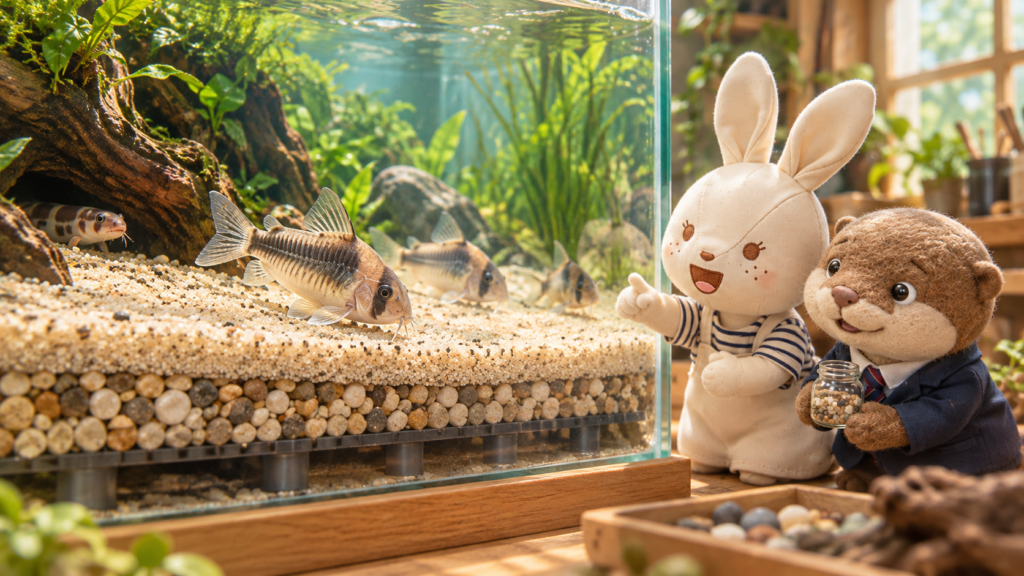 アイのアクアグッズ案内水槽の底砂の選び方|砂・砂利の違いとおすすめ商品道具の特徴や使い方、選ぶときのポイントをアイが紹介します。記事はコチラ →
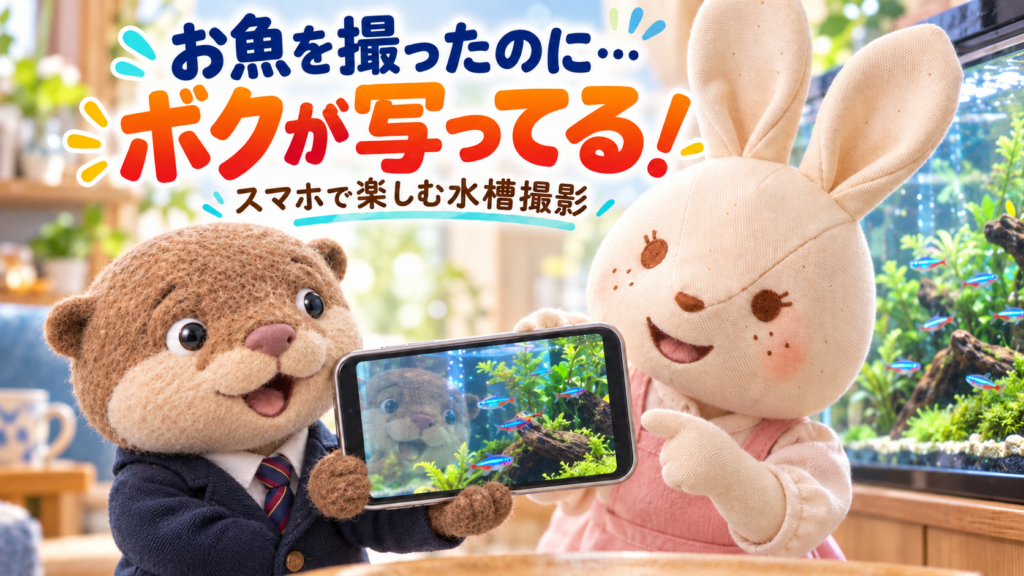 アイのアクアグッズ案内お魚を撮ったのに、ボクが写ってる! スマホで楽しむ水槽撮影と便利な道具道具の特徴や使い方、選ぶときのポイントをアイが紹介します。記事はコチラ →
さまざまな飼育テーマをご紹介。リンク先の記事には広告・商品紹介が含まれます。
案内・紹介記事一覧へ →参考文献・参照資料
本記事では、店舗・通販サイト、個人ブログ、まとめサイトを参考文献から除外し、分類、分布、生息環境、飼育条件、繁殖、病気や注意点を確認できる学術系データベース、公的・大学系資料、査読論文を中心に参照しました。
-
WoRMS Editorial Board. “Meiacanthus smithi Klausewitz, 1962.” World Register of Marine Species.
参照項目:学名の受理状況、分類階級、原記載情報、海産種であること。
https://www.marinespecies.org/aphia.php?id=219308&p=taxdetails -
Froese, R. and D. Pauly, editors. “Meiacanthus smithi, Disco blenny.” FishBase.
参照項目:英名、分布、最大体長、サンゴ礁性・水深、生息環境、卵生・沈性粘着卵、浮遊性仔魚、擬態に関する基礎情報。
https://fishbase.se/summary/meiacanthus-smithi -
Bray, D. J. “Meiacanthus.” Fishes of Australia, Museums Victoria.
参照項目:ヒゲニジギンポ属の毒牙、毒の送達構造、防衛目的での使用、捕食者による回避学習、擬態関係の概要。
https://fishesofaustralia.net.au/home/genus/881 -
Casewell, N. R. et al. “The Evolution of Fangs, Venom, and Mimicry Systems in Blenny Fishes.” Current Biology, 27(8), 1184-1191, 2017.
参照項目:ファングブレニー類の毒、毒牙の進化、オピオイド様ペプチドを含む毒成分、擬態システムに関する学術的背景。
https://doi.org/10.1016/j.cub.2017.02.067 -
Von Linden, J., Patterson, J. T., Ohs, C. L., and DiMaggio, M. A. “Aquaculture Applications of the Family Blenniidae.” UF/IFAS Extension, FA225.
参照項目:ブレニー類の水質目安、水温・pH・塩分、循環式飼育設備、隠れ家、給餌、人工繁殖、仔魚育成、検疫・病気対策の一般管理。
https://ask.ifas.ufl.edu/publication/FA225 -
Moorhead, J. A. and Zeng, C. “Breeding of the forktail blenny Meiacanthus atrodorsalis: broodstock management and larval rearing.” Aquaculture, 318(1-2), 248-252, 2011.
参照項目:近縁のヒゲニジギンポ属における産卵床、親魚管理、雄の卵保護、孵化、ワムシからアルテミア幼生への移行、着底時期の補助資料。
https://researchonline.jcu.edu.au/18835/ -
Yanong, R. P. E. “Cryptocaryon irritans Infections (Marine White Spot Disease) in Fish.” UF/IFAS Extension, FA164.
参照項目:海水魚の白点病、症状、生活環、検疫、診断、隔離・治療期間の考え方、導入時の注意点。
https://ask.ifas.ufl.edu/publication/FA164 -
Francis-Floyd, R. and Floyd, M. “Amyloodinium ocellatum, an Important Parasite of Cultured Marine Fish.” Southern Regional Aquaculture Center Publication No. 4705, 2011.
参照項目:ウーディニウム症の原因生物、海産・汽水魚への寄生、飼育下での重大性、病気対策の補助資料。
https://agrilife.org/fisheries/files/2013/09/SRAC-Publication-No.-4705-Amyloodinium-ocellatum-an-Important-Parasite-of-Cultured-Marine-Fish.pdf
確認日:2026年6月15日。飼育条件のうち水槽サイズなど、趣味飼育向けに換算した表現は、上記資料の水質・設備・生態情報をもとに記事用へ整理しています。




コメント